


![Blockchains Verstehen: Mining, Accounts, Smart Contracts und DeFi einfach erklärt [2022]](https://i.ytimg.com/vi_webp/byrZ2y57PoE/maxresdefault.webp)














![Altseason Just Went Full SEND! [Next Altcoin Plays]](https://i.ytimg.com/vi/KZFN2aKfYn8/maxresdefault.jpg)



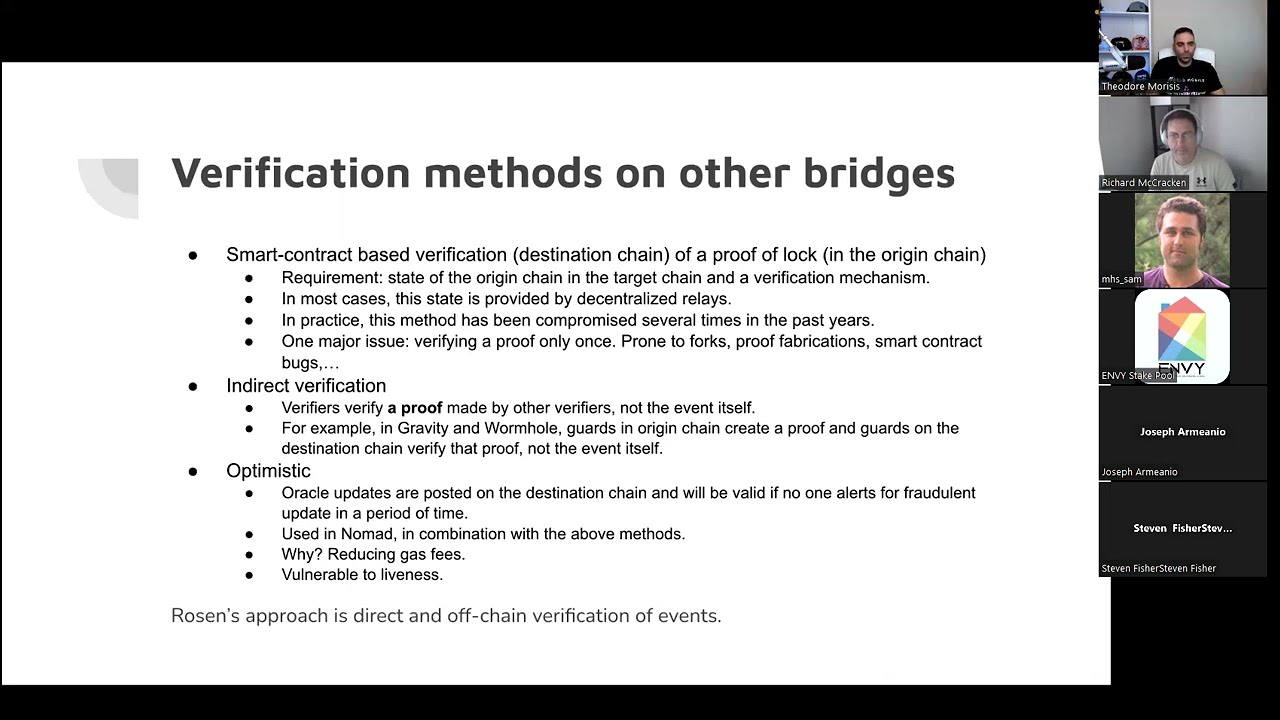
Cross-chain bridges enable communication between independent blockchains by allowing users to lock assets on one chain and receive equivalent tokens on another chain, facilitating interoperability similar to how cell networks allow different providers to communicate; this process involves smart contracts that lock assets and oracles/validators that verify and release corresponding tokens on the destination chain, though it inherently requires trust in the system's integrity.
Understanding Cross-Chain Bridges: Blockchain Interoperability Explained
Added:Fundamental blockchain architecture, including consensus mechanisms and ledger state isolation.
The definition and execution of smart contracts on decentralized networks.
Tokenization basics, including native assets versus token standards (such as ERC-20).
The concept of blockchain 'silos' and why disparate networks cannot naturally communicate with each other.
Security vulnerabilities and attack vectors specific to cross-chain bridges, including validator collusion and smart contract exploits.
The architectural distinction between trusted (custodial) and trustless (non-custodial) bridging mechanisms.
Advanced cross-chain messaging protocols and arbitrary data passage (such as Cosmos IBC, Polkadot XCMP, and Chainlink CCIP).
The design of cross-chain DeFi strategies, including multi-chain liquidity aggregation and cross-chain lending.
2.5K views42likes3:31Original Release: 2025-01-14
how's it going everyone so today we're going to look at Cross chain Bridges and how exactly they work so we'll use some cool schematics so you guys can actually visualize it and understand it better so what are cross chain Bridges and why do we even care so back in the day blockchains were actually completely independent of each other and they couldn't communicate with each other right so if you had assets on one blockchain and you wanted to use it on another blockchain that wasn't possible then we got cross chain Bridges this allowed different blockchains to actually communicate with each other so you as the user had the flexibility of having an asset on one blockchain and then actually transferring it over to another blockchain where you might need it in the future blockchain interoperability is going to be huge it's very much like cell networks right so whatever uh service provider you use you don't actually think about who the person is that you're calling right they might have a different network provider but they've got these sort of bridges as well where they've allowed the different networks to communicate with each other okay great let's actually have a look at how the crossing Bridges work all right so we've got the two blockchains so blockchain one will be ethereum and blockchain two will be salana now the objective is that Kakashi wants to send one ether from the ethereum network over to the salana network so he's got one ether on ethereum but he needs that asset on the salana network all right so he's going to to send his ethereum on the first blockchain so ethereum to a Smart contract on the ethereum network right that is essentially going to lock that ethereum up right so he no longer has access to it then on the second blockchain so the salana network we've got the Oracle or validator right now the function of this Oracle or validator is actually to look at the Smart contract and see when an asset has been locked up right so the object Ive is to see when someone has said okay I am prepared to lock my asset on ethereum so that I can have it on salana once the Oracle has um certified that yes this person has in fact locked the asset in the smart contract then it will release that token on the salana network right and then that will go to Kakashi's account now what's really important to understand here is you are not actually sending the asset from ethereum over to salana right you are merely taking that ether you're locking it into a smart contract on the ethereum network and then the salana network is looking to see when someone locked that asset up and then it releases a token which represents that ether on the salana network right so the ethereum here is actually just a token it's not like the actual ether that you have on the the initial blockchain the big thing here is that you're actually requiring trust to say that this person is in fact going or this smart contract is going to lock that ether up and then they're going to give it to you on this blockchain that's why all of these cross chain Bridges do have um High auditing so that all of this is validated and the trust is maintained all right guys and that's it on how cross chain Bridges work if you got some value from this video definitely subscribe to the channel and like the video
Up Next

27:19
Ethereum Development Guide: Scaffold-ETH and Solidity Fundamentals
@austingriffith3550
42.5K views•2021-09-28
52:00
Hybrid Key Establishment in Production: Post-Quantum Cryptography
@durumcrustulum
14.7K views•2025-08-27
64:25
Operational Security Essentials: A Guide for Hacktivists (OPSEC)
@hitbsecconf
157.4K views•2012-11-26
11:49
Understanding Ethereum: A Comprehensive Beginner's Overview
@99Bitcoins
3.1M views•2018-06-26
Related Study Plans & Knowledge Roadmaps
Structured learning paths in Blockchain & Crypto
blockchain-and-crypto
MPC Wallets: TSS, DKG & Secure Custody
01Foundations of Cryptography & Digital Signatures
02Secret Sharing & Introduction to MPC
03Distributed Key Generation (DKG)
+ 2 more learning modules
24h5 modules
Explore Roadmap
blockchain-and-crypto
ERC-4626: Yield Aggregators & Leverage
01Blockchain, Ethereum, and Solidity Foundations
02DeFi Primitives: Lending, Pools, and Yield Farming
03Mastering the ERC-4626 Tokenized Vault Standard
+ 3 more learning modules
35h6 modules
Explore Roadmap
blockchain-and-crypto
DePIN: IoT Registries, Proofs & Rewards
01Foundations of Blockchain & IoT
02Introduction to DePIN and the Flywheel Effect
03Designing IoT Device Registries & Secure Identity
+ 3 more learning modules
30h6 modules
Explore Roadmap
blockchain-and-crypto
Building EigenLayer AVS: Operators & Contracts
01Blockchain, Ethereum, and Smart Contract Basics
02Proof of Stake and Ethereum Staking
03Introduction to EigenLayer and Restaking
+ 3 more learning modules
24h6 modules
Explore Roadmap