























Curve Wars is a competitive ecosystem where protocols like Convex Finance compete to control CRV emissions by accumulating veCRV (vote-escrow Curve) tokens, which grant voting power over reward distribution. Curve holds weekly gauge votes to allocate rewards across liquidity pools, and veCRV holders can direct these emissions. Convex Finance has accumulated 43% of all veCRV, enabling it to boost rewards for users through Curve's boost mechanism and distribute CVX governance token rewards. Protocols bribe Convex holders to vote for their preferred pools, with total bribes reaching $20 million in recent rounds, generating approximately 50% APR for Convex holders. Curve V2's introduction of non-pegged asset pairs (like BTC-ETH-USDT) is expected to intensify competition, as protocols will bribe Convex holders to incentivize these new pools. The primary risks include CRV token price decline reducing the profitability of emissions control, and potential competition from Uniswap's concentrated liquidity model.
The Curve Wars Explained: A Complete Guide to DeFi Governance
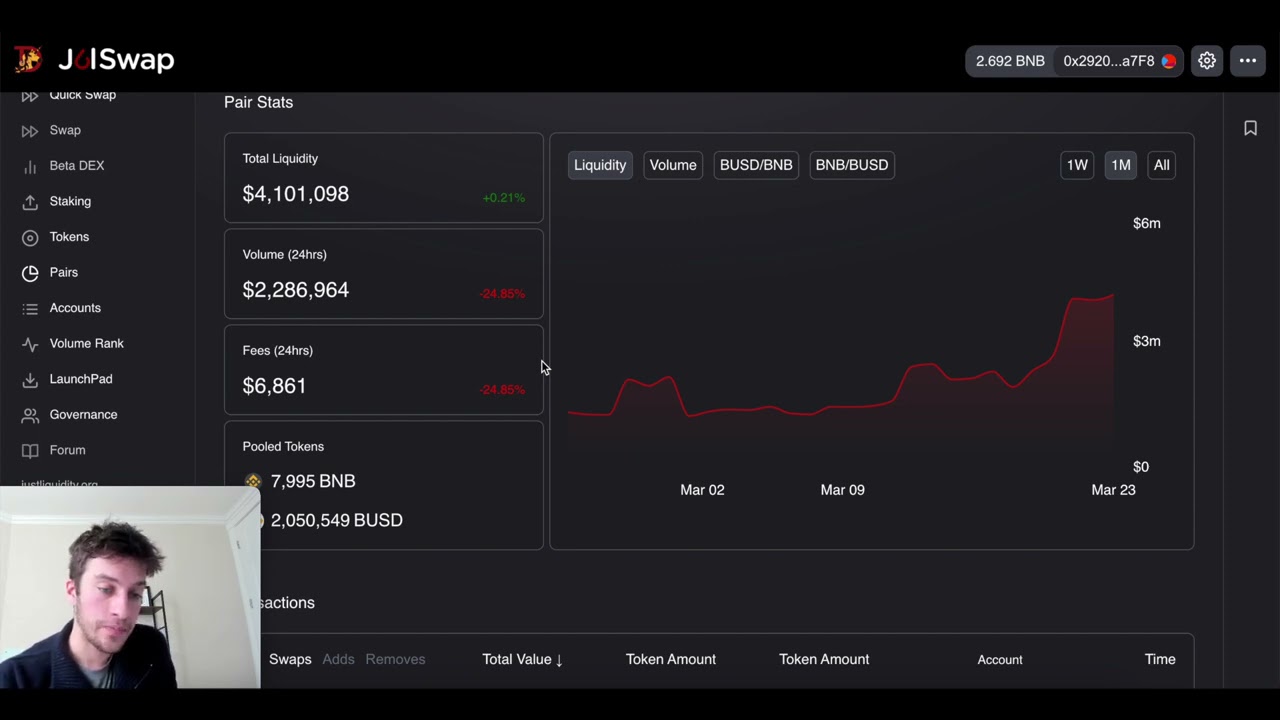
Added:hello everyone and welcome back in today's video we're going to talk about the curve wars now if you're not familiar with the curve wars at a high level it's essentially a protocol to protocol battle to control crv emissions and of course crv is the governance token of curve now i'm going to go over what all of that means and i think the best place to start is on curves homepage here so you've probably been here before and you've noticed that curve has all of these liquidity pools available here so let's just take the mim pool for example you can see here that the rewards apr is between 6.11 and all the way up to 15.27 of curve rewards so there are two considerations here the first is what determines the rewards level for this pool and the second is what determines what range of this apr you're going to receive as the user so to answer the first question on how curve decides to distribute rewards for each pool they hold a gauge vote every week now this gauge weight vote essentially allows curve governance to direct rewards in the curve token vcrv holders that's vote escrow curve holders which i'll get into in just a minute vote on where the new rewards will go for each pool you can see here on this pie chart that there's a ton of different pools that are incentivized and you can see the various percentage of rewards that go to each pool so here's for access 16.28 that's a large one there's mim very large at 24.64 and so you can see here that different pools get different votes allocated to them which controls the rewards so now remember going back to that home page you remember there was a range of rewards that you as the user could receive and the protocol decides that based on how much curve you've locked up on the curved platform so you can see here on this curve page let's just say i have a thousand crv in my wallet i could decide to lock those crv for one month three months six months a year and all the way up to four years which is the max now the more curved tokens i lock up which become vote escrow curve tokens that means i'll get a higher boost for providing liquidity on the platform in addition it also means i'll be able to control where the rewards go for each pool so if i lock up a ton of ve crv that means i'll have a lot of control over where the platform allocates curve emissions now these are the fundamentals of the curve wars you can see that the more crv you hold the more ve crv you can get which means you can control emissions on curve and get boosted rewards now this means that different projects want a ton of curved voting power just because that means they can control emissions get a ton of revenue etc so let's visualize what this actually looks like on dune analytics well if you look at this graph here in the middle left you can see that convex's share of ve crv has been steadily increasing over the last several months right now this dashboard is saying that convicts owns 43 of all ve crv which means convicts has a ton of power over curve emissions and curve boosting so now that we've seen that convicts holds a lot of ve crv let's take a look at how that actually impacts emissions and rewards for convex users so i've just pulled up the mim pool here you can see convex is giving users about a 22.7 percent apr on mim stablecoin deposits and if we compare that to curve here we'll find the minpool and you can see that mim is only allocating between 6.25 to fifteen percent in rewards on curve if you stake directly on curve so a couple things are happening here if we go back to the convex pool part of this apr is coming from the curve boost meaning that convex is able to boost curve rewards with its locked up ve crv and in addition convex is minting and distributing cvx or convex governance token rewards which stack on curve rewards all of this creates a flywheel effect where a lot of liquidity goes through convex which means convex is now able to capture more crv so because convex has all of this locked up ve crv they've now said well what if we let the community decide with the cvx governance token where we want to allocate our ve crv votes this also opens it up to other protocols to basically bribe convex holders to vote to incentivize the pools they want them to vote on so you can see here on convicts's site you can lock up the convicts token for a period of 16 weeks and that gives you voting power over convicts's ve crv now a lot of different protocols want incentivized liquidity for their tokens so they're now bribing cvx holders to vote for their curve allocations so we can see this on the vodium tab unfortunately there are no active gauge proposals right now so i can't show you that but there's this website lama air force where you can see what the bribes have amounted to last week so on this website here we can see how much these protocols are actually paying convex holders to vote for their curve pools you can see frax is the biggest briber here with about 7.5 million dollars of bribes in the last round now the total number of bribes was about 20 million in the last round which equated to 87 cents for every locked up convex token now this is actually a lot of revenue for convex holders so 87 cents every two weeks per convex comes out to about a 50 apr and you can see that because the convex finance token is priced at about 47 now and they're getting bribes that equate to about a 50 apr over one year so what's the rationale for these protocols spending all of this money to broad convex holders well i found this great article which i will share you all with you all in the link below and i highlighted one very important part which is that currently if a protocol pays one dollar in bribes to cvx holders that underlying pool receives four dollars and fifty cents in curve emissions what that essentially means is that each dollar that a project pays out to incentivize convex holders to vote for their pool they're getting about three dollars and 15 cents in curve emissions for doing so so it's a profitable activity for different dows and projects i recommend you read the whole article but the big takeaway here is that if they're getting four dollars and fifteen cents per each one dollar bribe the competition between bribers is going to increase which means more rewards to convict holders so in my opinion this is all very fascinating but i think it could get even more exciting over the next few months just because of what curve v2 offers so curve v2 was announced several months ago but essentially you can see here the tl dr is that curve v2 allows for non-pegged assets to be paired so you don't need to just pair stable coins on curve or pegged assets like eth and stake teeth you could actually do pools with very different price ranges the best example of this is the tri-crypto pool which holds btc eth and usdt none of those are meant to be pegged to the same value but curve can actually support the pegs around those different assets and concentrate liquidity around the price this is obviously in large competition with uniswap v3 because they're concentrating liquidity and curve is just kind of gearing up for that now i they only have a few pools here that support this v2 model one of them is notably the eth convex pair so ethan convicts are obviously not pegged but curve can support concentrated liquidity there and of course they also have the tri-crypto pool that i mentioned before so what i think we're going to see in the future on this vodium platform is that non-pegged asset pairs are going to be bribing convex holders to vote to incentivize their pair on this channel i've talked a lot about how liquidity mining is going to change and i just don't think it makes sense for a project to pay for its own liquidity mining campaign when they could just bribe convex holders to incentivize a curved pool based on the data we've seen there's just a lot more value there so how can this whole narrative fall apart what are the big risks here well in my opinion the core risk is really the curve dow tokens price once that price starts to go down it's less profitable for people to bribe convex holders for people to lock up crv and really try to get those curve emissions see curve has created this kind of flywheel effect where as long as the curve price is doing well the emissions are valuable but if this core token starts to go down in price then really there's no point of trying to get all of these emissions if we went into a multi-year bear market i would be really curious to see what happened to the curve token if its only purpose is to direct where the curve rewards go but the curve rewards are no longer valuable well what's the point of it then now of course you could argue that curve governance allows you to potentially get fees from the platform but i think the fees aren't a raise to the bottom and it's probably not going to be a sustainable model going forward i don't think the fees from the curve platform can justify a 21 billion dollar fully diluted valuation at least not yet and not in the near term now the other risk here which i think is much less of a problem is if a uniswap starts taking the market back with their concentrated liquidity platform uniswap is a share of stablecoin volume which again is most of curves volume has been growing i think the real catalyst here would be if uniswap decided to incentivize that liquidity if they did that they could start taking even more market share from curve which would of course depress the price of the crv token and just make this whole flywheel less attractive that said uniswap governance has been traditionally non-existent and the uni treasury is really just a slush fund for other defy initiatives so i don't really think that's a big threat again the price of this crv token is going to be the core metric to look at for the health of the curve wars as of now i would say the curve wars are definitely bullish for curve and convicts as we saw earlier it's profitable to bribe convicts holders so i suspect bribes will continue to increase now i know we covered a lot here so i just want to remind you all that we have a great discord community where we're always discussing these things which is going to be linked below in addition there's a link to try nancy now below as well so feel free to check out nansen if you want to look at the analytics behind these tokens with that said i want to thank you all so much for watching and have a great day
Up Next

Understanding Curve Wars: CRV vs CVX Governance
@CryptoTube
3.3K views•2022-01-03

Hybrid Key Establishment in Production: Post-Quantum Cryptography
@durumcrustulum
14.7K views•2025-08-27
Operational Security Essentials: A Guide for Hacktivists (OPSEC)
@hitbsecconf
157.4K views•2012-11-26
Understanding Ethereum: A Comprehensive Beginner's Overview
@99Bitcoins
3.1M views•2018-06-26
Related Study Plans & Knowledge Roadmaps
Structured learning paths in Blockchain & Crypto