















Decentralized exchanges (DEXs) are non-custodial, trustless platforms that enable peer-to-peer cryptocurrency trading without centralized intermediaries. Three major DEX protocols—Uniswap, Curve Finance, and Balancer—each employ distinct mechanisms: Uniswap uses an Automated Market Maker (AMM) with constant product market maker model for ERC20 assets, enabling users to provide liquidity and earn fees but risking impermanent loss; Curve Finance employs bonding curves to minimize slippage for stablecoin trading, offering lower impermanent loss risk and governance token rewards; Balancer allows flexible asset allocation in liquidity pools up to eight tokens, enabling users to earn fees while maintaining custom portfolio exposure. Users can provide liquidity to earn trading fees and governance tokens, though they must understand impermanent loss risks and smart contract vulnerabilities.
Decentralized Exchanges Compared: Uniswap, Curve, and Balancer
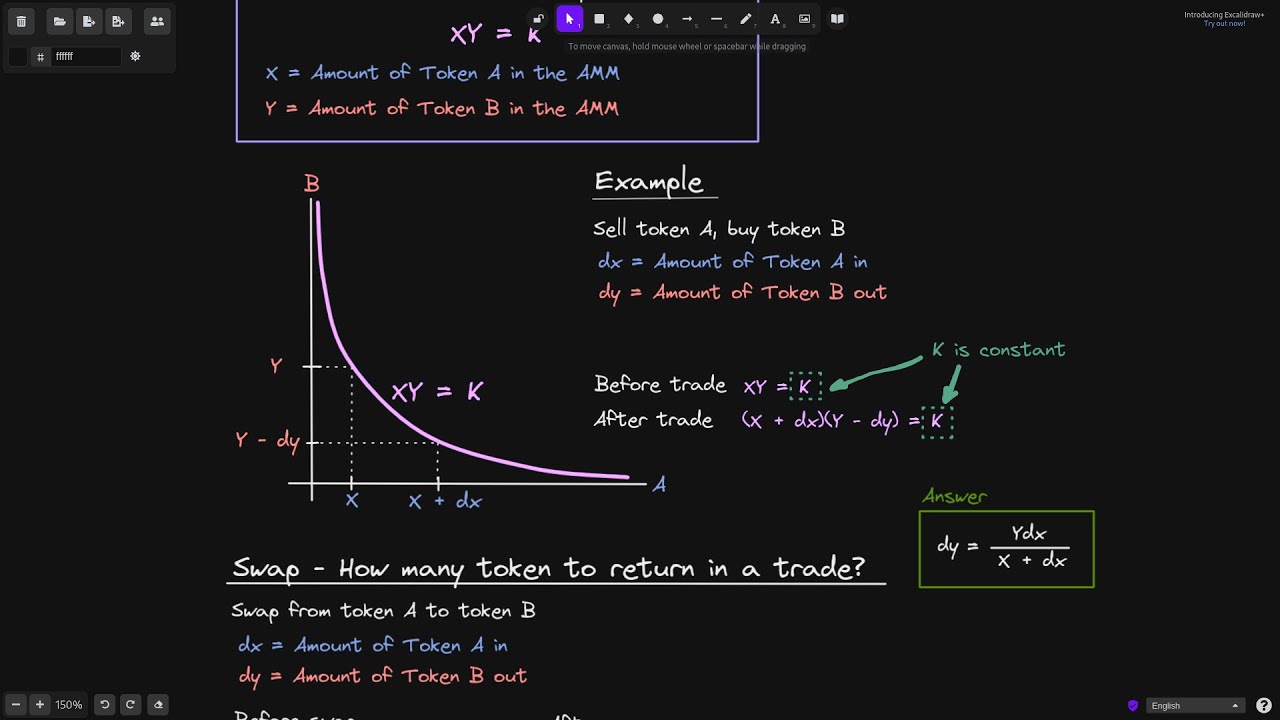
Added:something that's so liberating about decentralized finance is that we can exchange cryptocurrency in a completely decentralized way no need for exchanges no need for custody no need to trust but despite the defy space being a relatively new phenomenon there are already several alternatives when it comes to decentralized exchanges each of them has its own unique pros and cons my name is guy and in this video i'm going to take you through three of my most favorite d5 dexes not only will i give you a step-by-step guide on how to use them but i'll also be explaining their unique protocol designs and comparing them side by side and finally i have some of my own personal tips on how to use these dexes which you won't want to miss [Music] a few things that i need to get out of the way before we get cracking although i may be a crypto guy i am not a financial advisor so clearly this cannot be construed as financial advice think of it as a handy educational resource to help inform your own research and then if you're new to the channel welcome aboard i cover everything crypto this includes news reviews and alternative views so if you want some hot content served daily be sure to hit up that subscribe button oh yes and don't forget to ping that bell to get these the moment that they hit the tube okay that's enough of the intros let's get this defy dex duel started before i dive into my top decks i need to give a bit of an overview of what exactly dexes are if you're already a d5 diva and know all about it then feel free to jump to my picks in the timestamps below so a decentralized exchange is a platform where you can exchange two different cryptocurrencies without the need for a centralized entity they are non-custodial and trustless non-custodial because unlike coinbase or binance your funds are never kept on them trustless because unlike shapeshift or changely you don't need to trust that they will honor an exchange essentially when you make an exchange on a decentralized exchange you're doing so with another trader in a peer-to-peer fashion if these are ethereum-based erc20 assets as is the case with 90 of d5 then these are done on chain this means that you're transferring the asset in a transparent way on the ethereum blockchain these dexes are also built as decentralized applications or dapps this means that in order to interact with them you'll have to use a web 3.0 wallet on your browser these include the likes of metamask trust wallet coinbase wallet etc these wallets will then be used in order to sign transactions and authorize the dapps my personal preference for all of this is metamask which is compatible on most modern web browsers i also use my metamask in conjunction with a hardware wallet like a ledger this means that my keys are left secure in cold storage on my hardware wallet however if i need to sign transactions through it it's just a matter of connecting it to metamask and making sure to authorize the transactions okay that's all well and good but what are the benefits of using a dex well the first and most important is that you always remain in control of your keys you and you alone can determine exactly what you want to do with your crypto when you use a centralized exchange you have to trust that not only is there security up to scratch but also that they will honor all of your withdrawal requests another great benefit of these decentralized exchanges is that they're anonymous you don't have to submit any kyc docs this is great for those privacy hawks that would prefer not to entrust their documents with those aforementioned centralized exchanges heck even if you use a non-custodial exchange option like a changely or a shapeshift they often do require kyc documents in order to complete a transaction i mean this is not really the fault of an exchange they're required by law to know their customer and fight money laundering however with a decentralized exchange there's no one controlling it and the regulators can't really turn to anyone to request this enforcement one more benefit of these decentralized exchanges is the opportunity to earn income yourself you can do this by providing liquidity to their trading pools and thereby helping in the exchange of cryptocurrency you're awarded not only in the form of trading fees but you can also earn liquidity pool tokens which are paid out to those who are supplying the liquidity i'll cover all this in a bit all the benefits mean that these dexes have become insanely popular for example in july dex has made up almost four percent of centralized exchange volume more recently 24-hour east trading volume on dexes broke half a billion dollars i mean take a look at this graph this is the total trading volume on dexes since january of this year it's pretty damn mind-blowing if you ask me so that's it for our overview of dex's it's time to jump into the top decks on the market currently and that is uniswap uni swap launched back in late 2018 before d5 was even a thing it started without any sort of fanfare public sale or governance tokens heck even to this day uni swap does not have its own token so what is uni swap well it's a decentralized exchange that has done away with the concept of order books entirely it is what is termed an automated market maker when you want to trade on uni-swap you'll enter the amount that you would like to trade and uni-swap will provide a rate this exchange is facilitated through the use of global liquidity pools for erc 20 assets it's with these pools that uni-swap is able to create a unique market for any two assets sounds pretty simple but the way that uni swap is able to do this is pretty ingenious it uses what is termed the constant product market maker model basically uni swap is able to provide liquidity by adjusting the price of the order up based on the size relative to the pool of liquidity of course this will lead to significant price slippage on the order if there are smaller pools however this has the benefit in that it ensures that the pool never runs out of liquidity the user also has the ability to specify a max slippage amount that you're willing to accept don't let the complicated order procedure fool you though uni swap is amazingly easy to use the user interface has to be one of the most simple and uncluttered i've seen in crypto so far this is the ui of uniswap version 2 which was launched a few months ago as you can see all you need to do is connect your web 3.0 wallet and you're ready to switch your tokens as you can see over here there are two options you can either do the swap or you can pool let's start on the swap function this is the feature that you'll use when you want to exchange two erc20 assets you'll enter the amount that you'd like to trade over here below the trade you'll have all of the order parameters you'll see the potential price impact of the trade the liquidity provider fee as well as the route the order will take if any oh and by the way up in the top right here you have the option to further customize your order you can set the maximum slippage amount that you're willing to accept as well as the time that you're willing to wait for the transaction to execute i should also point out that you have the option to forward on the transaction to an external address as well this can be done with this add ascend feature over here when that is all said you can approve the spend and transaction on your meta mask this will then do the swap according to the parameters that you've set okay so that's how the swap feature works but let's talk about that pool option shall we at uniswap you can also provide liquidity to the pools that other traders can use in order to facilitate the transactions the smart contracts will then use the pooled assets to swap the tokens traders are looking to convert as a liquidity provider at uniswap you'll get a share of those liquidity provider fees that they charge all of their traders this is a pretty neat way to earn additional returns on your crypto holdings if there's a lot of trading activity however there is something very important that i need to illustrate here basically if you're supplying liquidity to a pool on uniswap then you run the risk of impermanent loss this is basically a term that's used to describe the opportunity cost you could incur due to a relative change in the composition of your pooled funds so what do i mean by that well when you supply funds to uni swap you have to do so that you have the exact dollar equivalent of either asset so let's say you've supplied one hundred dollars in ether for one hundred dollars in bat so that they each make up fifty percent of your share of the pool however as trading takes place in the pools this composition may shift either way towards one or the other this means that your relative waiting may change and hence you're not in control of your allocation we'll come back to this impermanent loss issue in the next decks so then assuming that you're ready to start supplying liquidity you will hit pool and add liquidity here you'll then select the tokens you'd like to pool for you can either supply to a pool that already exists or even start your own pool if you want by importing the token in order to pull you'll have to provide them in the same dollar value proportion if all good then you'll have to first unlock your tokens and then approve to the pool and you're a pooling do keep an eye on your proportions in the pool though as you do not want to fall victim to that impermanent loss if you can help it there are a few other features and functions that you may want to know about with uni swap i won't go over them here but i've covered it in depth in my full uni swap review which you can watch right here time to move on to my next decks though curve finance is another dex that i just can't live without like uni-swap this is a decentralized exchange that makes use of liquidity pools however it facilitates high liquidity with minimal slippage for stable coins this is all possible through the use of what are termed bonding curves the exact mechanics of it are beyond the scope of this video but it's basically a method to minimize price slippage you can see in the below diagram that the price impact from swaps on curve is less pronounced than it is on uniswap now something that you may find quite interesting about curve is this user interface it's much more complicated and nowhere near as clean as that of uni swap but i do personally like it a lot it harks back to the early web days when i was first playing around on the internet as a wee lad despite this interface it's pretty damn simple to do a trade on the home page you have all of the tokens that you can swap between as you can see it consists of stable coins and pegged bitcoin as you can see below the swap function i have more functionality around the order that i can adjust this is through the advanced tab down here below similar to the case with uni swap you can set the max slippage restrict particular order routes and customize your fees you then hit sell and the dex will ask you to confirm that on your web 3.0 wallet although you do have the function to set your max slippage on these orders you will have much less of an impact because of their unique bonding mechanism so this is all well and good but perhaps one of the coolest things about curve finance is what you can do on the other side of the trade you can supply some liquidity and farm some yield yup for those of you who've watched my previous video on youtube you will know that i have already been tending some crops in the d5 fields i've been supplying liquidity to curve pools in order to generate token rewards these are token rewards that are on top of the fees that one earns from just providing the liquidity i'll get to all that though let's start with the basics much like at uni swap when you supply liquidity to a pool you're providing users with an opportunity to swap their tokens one for another however an interesting thing to note about doing so on curb is that you don't have too much risk from impermanent loss this merely comes down to the types of assets that you're providing liquidity for given that they're equivalent in price all the time there's no difference in your portfolio holding if you have more of the one than the other for example if you hold 80 usdc and 20 packs your portfolio value will be the same if you had 20 usdc and 80 packs the two are equal to each other make sense so far okay so you can supply liquidity for traders on curve but there have been a number of unique incentives that are provided by project teams in order to increase intermarket liquidity for their tokens compound finance started this craze with their comp governance tokens since then we have had a veritable bazaar of liquidity mining tokens that have been released on the market in fact if you head on over to the curve finance homepage then you'll see all of the liquidity pools at the moment which you can join as you can see on top of the generalized apy you can expect from supplying liquidity you can also earn these additional rewards wi-fi ren snx and balances token i'm actually supplying liquidity to this pool over here of synthetic bitcoin i want to keep exposed to bitcoin as well as earning some returns on it not only am i receiving snx and ren from the balancer pool tokens but i'm also earning balancer rewards you can supply any of the other pools there including the us dollar stable coin pools if you would like to hold the dollar value of your investments so if you wanted to supply liquidity to one of these pools you can do so with the deposit button right over here this will take you to this screen here when supplying the coins you can do so in a proportion of your choosing however because you're at no risk of impermanent loss i would just supply them in equal proportion then once you're okay with the parameters in terms of gas and contract approvals you can hit deposit and stake this will unlock the crypto from your wallet and stake it on the curve contract there is one more thing that you want to consider here and that is that curve also had just released their own governance token crv these crv rewards are distributed to all of those that are supplying liquidity to curve pools it's also given to those people who've been providing liquidity prior to the launch i've been providing liquidity to the pools since june so i've accumulated some crv myself of course most of these are vested and will be released slowly over the next year so yes that's just a quick overview of providing liquidity on curve finance there's a heck of a lot more to go over but i need to move on if you want more on it there are a bunch of handy resources below on to my third and final dex and it's balancer balancer is a pretty ingenious dex and crypto asset management platform it acts as an automated portfolio manager liquidity provider and price sensor so it's really a bit of a swiss army knife dex one of the main benefits of balancer is the way they approach that problem of impermanent loss whereas at uni swap you run the risk and at curve you're supplying stable coins at balancer you can supply liquidity of any crypto asset in any proportions and get those rewards users can deposit any asset that they desire and still earn liquidity fees on it they can also adjust their allocations to suit their own individual needs this makes balancer a great solution for d5 users who want to earn passive income on ethereum-based assets while retaining exposure to the underlying asset the mechanics of how this work is pretty involved i've linked to the white paper below if you fancy some light bedtime reading now given that this is one of the primary features of balancer let's take a look at it shall we head on over to balancer.exchange and connect your wallet once that's done you will hit add liquidity this will pull up the pool management dashboard now there are plenty of public pools that you can join now over 1200 and counting this means there will most likely be a pool that is well shaped according to your desired allocation if you want to narrow it down you can filter for your desired asset over here i want to hold ether so i put in wrapped eath oh for those of you who don't know what weath is it's just a wrapped ether token that was minted according to the erc20 standard anyways i can scroll through all of these pools and decide which one i would like to supply liquidity for balancer supports pools of up to eight different tokens so it gives you a hell of a lot of scope for different allocations i suggest examining the pool for key aspects like balance volume and fees if you wanted to you could also start your own pool if the allocation that you want is not available a pretty neat feature if you hold an exotic erc20 portfolio in weird allocations once you've found the pool that you'd like to supply liquidity to you just hit add liquidity over here you'll need to set up your own proxy contract in order to manage liquidity on balance in the long term you only need to do it once though so don't worry about those exorbitant gas fees once that's set up you can enter the desired amount under the deposit amount field and unlock the listed assets so balancer is able to access them lastly submit the final transaction by clicking add liquidity once in a pool users can remove liquidity at any time by clicking the remove liquidity button so that is how you supply liquidity to balancer pools you'll notice how the pool will keep that allocation and you will have full exposure to the underlying asset while earning those returns oh and there's one more thing that i want to add balancer has its own governance tokens that they've also been distributing as a reward for providing liquidity this is released on a weekly basis of 145 000 bal tokens these are government tokens like the curve rewards or compounds comp and are sometimes difficult to value however if the performance of governance tokens over the past two months is anything to go by they can be pretty damn valuable i encourage you to read more about the distribution in the blog post that i've linked to below now although these smart liquidity pools are a primary feature of the balancer protocol there's also a pretty effective dex function on the balancer exchange head on over to balancer.exchange and you'll see the following interface clean uncluttered and simple you'll just have to select the asset that you'd like to swap and the resulting token you would like to receive once that's done you'll see the following interface with the exchange rate and the expected price slippage as with the other decks above you can define the maximum price slippage that you're comfortable with something else that's pretty neat is that you can click this drop down here and it will show you exactly how the order has been optimized using those balancer pools basically balancer uses smart order routing in order to find the cheapest exchange options between these different pools once you're comfortable with your order parameters then you can hit swap confirm the action on your web 3.0 wallet and the swap will process and exchange the tokens that's it folks my top three dex platforms now there was a lot more that i wanted to cover but the video was getting long i will come back to each of these with a more comprehensive video later on in all honesty i use all three platforms interchangeably and they serve unique purposes i encourage you to read up on them and understand their quirks and features before lugging a lot of crypto into any i also think it's really important to point out that despite their popularity there are still challenges and risks for one gas fees are making a lot of these d5 protocols incredibly expensive to use this means that it excludes a lot of the people who prefer to start with smaller amounts of crypto not ideal when eat 2.0 hey then of course you have your risks when you dabble in the d5 waters you are taking full responsibility for it hacks do happen smart contracts do have bugs pools do get drained and manipulated these are all tail risks that you should be aware of if you're going to be supplying liquidity the main precaution you can take is limiting your risk to any one singular pool and of course for the love of satoshi not investing more than you can afford to lose and there we have it my overview and review of my top three dexes now i need to hear from you what are your thoughts on these exchanges and protocols any pools that you guys are supplying liquidity to file comments below and of course thank you so much for watching if this video is helpful then help a brother out smash up that like button and don't forget to subscribe i'll be back at you good people with another video real soon thanks for hanging in there till the end i really appreciate the support now that i have you i want to share something quite important with you have you heard of my weekly newsletter it's my way of succinctly crystallizing my views on the crypto market for the week ahead nowadays i also share unique insights on particular projects as well as juicy coin tips so do you want to join well now is the time head on over to the description down there is a link to my sign up form when you're on that page all you need to do is enter your email and hit submit that's it you will receive a confirmation email upon which you are locked loaded and ready to go i'm currently working on my next email and that is one you won't want to miss you
Up Next

Impermanent Loss in Crypto Liquidity Pools Explained
@WhiteboardCrypto
287.3K views•2021-05-27

Hybrid Key Establishment in Production: Post-Quantum Cryptography
@durumcrustulum
14.7K views•2025-08-27
Tokenized Assets: The Compliance Trap Reshaping Crypto's Future
@CoinBureau
80.6K views•2026-03-05
Understanding Ethereum: A Comprehensive Beginner's Overview
@99Bitcoins
3.1M views•2018-06-26
Related Study Plans & Knowledge Roadmaps
Structured learning paths in Blockchain & Crypto