






















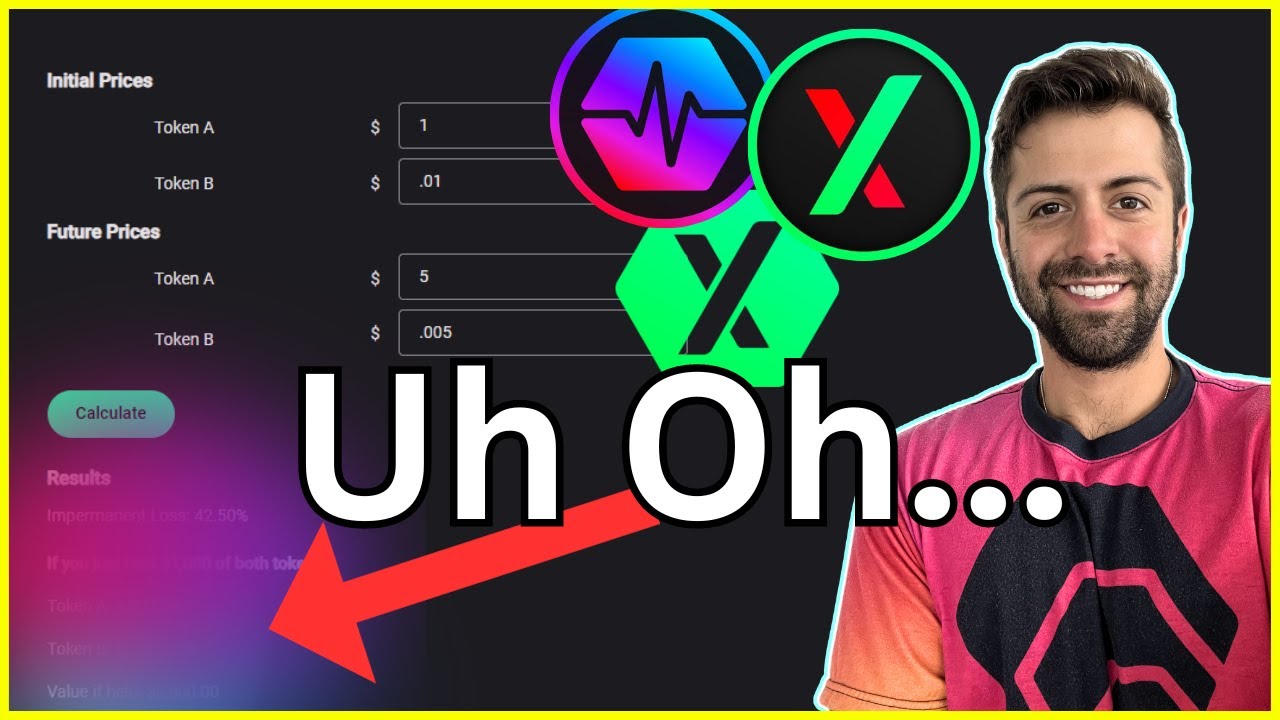



Impermanent loss is the unrealized loss that liquidity providers experience when the value of their position in a liquidity pool becomes less than what they would have earned by simply holding the underlying assets; it occurs because automated market makers rebalance pools during price changes, causing providers to receive fewer of the appreciating asset and more of the depreciating asset, with the loss becoming permanent only when they withdraw their liquidity.
Impermanent Loss in Crypto Liquidity Pools Explained
Added:Understanding the fundamentals of Decentralized Finance (DeFi) and how Decentralized Exchanges (DEXs) operate.
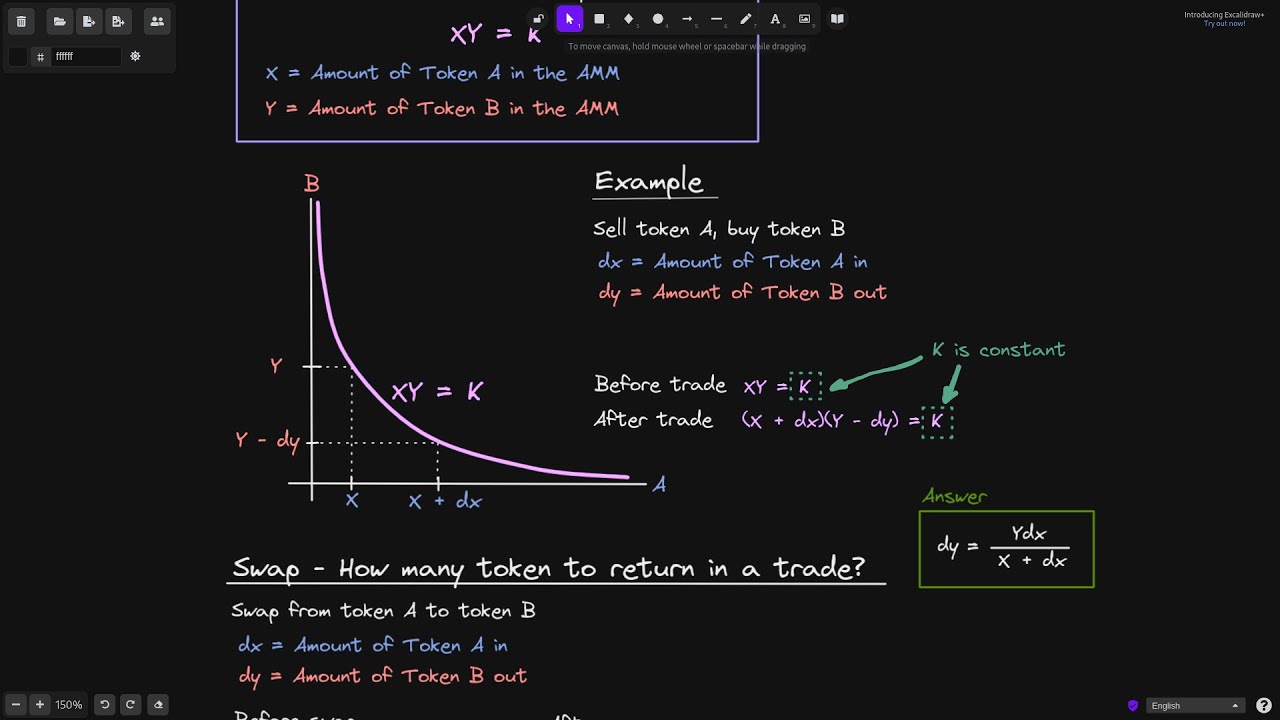
The core mechanics of Automated Market Makers (AMMs) and the Constant Product Formula (x * y = k).
How Liquidity Pools function, including the process of depositing equal-value token pairs as a Liquidity Provider (LP).
The concept of arbitrage and how traders exploit price discrepancies between different markets to align pool prices.
Analyzing Concentrated Liquidity models (e.g., Uniswap v3) and how range-bound liquidity affects impermanent loss risk.
Strategies to mitigate or hedge impermanent loss, such as using options, dynamic hedging, or participating in single-sided liquidity pools.
Calculating comprehensive LP profitability by balancing accumulated trading fees and yield farming rewards against impermanent loss.
Exploring alternative AMM designs, including stableswap invariants for low-slippage stablecoin trading and multi-token weighted pools.
287.3K views11.7Klikes8:17Original Release: 2021-05-27
what is impermanent loss impermanent loss is the unrealized loss that occurs when your share of a liquidity provider position becomes uneven compared to its original position if you knew what that meant great you don't have to watch this video however if you're as clueless as we were a few weeks ago stick around and you'll be able to explain this concept of impermanent loss to your grandmother here at whiteboard crypto we spent a lot of time and resources creating these amazing animations so you can sit back relax and understand the topic with the help of our analogies stories and examples let's dig in first off impermanent loss only happens to people who provide liquidity to a liquidity pool if you have no idea what a liquidity pool is you'll need to watch our video on how liquidity pools work to fully understand this topic because it can get complicated very quickly secondly impermanent loss is easiest to explain through examples so we're gonna go through two examples in this video let's say you put up one hundred ethereum and ten thousand dollars into a liquidity pool now most liquidity pools want there to be a 50 50 ratio whenever you initially start your deposit so we can reasonably assume the price of one ethereum at this point in time is one hundred dollars so there's ten thousand dollars worth of a stable coin and ten thousand dollars worth of ethereum that you are putting into this liquidity pool so you take that total twenty thousand dollars and put it into the liquidity pool hoping to gain a profit on some of the fees that will happen within the pool time for our first example let's say that the price of ethereum rises to 110 dollars well a trader can come along and realize that he can buy ethereum at your liquidity pool for 100 and then sell it to coinbase for 110 so he keeps buying more and more and the algorithm will keep charging him more and more until he stops making money that's how these decentralized exchanges work you pay more and more for each asset that you want to buy so that way it never runs out of the asset to sell you even if it gets down to very little the price will start to go up exponentially however in our case the asset was much cheaper than another exchange so it created what we call an arbitrage opportunity for a trader you can watch our automated market maker video for a better explanation of how this specific algorithm works but if we do the math we figure out that he was able to give 488 dollars and buy 4.652 ethereum at least until the liquidity pool price was also 110 if he bought any more ethereum he would be losing money so he immediately sold his cheaper ethereum that he bought from us to coinbase for 511 dollars and 82 cents which means he made a profit of 23.82 simply by buying and selling between two different liquidity pools now let's take the stance of being that liquidity provider this means there is now 10 488 dollars of the stable coin in the pool and 95.347 ethereum in the pool so if we take 95.347 and multiply it by 110 because that's the going price of ethereum we get 10 488. so if we take 10 488 of our stablecoin and 10488 of our ethereum and add them together we get a total value of twenty thousand nine hundred and seventy six dollars so the liquidity provider now has a total value of twenty thousand nine hundred and seventy six dollars meaning he made a nice 976 dollars because ethereum went up he made some pretty decent money today however to calculate impermanent loss we need to calculate how much money he would have had if he didn't invest in the liquidity pool and just held his stablecoin and ethereum in his wallet instead so obviously he still would have had his initial ten thousand dollars but what about if he held his 100 ethereum well now that 100 ethereum would be worth eleven thousand dollars so he would have had a total of twenty one thousand dollars if he just held it this means we can calculate his impermanent loss to be twenty one thousand minus 20 976 which is 24.
so in short this liquidity provider would have made more money if he just held on to his ethereum and stable coin now 24 might not seem like much but imagine a similar scenario where the price jumps twenty percent instead of ten percent or the price dropped by half in short impermanent loss is caused when the difference between two assets in a pool is changed as this change increases so does the impermanent loss so if ethereum goes back to a hundred dollars then the impermanent loss is basically cancelled and there's no one permanent loss because both assets would be the same as when the liquidity provider initially invested them they call it impermanent loss because it only becomes permanent whenever you cash out your liquidity until you do that there is still an opportunity for the loss to normal itself out so to sum it up impermanent loss is the loss that you get when you have less money by investing in a liquidity pool compared to the value of the assets that you would have had if you just held them let's consider another example this time we're gonna start off with again a hundred ethereum and ten thousand dollars in a liquidity pool however ethereum price drops from one hundred dollars to sixty dollars on binance so another trader comes along he buys ethereum of binance and sells it to our liquidity pool starting at 100 and then our liquidity pool keeps buying it at a lower and lower price until the pool hits 60 now i personally know how the algorithm of a constant product automated market maker works and you actually can too if you watch our video on it by using the math we find out that this means the trader gave the pool 30 ethereum so this is important the trader bought 30 ethereum at 60 each at binance which cost them 1800 now let's see how much they made a million dollars divided by 130 ethereum gives us 14 285 which means the pool should have 7692 however it has 10 000. i just want to say that was ridiculous if you want to know what those numbers mean real quick go watch your automated market maker video however this means that the trader received the difference for giving the pool 30 ethereum in short the trader bought ethereum at eighteen hundred dollars and sold for two thousand three hundred and seven dollars which means he earned five hundred and seven dollars that's pretty decent for just buying and selling in a couple minutes now let's take a look at our liquidity provider they have 130 ethereum at a market price of six hundred dollars this means that the value of ethereum and their portion of the pool is seven thousand eight hundred dollars and the cash value of the pool is seven thousand six hundred ninety two this means the value of the assets in the liquidity pool equals fifteen thousand two hundred ninety two which is a sharp loss from the initially invested twenty thousand dollars now let's calculate their permanent loss if they didn't invest those initial assets they would have had 10 000 cash and 100 ethereum which the 100 ethereum would now be worth 6 000 and doing some simple math we realized they would have had 16 000 if they didn't invest in a liquidity pool so sixteen thousand dollars minus fifteen thousand two hundred ninety two is an impermanent loss of seven hundred and eight dollars so by now we hope that you're understanding a little bit more about how impermanent loss works essentially what you need to know is that it's good for any liquidity provider when two assets that you are investing in stay roughly the same price when one goes up and the other stays the same the liquidity provider starts to experience impermanent loss and can only recover from that loss if the first asset starts to come down to equal out the liquidity now it gets really tricky when both assets prices start moving in short if they go in opposite directions the liquidity provider starts to lose money very quickly however if they increase at the same rate or decrease at the same rate the liquidity provider may not lose money due to impermanent loss at all and they may just reap the rewards of the profits from the trading fees here is a neat little chart that you can look at to see how much impermanent loss a liquidity provider may experience in terms of how much that asset changes in price as a price of an asset increases past 100 percent of its value to the other asset the impermanent loss grows and as the price of an asset decreases less than 100 percent the impermanent loss also grows so like i mentioned we want the price to be about the same as when we invested otherwise we start to experience some permanent loss so as we end this video we want to let you know that we are actually working on a second video that explains how to reduce or mitigate your risk as a liquidity provider and if you'd like to see that video consider subscribing and leaving a like if you're watching this video in the future and we've already created that second video you can check the link in the description we hope that you enjoyed this video but most of all we hope that you learned something thank you guys so much for watching and we hope to see you in the next one
Up Next

118:22
Uniswap V2 Pair Smart Contract Explained (Part 2)
@casweeney
2.8K views•2022-12-28

52:00
Hybrid Key Establishment in Production: Post-Quantum Cryptography
@durumcrustulum
14.7K views•2025-08-27

8:18
What Is AAVE? Decentralized Crypto Lending and Borrowing Explained
@WhiteboardCrypto
420.6K views•2021-05-25

11:49
Understanding Ethereum: A Comprehensive Beginner's Overview
@99Bitcoins
3.1M views•2018-06-26
Related Study Plans & Knowledge Roadmaps
Structured learning paths in Blockchain & Crypto
blockchain-and-crypto
MPC Wallets: TSS, DKG & Secure Custody
01Foundations of Cryptography & Digital Signatures
02Secret Sharing & Introduction to MPC
03Distributed Key Generation (DKG)
+ 2 more learning modules
24h5 modules
Explore Roadmap
blockchain-and-crypto
ERC-4626: Yield Aggregators & Leverage
01Blockchain, Ethereum, and Solidity Foundations
02DeFi Primitives: Lending, Pools, and Yield Farming
03Mastering the ERC-4626 Tokenized Vault Standard
+ 3 more learning modules
35h6 modules
Explore Roadmap
blockchain-and-crypto
DePIN: IoT Registries, Proofs & Rewards
01Foundations of Blockchain & IoT
02Introduction to DePIN and the Flywheel Effect
03Designing IoT Device Registries & Secure Identity
+ 3 more learning modules
30h6 modules
Explore Roadmap
blockchain-and-crypto
Building EigenLayer AVS: Operators & Contracts
01Blockchain, Ethereum, and Smart Contract Basics
02Proof of Stake and Ethereum Staking
03Introduction to EigenLayer and Restaking
+ 3 more learning modules
24h6 modules
Explore Roadmap