








![How to Stake Crypto Safely! [BEGINNER’S GUIDE]](https://i.ytimg.com/vi/5-QpXFVcjf0/maxresdefault.jpg)


















Liquid staking allows users to stake cryptocurrency and receive liquid staking tokens (LSTs) that can be used in DeFi applications while earning staking rewards, providing immediate liquidity unlike traditional staking where assets are locked for extended periods. Restaking extends this concept by allowing platforms to stake funds across multiple networks simultaneously to maximize returns, though it introduces additional risks including smart contract vulnerabilities, market volatility, fees, and counterparty risks. Popular platforms for liquid staking include Lido, Rocket Pool, and Mantle, while restaking platforms like EigenLayer, Pendle, and Restake Finance enable cross-platform staking strategies.
Liquid Staking and Restaking Explained: LSTs and LRTs
Added:The Proof of Stake (PoS) consensus mechanism and how native blockchain staking secures a network.
Basic Decentralized Finance (DeFi) concepts, specifically liquidity, tokenization, and yield generation.
The concept of 'slashing' and other fundamental financial and technical risks associated with validator staking.
How smart contracts operate on programmable blockchains like Ethereum to lock up and custody assets.
The technical architecture of Restaking platforms (e.g., EigenLayer) and how they secure Actively Validated Services (AVSs).
Systemic risks in DeFi, such as leverage loops, cascading liquidations, and smart contract dependency vulnerabilities.
The impact of dominant Liquid Staking protocols on blockchain consensus-layer decentralization and governance.
Advanced yield-farming and liquidity provisioning strategies using Liquid Staking Tokens (LSTs) and Liquid Restaking Tokens (LRTs).
40.6K views1.6Klikes7:33Original Release: 2024-04-26
imagine you have $500 your car really needs new tires but you just heard about this new stock that you are pretty confident is going to the Moon you think that if you invest your money you could double it to $11,000 but the car tires really can't wait it's quite the Dilemma what if you found out that you could invest in the stock and in return they would give you the same amount of money that you invested but with a built-in promise that you'll return it you could then buy the stock and take out a loan for the money you need for the tires welcome to whiteboard crypto the number one YouTube channel for crypto educ education here we explain topics of the cryptocurrency world using analogies stories and examples so you can easily understand them in this video I'll explain what liquid staking and reaking are how they work and even some places you can do it our attire and stock example is completely fabricated you can't ever know for sure that an asset will rise in price but the concept behind this analogy is a new feature that defi has made possible there are a few key terms you'll need to know to understand the rest of this video we have other videos on all of them that I'll link to in the description but I'll give you a brief overview here defi is short for decentralized finance and it's a term for a new possibility of secure Financial deals these usually involve trading cryptocurrencies but also offer other Financial Services like providing liquidity and staking staking is the mechanism by which people buy a cryptocurrency and then lock it up for a period of time as an incentive to help secure the network in return for behaving they earn a little bit of that crypto as rewards if they misbehave they have something to lose another term you'll want to get used to is liquid basically the ability to move Financial assets is referred to as liquidity when you own a house the value of the house is not that liquid because it would probably take you months to find a buyer write a contract and then actually sell and move out of the house on the other hand cash is very liquid because you can immediately use it to buy things and the last term you'll need to understand is token which refers to a cryptocurrency asset that you can trade or use on dii platforms we have a video explaining the difference between coins and tokens that is linked in the description below okay so now that once you have the basics you probably have an idea of what liquid staking means most simply liquid staking is the ability to stake some crypto and receive tokens in return that you can then use to do other things in defi while simultaneously getting the staking rewards remember how I said at the beginning of this video that you thought you could double your investment that's basically what this is doing so let's give a more practical example say you stake $500 worth of ethereum or eth the liquid staking platform then issues you $500 worth of the staking token let's call it SE so now you've given the platform $500 and they've given you an IOU of $500 the cool thing is that you can sell trade or redeem this IOU at any point in time making it completely liquid before liquid staking the $500 was just locked in the platform and most staking platforms require you to lock up your stake for a week up to 4 years these staked eth tokens what I call IUS are called liquid staking tokens or LST another benefit of liquid staking other than the immediate liquidity is that you don't have to run your own cont complex Hardware when you stake you usually need a dedicated server and internet connection and outages can be costly when liquid staking you do not have this risk you are offering it to someone else who has the equipment to be sure there won't be outages for most liquid staking tokens you just need to hold the token itself to earn rewards no technical expertise required so far you're probably thinking this is too good to be true why would a platform take the risk of letting you basically double your money at least on paper temporarily it's because this solves two other problems the first is securing the network and the second is ecosystem liquidity remember how we said staking helps secure the blockchain if not enough people are staking transactions will be slower the network will be less secure and it will be more centralized but if people are staking that they aren't able to use those assets in the ecosystem to do things like trading and lending and buying so a blockchain needs both people to stake and people to use the network liquid staking solves this problem by letting people do both so doesn't liquid staking create more risk for the Staker too if you are asking yourself this question you are right some of the main risks are number one smart contract risk while they're designed to be secure there's always a chance of vulnerabilities or exploits that could result in the loss of Stak assets number two is Market volatility the value of staked assets can change affecting both the rewards earned and the overall investment the value of an LST can also decouple from the value of the underlying asset for example in the summer of 2022 the value of Ste was lower than the value of eth for complicated math reasons we won't get into here just know it can happen even though it's unlikely it is a risk third is fees transactions on the blockchain cost money fees associated with staking can eat into your returns over time especially if you're frequently moving assets around there may also be fees for using the staking platforms that you should take into account we've seen some fees as high as 15% number four is lockup periods some liquid staking Solutions may have lockup periods during which staked assets cannot be accessed or withdrawn or that you have to return the LST tokens at a certain period of time if you have the tokens in invested elsewhere it could be challenging to meet those timelines you may have realized there's a word we've not covered in this video yet and that's reaking a tool initially built by a protocol on ethereum called Igan layer another whole video could be made about igen layer so we won't get into it too much here but basically igen layer is a protocol built with the ability to stake your native eth or LST tokens across multiple platforms at once it's called reaking because you're staking your funds on a platform and then that platform is taking your staked funds and reaking them where they believe they can earn the most return they also don't just stay on the Chain you deposited them they can Bridge them to other networks as well usually newer networks with low liquidity have the highest yield the tokens you receive when you deposit your funds into these reaking apps are unsurprisingly called liquid reaking tokens or lrts liquid reaking comes with its own risks but it's meant to help provide security to various platforms rather than just one newer platforms with low liquidity usually need the funds the most since they'd be an easy target for po potential attackers they've set it up so that different liquid staking platforms can use igen layer smart contracts to let people opt into this service at the time they first stake their tokens of course this comes with another risk that we didn't mention earlier and that's called counterparty risk when reaking you aren't only trusting one smart contract the staking platform but also the raking smart contract this means there are at least two points of potential failure rather than just one you're also going to be more involved in multiple dii protocols by using lrts and the more using the more risk there is okay so if you've watched this whole thing and understand the risks but still want to know how to get the rewards we'll let you know a few places you can participate but remember no protocol is perfect so this list might not be true in the future as of this video the most popular liquid staking platforms are Lido rocket pool mantle LSP and Stak stone for liquid reaking the most popular are ethery igen layer Pendle and restake Finance it's important if you want to use any crypto platforms to use ones that You' know are actively used and trusted by a large number of people and that have been audited and tested for security it doesn't entirely remove the risk but it helps to know that you aren't the first or one of the first people to put your assets somewhere if you want more info on any of these platforms or anything else we talked about in this video let me know in the comments thanks for watching I hope you enjoyed this video I really hope you learned something and most of all I hope to see you in our next video
Up Next

47:54
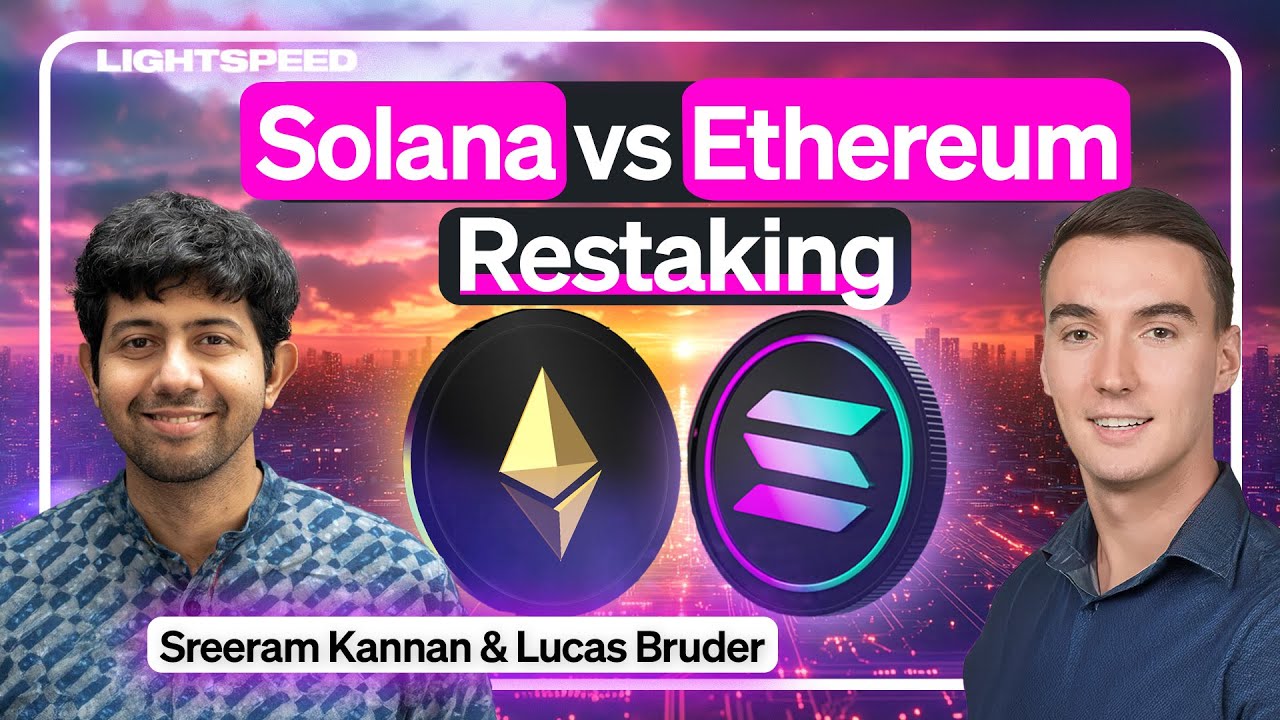
EigenLayer and Restaking Explained by Founder Sreeram Kannan
@nodeguardians
666 views•2023-01-28

52:00
Hybrid Key Establishment in Production: Post-Quantum Cryptography
@durumcrustulum
14.7K views•2025-08-27
8:18
What Is AAVE? Decentralized Crypto Lending and Borrowing Explained
@WhiteboardCrypto
420.6K views•2021-05-25
11:49
Understanding Ethereum: A Comprehensive Beginner's Overview
@99Bitcoins
3.1M views•2018-06-26
Related Study Plans & Knowledge Roadmaps
Structured learning paths in Blockchain & Crypto
blockchain-and-crypto
MPC Wallets: TSS, DKG & Secure Custody
01Foundations of Cryptography & Digital Signatures
02Secret Sharing & Introduction to MPC
03Distributed Key Generation (DKG)
+ 2 more learning modules
24h5 modules
Explore Roadmap
blockchain-and-crypto
ERC-4626: Yield Aggregators & Leverage
01Blockchain, Ethereum, and Solidity Foundations
02DeFi Primitives: Lending, Pools, and Yield Farming
03Mastering the ERC-4626 Tokenized Vault Standard
+ 3 more learning modules
35h6 modules
Explore Roadmap
blockchain-and-crypto
DePIN: IoT Registries, Proofs & Rewards
01Foundations of Blockchain & IoT
02Introduction to DePIN and the Flywheel Effect
03Designing IoT Device Registries & Secure Identity
+ 3 more learning modules
30h6 modules
Explore Roadmap
blockchain-and-crypto
Building EigenLayer AVS: Operators & Contracts
01Blockchain, Ethereum, and Smart Contract Basics
02Proof of Stake and Ethereum Staking
03Introduction to EigenLayer and Restaking
+ 3 more learning modules
24h6 modules
Explore Roadmap