DePIN: IoT Registries, Proofs & Rewards
Learning Goal: Design, build, and deploy a Decentralized Physical Infrastructure Network (DePIN) from first principles. Master the integration of physical IoT hardware identities with on-chain registries (ERC-721/ERC-6551), implement robust Proof of Physical Activity (PoPW/PoC) verification layers using decentralized oracles, and architect secure token emission mechanics powered by Burn-and-Mint Equilibrium (BME) models and reward-distribution smart contracts.
Prerequisites
- Basic familiarity with command-line tools and software environments.
- Introductory understanding of JavaScript/TypeScript and web architecture.
- Basic concept of decentralized ledgers (beneficial but covered in Module 1).
Estimated Study Time
- Total Estimated Hours: 30 Hours
Module 1: Foundations of Blockchain & IoT
Establish the core definitions of blockchain technology, public-key cryptography, EVM smart contracts, and the mechanisms through which physical IoT hardware captures and transmits data to open ledgers.

- Why this video: An intuitive 2D animation that introduces blockchain basics. It models decentralized ledger systems, block structuring, and cryptographic hashing, explaining how consensus keeps data immutable and transparent without intermediaries.

- Why this video: Clarifies the physical endpoint layer of the DePIN stack. It outlines how IoT sensors collect data from the environment and transmit it across networks without human intervention, setting the foundation for physical proof systems.

- Why this video: A comprehensive deep dive into Solidity and EVM mechanics. It steps through variable declaration, state modification, and contract architecture—skills necessary for writing registries and automated payout structures.
Knowledge Checkpoint
- Differentiate between a decentralized, cryptographically secure ledger and a centralized server database.
- Explain how physical sensors convert analog real-world phenomena (e.g., location, temperature, bandwidth) into digital telemetry.
- Deploy a basic contract to an Ethereum test environment using standard variable declarations and view/write methods.
Module 2: Introduction to DePIN and the Flywheel Effect
Investigate the economic and physical architectures of Decentralized Physical Infrastructure Networks (DePIN). Study how crowdsourced hardware aggregates latent capacity to disrupt centralized oligopolies, propelled by tokenized flywheels.

- Why this video: A clear high-level introduction to the DePIN paradigm, illustrating how physical operators contribute processing power, wireless coverage, or storage in exchange for microtransactions and network rewards.

- Why this video: An in-depth debate analyzing token models, hardware capital expenditures, and physical coordinate protocols. It breaks down how early network bootstraps utilize native tokens to solve the "chicken-and-egg" hardware deployment problem.

- Why this video: Uses animated graphics to dissect the Helium Network, a foundational case study of LoRaWAN-enabled physical networks operating at a massive, decentralized global scale.
Knowledge Checkpoint
- Sketch the loop of a DePIN Token Incentive Flywheel, highlighting how token price increases attract hardware contributors.
- Outline why decentralized hardware networks enjoy lower capital expenditure (CapEx) scaling costs than centralized telecom or storage providers.
- Contrast physical-resource DePIN networks (e.g., Helium, DIMO) with virtual-resource DePIN networks (e.g., Render, Filecoin).
Module 3: Designing IoT Device Registries & Secure Identity
Learn how to establish cryptographically verifiable, secure identities on-chain for physical hardware. Map physical devices to smart contracts using Decentralized Identifiers (DIDs) and non-fungible on-chain records (ERC-721/ERC-6551).
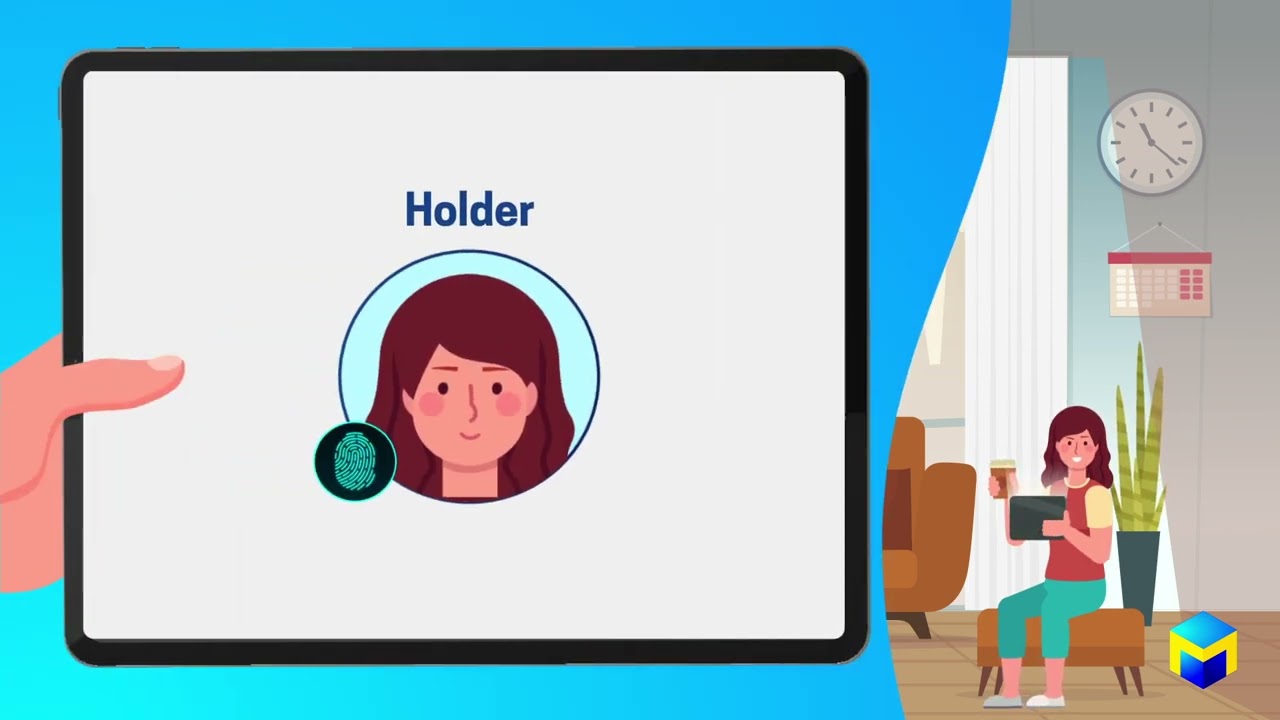
- Why this video: Teaches the fundamental mechanism of machine identity. DIDs replace usernames/passwords with globally unique, cryptographically verifiable IDs controlled directly by physical nodes.

- Why this video: Explains security at the hardware manufacturing boundary. Learn how Hardware Secure Modules (HSMs) generate and safeguard private keys locally on-device, establishing resistance against physical attacks and key cloning.

- Why this video: Bridges identity and registries. This tutorial teaches how to programmatically store state metadata on-chain, providing the foundational pattern needed to map unique physical device IDs directly to secure ERC-721 token bound registries.
💡 Curriculum Developer Note (Pool Gap): While this module provides a solid conceptual foundation for on-chain identity structures, step-by-step developer walkthroughs for the advanced ERC-6551 Token Bound Account standard mapping directly to IoT devices are absent from the current video pool.
To bridge this gap, independently search for: "ERC-6551 Token Bound Accounts smart contract tutorial" and "Mapping device hardware IDs to NFTs using Solidity".
Knowledge Checkpoint
- List the four primary design requirements for a Decentralized Identifier (DID).
- Describe how a Hardware Security Module (HSM) on an IoT motherboard prevents hackers from extracting cryptographic identities to generate fake data.
- Design an on-chain smart contract registry blueprint where each physical device's public key maps to an individual ERC-721 token.
Module 4: Proof of Physical Activity & Oracles
Master the construction of verification layers that validate real-world physical activity (telemetry data, localized coverage, or network bandwidth) off-chain, and securely report those physical metrics on-chain using decentralized oracles.
- Why this video: Demonstrates real-world IoT sensor integration (RFID badges, physical monitors) with public ledgers, showing how telemetry data translates to verifiable smart contract execution state updates.

- Why this video: Explains how oracles solve the "oracle problem" for IoT-based networks by allowing smart contracts to securely consume external, off-chain, real-world data feeds.

- Why this video: Provides a real-world perspective on Proof of Coverage (PoC). Explore how LoRaWAN nodes challenge and verify adjacent nodes, illustrating the core principles of Proof of Physical Work (PoPW) in local physical topologies.
💡 Curriculum Developer Note (Pool Gap): There is a lack of deep-dive, step-by-step programming tutorials in the current pool for building a custom, trustless decentralized oracle node from scratch to relay raw telemetry packets.
To bridge this gap, independently search for: "Building Chainlink custom adapter for IoT JSON payloads" and "Verifying sensor telemetry signatures on-chain in Solidity".
Knowledge Checkpoint
- Define the "Oracle Problem" and how it limits block execution engines in accessing real-world sensor telemetry.
- Detail how a Proof of Coverage (PoC) model physically and mathematically verifies that a device is deployed at a specific location.
- Create a system diagram tracing the path of physical temperature sensor data from the device payload to its ingestion into an on-chain storage contract.
Module 5: Tokenomics and On-Chain Reward Distribution
Design sustainable economic models, implement Dual-Token Burn-and-Mint Equilibrium (BME) logic, and write Solidity smart contracts to distribute token rewards directly to physical node operators based on active performance.
- Why this video: Explains the mechanics of the Burn-and-Mint Equilibrium (BME) model. Learn how burning utility tokens for fixed-price usage credits manages token velocity and links usage demand to token issuance dynamics.
- Why this video: A case study analyzing Helium's dual-token model. It details how HNT (the native token) is minted on an emission schedule while network use requires burning HNT to create USD-pegged Data Credits.

- Why this video: A coding guide to building reward distribution and contract access control mechanisms. Implement logic like
onlyOwneror authorized oracle checks to automate rewards to physical nodes.
Knowledge Checkpoint
- Explain how a Dual-Token Burn-and-Mint model prevents high market volatility from altering the costs of calling physical API requests on the network.
- Write a Solidity function modifier that ensures only a registered off-chain oracle node can trigger reward payout allocations.
- Describe the difference between a deflationary transaction tax and a dynamic mint-and-burn schedule.
Module 6: End-to-End DePIN System Architecture
Synthesize identity registries, off-chain messaging, decentralized oracles, zero-knowledge computation, and on-chain payout engines into a production-grade, secure, and performant DePIN system.

- Why this video: Outlines DePIN-specific communication requirements, explaining why traditional blockchains require intermediate messaging layers to process high-throughput IoT telemetry packets.
- Why this video: Addresses the frontier of privacy and computation in DePIN. Learn how zero-knowledge (ZK) proofs can verify raw sensor telemetry off-chain, preserving user privacy before submitting verification proofs on-chain.
- Why this video: Teaches the complete software structure for bridging on-chain smart contracts with decentralized backends, forming a template for a DePIN web interface or server.
💡 Curriculum Developer Note (Pool Gap): Comprehensive developer tutorials that walk through simulated hardware running locally, communicating with a backend server, and executing web3 payouts are highly limited in this pool.
To bridge this gap, independently search for: "How to build a DePIN dapp step-by-step walkthrough" and "Integrating Raspberry Pi with Ethereum smart contracts".
Knowledge Checkpoint
- Detail the path of physical telemetry data from an on-device secure enclave to a messaging layer (e.g., MQTT/DePhy) and through to on-chain payout.
- Describe how Zero-Knowledge (ZK) proofs allow nodes to verify physical actions (e.g., a dashcam capturing location data) without exposing sensitive raw coordinates.
- Identify network bottlenecks in DePIN and explain how intermediate L2/L3 execution environments help solve scalability limitations.
Course Map
This flowchart maps the optimal learning progression across the six architectural modules.
Key People Index
Notable industry experts and core protocols referenced across this curriculum:
- Vitalik Buterin (Founder, Ethereum): Pioneered public EVM smart contract structures and advocate for decentralized identities (DIDs/ENS) and decentralized coordination networks.
- Amir Haleem (Co-Founder, Helium Network): Led the first global DePIN deployment at scale, implementing practical Proof of Coverage and Burn-and-Mint Equilibrium models.
- Kyle Samani & Dmitriy Berenzon (Partners, Multicoin Capital): Industry research analysts who formalized the "DePIN Flywheel Effect" and token business model frameworks.
- Stefan Lindgren (CTO, Talkpool): Leading engineer on Hardware Security Modules (HSMs) and large-scale, tamper-resistant device provisioning pipelines.
Final Self-Assessment
Complete this comprehensive self-assessment to verify your mastery of the DePIN engineering stack:
- Explain how public-key cryptography allows an IoT hardware node to sign its telemetry data off-chain, verifying its authenticity on-chain.
- Map out a Token Flywheel showing the relationship between token supply inflation, physical deployment growth, and demand utility.
- Write a basic ERC-721 token-based device registry smart contract in Solidity that maps specific hardware
deviceAddressaddresses to verified metadata URLs. - Describe the security role of an HSM and how secure key provisioning during device manufacturing prevents sybil attacks.
- Draft an architectural topology diagram detailing how physical sensor data is verified using decentralized oracles (e.g., Chainlink) to trigger smart contract state changes.
- Formulate a mathematical explanation of the Burn-and-Mint Equilibrium model, demonstrating how it decouples system usage costs from native token price volatility.
- Implement role-based access control (
OwnableorAccessControl) in Solidity to restrict payout calls exclusively to authorized oracle network addresses. - Outline how zero-knowledge proofs can verify physical coordinates and data correctness without revealing raw, sensitive user telemetry.
- Explain how low-latency messaging middleware networks integrate with high-throughput L2 blockchains to manage thousands of active physical IoT devices.