Building Multi-Strategy Yield Aggregators: Designing and Deploying ERC-4626 Tokenized Vaults with Flash-Loan-Leveraged Strategies
Learning Goal: Build, test, and securely deploy an advanced, production-grade, multi-strategy yield aggregator. You will learn to architect ERC-4626 tokenized vaults from scratch, implement automated allocation systems, and design advanced yield strategies utilizing programmatic flash-loan-recursive leverage.
- Prerequisites: Basic programming knowledge (JavaScript, Python, or C++), familiarity with terminal interfaces, and a conceptual interest in decentralized financial systems.
- Estimated Total Study Time: 35 Hours
Module 1: Blockchain, Ethereum, and Solidity Foundations
This module establishes your technical baseline. You will study how the Ethereum Virtual Machine (EVM) functions, understand how state is stored and changed globally, and write, compile, and deploy your very first ERC-20 smart contracts.
Recommended Videos
- Why this video is valuable: It demystifies the underlying architecture of Ethereum, explaining the evolution from single-state digital currencies (like Bitcoin) to a generalized global state machine that hosts turing-complete execution. It is the perfect conceptual launchpad before touching code.

- Why this video is valuable: Deep-dives into the 20th Ethereum Improvement Proposal (EIP-20). It walks through why token standardization is the bedrock of DeFi liquidity, showing how standard interfaces allow decentralized exchanges and yield vaults to programmatically interact with any asset.
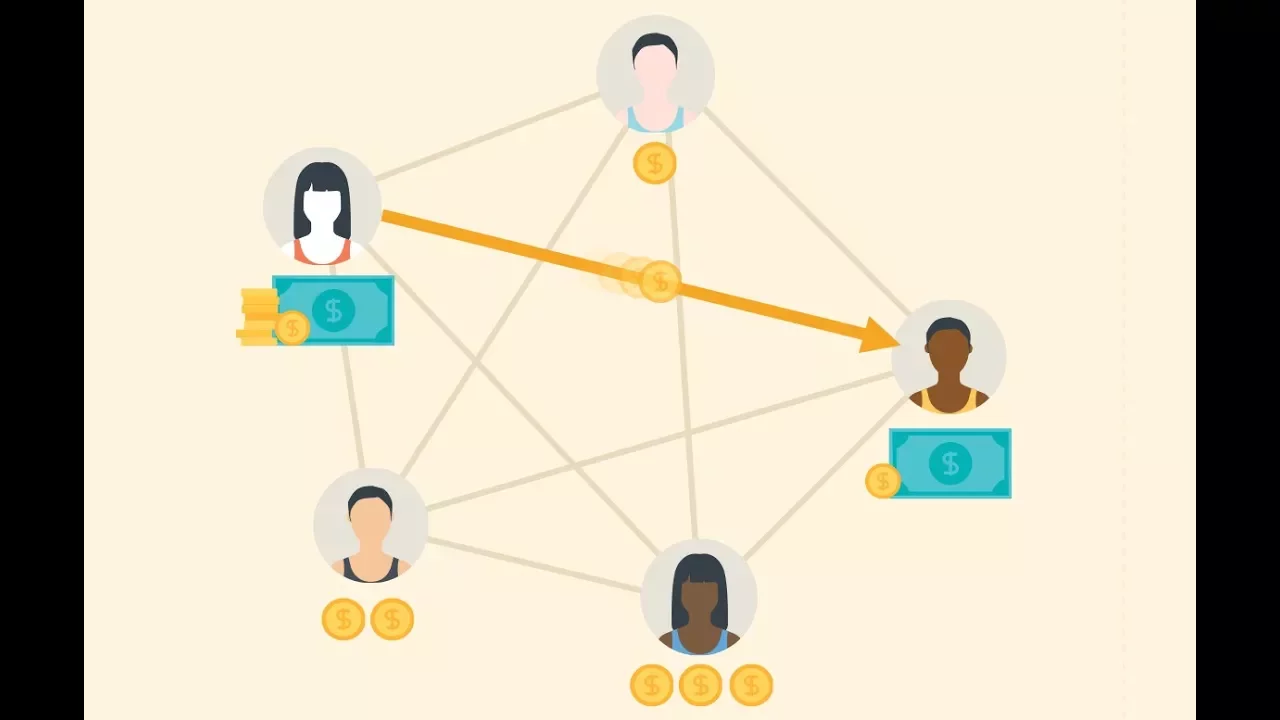
- Why this video is valuable: A practical developer-centric walkthrough of ERC-20 token code. You will see how balances are tracked under the hood via storage mappings (
mapping(address => uint256)) and how transfer approvals govern multi-contract token interactions.
Module 1 Knowledge Checkpoint
- Understand the role of the Ethereum Virtual Machine (EVM) and gas limits.
- Explain the difference between an External Owned Account (EOA) and a Contract Account.
- Read, modify, and explain the core functions of the ERC-20 standard (
transfer,approve,transferFrom,allowance). - Define how mappings function within Solidity state storage.
Module 2: DeFi Primitives: Lending, Pools, and Yield Farming
This module transitions you from basic token standards to financial interactions. You will dissect automated market makers (AMMs), decentralized money markets (with a strong focus on Aave), and the underlying mechanics of yield generation through lending and liquidity provision.
Recommended Videos
- Why this video is valuable: It visualizes the core mechanics of decentralized debt pools, explaining how interest rates adjust algorithmically based on supply/demand utilization, and why over-collateralization is required to keep systems solvent without credit scoring.

- Why this video is valuable: Provides mathematical clarity on interest-bearing tokens (aTokens/cTokens). It walks through how lending deposits instantly yield claim tokens that dynamically grow in balance or value, which is the foundational design pattern for tokenized vaults.
- Why this video is valuable: Breaks down yield optimization conceptually. It illustrates how automated yield aggregators collect transaction fees, compound rewards automatically back into principal assets, and abstract away complex manual transactions from end-users.
Curriculum Note (Gap Mitigation): High-quality, up-to-date visual videos on AMM constant product formulas () and multi-protocol farming on EVM are sparse in basic packages. For a rigorous mathematical approach to pool balance changes and impermanent loss, we strongly recommend self-studying the Uniswap V2 and V3 whitepapers alongside this module.
Module 2 Knowledge Checkpoint
- Articulate how pool utilization rates determine borrowing and lending APYs.
- Distinguish between direct interest accrual methods (Compound's exchange rate model vs. Aave's balance reindexing standard).
- Calculate basic collateralization ratios and identify the trigger parameters for automated liquidations.
- Map out the theoretical flow of assets from a depositor to a decentralized lending pool.
Module 3: Mastering the ERC-4626 Tokenized Vault Standard
This module is the core pivot of the curriculum. You will explore EIP-4626, the standardized interface for yield-bearing token vaults. You will master the exact equations that govern shares-to-assets and assets-to-shares conversions, solving historical interoperability friction across DeFi.
Recommended Videos
- Why this video is valuable: A raw, code-first guide demonstrating how to build a basic share-minting token vault from scratch in Solidity 0.8. This implementation acts as the perfect pre-requisite step to understanding the structural design choices of ERC-4626.

- Why this video is valuable: Walks directly through ERC-4626's synchronous interface design. It details why standardizing the methods for deposits, minting, withdrawals, and redemptions prevents systemic integration bugs across DeFi aggregators.

- Why this video is valuable: An elite-level conversation featuring Joey Santoro (co-author of ERC-4626). It dives deep into the edge cases of the standard, the mathematical rounding directions required to prevent inflation attacks, and the architectural choices that made it an industry standard.
Curriculum Note (Gap Mitigation): Although the panel discussion offers high-level architectural insights, it does not provide a line-by-line coding tutorial of ERC-4626 mathematically from scratch. To close this gap, you should implement OpenZeppelin's
ERC4626.solmanually. Pay special attention to: and ensure that conversions always round down on deposit/mint, and round up on withdraw/redeem to prevent exploit vectors (such as the "inflation attack"). Independent query suggestion:ERC 4626 tokenized vault tutorial solidity.
Module 3 Knowledge Checkpoint
- Understand the exact mathematical difference between
deposit()/withdraw()(asset-driven) andmint()/redeem()(share-driven). - Explain how an inflation attack works in a freshly deployed vault (low share count) and how to mitigate it by minting "dead shares" to the zero address.
- Implement conversions using the formula: where is shares, is assets, is total supply of shares, and is total managed assets.
- State why rounding down on deposits and rounding up on withdrawals is mathematically required to safeguard vault solvency.
Module 4: Flash Loans and Leverage Mechanics
This module teaches you to execute advanced, single-transaction uncollateralized loans. You will learn how to tap into multi-million dollar liquidity reserves from Aave, run arbitrary code using their callback structure, and construct leveraged loops to multiply your farming yields.
Recommended Videos

- Why this video is valuable: A masterclass in coding flash loan executions. It covers how to inherit the correct interfaces from Aave, configure the callback execution function (
executeOperation), set parameters, and programmatically handle repayment of the flash-borrowed principal plus interest.

- Why this video is valuable: Breaks down the specific conceptual architecture of leveraging your positions using flash loans. It shows how borrowing and depositing assets inside the same block can expand your yield exposure far beyond your actual capital limit.
Curriculum Note (Gap Mitigation): While these videos show how to write the callback function and interact with Aave, they do not provide a step-by-step tutorial on looping assets recursively for yield generation. To practice this: Write a Solidity contract that:
- Flash-loans USDC.
- Deposits USDC into Aave's lending pool as collateral.
- Borrows an alternative asset (e.g. USDT) against that collateral.
- Swaps USDT back to USDC on a DEX (Uniswap).
- Repays the original flash loan using the swapped USDC. This creates a recursively leveraged, yield-earning debt position in a single transaction block. Independent query suggestion:
Flash loan leverage yield strategy coding tutorial.
Module 4 Knowledge Checkpoint
- Explain the transactional lifecycle of a flash loan and how EVM state rollbacks guarantee loan safety.
- Write a contract that inherits Aave's
IFlashLoanSimpleReceiverand overridesexecuteOperation(). - Calculate the absolute minimum profitability of a leverage flash transaction, accounting for pool entry fees (e.g., Aave's 0.05% fee) and gas costs.
- Define the potential liquidation risks associated with executing recursive leverage on variable-interest debt markets.
Module 5: Coding Multi-Strategy Yield Vaults
In this module, you will design the central routing architecture of a Yearn-style yield aggregator. You will learn to construct a master "Controller" contract that accepts deposits, converts them to ERC-4626 shares, and dynamically distributes capital across multiple strategy contracts.
Recommended Videos
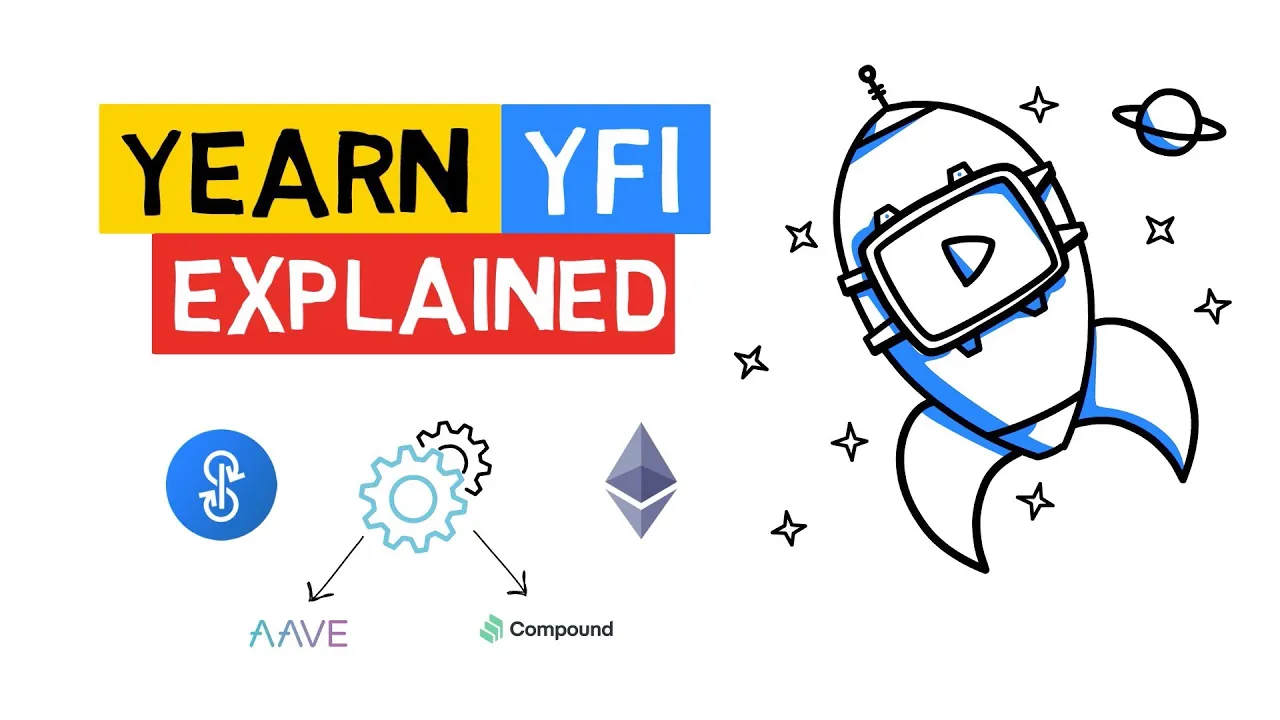
- Why this video is valuable: Essential for mapping out the systems architecture of your aggregator. It walks through Yearn's development from a single pool to multi-strategy structures, explaining how asset allocation choices are delegated to programmatic modules to yield high performance.
- Why this video is valuable: Illustrates the routing pattern of assets between distinct DeFi protocols (Aave, Compound, Curve). This acts as a reference conceptual design for your master Controller's rebalancing algorithm.
Curriculum Note (Gap Mitigation): Because the video pool lacks a raw, multi-contract coding tutorial for dynamic routing, you must build this architecture manually using standard Solidity patterns. Follow this classic architectural layout:
            ┌──────────────────────┐
            │     Vault Owner      │
            └──────────┬───────────┘
                       │ (rebalance)
                       ▼
          ┌──────────────────────────┐
          │ ERC-4626 Vault/Controller│
          └──────┬────────────┬──────┘
                 │ (deposit)  │ (deposit)
                 ▼            ▼
           ┌──────────┐  ┌──────────┐
           │Strategy A│  │Strategy B│ (e.g. Leveraged Aave)
           └──────────┘  └──────────┘
Implementation Steps:
- Create a
VaultControllercontract that manages an array of addresses calledstrategiesand tracks allocation weightings (e.g., 60% Strategy A, 40% Strategy B).- Create an abstract
BaseStrategycontract containing standardized interfaces fordeposit(uint256),withdraw(uint256), andharvest().- Implement safe transfer patterns (
SafeERC20) to ensure tokens never get locked when shifting capital during a manual or automatedrebalance()execution. Independent study search queries:How to build a yield aggregator smart contractorYearn finance smart contract architecture explained.
Module 5 Knowledge Checkpoint
- Design a system architecture separating user balance accounting (the ERC-4626 Vault) from active capital deployment (Strategy contracts).
- Write a secure, access-controlled administrative function inside the controller to shift allocation percentages between strategies.
- Explain how a
harvest()function collects accrued yield, swaps intermediate incentive tokens (e.g. CRV, AAVE) back to the base asset, and compounds it back into the strategy's vault balance. - Prevent asset loss during strategy migrations by writing safe contract teardown structures.
Module 6: DeFi Security, Testing, and Safe Deployment
You will learn to write rigorous unit, integration, and fuzz tests using Foundry, identify common structural vulnerabilities (reentrancy, rounding flaws, oracle price manipulation), and deploy code safely on-chain.
Recommended Videos

- Why this video is valuable: A quick, comprehensive setup guide for Foundry—the fastest testing framework in Ethereum. You will learn to configure your test directory, write test assertions directly in Solidity, and use powerful CLI utilities like
forgeandcast.

- Why this video is valuable: A practical tutorial on structuring your test assertions. It shows you how to use Foundry cheats (like
vm.prank,vm.expectRevert, andsetUp()) to isolate environment states and verify exact mathematical balances during deposits and withdrawals.
- Why this video is valuable: Explains the historical architecture of multi-million dollar exploits in DeFi. It serves as an audit warning to developers, emphasizing that passing automated unit tests does not mean your contract logic is safe from complex transaction loops.
Curriculum Note (Gap Mitigation): Standard tutorials do not adequately demonstrate visual walk-throughs of flash-loan-driven oracle manipulation attacks. To protect your aggregator, you must understand how relying on a spot price of an AMM (like Uniswap) allows attackers to inflate share values. Rule: Always use decentralized oracle networks (like Chainlink) or Time-Weighted Average Prices (TWAP) when determining the valuation of assets inside your ERC-4626
totalAssets()calculations.
Module 6 Knowledge Checkpoint
- Install Foundry and set up a multi-contract testing suite using the
forge-stdlibrary. - Write integration tests that fork mainnet state (
forge test --fork-url) to test live integration with Aave lending pools. - Identify and apply reentrancy guards (
nonReentrantmodifier) to prevent external state-calling bugs during deposit or withdrawal functions. - Differentiate between a spot-price oracle attack and a resilient decentralized Price Feed integration.
Course Map
This flowchart maps your required sequence of modules. Notice how Module 5 acts as a convergence point, combining standard ERC-4626 accounting structures from Module 3 with flash-leverage mechanics from Module 4, before proceeding to security audits and deployments.
Key People Index
- Vitalik Buterin
- Context: Co-founder of Ethereum. Proposer of the original ERC-20 standard interfaces in 2015, which laid down the modular asset architecture that all future DeFi relies on.
- Stani Kulechov
- Context: Founder of Aave (originally ETHLend). Pioneer of automated liquidity pools, variable-rate lending algorithms, and the original creator/popularizer of uncollateralized flash loans.
- Joey Santoro
- Context: Founder of Fei Protocol and lead co-author of ERC-4626. He champions the institutional standardization of DeFi vaults to optimize security and modularity.
- Andre Cronje
- Context: The creator of Yearn Finance. Known as the "father of yield aggregation," he introduced the dynamic Controller-Strategy routing pattern that serves as the foundation for Module 5.
Final Self-Assessment
Complete this comprehensive, practical check-list to verify that you have successfully mastered the skills of a senior DeFi yield architect:
- Write, compile, and deploy a custom ERC-20 token containing standard gas-efficient transfer functions.
- Implement an ERC-4626 tokenized vault that correctly manages underlying deposits and mints proportional receipt shares.
- Prove mathematically that your vault rounds down on deposits and rounds up on asset redemptions to prevent rounding exploits.
- Program an external strategy contract that connects to Aave's lending pool interface to generate basic interest.
- Construct a Flash-Loan execution contract that successfully borrows capital from Aave, triggers arbitrary logic, and repays the loan in a single block.
- Implement recursive leverage by using flash borrowed funds to open an over-collateralized leverage position, multiplying the vault’s yield.
- Code a master
VaultControllercontract that dynamically manages and routes capital among at least two separate yield strategies. - Write integration tests in Foundry utilizing Mainnet Forking to verify that real-world contracts behave correctly.
- Run a fuzzing test suite that inputs random asset quantities and verifies that the vault never falls into insolvency.
- Secure all user entry/exit points from reentrancy exploits and secure administrative functions using roles or owner patterns.
- Replace any spot price calculation methods inside your system with a secure Chainlink price feed interface to protect against oracle exploits.