
















Flash loans enable developers to make passive income by borrowing large amounts of cryptocurrency within a single transaction, depositing the borrowed funds into DeFi lending platforms to earn interest, and repaying the loan in the same transaction; this leverage strategy multiplies returns by allowing users to earn interest on a larger principal than their own capital, with the 2024 approach using low-cost Layer 2 chains to minimize transaction fees.
Flash Loans for Passive Income: A Developer's Guide to Defi Lending
Added:Proficiency in smart contract development (e.g., Solidity) and familiarity with Ethereum Virtual Machine (EVM) execution environments.
Understanding the concept of transaction atomicity in blockchain, where a sequence of operations must either succeed in its entirety or revert completely.
Fundamental knowledge of decentralized finance (DeFi) primitives, specifically Automated Market Makers (AMMs), liquidity pools, and decentralized lending protocols.
Familiarity with smart contract development frameworks such as Hardhat, Foundry, or Truffle, and basic interaction with Web3 providers.
Developing and deploying cross-protocol arbitrage bots that utilize flash loans to capture price discrepancies between decentralized exchanges.
Studying flash loan-based security exploits, such as oracle price manipulation and governance attacks, and learning how to implement robust defensive measures.
Implementing advanced programmatic operations like collateral swapping, debt refinancing, and automated liquidation scripts across DeFi platforms.
Exploring Maximal Extractable Value (MEV) and utilizing specialized transaction routing (e.g., Flashbots) to prevent frontrunning of flash loan transactions.
19.6K views692likes12:05Original Release: 2024-08-06
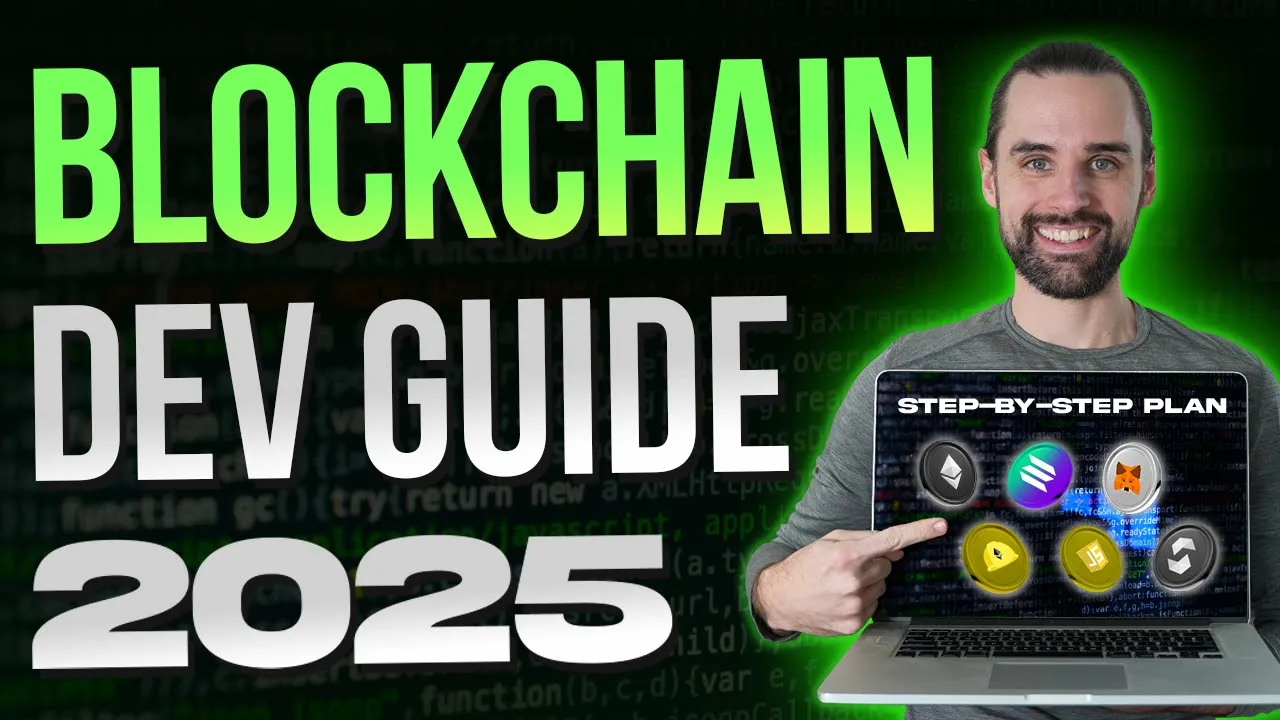
blockchain holds unlimited opportunities for developers to make passive income because you have open access to a brand new Financial ecos system with countless ways to make money that you can't do anywhere else like with flash loans where you can borrow insane amounts of money completely for free on the blockchain and what's more is you have a massive leg up as a blockchain developer because normal people cannot do this and in this video I'm going to talk about a new way to make passive income with flash loans that's guaranteed that's working right now in 2024 I'm want to talk about all this as a blockchain developer myself who's done this so if you're new around here hey I'm Gregory and on this channel I turn you into a blockchain master so if that's that you're interested in then smash that like button down below and subscribe all right so let's get started let's talk about this new way to make passive income with flash loans guaranteed now there's a ton of ways to make passive income in the blockchain space and I've tried almost all of them things like staking Lending yield farming trading Bots liquidations okay and they all have different pros and cons based on what you're trying to do but there's one strategy That's Unique because it's guaranteed to make passive income you can outperform most people in crypto and you have a massive leg up as a developer in doing this but if you're not a developer I'll show you a trick on how now this is all possible because of a cheat code on the blockchain called a flash loan where you can borrow millions of dollars or cryptocurrency completely for free and I'm going to show you how in this video but if you want to unlock this cheat code and start using flash loans to make passive income then make sure you hold your spot for the flash loan master class next Thursday on August 15th inside I'm going to show you everything you need to know in order to make passive income with flash loans and I'm going to let you steal my passive income app that I'm going to show you in this video today so trust me you don't want to miss this hold your spot with the link down below all right so let's get back to it let me break down how this passive income strategy works now a quick disclaimer I'm going to show you how to make passive incomes of flash loans guaranteed but that does come with some risks you know full disclosure and I'll completely outline those in this video for the sake of full transparency so make sure you stick around now first let's talk about different ways to make money with flash loans so things like Arbitrage based trading Bots liquidations front Runing and then this way I'm about to show you here in the second now these all have different pros and cons but the way I'm going to show you today is completely guaranteed okay so things like trading Bots they're awesome but you do have to look for opportunities same thing with liquidations and with front running well it's illegal but let's talk about this particular way and the reason I like it so much is that it is guaranteed so let's see how it works well it first starts off with using applications that are related to defi lending all right so what is that well basically you see an application like this on my screen compound Finance this is an application that works kind of like a bank where you can deposit cryptocurrency on one side and then turn around and borrow cryptocurrency on the other side and you don't have to borrow necessarily you can just deposit and when you do that you can see um that you have a certain annual percentage yield on your deposits things like you know 6% 4% 2% etc etc 12% here now anybody can do this with a crypto wallet but if you unlock the power of flash loans you can multiply these returns and make a whole lot more passive income than what you see here on the screen and that's where the guarantee comes into play okay so if we're talking about a strategy where the opportunities right here I can show you the opportunity then all you have to do is essentially click a button and start making passive come and make a lot more than what somebody might see here on the screen so that's the guarantee you don't have to go out and search for opportunities here it is so how does it work okay well let's look at another defi lending platform this is moonwell same type of situation where you can deposit cryptocurrency like usdc here all right you can deposit it in a 5.5% apy so let's take a quick look at how they work on the back end basically when you go use this application you're depositing a stable coin like usdc which is really nice because you can always withdraw those funds at any time and you're subject to the price of the cryptocurrency you're using going up and down and you're going to earn a rate of return that looks like this and 5.5% you know it's not bad but you can multiply this return even more in a way that normal users can't okay so what you can do is you can deposit usdc and then you can turn around and borrow usdc to earn an additional apy than what you see here so how is that possible well it's with the power of flash loans so let's get into that so really quickly what is a flash Loan in not familiar well basically it's a technique where you can borrow millions of dollars of cryptocurrency completely for free on the blockchain as long as you pay it back in the same transaction okay so what does that mean well basically blockchain supports simple transactions and complex transactions a simple transaction would be like if I sent my if I sent cryptocurrency to you from my account to yours that's a simple transaction with one instructions just take cryptocurrency out of my account and put it into your account but what if you want to do multiple steps like step one go borrow cryptocurrency step step two you know do something with it like trade it or lend it out okay and then step three pay back that money to the flash loan provider well that's a complex transaction okay and that's how flash loans work so basically when you pay it back in the same transaction you're performing multiple steps all in one go as soon as it ex gets executed on the blockchain now you can only do this with smart contracts and you need to be a developer to create these smart contracts that's why you have an edge or just get some contracts that a developer already created like I'm going to show you the master class to do something like this because that's what normal users can't do a normal user can't do a flash loan and actually make use of it with their metamask wallet for example because they can't do these multiple steps without having a smart contract that they or someone else created so how can we use these flash loans and the power of smart contracts to make more money with an application like this passive income guaranteed that normal users can't well like I saying before it involves depositing usdc to earn this 5.5% apy and then turn around and borrowing the usdc back okay after that to earn more and then using flash loans to boost your return to get a much higher apy than what you'd see here okay so first of all let me explain that whenever you're putting money in this liquidity pool you're getting back rewards in usdc but you're also getting this you know sort of thirdparty token this well token that is bonus apy on top of that that's why you can earn money for depositing and you can earn money for borrowing because you're getting brand new cryptocurrency created by the application or distributed by the application in this case okay let's just say that you have you know $30 of your own money I'm just using that example uh you'll see why in a second for easy math okay so let's say you deposit $30 of usdc into moonwell okay now normally you might earn like 5% apy on top of that right and then what you do is you take out a flash loan for $70 okay because 30 plus 70 equal 100 that's why I'm using those numbers just for easy math now instead of depositing $30 earning 5% on that now you are earning 5% on $100 okay it's leverage so you're using flash loans to to boost the amount of money that you're putting into the protocol now remember what I said before is you have to pay back flash loans in the same transaction so you can't just like borrow the money and go park it in moonwell and not pay the flash loan back so so what you do is in the same transaction that you deposit your own money and you borrow the $70 of The Flash loan you instantly turn around and borrow $70 of usdc back from liquidity pool and you pay back the flash loan all in one go okay so now instead of putting $30 of your own money and there earning 5.5% on that you're earning 5.5% on $100 so you're roughly 3x in your return on this and so you can get on average you know 3x or even a lot more than other people because you can do things like Auto compounding or compounding your returns so once you earn apy you can reinvest it and do this trick over and over and over again on regular intervals and earn a much higher apy than a normal person who's just clicking buttons so that's the guaranteed part is here's the opportunity you don't have to go search for it it's guaranteed because when you click a button it's going to put the money in there and it's going to earn a much higher return than somebody else it's a set forget it strategy guarantees of course there are some risks which talk about here in a second now that being said you know whenever you're ready to get out of that position like how do you get your money back well you just do the exact opposite okay you withdraw the money and whenever you do that you take out a flash loan to pay back the outstanding balance from the market that you're in and then you just Depo you pull all your money out and then you pay back that flash loan to exit your position all right so that's an overview of this particular strategy so what is the new way for doing this in 2024 so I I've done this on multiple different ways okay I've done this in the past on things like ethereum with compound Finance I've done it with many other compound Forks but the new way to do this for 2024 is to do it much a much lower cost way on New Markets on new chains with lower fees okay to reduce any cost that you have for doing this whether that's deploying the contracts doing the transactions to put you know money in these projects or pulling them out basically making your startup cost essentially zero besides the initial Capital that you're putting in to these to make this type of return so doing it on lowcost chains like ethereum layer 2s that's exactly what I'm doing okay with moonwell this is on top of the base layer two which is kind of like a blockchain it just piggybacks top of ethereum you pay the gas fees in e but the transaction costs are minimal and really negligible compared to the return that you get from an application like this and you can rinse and repeat this strategy if you want to look for different opportunities where you can boost your returns across the different markets here or across different chains or different applications now of course some of them might be higher risk CU they're newer applications or you may be in markets with cryptocurrencies that are more volatile but that's the nice thing about this is you can do it on a more reputable uh application like this with a reputable stable coin that has you know strong backing and good apis now finally as promised let me outline the risks of this particular strategy you know it is guaranteed that passive income will be provided but what are the potential risks so first of all you do have to use some of your own money to do this as opposed to like a trading bot where you don't really need any money to do do it you're always just borrowing capital and using that for trading okay you get you have money for gas fees but you're not using your any your Capital to trade you do have to deposit some of your own funds into application and then you're borrowing extra money with flash loans to boost your returns so anytime you're using your own money in crypto you know something could happen to it okay that's that's the basic risk here okay you can do things like you could send it to the wrong place uh you can lose your private key your pass code your seed phrase whatever for your wallet uh the smart contract that you're depositing into uh like the defi application could have a vulnerability it could get hacked you could borrow too much money you know based on your collateral Factor um and then you know get liquidated in this process I'll show you some ways to potentially mitigate that strategy the stable coin you're using could dpeg your smart contract that you coded for this could have a vulnerability there's lots of different vectors but that's the cost of the guarantee because that being said you know there's always going to be higher risks in search of higher returns but if you use the best practices and you assume there risk then this still can generate a competitive yield compared to what normal users are able to get so you know that's an overview of how you can use Flash loans to make passive income with crypto lending this new way for 2024 so if you want to see how to unlock the superpower of using flash loans to make passive income then make sure you hold your spot for the flash loan master class next Thursday August 15th inside I'm going to show you everything you need to know on how to make passive income with flash loans and I'm going to let you steal my passive income application that I showed you in this video today so trust me you don't want to missed this make sure you hold your spot the link down below so that's all go after today thanks for watching and I'll see you inside
Up Next
27:33
Moody's Stock Analysis and Portfolio Addition | Compounding Machines
@JosephCarlsonShow
126.5K views•2024-01-10

66:41
Web3 Social Decentralization: Farcaster Co-Founder on Crypto Social Networks
@levychain
1.5K views•2022-10-18

15:23
Decoy Effect: How Pricing Psychology Influences Consumer Spending
@bobinvestsUS
90K views•2026-01-05

17:30
The Planned Obsolescence of Light Bulbs and Tech
@veritasium
25.3M views•2021-03-26
Related Study Plans & Knowledge Roadmaps
Structured learning paths in Business
business
CPG Retail Strategy: Pitching & Trade Spend
01Foundations of the CPG and Grocery Ecosystem
02Retail Math and Designing the Pitch
03Securing Shelf Space & Category Reviews
+ 2 more learning modules
12h5 modules
Explore Roadmap
business
Pop-Up Retail: Strategy, Design & Execution
01Introduction to Pop-Up Retail & Strategic Goal Setting
02Budgeting, Site Selection, and Legal Essentials
03Experiential Retail Design & Visual Merchandising
+ 2 more learning modules
15h5 modules
Explore Roadmap
business
Reg CF: Startup Funding, Marketing & Launch
01Introduction to Equity Crowdfunding & Reg CF
02Platform Selection & Legal Preparation
03Crafting High-Converting Campaign Assets
+ 2 more learning modules
14h5 modules
Explore Roadmap
business
Productized Services: Scaling Solo Freelance
01Foundations of Productized Services
02Packaging and Scope Definition
03Pricing and Subscription Models
+ 2 more learning modules
15h5 modules
Explore Roadmap