Productized Services: Scaling Solo Freelance
Learning Goal: This curriculum provides a complete roadmap to design, package, price, systematize, and launch a productized service. It is specifically built to help solo creative and technical freelancers transition away from low-leverage custom hourly work and build a highly scalable, recurring-revenue business model.
Module 1: Foundations of Productized Services
This module introduces the conceptual shift from traditional bespoke freelancing to the productized service business model. You will learn how to transition from selling "hours for dollars" to offering standardized, off-the-shelf packages that target specific client outcomes.
Recommended Videos
Video 1: How I Productized My Service to $100k/Month (copy me)

- Why this video: Gregory Hickman explains the core foundations of productizing services. He details how to achieve predictable capacity and stable, scalable revenue by focusing on fixed scopes, standardized deliverables, and a specific client profile.
- Knowledge Checkpoint:
- Explain the difference between custom freelancing and a productized service model.
- Identify your ideal client profile (ICP) and their single most desired business outcome.
- Define how fixed scopes lead to predictable delivery capacity.
Video 2: Make Millions With a One-Person Business - Here's How

- Why this video: This video breaks down the highly successful "unlimited requests, fixed monthly subscription" model. It highlights how to run a high-revenue design business without traditional sales calls, lengthy proposals, or endless custom project negotiations.
- Knowledge Checkpoint:
- Understand the mechanics of a single-operator productized subscription business.
- Identify how to eliminate synchronous meetings to maximize deep-work time.
- Formulate a plan for handling a queue of client requests sequentially.
Video 3: Scale Your Business Through Productizing Your Services with Brad Hussey

- Why this video: This video introduces the "service-goods continuum," explaining how to transform variable, high-touch services into standardized "commoditized" goods.
- Knowledge Checkpoint:
- Place your current freelance offerings along the service-goods continuum.
- Identify which elements of your delivery can be locked into a fixed price with zero customization.
- Understand how standardized packaging leads to increased business valuation.
Video 4: The Top 5 Productized Service Models Explained in 9 Mins

- Why this video: Hickman categorizes different types of productized services, showing how traditional retainers are shifting toward modern productized growth matrices.
- Knowledge Checkpoint:
- List the five core productized service models.
- Select the specific model (e.g., task-based subscription, fixed-deliverable package) that best fits your skillset.
- Identify where your service sits on the leverage vs. customization scale.
Module 2: Packaging and Scope Definition
To build a productized service, you must translate your raw technical or creative skills into a highly defined package. This module guides you through defining your value proposition, setting boundaries on your scope of work, and building tiered packages that eliminate scope creep.
Recommended Videos
Video 1: How to Package Your Services

- Why this video: Courtney Chaal outlines a clear 6-step framework to transition from custom quotes to a "signature service." She covers how to name your package, target your "muses" (specific ideal clients), and define exact outcomes.
- Knowledge Checkpoint:
- Define your signature service based on your primary expertise.
- List the specific steps required to take a client from pain point to outcome.
- Name your service packages using outcome-driven, clear language rather than technical jargon.
Video 2: How to Package & Sell Your Design Services as a Freelancer

- Why this video: This guide focuses on naming tiers and listing outcomes simply. It teaches you how to present packages based on transformation and business value rather than the raw hours worked.
- Knowledge Checkpoint:
- Structure your service offering into distinct, tiered packages (e.g., Basic, Standard, Premium).
- Draft an outcome-based checklist of what is included in each tier.
- Identify and eliminate hourly tracking metrics from your client proposals.
Video 3: Value Proposition Design

- Why this video: This video introduces the structured "Value Proposition Design" framework, focusing on mapping your services to specific customer jobs, pains, and gains.
- Knowledge Checkpoint:
- Map your target client’s functional, social, and emotional "jobs to be done."
- List the primary "pain relievers" and "gain creators" that your packaged service provides.
- Align your productized packages directly with your value proposition canvas.
Module Gap & Independent Study Guide
⚠️ Curriculum Gap Alert: The available videos cover the high-level concepts of packaging and value propositions, but lack step-by-step technical tutorials on drafting strict scope of work (SOW) documents for creative/technical niches.
Actionable Independent Study:
- Draft a "Limits of Service" document. Write down 10 specific tasks that are strictly excluded from your package (e.g., "We do not write custom backend code; we only build frontend components").
- Search online for: "Productized service scope of work examples" or "How to write a service level agreement (SLA) for productized agencies".
- Create a strict revision policy (e.g., "Max 2 rounds of active feedback at any one time").
Module 3: Pricing and Subscription Models
This module focuses on moving away from hourly rates and project-based pricing to predictable subscription models and value-based pricing. You will learn how to price your packages based on business impact and structure recurring retainers.
Recommended Videos
Video 1: Charging Subscription For Design Services: (w/ DesignJoy)

- Why this video: An in-depth interview exploring the exact mechanics of a design subscription. It details how to charge high-ticket subscription fees, handle infinite requests sequentially, manage client expectations, and ensure strong margins.
- Knowledge Checkpoint:
- Explain how a sequential queue prevents you from being overwhelmed by "unlimited" requests.
- Structure your subscription terms (e.g., pause or cancel anytime policy).
- Calculate your target Monthly Recurring Revenue (MRR) based on subscription capacity.
Video 2: Launching Design Joy into a Full-Time Job w/ Brett of Design Joy
- Why this video: Brett discusses the operational transition from a side-hustle to a full-time subscription model, showing how fixed monthly parameters can scale.
- Knowledge Checkpoint:
- Determine the maximum number of active subscription clients you can personally manage.
- Understand the psychological shift from billing retrospectively to collecting subscriptions in advance.
- Define your delivery SLA (e.g., 48-hour turnarounds) for queued tasks.
Video 3: When Should You Implement a Loyalty Program?

- Why this video: Despite the title, this clip covers the fundamental philosophy of value-based billing: charging for "knowing which screw to turn" rather than the time it takes to turn it.
- Knowledge Checkpoint:
- Define the business value of your fast turnaround times.
- Pivot your sales conversations from time estimates to expertise and fast outcome delivery.
- Calculate your pricing based on the financial outcome your service unlocks for a client.
Module Gap & Independent Study Guide
⚠️ Curriculum Gap Alert: The video pool does not contain step-by-step technical guides for setting up automated subscription billing structures (like Stripe Billing, customer portals, or automatic failed-payment retries).
Actionable Independent Study:
- Visit the Stripe Billing Docs and read the guides on "Set up subscriptions" and "Integration with Stripe Customer Portal."
- Create a test Stripe account and build a subscription product with two recurring pricing tiers (e.g., 3,000/month).
- Search YouTube for: "Stripe subscription setup tutorial for agencies" or "How to set up recurring billing with Stripe and Webflow/WordPress".
Module 4: Systemization, Tools, and Team Building
Standardization requires bulletproof processes. To scale, you must document your workflows, write Standard Operating Procedures (SOPs), use automation, and establish clear delivery structures. This module teaches you how to step out of the daily execution loop.
Recommended Videos
Video 1: How to write SOPs (so your business runs without you)
- Why this video: Ross Harkness details how to build business systems through SOPs. He explains how to transition from a "job disguised as a business" to a true systemized asset by documenting your daily operations.
- Knowledge Checkpoint:
- Audit your week and list every repetitive task you perform.
- Choose a screen-recording tool (e.g., Loom) or documentation tool (e.g., Notion) to store your SOPs.
- Draft your first "delivery" SOP, outlining every step from client request to completed file upload.
Video 2: SOP Example: Write an SOPs 5X faster with Chat GPT

- Why this video: This video demonstrates how to use AI to write SOPs quickly, applying the 80/20 rule to focus on documenting the 20% of services that generate 80% of your revenue.
- Knowledge Checkpoint:
- Apply the 80/20 rule to prioritize which processes need documenting first.
- Use AI prompting frameworks to outline your custom delivery workflows.
- Identify high-risk bottlenecks in your business where money or time is lost, and draft protective SOPs for them.
Video 3: What are Standard Operating Procedures? (& see what mine look like!)
- Why this video: Sarah Noked shares a professional 5-part framework for creating SOPs (Prerequisite, Purpose, Policy, Party, and Steps) and shows real-world examples of how they are organized.
- Knowledge Checkpoint:
- Structure your SOPs using the 5-component framework.
- Assign the "Party" (responsible role) for each SOP, preparing the documentation for future hires or white-label partners.
- Organize your SOP library in a centralized portal.
Module Gap & Independent Study Guide
⚠️ Curriculum Gap Alert: The video pool lacks detailed tutorials on hiring, vetting, and managing white-label contractors or specialists using Kanban queues (Trello, ClickUp, or Asana) specifically for productized delivery.
Actionable Independent Study:
- Set up a project delivery board in Trello, ClickUp, or Asana. Create columns for: Backlog, Active Request (In Progress), Under Review (Client), and Completed.
- Search YouTube for: "How to manage white-label contractors for agencies" or "Asana Kanban board setup for productized design agency".
- Write a contractor brief template that clearly defines deadlines, revision rules, and flat-rate compensation per task.
Module 5: Launch, Onboarding, and Client Portals
To launch successfully, you need more than generic marketing; you need a system that minimizes signup friction. This module teaches you how to design a high-converting, self-serve landing page, choose your client portal, and automate your client onboarding flow.
Recommended Videos
Video 1: A SECURE and SCALABLE Client Portal with Assembly (Formally Copilot)

- Why this video: An in-depth walkthrough of building a modern, secure, and scalable client portal. This is critical for productized services, as it centralizes your client communication, messaging, file delivery, billing, and task management into one professional, white-labeled dashboard.
- Knowledge Checkpoint:
- Understand the role of client portal software (like Copilot/Assembly) in productized operations.
- Set up a client dashboard containing billing widgets, message boards, and file upload modules.
- Configure granular access controls so clients can securely log in and view only their specific projects.
Video 2: This software fixed my website agency.

- Why this video: Dave Swift explains how client portal software automates request management, manages recurring payments, tracks support credits, and prevents scope creep.
- Knowledge Checkpoint:
- Contrast custom client intake emails with structured, portal-based ticketing.
- Set up ticket/request forms inside your portal that enforce strict input parameters (preventing vague briefs).
- Establish automated notifications to update clients when active tasks move from "In Progress" to "Completed."
Video 3: Agency Client Onboarding - A Full Walkthrough
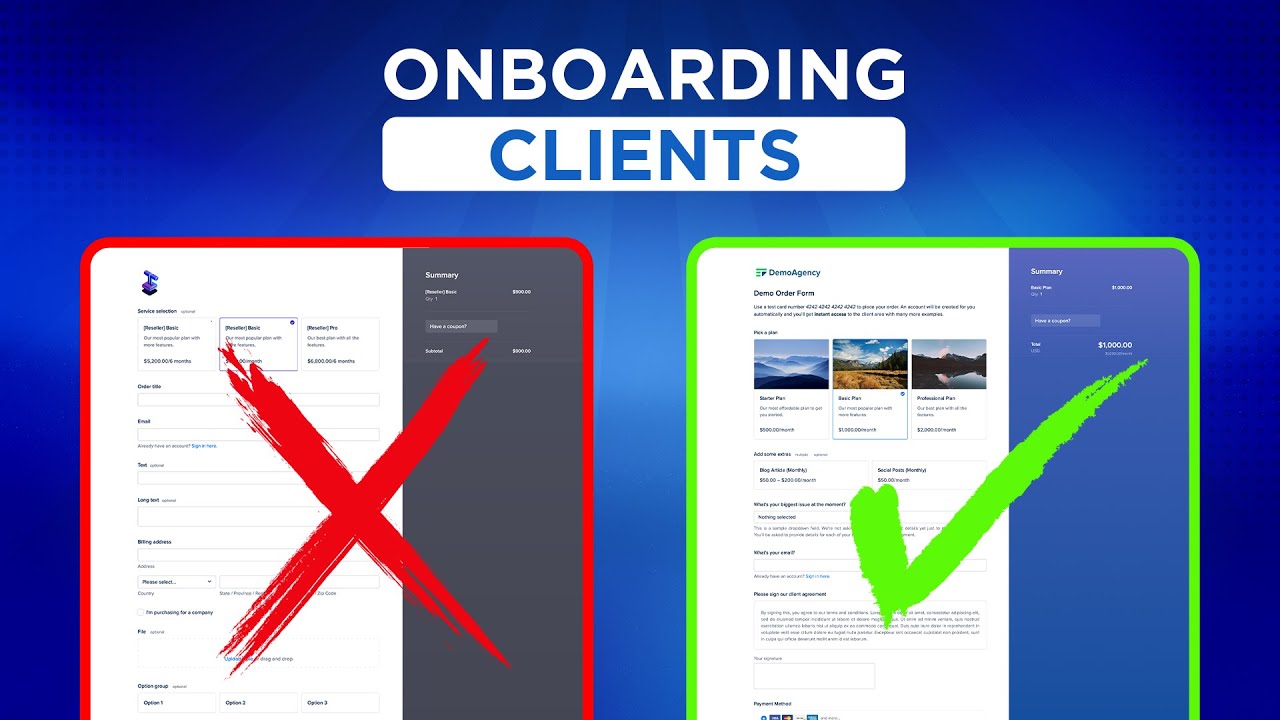
- Why this video: This video highlights a vital operational rule: separating your checkout order form from your client onboarding intake form to minimize signup friction.
- Knowledge Checkpoint:
- Design a simplified checkout process that asks only for payment details and essential contact info.
- Build a post-payment redirect page that takes the client directly to their intake form inside the portal.
- List the minimum details required to kick off your delivery workflow without needing an onboarding call.
Video 4: ManyRequests July 2025 Update
- Why this video: This short update shows a modern client portal software (ManyRequests) in action, illustrating features like asset versioning and billing management.
- Knowledge Checkpoint:
- Understand how version control works for creative assets within a dedicated portal.
- Review how automated receipt delivery and credit tracking are integrated into a modern client dashboard.
Video 5: Watch Me Build A $100,000 Sales Page From Scratch. (Copywriting tutorial)
- Why this video: Designing your landing page requires a transition from portfolio layout to direct-response copywriting. This video shows you how to structure an optimized sales page that communicates value clearly.
- Knowledge Checkpoint:
- Write a clear, benefit-driven headline for your landing page hero section.
- Structure your landing page sections to address client pain points before presenting your pricing tiers.
- Place explicit, self-serve "Buy Now" calls-to-action (CTAs) under each pricing tier.
Module Gap & Independent Study Guide
⚠️ Curriculum Gap Alert & False Positive Warning: When searching for client portal tools or setup guides online, be aware of "false positives" in general video lists. For example:
- Search terms like "SPP" can return unrelated guides for HP Service Packs, Amazon's Seller Provider Portal, or knitting techniques. Use precise terms: "Service Provider Pro (SPP) tutorial" or "SPP portal setup guide".
- Search terms like "Copilot" can return Microsoft Windows Copilot tutorials. Use precise terms: "Copilot client portal setup" or "Assembly client portal review".
Actionable Independent Study:
- Sign up for a trial of a dedicated client portal built for productized agencies (e.g., Copilot, ManyRequests, or Service Provider Pro).
- Create your portal subdomain (e.g.,
portal.youragency.com) and embed your test Stripe checkout links into your pricing page.- Complete a full test purchase: purchase your own test product on your landing page, complete the automated onboarding redirect, submit a mock ticket in the portal, and mark it complete.
Course Map
This map outlines the recommended learning order and operational milestones to transition from solo freelancer to a scalable productized agency.
Key People Index
Here are the key creators, operators, and educators featured in this curriculum:
- Gregory Hickman (@gregoryjhickman): Founder of System.ly and a leading authority on systematizing and scaling service businesses. He is known for building high-ticket productized models that replace bloated, custom agencies.
- Brett (DesignJoy / @TheBrettWay): The designer who popularized the modern "unlimited subscription design" model, scaling to over $100k/month as a solo operator without taking sales calls or meetings.
- Courtney Chaal (@CourtneyChaal): Founder of The Rule Breaker’s Club and creator of the "Signature Service" framework, which helps service providers stop offering custom proposals and package their core expertise.
- Brad Hussey (@JoshHallco guest): Experienced web designer and business coach who teaches freelancers how to transition from low-margin gigs to systemized, higher-value packages.
- Sarah Noked (@SarahNokedOBM): Certified Online Business Manager (OBM) who specializes in helping agency owners build back-office infrastructure, documentation, and standard operating procedures (SOPs).
Final Self-Assessment
Review this list once you have completed all modules and independent exercises. You are ready to launch your productized service once you can check off every item:
- Target Audience Defined: I have identified a specific Ideal Client Profile (ICP) and mapped out their functional, social, and emotional "jobs to be done" using a value proposition canvas.
- Signature Service Packaged: I have grouped my technical or creative services into 1 to 3 distinct tiers with outcome-driven, clear names.
- Scope Boundaries Established: I have written a clear "Limits of Service" page that lists exactly what is and is not included in my packages, completely eliminating scope creep.
- Subscription Pricing Ready: I have set up recurring subscription items inside a payment processor (e.g., Stripe) with a defined delivery SLA (e.g., 48-hour delivery windows).
- Back-Office SOPs Documented: I have written or video-recorded standard operating procedures for at least 3 core tasks (including task intake, production, and final file delivery).
- Project Management Board Built: I have configured a Kanban board (such as Trello, ClickUp, or Asana) to manage my active client request queue sequentially.
- Onboarding Form Built: I have separated my checkout from my intake. I have a post-purchase redirect link that takes clients directly to a clear onboarding question set.
- Client Portal Live: I have built a custom, white-labeled client portal (using tools like Copilot, ManyRequests, or SPP) and connected my subscription billing links to it.
- Direct-Response Landing Page Complete: My landing page copy focuses on outcomes rather than my process, features a prominent hero section, and includes self-serve "Buy Now" links.
- End-to-End Delivery System Tested: I have successfully run a test checkout on my own site, completed the onboarding form, managed the mockup request in my client portal, and verified the workflow from start to finish.