


![How To Create Your Ideal Client Profile | Step-by-Step | Creating a Customer Avatar [CC English Sub]](https://i.ytimg.com/vi/rQq-kz4F73c/maxresdefault.jpg)



















Design freelancers should package their services into tiered offerings (such as Visual Identity, Visual Identity Plus Marketing Assets, and Visual Identity Plus Website) rather than providing custom quotes, as this approach eliminates client confusion, accelerates sales, enables higher pricing by selling complete transformations instead of individual deliverables, and positions the designer as an expert while creating clear decision-making paths for clients.
Packaging Design Services for Freelancers: How to Sell Your Work
Added:Basic pricing models in freelancing, specifically the differences between hourly billing, flat-rate pricing, and value-based pricing.
The concept of a Target Audience or Ideal Client Profile (ICP), understanding who needs your design services and why.
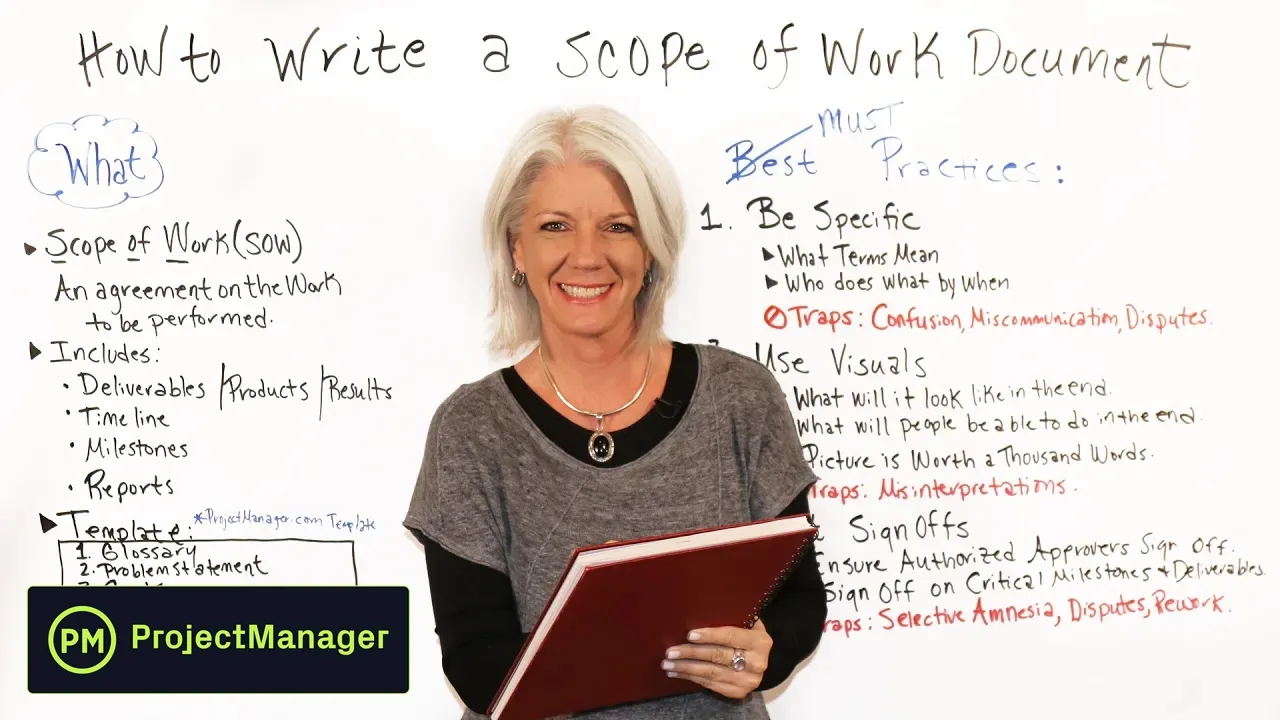
Fundamentals of defining a Scope of Work (SOW) to accurately identify project deliverables and avoid scope creep.
Establishing a core value proposition, recognizing the specific business problems your design services solve for clients.
Advanced pricing psychology and price anchoring techniques to steer clients toward high-value tiered options.
Designing client onboarding systems and automated workflows to efficiently deliver packaged services at scale.
Transitioning one-time packaged services into ongoing retainer models for predictable recurring monthly revenue.
Contract drafting and legal protections specifically tailored to scoped, tiered service offerings.
Key Performance Indicators (KPIs) and profitability analysis to evaluate and optimize the performance of each service tier.
812 views19likes9:46Original Release: 2025-11-05
If you're still sending custom quotes for every project, you're making sales harder than they need to be. Clients get confused when second guessess your pricing and half the time they ghost.
But once you package your design services, everything changes. Sales gets easier, you close faster, and you can finally charge more for your work. In this video, I'll show you how to package your services the right way so you can make more money without more stress. I started my design agency over 10 years ago. And back then I was charging $65 for a logo on Craigslist. Sometimes I would get lucky and charge $120 or maybe even $480 if a client had a bigger budget. Fast forward to today, my last project was $25,000 for a full visual identity. We don't do oneoff logos or random business cards anymore. We have a signature offer. We package our services and we charge high ticket pricing that reflects the value we deliver. Okay, let's be real. Custom quotes sound nice in theory. I'll just design something specific for each client. But in reality, custom quotes usually mean confusion and endless back and forth.
Think about it from the client's perspective. They come to you for clarity, but instead they get an email full of itemized services they don't fully understand. logo 1,200, website $4,500, strategy $2,000. Half the time they're thinking, "Do I really need all of this?" Or worse, they start cutting things out to lower the price. Packaging fixes all of that. Instead of nickel and dimeming, you present your offer as one clear solution. For example, our brand identity package includes strategy, logo design, color palette, and typography for $5,000 or $10,000. No confusion, no picking apart, and they see the whole picture. They want to just say, "Okay, I don't need colors. How much would it be without the colors?" And here's the best part. Packages let you charge more because you're selling a complete transformation, not just deliverables.
So, how do you actually do it? Start by thinking about what your clients really need, but also what you like to design.
For most businesses, they don't need just a logo. They need a full visual identity. So your package should reflect that. Maybe it's brand strategy session, logo and brand marks, color palettes and typography, basic brand guide, and that becomes your signature package. And here's the truth. It's not about the hours you spend. It's about the value of the outcome. A strong identity could help a business land retail placement or attract investors. That's worth way more than the time you spend choosing fonts.
Then once you've created your main package, the next step is to build out tiers. Tiers make selling so much easier because instead of comparing you against other designers, clients start comparing your packages against each other. And that's exactly what you want. Here's one way you could structure it. So tier one, visual identity. This is your foundation. It includes everything a brand needs to get started. So, strategy, primary logo, secondary logo, color palette, typography system, and maybe a basic brand guide. This tier is perfect for smaller businesses or startups who know they need more than just a logo, but aren't ready for a full scale package. Then you can have a tier two, visual identity plus marketing assets. So, this is where you take things up a notch. You still include everything from tier one, but you add on like either social media templates or packaging or some key print collateral depending on your niche. For example, if you focus on food and beverage, you might add packaging. If you focus on service-based businesses, maybe you include business cards and branded PDFs.
The point is that this tier shows clients how their brand will actually come to life in real world. Tier three, visual identity plus marketing assets plus websites. So, this is your premium option. It's everything from tier 2 plus a custom website that ties the whole brand together. Most clients want their brands to extend online. So, this tier positions you as the one-stop solution.
Instead of them hiring you for branding and then shopping around for a web designer, you keep the project inhouse and capture that higher ticket sale.
Now, here is why this three- tier approach works. So well clients feel in control. They get to choose between option A, B or C, which makes the decision faster and easier. It anchors your value. Some people will go straight to the website because that's what they need. But even if they don't, just seeing that higher number makes the middle option feel more affordable. and you keep clients with you instead of them buying a logo from you and then running up to someone else for social media graphics or a website. You're offering the full journey. And this is key. When you don't have packages, clients are comparing you with other designers. But when you show them two or three options, they are comparing you against yourself. Do I want the branding? Do I need marketing? Do I need a website or the branding, marketing, and a website? That's much stronger position to be in. This is also where high ticket sales become natural. If your base package is, let's say, $5,000, your middle tier might be $8,500 and your premium tier could be $15,000 or more. Even if most clients land in the middle, you're still making significantly more than if you sold Man of Logos for $1,000. By the way, if you're listening to this and thinking, "Okay, I want to package my services, but I don't know exactly how to attract clients who will actually pay these prices." I've got you. I created a free workshop called From Crickets to Clients, where I walk you through the exact steps I used to go from chasing random referrals to building a fully booked design business. Inside, you'll see how to position yourself so clients come to you, how to stop undercharging, and how to confidently book projects at premium rates. Designers who have gone through this workshop have landed their first high ticket clients in just weeks.
The link is in the description. It's completely free to join. And if you are ready to stop waiting around for opportunities and start booking consistent clients, this is where you start. Now, the way you present your packages matters just as much as what's inside. Here's how to do it. So, one, give each package a name. Don't just say package A, package B, package C. Call it something like signature brand identity or premium brand and map. Like names make them feel tangible. Two, show what's included, but keep it very simple. Clients don't need to know how many revisions or how many hours. Just list the outcomes like strategy, brand visuals, brand guide, whatever it is.
Three, highlights the transformation. So instead of actually saying logo design, say a visual identity that positions your brand to attract high-paying clients. That's what sells. The key here is confidence. If you hesitate, clients sense it. But when you say, "This is my signature package. It's 7,500 and it includes everything you need to launch a brand that sells." They believe in you.
Here's why this works. No more scope creep. Everything is already defined in the package. If they want extra work, it's an add-on at an additional price.
Faster sales. Instead of spending hours writing proposals, you can send your packages immediately. That speed impresses clients. I even have a proposal template. If you want to get it, the link is in the description.
Then, higher perceived value. A package feels polished and professional. Custom quotes feel like you're making it up as you go. Then, premium positioning.
Clients aren't comparing line items, they're comparing outcomes. And that allows you to charge more. I'll give you a real example. So, when I switched from custom quotes to packages in my agency, my close rates nearly doubled. And instead of clients trying to negotiate every little thing, they started asking, "Can I upgrade to the bigger package?"
That's the power of packaging your design services. Now, if you're ready to start packaging your services, here's your action plan. First, write down everything you currently offer. Second, group those deliverables into two to three clear packages. Third, give each package a name and price. And then update your website and proposal template to reflect your new structure.
And then on your next call, pitch a package instead of a custom quote. It doesn't have to be perfect right away.
You can refine your packages over time.
The important thing is to stop selling one of deliverables and start selling solutions. So, here's the bottom line.
Packaging your design services doesn't just make your business look more professional, it makes you more money.
It positions you as the expert, creates clarity for your clients, and helps you close projects faster at higher rates. I would love to know in the comments now, do you currently sell custom quotes or packages? And if you package, what's inside your signature offer? Also, don't forget the free workshop from Cricket to clients is linked below. It's the best place to start if you want a profitable design business that books clients consistently. If this video helped you, hit subscribe for more strategies like this. Grab a notebook, sketch out your first package, and start making sales easier for yourself and your clients.
Up Next
12:33
Value Proposition Design: Value Maps & Creative Economy
@eu-easternpartnershipcultu6943
3.4K views•2017-04-12
46:36
Retention Habits of Top DTC Ecommerce Brands Revealed
@SendItPodcast
44K views•2026-03-03

15:23
Decoy Effect: How Pricing Psychology Influences Consumer Spending
@bobinvestsUS
90K views•2026-01-05

17:30
The Planned Obsolescence of Light Bulbs and Tech
@veritasium
25.3M views•2021-03-26
Related Study Plans & Knowledge Roadmaps
Structured learning paths in Business
business
Pop-Up Retail: Strategy, Design & Execution
01Introduction to Pop-Up Retail & Strategic Goal Setting
02Budgeting, Site Selection, and Legal Essentials
03Experiential Retail Design & Visual Merchandising
+ 2 more learning modules
15h5 modules
Explore Roadmap
business
Reg CF: Startup Funding, Marketing & Launch
01Introduction to Equity Crowdfunding & Reg CF
02Platform Selection & Legal Preparation
03Crafting High-Converting Campaign Assets
+ 2 more learning modules
14h5 modules
Explore Roadmap
business
Productized Services: Scaling Solo Freelance
01Foundations of Productized Services
02Packaging and Scope Definition
03Pricing and Subscription Models
+ 2 more learning modules
15h5 modules
Explore Roadmap
business
Gov Procurement: Find, Bid & Win Contracts
01Introduction to Government Procurement & Business Setup
02Small Business Certifications & Set-Asides
03Finding and Analyzing Contract Opportunities
+ 2 more learning modules
14h5 modules
Explore Roadmap