








![ChatGPT ti sta IMBROGLIANDO [AI e Bias Cognitivi]](https://i.ytimg.com/vi_webp/ua3FKHyXzYQ/maxresdefault.webp)





![[우리회사 조직문화 만들기] 2. 조직문화에 관한 철학, 심리학, 교육학, 경영학의 핵심원리 (매슬로우, 빅터 프랭클, 허츠버그, 알더퍼, 맥클리랜드, 마틴셀리그만)](https://i.ytimg.com/vi/qZKHg-upWMc/maxresdefault.jpg)




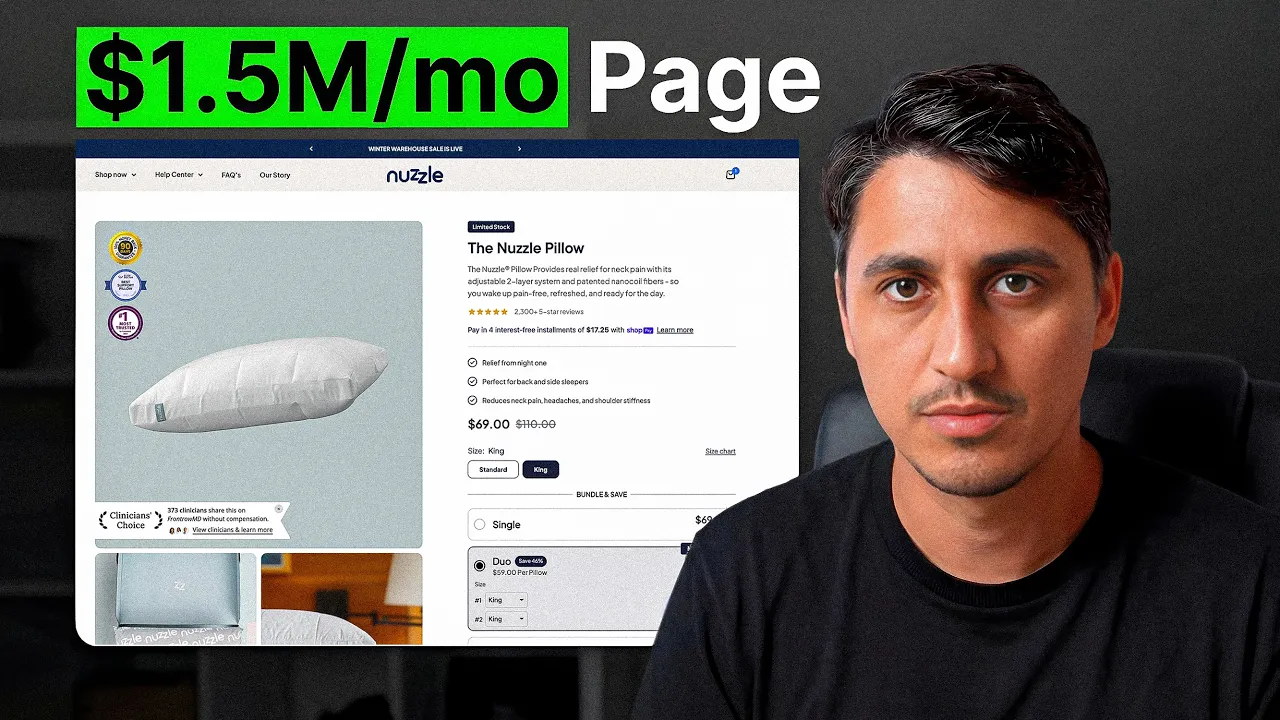









The decoy effect is a psychological pricing strategy where businesses introduce a third, deliberately unattractive option to shift consumer preferences toward a more profitable choice; this works because humans are fundamentally comparative creatures who cannot judge absolute value and instead rely on relative comparisons, making the decoy serve as a psychological anchor that makes other options appear more attractive or reasonable than they would be in isolation.
Decoy Effect: How Pricing Psychology Influences Consumer Spending
Added:Introduction to Behavioral Economics: Understanding how psychological, cognitive, and emotional factors affect economic decisions, moving beyond classical 'rational actor' models.
The Concept of Perceived Value: How consumers assess the worth of a product based on context and comparison rather than objective utility.
Cognitive Biases and Heuristics: Familiarity with mental shortcuts, specifically the Anchoring Effect, where initial information heavily influences subsequent judgments.
Basic Pricing Strategies: Understanding standard pricing models like cost-plus pricing, competitor-based pricing, and value-based pricing.
Choice Architecture and Nudge Theory: Exploring how the presentation of choices can be designed to influence human behavior without forbidding any options (e.g., default options, choice overload).
Advanced Tiered Pricing and Bundling: Analyzing how businesses structure subscriptions, SaaS pricing models, and product bundles using asymmetric dominance.
Defensive Decision-Making Frameworks: Developing cognitive strategies and heuristics to recognize and resist pricing manipulation in everyday consumer environments.
Ethical Marketing and Consumer Protection: Examining the moral boundaries of behavioral pricing and regulatory frameworks designed to protect consumers from predatory marketing tactics.
90K views4.4Klikes15:23Original Release: 2026-01-05
Picture this scenario because it is a ritual we have all participated in likely without realizing we were the victim of a psychological experiment.
You walk into a movie theater. You are hungry. But you are also trying to be financially responsible. You tell yourself, "I'm just going to get the small popcorn. I don't need the bucket.
I don't need the calories. And I certainly don't need to spend $10 on corn." You get to the counter and you look at the menu board. The small popcorn is $6. That feels expensive, but whatever. You're at the movies. Then your eyes slide to the right. The large popcorn, the massive tub that looks like a trash can, is $8. That seems like a lot, but then right in the middle, you see the medium. The medium popcorn is $7.50.
Your brain instantly does a calculation.
You think, "Wait a minute. The medium is $750. The large is only 50 more. It would be stupid to buy the medium. I'm getting way more value if I just spend the extra 50 cents for the large. So, you buy the large. You walk away feeling like a savvy consumer who just hacked the system. You feel like you got a deal, but you didn't get a deal. You got played. You walked in intending to spend $6 and you walked out spending eight.
You spent 33% more than you planned solely because the theater placed a medium option on the board that they never expected you to buy. that medium popcorn isn't a product. It is a psychological weapon known as the decoy effect and it is draining your bank account every single day. My name is Bobby and I spent way too much time thinking about the dark arts of menu engineering and the behavioral economics that corporations use to hack our decision-making processes. If you are someone who constantly finds themselves spending just a little bit more than you budgeted, or if you wonder why you always end up with the premium subscription instead of the basic one, make sure to hit that subscribe button and give this video a thumbs up if this helps you out. Because today we aren't talking about interest rates or stock markets. We're talking about why your brain is mathematically illiterate when it is presented with three options and how marketing teams use a concept called asymmetric dominance to force you to upsell yourself without them ever saying a word. Here's the thing about the human brain. We are terrible at judging absolute value. If I showed you a six-cylinder engine piston and asked you how much it costs, you would have no idea. Is it $50? 500? We don't know the intrinsic value of things. We're comparative creatures. We function like geer counters. We can only measure things in relation to the things sitting next to them. Marketing executives know this. They know that if they present a product in isolation, you might decide it's too expensive. But if they present it alongside a decoy, an option that is deliberately terrible, the expensive product suddenly looks like a bargain.
The decoy effect is specifically designed to shift your preference between two other options. In the popcorn example, the theater doesn't care about the medium. They don't want you to buy the medium. The medium exists solely to kill the small. Without the medium, you compare the small, $6, to the large, $8, and think, I'll save two bucks. But introduce the medium at $750, and suddenly the comparison shifts. You compare the medium to the large. The large dominates the medium so significantly in value per dollar that the small becomes irrelevant. You stop thinking about the absolute cost of $8 and start thinking about the relative gain huge bucket for only 50. Now you might be thinking, "Okay, Bobby, so I spent an extra two bucks at the movies.
Who cares? That's not going to bankrupt me." And if it stopped at the concession stand, you would be right. But this architecture of choice is embedded in almost every financial decision you make, from the coffee you drink to the house you buy. Let's look at the tech industry, specifically Apple. They're the grand masters of the decoy effect.
Go to their website right now and try to buy an iPad or an iPhone. You'll see a ladder of storage options. Let's say the base model is 64 GB for $400. The next step up is 256 GB for $550. and the top tier is $700. The gap between the entry level and the mid tier is designed to make you feel uncomfortable. 64 gigs isn't enough. You tell yourself, I'll run out of space. So, you look at 256.
It's $150 more. That feels steep. But then you look at the pricing structure and realize that for just a little bit more, you get into the pro territory.
The middle tier is often priced awkwardly high to make the top tier pro model look reasonable. They're using the middle tier to push you up the ladder.
You walk in wanting to spend $400 and walk out spending $700, convinced that it was the smart logical choice because of the value per gigabyte. This phenomenon was famously studied by a behavioral economist named Dan Arieli.
He noticed something weird on the subscription page for the Economist magazine. They offered three options. a webonly subscription for $59, a printonly subscription for $125, and a web plusprint subscription for $125.
Read that again. The printon and the web plus print were the exact same price. It made no sense. Why would anyone buy the printonly version when you could get the web version for free included in the third option? Arieli ran a study. He asked a group of students to pick an option. Almost nobody picked the middle option, print only. Most picked the combo deal, because it felt like they were getting the web version for free.
It felt like a steal. But then Arieli removed the middle option, the decoy. He just showed the web only, $59, and the combo, $125.
Suddenly, the preference flipped. Most students chose the cheaper webonly option. The middle option was useless as a product, but it was essential as a psychological anchor. Its only job was to make the $125 price tag feel like a bargain instead of a ripoff. Without the decoy, the expensive option looked expensive. With the decoy, the expensive option looked like a victory. This is where it gets really interesting and honestly terrifying for your wallet.
This hack applies to the biggest purchases of your life, including real estate. A good real estate agent knows how to weaponize the decoy effect. Let's say you're looking for a house with a budget of $500,000.
The agent shows you house A. It's nice, fits your criteria, and is listed at 500K. Then they show you house B. House B is the decoy. It is also listed at 500K or maybe even $510, but it's in worse condition. The roof needs repairs.
The kitchen is dated, and it's on a busy street. The agent knows you won't buy house B. They're showing it to you to reset your baseline. After seeing the dumpy house B, house A suddenly looks like a palace. You stop scrutinizing the flaws in house A because at least it's not house B. Then they show you house C listed at $525, which is slightly better than house A because you've been primed by the terrible decoy. You were far more likely to stretch your budget to $525 feeling like you're getting a steal rather than negotiating hard on the 500k house. The bad option makes the mediocre option look good and the good option look great. This sees this aggressively in the automotive industry with trim levels. You see an ad for a PRA starting at $30,000. That's the Anchor. You go to the dealership. The base model has cloth seats and no heated steering wheel. It feels cheap. Then you see the Limited trim for $40,000. That's a $10,000 jump.
It hurts. But wait, there's the premium trim for $38,000. It has almost everything the Limited has, but it's missing that one cool feature you really want, like the panoramic sunroof. The dealer has priced the premium so close to the Limited that you think, "Well, for only $2,000 more a month over 5 years, I might as well get the fully loaded one." The premium trim is the decoy. It exists to make the jump from base to limited feel smaller. They're managing your pain. They know that once you've mentally committed to spending $38,000, the leap to $40,000 is frictionless. The danger of the decoy effect is that it creates upsell leakage in your budget. You might have a strict budget for your fixed costs, but your discretionary spending is constantly being inflated by 20 or 30% because of these choices. Think about coffee.
Starbucks uses the tall grande venti pricing to perfection. The price difference between a Grande and a Venti is usually minimal, maybe 30 or 40, but the volume difference is significant.
You almost always upsell yourself to the Venti because the math tells you it's a better deal. But is it? If you didn't need 20 ounces of liquid sugar and caffeine, you didn't save money. You spent 40 extra cents. If you do that every day, that's $150 a year. Multiply that by every subscription, every popcorn, every fast food combo meal where you superers sized it because it was only a dollar more. We're bleeding thousands of dollars a year in value upgrades that we didn't need. We are efficient shoppers buying inefficient amounts of stuff. So why does our brain do this? It comes down to loss aversion and the fear of missing out on value.
When we see the medium popcorn for $7.50 and the large for $8, our brain interprets buying the medium as a loss.
We feel like we are leaving popcorn on the table. We hate losing more than we love winning. The marketer creates a scenario where the only way to avoid the feeling of being ripped off is to spend more money. It is a masterful manipulation of our insecurities. We want to be the smart ape. We want to be the one who maximizes resources. The corporation hacks that evolutionary drive to maximize their quarterly profits. Let's talk about how this impacts the middle class squeeze we discuss on this channel. The decoy effect is a major driver of lifestyle creep. When you get a raise, you go shopping for a new car or a new apartment. You enter the market with a budget, but the market is filled with decoys. You look at the luxury apartments. The one-bedroom is $2,000.
The two-bedroom is $2,800, but the two-bedroom with a view is $2,900.
You justify the extra $900 a month because the comparison between the standard two-bedroom and the view unit makes the view look cheap. You stop asking, "Can I afford $2,900?" and start asking, "Which of these is the best deal?" Those are two very different questions. The first question protects your wealth. The second destroys it.
There's also a particularly nasty version of this in the world of SAS, software as a service, and digital subscriptions. Go to any software pricing page, you will see three columns: basic, pro, and enterprise, or silver, gold, and platinum. Almost always, the silver plan is garbage. It's missing key features. It is the decoy.
It exists to make you hate it. The gold plan is highlighted. It says most popular and the price is perfectly calibrated to be painful but acceptable compared to the limited silver plan.
They are hurting you. They are sheep dogs and you are the sheep. They don't want you in silver and they know you won't pay for platinum. They built the entire maze to force you into gold. When you click gold, you feel like you made a choice. You didn't. you walk down the only hallway they left open. So, how do we fight back? How do we stop falling for the decoy effect? The first step is to recognize the ugly brother. This is a term from behavioral psychology. If you have two options, A and B, and you can't decide, adding a third option, negative A, a worse version of A, makes A look amazing. When you're shopping, look for the ugly brother. Look for the medium popcorn. Look for the printonly subscription. Look for the house that is priced high but looks terrible. Once you spot the decoy, you break the spell. You can say, "Ah, I see what you're doing.
You put that there to make me buy the expensive one." Naming the manipulation neutralizes it. The second strategy is to define your absolute needs before you ever look at the menu or the price list.
If you're going to the movies, decide in the car, "I want the small popcorn."
When you get there, put on your blinders. Do not look at the medium. Do not do the math. The math is a trap. If you decided 64 GB was enough storage for your phone, buy the 64 GB. Do not look at the 256 GB price. The moment you start comparing, you start losing. You have to become an absolute thinker in a world of relative pricing. Ask yourself, does this product in isolation solve my problem for a price I'm willing to pay?
If the answer is yes, buy it. If the answer is no, walk away. Do not let the existence of a third worse option change your mind about the first two. Finally, use the unit cost fallacy against them.
We're obsessed with getting the best price per ounce or price per gigabyte, but you cannot bank price per ounce. You can only bank dollars. If the large popcorn is a better value per ounce, but you throw half of it away, you lost money. If you buy the 256 GB iPad, but only use 40 GB, you wasted $150. You paid for empty space. Efficiency doesn't matter if the consumption is wasteful.
It's better to overpay slightly for exactly what you need than to get a great deal on a bunch of excess that you don't need. The decoy effect is everywhere. It's in your grocery store, your car dealership, your streaming services, and your vacation packages.
It's a tax on your attention span. It's a tax on your inability to calculate value in a vacuum. The corporations are betting that you will always choose the path of least psychological resistance, which is the upsell. Prove them wrong.
Be the person who orders the small popcorn. Be the person who drives the base model car because it gets you to work just as fast as the luxury trim. Be the person who keeps their money in their pocket instead of trading it for a perceived value that disappears the moment you walk out the door. If this video made you realize you've been upselling yourself your whole life, share it with a friend who always orders the Venti. We need to stop letting menus control our bank accounts. Thanks for watching and I'll see you in the next one.
Up Next
72:08
Behavioral Design and AI-Driven User Influence Strategies
@VWOofficial
107 views•2025-04-02
46:36
Retention Habits of Top DTC Ecommerce Brands Revealed
@SendItPodcast
44K views•2026-03-03

152:35
Recycling Innovations: Trash-to-Treasure Technologies & Sustainability
@BusinessInsider
13.6M views•2023-01-11

17:30
The Planned Obsolescence of Light Bulbs and Tech
@veritasium
25.3M views•2021-03-26
Related Study Plans & Knowledge Roadmaps
Structured learning paths in Business
business
Pop-Up Retail: Strategy, Design & Execution
01Introduction to Pop-Up Retail & Strategic Goal Setting
02Budgeting, Site Selection, and Legal Essentials
03Experiential Retail Design & Visual Merchandising
+ 2 more learning modules
15h5 modules
Explore Roadmap
business
Reg CF: Startup Funding, Marketing & Launch
01Introduction to Equity Crowdfunding & Reg CF
02Platform Selection & Legal Preparation
03Crafting High-Converting Campaign Assets
+ 2 more learning modules
14h5 modules
Explore Roadmap
business
Productized Services: Scaling Solo Freelance
01Foundations of Productized Services
02Packaging and Scope Definition
03Pricing and Subscription Models
+ 2 more learning modules
15h5 modules
Explore Roadmap
business
Gov Procurement: Find, Bid & Win Contracts
01Introduction to Government Procurement & Business Setup
02Small Business Certifications & Set-Asides
03Finding and Analyzing Contract Opportunities
+ 2 more learning modules
14h5 modules
Explore Roadmap