















Value Proposition Design is a strategic framework that helps organizations understand and deliver value to customers by systematically analyzing three types of customer jobs (functional, social, and emotional), identifying associated pains and gains, and mapping these against organizational products and services to create effective pain relievers and gain creators; this methodology, developed by Yves Pigneur and Alex Osterwalder, enables businesses to re-examine their offerings and potentially develop new products or services that better address customer needs.
Value Proposition Design: Value Maps & Creative Economy
Added:Introduction to the Business Model Canvas (BMC) and its core building blocks.
Fundamentals of customer segmentation and creating detailed user personas.
Basic concepts of the Creative Economy, including the commercialization of cultural and intellectual assets.
Core principles of Design Thinking, particularly empathy mapping and identifying user friction points.
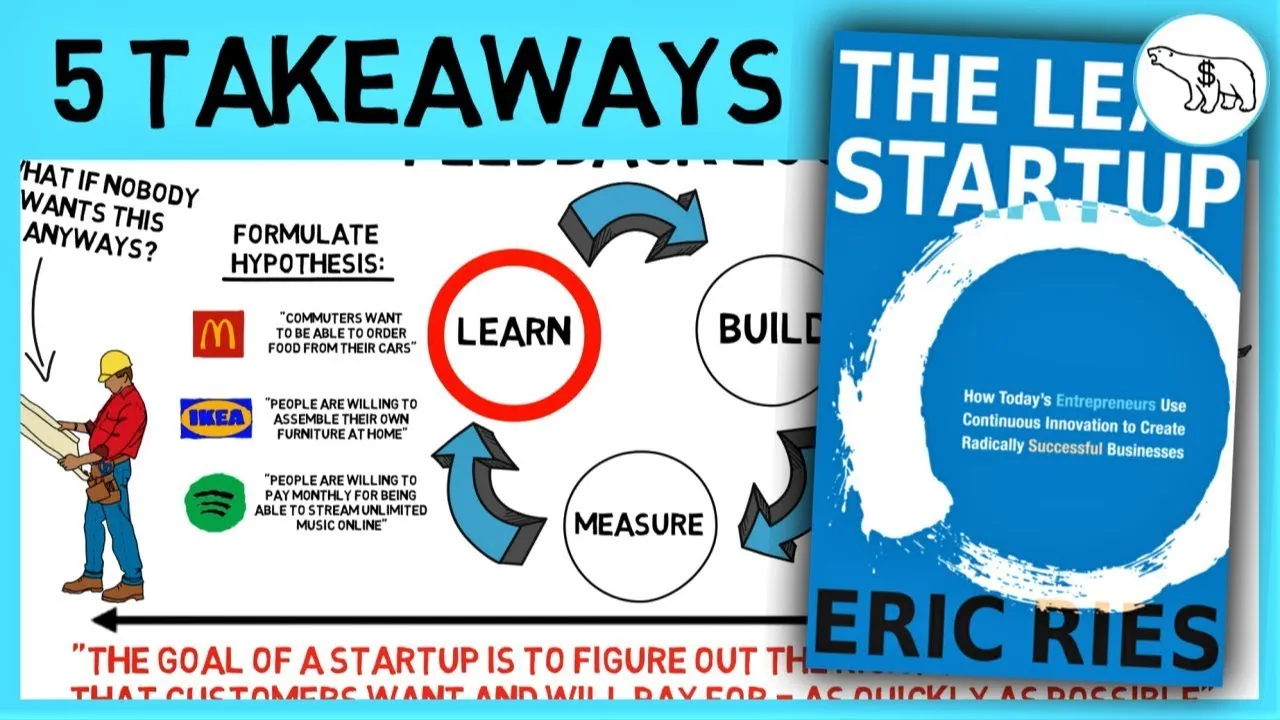
Methods for testing and validating value propositions using Lean Startup experiments and MVP (Minimum Viable Product) testing.
Achieving and measuring Problem-Solution Fit and Product-Market Fit within creative industries.
Developing sustainable pricing strategies and monetization models tailored for creative goods and services.
Scaling creative business models while preserving artistic integrity and brand value.
3.4K views18likes12:33Original Release: 2017-04-12
Value Proposition Design In previous lecture we were talking about value chains.
How the value chains are arranged in different markets.
But what actually is value?
What do we understand by that?
And how is this value then brought into products with respective pricing models and arranged with the business models?
Let’s start with definitions, with terms.
Value is the perception of usefulness that a customer gets from a product.
So, that’s the value.
Especially important is that it’s subjective.
It’s not necessarily something that you desperately need, and in many cases, we don’t need the stuff that we find of value.
So, that’s the value.
Then what is a business model?
Business model is how we organise our operations in order to deliver to the customer the promised value.
It’s how we arrange our internal operations in order to produce, to deliver to the customer the value.
And our customers can be either final customers if we are in the value chain close to the final link, to the customer, or it can be other cultural organisations or actors along the value chain depending on where we sit in that value chain.
Remember the first lecture.
And then the pricing model is actually how we put the monetary value on this intrinsic value that we are offering as a product or as a service.
So that’s important to understand subjectivity of value the business model is how we arrange operations to deliver that value, and then what are the monetary elements in our value in order to produce pricing models and, respectively, have a price on our service and product.
There is a great methodology developed by Yves Pigneur and Alex Osterwalder and their collaborators which is called Value Proposition Canvas.
It’s freely available online and I do encourage you to check it.
In fact, there are links under this video where you can download respective templates and documents and dig deeper into the methodology.
But we will try to look into the value maps: how they are working and how it can be applied to creative economy.
The Value Proposition Canvas consists of two parts.
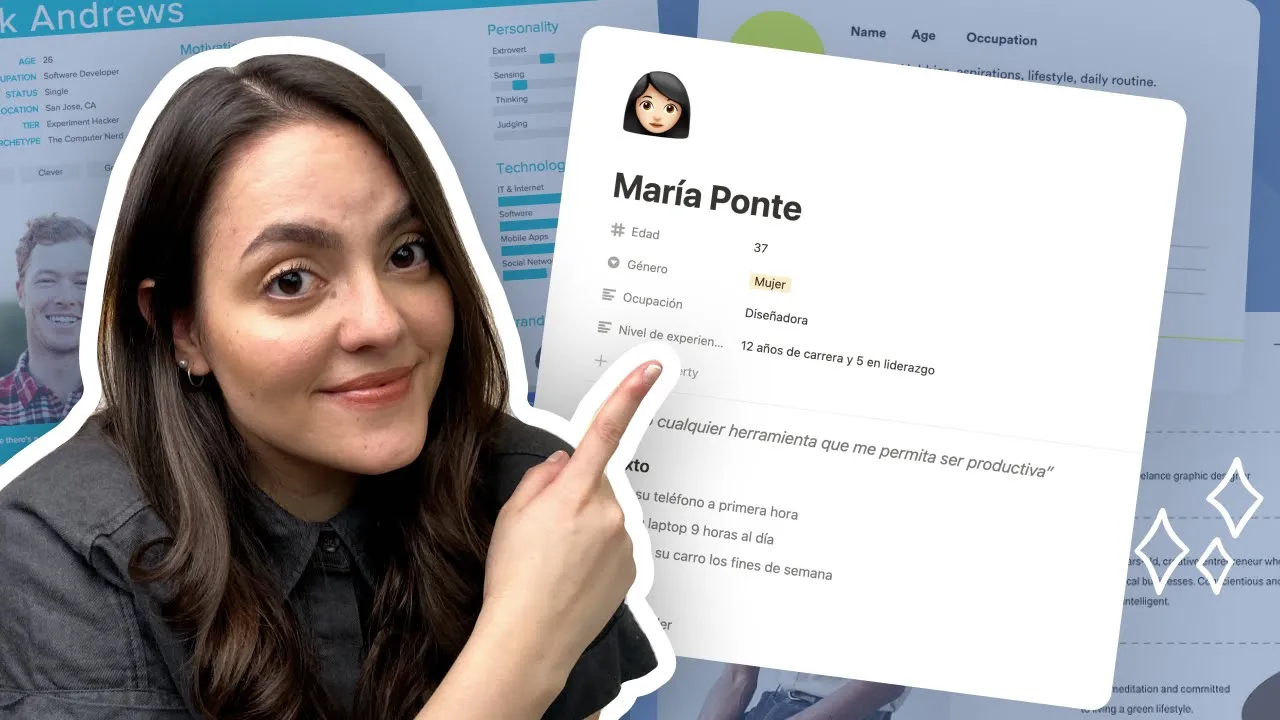
The first one is a customer profile, where we describe customer.
We will look into this in a minute.
And then there is also a value map, which describes how we convert the needs of our customers into actual products and services.
And this is a great exercise to understand how you create the value and what actual value you create.
Let’s start with value proposition canvas.
We look at the customer profile.
In the centre, you have this customer, this face.
And it’s great when you start and approach to deal with a value map to have an idea of some kind of product or a service that you are already either delivering or you want to deliver and, respectively, you already have an idea of a customer segment that you want to analyse and dig deeper into.
For instance, you are a Skansen Museum and you are talking about the families in their 30s and 40s with young kids.
Or you are a festival organiser, so your product and service would be some performances at the festival venue, and your customer would be the creative class in their 20s, 30s in the metropolitan area in your country.
So, that would be an example.
Take a note whom you are talking about.
Please note that we are talking about one product, one service, not multiple products and services because otherwise it goes too wide.
You can do these reiterations multiple times with different products separately.
So, we take the customer profile. We have the customer in the centre.
Then we have customer jobs. What are the customer jobs?
Customer jobs are the needs that your customers feel that they have and they need to fulfil.
These needs, these customer jobs could be functional: let’s say, we need a certain object in order to fulfil, I don’t know… an iron to iron, right?
Or a functional need would be that we need to have our kids somewhere for a certain time because it’s a function, otherwise we can’t go to job or won’t have time for our family. Therefore, we need something to entertain our kids for a couple of hours.
So, that’s functional job.
But then there’re also social jobs. What are the social jobs?
It’s when we want to belong to a group, we want to engage, we want to be seen with someone.
It’s also a status thing or a ‘belonging’ thing.
When we want to be with someone.
The third type of customer job would be emotional.
Either we feel a bit depressed and we want to find something like a job in order to entertain us or we want just to get lost or just switch off because we are too tired or something, we want to go into the fantasy world.
So it’s also emotional job.
And you list in this block, you list all these jobs that your customers you identified might have.
Then there are two other parts in this customer profile.
On the top, you would have ‘pains’, and below you would have ‘gains’.
Quite obvious, ‘pains’ are what hurts you when you want to do your job.
Let’s say, if I’m talking about having our kids entertained for two hours, the pain would be that when you need this, the kindergartens are closed, and there’s nowhere you can go without yourself being with your kids.
Meaning park is great, other outdoor activities are great but however someone like you needs to be there and if you need time for yourself and partner, well, there aren’t that many options.
So, it’s a pain.
But then, what are the gains that you are looking for?
Let’s take another example which would be emotional.
Emotional gain, in this case with the kids, would be that you want to feel secure about your kids, you want to know that your kids are fine, and that they are not somewhere where you would be constantly in anxiety what is happening with them.
So, for you it would be a gain if you feel safe and good about what the kids are doing right now and with whom they are engaged right now.
That would be your gain.
When you do your customer profile, you do these rounds to analyse what is the job, what is the pain that could be associated with the job, then what are the gains that people are expecting with the job.
So you put yourself in the shoes of your customer and do these rounds in digging deeper what would you gain, what would you want.
Maybe it’s a functional gain, you would want to spend less time.
Maybe you want to have it easier to use if we are talking about fashion or product design.
Or maybe you would want your friends to say: ‘Wow, what a great thing!’ ‘What a great experience you have!’ ‘Where do you go?’ Maybe you want this kind of subtle recognition and you want to be seen that you’ve been there.
So, these are types of gains that you need to mark and write and discuss in your group or even with externals whom you can invite for this discussion.
But also analyse really deep what could be the pains, what could hurt, what people want in order to solve their job.
And then we look at the other half, at the actual value map.
There we have our products and services, initially planned, what we had in mind.
Then we have already our customer profile: we understand the customer jobs, we understand the pains, we understand the gains.
And then in that value map we would have ‘pain relievers’.
So, what does it mean? Actually, quite obvious.
If you’ve already listed the pains, then you see how your product can relieve the pains.
Is your product is outperforming the product which is already on the market?
Does it provide emotional relief to the pain that customers might feel?
So you look at the pains that you’ve listed: for functional jobs, emotional jobs, or social jobs, and then you list what could be those pain relievers.
In which way, how can you make these pains go away?
And then below you have, respectively, gains: what people are looking for good mood, for wow-effect, for security, for certain functionality, for costs savings – and then these are actually gain creators.
So, they create gains.
Your product should have these elements that enable people, your customers, to gain from your service and product either financially, or emotionally, or with functionality or in other ways.
It’s a great exercise to do together in the group.
Again, you have your jobs, your customer jobs, pains, gains, pain relievers and gain creators, and then you have products and services.
And what happens?
If go along this loop, you might think about new services or slightly or even completely changed product or service because you understand that there are other pains and gains which are important.
So, super important is actually to rate the pains and the gains and, respectively, pain relievers and gain creators of your customers to understand better your customer: what actually is hurting, where actually people are looking at the added value.
To add you an example, again, in the Culture and Creativity course a week ago we had a group discussion about a festival, famous festival in Ukraine, GogolFest.
And we were looking at the customer profile, and we were looking at the pains, gains, gain creators, pain relievers, and we understood that actually what people are looking for – where is the gain? – it is wow-effect.
And then, secondly, people are looking for community.
They want to belong to a certain type of community that keeps gathering annually at that great festival.
Suddenly, you see that the product or the service is not the festival itself but it can be a community.
So the festival should offer certain services or activities in order for that community to be there, to be seen and clearly acknowledging that I belong to the GogolFest community.
And also there should be wow-effect, there should be performances, there should be something entertaining, amazing, out-of-the-world because that’s what is their gain creator.
It might be wrong, I mean, we didn’t dig too deep into that.
But that’s a great example that when you start just with the festival and your usual customers that you think these are the crowds that keep going annually, and then you analyse actually where the pains and gains are, and you can come up with very interesting modifications of the product and services that you are actually delivering on the market.
So, look at the Value Proposition Canvas, do this mapping of your customers and then of the values that you are delivering to customers and see whether you can adjust, trick your current products and services or maybe even come up with new ones.
Thank you for watching this course.
I hope that you enjoyed it and you learnt something new and useful for your further work.
Please note that there is some additional information – cases, materials and useful links that you can check just below this video.
Thank you and bye.
Up Next

32:57
How Design Subscription Services Generate Consistent Revenue
@FluxAcademy
56.4K views•2022-08-17

66:41
Web3 Social Decentralization: Farcaster Co-Founder on Crypto Social Networks
@levychain
1.5K views•2022-10-18

15:23
Decoy Effect: How Pricing Psychology Influences Consumer Spending
@bobinvestsUS
90K views•2026-01-05

17:30
The Planned Obsolescence of Light Bulbs and Tech
@veritasium
25.3M views•2021-03-26
Related Study Plans & Knowledge Roadmaps
Structured learning paths in Business
business
CPG Retail Strategy: Pitching & Trade Spend
01Foundations of the CPG and Grocery Ecosystem
02Retail Math and Designing the Pitch
03Securing Shelf Space & Category Reviews
+ 2 more learning modules
12h5 modules
Explore Roadmap
business
Pop-Up Retail: Strategy, Design & Execution
01Introduction to Pop-Up Retail & Strategic Goal Setting
02Budgeting, Site Selection, and Legal Essentials
03Experiential Retail Design & Visual Merchandising
+ 2 more learning modules
15h5 modules
Explore Roadmap
business
Reg CF: Startup Funding, Marketing & Launch
01Introduction to Equity Crowdfunding & Reg CF
02Platform Selection & Legal Preparation
03Crafting High-Converting Campaign Assets
+ 2 more learning modules
14h5 modules
Explore Roadmap
business
Productized Services: Scaling Solo Freelance
01Foundations of Productized Services
02Packaging and Scope Definition
03Pricing and Subscription Models
+ 2 more learning modules
15h5 modules
Explore Roadmap