









![[공대생 추천 영상] QA, QC가 뭘 하는지 궁금해? 모두 이야기 해줄게! / 공대 취업 / 직무인터뷰 / 품질 관리 / 품질 경영 / 코오롱인더스트리](https://i.ytimg.com/vi_webp/tO1xkcNbsB4/maxresdefault.webp)












![FREE Course: Master GoHighLevel in 1-Hour [Tutorial & Review for Beginners in 2025]](https://i.ytimg.com/vi_webp/EuDI3utWDoU/maxresdefault.webp)
Standard Operating Procedures (SOPs) are documented instructions that outline how to complete key tasks within a business, consisting of five essential elements: Prerequisite (required resources), Purpose (reason for the procedure), Policy (guidelines and frequency), Party (responsible person), and Property (owner who maintains the document). SOPs enable businesses to maintain quality standards, ensure consistency across team members, empower employees to create their own procedures, and facilitate smooth transitions when team members leave, ultimately supporting business scalability and operational efficiency.
Mastering Standard Operating Procedures (SOPs) for Business Scalability
Added:Basic business operations and process mapping: Understanding how a business functions daily and how to map basic workflows.
The concept of business scalability: Differentiating between organic business growth and scaling operational capacity efficiently.
Organizational structure and role definition: Understanding how responsibilities and tasks are distributed across a team or department.
Fundamentals of quality assurance: Recognizing the importance of consistency, error reduction, and standardized outputs in business.
Change management strategies: Learning how to successfully implement new procedures and overcome team resistance to process changes.
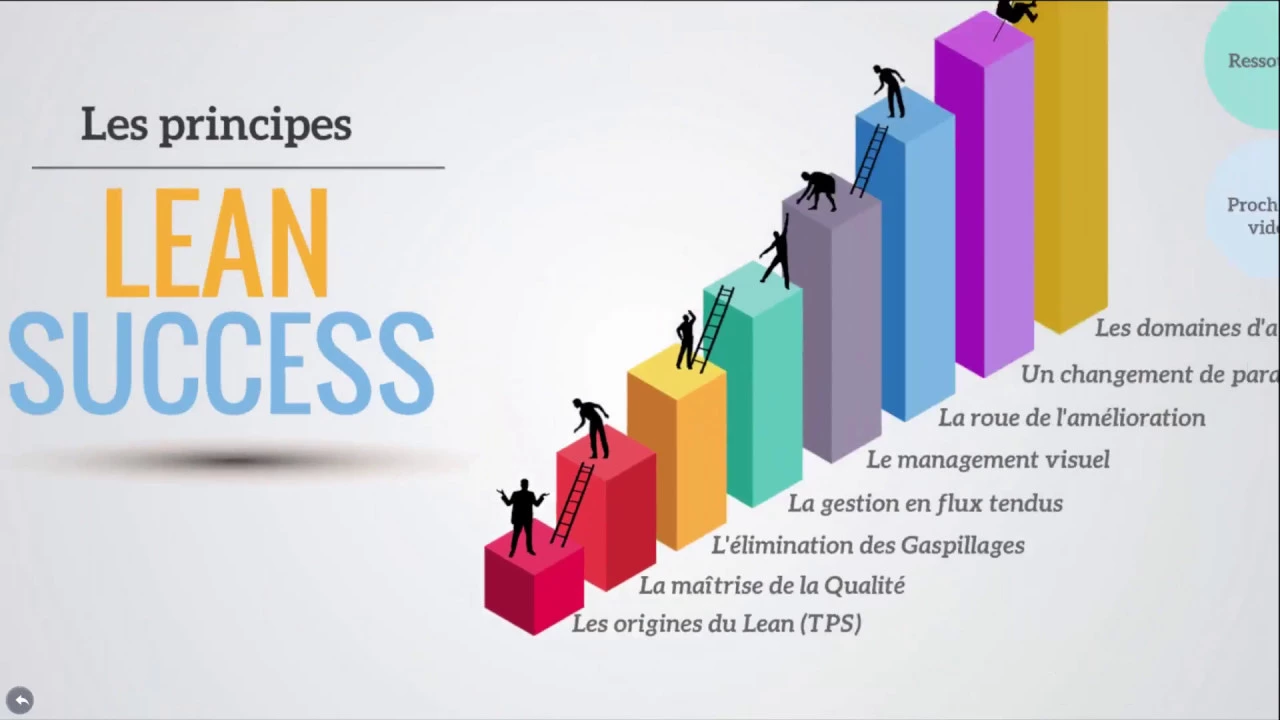
Continuous improvement frameworks: Exploring Lean, Six Sigma, or Kaizen to regularly audit, refine, and optimize existing SOPs.
Knowledge Management Systems (KMS): Designing digital repositories to organize, update, and distribute SOPs effectively across the organization.
Workflow automation: Integrating standardized procedures with business software (like ERPs or project management tools) to automate repetitive tasks.
7.8K views167likes8:38Original Release: 2021-12-01
Hey there, Sarah Noked here. I'm the CEO and founder of OBM School and I teach people just like you my tips and strategies for how to start and scale a successful service based business online, work with the right clients, charge the right pricing, and actually create a life and business by design. Now there's definitely a buzz around systems these days. It wasn't always like that.
I remember three or four years ago, systems were definitely not sexy and people weren't excited about setting systems up in their business. And I've noticed, especially in the last year, that systems are really top of mind. Not just for online business managers these days, but also for their clients and just business owners in general. So I decided that today I really want to talk all about systems and actually take you behind the scenes on how I set up systems for my clients, but also for my own business and basically what we teach inside OBM School.
So here we are inside the systems vault and we offer this as part of our OBM School. And in particular, I wanted to bring your attention to our master for creating standard operating procedures. This is one of the big ones in our program. We have about over a hundred SOPs inside of our vaults, but I wanted to give you a little bit of understanding of how systems really do play a key role in your ability to really take things to a next level as an online business manager. And if you're listening to this as somebody creating systems in your own business, then this is definitely the first place that I want you to start. It's with the master for creating standard operating procedures in your business. It's sort of funny in a way, but yes, there's an SOP for creating SOPs. And as you can see, it goes over a lot of the things that are in our template. So I just want to start with our template for creating master docs.
So I'm going to start by heading into this one. So I'm not going to go through the whole SOP, but I do want to talk about how to create SOPs for your business. So this is part of our master, but what I wanted to bring your attention to was this beautiful little template that we have here. And this is the basis of all of our SOPs. And actually, if you go to sarahnoked.com/SOP, you can download this template for free. So here's what this template looks like. And when you are building systems in your business, you want to go through these Ps of prerequisite, so any resources that are relevant to being able to complete this project or this particular system, the purpose of why this system is important. The policy are the guidelines around how to complete the task, how often it happens, the different nuances, right? The party, the party is who's responsible for carrying out whatever is included in the procedure. And the property is the person who actually owns the procedure, so that is usually the online business manager.
It's the person who's responsible for basically making sure that the SOP stays up to date. And then you have the process listed. So here's part one, here's part two, here's what happens in part three. And then the procedure breaks down each part of the process. And that is how we have created SOPs in our own business for our clients. And I want to show you now, in context, the SOP for creating SOPs. So in our prerequisite, we have all these things that we need for whoever in our business, all team members, quite honestly, who are creating standard operating procedures, right? Because in our team and what I hope to bring to my clients' teams as an OBM, is that everybody should be empowered to create standard operating procedures around what they're doing, around what others are doing, so that we can all have the business run off the systems.
And the people are responsible for managing the systems, but the systems are not dependent on people. So if Susie, the VA of our client's business leaves, we know exactly what Susie's been doing, right? We're not left here not knowing what she was responsible for, or how exactly she sent out that email broadcast every month. So when you have a standard operating procedures and a procedure for creating standard operating procedures, it does really empower your team.
So the prerequisites are all the things, again, so in the context of our template, we have the master SOP that's connected, folders where our documents live, the templates. We have a master guideline of naming conventions. We have a master SOP of, oh man, all these very juicy SOPs that you get inside OBM School. You got tons of those. We've got archiving standard operating procedures.
Teamwork's our project management tool that we use and then creating templates and supporting docs.
So our purpose of creating standard operating procedures, so SOPs are the bread and butter of our business and allow us to maintain a high level of quality assurance and standardization in the way we operate. As such, SOPs are a big part of our company culture and contribute successfully to our ability to scale and operate with a virtual team. Having documented and maintained procedures and processes in place for every recurring task in the business allows us to streamline systems, be productive as possible (IE, no need to reinvent the wheel each time) and take holiday and leave.
In short, we heart SOPs. And this is literally what I hope to leave as a legacy behind me is the idea of creating systems, having a life, being able to take a holiday.
It just makes everybody's life easier. Policies around creating SOPs. So in our business, we always use having people log in with their @sarahnoked.com email address in drive. That way, when someone on my team creates a standard operating procedure, I own that standard operating procedure. If they leave, they're not taking that with them. All SOPs must follow this layout that I showed you before. That was our template. We have our guidelines for naming conventions, because of course we all, I mean, look, if you're listening to this channel, then I guess you really like naming conventions and making sure that things are organized. For example, I cringe if people don't follow this format for the title of these. And that is something that I think is very unique to our personalities as OBMs. We have SOPs are put in place for all recurring tasks.
I was shouting that from the rooftop earlier, I will shout it again. Here's where SOPs can be found. Here are our systems definition. So we highlight these five systems. This is part of what we teach inside of OBM School. What kinds of systems that we see happening in businesses and how we can really leverage our knowledge of systems to help streamline. So we've got operations, sales, marketing, delivery, and growth. Some other nuances about our particular SOPs and then the party, again, I said that all team members are responsible for creating SOPs, but our online business manager is responsible for making sure that this standard operating procedure for creating standard operating procedures stays updated. And then we have our process of how to create the SOP and then we're mapping it out with screenshots, nice hyperlinked pieces here and there and making it just a really, really beautiful procedure.
And this is the reason why creating systems can be such a beautiful thing in your business. So I hope you enjoyed that behind the scenes look at our systems. Again, we really dive into this systems piece inside OBM School, and we actually give access to our entire systems vault. And our systems vault contains done for you systems and SOPs that you can really drop right into your business or into a client's business. And if you want to learn more about that, I'll leave our OBM School links below the video and also leave the link below so that you can grab our template for creating these SOPs for your own business. And do click subscribe and hit that little bell to be notified when we go live every Wednesday when we drop a new video and I'll see you soon.
Up Next
24:17
Copywriting Tutorial: Building a High-Converting Sales Page from Scratch
@Tyson4D
67.1K views•2024-01-06
46:36
Retention Habits of Top DTC Ecommerce Brands Revealed
@SendItPodcast
44K views•2026-03-03

15:23
Decoy Effect: How Pricing Psychology Influences Consumer Spending
@bobinvestsUS
90K views•2026-01-05

17:30
The Planned Obsolescence of Light Bulbs and Tech
@veritasium
25.3M views•2021-03-26
Related Study Plans & Knowledge Roadmaps
Structured learning paths in Business
business
Pop-Up Retail: Strategy, Design & Execution
01Introduction to Pop-Up Retail & Strategic Goal Setting
02Budgeting, Site Selection, and Legal Essentials
03Experiential Retail Design & Visual Merchandising
+ 2 more learning modules
15h5 modules
Explore Roadmap
business
Reg CF: Startup Funding, Marketing & Launch
01Introduction to Equity Crowdfunding & Reg CF
02Platform Selection & Legal Preparation
03Crafting High-Converting Campaign Assets
+ 2 more learning modules
14h5 modules
Explore Roadmap
business
Productized Services: Scaling Solo Freelance
01Foundations of Productized Services
02Packaging and Scope Definition
03Pricing and Subscription Models
+ 2 more learning modules
15h5 modules
Explore Roadmap
business
Gov Procurement: Find, Bid & Win Contracts
01Introduction to Government Procurement & Business Setup
02Small Business Certifications & Set-Asides
03Finding and Analyzing Contract Opportunities
+ 2 more learning modules
14h5 modules
Explore Roadmap