



























Client portal software enables service-based businesses to productize their offerings by automating request handling, managing recurring payments, tracking support credits, and preventing scope creep, thereby improving operational efficiency and client satisfaction.
How Client Portals Optimize Website Agency Operations
Added:Understanding of the web design and development project lifecycle, including stages like discovery, wireframing, development, and QA.
The definition and core causes of 'scope creep' in professional service delivery, and how it impacts agency profitability.
Basic knowledge of agency-client communication challenges, such as fragmented feedback channels (email, Slack, phone calls).
Familiarity with standard project management principles and how tasks, files, and milestones are typically tracked.
Technical integration strategies for linking client portals with existing agency tools (e.g., CRMs, PM tools, and billing software).
Best practices for client onboarding and change management to ensure high adoption rates of the new portal.
Establishing Key Performance Indicators (KPIs) to measure the operational ROI of the portal (e.g., project turnaround time, client satisfaction scores).
Advanced automation workflows within client portals, such as automated intake forms, contract signing, and recurring billing.
9.8K views159likes7:59Original Release: 2022-09-15
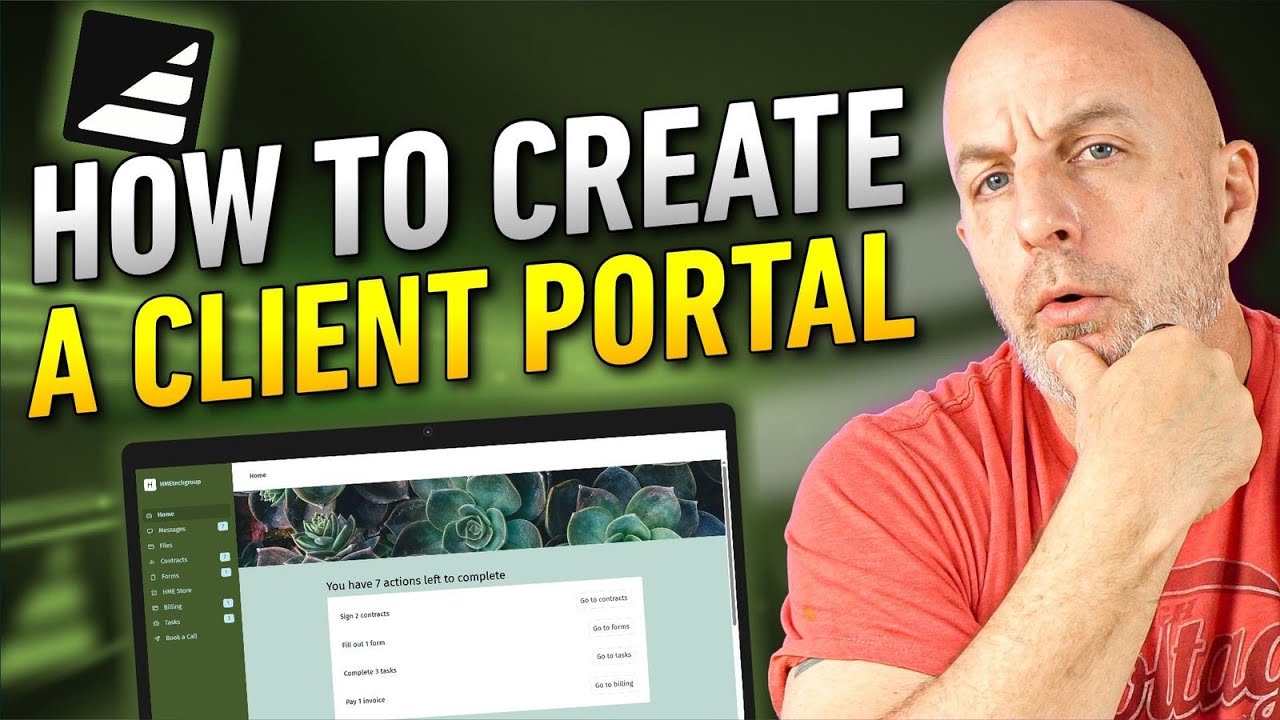
look at this form this might look like any other form to you but to me it's the key to happiness inside of my client work this form is part of a system A system that allows me to get my work done more efficiently it ends those emails that are layered with different colored responses from multiple people it stops scope creep so I'm not providing more work than what has been agreed to with the client it's allowed me to productize our services and I'm more excited about growing our business than ever before best of all our clients love it as well what is this service cool you're really good at software Dave the tool is called mini requests and I'm going to show you exactly how it works as well as what I wish it did better so this is a great fit for anybody who's providing Services now I'm doing it with websites but you could certainly use this tool for something like graphic design or even content writing to get started you just add your services inside of many requests as products and then you link to them from your website so that people can check out and become customers when creating your products you can set limits like a number of requests per month or how many concurrent requests people can make each service that you add has its own request form for your clients to fill out that way you can customize the form so that it's specific to the service you're providing when your customers log in everything has your branding they can file a new request purchase additional services from you or even just update their credit card information so that's how many requests Works in a nutshell now obviously I can go into exhaustive detail about how each feature works but I think it's more beneficial to do a before and after after because I've been using this software with our clients for the last two months and it's been a absolute great experience before mini requests our process was inefficient we would create a custom proposal for each Prospect even though we were really only selling two or three different products so with mini requests we productize our business and things are going really well with our old process after the client agreed to the proposal we'd sign them up for wave apps recurring billing wave apps is a popular tool that a lot of businesses use successfully but there wasn't a very good client experience in terms of once people have entered their credit card information there's no way for them to update it so we would get a notification when a payment had failed and then we'd have to track down the client try to get them to update it and every single time it was a problem it was just they couldn't get the link to work right or something wasn't happening in an efficient manner so now with mini requests if something fails we get a notification but so does the client they can log in update their own card no problem that right there is worth it's weight in gold but what makes it even better is that now their requests are all displayed for them because the way we do website management is each plan gets a set number of support requests per month and often these teams are large they might have five or six people working on a particular website and all of those people are welcome to send in support requests that we will fix for them but if they don't know about each other those 10 requests that they might have paid for can get eaten up rather quickly we didn't have a dashboard or any real easy transparent way to show people how many requests were available so many requests really really solve that problem in a hurry for us and made life a lot easier now scope creep is less of a thing because we don't feel compelled to do extra work just because we don't want to upset people and say hey you've already used all of your credits for the month you've got to either pay for more or wait till the month rolls over alright so that's how it transformed our business but I still want to talk about some of my favorite features and the first feature I want to highlight is the ability to customize the client portal you can add your own logo including variants for light and dark backgrounds as well as adding your primary color which functions as a brand color this presents your brand with professionalism and you know you probably have a very legit business so you want your customers to feel that way when they go to interact with you but the portal doesn't just stop there with some light branding you can do a ton of other things like I've gone ahead an integrated rewardful so we have an affiliate program so that people can actually promote our services and we get new customers and other people can earn money from their referrals I've also added links right to the dashboard to our knowledge base or important YouTube videos to help our clients get started and speaking of getting started you can add an onboarding sequence so that when people sign up they get logged in for the first time they know exactly what to expect and what to do next and I absolutely love this announcements feature which allows you to set timed announcements that will expire automatically and display whenever someone logs into the dashboard they can also be sent out out via email although I prefer to just have them display in the dashboard your mileage may vary I mentioned the rewardful integration there is a ton of other third-party Integrations some of which you're probably going to love like the ability to add a dashboard from like Google data Studio or services like click up so that you can show a dashboard on a per client basis so it can be customized to a specific client they can see important information for their business maybe you're doing SEO you want to show them an SEO dashboard boom you can grab that information right out of data studio and display it inside of your client portal what is more professional than that I have actually sent quite a few messages already to the team over at mini requests I do want to point out that this is a funded business they are part of the calm fund which is a venture capital fund this they've got funding it seems like a very secure business and the founders have been super responsive to my multiple emails requesting they update many requests in a certain direction so here are my feature requests for mini requests in the intake form or the request form what I'd love to C is the ability for more customization of images so the first thing that's obvious is just inline images right now you can attach images to your request but it doesn't show up in the conversation that's the first thing that needs to be updated then I'd love for there to be markup on those images so people can go and say hey make this button bigger or how about change this color from Blue to Red you get the idea it'd be really a great design tool to have that built right into the request form the next service that I'd love to see kind of piggybacking on that is a widget that I could embed on my client websites so if they had an issue I could have them click where they want their website updated maybe when they're logged in as an administrator and then that request would be automatically transmitted over to mini requests and we could get it taken care of for them straight away one last feature request related to having customers make requests is to allow them to email you go full on help desk allow people to create new requests via email right now they've got to log into the portal and fill out the form there which is great I like that because then you can make sure you get the important data that you want but it sure would be nice to just let people fire off emails as well maybe you make that an optional thing but I think I'd like to see that as well as my customers I know they would the only other feature that I'd like to see added is the ability to switch between plans right now a customer could log into our portal and they could add a new service so they could sign up for maybe a second care plan if they wanted to but they couldn't switch from a small care plan to a bigger care plan they would simply have both running concurrently then I could log into stripe and I could change things there on my end and have it resync in many requests but it sure would be nice to have you know a prorated switch between plans that would be a really great feature hopefully they Implement that in version two so that is my look at mini requests as you can tell I am definitely a fan go check it out if you do a service based business they got plans starting as low as 49 bucks a month all the way up to 249 dollars but they never take a cut of your sales which is really really cool now I may or may not have a promotional code down below so go check that out uh click my link that will be a referral link so it helps me out here at the channel if you click that before buying hope you found this video helpful if you got any questions about mini requests leave them in the comments down below and I'll see you in the next one
Up Next
3:57
ManyRequests July 2025 Update: New Features & Workflow Improvements
@manyrequests
218 views•2025-08-08

26:22
Walking in the City: Urban Rituals and the Flâneur in Contemporary India
@PSBTIndia
1.9K views•2016-08-02

9:49
FastAPI vs Flask vs Django: Choosing the Right Python Web Framework
@TechWithTim
302.5K views•2024-05-26

1:42
Game of Thrones Opening Credits: A Cinematic Analysis
@gameofthrones
46.3M views•2011-04-18
Related Study Plans & Knowledge Roadmaps
Structured learning paths in General & Interdisciplinary Studies
general-studies
Artificial Light: History, Tech & Human Impact
01The Pre-Electric Era: Fire, Oil, and Gas Lighting
02The Incandescent Revolution and Grid Electrification
03Gas Discharge and Fluorescent Illumination
+ 3 more learning modules
14h6 modules
Explore Roadmap
general-studies
Elevator Engineering: History, Physics & Cities
01From Hoists to Safety Brakes: The Dawn of Vertical Lift
02Hydraulic vs. Traction: The Engineering Physics of Elevators
03Modern Speed, Safety, and Algorithms
+ 2 more learning modules
12h5 modules
Explore Roadmap
general-studies
Rubber: Material Science, History & Geopolitics
01Origins of Natural Rubber & Mesoamerican History
02The Chemistry of Natural Rubber & Vulcanization
03The Geopolitics of the Rubber Boom & Colonization
+ 2 more learning modules
12h5 modules
Explore Roadmap
general-studies
Containerization: Evolution, Logistics & Trade
01Ancient Trade & Bulk Cargo: Amphorae to Barrels
02The Industrial Revolution & Cardboard Packaging
03The Containerization Revolution: Malcom McLean
+ 2 more learning modules
12h5 modules
Explore Roadmap