Artificial Light: History, Tech & Human Impact
Learning Goal: Trace the technological evolution of artificial illumination—from oil lamps and coal gas lighting to incandescent bulbs and modern LEDs—and analyze how controlling light transformed human productivity, sleep patterns, urban nightlife, and global energy infrastructure.
- Prerequisites: None. A basic understanding of introductory physics (voltage, current, and atomic energy states) and basic biology (nervous systems and photoreceptors) is helpful but not required.
- Estimated Study Time: 14 Hours
Module 1: The Pre-Electric Era: Fire, Oil, and Gas Lighting
This module introduces the deep history of human illumination before the arrival of electricity. You will explore how early humans harnessed open fires, transitioned to animal- and plant-based fats, developed candles, and ultimately built massive urban coal-gas networks that transformed late 18th- and 19th-century cities.
Recommended Videos
Why this video is valuable: This highly detailed historical reconstruction examines the evolution of early lighting instruments, specifically contrasting Roman clay and stone oil lamps (utilizing fish or olive oils) with medieval rushlights (dried rush stems soaked in animal grease) and early candles. It provides a foundational understanding of the logistics, raw materials, and physical limitations of combustion-based lighting prior to the industrial era.
Why this video is valuable: This video provides an immersive look at the material reality of 18th-century lighting. It contrasts open fires, early liquid-fat lamps, and different varieties of candles (tallow vs. beeswax). You will gain an appreciation for the labor, cost, smoke, and olfactory realities of lighting spaces before modern automation, framing artificial light as a scarce, highly valued commodity.

Why this video is valuable: This brief architectural tour offers a rare look at how Victorian homes integrated early municipal coal gas networks. It details the installation of gas piping routed from city gasworks directly to domestic light fixtures, demonstrating the technological and infrastructural leap represented by piped utility gas.
Gap Coverage & Independent Study Recommendation
While the provided video selection covers pre-industrial flame sources and domestic gas piping installations well, long-form content detailing the industrial scaling of urban coal gas networks is limited.
- Independent Research Task: Search for resources detailing the manufacturing of gas from coal carbonization, the construction of "gasometers" (large gas holders) in Victorian cities, and how gas distribution lines laid the structural blueprint for modern municipal gas and water utilities.
Knowledge Checkpoint
- Detail the physical and chemical differences between tallow (animal fat) and beeswax candles, specifically comparing their burn rates, smoke output, and historical class associations.
- Explain how a rushlight was manufactured and used as a low-cost alternative to poured candles.
- Describe how municipal coal gas was generated and distributed to Victorian households, highlighting how this network altered internal residential plumbing and architecture.
Module 2: The Incandescent Revolution and Grid Electrification
This module analyzes the physical principles behind incandescent light bulbs, the high-stakes patent battles between Thomas Edison and Joseph Swan, and the critical transition from localized lighting systems to physical, long-distance electrical power grids.
Recommended Videos
Why this video is valuable: This dramatized documentary details the commercialization of the incandescent light bulb and the physical infrastructure required to power it. It unpacks the financial partnership between JP Morgan and Thomas Edison, the construction of the landmark Pearl Street Station (the first commercial DC power plant), and the subsequent "War of the Currents" against Nikola Tesla's and George Westinghouse's alternating current (AC) system.
Why this video is valuable: This video bridges the gap between historical narrative and practical physics by physically recreating Edison and Swan's carbon filament bulb. It explains the physical challenges of carbonizing organic fibers (such as cotton or bamboo), the necessity of establishing a deep vacuum inside the glass envelope to prevent filament combustion, and the thermodynamic reasons why carbon filaments eventually degrade.
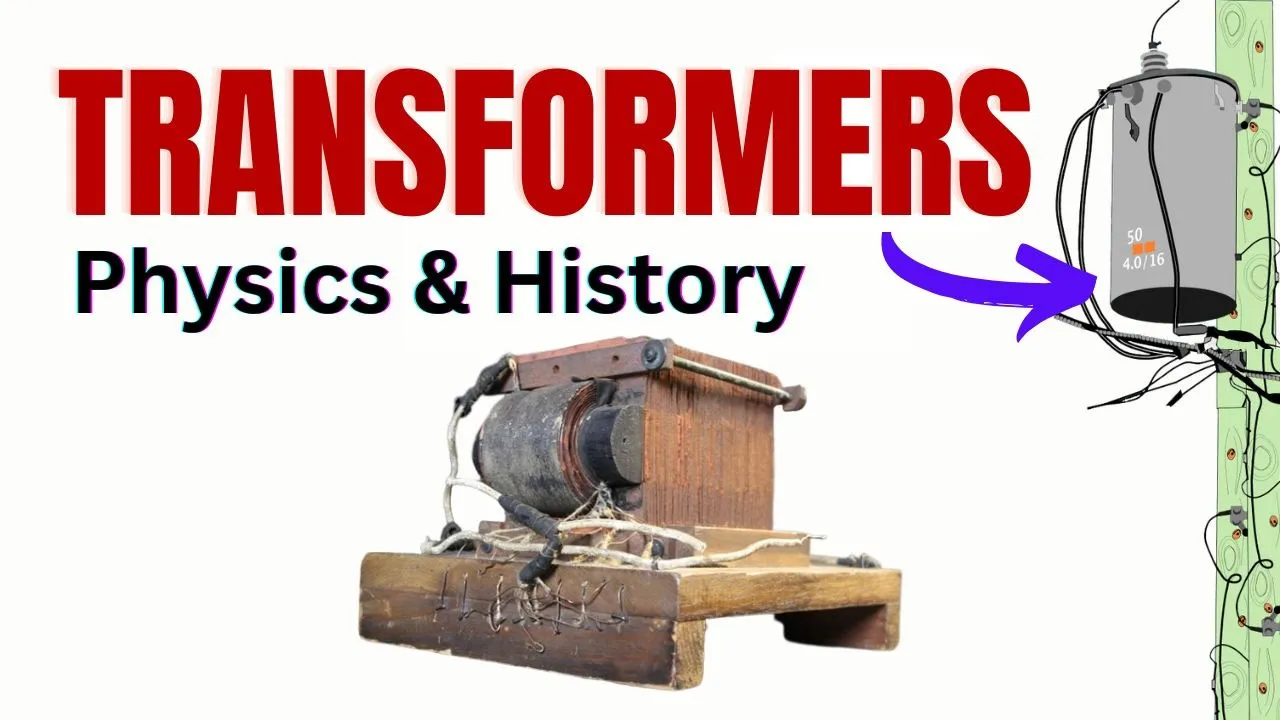
Why this video is valuable: This highly educational history of science video clarifies why alternating current (AC) ultimately won the power grid war. It explains the physics of the transformer, which allowed electric utilities to step up voltage for highly efficient, long-distance transmission and step it back down to safe levels for domestic lighting. This direct link connects the adoption of domestic bulbs to the engineering of modern high-voltage grids.
Gap Coverage & Independent Study Recommendation
While these videos present the economic and scientific rivalry between AC and DC power networks, they do not exhaustively detail the localized sub-station distribution architectures.
- Independent Research Task: Read about Thomas Edison’s "three-wire system" of distribution and the physical limitations of transmission distance when operating at 110V direct current without transformers.
Knowledge Checkpoint
- Explain why a high vacuum is thermodynamically necessary inside an incandescent bulb, and what happens to a carbon or tungsten filament in the presence of oxygen.
- Compare the physical transmission efficiency limitations of Edison’s low-voltage DC system with Westinghouse’s high-voltage AC system using Joule heating equations ().
- Identify the historical compromise between Thomas Edison and Joseph Swan regarding their overlapping patent claims in the 1880s.
Module 3: Gas Discharge and Fluorescent Illumination
This module transitions from incandescent thermal radiation to the quantum mechanics of gas discharge and plasma. You will study how neon, mercury vapor, and fluorescent lamps generate highly efficient light at lower physical temperatures through atomic excitation and phosphor conversion.
Recommended Videos
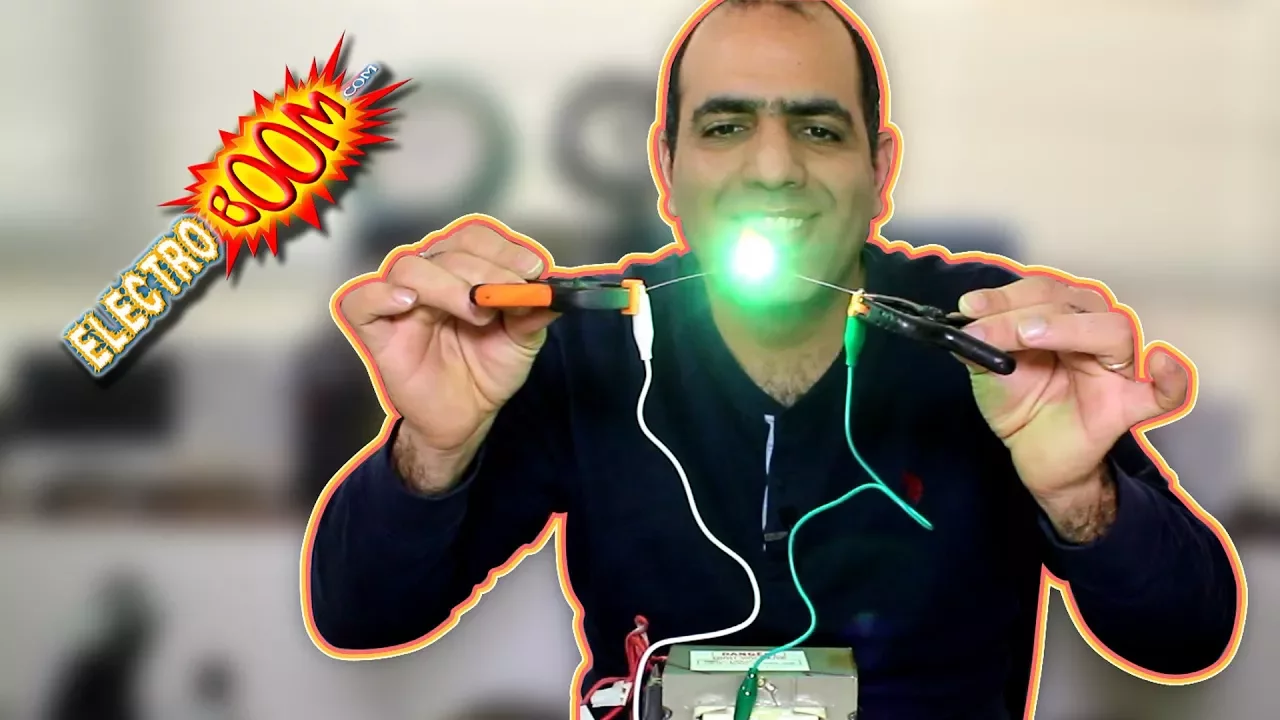
Why this video is valuable: Using interactive, humorous, and visually revealing experiments, this video breaks down the multi-stage activation process of a fluorescent bulb. It explains the purpose of the starter and ballast, how heating filaments vaporize liquid mercury inside the tube, and how a high-voltage inductive kick ionizes the gas to establish a conducting path of plasma.

Why this video is valuable: This video analyzes how fluorescent technology was miniaturized into Compact Fluorescent Lamps (CFLs). It explains how UV radiation from mercury discharge is converted to visible light via phosphor coatings on the inside of the tube, and examines the thermodynamic "warm-up" curve required before gas discharge lamps reach full luminous efficiency.
Why this video is valuable: This animated lesson explains gas discharge physics at an atomic level. It illustrates how free electrons collide with noble gas atoms (such as neon or argon), exciting atomic electrons to higher energy orbitals, and how those electrons release energy in the form of photons as they decay back to their ground state.
Knowledge Checkpoint
- Explain why gas discharge and fluorescent lights are referred to as "cold cathode" lamps, contrasting their operating temperatures with those of incandescent filaments.
- Describe the two-stage energy conversion process in a fluorescent tube: how ultraviolet photons are generated and how they are subsequently converted to visible light.
- Define the roles of the ballast and starter in traditional fluorescent light fixtures, especially during the initialization phase of ionization.
Module 4: The LED Revolution and Solid-State Lighting
This module investigates the physics of semiconductors, the engineering behind the Nobel Prize-winning blue Light Emitting Diode (LED), and the transition to highly efficient solid-state lighting architectures.
Recommended Videos

Why this video is valuable: A masterpiece in scientific journalism, this video chronicles Shuji Nakamura's arduous journey to invent the high-brightness blue LED using GaN (gallium nitride). It unpacks the solid-state materials science, the mechanics of Metalorganic Chemical Vapor Deposition (MOCVD), and explains why a blue light source was the critical puzzle piece needed to synthesize energy-efficient, white LED light.
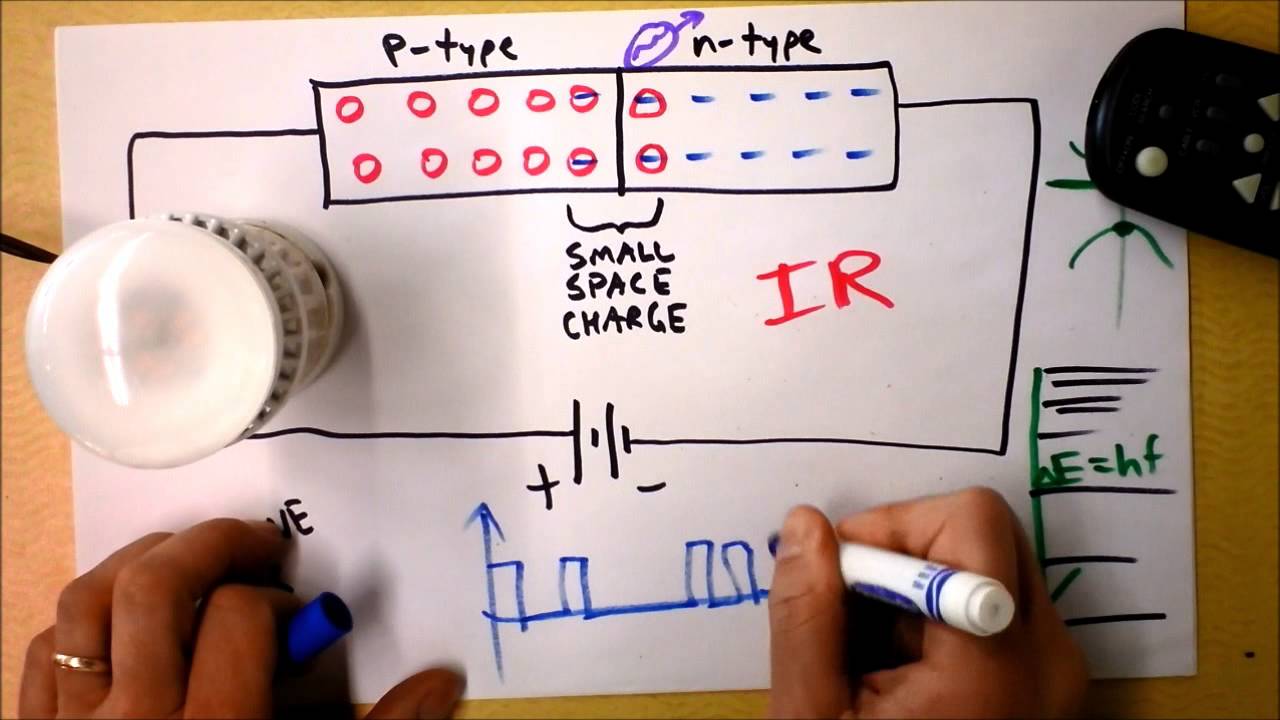
Why this video is valuable: This video provides a rigorous mathematical and physical walkthrough of a semiconductor p-n junction. It explains conduction and valence bands, Fermi energy levels, and how forward-biasing a diode forces electrons to recombine with holes, releasing quantum packets of energy (photons) proportional to the bandgap of the material.
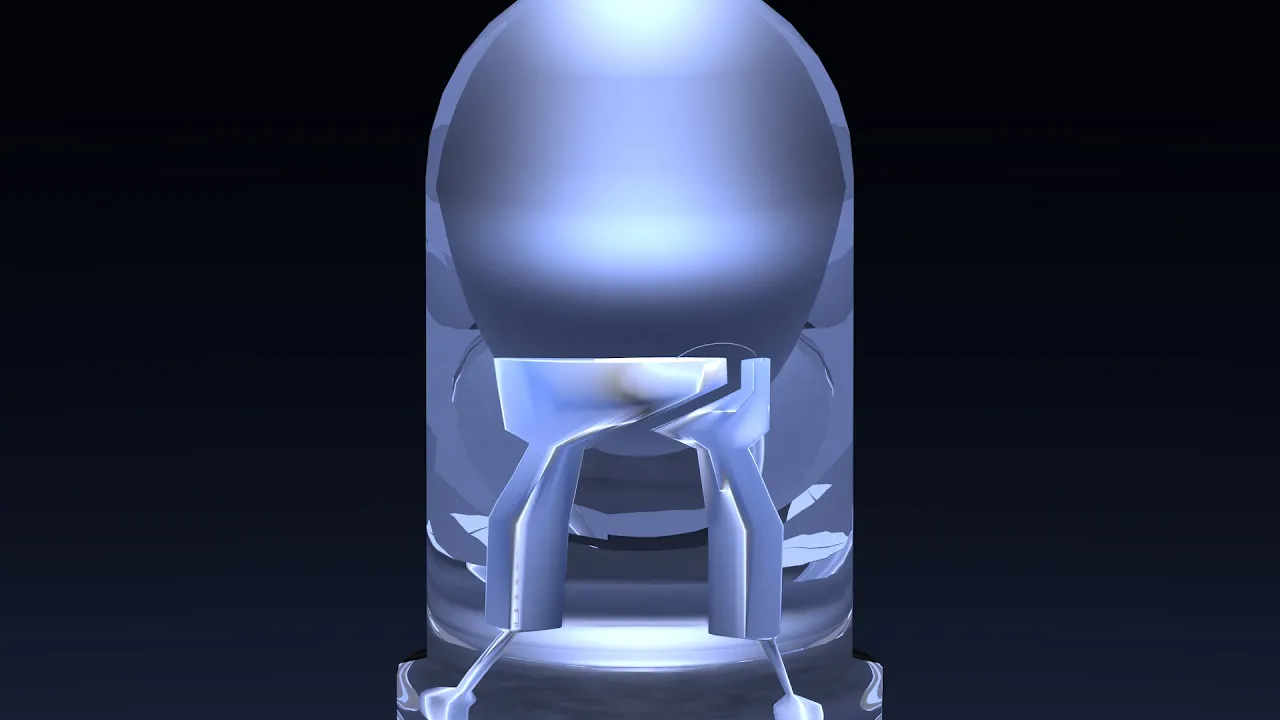
Why this video is valuable: This highly visual animation tracks the migration of charge carriers within a solid-state diode. It defines "doping," explaining how n-type and p-type silicon materials behave, and traces how radiative recombination directly outputs light without wasting energy on thermal incandescence.
Knowledge Checkpoint
- Explain the concept of a bandgap in solid-state physics, and detail how it determines the wavelength (color) of light emitted by an LED.
- Why was GaN (gallium nitride) so difficult to work with compared to previous materials like GaAs (gallium arsenide), and how did Nakamura overcome this?
- Describe the two primary methods used to generate high-efficiency white light from modern LED chips.
Module 5: Circadian Biology: Sleep, Melatonin, and Blue Light
This module analyzes the physiological effects of artificial illumination on human biology, looking at sleep cycles, melatonin suppression, and the neurological pathways governing circadian systems.
Recommended Videos

Why this video is valuable: Dr. Andrew Huberman explains the neurobiological mechanism of circadian clock setting. He breaks down how early-day light exposure programs the suprachiasmatic nucleus (SCN) in the brain, establishing a biological timer that regulates energy release during the day and initiates healthy melatonin release roughly 16 hours later.

Why this video is valuable: This essential clip focuses on the specialized cells located in our retinas: intrinsically photosensitive retinal ganglion cells (ipRGCs). It details how these cells contain a light-sensitive pigment called melanopsin, which responds specifically to blue-yellow contrasts at low solar angles to align our internal biological clocks.

Why this video is valuable: Renowned neuroscientist Russell Foster, the discoverer of ipRGCs, explains how these non-visual photoreceptors operate independently of rod and cone cells. He explains why these receptors require high-intensity light signals (hundreds to thousands of lux) to properly trigger biological alertness and entrainment.
Gap Coverage & Independent Study Recommendation
While the visual clips introduce the concept of photoreception, long-form biochemical deep-dives are naturally condensed in short-form content.
- Independent Research Task: Read about the retinohypothalamic tract (RHT) and step-by-step trace how light-stimulated ipRGCs transmit electrochemical signals to the Suprachiasmatic Nucleus (SCN), and how this subsequently inhibits the pineal gland's synthesis of melatonin from serotonin.
Knowledge Checkpoint
- Identify ipRGCs and explain how they differ functionally from traditional rod and cone photoreceptors used in spatial vision.
- Detail the role of the pigment melanopsin and specify the band of light wavelengths (in nanometers) to which it is most sensitive.
- Define the term "Zeitgeber" and explain why bright morning blue light serves as the primary master timekeeper for human biological systems.
Module 6: Societal Transformation: Nightlife, Productivity, and Light Pollution
This final module integrates history, economics, and ecology to trace how artificial lighting transformed human labor from a diurnal cycle to 24/7 industrial shift work, created the modern nighttime urban economy, and altered global ecosystems through artificial light at night (ALAN).
Recommended Videos

Why this video is valuable: Author and economist Tim Harford details the plummeting economic cost of artificial light throughout human history. Referencing William Nordhaus’s landmark study, Harford explains how the labor-time cost of creating a standard unit of light dropped by many orders of magnitude, making light a nearly free commodity and unlocking unprecedented night-shift industrial productivity.
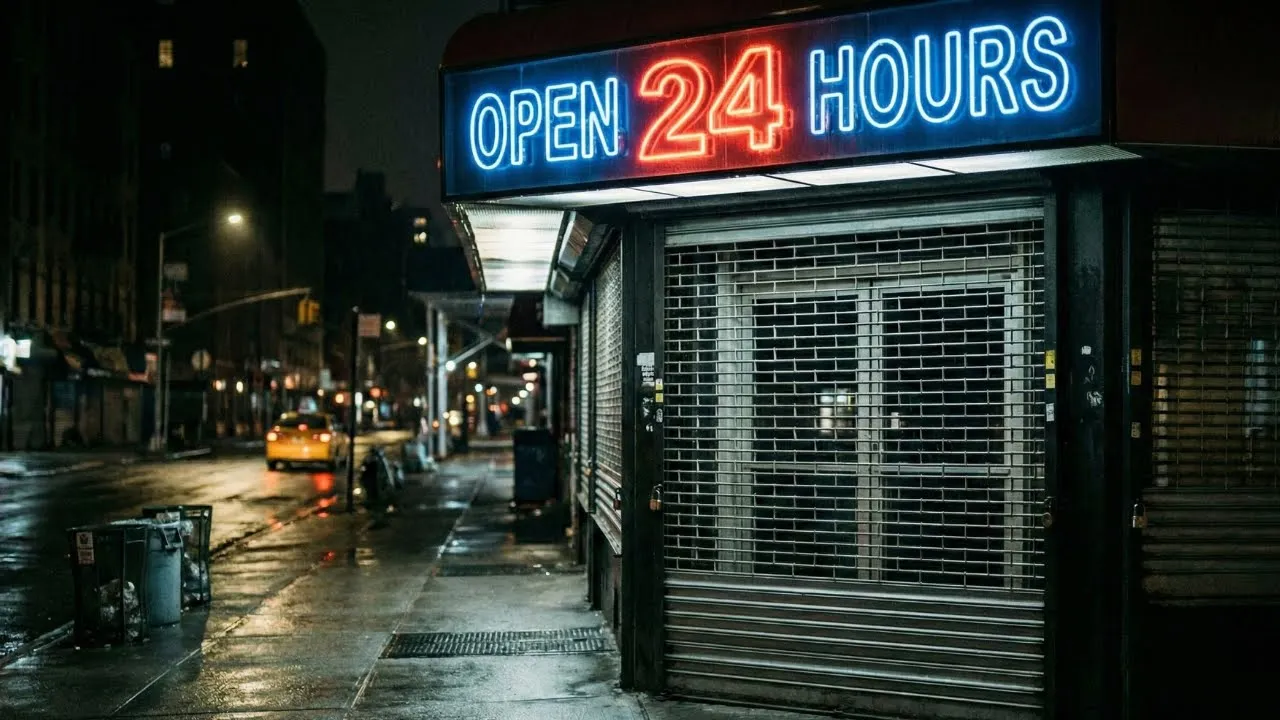
Why this video is valuable: This documentary analyzes the rise of 24-hour urban spaces, illustrating how interconnected systems of night shift work, public transit, and midnight commerce operated continuously during the mid-20th century. It unpacks the socio-economic conditions that allowed nightlife and round-the-clock industries to flourish and eventually decay.

Why this video is valuable: This presentation examines the ecological and sociological consequences of artificial light pollution. It covers the Bortle Scale, discusses the disruption of migration and mating patterns in nocturnal wildlife, and looks at civil movements dedicated to conserving our shared celestial heritage through dark-sky ordinances.
Knowledge Checkpoint
- Summarize William Nordhaus’s economic findings regarding the real labor cost of light from the Babylonian era to modern electricity.
- Describe the systemic socioeconomic impacts of 24-hour operations in post-WWII urban centers, highlighting how artificial light altered traditional industrial work shifts.
- Define the Bortle Scale and list three common mitigation strategies used to preserve dark night skies in urban-adjacent regions.
Course Map
Key People Index
- Thomas Edison
- Context: Proponent of low-voltage DC power grids; engineered the first commercially viable carbonized-cardboard and bamboo filament incandescent bulbs and established the Pearl Street Station in New York City.
- Joseph Swan
- Context: British physicist who independently developed carbonized-thread incandescent bulbs in parallel with Edison, leading to overlapping patent disputes and the eventual creation of the joint British firm "Ediswan."
- Nikola Tesla & George Westinghouse
- Context: Pioneers of alternating current (AC) electrical transmission and transformers, which enabled long-distance power grids that expanded the reach of electric illumination.
- Georges Claude
- Context: French engineer and inventor who pioneered commercial neon gas-discharge lighting at the turn of the 20th century.
- Shuji Nakamura
- Context: Nobel Prize-winning materials scientist who overcame massive crystalline growth barriers to create high-brightness Gallium Nitride (GaN) blue LEDs, enabling modern energy-efficient white solid-state lighting.
- Dr. Andrew Huberman
- Context: Stanford neuroscientist known for research on how morning and evening light exposure regulates human sleep patterns and overall physiological alertness.
- Dr. Russell Foster
- Context: Oxford neuroscientist who discovered the non-visual intrinsically photosensitive retinal ganglion cells (ipRGCs) in the mammalian eye, proving how our biological clock syncs to ambient light.
- William Nordhaus
- Context: Nobel laureate economist who developed metrics to trace the real economic cost of artificial illumination across several millennia.
Final Self-Assessment
- Explain how a pre-industrial candle behaves as a chemical reactor, identifying where the fuel is stored, how it is drawn upward via capillary action, and where gas phase combustion occurs.
- Differentiate between Thomas Edison's DC power transmission lines and Nikola Tesla's AC transmission lines in terms of physical range, safety, and reliance on transformers.
- Explain the molecular decay process by which a gas discharge lamp converts physical electron impact excitation into discrete, colorful wavelengths of light.
- Describe the function of phosphor coatings on fluorescent and white LED light fixtures.
- Define radiative recombination inside a semiconductor diode.
- Explain why the development of a blue LED was historically more difficult than creating red or green LEDs, and why it was critical for general household illumination.
- Detail the neurological pathway of photic sleep suppression: from ipRGC cells and the pigment melanopsin, through the suprachiasmatic nucleus (SCN), down to the pineal gland.
- Contrast the physical light intensity (lux levels) required to trigger visual rods/cones versus the lux intensity needed to entrain or alter mammalian circadian rhythms.
- Explain how dropping artificial illumination costs reshaped the division of labor, specifically enabling the 24/7 industrial factory shift system.
- Outline how urban light pollution impacts bird migrations, insect reproduction cycles, and human visibility of astronomical landmarks.