














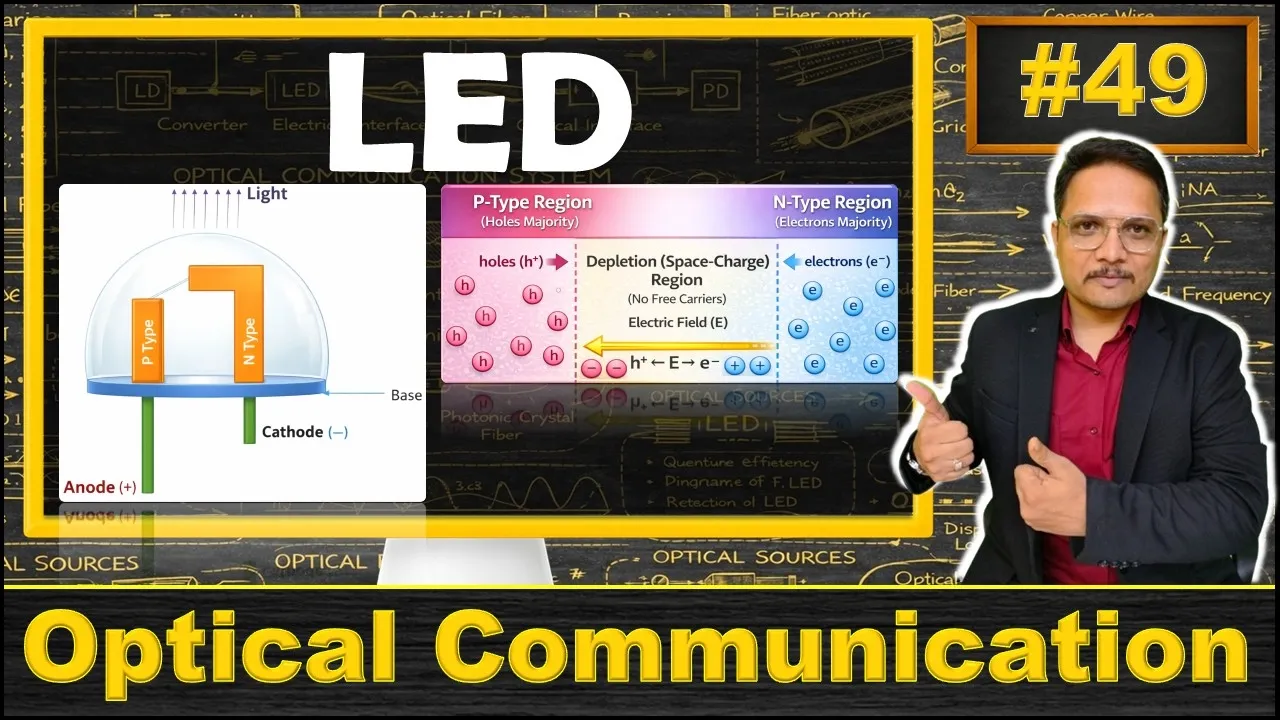

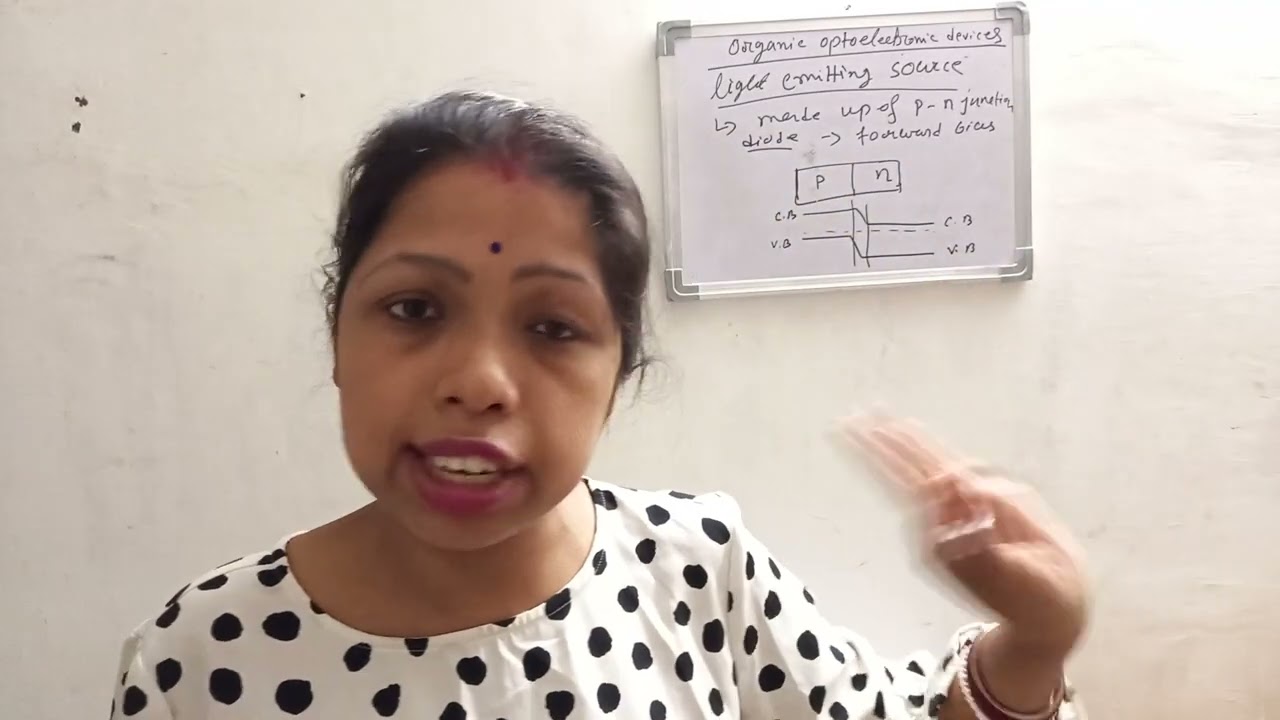
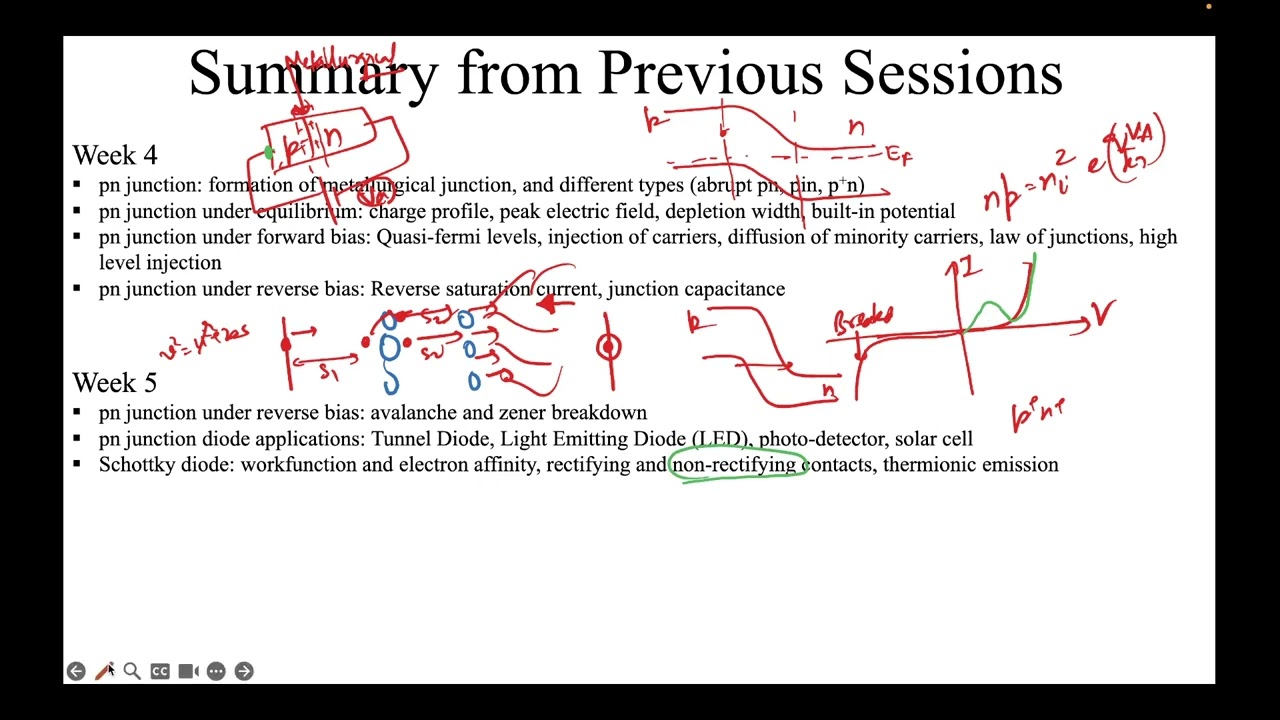
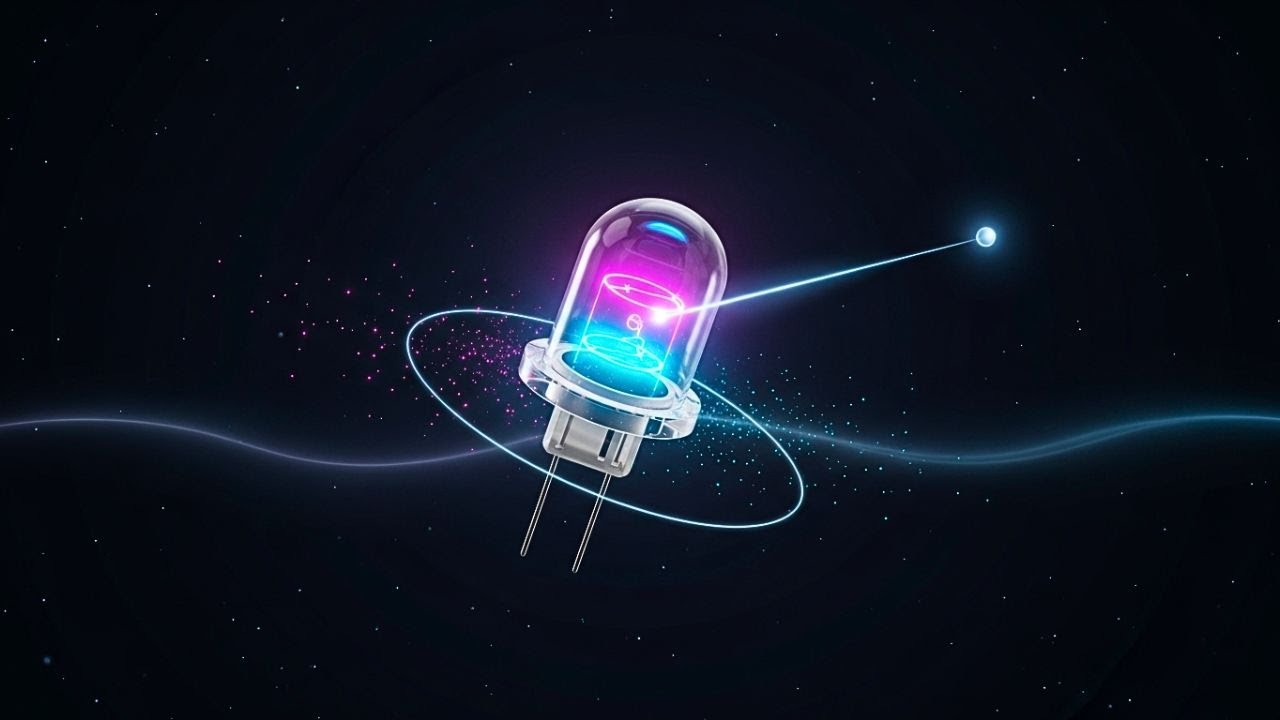



LEDs work by applying a voltage across a PN junction, creating an electric field that separates electrons and holes; when these charge carriers recombine at the junction, they release energy in the form of photons, with the color of light determined by the semiconductor's band gap energy, and LEDs achieve approximately 15% efficiency compared to just 1% for incandescent bulbs.
How Light-Emitting Diodes (LEDs) Work: Semiconductor Physics Explained
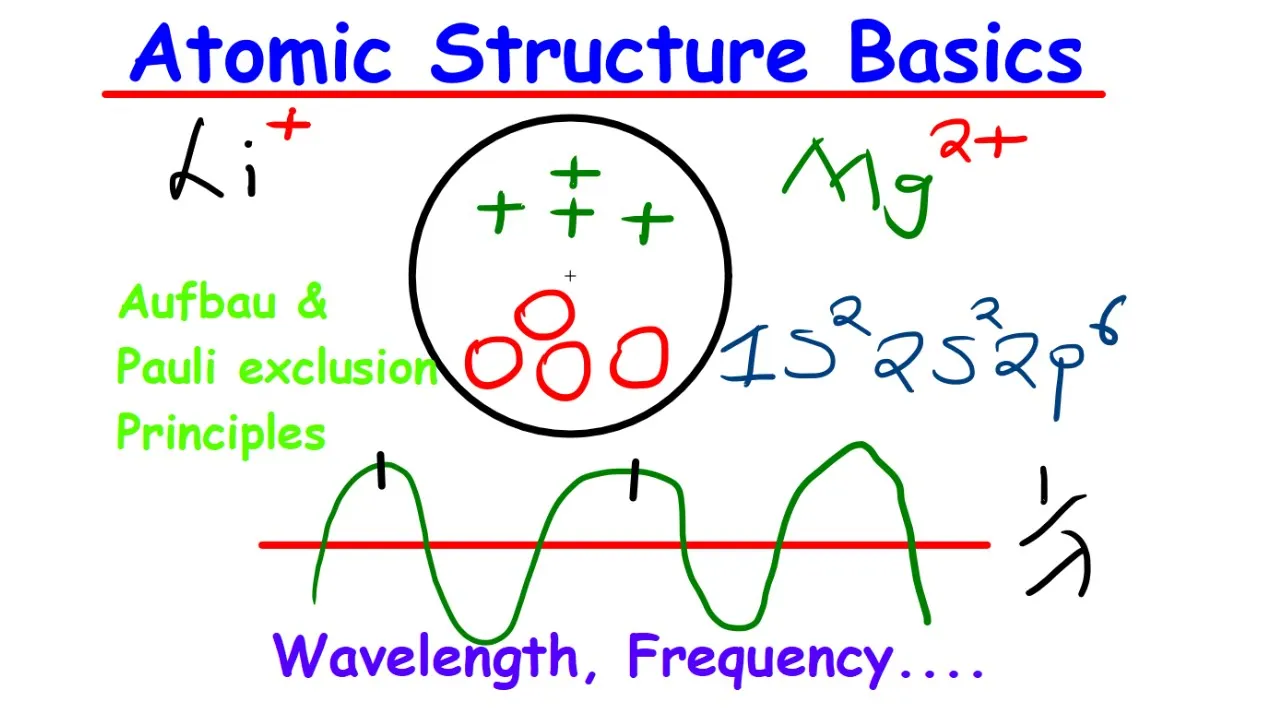
Added:Understanding of basic atomic structure, specifically electron energy levels and transitions.
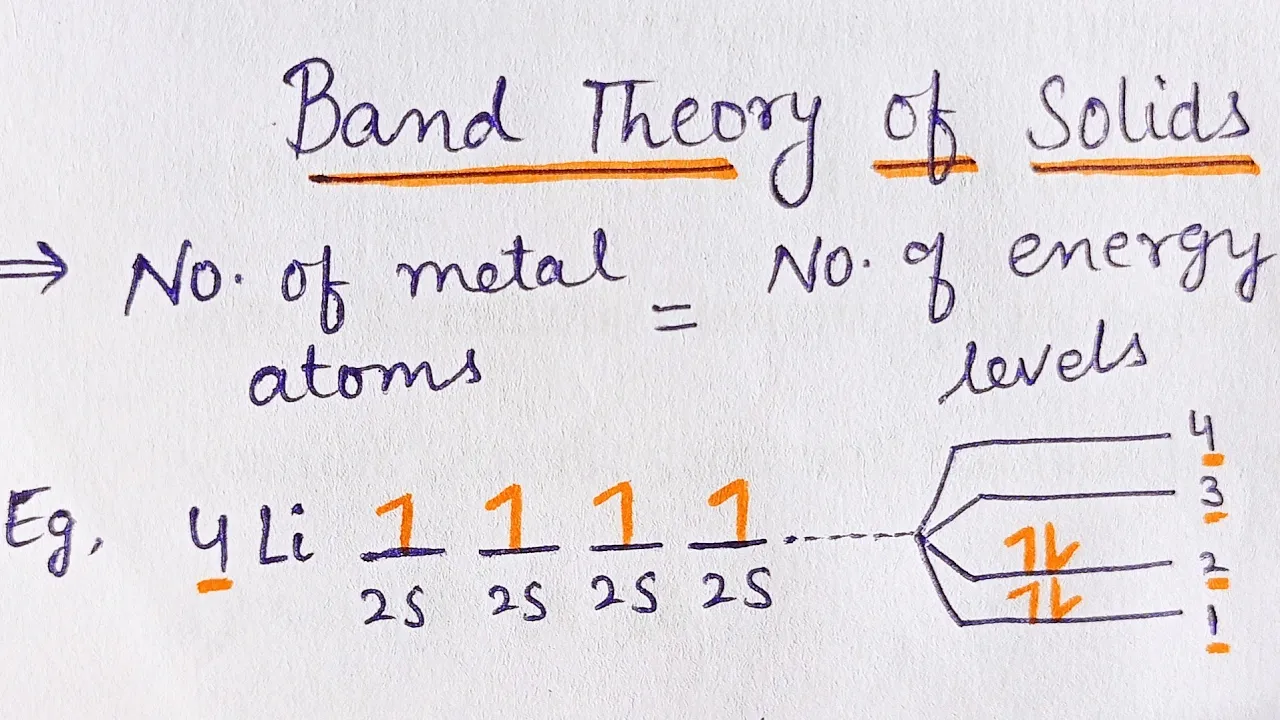
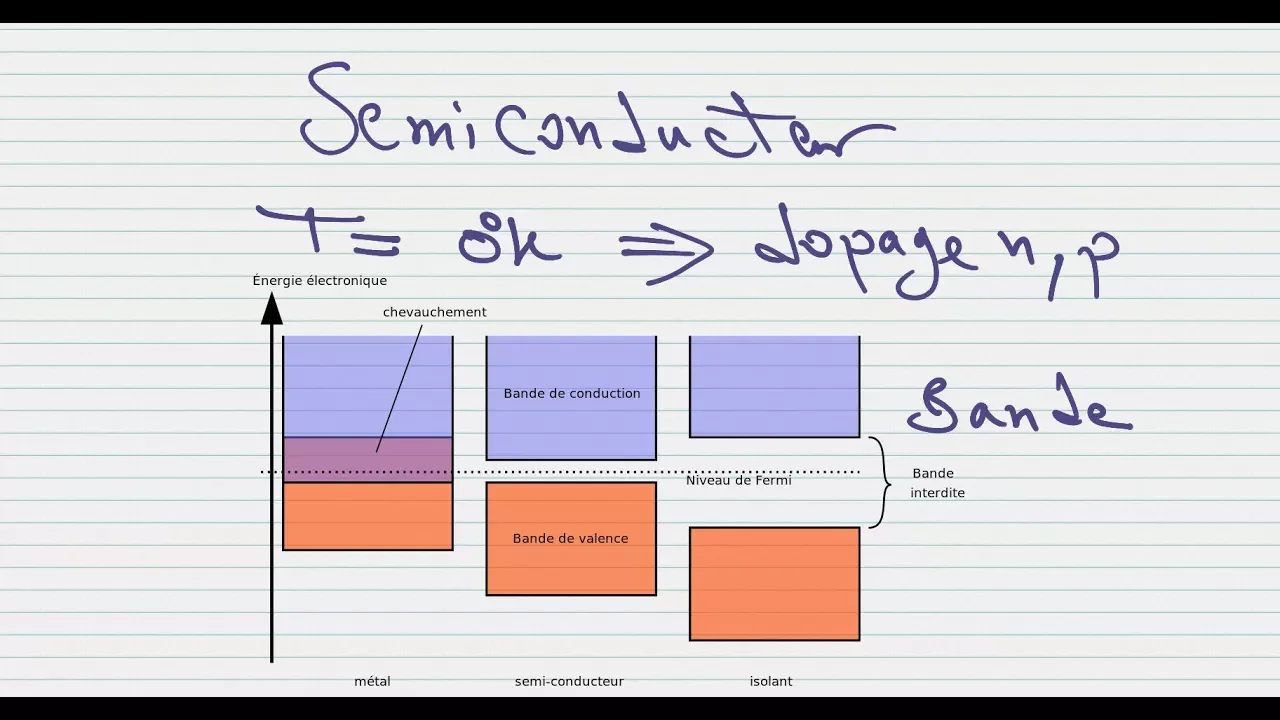
The concept of Band Theory in solids, including the valence band, conduction band, and the band gap.
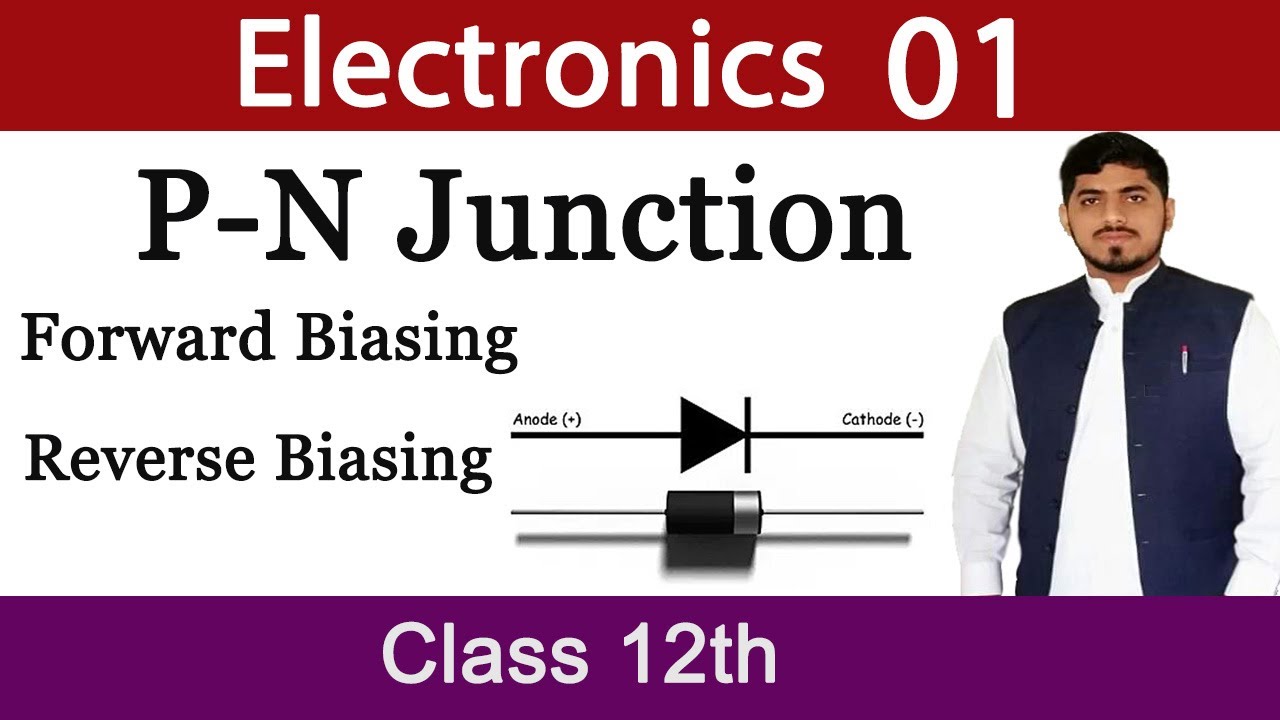
The physics of a p-n junction, including doping (n-type and p-type semiconductors) and forward-bias behavior.
Basic wave-particle duality of light, specifically how photon energy relates to wavelength (E = hc/λ).
The critical distinction between direct and indirect band gap semiconductors (e.g., Gallium Arsenide vs. Silicon) for optoelectronic devices.
Advanced LED structures, including double heterostructures, quantum wells, and Organic LEDs (OLEDs).
Loss mechanisms and efficiency limits in LEDs, such as non-radiative recombination, Auger recombination, and thermal droop.
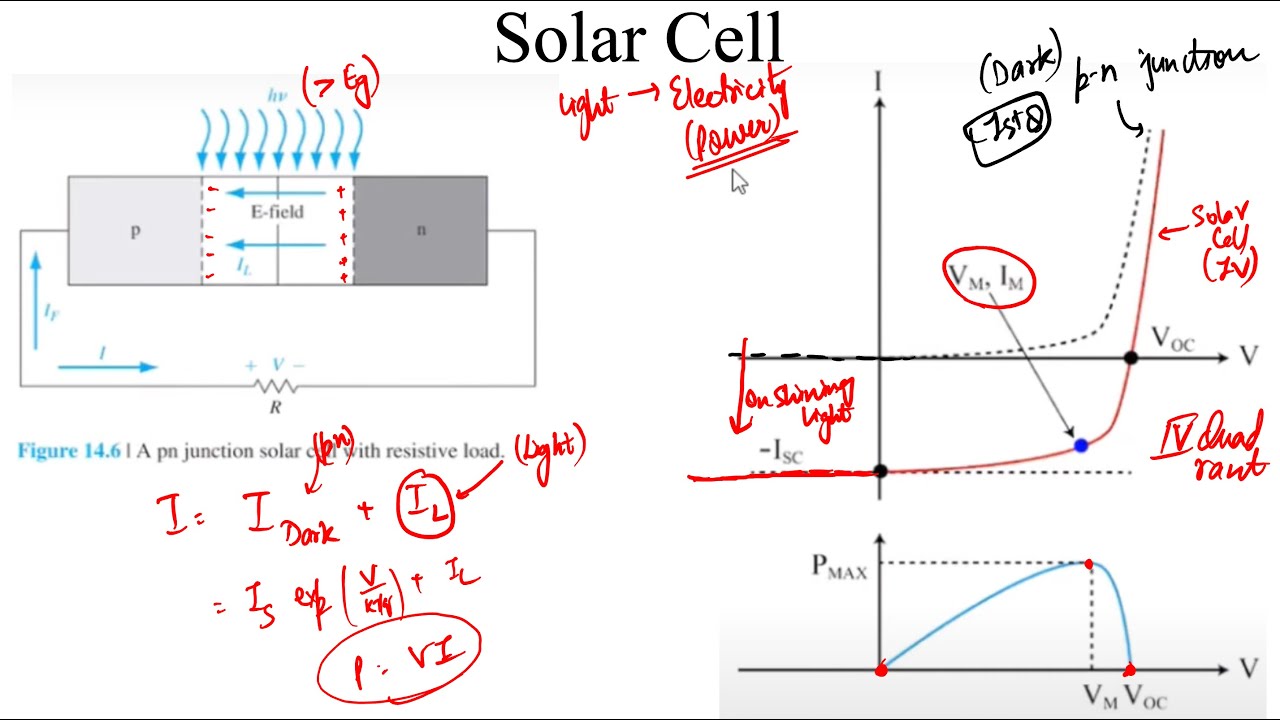
Related optoelectronic devices, specifically Laser Diodes (stimulated emission) and Solar Cells/Photodetectors (the photovoltaic effect as the inverse of LED operation).
202.2K views1.4Klikes11:43Original Release: 2013-12-13
in today's episode of guns thugs G's and hoes we'll investigate the LED oops screwed it up again this is ease and holes all right so the situation is now speed dating somebody has gotten the thugs to push all the electrons to the left and some more thugs to push all the holes to the right probably the same electric field we must have set up an electric field that's got these thugs pushing electrons one way and holes the other way and those two things go opposite directions because a single electric field affects positively charged things different than it affects negatively charged things differently and um let's see oh these holes aren't real they're just sort of the absence of an electron but we've made the analogy that they're sort of the same thing and how do guns come in oh yeah shoot my gun just turned off when an electron meets a hole this is called a recombination region in here yeah it's the same deet region that you noticed before but when this electron sorry this electron and this hole combine they let out a celebratory shot because they just met each other and they're happy but that is light coming out so let's see what I'm talking about in this analogy now we've got a battery hooked up to a PN Junction and we've got the positive side of the battery here and the negative side of the battery here so we've got an electric field inside this guy that's pointing that direction now that's going to make the holes want to go to the right and it's going to make the electrons want to go to the left and so let's follow the path of one such pair we've got a hole over here that's going to the right and an electron over here that's going to the left D D D D D D D when they meet each other hey they like to get together and the cool thing is they release some energy and we'll make the analogy back to the atom which perhaps you understand best of all there's Freedom here this is the electron not near the hole and now we're starting with that circumstance but the electron meets the hole and guess what there's a place for the electron to go so energy equal to the change in the uh the freedom band level and the bonded band level where the electron and the hole have reunited is the excuse me the energy of the photon that's going to be released from this Junction so let's get ourselves a um I always want to do brown photons what a ridiculous thing so we're going to have a photon coming out that direction and of course it depends on the band gap of the structure now let me draw you like a typical band Gap you've got something like this and there are all kinds of cool things going on looks like the side of a basketball but really you've got energy here and energy here this is probably the veilance band and that's probably the conduction band you've got electrons up here and holes down here and when they recombine some energy can be emitted in the form form of light now LEDs are all over the place and I want to talk to you a little bit about them but uh let me show you an example first here is um a battery and I'm going to flip the switch well I'll do that first it's kind of dramatic here are the lights and I'll flip the switch and you can see that these suckers are lighting up now what I find interesting is we've got a whole bunch of LEDs strung on this line and I've got only 4.5 volts and I'll show you what's interesting about this unlike traditional Christmas tree lights I can take one of these out and they won't turn off and that's because they're not in what how do you think these suckers are wired figure that out how are these wired because I can take one out and none of the others turn off what about if I take out this one oh still none of the others turn out and that's turn off that's the reason that they can power it with just 4.5 volts in fact I would argue that every one of these bulbs is probably getting 4.5 volts so what does that mean series or parallel you figure that out I have another example though of some LED lights because this is becoming to uh rather interesting we can do home lighting with LEDs now whoa they're all over the place though let me show you something else cool I got a uh stereo at home and I can press the play button from a long distance away and the cool thing is inside of here there's a light that goes on and that sucker is an LED let's see if we can get into this thing yeah no that didn't work yeah Okay cool so right there see that led that guy right there that is an LED and that is putting out light when I press the button but the problem is I can't see that if you look into your remote control you won't see anything happening because it's an infrared LED so that means it's putting out light that you can't see but guess who can see it yeah your stereo or whatever else you're controlling with your IR remote that's what infrared stands for that's what IR stands for in the infrared remote this is kind of a cool remote control it's got an LED here that's in the visible that lights up when I press and make the infrared light go on so you can know that your batteries Aren't Dead look my batteries aren't dead because it's uh oh man it's also flashing on a code wow this is really cool we should talk about digital electronics some other time it's like on and then off and then off for a long time and on and on and on it's sort of like Morse code and it's communicating to the television which button you've pressed it's not changing the light that's coming out it's changing when the light's coming out and uh now okay on to these this is a home light it's an old style LED light and that means that it's just 3 years old maybe but I'll turn this suer on so that you can look at what's going on here we've got a very very bright light and I think I see if I squint I think I see six LEDs in there and I don't know if you'll be able to get that from the contrast so maybe I'll put through a piece of paper and you can no that's just diffusing it okay so it's very bright and they've designed the plastic around it to push the light in various directions but something's interesting if I move it back and forth oh no that's not interesting maybe that's a little interesting well we'll see when we go back through it and I want to show you also the company cre has been making semiconductors in the United States good solid Crystal semiconductors in the United States for a long time and they started making LED buls so here's a a nice one from CRE it's actually much lighter and it's very new you can get these at um dang what is it Home Depot or Lowe's pick your favorite right you want the ones that are made in the US from CRE this one's got a lot of different LEDs and they're pointing sideways nothing exactly pointing up but it's glass and it's very light and they're getting cheaper all the time I think they're 10 bucks right now and uh just like in Doritos you can get that version right there that might be considered the Um nacho cheese or something or you can get cool ranch so depending on what color flavor you like you can win now LED lighting has gotten to the point of 15% efficiency and that's amazing compared to incandescent lighting which hovers around 1% efficiency so you're going to save a ton of money if you get LED lighting in your house that is a very good efficiency and getting better and cheaper all the time the uh you might think that every time there's a current going through a diode that you'd get emission of light cuz you're always going to have recombination of holes and electrons but but you need a direct band Gap like this if one band is over here and the other one's over here that's an indirect band Gap and traditional silicon for calculations inside like a transistor or something is an indirect band Gap so you have to do funny things to make actually an LED and uh there's something I don't want to scare you so I'm going to warn you about this a little bit you're about to see something very interesting about what's happening when an LED is hooked up to a circuit where the voltage is not constant so here's voltage nah that's velocity here's voltage as a function of time I've got something like this going on and I'm going to plug this in so you can just look at what it what how it uh how it appears these are Christmas tree lights that are appearing all over the United States and they drive me nuts I go just crazy when I see these things so that's fine if you're kind of looking at it like that but now what whoa oh man that's annoying and Cadillac freaking Cadillac and Lexus nice cars are putting these things on their brake lights now that's cool it actually makes a lot of sense because LEDs are reasonably expensive to buy and the nice thing is if I'm uh following behind some Cadillac and it looks like this right and it's got a wheel here and a wheel here they've got brake lights and they don't want to put a whole bunch of extra LEDs in there brake lights and tail lights are going to be using the same LEDs so you've got dim mode and you've got got bright mode and the only difference is in dim mode these LEDs are not on all the time but what drives me crazy is I'm following behind some guy and he's not got his brakes on he's just got his tail lights on if I'm following behind this guy and the lights are dim because the regular tail lights they're blinking and every time I move my head sharply to the side while maintaining focus on these lights and I guess I mean I mean I'm looking over here but still focusing over there it's kind of hard to do but you should try this when you're driving no try it when someone else is driving but look at these lights and then look away while continuing to focus on the lights and you will see that they're blinking but not when they put their brakes on when they put their brakes on they're going to have them on fulltime this is called duty cycle and duty cycle is something very interesting that we'll see in the next clip be warned you don't have to watch this I'm a Lumberjack and I'm okay I sleep all night and I work all dayj all night day on Wednesdays I go shopping but did you notice the great contrast with the LEDs that are powered by a battery consider these I'm a Lumberjack and I'm okay I sleep all night and I work all day LJ and he's okay he sleeps all night works all day Wednesdays I go shopping and in slow motion again forget about it in fact I'm going to ask you to go back and look at that video of The Lumberjack swinging around those flashing lights and I'm going to ask you to figure out two things I want you to figure out the um duty cycle of the lights and I want you to figure out the critical voltage at which those LEDs turn on and I want you to prove that I'm in the United States I've had a lot of accusations people thinking that I'm operating out of England it's not true the United States has a different speed a different what I mean is a different frequency of lights and so you can prove that I'm in the United States and you can tell me the operating range of voltages of those LEDs there are 50 in the string and you can calculate everything else good luck
Up Next
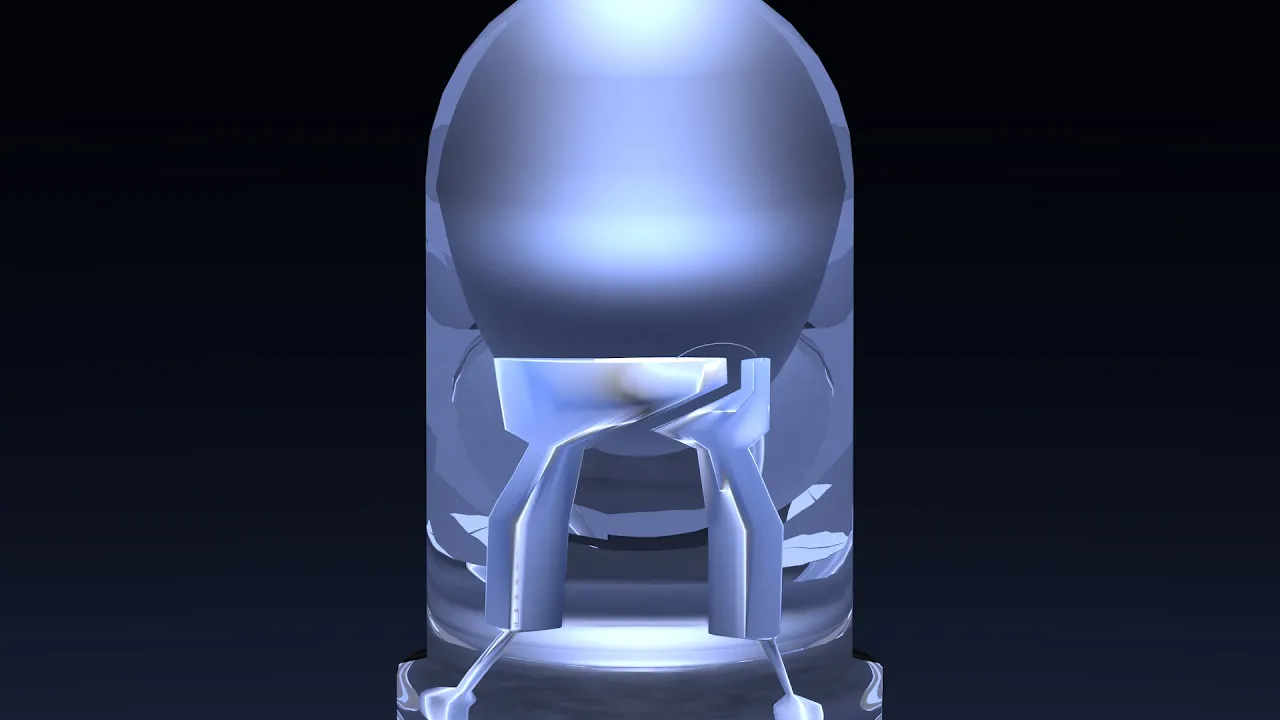
9:10
How LEDs Work: Physics of Light Emitting Diodes Explained
@fmgomezcampos
1M views•2015-07-16
73:35
Deriving Maxwell's Equations in Geometric Algebra (QED Prereqs) 11
@XylyXylyX
2.6K views•2024-09-08

7:01
Geometric Optics: Concave & Convex Mirrors and Lenses Intuition
@DocSchuster
141K views•2013-03-01

33:44
The Blue LED: A Decade-Long Scientific Challenge Explained
@veritasium
46.5M views•2024-02-08
Related Study Plans & Knowledge Roadmaps
Structured learning paths in Physics
physics
Medical Physics: Imaging, MRI & Radiotherapy
01Foundations of Radiation and Matter Interaction
02X-Ray Imaging and Computed Tomography (CT)
03Magnetic Resonance Imaging (MRI) Physics
+ 3 more learning modules
15h6 modules
Explore Roadmap
physics
Nuclear Physics (Decay, Fission & Reactors)
01Atomic Structure and the Binding Force
02Radioactive Decay and Half-Life
03Nuclear Fission Mechanics and Chain Reactions
+ 2 more learning modules
12h5 modules
Explore Roadmap
physics
Soft Matter (Polymers, Colloids & Rheology)
01Foundations of Soft Matter & Thermal Forces
02Polymer Physics and Macromolecules
03Colloids, Surfactants, and Self-Assembly
+ 2 more learning modules
38h5 modules
Explore Roadmap
physics
Analytical Mechanics: Lagrangian & Hamiltonian
01Mathematical Foundations: Calculus of Variations
02From Newtonian Mechanics to Constraint Dynamics
03The Principle of Least Action & Lagrangian Mechanics
+ 3 more learning modules
28h6 modules
Explore Roadmap