


















![ALAT OPTIK | KELAS XI | FISIKA ITU MUDAH [Marsella Putri Astuti]](https://i.ytimg.com/vi/GC18_QjuLO0/sddefault.jpg)




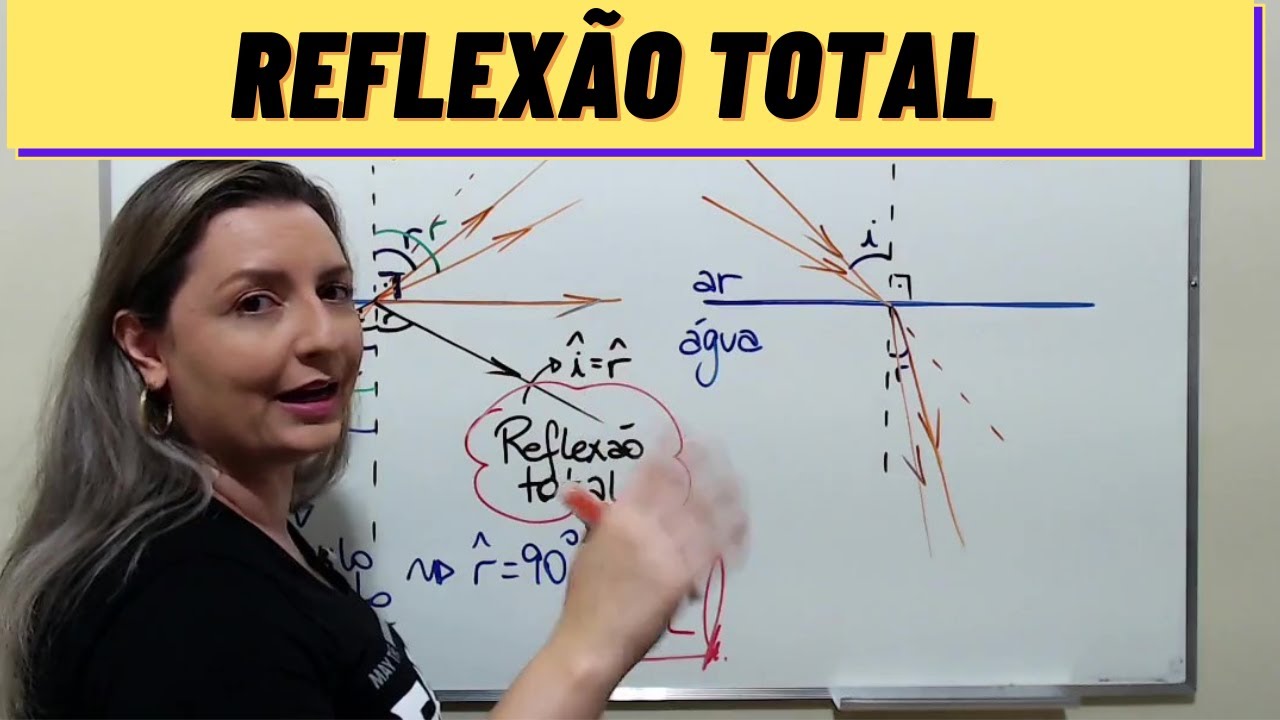


In geometric optics, concave mirrors and convex lenses are converging elements that bring parallel light rays to a focal point, while convex mirrors and concave lenses are diverging elements that spread light rays away from a focal point; refraction follows the principle of least time where light bends toward the normal when entering a slower medium and away from the normal when exiting, with total internal reflection occurring when light strikes a boundary at angles exceeding the critical angle determined by the indices of refraction.
Geometric Optics: Concave & Convex Mirrors and Lenses Intuition
Added:Understanding that light travels in straight lines (light rays) and represents the path of energy propagation.
Basic familiarity with flat (plane) mirrors and the concept that the angle of incidence equals the angle of reflection.
The conceptual distinction between reflection (light bouncing off a surface) and transmission (light passing through a medium).
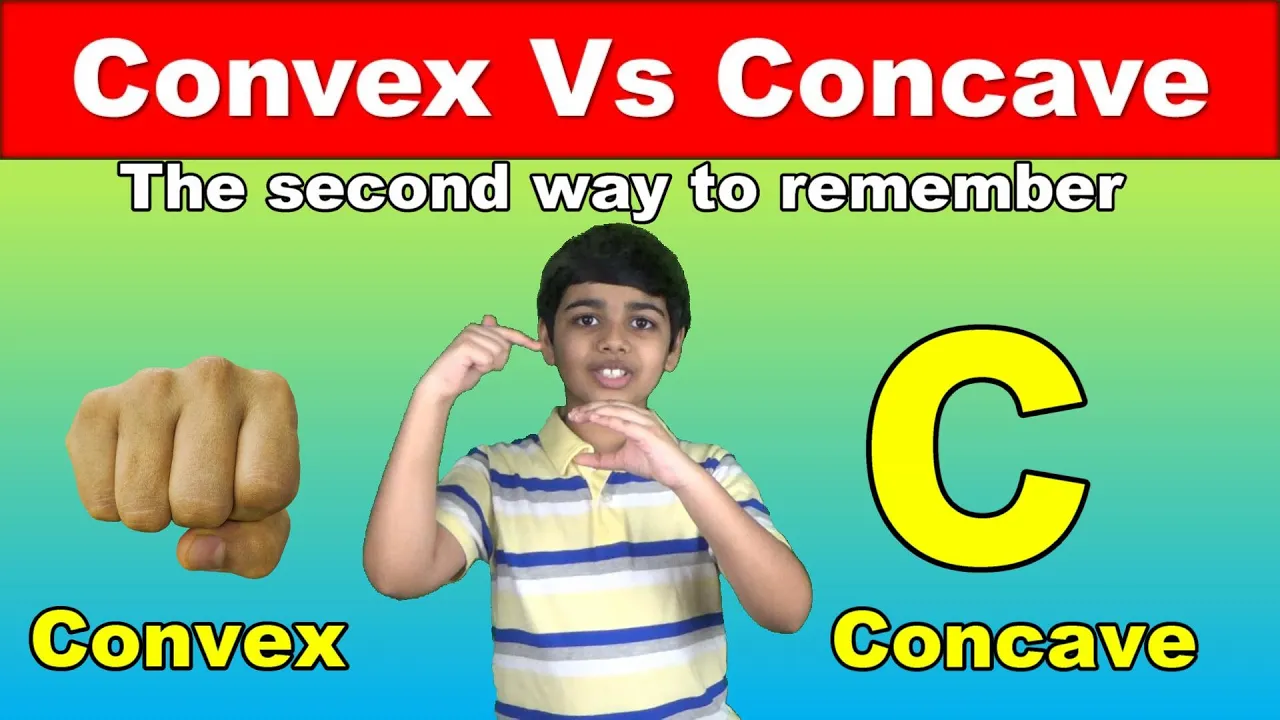
A basic physical understanding of what 'concave' (curved inward) and 'convex' (curved outward) mean.
The Thin Lens and Mirror Equations: Quantifying focal lengths, object distances, and image distances mathematically.
Systematic Ray Tracing: Learning the rules for drawing principal rays to precisely locate and characterize real and virtual images.
Snell's Law of Refraction: Mathematically calculating how much light bends when transitioning between media with different refractive indices.
Practical applications in Optical Instruments: Studying how combinations of lenses and mirrors function in eyeglasses, cameras, microscopes, and telescopes.
Real-world technology of Total Internal Reflection: Exploring how optical fibers transmit data over long distances with minimal loss.
141K views2.1Klikes7:01Original Release: 2013-03-01
But let's get to work. Here's a mirror, plain mirror. And here's a beam of light coming in. And you see that as the beam of light comes in, it's going to leave at the same angle as it entered all the time. And the interesting thing about mirrors is that we can bend them. So I could start with a mirror like this.
This mirror is concave over here. So as I come in parallel to the axis of the mirror, I leave oo always sort of aiming at a certain point. Do you see this point where it's always kind of hitting? I might call that the focal point of the mirror.
Sorry, I'm kind of blocking it right there. Yeah, there we go. Right there.
All these parallel rays are converging right there. That defines a focus of the mirror. So, this kind of a mirror, a concave mirror, is a converging mirror because it causes the rays from wherever they start here, here, here, here, here to converge at that single point. But if I flip this mirror over, notice I've got a mirrored surface over there. I got a diverging mirror now. Check it out. See, it causes the ray to go up and down here the ray goes down. Yeah. Oh, this is getting really hot. Wow.
Yeah. Mhm. Good. So, that's a diverging mirror because it's convex. And we also have discussed the principles of refraction. So, as I send a ray of light into here, if I send it straight in, then you see the ray of light inside the block and you see it come out of the block and everything's fine. But if I send it in at an angle, if I Oh, if I send it in at an angle. Let me put the block like this. I think that'll be more interesting. If I put the block like this, and I send it in at an angle, you see that I can get the uh ray of light to come in at a weird angle. And then, see, it it breaks here. It's I mean, it's not breaking like it's broken, but it's definitely making a very sharp bend. And it goes this direction, and it comes back out. And notice this initial ray coming in is parallel to that final ray that's leaving right there. But in the medium it's going more slowly. So it tries to actually minimize its time in the medium. Principle of least time is a hugely important physical principle. So the light knows which way. I mean I guess it tests every way in some very uh interesting way. And it tests every possible path and finds the path that takes the least time and takes it. So, knowing this, you guys could actually just pause your screen and find a uh the index of refraction of this block of plastic that I've got right here. That's cool. But notice that the incoming ray is always parallel to the outgoing ray.
Yep. But what if what if I have something a little more interesting like a curved block of plastic or glass or a really curved block of plastic or glass?
Notice this. I bring it in and it curves really dramatically. A parallel ray coming in seems to be always pointing towards something. Watch this. This is convex, right? Wouldn't you agree this is convex? Now, I'm saying that everywhere in here, we're kind of pointing towards a particular location.
Problem is this is a circular cross-section. So, it hasn't doesn't have a really well- definfined focus, but I'm going to argue that somewhere around here all the parallel rays are trying to join. And this must be a focal point. So there's a focal length that we can define for this very strange lens.
With a more uh reasonable type of lens, we'd do it like this. And we'd say that is Oh, look at the focus on this guy.
I'm bringing in parallel rays. And the focus on this guy is probably much further away. It may even be beyond my piece of paper. As the rays come in parallel, they bend more and more as we get further and further. Well, we get closer to this side of the mirror where the angle is sharper. Ultimately, might make sense to look at a prism. Oh, a prism has all cool all kinds of cool things that we could study. Notice that as the light comes in, it bends towards the normal as it enters the prism and it bends away from the normal as it leaves the prism. So, you get all kinds of cool stuff like this. Bending towards the normal, bending away from the normal.
Ooh, that's kind of ideal. It's bending towards the normal and then away from the normal, but it makes it continue turning. That's kind of funky. Watch this, though. See all this light that's coming out right here? As I get this more and more dramatically bending away from the normal. See, it's really coming in to this intersection here, going into this um this smaller index of refraction. Light can travel faster out here. So, it wants to spend more time out here than it does inside the block of acrylic. Watch as I go even steeper.
Can you notice what's happening right there? That light is getting closer and closer to never making it out of the block of plastic at all. Watch it. Watch it. Now, careful. Careful. Oh, you see that rainbow effect? Yeah. That's why they call them prisms. Look at this.
Boom. Suddenly, no light at all escapes.
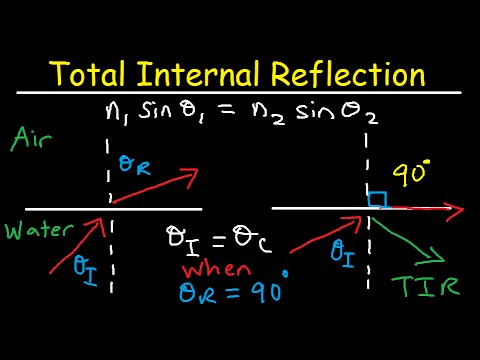
Now, the light is entirely trapped in there. That's called the critical angle right there. Boom. That's the critical angle. You could measure that. And it depends on the index of refraction. In fact, it's a very easy bit of math.
Maybe I'll make a video to do it or maybe you'll do it on your own for crying out loud. And then once it's totally internally reflecting, then we get a bounce off of here inside here.
Look at that. Look at that. You see that other beam is also totally internally reflecting. And I've actually got no light at all out here. No light at all is coming off of this bounce. But if I go really close, I can get the light to quantum jump through there, which is really interesting. I don't want to talk too much about quantum physics with you right now, but notice that I can make total internal reflection happen right here. Finally, we could also make a lens that's shaped like this. And the funny thing about this lens is I bring a ray of light in that's parallel and it's bend. Well, it's not bending at all if I'm in the middle, right? But it bends down at the bottom and it bends up at the top. So, this kind of a lens is diverging, but it's concave. Remember our converging lens? The converging lens is convex.
Whoa.
What if I put these two together? Check this out. Now, array coming in parallel leaves parallel, but it's doing all kinds of funky stuff in the middle. Yep, I agree. Bringing two lenses together makes some very complicated optics happen, which is really fun. But note right now that the action of a mirror is the opposite action of a lens. They're sort of like capacitors and resistors or capacitors and inductors in that sense because um a concave lens is diverging and a conc mirror is diverging.
And similarly a concave mirror is converging. See that focal point that's forming right there. and a convex lens is converging. Okay, bye.
Up Next
14:56
Total Internal Reflection & Critical Angle | Physics Tutorial
@TheOrganicChemistryTutor
551.2K views•2016-08-06

12:53
21cm Hyperfine Transition in Neutral Hydrogen: Radio Astronomy Basics
@AaronRobertParsons
12.4K views•2011-10-13

32:32
NMR Spin Physics I: Zeeman Effect, Resonance Condition & Larmor Frequency
@nptel-indianinstituteofsci8064
2.3K views•2024-01-17

27:14
Entropy and the Second Law of Thermodynamics Explained
@veritasium
27.5M views•2023-07-01
Related Study Plans & Knowledge Roadmaps
Structured learning paths in Physics
physics
Nuclear Physics (Decay, Fission & Reactors)
01Atomic Structure and the Binding Force
02Radioactive Decay and Half-Life
03Nuclear Fission Mechanics and Chain Reactions
+ 2 more learning modules
12h5 modules
Explore Roadmap
physics
Soft Matter (Polymers, Colloids & Rheology)
01Foundations of Soft Matter & Thermal Forces
02Polymer Physics and Macromolecules
03Colloids, Surfactants, and Self-Assembly
+ 2 more learning modules
38h5 modules
Explore Roadmap
physics
Analytical Mechanics: Lagrangian & Hamiltonian
01Mathematical Foundations: Calculus of Variations
02From Newtonian Mechanics to Constraint Dynamics
03The Principle of Least Action & Lagrangian Mechanics
+ 3 more learning modules
28h6 modules
Explore Roadmap
physics
General Relativity (Spacetime & Cosmology)
01Foundations of Relativity: Special Relativity
02The Geometry of Spacetime: Equivalence Principle & Curvature
03Einstein's Field Equations: The Mathematics of Gravity
+ 2 more learning modules
55h5 modules
Explore Roadmap