Mastering Soft Matter Physics: Polymers, Colloids, and the Rheology of Non-Newtonian Fluids
Learning Goal: Develop a comprehensive, mathematically rigorous, and physically intuitive understanding of soft condensed matter. You will master the physics governing structural scales, thermal fluctuations (), macromolecular conformation, self-assembly thermodynamics, colloidal stability (DLVO theory), viscoelasticity modeling (Maxwell/Kelvin-Voigt), and the dynamics of anisotropic/active systems.
- Prerequisites: Undergraduate-level classical mechanics, basic thermodynamics/statistical mechanics, and introductory differential equations.
- Estimated Total Study Time: 38 hours
Module 1: Foundations of Soft Matter & Thermal Forces
This module establishes the foundational scale and energy concepts of soft matter physics. You will learn why soft matter is characterized by large structural units, why its mechanical response is dominated by weak bonds on the order of thermal energy (), and how Brownian motion and van der Waals forces govern behaviors at the mesoscale.
Recommended Videos

- Why this video: Led by prominent theorist Fyl Pincus, this academic lecture outlines the core philosophy of soft matter physics. It explains why soft matter has a low elastic modulus () and why weak thermal forces can easily deform these materials, emphasizing physical concepts over pure computation.
- Knowledge Checkpoint:
- Understand the relationship between the low elastic modulus () of soft matter and its characteristic structural length scale.
- Explain how thermal energy () competes with weak intermolecular bonds to drive structural transitions.

- Why this video: This video provides the mathematical foundation of Brownian motion as analyzed by Albert Einstein in 1905. It walks through the physics of concentration gradients, random walks, and fluid-particle interactions, proving how microscopic collisions manifest as macroscopic diffusion.
- Knowledge Checkpoint:
- Derive the relation between the mean-squared displacement and the diffusion coefficient .
- Describe how concentration gradients drive net particle flux in a suspended medium under Brownian motion.
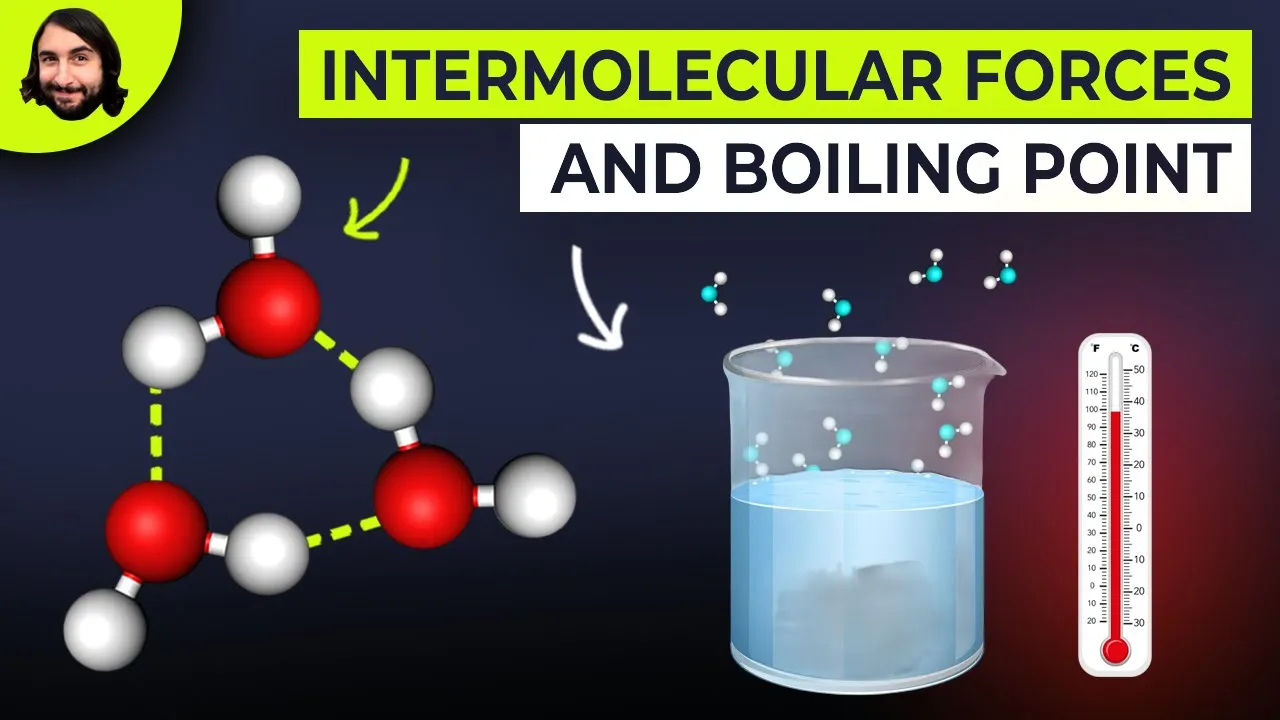
- Why this video: A clear and intuitive visualization of the weak, non-covalent forces that hold soft materials together. It covers London dispersion forces, dipole-dipole interactions, and hydrogen bonding, which serve as the molecular glue of soft assemblies.
- Knowledge Checkpoint:
- Distinguish between permanent dipole-dipole interactions and transient London dispersion forces.
- Explain why van der Waals forces scale with molecular weight and contact surface area.
Module 2: Polymer Physics and Macromolecules
This module dives into the statistical mechanics of macromolecular chains. You will master the random walk model of polymer configurations, transition from ideal chain structures to real chains, and derive the thermodynamic origin of rubber elasticity.
Recommended Videos
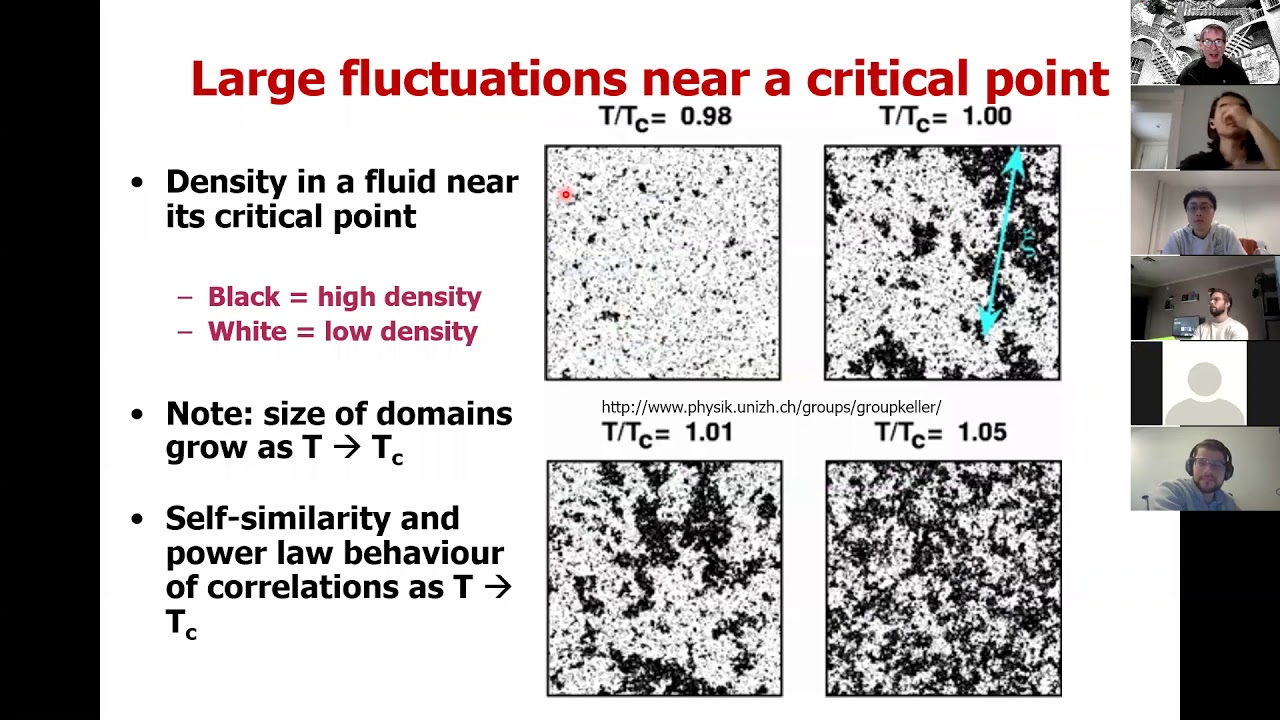
- Why this video: This lecture introduces the "spaghetti model" of polymers. It explains how universal, coarse-grained physics can describe macromolecular structures without getting bogged down in localized chemical details, focusing instead on random walks.
- Knowledge Checkpoint:
- Explain the difference between chemical detail models and the mesoscopic/coarse-grained spaghetti model.
- Describe how a random walk describes a polymer chain in an unperturbed state.

- Why this video: This academic session mathematically frames the random coil conformation. It details the structural statistics of ideal polymer chains, explaining how individual monomer steps aggregate into a macroscopic coil.
- Knowledge Checkpoint:
- Define the end-to-end vector and its mean-square average for an ideal chain.
- Describe the physical meaning of the random coil conformation and how it represents a statistical distribution.

- Why this video: This classic lecture from Yale University explains the thermodynamic basis of rubber elasticity. It shows that polymer stretching decreases configurational entropy, meaning the restoring force of a rubber band is entropic rather than energetic.
- Knowledge Checkpoint:
- Formulate the entropic spring equation: why does tension increase with temperature ()?
- Contrast entropic elasticity in polymers with energetic elasticity in crystalline metals.
Curriculum Note on Gaps: For highly rigorous polymer scaling laws (e.g., Flory theory, excluded volume, and self-avoiding walks in different solvent qualities), you are encouraged to independently review Chapter 3 of de Gennes' seminal text, Scaling Concepts in Polymer Physics.
Module 3: Colloids, Surfactants, and Self-Assembly
This module focuses on multiphase systems: solid particles suspended in fluids (colloids) and amphiphilic molecules (surfactants). You will explore the physical chemistry of stabilization via DLVO theory and the thermodynamics that drive spontaneous micelle and membrane creation.
Recommended Videos
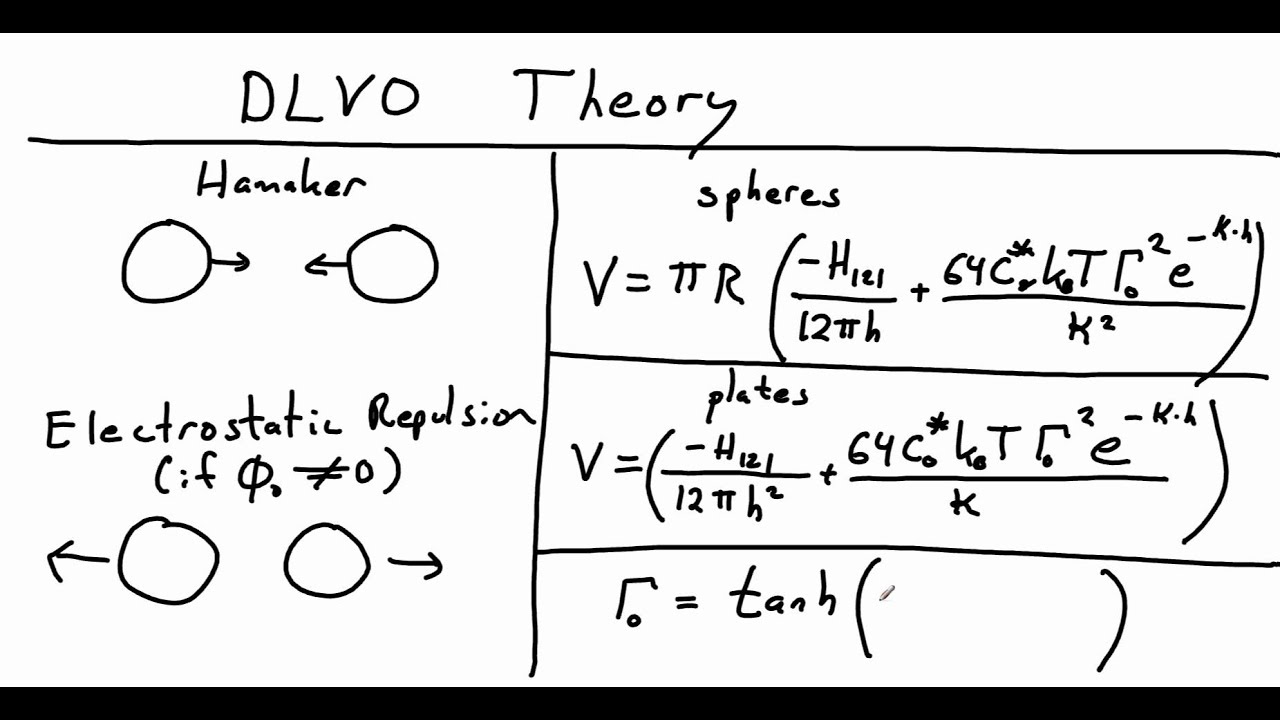
- Why this video: An essential, mathematically clear breakdown of DLVO (Derjaguin-Landau-Verwey-Overbeek) theory. It details the precise thermodynamic balance between attractive van der Waals interactions (Hamaker attraction) and repulsive electrostatic double-layer forces.
- Knowledge Checkpoint:
- Draw the DLVO potential energy curve as a function of particle separation, identifying the primary minimum, secondary minimum, and activation barrier.
- Explain how salt concentration (ionic strength) screen electrostatic repulsion and trigger colloidal aggregation.

- Why this video: This video introduces the amphiphilic structure of surfactants and illustrates how they resolve their thermodynamic "dual nature" (hydrophilic head vs. hydrophobic tail) through adsorption and self-aggregation.
- Knowledge Checkpoint:
- Define surfactant adsorption at an interface and its effect on surface tension.
- Describe the structural configuration of a surfactant molecule at an air-water interface.
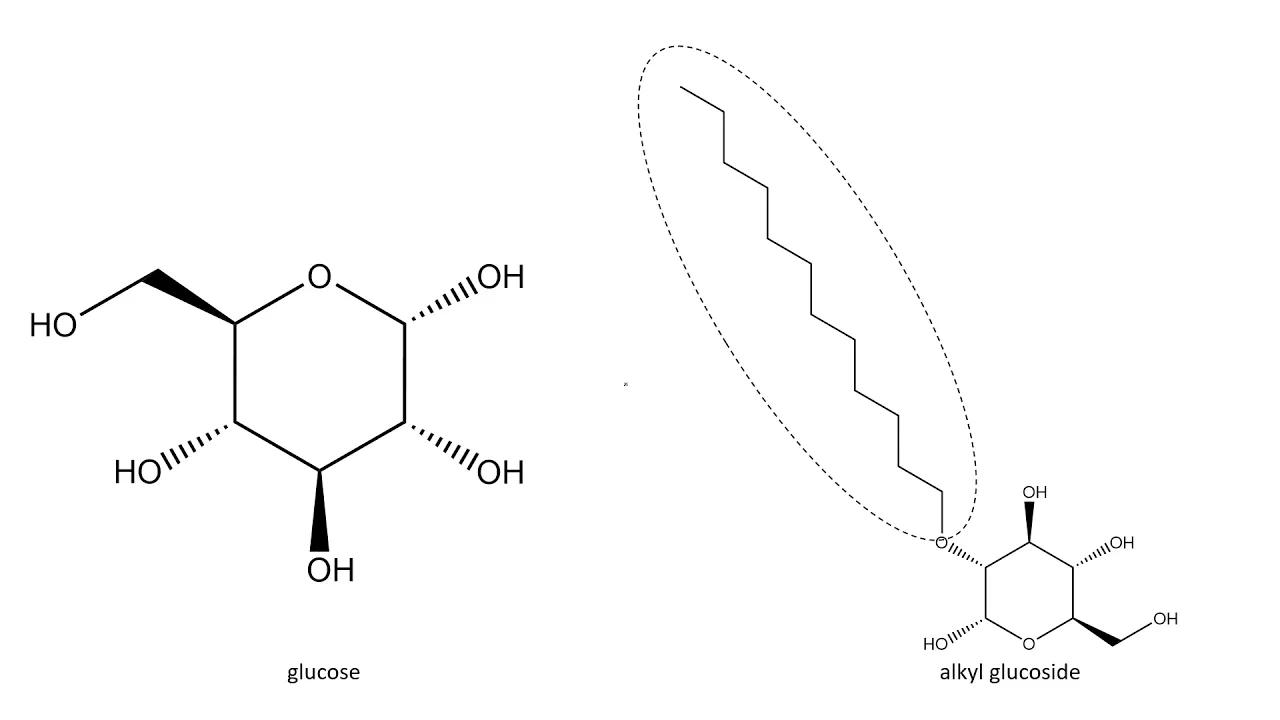
- Why this video: A rigorous, graduate-level lecture explaining the thermodynamic driving forces of self-assembly. It covers the hydrophobic effect, free energy changes during micellization, and the determination of the Critical Micelle Concentration (CMC).
- Knowledge Checkpoint:
- Define the Critical Micelle Concentration (CMC) and describe how physical properties (e.g., osmotic pressure, conductivity) change at this point.
- Explain the thermodynamic origin of the hydrophobic effect: why does water structure drive surfactant self-assembly?
Module 4: Rheology and Non-Newtonian Fluids
Rheology is the study of the deformation and flow of matter. This module moves past simple fluids to analyze complex fluids. You will master shear thinning, shear thickening, yield stress, and the quantitative mathematical models (Maxwell & Kelvin-Voigt) that describe viscoelasticity.
Recommended Videos

- Why this video: This video introduces how rheometers apply and measure shear stress () and shear strain (). It bridges the gap between qualitative fluid behaviors and quantitative, experimental measurement.
- Knowledge Checkpoint:
- Define shear stress () and shear strain () in terms of force, area, and displacement.
- Explain how a rotational rheometer measures viscosity as a function of shear rate.

- Why this video: An academic lecture from IIT presenting the mathematical framework of non-Newtonian flow. It derives the Ostwald de Waele power law model, showing how pseudoplastic (shear-thinning) and dilatant (shear-thickening) fluids are quantified.
- Knowledge Checkpoint:
- State and write the power-law equation: .
- Classify fluids based on the flow behavior index (): identify the regimes for Newtonian (), pseudoplastic (), and dilatant () behaviors.

- Why this video: This video derives the constitutive equations for viscoelastic models. It focuses on the Maxwell model, which represents a Hookean spring and a Newtonian dashpot coupled in series, showing how stress and strain behave under load over time.
- Knowledge Checkpoint:
- Derive the governing differential equation for the Maxwell model using series constraints (, ).
- Describe how a Maxwell material behaves during sudden stress relaxation.
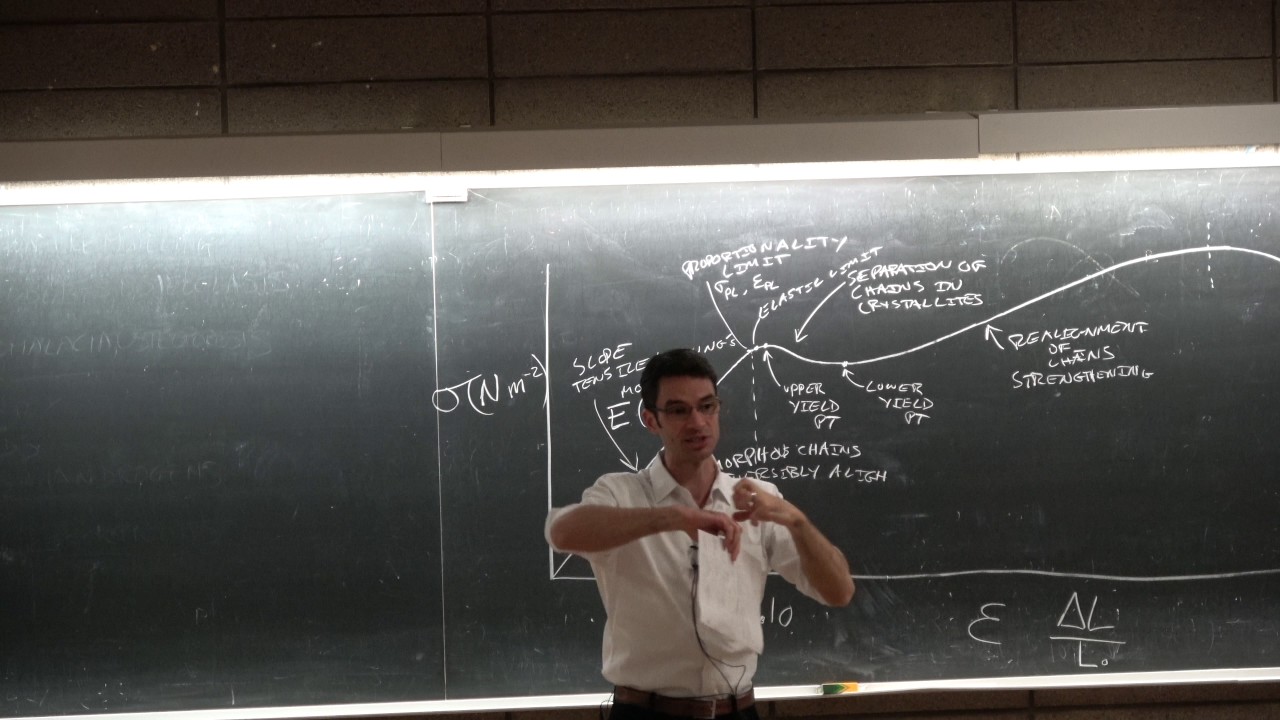
- Why this video: Darren Lipomi of UCSD contrasts the Maxwell model with the Kelvin-Voigt model (spring and dashpot in parallel). This comparison helps you select the correct model to describe solid-like vs. liquid-like viscoelastic dynamics.
- Knowledge Checkpoint:
- Contrast the spring-dashpot configurations of the Maxwell model (series) and the Kelvin-Voigt model (parallel).
- Explain why the Kelvin-Voigt model is suited for viscoelastic solids showing creep recovery, while the Maxwell model describes viscoelastic liquids.
Module 5: Liquid Crystals and Active Matter
This final module covers systems that exhibit order without rigid crystallization. You will study liquid crystals—anisotropic phases characterized by orientational order parameters—and active matter systems, where individual units consume energy to generate self-propelled motion.
Recommended Videos

- Why this video: This lecture details the diverse thermodynamic phases of liquid crystals, mapping transitions from the isotropic phase to the orientational order of the nematic phase, and the positional layering of the smectic phases.
- Knowledge Checkpoint:
- Explain the structural difference between the nematic, smectic A, and smectic C phases of liquid crystals.
- Define the concept of "anisotropy" and explain how it influences the optical properties of liquid crystalline materials.
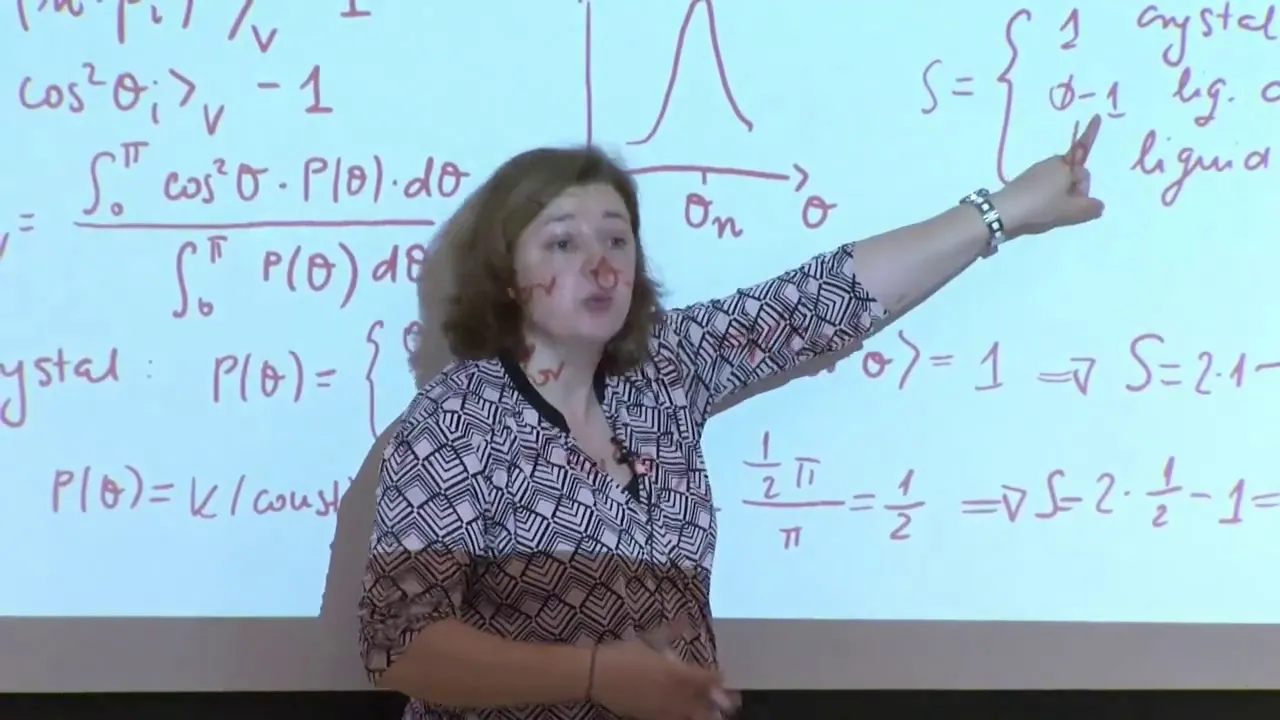
- Why this video: A mathematically rigorous derivation of the liquid crystal orientational order parameter (). It explains how the distribution of molecular orientations relative to the director () is quantified using Legendre polynomials.
- Knowledge Checkpoint:
- Write and derive the definition of the orientational order parameter: .
- State the numerical values of for a completely random isotropic liquid () and a perfectly aligned liquid crystal ().

- Why this video: Delivered by prominent active matter theorist Cristina Marchetti, this lecture introduces systems of self-propelled particles. It models active systems out of thermodynamic equilibrium, using self-propelled rods as a key case study.
- Knowledge Checkpoint:
- Define "active matter" and explain how it differs from passive systems in terms of local energy consumption.
- Describe the collective phase behaviors (such as flocking) that arise from simple self-propelled rods.
Course Map
Key People Index
- Albert Einstein (1879–1955): Formulated the quantitative theory of Brownian motion in 1905, establishing a direct mathematical link between diffusion and microscopic molecular collisions.
- Robert Brown (1773–1858): The Scottish botanist who first observed the erratic, continuous jiggling of pollen grains in water (1827), which was later named Brownian motion.
- Fyl Pincus: Highly regarded theoretical physicist who contributed significantly to our understanding of polymer scaling, biophysics, and the fundamental force balances in soft matter systems.
- Cristina Marchetti: A leading theoretical physicist in the field of active matter, known for her work on the hydrodynamics of self-propelled particles and collective out-of-equilibrium behavior.
- Johannes Diderik van der Waals (1837–1923): Nobel laureate who formulated the equation of state for gases and liquids, proving the existence of weak intermolecular forces.
Final Self-Assessment
Complete this final self-assessment to confirm your mastery of the curriculum:
- Thermal Fluctuations: Can you explain why is the relevant energy scale for soft matter, and how this explains why these materials are highly responsive to weak external forces?
- Einstein Relation: Can you derive the Stokes-Einstein relation () and explain how it connects microscopic fluctuations with macroscopic dissipation?
- Polymer Statistics: Can you write down the probability distribution for the end-to-end distance of a 1D random walk polymer and explain how this relates to a Gaussian chain?
- Entropic Elasticity: Can you derive the entropic spring constant () of an ideal polymer chain from its free energy?
- DLVO Theory: Can you explain how the addition of monovalent vs. trivalent salt ions affects the electrostatic double-layer thickness () and alters colloidal stability according to the Schulze-Hardy rule?
- Thermodynamics of Self-Assembly: Can you mathematically explain why the Critical Micelle Concentration (CMC) decreases as the hydrophobic tail length of a surfactant increases?
- Ostwald de Waele Power Law: Can you calculate the apparent viscosity of a fluid with a flow index of at a given shear rate, and classify its non-Newtonian flow behavior?
- Maxwell vs. Kelvin-Voigt: Can you write down the differential stress-strain equations for both the Maxwell and Kelvin-Voigt models, and solve them for a step-strain experiment?
- Orientational Order: Can you compute the value of the order parameter for a state where all liquid crystal molecules are oriented at exactly relative to the director?
- Active Matter: Can you explain why active matter systems violate the fluctuation-dissipation theorem and identify how they differ from systems driven by external macroscopic fields?