

























In soft matter physics, the fundamental forces governing system behavior include electrostatic interactions, dispersion forces (London forces) that arise from quantum fluctuations and scale as 1/R^6, and depletion interactions that create effective attractions between large particles due to the exclusion of smaller particles from the gap between them. These forces operate at different length scales and energy hierarchies, with soft matter characterized by larger length scales (10-100 Å) compared to hard matter (1 Å), leading to different physical behaviors despite similar underlying interactions.
Fundamental Forces in Soft Matter Physics | Lecture 1
Added:Basic Statistical Mechanics and Thermodynamics, particularly the concepts of thermal energy (kBT), entropy, and free energy minimization.
Fundamental electrostatics, including Coulomb's law, polarizability, dipole-dipole interactions, and shielding in a medium.
Introductory Fluid Dynamics, specifically low-Reynolds-number flow, diffusion, and Brownian motion.
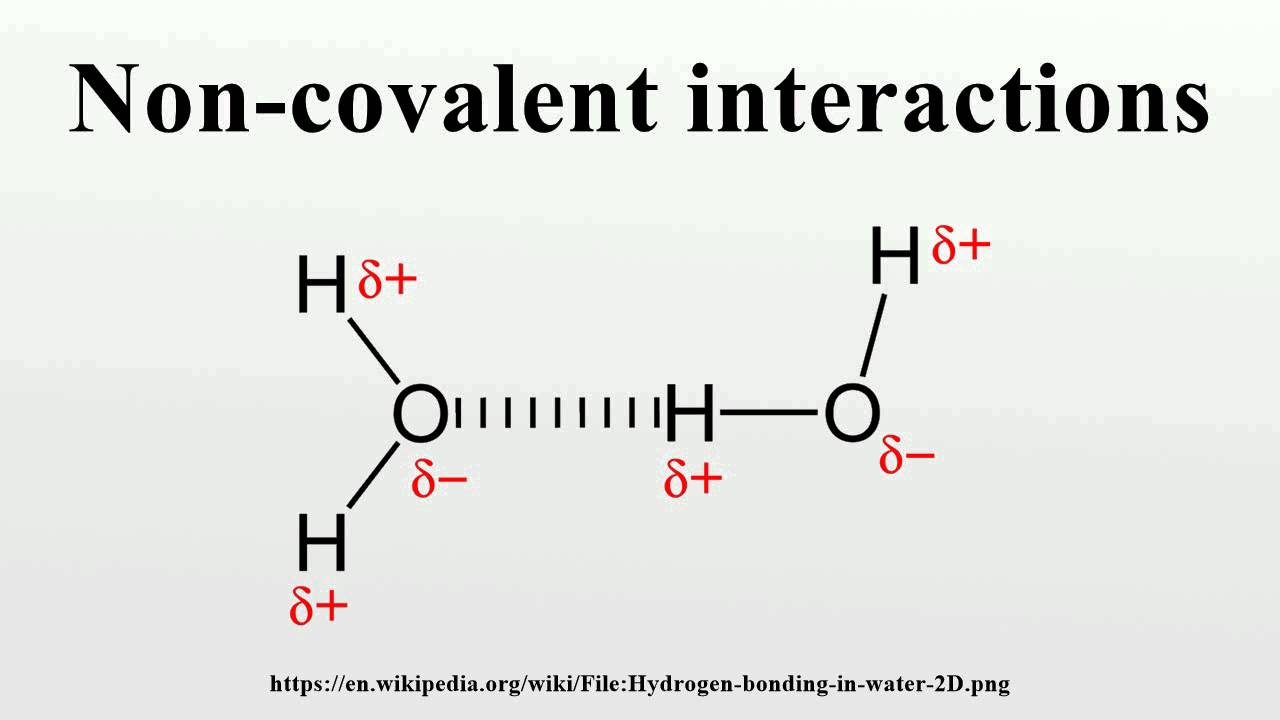
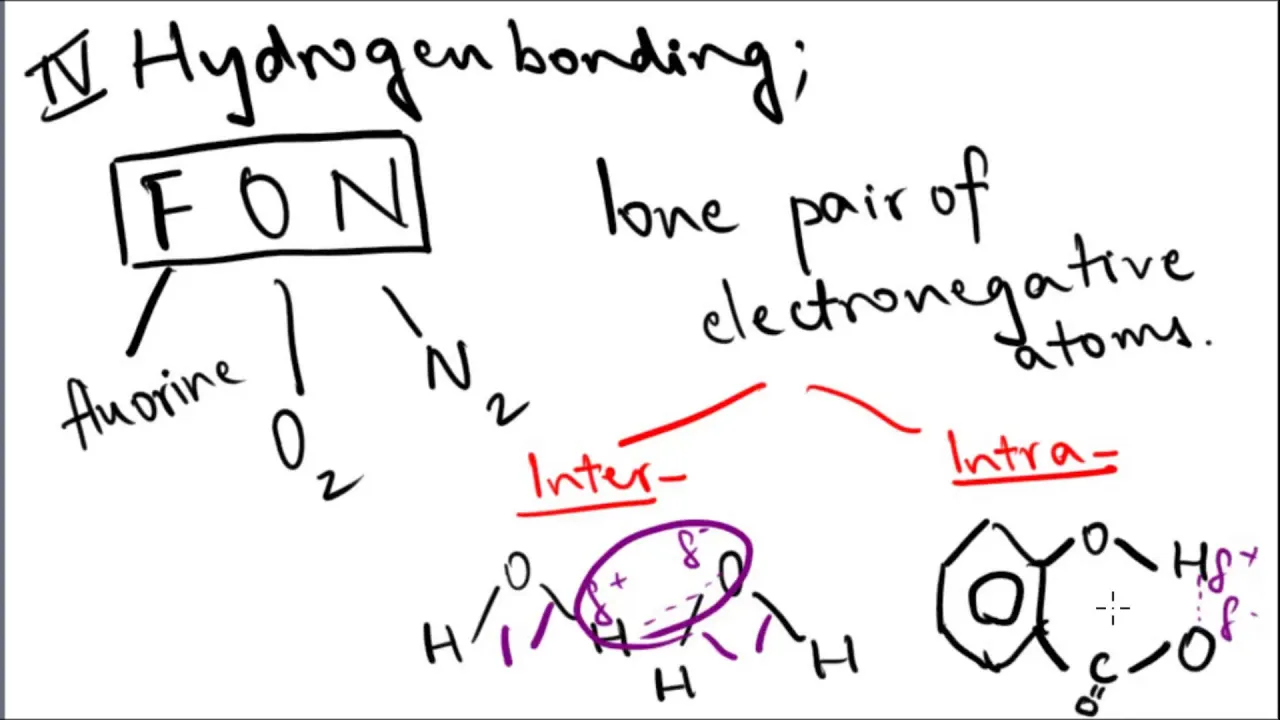
General chemistry concepts regarding molecular structures, polymers, and the difference between covalent and non-covalent interactions.
DLVO (Derjaguin-Landau-Verwey-Overbeek) Theory and its application to colloidal stability and aggregation.
Polymer Physics theories, including ideal chain models (random walk), excluded volume effects, and viscoelasticity.
Self-assembly phenomena in soft matter, such as the formation of micelles, vesicles, and liquid crystals.
Advanced topics in biological soft matter, including cell membrane mechanics, DNA packaging, and active matter dynamics.
776 views9likes1:32:17Original Release: 2016-07-07
it's probably good to tell everybody who who we are so you heard my name I'm Phil Pinkus so I uh but the question is where we're coming from because background it always gives context so my PhD it's a long time ago now at Berkeley I worked with Charlie catel on magnetism so most of my career I say the first half was all in let's say traditional solid state physics I worked on magnetism I had a buddy who was a post office when I was a graduate student by the name of Deen so we became and and he I worked a lot with him on superc contivity on Li crystals I also did a lot of work with uh another PE guy might have heard of Alan heager on uh on correlated electrons and conducting po so I I sort of have a more of a solid state background and only started you know let's say in the uh the second half of my career in in soft matter stuff so uh and you'll probably that'll probably that background will probably come out in some of the uh lectures I know uh so I have this funny trajectory the uh I like to also emphasize a few things that that Leo said uh uh first asking questions I love questions I'm not going to use PowerPoint uh this will be all think of these as informal talks so if I say anything you don't understand or if I use jargon that you don't understand just ask questions as Leo said if you don't understand it somebody else probably doesn't understand it and and it's more important to be coherent you know to understand what what we're talking about than than covering the material uh uh an old one of my old mentors from UCLA Ted Holstein always used to tell me that when you go to a talk you should try to you should listen to get something out of it if you don't understand what the speaker is saying it's it's his job to make you understand so ask so either ask or get up and leave because the only thing you have in life is time okay so you don't want to waste your time just sitting and not following the um uh the other thing that that I wanted to say about about these kind of schools the first school that I went to of this St style was actually in France uh when there's a set of schools in Britany called begu place with the French sailing school and uh and and I know was the first time I had experienced this maybe 20 years ago now and realizing these things are really good and the thing that's that's best about these is not the material and and it's a little bit what Leo said it's it's the fact that you guys represent a finite fraction of your generation in the world that's working in the this kind of area so that means the contacts you make with each other will be you'll stay for you with you for the rest of your life the so those kind of in interpersonal relationships are are the main thing that comes out of these kind of schools in my opinion and I saw that in bre beu and I saw it in the two others like these that I was over here and and by the way Leo does a tremendous job in organizing these things I mean it really works well it doesn't feel like he's doing much but there's a lot done behind the scenes I'm sure Leo okay so what I'm supposed to talk about is stuff that you all no okay I'm going what are the fundamental forces that play a role in let's say in soft condens matter or more specifically in polymer physics and U so the my going in point is this is something everybody should know and I'm not trying to instill on you say that theoretical methods or computational methods it's more how to understand the physics that's going on I mean I mean you could figure out I mean do homework problems and figure out how to how to do the calculations the uh so so uh so and again everything that I'm going to say in these three lectures you should kind of know I might say them in a different way you know uh and you see them and you know uh you know because you know the way things are done in textbooks are not necessarily the only way to do that but um uh okay so um uh okay now the other uh the other thing is that even though I'm talking about stuff that you're supposed to know it doesn't mean these things are well understood to a lot of to a large extent everything that we talk about you don't have to probe very deep before you realize that something that's not quite kosher things are a little not as good as as they sound they are they're more complicated and uh so there's a lot of like fundamental science yet to be done even in these kind of simple stuff that I'll talk about um yeah so uh so I'm going to I'm going to give these like three lectures and roughly speaking they're going to be in the following way they'll be what I call uh if I know how to spell it ubiquitous forces things that are always there if you want like them or not uh there's going to be one lecture on mainly on electrost staus and one lecture having to do with things like hydrogen bonds hydrophobic effect things like okay uh but then probably I'm not going to probably they're not going to be packaged very well but that'll be the the rough the rough order uh uh so uh so let's so let's start uh at the beginning and everything that that or most things you're going to hear these week falls under the uh the rubric of of soft matter and uh So Soft means kind of squishy uh my friend uh Barb bergino call soft matter sludge physics so that's another good another good description that for Mike uh the um and so squishy means that you want to talks something about a an elastic modulus and if you look at an elastic modulus I'll call it g uh it's as far as Dimensions is concerned it's an it's an energy per unit volume so for me it's it's a some kind of temperature divided by some length cubed those are the dimensions of modulus and and uh and if you look at ordinary hard material the characteristic temperature TC may be something like a tenth of an electron volt by the way another thing that my thesis advisor Charlie catel always insisted upon for us is physics is numbers you got to you always have to put in numbers and we'll see that over and over again it's important so that's about let's say 10 KT for for me bol's constant is always one okay everything KB I always work in K units with Bol constant uh uh and for hard matter L let's say is in the order of an angstrom 10- 8 cm and that you can compute a modulus what is TC so characteristic thing that represents the interactions of the system transition temperature the cohesive energy the melting temperature of a material anything like that 10 or 100 KT t means room temperature uh for that's for hard matter for soft matter the interactions are the same see so it's still TC but for soft matter L is about 10 times a or or a is about an Ang so for soft matter G is about 10us 3 the modulus of hard matter so the the whole issue in hard and solt is that length scales are bigger that's what this that's pretty much what what distinguishes hard to soloft matter I know Michael doesn't like it but it's right isn't different in soft matter is K it's the same thing the interactions are all the same well in in hard matter interaction is the curvature of the potential to people you're thinking about well you're talking about you're being I'm just talking about more crudely transition temperature 100 100 KT 10 KT but for S it will not be 100 KT of a l scale it will be yeah the interactions are the same it's just that the L the objects are larger So Soft matter has to do with nanop physics so he'll argue with me I'm right he's wrong he can defend himself later in hard matter one one would think the typical interaction would be coent bonds and or something well I'm talking about even something weaker than that an exchange interaction in a magnetic material uh a hydrogen bond something of theorder is not what creates the elasticity it's what creates I'm just trying to be very crude okay but the the main issue is size that's what the emphasis the main issue is that for soft matter you're dealing with fundamental objects that are large so so let's talk a little bit about energy scales since I already this we talking about that so one for for condensed matter physics cadet's matter physics in general the fundamental energy scale is an atomic energy that's an atomic energy which is of the order of electron volts okay the U the the next smaller energy is of is of the is of the interactions the ones that are that I try to lift here as TC and these may be of the order of a tenth of a volt okay the other interaction that is important at the next level of call E3 is is entropy that is temperature and we're dealing always with around room temperature so this is of the order of 100 of of a volt okay and that's the higher hierarchies of uh of of energies that that we're dealing with now if most of condensed matter physics in general hard and soft we don't worry so much about that that that energy because the the atoms that were involved in this especially in salt are pretty much fixed objects in in hard matter maybe you're you dealing with it a little bit and and so in the same sense that we don't have to worry so much about the Integrity of atomic species it's the same way that an hard condensed matter we don't worry about integrity of nuclei we don't worry about the strong interactions and things like that because they not we're not doing things where they're where that's changing okay so so we're not thinking too much of most of the action that we have is down here between the interactions and and and thermal energies and eny okay the uh the players uh that uh that will that will talk about what are the objects that we're dealing with uh uh I don't want to say spend much time on that but uh and typically in soft batter we're dealing with with colloidal systems which are something like solid materials like they don't have to be spheres for example like suspensions for example of gold in some some solvent or we're dealing with emulsions which are admissible liquids two liquids that don't mix so they form liquid droplets in another in in a solvent or we may be dealing with Foams which are is gas in in in a solvent missing gas okay uh now in these lectures I mean not my lectures but in the ones that you'll hear we there'll be a lot of discussion about larger objects which you know about polymers and I won't say much about it I think sure you'll say a lot about it but you know for a for a for a physicist the first thing of a polymer is you just think of little beads that are struck struck together by uh universal joints and that would be the the first simplistic picture of a polymer uh where these beads may be any size but typically may be again of an atomic size okay and and these things could be very large so these things typical Dimensions here I just I should have told you typical Dimensions here might might be 100 uh 100 anoms to uh to a micron 100 to a a let's see right down so that it could be nanosiz objects and the same for these these could be could be larger okay and you'll hear a lot about polymers so I won't say anything more about them okay but in the back of our mind most of the things we'll be talking about we have some solvent and we're talking about things in the solvent okay uh that's not everything in soft matter but a lot of I think most of the talks many of the talks here will focus on that I guess the LI crystals might be need Li crystals uh so uh one thing that we should all uh be uh have in our mind is solution thermodynamics that's one thing that that that we have to bear in mind and uh so uh the way that I'd like you to remember it for these lectures is is to uh think about dilute solution so I'm going to imagine a a a solvent where I put in objects you can think of them if you like as objects like this or smaller objects molecules and and uh and what I mean by dilute solution is that the concentration C is the concentration of objects see is defined as the number of those objects I put in per unit volume of the material is is small and it's small in the in the sense that the that we're only dealing at this point with with short range interactions your drains and forces and and we'll get back to that later to see where it goes wrong but for the moment let's just so that the interactions are very short drains that that just means that they don't diverge at Infinity then if we want to think of dilute solution thermodynamics what we want to write down is a free energy I'll write a free energy per unit volume I'll just think of a homogeneous glass of stuff okay uh uh as usual I'm going to normalize the energy by by by temperature t means again all my Lees t means KBT and this is room temperature or something like room temperature in in in in soft condens matter physics in this in contrast to solid state physics temperature is often not a very useful variable and the reason for that is that a lot of the parameters that appear are temperature dependent so everything is temperature dependent and it's not easy to uh to learn much uh and typically from the temperature dependence of objects in in solid state physics you're usually working at very very low temperatures and and and and and the temperature dependence is is typically more useful okay uh that does mean it's not useful here but it's not it's not a and those of you who do experiments know you don't often vary the temperature vary other stuff okay so let's look at the free energy PR unit volume of a dilute solution of stuff so the first thing is the pure solvent if I have nothing then the pure solvent I'll call it F0 over t is the pure sign and we're going to get back to that later and then and then I can imagine just a power series expansion in the concentration that's called in a varial expansion and I just want to copy so I use the same notation so there the term B1 C I'm just doing a power series expansion a half P2 c^ 2 16 E3 C cubed okay just uh uh I could do the formally and uh right these the these these coefficients depends obviously on the stuff that I'm putting in and on the solvent and then I have remember I have an entropy of mixing so the entropy of mixing I should write C log c one this is ENT so for dilute Solutions I would write that and this is called varial expansion so don't you usually include that in your to what the the entropy of mixing isn't it usually part of of the V coefficients not the way I do it maybe you can that's fine I mean okay but you need a log there's no logs here okay you need a log okay now okay so that's just a formal a formal expansion which you would expect would be okay as long as I have no long range interactions the U just to just to get everybody at the same point the chemical potential is how much is what you have to do the work you have to do to add a partical so the chemical potential for the solute I'll just call it VI is just the F the n and fix whatever things you want find the temperature and uh and and you could so you could you could see what that is it's uh in units of KT it's a B1 plus B2 C plus log C okay that's the chemical potential the other quantity I maybe I'll write it up here because it's important the osmotic pressure osmotic pressure everybody maybe should understand it's I imagine an experiment where I have a membrane here permeable to the [Applause] solvent but IM impermeable to the solute and I put so ahead of the solute here's here only pure solvent and it's the pressure on that membrane okay that's what osmotic pressure means I think we again well everything I say you should know in this language I call it Pi is C DF dcus F see that coordin blackard didn't look visible thank you so let's come back over here are you going to elaborate for some of these things pardon are you going to elaborate on some of these things for example uh uh what do you mean by elaborate okay where does that definition come yeah I'm going to come I'll elaborate a little bit yeah let me let me let me first WR I'll get to your question but let me first write this down again so you can see it I is c f to cus F you could just you could you can derive that just by differentiating it's just thermodynamics and in in my language it's uh C plus uh B1 B2 c^2 / 2 plus 13 B3 C cubed like that okay okay so uh B1 is kind of irrelevant to the pressure okay um now um question I'm trying to understand I'm trying to understand the last of your and so that inde you can expand also this logarithm and including the expansion and uh I don't know how to expand the log I mean c c is it's not 1 plus c c is small so the log of a small number is big I mean I can't expand that um at this level I can't expand it that's why I that's why I had to keep it separately okay I think I think that's is there am I doing something wrong okay uh now uh okay so this this is just pure if you like phenom ology um the U let's remember let's remember what the interaction between any kind of molecules is uh if I look at the V of R between two I think I have all the coefficients right huh well if I take the derivative of the the cubic terb I get a half and I'm a half minus a six still giv yeah I think it's right okay so if I look at the typical intermolecular interaction somebody say uh between molecules always looks like this okay that interaction between molecules always looks like this uh there's some length scale here a there's some depth of a potential Delta and sometimes people write this like a Morse potential with exponentials or those of you who do simulations always use the U what is it called the uh Leonard Jones leard Leonard Jones where this goes here as 1 R 6 and this goes as 1 R 12th U this is Leonard Joe's as we'll see there's a good reason for this 1 over R 6 there's no good reason for 1 over R 12 it's just because 12 is 2 * 6 and it's convenient there's no real but so so let's remember what this is this this part here the Steep repulsive barrier which is is quantum mechanical origin by the way I should say at the beginning that we're talking about the fundamental forces the only Force to are first approximation that plays a role in any condensed matter physics is electromagnetic interactions that's the only thing you have to worry about strong interactions or in the background they don't do anything uh the to to a first approximation the only thing that count I mean you could use you have to worry about strong interactions if you're doing Neutron scatterings or something like that but but I mean as far as the the physics of what's going on is concerned it's all dominated by by by electromagnetic interactions okay and this hardcore is just a coom interaction where you're pushing electron wave functions on top of each other it's just a it's just a coolum interaction between electrons but it's quantum mechanical so this is this is uh this is this this hardcore this part is a fluctuation Force which we'll talk about later and but but the the point is is that all interactions between molecules look roughly like that okay and U so if you want to calculate you could you if you know the the interaction between the particle between the objects then you could calculate these coefficients okay and in particular B2 which is called the SE varial coefficient it's the one it's the first one that plays a role here in the osmotic pressure is something like one - eus this potential V of R over T integrated over all space and now where does that come from that comes from taking this set of particles and calculate and calculating the partition function that there a h is a a hamiltonian which is a sum of all these pairwise interactions assume you assume they're pairwise and you put that in the partition function and you assume low concentration you turn the partition function crank it's done in all the textbooks and you calculate the coefficients in this expansion just this way and you just match terms and this is what B2 is okay now you have to be careful we're talking about objects and the solvent so this interaction is not the interaction between those objects in vacuum it's the it's interaction between those objects in the solvent so this interaction that I'm putting in here to you to calculate this B depends on the solvent we have to remember that we technically forget that it depends on the solvent this is the interaction through the solent however that's Define okay but but given that this is B2 uh the higher varial coefficients B3 and B4 you could also write in in this kind of structure but they involve multiple length integrals and they get increasingly messy and difficult to calculate okay however this one has a lot of simple simple physics in it for example if I looked at this potential here you could imagine several limits if the temperature is much bigger than Delta Delta is the depth of this minimum then you see that this this thing is always V over KT is always Small E the small number is one 1 - 1 is zero so this is zero until for for any separations of these molecules bigger than a however when this R is smaller than a this thing that becomes very large e the large minus large number is zero this is one so that means in this limit B1 is of the order of a cub and is greater than zero a is okay B2 B2 it's a volum by the way oh by the way units dimensions are important you see this is a volume B3 is a volume squar okay uh if if T is small compared to Delta oh sorry yeah you said units are important it's a volume uh so why is that important say that again you said units are important it's a volume so yeah because this is an energy per unit volume so that's a c² this has to be a volume right this has to be a volume I'm just pointing that out what the dimensions are that tell what does that tell me uh about thate well I'll okay so let's look at B3 B3 is I won't even write it down it's a it's a complicated interval that involves three particles but because it's a volume and the only length of this problem is a you could write down immediately this is of order 8 to the six tells you that autoa and in fact we don't almost never worry about B3 because it's so it's not very sensitive because it's a multiple integral when you integrate you smear out all all the details that's why the only one that's very sensitive typically is this one B2 okay so if I come back if if T is less than Delta then then I have e to a positive big thing when R is in this range where the minimum is and that could be very big so typically in this range B2 is of order it's a volume has to be like a cub e to the delta T negative because this is sign so if I plot if I made a plot of B2 I said what I wouldn't do before versus temperature I treated this seriously that the the Delta was not temperature dependent of course which it is uh if I you would say that B2 at some point it goes through zero which you know in in in imperfect gases is called I guess the boil point and in polymers this is called the FL Point flry temperature um and um so so so uh a lot of physics could be for dilute Solutions as you'll see and and problem you see a lot more can be thought of in terms of this varial expansion okay uh so uh now of course we're not only interested in dilute Solutions but but uh uh this is a good place to for everybody to remember okay so this is all stuff that that we should know uh I think okay um okay now before uh already at this level we could see some of the effective forces in the problem that that we're dealing with okay so I hope that everything I said you've all seen before but or or some version of is it does this imply some kind of collapse or what is it say what when B2 go through change of sign imp some kind of collapse yeah so when B2 change yeah when B2 becomes negative that means you have effective yeah attractive interactions the the objects want to sit in their potential minimum and you have things so that's good point that would be so that's when we' say that the solvent of this material which is what determines that interaction is a poor solvent we would say when B2 is negative it's a poor solvent when B2 is positive it's a good solvent that's that's a good one B2 is positive means the objects are effectively repelling one another that means they want to be surrounded by Sol remember this interaction is the interaction in the presence of the Sol you sorry you still wouldn't have would you get collapsed at that point because you still have the the entropy yeah so it doesn't mean it collapses but it means there's a tendency to collapse of course yeah so what you say is Right entropy uh for for solution which is dilute enough entropy always wins if you put a if you put a hydrogen atom in the middle of the universe at at a fixed temperature it's going to ionize spontaneously because it's it's it's KT versus the The Binding energy 27 electron volts of Hy so entropy will always win if the system is diluted up and that's a message that we should keep remembering over and over again that's an important point so I'm glad you said that uh when people do simulations they like modeling po polymer in a good solvent they often times get rid of the fractional together so just use the repulsive part of Leonard Jones and something like that is that just because they neglect the this attractive part of the potential or can there be situations where the solent May mediates it in such a way that there's actually no attractive part yeah so I uh well maybe there's an expert here who wants to answer that but I think it's just what you said that you just if you're interested in the repulsive stuff then you then you you you you think you're in this region up here you don't have to worry about the interactive sometimes you use just for the scre volume interaction yeah so is there anybody else WCA yeah it's a WC so you're referring to WC the which is really for hard sphere systems right so so it's to try to see like what a g of R is for a hard sphere system so so people people use that Beyond it right but but that's that's what those poten actually develop for right but is is this just a model or can there actually be a real situation where you only have an attractive part where you only have say that again you only have where you actually attal well okay so there are systems which approximate that uh if you take U um so there's a lot of people in who in the colloid Community take colloidal particles like little spes and they put on polymeric hairs short hairs uh that where the the solvent is a good solvent for the polymer so it's you're in the temperature much bigger than Delta for the polymer and then the interaction between the Spheres is to a first approximation hardcore repulsion now you always have some long range attractions which we'll talk about later but if they're small it's if they're small enough you can neglect it but but I mean you never you never have a perfectly at the end of the the day you always have attractive forces somewhere and you can do perative expansions about that too that's part of why see is useful yeah well I mean this is kind of a PR So based on the o you had so why the B2 is increasing as temperature increase it seems it should increase when temperature goes down what uh if you look at the fundamental interaction things want to be stuck together there's always attractive forces and B2 positive means repulsive forces so so so at the end of the day the ground state of any system is stuck together everything stucks together so so B2 is a is increasing B2 is increasing repuls that's the way it's defined so that mean it should be a negative sign in the exponential of the second one of the low temperature approximation this a there is a negative sign okay you're right it's negative because of this negative I thought they an equal sign okay I'm sorry no no it's a you're right I'm sorry okay so uh good okay so it's important that that that we kind of focus on this um so let me now um one of already just with knowing this stuff we we uh we we see some things that are important in soft matter so so so so let me imagine the following situation that I have my beer of stuff and I have my solvent and I have some small solute particles I'll draw my little solute particles you can think of them as little spheres if you want a and in in uh in addition I I put in some if I had a different color here I would use it but I can't open it yet uh I have some uh a few big red particles these are all you should think of these as solid particles uh so already what I I could what you could see is something that's called a depletion interaction this was first as far as I know mostly due to osawa not not so many years ago this is not ancient he's still alive so just to give you this uh this feeling and the idea is the following that there's an interaction between these red guys because of these little white guys um and uh the way that works is the following what did I do with my piece of red CH so let's ADM met uh clearly I'm thinking of these red guys is Big very big and if two of them get close together it's like two flat surfaces so let me just think let me look very close and here's one red guy here's the other one separated by some separation let me call it h and let's think about what happens if and so the size of the white guys here I'll call B so these think of the white guys as a sphere of radius B the red guys is some sphere of some bigger radi much bigger radius I don't have to specify it here and suppose H is less than b if H is less than b then these small guys can't fit so that means there's a region here this is a depletion Zone okay but if I look at the large scale These Guys these feel an osmotic pressure due to the little white guys there's a if if the white guys are very dilute there's an osmotic pressure to a CT I already wrote I wrote it down here it is let's see let's be very dilute so I don't have to worry about B2 but so there's the pressure CT on this side but there's no balancing pressure on the inside because the concentration is zero in the in here if H is less than b so that means that there's attractive Force attractive force between the red spheres whose range is something like B and there's a pressure which is something like minus CT other words these guys are being squeezed together with a pressure disjointing pressure using derag language minus CT or the opposite of a disjointing pressure it being pushed together okay and so so already whenever I have a solution of of multiple components which we're often dealing with there's an attractive force between objects just due to this okay this is there all the time and you always see it okay so clearly if you want the fourth to be bigger you play with the concentration of the small guys okay now so what I given you is the crude picture if you want to work this out better and it's complicated and you have to decide what it means for the red guy to be big bigger than the white guy what are the conditions are that's more of of an exercise you could try to work out that's like that's like a homework problem okay but the crude picture is that you have this kind of depletion so you see that already just from knowing something about dilution dilute solution thermodynamics and it should be very well known but it's not that ancient and nowadays there's lots of experiments that rely upon that mostly in see supposed to go till what time 10:30 okay okay so uh so now uh any comments about this I'm not going to say anything more about the polition I'm sure you'll hear about it later later this week and next week so you have your homework followed how to work this out in detail how to decide what if the red guy is uh 10% bigger than the B guy does it still work that's a good question okay could you put some numbers what is h for example it's more than 1 mm well it depends on B I said this is true H is less than b so suppose B is a th say B is 100 say 10 nanometers and and a the red one is 100 nanom so the range is just given by the sizes of the objects uh so could you represent those forces by uh changing B2 for large particles Ah that's a good question that's right so if you okay so now that's a good question so so now if you think of my solvent as the pure solvent plus the white colonal guys then if that that's a new solvent two components of it then then this interaction could be represented would be an effective B2 between the the red guys absolutely that is exactly the way you uh you should think about it can the same vein as that if you just have a normal if you just have one component in a solvent and of course the solvent's going to have some finite size that we normally no it doesn't work quite that way because the solvent is at High concentration is it it's not I can't use describe the solvid by AAL Theory at least at least not obviously that's that's that's the hard part is that the solvent is dense and so we we can't use this the simple way of doing it and we and and that's an that's a a good question because that's a very important point because very often and especially here with this some emphasis on biological systems the solvent is water and water is a very tricky complicated solvent so we have to under we just we can't just representing just doing stupidly representing it by F0 like I do here doesn't do justice because there's all kinds of effects on that VMR and so so we're going to spend some time talking about that at at the end okay but the thing is it's I can't represent it by a very expansion uh sorry what is the Big R guy what is the Big R Ral object another colloidal particle okay or another M so it's different from the white little it could be made of the same stuff as the little one okay it could be you know could be the same kind of stuff just much bigger all right there was another question the a cler of red big particles uh does the for the de force disappears in the center I I I didn't hear very well so if you have an aggate or a cluster of red particles does the force exist within the cluster or just at the frontier of the cluster ah I see what you're saying uh the way I would look at it it's a it's a it's like a pressure pushing in from the edge of the cluster not it's not a yeah this this is yeah you're not well the way I talked about it it's like a step uh how it falls off in real life I'm not sure does anybody know Michael do you know yeah it's geometrical property how would they overlap volume changes with yeah so but it's it's it's is there could I I can't describe it by a no no it dies completely at some point yeah so it's pretty it's exception of a sphere in a plane was excuse me there was another question okay good oh no I'll ask yeah I I've wondered about this and I've never asked it so let's say your big red spere is let's say it's a p okay and presumably we can say it has some some well defined size some RG then then the depletion reg the depletion interaction would happen for large solutes you would think that couldn't enter the polymer but at some point it would die off if they could diffuse through the PO yeah I think that's correct I think that's that's absolutely correct and so uh uh that's right if you if you have that's right I I I I think that the and that's a little bit of a tricky issue okay so if I have uh I don't know what this what to say about that I think people have worked this out in the literature though I think you could probably find about or or look at the case where the the uh my red sphere is not completely imp pedable but has a certain permeability or something like that I mean I mean uh they're clearly you know the the sharp division of something just impenetrable object is an idealization and that's what I what I part of this is sort of an example of what I meant when I said that even the things that we think are easy that we should understand you you don't have to go very Pro very far before you find out that it become a little bit tricky so we have repulsive spheres that PO disperse can small ones precipitate the large ones even though there only pure repulsion same same exact say that again say you have same chal same material po dispers some kind of Po dispersity can small ones P repulsive precipitate or cluster large ones I think so by pure just pure repul I think so just the distribution I think so I think so but I'm I I haven't seen examples of it that way but I think I I think principle should should work okay um what uh so what I'd like to spend most of the rest of the time talking about is this stuff this one over R of the six the So-Cal you know dispersion forces and uh and this is a very uh in some way very simple but another way very complicated uh area and uh so I I i' like to give it to so I uh so i' like to talk a little bit about it and I myself don't understand all of the aspects of it because it's so comp complicated okay but so I'll try to tell you the parts that I understand and it'll be clear the parts that I don't understand so well uh let me so uh let me uh and like like all of physics you know we have to sort of part of it is lying so I have to or idealization so I have to I'll start off by lying to you a little bit and uh and then we'll fix up the lying so let me I want to start at the most simple level so let me start with with our old friend uh the hydrogen at cuz I I I I don't I don't want any of this to be mysterious and and uh so I'm going to think of but I don't have to worry about all the details so I I'll be happy just with the bore atom so remember that the energy for a hydrogen atom uh I'll assume the mass of the proton is infinite a little bit so that we have the kinetic energy of the electron and then electrostatics and here I should say when I do electrostatics I use CGS units I'm using evil units I have no Absol that's because I hate Epsilon zeros and 4 Pi so if you need it if you need it you have to put it you have to supply the 4 Pi Epsilon Z okay so uh so so uh okay everybody's happy with hydrogen um and then we have B quantization let's say B quantization I'm not I'm not doing it I don't have enough time to solve raing your equation is uh I know what it is some integer integer n z uh 1 2 3 * H H is p constant so this is quantum mechanics got P Conant okay um so I just put this here this is 2 pi r p is NH so I eliminate momentum I just remind you how to do B atom so that that this effect of energy looks like this looks like that it's a minimum because I have this large uh centrifugal potential 1 / r s here okay uh so for the hydrogen atom you you could all minimize that the the energy levels are given by something I'm going to write it down just because four m is the mass of the electron n^2 H bar squ okay that's the those are the energy levels and the radi H+ s² okay so those just come from doing this minimization you all done it before um important things I have to remember is that uh this here for Nal 1 is something like 13.6 electron volts we know all those numbers m e h you know and and this for Nal 1 is about a half okay so that's uh that uh that's the solution for the grounds 1s state of hydrogen the important thing is this is huge compared to temperature which is 140th from an electron volt um and U and this is isotropic the the the the one wave function is isotropic uh if you want s goes as e the minus something like r a uh a is what this is a Nal okay uh and I think you you all know that uh the important point is that the one s state is spheric spher ically symmetric and for me this is a hydrogen atom the hydrogen atom is the Paradigm for all atoms All Atoms are the same there are slight details in terms of orbital Ang momentum blah blah blah but to a first approximation they all look like this okay the um uh if I so this is spherically symmetric thing it's neutral so it has no dipole the average dipole moment is zero in the ground state one talk about the ground state if I put this hydrogen atom in an electric field it polarizes because there's a there's a negative charge there's a positive charge the proton and the electron and so it develops an average dipole moment which is proportional to the electric field and I'm not worrying about you know it's just like that if you want to put in vectors okay in general that's just linear response and Alpha just remember is called the polarizability uh let's get Dimensions straight so let's get the dimensions dipole moment is a charge times a length the electric field in my units is a e square is a charge divided by a length squared right so the dimensions of this is L Cub the dimensions of polarizability is a volume okay um for the hydrogen atom is only one length of the problem [Applause] that's the length so you immediately know that this is of the order of a so the polarizability for hydrogen atom is is is something like its volume by the way it's exactly a cub if you calculate it but but I mean you see from dimensional analysis it could be nothing else but a cub times a number okay okay uh now so uh so so let's think about this for the moment so let's imagine that we have two hydrogen atoms fixed in space separated by a distance R so I have two hydrogen atoms here's hydrogen atom one here is hydrogen atom number two separated by a distance R um so something funny happens because the if I look if I think of the hydrogen atom semi classically uh then I think of it as a proton with an electron whizzing around it you could think of it that way and that means that while the average dipole moment the average over uh Cycles is zero there's an instantaneous dipole moment that's that's rotating around like a like a lighthouse like a ligh so at some instant of time you would say there a dipole this one moment mu1 pointing toward e toward toward number two so that means there's an electric field at number two due to number one which is of the order of mu1 over RB dipole dipole interaction goes as 1 over R Cub right just my dimensional analysis this electric field polarizes gu to so that so there's a dipole moment two which is E21 times Alpha now two dipoles interact with one another so there's a dipole dipole interaction which is something like minus mu1 do mu2 over R cubed so this let's let's plug everything in here this gives - Alpha mu1 2/ R 6 now the average value of mu1 is zero we already said that the average dipole moment is zero but what comes in is the dipole moment squared and what's the average of Di moment squared for a hydrogen atom is e a squared so this is an this is an there's an energy here minus e^2 a 5 over R 6 okay prop R to the six that's that art of the six so this suggests that all neutral objects hydrogen atom is just a paradigm for any kind of neutral polarizable objects interact with a attractive interaction is always a minus sign because multiple interactions are always attractive and and it goes like this now of course it's very small the a for hydrogen atom a is of the order of of an angstrom so clearly this is a weak interaction it's not long range it's short range but it's always there it's ubiquitous that's I so all neutal objects have this interaction now as I said let me finish about my lying so I lie to so the where I I'm wrong here is that it I I I didn't take very seriously matal equations because even if if I think of the semi classical picture of the of the atom of the electron is going around like a lighthouse still it takes time for this for the signal to to the electric field to to reach atom two that is there's a retardation effect which I neglected this calculation is right if the velocity of light is infinite okay so this is not quite right and there it's right if the distances are very short if R is very small it's right because then the velocity of light is effectively infinite but if R is is too big then it's wrong and and if I do it with retardation then this 1 over R the 6 becomes 1 over R the 7th and then there's a a c I'm I'll get back to that later okay uh but for short distances this is correct now words the question what about the other dimensions when take two dimensional system I couldn't I couldn't hear what about other dimensions when you take two dimensional system surfaces one dimension like let's see I don't I think this is this is perfectly fine I didn't use I mean of course if the if the if the atom is constrained so that the 1s State it's it's it's not a it's I take the hydrogen atom in two dimensions then it's different but as long as I take the hydrogen atom the three-dimensional I mean what's right is the following what what's what's correct here is that the dipole moment the neutral object I assume that there's a linear polarizability and and and uh and that I have you know dipole dipole interaction in 3D okay but but if you have confined systems then then then if you have say these were these were Metals say these were conductors with electric field was zero and these guys were far apart then this might be different then it would be different direction is yeah then it would be different because then I would have to solve uh the pl the lus equation and and do that so I would have a different this R Cube would be different okay so that's true you could have it but as long as it in as long as this separation is smaller that's right that's right so that's a good point so you so so this i' I've really done this in in in in in in Infinite Space in 3D okay so this uh so this is typical what's called This is a fluctuation Force this is an interaction that's associated with Quantum fluctuations this is [Applause] quations and notice this is a t equals z calculation there's no temperature here uh so this is a and but such interactions are always exist between neutral objects so so we get back to the discussion a little before about can I have repulsive interaction the answer is kind of no because we always have these long range attractions as long as a system has a polarizability and every system has a polarizability say something about adity of these type of forces again I couldn't hear it when we talk about electric forces and stuff like that always have adity process of this kind what is the absolutely this is this is another okay I told you I lied to you so I didn't quite lie to you yet here but uh this interaction when we treat it here we treat it like a potential as if it were pawise additive these interactions are not pawise additive you're absolutely correct so if I I was very careful to only talk about two if I have three the interaction between two is different because of the presence of the third so this is a very tricky delicate Point uh uh what we know from what we believe about maxal equations until that's prove it to be not right is that the ordinary Kum interactions are P additive but these are not and and and you'll see that in a minute so you're absolutely right the the and and that's what what that's why part of the reason I said these things are really complicated because you have to worry about this retardation that I talked about and you have to worry about the fact that these things are not pairwise addtive so you're you're and those those are the two things that make this stuff very complicated and and and and and and and let's see let's see that a little bit more specifically so let me come over here I like this so let's let's see where that leadses so let's imagine that I have two condensed materials stuff with lots of ATS you know think of solids separated by a vacuum distance D now if I assumed that that uh where my red to that this was composed of dense like a solid of atoms here and one here that each one of these atoms interact with each other through only through this 1/ R 6 kind of interaction then if you forgot about the lack of pawise additivity you could compute the force between these two slabs right you just add them up the way you do enm you add them up you just integrate and that's another homework problem for you to do to do that here assume that there's a density row of both sides row is a number of these red guys red molecules per unit volume and you could calculate the energy of interaction if these are infinite it would be an energy per unit area right so let me say there's an interaction energy per unit area and uh we could figure it out by dimensional analysis you say that it's this guy interacting with those guys so it's this interaction should be attractive because all these forces are attractive okay it should go as the square of the density the number per unit volume it should go cuz there adding up pair wise this should go as the square of the polarizabilities of the objects by the way this is a number P a volume this is a volume this is this is dimensionless there's an energy scale of the interactions you can see that energy scale here the energy scale is given by whatever the prefactor of the 1/ r 6 I'll just call it an energy scale uh atom Epsilon which is an atomic energy it's like e^2 a it's like a hydrogen the energy of a hydrogen bond and that's to get this energy to get the dimensions right this has to be go like d^2 so you could do that just by integrating the way you integrate coolum interactions or anything you can integrate with a 1/ r 6 and you'll find you'll get and there's a number here and you'll get and you'll get that answer but this is just a dimensional analysis way of doing it okay okay so so this would be and so this would say that there's a you see why it's d^ s it has to have the right dimensions okay then the pressure again the joining pressure using daragan language is just a derivative of this where respect to D the negative derivative so there's an attraction which is 1/ D Cub right right so that's assuming pairwise additivity so I'm not worrying about this thing and most of the time this gives you a reasonable guess of what the answer is most of the time but not always and we'll see okay now by the way all of this stuff on these dispersion forces if you want to look at more authoritative things there's a relative the recent book by Adrien porian and there's another very good book uh by older by Nim and mohanti and if you want to see it in the most unpalatable form there's abos of gorov JAL okay that's in a horrible way okay the U okay uh but but uh uh uh okay so there's a lot of okay so so so how do we see where the problem is okay so the way people usually write this is minus a over 12 Pi don't ask me where the 12 Pi come from b^ s and and a has a name is called the the Homer Conant it's it's it's an energy and it's typically if there's a solvent between it could be something like a like a a few HS to a tenth of an electron volt okay uh if there's vacuum between it's more like an atomic energy more like an e um the uh okay so now you can see that this what I told you in some limits is pure nonsense no and in the following way I told you that the scale of the interaction is given by the polarizability which is the volume supp po by instead of hydrogen atom my individual objects were little conducting spheres metal sphere what's the polarizability of an ideal conducting sphere of radius a a a cub this has to be the volum okay what I made ideal conducting mean where the electric field inside is really zero at all freen I mean I've been also sloly about frequency dependence um so the the con the polarizability of a small conducting sphere is its volume so what if I have if my two slabs are made of conductors they're infinite so the interaction is what what's a infinite so this says that if these are two conductors there's something wrong with my calculation the hom Conant should be infinite and that's getting to your question of Paro additivity it has both that and and retardation so the problem is that this is too crude to to to look at that case so let's look at that case where these are doctors cuz you can see there's something wrong here does everybody see what's the where the problem is you see the difficulty that that if these are metals the polarizability of a conductor that diverges as the size of the conductor and this my my my two body additivity calculation says that it has to be go as a square of the polarizability so would be if these are two metals this calculation would give infinite so so how so how do so this tells you how that there's a problem and and and the uh so this was fixed I think I don't know first but I the one I know first is from Li chips is he the first one who did this right from Li from Li and um so so let me uh I'm going to sketch out very briefly the classical way to do this problem which is not the way I like to think about it but but uh uh but but let me so let's try to fix this so let me imagine I have this problem and this these two stuff are conductors with where there's uh enough mobile electrodes that we could that the electric that they have screening in the Elric the electric field in inside the conductor is just the kind of conductor we talk about in freshman enm where there's zero electric field okay so all of this stuff that we talked about is based on electromagnetic interactions so if you want to think of two conductors with electromag magnetic interaction interactions let's try to think about it so the interactions come become because of electromagnetic origin electromagnetism it this exchange of photons so we we have if we wanted we want to go to fundamentals we should think of this vacuum here this all being is immersed in in a black in in a black body radiation and now we could would bring in temperature and say that there's some this thing is has a temperature T then uh uh we could we could write down that the if I want to do this all statistical mechanics and I'm not going to do it I'm just going to stretch it out that there's a partition function which is the trace of eus beta time the hamiltonian over KT but in the case of of a photon field we know that the hamiltonian is the sum over all mes of the frequenc the the energy of a photon of wave Vector Q that's H CQ in free space times okay times the the Boza NQ is just the Boza distribution okay B Einstein distribution see just remember is 1 e to the H Omega Q over tus 1 okay so that's this is the describes photons of free spaces describes black body radiation sorry um what's the second ter this yeah that's 0 point motion a half KT is zero um okay so uh remember that free energy is minus t log Z the free free energy of a black body system I'm going to put in the boundaries later is just I just put this in here turn the crank this is just a sum over CU of the logarithm of something messy it starts to look messy but it's not so bad H bar Omega Q over 2T okay uh so this is the free energy of our system but we have to remember that we have these conducting boundaries here and the electric Fields must be zero at so we have to solve the wave equation in here and we have to make sure that the first mode that we have is that this is plain waves in a wave guide okay because of that the that the electric field has to be zero at the surface okay um so uh so that means when I calculate this free energy of this system I have to subtract out all of the all of the BS that have a wavelength long than 1/d in in in the that that X Direction in that direction okay so you could do that and uh and and you have all kind of divergences but uh you can calculate the pre the pressure is just minus e f d and and you could just do this I'll get the answer in a different way probably my next lecture but but this thing becomes to a first approximation minus H Bar C see it involves H bar involves C over D to 4 okay that's doing this and the nothing special you got to make sure you take the derivative because each one this term diverges so you got to make sure you take the derivative uh and that's what you get no nothing special this arithmetic just how you could do that for a homework problem if you want to I have it done takes me maybe two slop of pages to do it okay replacing sums by intervals and things like that okay um so there's an interaction which is attract let's compare that to this it's attractive the pressure is 1 over D 4th not 1 over D Cub it depends on har bar but so does this because H bar is hidden in the but it's depends on C notice if I let C go to Infinity the velocity light go to Infinity as I did here I get infinite so you see that part of the issue why this diverged was that I didn't take into account retardation and also I'm not doing it by pairwise additivity I'm doing it as it feels so I'm there's no par there's no pairwise additivity in this Li calculation he's treating each slab as you know just a a massive region where there's no electric field this Bic what called Effect one one of to the is for pardon me one of to the is for this oh yeah this is whatever you want to name you want to call Casmir I I I don't know the right names they're very technical names oh whether this or that and I for me they're all the same they're all fluctuation forces tazmir or vandals you call whatever you want I don't know what the I don't know what the true name is so if you're a purist about names don't ask me but to me they're all the same they're fation forces I mean the purists worry about names and I don't okay I'm sorry so I'm the wrong person but it's that but is this really the same force in origin as what you were describing before because here you describing the fluctuations of the space between the but there were describing yeah so some that's right good question I think the answer is yes but but we we we'll say a little bit more now I sort of run out of time so I stop so I want to say more about this Wednesday I'll tell you so I'll start from here Wednesday because I have a different way of thinking about this for me I'll tell you an advance fact you can work it out as an exercise for me the way to think about this is is is to think of it as a depletion interaction this is an depletion interaction where I'm depleting photons from the certain class of photons from the center and then I have an osmotic pressure of photons radi ation pressure from the outside and that's the way to think about it and that makes it all simple okay that's the Joe Embry way of thinking about it okay that's so I'll that's why I didn't want to work this out I'll get the same answer that way in a few lines just by kinetic theory okay so uh so we'll continue on at this point on Wednesday and then we'll talk about okay
Up Next
80:56
Emergence and Phase Transitions | Emergent States of Matter Lecture 2
@ChopinJunkie
460 views•2021-05-19

12:53
21cm Hyperfine Transition in Neutral Hydrogen: Radio Astronomy Basics
@AaronRobertParsons
12.4K views•2011-10-13

69:26
Self-Propelled Hard Rods in Active Matter Physics
@ICAMI2CAMpresentations
202 views•2016-04-26

27:14
Entropy and the Second Law of Thermodynamics Explained
@veritasium
27.5M views•2023-07-01
Related Study Plans & Knowledge Roadmaps
Structured learning paths in Physics
physics
Nuclear Physics (Decay, Fission & Reactors)
01Atomic Structure and the Binding Force
02Radioactive Decay and Half-Life
03Nuclear Fission Mechanics and Chain Reactions
+ 2 more learning modules
12h5 modules
Explore Roadmap
physics
Soft Matter (Polymers, Colloids & Rheology)
01Foundations of Soft Matter & Thermal Forces
02Polymer Physics and Macromolecules
03Colloids, Surfactants, and Self-Assembly
+ 2 more learning modules
38h5 modules
Explore Roadmap
physics
Analytical Mechanics: Lagrangian & Hamiltonian
01Mathematical Foundations: Calculus of Variations
02From Newtonian Mechanics to Constraint Dynamics
03The Principle of Least Action & Lagrangian Mechanics
+ 3 more learning modules
28h6 modules
Explore Roadmap
physics
General Relativity (Spacetime & Cosmology)
01Foundations of Relativity: Special Relativity
02The Geometry of Spacetime: Equivalence Principle & Curvature
03Einstein's Field Equations: The Mathematics of Gravity
+ 2 more learning modules
55h5 modules
Explore Roadmap