





![ICTP WInter School preschool 2019 [Lecture 03] Statistical Field Theory Basic 01](https://i.ytimg.com/vi/nRVLw4gmEnc/sddefault.jpg)



















Emergent states of matter arise from spontaneous symmetry breaking, where systems develop long-range order characterized by universal properties that transcend their microscopic details; this universality enables the use of minimal models to predict complex phenomena across vastly different physical systems, from magnets to superfluids to polymers, by focusing on symmetry and topology rather than atomic-level complexity.
Emergence and Phase Transitions | Emergent States of Matter Lecture 2
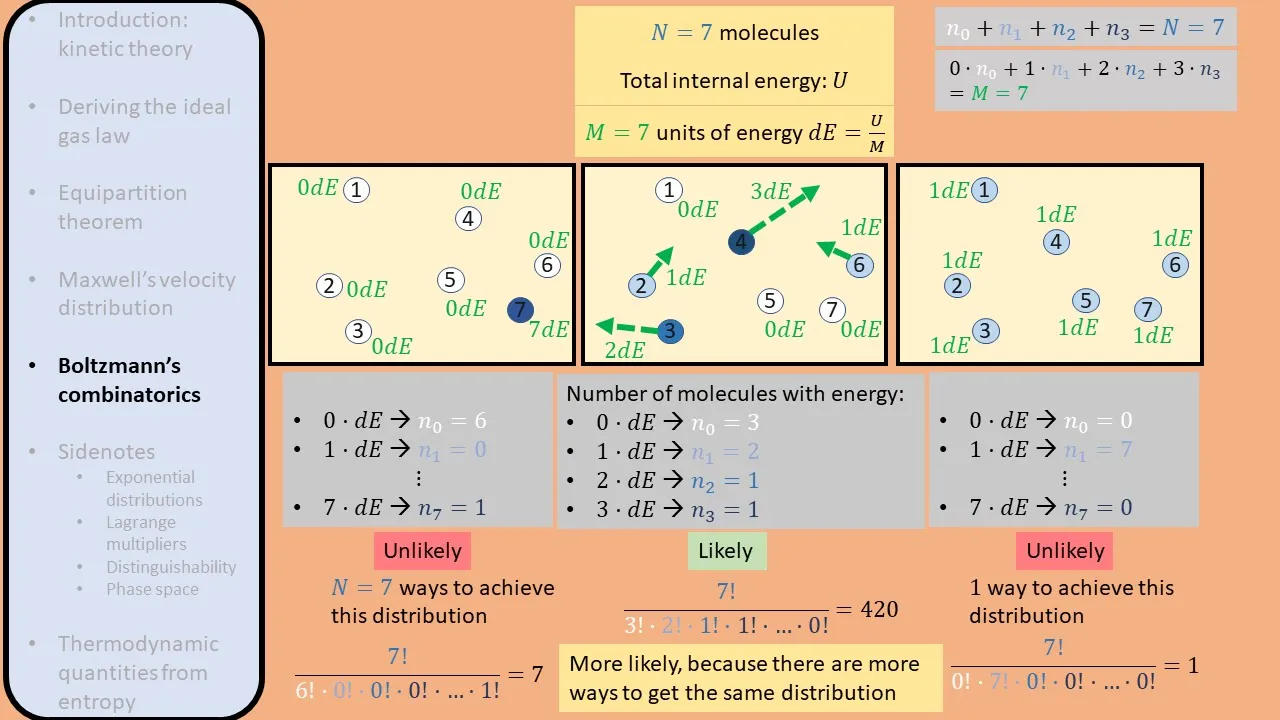
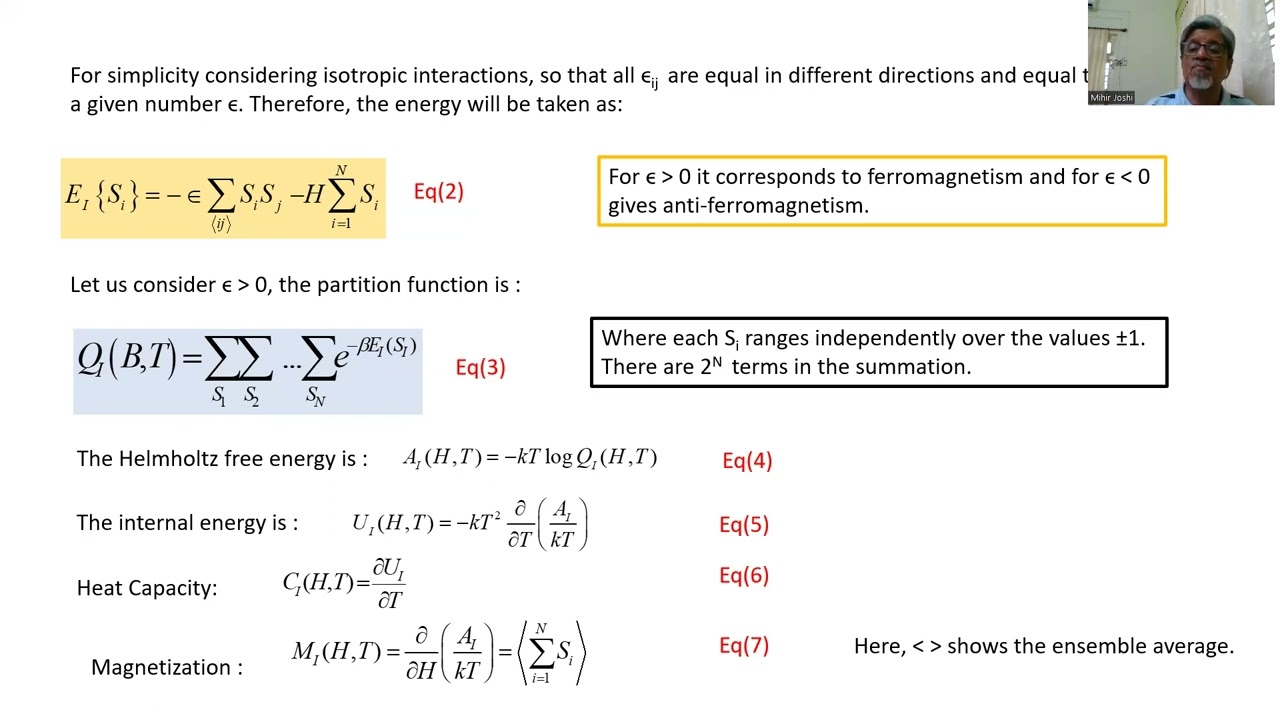
Added:Fundamental concepts of Statistical Mechanics, including entropy, free energy, partition functions, and the canonical ensemble.
Basic understanding of classical phase transitions, including order parameters and the distinction between first-order and continuous transitions.
Familiarity with foundational condensed matter models, such as the Ising model, to understand cooperative behavior.
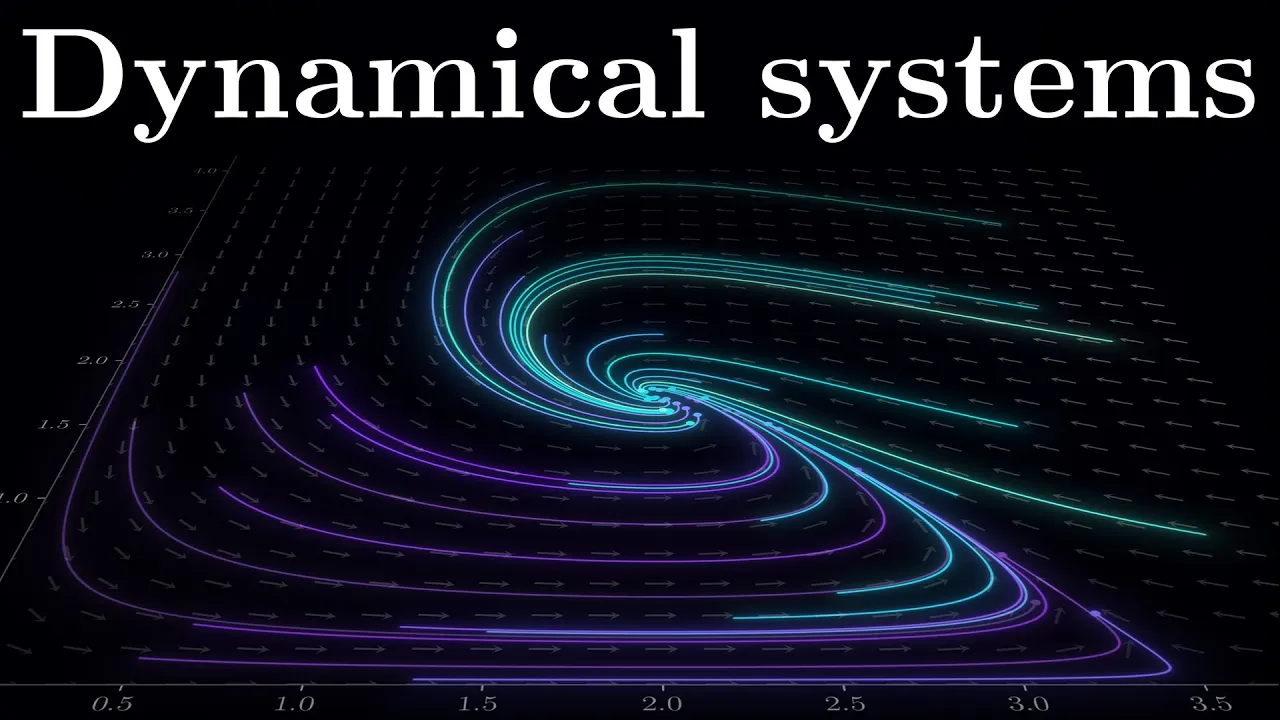
Introductory knowledge of dynamical systems and differential equations to describe how physical systems change over time.
The Renormalization Group (RG) framework, which mathematically explains scaling laws and universality at critical points.
Advanced Non-Equilibrium Statistical Mechanics, focusing on fluctuation-dissipation theorems and active matter systems.
Topological Phase Transitions and quantum phase transitions, exploring states of matter that cannot be described by local symmetry breaking.
Applications of emergent behavior in complex systems, such as neural networks, biophysics, and self-organizing patterns.
460 views6likes1:20:56Original Release: 2021-05-19
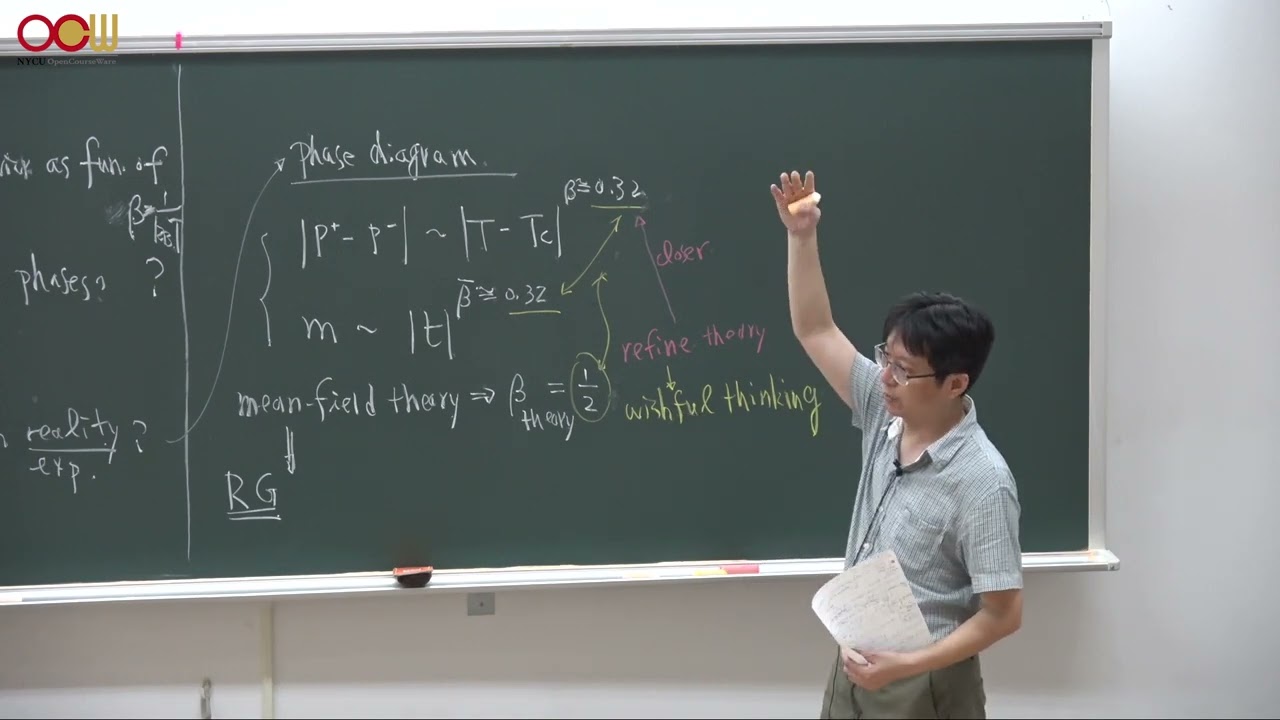
okay so good afternoon and uh this is the second of the introductory lectures to emerging states of mata so i'm going to start off by talking about the uh onset of emergence and the onset of emergence is associated with face transitions uh so i want to talk a little bit about those but this isn't the classroom phase transitions and so we're going to see particularly what it is that differentiates emerging states of matter from a course on on phase transitions so let's just quickly remind ourselves what happens uh in phase transitions so in phase transitions you might be having something like a liquid gas transition and so here we have the phase diagram of regular matter here's pressure here's temperature this is the phase diagram this is the solid phase which is when you get at low temperatures and high pressures at high temperatures and low pressure you get a gas phase and then in between you get uh the liquid phase and then what what we're particularly interested in in phase transitions is we're trying to understand either the transition between liquid and solid or see here the transition between liquid and gas this line here between solids and liquids is a first order transition um so there's entropy um um generation and latent heat at that transition this transition between liquid and gas is a first order transition as well but the uh the order parameter for this transition is the density difference between the liquid which is more dense and the gas which is less dense and that density difference gets smaller and smaller as you go closer to this critical point and at this critical point it disappears and beyond this critical point there really is no distinction between a liquid and a gas and so the the critical point in this particular case is is actually just the vanishing of a line of first order transitions in the pressure temperature plane okay and so this is what you would see here is the meniscus the size of the meniscus is controlled by the the correlation length as you go towards the critical point that diverges and then you eventually get into a phase where you can truthfully say the distinction between gas and liquid doesn't exist and you only have a fluid so what that means in particular is that you can do the following thing if i take a um if i if i take um if i take a uh a liquid at some particular pressure and then i heat it up so i'm going for along this line here as i've just drawn it uh what would happen is as i heat it up they would get to this point where there was liquid gas coexistence and that's what you can see over here the meniscus is the showing you there is coexistence you will sit there and sit there and sit there until you get uh to a higher temperature and then you'll start going up like this so um in in so that that that sequence of events happens um at this consistent point i i can go from from liquid to gas without going through a phase transition so i can start off i i can start off here and i'm usually thinking this in the other way in the other way around so i'm slightly confused so so if i start up with a with a a liquid um i uh increase the pressure i go up to here i increase the temperature so i go up to here and then i decrease the pressure so i go down to here i can go to liquid and gas without going through a dispersed water phase transition without ever seeing a meniscus so so thinking of liquid and gas as being distinct phases is a little bit misleading because in a phase diagram they're not topologically distinct unlike say solid and liquid which are topologically distinct and by topologically distinct what i mean is that i cannot go from liquid to solid without going through some kind of phase transition usually it's a first order transition but in some disordered solids it can be a second order transition but there always has to be something between these these phases some kind of non-analyticity and the reason for that is that they have different symmetry and the symmetry cannot emerge in a gradual way it is either there or it isn't and so if it's broken or not broken that tells you uh something about the phases of magic and so this this symmetry is the way that we're going to be thinking about uh emergent states of mountain in this course we're going to be thinking about it as being associated primarily to changes in symmetry now and that is a perspective that we have in this course it's a perspective that is not the only perspective to thinking about uh emerging states of matter can i ask you a question before you move on yes first there is something in the chat about turning on captioning um but i want us to i wanted to know uh can you explain more in detail what you meant when you said it's topologically distinct nothing in your explanation after you said that sounded topological to me yeah okay i've switched on captioning and um so you should be able to see that and let me hide the meeting controls where is that there okay so you can see the captions everybody's happy with that now what i meant by topologically distinct is this i meant that i can go from liquid to gas without going through any without going through any transition the transition is a line of singularities so i think of these as being topologically connected oh so you're talking about the topology of this chart i guess yes i'm talking about the okay phase diagram not the topology of the excitations of the system okay great thank you so that's an important distinction thanks for the question yeah so so but that brings me on to what i want to talk about so so the the viewpoint that has emerged in condensed matter physics over the last 20 30 years has also been a discovery that you can have states of matter that have the same symmetry but i have a very different uh topological order and so if i were to to uh say you know if i were to make emerging states of matter one emerging states of matter two emergency states of matter one would be on symmetry breaking emergency as a matter too would be on topological order so we we may talk a little bit about topological order later in the course uh if we if we feel like it but but what i will be talking about is the point that even if you have spontaneous symmetry breaking as the way of thinking about emerging states of matter nevertheless uh there are topological excitations uh and and and and those are very are going to be very important so when we actually get to the first homework set of the class for example we're going to be trying to understand uh the first first thing we'll be asked to do is try to understand something about the topological excitations of different uh symmetry symmetric states of matter okay so let's just talk very quickly about critical points i don't want to say too much about this i'm assuming that most of you have been to my five before start net class so you know that near a critical point uh you have a large fluctuation so this is an ising model simulation where um you can think of it as being a liquid gas or an icing model so black would be regions of high density white would be regions of low density if you're thinking about a fluid or black would just be spin up and white would be spun down and then what you're seeing is as you as you vary the the temperature you can see the size of the domains uh grows and in particular what what you're supposed to see from this is is that uh the size of domains grows as you get towards tc but also that when you're close to the critical point uh what you see are demands on or on all scales and that's not really easy to see from this picture here but if you look at the black regions in this white predominantly white background you'll see that there's domains of size well there's as big as this picture and then there's domains on all scales all the way down to the smallest ones whereas if you look at this picture here where you're well below the critical point 0.98 you can see it's mostly white with just a few patches of black and those patches of black just have a very characteristic size which is the correlation and so so the idea is that when you're near a critical point you have large fluctuations you have fluctuations on all scales and and what that means is that when i look at correlations they are not characterized by a single scale they're characterized by all scales in other words there's no scale at all and so what that means is that you expect that correlations decay exponentially uh when you are away from a critical point and decay as a power law at the at the critical point now there's a lot of extra things to say about that but i don't want to go into that in this particular course at least not right now okay so when we talk about emergence what we're thinking about is that there's two uh regimes so this is say a magnet so this is high temperature this is the magnetization as i go below the critical point what i start to see emergent is the magnetic order and the the the topic of phase transitions in the normalization group course is to understand the asymptotic behavior uh asymptotically close to this this temperature tc and in fact um to understand what is the you know the analytic structure of say this curve here what is the functional form as you go below the tc for example and there's a whole variety of scaling laws uh that relate various observables such as susceptibility response functions magnetization which is the order parameter correlation functions thermodynamics so let's just talk very briefly about about those because i i want to talk about them a little bit later when we talk about emergence and non-equilibrium systems so the picture i just showed you was this one over here and so what you what you're looking at is the magnetization uh as i uh in zero external field as i go below tc and and what what what we learn is that this behavior is actually non-analytic there's a it's described by a power law function beta which is um not the function that you would naively have expected so if you were to um ask you know i'm going to give you you know 10 seconds make for me a theory of this curve here okay how would you do that okay so the 10 second theory says oh let's look at this um in the temperature maybe i should well let's just look at this invert the axis so temperature is vertical and m is horizontal so then um you know what you will get is this let me let me annotate it um like this so if i were to annotate if i were to draw it this way so what i would do is this is m here's t this curve looks something like this and now what i would do is i would continue this on the other side so this is m positive so m negative would look like this and then what i would say is well what is this curve going to be well let's write this as a function t is a function of m and what is t as a function of m well it's clearly an even function because uh because there's no external magnetic field so spin up and spin down are the same so this function should be a function of m squared because it has to be an even function of n and so therefore the simplest possible form for this function is some t naught that's over here and then minus some coefficient let's call it a times i m squared and so then if i inverted that then what i would get is that m is going to go like t naught minus t to the one north pole so there you are there's a 10 second theory for what the shape of this curve would be and that sounds like an incredibly persuasive theory for what you would expect to see in a situation where you have uh order emerging magnetization in this particular case but actually uh that's not what is seen so what is actually seen is something very different uh you see an exponent beta and this exponent beta is closer to uh a third in three dimensions like 0.326 or something like that and and the whole course on phase transitions in the normalization group is to try to understand what could possibly be wrong with this argument here so this argument is wrong because it disagrees with experiment and the real question is why and why it's wrong that's what's the topic of the of my phase transitions in the normalization group course okay so if you want to take a screenshot of that go ahead take a screenshot i'm going to clear the screen in five seconds four three two one gone okay now let's let's go back to this picture over here this shows you the external magnetic field and the temperature plane and so what i do what this graph corresponds to is having h equals zero and going down from high temperatures to low temperatures and as you go through tc you go through this continuous phase transition and it's called a continuous phase transition because the order parameter the magnetization goes continuously to zero whereas if this was a first order transition this would go down like this and then would jump discontinuously now if i have an external field then i do have a first order transition and that first order transition occurs when t is less than t c and i go from plus h to minus h so let's just think about this in cartoon pictures let's suppose i'm near zero temperature so then if i apply an external magnetic field the spins will all roughly mostly will all be pointing up as i lower as i take the external magnetic field h and make it go from pointing up to pointing down then what will happen is the magnetization will go from from a number that's plus one to a number that's minus one and they will do that discontinuously so if h is very small the system will always orient our point in the magnetization will be plus one if h is very small but negative the system will always orient downwards and the magnetization will have magnitude minus one magnitude one excuse me so what that means is as i go across this line here uh h equals zero t less than t c i have a discontinuity in the magnetization and that's true for every temperature below the critical temperature and that discontinuity is it means that there's a discontinuity in the magnetization magnetization is the first derivative of the free energy with respect to external magnetic field and so therefore it's a discontinuity in the first order derivative of the free energy and so it's a first order phase transition okay so so that's this phase diagram now what happens at this critical point we've seen that there's some weird non-analyticity here let me tell you about something else that happens so normally if you're anywhere in this phase diagram and i said to you i'm going to apply an external magnetic field to a magnet what is the magnetization that it's going to induce so what you would say is well if i play an external magnetic field the magnetic field that is induced the magnetization that is induced in the material is proportional to the magnetic field that i apply and that's a very makes great sense that would be what you would expect from linear response theory linear response theory says the response to a perturbation is proportional to how big that perturbation is as long as that perturbation is small enough there may be nonlinear terms as well but at least to first order in the perturbation strength the response will be linear now when you get close to this critical point here right here what you find is that that breaks down linear responsibility breaks down so if you sit at tc that means you're sitting on the critical isotope and if you then ask how does the magnetization depend on h normally you would say m should be proportional to h and that would be curious law but at t c that breaks down it goes as some weird power of h and we conventionally write that power in terms of a critical exponent little delta as h to the power one over delta okay so these two things happen this is the non-electricity and the order parameter this is the breakdown of linear response theory and both of these things happen in critical phenomena now what we where the modern era of critical phenomena uh really took off was the observation by widdham and kadenov that both of these stylized facts follow from this similarity formula so what does the similarity formula say so little h is the external magnetic field normalized by kb times tc okay so little h is just really the external magnetic field here little t is the difference between the temperature and the critical temperature normalized by tc so it's a dimensionless measure of temperature and so normally you would say well the magnetization should be a function of temperature and field and you can see you can see why you've just released from these three space diagrams but what happens at or near the critical point is that m is really just a function of one variable this combination of h and t delta is some new critical exponent and uh and this function here is what's called the scaling function so this is called a similarity formula and it's the basis of universality so let me show you how how that works so you would say that m should be a function of two variables but this formula here says that if i plot m divided by t to the beta as a function of h divided by t to the delta then that should just be one function f of x so that's called the scaling function so you do that so here is the magnetization scaled in that way here is the temperature scaled by the external magnetic field in that way and you can see that all those data which should be a function of two variables and so should build a plane actually fall onto one curve one line and these are data in fact from five different magnetic materials and they and they're all quite different and yet all these data when plotted in this way form to one universal curve and this line through the middle here is the normalization group prediction for what that curve should be with no adjustable parameters so it's a very remarkable fact that depending on the material it doesn't material properties don't really matter they don't determine the critical exponents and they don't determine uh what this this curve is and so this is this is the idea of universality and it is practically um you know it's a big it's a big surprise uh how this worked and of course the purpose of the normalization group was to try to understand uh how this comes from and how to be able to understand these things now why this is so important is because we're going to see it relates to emergence in a particularly important way but the thing i want to emphasize is that this success is um something you shouldn't have expected so normally you might say well okay what's the big deal here somebody made a really good theory they solved it they calculated properly the measurements fit the theory there's no there's no big deal here but and so so you might say well what is the theory well the theory is the heisenberg model for a magnet so it's a particular spin system and we'll talk a bit more about that in detail later but this isn't really a model that gives a precise prediction in agreement with experiment this is actually a model of a model of a model of a model of a model that gives a precise prediction in agreement with experiment okay now why do i say it like this well at the underlying level of description you have quantum chemistry which is we talked about levels of description last lecture and so now we're really seeing where this comes from you've got quantum chemistry at the lowest known description the next higher level of description of a magnetic material you might have the the electronic structure the band structure the electron phonon interactions the electron spin interactions what's been orbit interactions and so on and so forth then you say well let's make a simpler model of that let's just not ignore let's ignore the electronic structure but let's just focus on the magnetic dipole moments so we get a model of quantum spins which is a quantum heisenberg model and that's too hard to solve so let's just blow away the quantum mechanics just make it classical and and that's too hard to solve so then let's make a coarse grains theory of it which is a which is landau theory which is kind of what we were doing at the beginning of today's lecture when we tried to make us 10 seconds theory for how you fit the magnetization curve and so and and the remarkable thing is this each step of the way going from this level of description to this level of description to this level of description to this level of description this level you are making non-systematic approximations for example you know going from quantum to classical electronic structure to a spin model and so on these are all non-systematic approximations that you can kind of say it seems reasonable but they're not necessarily ones that you can say are systematic and i can compute order by order and perturbation theory what are the collections to these approximations so you would think that normally if you make a theory which describes something in reality and then you make approximations the as you make more and more approximations the agreement with experiment will be reduced and if you don't make too bad approximations you'll be able to get reasonably good agreement with predictions but the predictions that we make with the normalization group theory and the failure of phase transitions are incredibly precise i mean may not be quite as precise as say you know 10 10 significant figures in quantum electrodynamics uh whatever it is but but close to that you know we can really predict these exponents to very high accuracy and observe them and all the phenomena associated with them with very high accuracy in experiments and so that really is is remarkable that that what we're looking at in critical phenomena is something that is very resistant to all these simplifications that we've made and that's the idea of universality that all these different levels of description all flow to the same underlying theory which makes the same simplest predictions so that's what we talked about last time about levels of description and in critical phenomena that is where you see it see it first so now let's go back to this picture of uh that we started with so what i've spent the last 10 minutes or so talking about is the phenomena that accompany the critical point and so that's what you know my normalization group class is is all about what we're interested in in this class is something different as i and we'll talk about this in detail but as we go below the critical point into this regime here now what's happened is this the the the magnetization fluctuations are not uh small in other words you know the magnitude of the magnetization is is substantial you know it's not infinitesimal as it is over here so the direction so the magnitude of the spins the magnetization is something that is clearly fixed but because the spins can our heisenberg model and they can point in any uh direction in space they have directional fluctuations or phase fluctuations as i'd rather call it and so what's happening here is in this machine phase fluctuations are very important but amplitude fluctuations of the order parameter are not important and so what what what happens here is a whole suite of phenomena that are associated which are universal in the sense that there's universal characteristics of them and we're trying to understand now what what goes on in this regime and and we'll see that that regime is dominated by a variety of generic consequences the fact that you can have a long wavelength description of the phase order in the system we can make certain statements about the excitation spectrum we can make some statements about the existence of topological defects and what their dynamics and characteristics will be all based just on symmetry and universal statements without really having to know very much in detail about what the materials are actually made of so it's a kind of universality that mirrors what happens here but it's not so much a universality in terms of you know non-analytic behavior it's a universality in terms of what the actual behavior of the system is on appropriate uh scales of of time space and energy and so that's what we're going to be trying to understand in this course is the genetic consequences of spontaneous symmetry breaking in systems which have continuous symmetries so later on when we get beyond this we will be talking about systems with continuous symmetries as opposed to systems with discrete symmetries so likewise models so so so let me just just um recapitulate what those things are so the universal outcomes of emergence what we're going to see is that emergence is associated with a breaking symmetry so in a magnet at high temperatures the spins can point in any direction full rotational symmetry as you go down to low temperatures that rotational symmetry is broken the spins will uh find the configuration based on the history of the system and they'll align along some randomly chosen direction and so we say that there is broken rotational symmetry and and we call that spontaneous symmetry and we'll talk more about that uh in detail i don't really like the term spontaneous symmetry breaking because i think it hides something about the um the dynamics of phase transitions and also it hides something about the ergodicity breaking which which also accomplish space transitions those of you who took my statmet class will have me talk about that i i don't know if i'm going to get into that so much in this course now the other thing about emergent states of matter is that they have its emergent states of order so we're looking at the order of say the magnetization in a magnet or the magnetization it was magnetization magnet or maybe off diagonal long-range order which is some people talk about quantum order in say a super fluid or a superconductor or something like this some kind of order parameter which is quantum mechanical uh in nature so the idea is then that you can have a state of order which is uniform throughout the system but in systems that have a continuous symmetries you can have um holes in that order so holes in order are what we call defects so you for example you may have a crystal a crystal may well be a system where all the atoms are in some periodic array and so there's an order which is just exemplified by the black scattering or the x-ray diffraction telling you that the atom's synthetic lattice spacings but of course you can have vacancies you could have a missing atom and so that would be a hole in the crystalline order so that would be called a vacancy and that is the kind of defect but you can have other kinds of defects that have a topology associated with a topological charge and an example of that in the crystal would be something would be a dislocation a a screw dislocation for example or an edge dislocation and we'll talk a little bit uh about that so so the uh the reason how do you detect these dislocations well they are breaks in the order of the system and typically they can be understood by by constructing a conserved quantity which is constructed from the line integral of a path in space around that object so we'll discuss that in a lot in the context of super fluids um and superconductors um not not so much in the context of dislocations and and where if we decide later in the semester to talk about liquid crystals we'll see that these kinds of um topological defects are very important there so that's one of the main messages is that when you have spontaneous symmetry drinking you will also have um from the way that the symmetry is broken we can discuss what kinds of topological defects will be present and why topological defects are so important is that they can dominate the large-scale properties of materials so for example if you're looking at say crystalline materials the mechanical response of the material is strongly dominated by the structure of the defects in the material whether whether they're topological like dislocations or non-topological uh like vacancies or green boundaries or other things like this so so defects in in states of order are very important to understand and and and particularly in superconductors particularly engaged theories and things like this these are these are really uh the topological sector uh of the sort of theory is something that's very important now then the other uh area where we were interested in looking at emergence is we're interested in looking at not just the ground state of the system but the low energy excited states of the system so so we we take our system uh at low temperatures it will have some order very low temperatures of the custom order as i raise the temperature the system will have thermal fluctuations and and the and the uh excited states will become occupied and so one wants to know can one say something specific about these low energy excited states without having to solve the whole problem and it turns out that you can and some of you may have heard about uh things like higgs bosons and goldstone modes and things like that so it turns out that there are generic consequences that come from from symmetry uh considerations that tell you about the low energy excited states of the field and we're going to be talking a lot about that in the context of superfluids and superconductors and uh and engaged so so those are some of the universal outcomes of uh emergence now the next thing i want to talk about for the next few minutes is that this universality is really important because we can exploit it to make predictions and we've exploited to make predictions using the idea of a minimal model so the idea is this the fundamental idea is this if i know that something is going to be universal for example let me go back to this picture here so let's suppose i know for example that the magnetization of a magnet uh also or some complicated system is going to be universal i've got reasons to believe that and so you say okay fine that's great but i don't want to just know that it's universal i want you to compute this particular function here the solid line that goes through all these data so you could say well i can easily do that i can take a a very detailed model of of this material crbr3 whatever that means okay so take that material go to materials scientists learn about all the quantum chemistry of that make a model of that try to compute what happens with that material and you can look at its behavior at a critical point to do that with realism would be quite challenging to do although i don't doubt that it could be done but if you really wanted to know this curve here and you had already been convinced that it was universal you'd say you'd be an idiot to start off with the you know the electronic structure and the quantum chemistry of this particular material you'd be much better off starting with just a heisenberg model than just computing without because the hamiltonian is so much simpler so then you have the idea then that what i can do is i can look at the simplest possible realization of this system and do my calculations on that knowing that any more complicated model for the system i'm interested in would also give the same predictions and so that's the idea that we can use the normalization group thinking to make minimal models of emergence in real systems so let me give you ask a question real quick yes somebody's on who's asking me adam hi adam yep go ahead um can you go back a slide real quick um so you're talking about the the defects and how you can have like local holes in order if you're formulating your theory and you know you write the theory and everything uh do those defects appear within the theory or is it like in the real world experiment that you like try and form a crystal and then a hole appears or can you show in your theory that your theory predicts the order and the holes in the order that's right like it's the latter the theory the theory will predict um what those holes can be now something like a vacancy might be something that you say that's an experimental detail you know an atom was just missing there and if you waited a million years that vacancy would diffuse out and go out through the boundaries of material and then you'd have a perfect crystal so that that's a true statement and there's a procedure you can do an experiment to get rid of those things you can do annealing for example to try to make your material have as few of those defects as possible but these defects the topological ones those are intrinsic to the to the symmetry group of the of the system and so um so though so when we describe the system we will by writing it down in terms of its degree of order we will be able to predict what these things will be and how they will behave and we'll be able to make write down equations that describe the hydrodynamic that's called the hydrodynamic uh description the long wavelength behavior of materials again that all comes from the theory gotcha thanks all right so here's the uh the winners of the nobel prize in 2016.
i'm sure most of you know these know these names david palace my consulates what do you anybody who anybody want to say what they notice is is special or universal about these these three people this is not a scientific question so much apart from the fact that they're all male did they go from high energy physics into condensed matter physics i'm not sure i i don't i don't know david david fowler and mike costas definitely do i don't remember if duncan did as well they're all from uk they're all from the uk exactly right right they're all from the uk and they all have positions in uh united states universities this was margaret thatcher's gift to american science [Music] by anyway so so there's there's a lot a lot of of expatriate brits um in british universities and and in in american universities including me of course and and there's reasons uh for that this are not necessarily scientific so um so that's right so so what did these what do these people do i'm not going to talk about what uh duncan did but but um cosmics and palace um i want to talk a little bit about what they did so um so so by the way i should mention so uh david i i knew all these people of course personally david david thousand unfortunately had passed away a few years ago um a random historical note uh when i was on sabbatical in cambridge um about 10 or 15 years ago actually i stayed and my family rented his house um my cost which i've known for a long time is um now works on non-equilibrium patent information and things like this and that's how i how how how i came to look to know him all right so what what we're going to be talking about in the class is super fluids and in the on the class website you'll see that there's a movie page and on that movie page you'll see a wonderful movie that i digitized and uh posted on the internet um with permission of the people who made the movie um uh about the properties of superfluid helium so roughly speaking superfluids honey is a normal fluid with viscosity at room temperature so it flows into viscous and so on superfluid helium roughly speaking has no viscosity at say one degree above absolute zero and we will talk in detail about whether this statement is really a true statement it's not it's not quite true and we'll talk about what what super fluidity really means now the interesting thing is those are phenomena to do with real fluid mechanics and yet what uh what uh constant powers did was they they made a model of the super fluidity literally based on the xy model which is a model of spins in a plane so the spins literally point in the xy direction only they can live in three dimensions but so you have the dimensionality of the order parameter space which is the xy plane and you have the dimensionality of the physical space which is x y and z the real space and and we will be talking in detail about that distinction between order parameter space and the uh the um the actual embedding space so when we talk about spontaneous symmetry breaking most of the time we're talking about breaking the symmetries in order parameter space not breaking the space times temperatures of the system so this is this is what the xy model describes it's basically arrows in the plane we'll go through it in detail in the course and one of the things that that they predicted um about the superfluid transition is this that in in two dimensions the the uh the superfluid uh transition has a a discontinuous jump even though it's a continuous transition it has a discontinuous jump in the super fluid density at tc i'll i'll tell you how we quantify that uh when we get into details in the course and and that was predicted just to scale in a particular way with the critical temperature and these are data here in fact these are data from uh university of illinois from jack michelle's group and they and the data agree uh very very well with the with the theory with no uh no adjustable parameter and this this this quantity the superfluid density turns out to be the emergent rigidity of the superfluid okay so you may think of it's like a density but the way that will learn to think about it is that what superfluid density really is telling you about is the is how stiff the superfluid is and what do we mean by how stiff a super fluid is what we mean is this if i take the spins over here and the spins over here a distance apart and i i keep this one fixed and i bend this spin i i rotate its phase how much does that bending of the phase raise the energy of the system and the and the analog of the stiffness or the young's modulus if you will of the superfluid is this this super pure density and this was again something that came out of the earth theory so this is a striking example of um of universality looking at the simplest way that you can write down literally spins on a plane or arrows on the plane if you will that tells you about the literally observables that you can measure in experiments in in rather sophisticated super clear phenomena so so the moral of this story is that very simple models can predict very complex phenomena and going back to uh what we talked about last time when we talked about the picture of emergence as being these successive levels of description i would argue that in fact everything we know about the physical world comes from looking for simplest mathematical models that have the right symmetry and topology and and so i think everything that we know how to calculate and explain in in certainly in physical sciences and perhaps beyond we really know that because we are always making models which are minimal models and those minimal models have enough realism and they can predict what you what you're looking for but on the other hand they do not um they they do not um have excessive realism okay so now i want to take a break and i want to talk about the purpose of doing computer simulation so does anybody have any questions before i get into that i had a quick question sure uh i think you said that the emergent states are characterized by a broken symmetry or there could be a broken or a change in the topological order between the emergent state in a non-emergent state are there other higher order forms of order that could differentiate emerging from non-emergent states no not that i know of that doesn't mean that they aren't but i only know of those things gotcha thank you yeah yeah you know it's a it's a it's it's an interesting question and what do you want you know what do you what do you need to classify systems as i suppose you know i'm going to get on to non-equilibrium systems and living systems i'm going to say a few things about that and you might say well in those systems there are other things that that you can clearly see so i would say i will kind of answer that question in a way when we talk about systems which are beyond these sort of simple physical equilibrium systems okay let me talk about computer simulation okay so what is the purpose of computer simulation so this is a rant that they have which uh which was prompted by reading a passage in um a collection of papers and essays by uh leo kadanov who was one of my mentors and leo kavlov for those of you who don't know was a condensed matter theorist he was here at the university of illinois he uh he worked for superfluids and superconductors and phase transitions and critical phenomena he really invented this idea of block spins and looking at physical systems on different scales and different levels of description and all of that was really the foundation for the normalization group in my opinion he should have won the nobel prize along with ken wilson and and and ben woodham also should have been included in that in my opinion now one of the things that happened was leo was here until um the late 1960s 1969 his most famous paper was written in 1966 and then um he moved to brown and he uh decided to get into urban planning okay now you might think well why is a theoretical condensed microphysicist doing urban planning well you know condensed amount of physicists have broadened their interests into all sorts of areas and today it's not surprising that you'll see a condensed matter physicist who works on you know social phenomena or biological phenomena you know neural networks there's also there's many many interdisciplinary applications but at that time that wasn't so much uh a trend i i would say and leah was always one of the lead trend leaders so this is what he wrote he said at the time there was a great national push towards understanding the dynamics of urban development so we're talking about the united states in the 1960s a period of great social uh unrest and and um some some changes were made not enough but but anyway he was interested in that and somebody called jay foster who was at mit had developed a computer model of urban change which took a very simplified view of an urban society and then used the output of that model to prescribe social policy i did not like the policy prescribed this is the leo cousin of talking so so he says i set out to use the same modeling tools that faster had developed to reach conclusions which were more to my liking and our first result was that while not changing the model at all we could reach opposite conclusions from that of the forex degree okay so here's an important point make a computer model uh it may have excessive realism there may be parameters that you can tweak and it may be there as you tweak those parameters the predictions completely change then they're not robust so then he says then we went on to build other models which more accurately recorded our own prejudices and points of view he's talking about his prejudices and points of view about the way society should be structured [Music] and so on and so forth and after a while the point we had made began to sink in if these models really represented little more than we could say in words why not leave out the computer in other words what he was kind of saying is partly this garbage in garbage animals you encode your prejudices in the computer you run the computer simulation it does what you already told it to do so big surprise what did you really learn nothing and so he says the construction of this sort of computer model seemed to me to be a rather pointless endeavor for just reasons and others i moved away from urban struggles and you can read this in uh this nice set of essays uh published about 20 years or so ago and um and so i think katznov then moved to university of chicago and then became involved in in the developments and in phase transitions and then some time later in past information and dynamical systems and so that was the point where i got to i know him so the moral of this story is this when you're doing computer simulation there's two things you know you you can do uh you can use it to try to compute numbers that you can't compute analytically so let's suppose i want to know what is the band gap of silicon okay i can't compute that analytically multi cycle movies maybe our people can so but you can compute it by building very complicated models with excessive realism about the the band structure and the crystal structure and so on and you could compute these things quite accurately with it with a with a sophisticated enough computer program so so you can get numerically information you know a little literally a number in electron volts um that verbal arguments cannot address okay you can't argue verbally why the band gap should be one number or another it's just something you have to calculate you can argue verbally about why there should be a band gap should this thing be you know a insulator or metal semiconductor or whatever that you can understand theoretically but to to get some precise numerical information you need to use a computer to do that so that that's fine that's one good use of computers the other thing you should do though is that you can use a computer to find emergent phenomena an outcome of the dynamics is not mandatory and usually collected just as we've been talking about last time so a question that you might want to ask is you know what are the states of the system what is the phase diagram of say a social system what is the phase diagram of a superfluid or you know a not insulator or whatever it might be that's a question that is a question about emergence and self-organization and and so the point about it being not mandatory means that when you find it in the computer simulation it arose not because you put it in but because it came out okay you didn't dial it in into the into the calculation unlike what kazanov was doing here where he was putting in into the code here's prejudices about how the system should behave when the system just did that what you really want to do in computer simulation is not tell the system how to behave and then see that it spontaneously develops some kind of collective phenomena that you're looking for for example you know herding behavior or swarm behavior in bees or insects or birds or or fish or whatever whatever it might be or the the onset of super fluidity in in in helium or something like that so something that is emergent that's what a computer is really good for so in in my own research for example i don't do this very very much at all you'll hardly find any papers of mine where i'm trying to find a detailed numerical calculation of a particular topic and one particular physical quantity what i'm usually interested in doing is using the computer to do experiments to find out what the phase diagram is and what are the important variables that are controlled and that is i think what computers how computers should be used so again we can exploit the idea of universality the idea of minimal models to build minimal computer models of phenomena and then see how we can use them so let me give you some concrete examples of that so let me give you one which is um from one of my uh friends yoshi ono who retired from the university of illinois recently but uh was here for many years and uh and he he he his early work uh was was really quite remarkable he was one of the first people to take the idea of mineral models and normalization group and universality and start applying it to real uh physical systems so let's have a look at different levels of description of polymer systems so here is a polymer as a as a chemist might view it so there's some you know physical structure picture of a polymer or this is a chemical formula structure of the monomers that are linked together to make a to make a problem so that's an atomic level of description here's how one of my colleagues also sadly passed away a few years ago too early klaus shelton who was a pioneering computational biologist you know so they would make models of proteins and you know other biological molecules where you might say a large part of the molecule is some helix or some beta sheets or something like that and then there might be some sites where there's uh some some reactions occur or some important confirmations that need to be captured and so you would have a model of a polymer which is basically of elastic sheets with some multi-scale phenomena happening at the important location so that's a picture of a polymer from a computational biology perspective this is how a theoretical physicist might be a polymer the theoretical physicist says well atoms around blobby things and so if i want to understand the properties of matter made out of atoms i should understand the collective behavior of round lobby foods if i'm a theoretical physicist and i want to understand the nature of polymers i say polymer matter is made out of stuff that's long and springy like spaghetti and the question that i want to understand is what properties of the matter follow just because it is made out of long stringy stuff rather than round blobby stuff and and we'll see that there are things that you can do like that so each of these levels of description it's not like that one is better than the other but they answer different questions so this this level of description is what you are forced to use if you want to understand chemical bonding or reactions things like that this level of description is what you would use if you wanted to understand say protein folding or large scale motions or the ribosome or elasticity of a cellular membrane or something like this and the spaghetti level of description is what you might want to use if you wanted to understand something like the thermodynamics or a polymer solution or if i take polymer as a stick in a solution in in a fluid you know how big are they how do they float around and so there's these different levels of description are good for answering different types of questions so let's focus now on this spaghetti level of description and let's just kind of ask what kind of questions can can we answer with that so let's ask the simplest question that you can ask so here's a picture of a polymer that i just sketched out and you might ask the following question the polymer is made out of monomers the monomers have a length little l there's n monomers stuck together so i've made a polymer whose total length if all the monomers were laid out end to end is something like this l equals n times l okay but in reality these things are in solution they're in thermal equilibrium they they are sort of floating around like this and they adopt some confirmation like so and so the question you might want to ask is how big is this polymer so if you go and ask the chemist so the chemist will say okay let me take the chemistry level of description let me model the bond angles and the energy barriers to rotations about the carbon bonds let me model the interactions with the solvent molecules and so i'll make a very detailed chemical model of that and then just then i will let it go into thermal equilibrium and it'll sit there for a long time example many different configurations and then i can measure the size from this big molecular dynamics uh or monte carlo simulation and i can predict for you the size of the polymer in angstroms problem solved okay so that that works and you can you can totally do that the physicist might say well no i'm not going to do that i'm going to ask a different question my interpretation of the question is this if i know that i've got n steps each of length l how big is the polymer to me means how does the size scale as i change the number of steps so let's think about what that question really means let's suppose i tell the chemist the pilot the polymer has ten thousand monomers come together and so they they they do that calculation and then you say oh no actually i made a mistake it's not ten thousand monitors linked together it's a hundred thousand okay so then the chemist will say fine okay i'll just put that into my computer so they then make a bigger model and run it again and see see and see what the size is but the physicist will answer no i don't need to all i need to know is how it scales so the scaling is the kind of question that a physicist would ask and what that means is you know if i change the number of monomers how does the size vary what is called the size r if you just think of the polymer as being just a random walk in space which is certainly what it looks like here then the physicist will say well from einstein's argument which most of you have done in my statistical mechanics class um you will know that the r squared scales like n and so the size scales as the length of the polymer to the one-half pin and so that's you know that's good that says that if i if i if i tell you that n has increased by not not ten thousand monomers but a hundred thousand i know i have to multiply the size by the square root of ten okay so that's something that that you didn't know and that's that's good um as long as you know how big the polymer was at size with with with ten thousand monomers i can predict how big it's going to be with a hundred thousand elements so that's the physicist argument and it sounds great but it's wrong okay and it's wrong because although this is a minimal model a polymer is just a random walk it's it is too simple there's a famous quote from einstein that says a theory should be as simple as possible not simply and this theory is too simple why because it's left out an important qualitative feature and that qualitative feature is that two atoms cannot occupy the same point in space so a polymer is a is a spaghetti type object but spaghetti can't go through itself so because two atoms cannot occupy the same point in space they're going to be some configurations where these trajectories or the polymer chains actually go through each other and then those configurations have to be removed so if you remove those configurations from your ensemble of configurations when you do your averaging then you're going to be left with only configurations that are bigger than that configurations that don't include the crossing configurations where they avoid and so therefore the polymer chain is going to be bigger than you would predict based on the random walk argument so how much bigger well again you can work this out by your normalization group theory and it turns out that the size doesn't scale as l to the one half l to the point five it scales as l to the point five eight eight with other decimal places and this scaling is something that is independent of the chemical structure it's true for dna it's true for polyethylene okay it doesn't matter it's uh it's universal and it and it's asymptotically true for large chains and in fact as i take the l goes for infinity limit the length going to infinity limit that is like taking the limit as the temperature goes to the critical temperature in a phase transition so in a sense we can model the physical nature of a polymer chain by by turning it into a field theory very close to its critical point i'm not going to be talking about that so much in this course but um but that's the way that one can one can do things so this is a this is again a nice way to answer the question it tells you how the length scales but of course it doesn't predict for you what the size of the polymer molecule is in angstroms so you get two different answers to the to those questions depending on what you're interested in so here's another thing we talked about the size just now remember earlier on we talked about the universal scaling near a phase transition i showed you the magnetization magnetization data all falling onto one universal curve so it turns out that suppose you ask this question okay i put polymer in solution uh i have a concentration c of the of the of the polymer how how what is going to be the osmotic pressure that that that you would measure and you can calculate that by making a spaghetti model and if you do that calculation you measure the osmotic pressure pi as a function over c over kt and then on the horizontal axis is the concentration of the polar c and normalized in a particular way that our theory projects and then you get this curve here shown in black this is a a universal curve computed using a method in phase transitions in the normalization group theory known as the epsilon expansion which i teach in this class and these data are data that were taken by uh will cs ethel um a year later from the theory and you can see that without any adjustable parameters without any material specific parameters the data will fall onto one universal curve so what this tells you is this if you want to know what is the osmotic pressure of a polymer you could either say i want to know what that pressure is in pascals or i want to know how it varies as a function of concentration doesn't matter what the nature of the polymer is they will all fall onto it onto a universal curve and so that's the idea that one can use mineral models to make actual experimental uh predictions so basically what i told you is that the spaghetti model of a polymer is an example of a mineral model it's flexible a random walk that's one model it's too simple you can make it a little bit more simple a little bit more realistic by adding self-avoidance but anything else that you add at least for the questions that we're interested in asking as a physicist or physical chemist anything else that you would add would be excessive realism not necessarily so the model is good at answering some questions and allows you answering other questions like what is the size of the polymer in angst problems not a good way to answer those sorts of questions so to a large extent i think the success of physics is because we always tend to ask these sorts of questions which are the ones that minimal models can be good at answering and other other fields uh you might say well they're not successful it's because i would totally disagree with that the questions that they're asking are much harder so physics is successful at the extent that it is successful because it only asks simple questions okay let me just very quickly give you some ideas about how that can be used for looking at past information far from the equilibrium so one of the things that we will be uh talking about at the end of this of this class is the emergent order in systems far from equilibrium and one of the things that systems have equilibrium generically do is they form patterns in space and patterns in time and the concepts that we're going to be using in this class and we're going to be introducing also apply to non-equilibrium systems so the most amazing thing is this i'm going to show you how one can describe some systems like superconductors and superfluids we will see that the same formalism applies also to the formation of patterns uh far from equilibrium and we're actually apply these techniques to study the formation of presence in in fluid convection at the at the end of the end of the semester so let's talk about just a little bit about uh pat information so here are some some images these are electrical micrograms of what you would see if you took the chair that you're sitting on and then took took the metal in in the in the chair and the legs of the chair or whatever and put them under an electron microscope and this is what you would see and if you blew up this part over here you would see something like this now the thing that you should probably notice if you if anybody here is a material scientist let's say or somebody who's been well trained you would say oh these are very scientific pictures because you know the idiot professor has left out the scale bar anybody who's a scientist knows that when you show a picture you should so show the scale bond right well maybe but the thing is this we all know what the scale is okay we all know that this is basically microbes okay so so what we care about is not actually the scale which is something is of course it's important in practice but it's not what we care about for understanding the pattern what we what we really are interested in is asking is why do you get this shape why do you get these patterns in the first place what scale it's on will depend on what is the material for example i can make snowflakes these these things here look like what you would see if you looked at the tip of a snowflake something like it would be a different symmetry but they look basically like this these things are called dendrites i can make dendrites in the scale of microns are smaller i can make dendrite dendrites which are this big okay in in a different kind of experiment in a different setting so the shape is the thing that is important the dimensions is the thing that is not important now it's important if you if you want to make your chair you want to have the microstructure be literally micro structure but in understanding the pattern and the pattern is the thing that determines the mechanical structure of the thermal structure the electrical structure all the properties of the material those really come from these shapes here and these shapes the morphology if you will which determine the physical properties come from understanding the non-equilibrium dynamics that forms these materials in the first place so now i want to show you how one can even apply these kinds of ideas to looking at dynamical systems spatially extended dynamical systems so let's ask ourselves the following question how would we try to predict these very complex physical patterns using say a computer so what you might say is well i can i know what the physics of this is the physics is actually uh the flow of heat in the material because when something turns from liquid to solid it liberates latent heat and that latent heat has to diffuse away in order to let the solids stay solid or it will re-melt it so you have heat diffusion you have certain boundary conditions on the liquid solid boundary interface which i'm not going to go into and so you could solve those equations on a computer and and you you can indeed do that although at the time when i started working on this in the 1980s it was impossible to do that and learn how to do other tricks that i'm not going to tell you about but one can do that okay so so typically the way you understand the physical properties of materials is you say well i can write down say the heat equation some differential partial differential equation and then to solve it numerically what i have to do is i discretize it so i put it on to some kind of lattice i take the derivative and i say the derivative is you know u d u by d x is just u and i plus one minus t of i over delta x so i know how to translate a derivative into differences uh of the field values at different points in space and then i once i've solved my partial differential equation on a lattice and i look at what happens when i make the lattice spacing smaller and smaller and i check that my my equations are grid converged and my predictions don't depend sensitively on my lattice spacing so that in a very very crude nutshell is what one does in numerical analysis or a partial differential equation partial differential equation is defined on the continuum on a computer i can only define variables discretely on a discrete lattice and so i make such a lattice to make the lattice finer and finer and computes and solve the equations that i want to solve that's the conventional approach so we're not going to take that approach and and the reason is this we're led by the idea of universality emergence minimal models the normalization group theory we're going to take this point of view we're going to say let's think about that we start off by modeling nature as a partial differential equation okay fine sometimes we can solve that but usually we can't so we have to put it on the computer so now we discretize the differential equation and when we discretize the differential equation what we get are an infinite series or finite in practice but a large number of coupled maps that are coupled together so the variables are all interconnected and then we solve that coupled map and update it in time and and so that that's literally what you're doing when you're solving a partial differential equation in the computer like a squaring equation for example so you might say well now that we've been attuned to this idea of universality and emergence why not if we're going to end up with a description that involves coupled maps and we have this uncontrolled process of starting off with a model as a differential equation discretizing it making a set of a couple of maps and then solving a coupled map system why didn't we just forget about calculus altogether pretend it didn't exist how would you describe matter if you didn't know calculus but what you would do is you would just start off with this level of description you would model nature as being a couple of maps and you would compute and you wouldn't get anything you wouldn't even start off with a differential equation okay so okay fine that sounds great in practice can you actually do that so the answer is yes you can and i'm going to show you how so the way you the way that you i want to give you an example someone can do this i'm going to show you what would happen with say a material science problem the question of phase separation of an alloy and then i'm going to show you what happens in a system which is like a liquid crystal which has a topological defects in it i'm going to show you one can compute using mineral models the normalization group inspired and compute quantities that are very very complex to to to predict so this is a an alloy made out of two materials a and b um this is temperature this is concentration of one of the alloys let's say c and then what happens is this at high temperatures a and b atoms are mixed uniformly in the alloy and so they're uniformly dispersed in space as i cool it down the alloy will phase separate so an example of a phase separation or alloy would be a salad dressing you know french dressing if you have make a salad you take oil and vinegar you put them onto a salad so what you do is you take oil and vinegar you stir them up make a nice dressing you pour it on the sandwich then you chat with your inner companion and while you do that your salad dressing will stay separate the oil and vinegar don't like to be next to each other and so they will form little globules of oil little globules of vinegar and if you talk too long you will end up with a some appetizer unappetizing mess on your sounds and you really won't want to eat it okay so what you want in in salad is to be in this phase but if you wait too long you'll be in this space so this coexistence phase is is something that will look like this so let's think of orange and blue here is your salad dressing and uh and you can see that as i evolve it in time i start off with with something that's got little blobs in it and as i wait longer and longer and longer those blobs get bigger and bigger and bigger as these domains merge into one of them so that's just the ski the dynamics of phase separation and there's a process for this that's called the material scientists would call a spinal decomposition now why is it interesting why is it interesting to a physicist well it's interesting a performing reason if i take this picture here and i cut out this little corner and blow that up blow that up photo photographically enlarge it in photoshop i get this picture here and if i just showed you this picture and i showed you this picture and i said this picture on the left this picture on the right which one of these is the time evolution of this and which one of these is just expanding the scale of this original picture well unless you look very closely you really wouldn't be able to tell okay so then you can say fine let's take this picture evolve it further forward in time so i get this if i took this little cutout of this one and expanded that i would get this picture and if i took the cut out of this one which itself was a cut out of this one and expands it even further i get this picture so i get these three different pictures all of which up to pixel artifacts look statistically indistinguishable so what i've learned from this is that the time evolution is the same as changing the scale and changing the scale is what what i just told you happens when you're looking at critical phenomena so you might say aha there must be some kind of scaling law here and there is i'm going to show it to you in just a minute now what we're interested in for this course is this is a system that has a uh a scalar order plant or a discrete symmetry either you're in the a atom or you're the b atom either you'll spin up or you'll spin down high density low density so a discrete ordered parameter and that discrete order parameter has boundaries between the up and the down regions and that's the boundaries between the blue regions and the orange regions when you have an order parameter that is not a scalar but as a complex variable so a complex number or a vector or an n-dimensional vector or a tensor then you have very different physics that's what we're going to be talking about in the class and you will have technological defects and correlation functions so i'm going to show you that in a minute okay so let me show you that this picture which you learned from this computer simulation actually happens in in real life so yes sorry uh we're like six minutes over on time just adds up i don't know if you're okay i i take it i didn't realize that but thank you for telling me so i i um because i've got full screens i can't see the time i i thought i was actually on time one minute to go but if we're over time then i'm going to stop here and we'll carry on next time so thanks thanks for thanks for watching next time we'll talk about these dynamic scalings and then we'll go on to some more complex uh systems so thanks for the yeah where you are we're six minutes over thank you great okay so um let me stop the recording
Up Next

88:04
Liquid Crystals: Order, Phases, and Physics | Lecture 1
@ICAMI2CAMpresentations
3.6K views•2016-06-11

12:53
21cm Hyperfine Transition in Neutral Hydrogen: Radio Astronomy Basics
@AaronRobertParsons
12.4K views•2011-10-13

32:32
NMR Spin Physics I: Zeeman Effect, Resonance Condition & Larmor Frequency
@nptel-indianinstituteofsci8064
2.3K views•2024-01-17

27:14
Entropy and the Second Law of Thermodynamics Explained
@veritasium
27.5M views•2023-07-01
Related Study Plans & Knowledge Roadmaps
Structured learning paths in Physics
physics
Nuclear Physics (Decay, Fission & Reactors)
01Atomic Structure and the Binding Force
02Radioactive Decay and Half-Life
03Nuclear Fission Mechanics and Chain Reactions
+ 2 more learning modules
12h5 modules
Explore Roadmap
physics
Soft Matter (Polymers, Colloids & Rheology)
01Foundations of Soft Matter & Thermal Forces
02Polymer Physics and Macromolecules
03Colloids, Surfactants, and Self-Assembly
+ 2 more learning modules
38h5 modules
Explore Roadmap
physics
Analytical Mechanics: Lagrangian & Hamiltonian
01Mathematical Foundations: Calculus of Variations
02From Newtonian Mechanics to Constraint Dynamics
03The Principle of Least Action & Lagrangian Mechanics
+ 3 more learning modules
28h6 modules
Explore Roadmap
physics
General Relativity (Spacetime & Cosmology)
01Foundations of Relativity: Special Relativity
02The Geometry of Spacetime: Equivalence Principle & Curvature
03Einstein's Field Equations: The Mathematics of Gravity
+ 2 more learning modules
55h5 modules
Explore Roadmap