











![[PASS 2024-2025] TAToutcapté n°8 - Biophysique (RMN)](https://i.ytimg.com/vi/BhfZAdgwh7Q/maxresdefault.jpg)
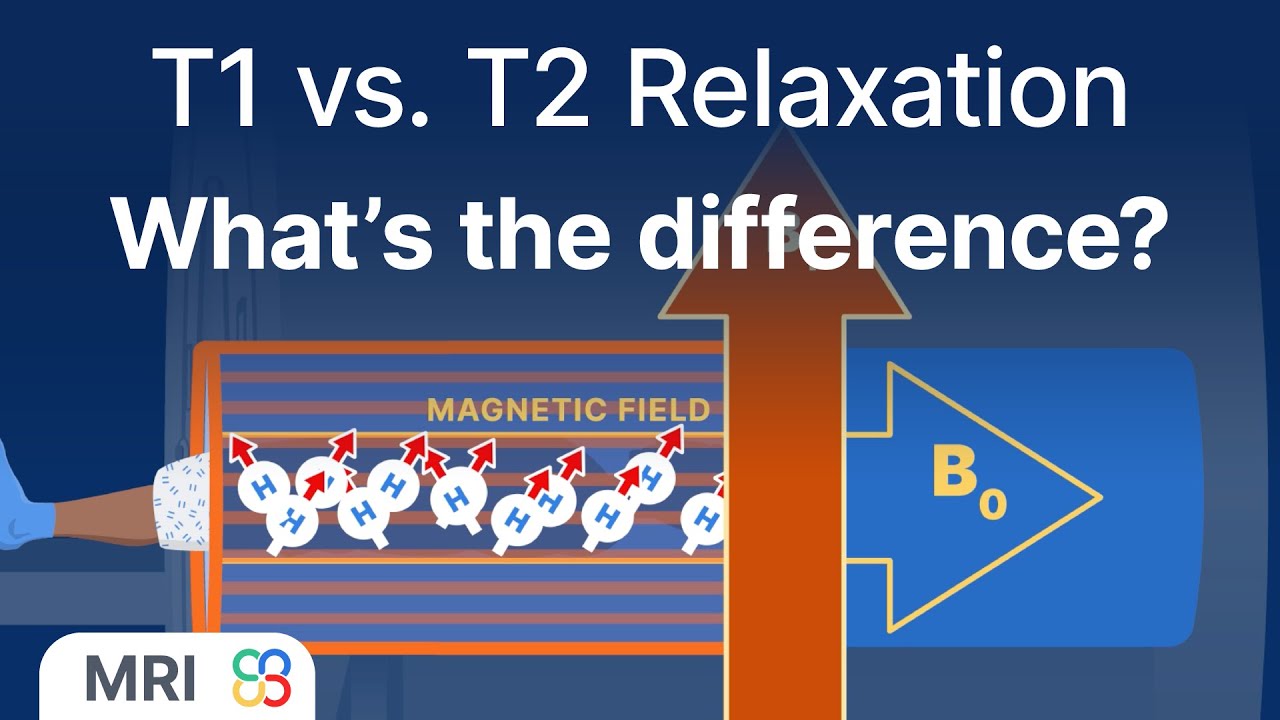



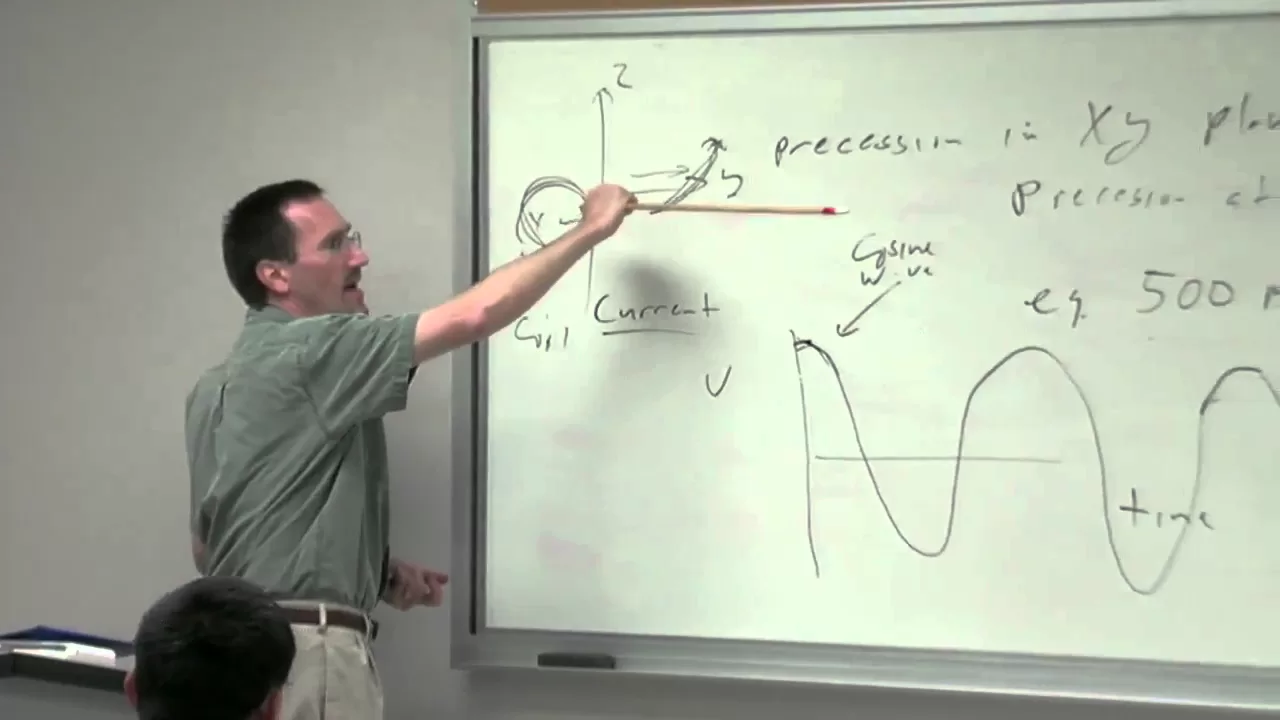






Nuclear Magnetic Resonance (NMR) spectroscopy relies on the interaction between nuclear magnetic moments and external static magnetic fields, where the Zeeman effect causes energy level splitting of nuclear spins, and the resonance condition ν = γB₀/(2π) determines the frequency at which nuclei absorb electromagnetic radiation; this frequency varies linearly with magnetic field strength and falls within the radio frequency region of the electromagnetic spectrum, enabling detection of different nuclei based on their unique gyromagnetic ratios.
NMR Spin Physics I: Zeeman Effect, Resonance Condition & Larmor Frequency
Added:Basic quantum mechanics concepts, specifically the definition of nuclear spin, spin quantum numbers (such as spin-1/2), and magnetic angular momentum.
Classical electromagnetism principles, including magnetic dipoles, magnetic dipole moments, and their interaction with external magnetic fields.
The Planck-Einstein relation (E = hν), which mathematically connects the energy difference of quantum states to electromagnetic radiation frequency.
The concept of thermal equilibrium and the Boltzmann distribution, which determines the population distribution of spins between different energy states.
The Bloch Equations and spin relaxation dynamics, specifically longitudinal relaxation (T1) and transverse relaxation (T2).
Chemical shift and J-coupling (spin-spin coupling), which explain how the local electronic environment affects NMR spectra to reveal molecular structure.
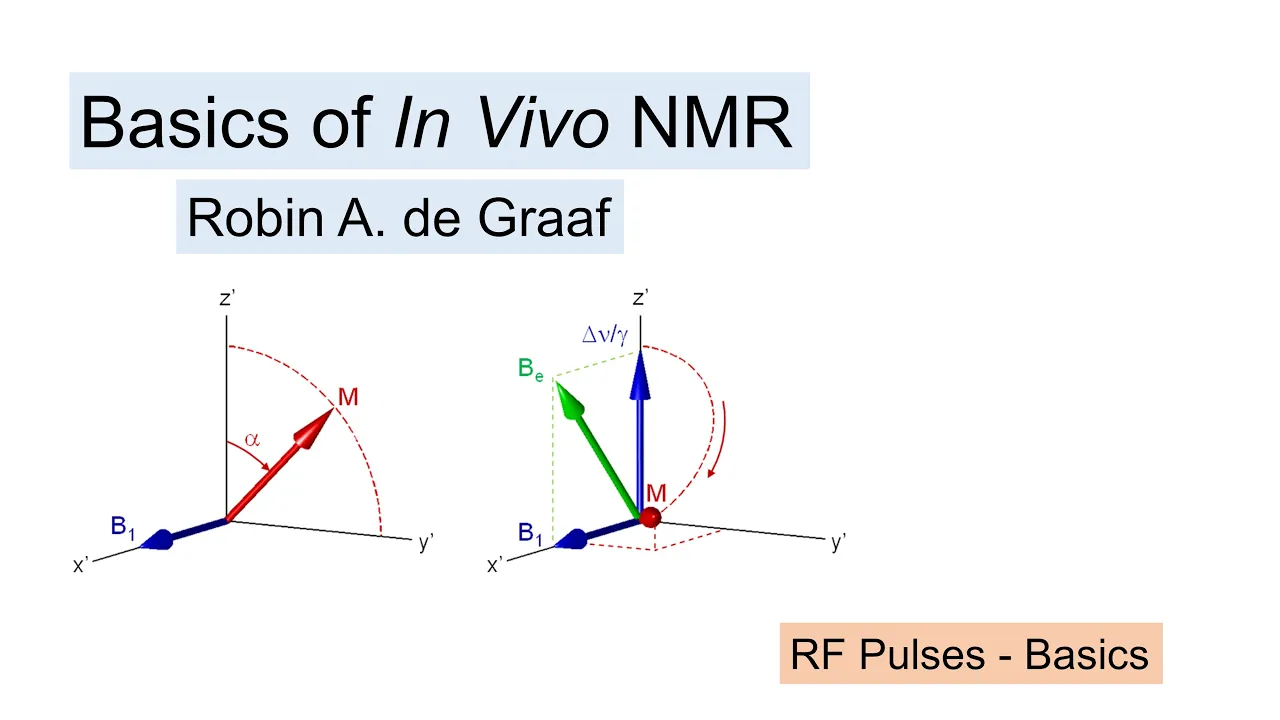
Radiofrequency (RF) pulse manipulation, including the concept of rotating reference frames, pi/2 (90-degree) pulses, and spin echoes.
Practical applications of NMR spin physics, such as Magnetic Resonance Imaging (MRI) spatial encoding using magnetic field gradients.
2.3K views24likes32:32Original Release: 2024-01-17
welcome all of you in the last class I gave General introduction to nuclear Spin and how to arrive at the nuclear spin based on the simple empirical formula depending upon atomic mass and atomic number of different elements and different nuclear spins and I also discussed about two important quantum number spin quantum number I and magnetic quantum number M and I said they related to each other they quantied and I also discussed for m is equal to M depends upon I for particular value of M we have different quantization directions which takes the value from minus I to plus I in steps of one for example for spin half nucleus we have two possible orientations minus half and plus half and we also work out what is the magnitude of this quantization direction what is this magnitude of spin angular momentum that also we worked out and I said there's a Magnetic Moment mu because we can treat spinoff nuclear as a tiny magnet this Magnetic Moment mu depends upon is dependent on what is called gyom magnetic ratio of the given nucleus which is constant for a given nucleus which is different for different nuclei and I said even though proton and carbon have same I and same m i is equal to half M = minus half and plus half but the gamas are different because it depends upon mass as a consequence Magnetic Moment mu is different since mu is different we can study independently individually these two can be studied so that's what I said for any element of the periodic table if you look at it gamma is different as a consequence every element of the periodic table so long as it possess a spin can be individually studied by NMR this is what I discussed last time now we will go further today and I will introduce about what is called zon interaction what is zon interaction what is the base requirement of NMR is interaction of the Magnetic Moment mu with the static external magnetic field external magnetic field is a huge magnetic field which is static and denoted as B not the Magnetic Moment mu of the nucleus should interact with this so nuclear spin quantum number I that must be non zero that's what I said I told you mu depends upon this I and if I is equal to zero I I worked out and showed you in the last class mu is zero since mu is zero there is no NMR that means I must be present to detect NMR that is the reason why for the nucleus which is spin zero there is no NMR that's what we discussed and this is what I showed you last time and also again I'm writing mu isal GMA h i i + 1 and interaction of mu with b not if you consider nucleus spins as soon as you put this nuclear spin put it inside an external static magnetic field what is going to happen the nuclear spins start aligning with the static magnetic field initially they're all randomly oriented there is no preferred orientation direction of the nuclear spins as soon as you put them in the external magnetic field they start aligning with the static magnetic field how do they align some of them align in the direction of the field some of them align in the direction opposite to that of the field field these are the preferred orientation directions and the energies of interactions for both these orientations are different if the spins are aligned in this direction it has one type of energy if the spins are aligned in the direction opposite to magnetic field it is a different energy and these two energies are different and in in fact we can calculate these two energies and in the asence of the magnetic field these two energies states are not separated they are all degenerated State okay in the OBS of the magnetic field as soon as you put it in the magnetic field then there's a removal of degeneracy the energy levels get separated out for both spin half or orientation Direction the in the direction of the field and the orientation in the direction opposite to that of the field both get separated out okay and conventionally and you can also understand from Bol spawn distribution more spins are aligned in the Direction the magnetic field they are opposing it is a bolman requirement it's a bolman distribution this what is going to happen and this method of this way of separation of the two energy states or what is called removal of degeneracy by the interaction of the magnetic movements with the external magnetic field is called zon effect a zon effect now for spin half nuclei we can work out a simple mathematics e = to minus mu do B mu is the Magnetic Moment and B not is the static magnetic field in the absance of the magnetic field when B not equal to Z you can see all the spins are oriented there's no preferred orientation both POS orientation in the direction of the field up and down both the spin states are not separated they are degenerate State you can't see separate them out here the in the OBS of the magnetic field when B not is zero now as soon as they put it in the magnetic field which is non zero then what is going to happen is there is a separation of the energy states one correspond to minus half other correspond to plus half this is for the anti parall orientation this is the parallel orientation this is orientation in the direction of the field this orientation in the direction opposite to that of the field and when there is a separation of the energy you can find out what is the energy difference then the energy states are separated you can find out what is Delta e and you all know once it is this thing as I told you there are more spins in the direction of the field then in the direction opposite to the field there is a small excess population of the nuclear spins in the state Alpha is equal to plus half and this is called a removal of degeneracy now energy of interaction the Magnetic Moment with the magnetic field we can calculate how do we do that eal to minus m m. B KN that is an equation General equation written you may ask me a question why did I write negative is anyway always energy is positive but it is is to ensure that the spins oriented in the direction of the external magnetic field has lower energy that is a assumption that's the reason why deliberately he has been put negative side has been put for this so interaction energy is given by mu do B both are vector is the dot product of the vectors okay this is the energy of interaction the Magnetic Moment for do two different spin States equal to plus half and minus half that is equal to Alpha and equal to and E Alpha and E beta we can work out the energy is like this one is minus half GMA hbz 2 pi other is plus half GMA bz or 2 pi hbz or 2 pi notice the energy of the beta State here is more then the alpha state of course you know why because equal to minus mub mub not I Told You So since it minus is there e beta state is minus half-- half into minus half is plus half as a consequence always we see that as soon as you put in the magnetic field this is the higher energy State M = to minus half this m = to plus half is the lower energy State this is what is going to happen so as soon as I put this in the magnetic field so this is the energy separation this is the energy of each of these two spin States a alpha and E beta when I calculate the energy bit of each of these two states I can calculate the difference in the energy Delta e simple equation from the previous equations you can calculate of course you all know energy separation is related to frequency H equate these two now then what will happen when equating these two and do some simple jugy you will find out new is equal to GMA into b/ 2 pi this is a important equation of NMR called the resonance condition where new is equal to gamma B not and 2 into Pi this is the resonance condition this basic equation is the one which is responsible for seeing anmr signal and this is the equation which is given for Noble presses in NMR simple equation so many interactions were there and the result carried out in this NMR spectroscopy based only because of this equation basic equation resonance condition no four noble PES were obtained so this is what is the basic resonance equation and as you can see here new is a constant for a given nucleus I told you 2 is a constant p is a constant and of course magnetic field you can keep yourself constant there is no need to variate that means frequency is constant now I double the magnetic field what will happen this will get doubled because other three parameters remain same that means the resonance frequencies very linearly with the magnetic field if I have a magnet and I get the resonating frequency for a given nucleus I calculate for a particular spin for like proton or carbon nitrogen whatever it is and I double the magnetic field simply the resonating frequency I have to double it that's what happens resonance frequency gets doubled by linearly changing the magnetic field and this is what happens the energy level gets separated out because the frequency doubled frequency is related to energy separation as a consequence when it double the magnetic field the energy difference energy State difference also gets doubled this what happens for example at a given magnetic field 4.7 Tesla okay this Alpha State the beta State I calculate the energy difference and let us say this is the 200 MH I calculate I I simply double the magnetic field go to 9 9.4 Tesla see what is going to happen now the Delta e is equal to 400 MHz now just doubling the magnetic field 4.7 to 9.4 the energy separation became double and the resonating frequency also doubled there are few advantages of this as we go ahead I will tell you when you increase the magnetic field you have increased sensitivity and you also have increased resolution so when you are doing the Peaks if you're seeing the NMR resonance at higher and higher magnetic field there are certain advantages of sensitivity and resolution as we go ahead further we'll discuss these things this is a simple table which tells you look at in this column we have a magnetic field put here in this column resonating frequency look at it at 100 MHz the resonating frequency magnetic field is 2.34 87 Tesla remember magnetic field is always expressed in Tesla Tesla one Tesla means 10,000 G strong magnetic field very very strong magnetic field now I double the magnetic field 2.3 become 4.6 already you go to 200 MHz in fact what I'm going to do is I'm going to increase it eight times 2.34 I make it 18.78% larger this is basically what is going to happen so restive frequency varies linearly with the external magnetic field okay with this I want to tell you one thing where does NMR spectroscopy appear in the electromagnetic spectrum remember in the very first slide I showed you the electromagnetic spectrum I said NMR spectroscopy appears in the radio frequency region correct let us understand this whether it's true or not we'll calculate ourselves I know the resonating equation resonating condition I know all the other parameters gamma 2 and Pi I'll fix the magnetic field as 2.35 Tesla and I know what is the gamma value for proton it is 26 something into 10^ 7 radians per Tesla per second I plug in all these values to this equation and then calculate what is the resonating frequency it turns out to be 100 megaherz which is the radio frequency region okay now I'll double the magne I'll increase the magnetic field to a large value I go to 14.1 Tesla plug in this value all other parameters remain same I'm not changing it if I plug in the value for all of them and work out you will see the resonating frequency is now 600 for a earlier for a given magnetic field of 2 something think it was 100 MHz now when it is 14.1 Tesla it is 600 MHz okay what about carbon in this magnetic field where does carbon resonate I know proton resonates in two different magnetic field at 100 MHz and 600 MHz I calculated where does carbon come put the value of carbon gamma that is 6. 725 all other parameter remain same only gamma is different I plug in those values and calculate at 100 MHz of the proton where the magnetic field is this one okay a very small value of magnetic field now I'm going 2.35 Tesla magnetic field the resolutive frequency is 25.15 mahz remember for this magnetic field proton was resonating at 100 mahz gamma of carbon is four times smaller as a consequence the resonating frequency of the carbon is 4 four times smaller same thing now go to the higher magnetic field where we calculated for proton that was we got 100 600 mahz but now same thing for this if you plug in the value of gamma for carbon it Turner to be 150 MHz so that shows all for all these nuclear two example which I took NMR is coming in meah frequency range which is in the radio frequency region that's why n comes in the radio frequency region because radio frequency region goes from small few meah to few G one to gz as a consequence we are going to observe NMR in the radio frequency region now let us do reverse engineering let us say I have protons in a given molecule which is in a given magnetic field resonating at 300 MHz now if I ask you what is its magnetic field strength of course we can calculate it what we will do is plug in this value earlier you plugged in value for B KN and calculated what is resonating frequency now I know resonating frequency I have to calculate B not rearrange this equation now plug in the values for 2 pi new what is the resonating frequency 300 MHz I know the value of gamma calculate it for example for a certain value for this 300 MH we turns out to be 7.04 Tesla see we know how to calculate the magnetic field strength when I know the resolutive frequency of a particular nucleus I can calculate at what magnetic field the experiment was done or in other words if you tell me what is the magnetic field strength you have I can tell you different nuclei will resonate at which frequency what are the frequencies at which different nuclei will resonate that's what I can detect I can calculate okay so what is the radio frequency range it goes from 20 K to several GS where did we calculate the resonating frequency of proton and carbon for different magnetic fields they were all in mehz as a consequence I am Telling You NMR is detected in the radio frequency region this is what I said in the very first slide when I showed the slide where electromagnetic spectrum was shown and I asked a question where does NMR comes and I said is RF region and this is what it is we can confirm it because now we know the resonating condition we know gamma we know B we can plug in the values and get the resonating frequency and this are all in the radio frequency region okay now if you look at it if you go to any NMR laboratory you will see big cylinders like this okay big big cylinders like this what do the this thing if you see look at it there are some numbers written here 400 700 600 all those things what do this mean 900 year what do this refers to this is the resonating frequency of protons these cylindrical materials what you see in any NMR lab there are huge magnets strong magnets and if I say 400 here that means in this magnetic field proton is resonating at 400 mahz in this magnetic field proton is resonating at 900 Mega mahz this is what is understandable you have to go and see in different NMR spectr laborator if you go if you see different cylinders like this with the number written that is the spectrometer frequency at which protons are detected in a given magne this is the magnetic field and you should know the strength of this because you know what is the resoling frequency that's what it is and highest magnetic field currently available for doing an mrr is 28.2 SL SL which is huge close to 20 million doar very very huge but only hardly some three or four such spectrometers our available in the world is very difficult to afford and also to purchase these things so hardly 34 Laboratories are there just to give you an idea present day world we can go up to 28 point Tesla magnetic field where we can get the resonating frequency of protons at 1.2 GHz huge magnetic field and resona frequency is very huge and this magnetic field strength remember is nearly six lak times stronger than that of the Earth's magnetic field Earth's magnetic field is only 50 micro Tesla and this is 28.2 Tesla that is 28.2 into what is called 10,000 Tesla 10,000 G this is the gas if you calculate this thing it is going to be huge value okay so now let us see what will happen we understood radio in the NMR Spectrum NMR resonating frequency is in the radio frequency region we we know we calculated the resonating frequency in a g frequency for a given magnetic field for both proton and carbon are two different magnetic fields we calculated now let us see what is going to happen if you look at this I have a magnetic field let say 4.68 Tesla then if I say proton resonates at 200 simply take the ratio of with gamma if you know what is gamma I can calculate Florin comes at 188 carbon comes at 50 and 2 Dum comes at 30 and nitrogen comes at 20 these are the different resonating frequencies for different nuclei in a given magnetic field now change the magnetic field what will happen I'll increase it to 9.39 Tesla then this correspondingly linearly changes because I double this so then you see keeps on changing 200 become 400 and keeps going like this and I change it to some more other value I increase it five times so now 200 became 500 this is Florine 470 and nitrogen became 50 that means we can the resonating frequency in any magnetic field for any nuclei so different magnetic field if you have different nuclei you can study and correspondingly the resolutive frequencies are different this is so far about little bit of understanding about resonating frequency and different magnetic field strength how we calculate the resonating frequency etc for different nuclei there is a classical analogy for this which some of the people discuss in some of the chemistry books what is this classical analogy classic analogy is very simple I take the example of spinoff nuclear as I told you spin half nuclei have only two possible orientations plus half and minus half in the absence of the magnetic field they're all randomly oriented you see there is no preferred orientation at all they're all randomly oriented as soon as I put them in a magnetic field these tiny magnets start aligning like this you can see some are in the direction of the field and some are in the direction opposite to the field some are opposite some are in the and this is the magnetic field Direction B not okay they line up either parallel or opposite direction of the magnetic field as put to the magnetic field and then what is going to happen these two forces are there which are acting on the nuclear spins in the magnetic field one is the large magnetic field wants to pull it keep keep it aligned with that and the spin angular momentum wants to spin at a restricted orientation I can I told you know we can calculate the restricted orientation direction of quantisation we can calculate angle Theta I told you that is also fixed angle Theta at the same time the magnetic field wants to pull it towards it there are two forces acting then what is going to happen it is like a tug of war like a tug of war there is going to be a tar created as a consequence these two forces makes this nuclear spins to prec to rotate around the magnetic field Direction This is called Precision this means rotation of a rot rotating object is called Precision okay so this starts rotating like this in a magnetic field now it looks like a cone which is opening upwards and Cone opening downwards the reason is for spin of nuclei you have two possible orientation nuclear spins which are like this start rotating like this this the nucleus SP Al like this start rotating like this as a consequence it appears like a two cones okay that this what is happening and these two alpha beta components of the Magnetic Moment will have will Orient have a particular quantization direction and start processing in the magnetic field because of the T that is going to be produced due to two possible forces which I explained and this is called lmer Precision remember this is called Precision then the question you may ask me okay they are precising that is rotating at some speed what is the Precision frequency what is the speed at which it is rotating what is the frequency of it that you can work out this is related to the magnetic field strength or in other words we calculated the energy separation between two energy states and then we got the resonating frequency it exactly the same okay the resonating frequency is the preced frequency and it is a lmer frequency it is nothing but resonance frequency the energy separation between two states if you calculate we we know what is new resonance condition we can we calculated new and new is a resonating frequency which is also called lmer precal frequency so resonating if I say lmer frequency remember it is nothing but the resonating frequen of a given nuclei in a given magnetic field that's what it is now you may ask me a question what is the energy involved in this see if you look at this energy there are in this table there are so many things which are involved here there's a frequency wavelength radiation energy here for different type of spectroscopic techniques but if you see the last column of it you will see here radio frequency region energy is very very small LMR spectroscopy Falls in very very low energy region very very low energy compared to look at the gamma x-ray there are t power of 4 10^ of 8 here 10^ of- 7 10^ ofus 3 several orders of magnitude smaller so NMR spectroscop is really a weak interaction energy very very low energy region okay now I want to introduce one term called sign of the gamma remember I told you about Precision frequency new gamma is a g magnet ratio for a given nucleus now this gamma has a particular sign if I calc if I know the Magnetic Moment mu if I know the angular momentum P if both of them have the same sign then gamma is positive if mu and P have opposite signs gamma is negative this is what it is this is a Magnetic Moment this is the nuclear spin this is a magnetic moment if they have same orientation same positive sign same sign gamma is greater than zero positive and now if they oppos opposite let angular momentum is like this spin angular Magnetic Moment is like this they opposite signs then gamma is negative so what you may ask me a question okay gamma is positive gamma is negative how does it matter for us this matters because some nuclei which have a negative Magnetic Moment Like This some have positive Magnetic Moment but those which have negative Magnetic Moment press in the direction opposite to that of the nuclear positive gamma for example if have a proton proton is rotating like this clockwise let us say which has a positive gamma other nuclear like nitrogen 15 16 Etc they they rotate in the opposite direction because gamma is different so the direction of precision is different okay but the resting frequency remains same then you ask my question how does it matter it utility comes in many applications you will if you know this only you will understand for example I want to do heteronuclear double Quantum which I I don't know whether I have time to discuss we'll see at the endonuclear Double Quantum between proton and nitrogen one has a positive gamma other is a negative gamma they both process in the opposite direction so when the double Quantum instead of adding it may become it may get subtracted it may become negative we'll discuss if there's a time later so these are there are consequences of precision of the nuclear spins either in the direction clockwise or in the direction anticlockwise so this is the concept which you have to know the sign of the gamma and the direction of position is given like this if the gamma is greater than zero like proton and carbon they're rotating like this in the clockwise for gamma less negative they're rotating in the opposite direction can you see the nuclear spins rotating both in the opposite directions okay this is clockwise position this is anticlockwise position this is the thing we should know okay now I will introduce a term called population differ difference what is the population difference see as I told you there are more spins aligned in the direction of the field than opposing it this is because of the Boldman population distribution that a bolman equation and this is equation is given by this the ratio of this spin population in beta and Alpha state is given by this equation it's a exponentially decaying function divid by K into t k is the B constant okay now if I consider two energy states I spin half nucleus I have two spins positive and orientation for spin of State spin plus of and minus minus of states there are number of spins like this there are more spins in this direction than in this Direction that's all we know this anti parallel orientation this a parallel orientation fine so now the advantage is there there is more spin here than here if I take the difference between the nuclear spin there is a population if this number of spins in this state and number of spins in this state are exactly equal then you calculate the difference in spin population it is zero you will not see NMR I I I'll tell you as you go ahead further there must be population difference to see the signal fortunately bman population helps us to have more spins in the lower energy State than in the higher energy State okay so with this we will have to discuss something about sensitivity of NMR how do we detect sensitivity how do we detect what is sensitivity for different nuclei what is selection role how do we induce the resonance this is little bit of discussion so think the time is up I'm going to stop here what I discussed today see we discuss about resonance condition was discussed that we new and then I we worked out what is resonating frequency of a different nuclear in a different magnetic field and we have came to know that NMR comes in the radio frequency region and we you know the resona frequency we know how to calculate the magnetic field strength and for different magnetic field what is thetic frequency for different nuclear we worked out it simply linearly varies with gamma that also we understood so with all these things we got an idea about what is happening for the nuclear SP in a given magnetic field then I we calculate the energy separation and then frequency same thing classical analogy if I say nothing the Lal frequency the Precision frequency is nothing called alarm frequency which is nothing but the restive frequency so with this idea and also we discuss something about positive negative gamma if the nuclear has a positive gamma negative gamma why it is positive negative I discussed one which has a positive gamma negative GMA if I have two nuclei they process in the opposite direction in a given magnetic field one process in the clock Direction other processes in the antic clock direction is an important term this are all have consequences later with this I'm going to stop here we'll discuss something about NMR sensitivity how do we get the resonance everything in the next class so thank you very much
Up Next

4:14
Understanding Nuclear Spin: Gyroscope Analogy in NMR Spectroscopy
@StubbornAlchemist
2.9K views•2020-08-13

12:53
21cm Hyperfine Transition in Neutral Hydrogen: Radio Astronomy Basics
@AaronRobertParsons
12.4K views•2011-10-13
31:45
Fundamentals of Semiconductor Devices: Course Introduction
@nptel-indianinstituteofsci8064
256.6K views•2019-01-11

27:14
Entropy and the Second Law of Thermodynamics Explained
@veritasium
27.5M views•2023-07-01
Related Study Plans & Knowledge Roadmaps
Structured learning paths in Physics
physics
Nuclear Physics (Decay, Fission & Reactors)
01Atomic Structure and the Binding Force
02Radioactive Decay and Half-Life
03Nuclear Fission Mechanics and Chain Reactions
+ 2 more learning modules
12h5 modules
Explore Roadmap
physics
Soft Matter (Polymers, Colloids & Rheology)
01Foundations of Soft Matter & Thermal Forces
02Polymer Physics and Macromolecules
03Colloids, Surfactants, and Self-Assembly
+ 2 more learning modules
38h5 modules
Explore Roadmap
physics
Analytical Mechanics: Lagrangian & Hamiltonian
01Mathematical Foundations: Calculus of Variations
02From Newtonian Mechanics to Constraint Dynamics
03The Principle of Least Action & Lagrangian Mechanics
+ 3 more learning modules
28h6 modules
Explore Roadmap
physics
General Relativity (Spacetime & Cosmology)
01Foundations of Relativity: Special Relativity
02The Geometry of Spacetime: Equivalence Principle & Curvature
03Einstein's Field Equations: The Mathematics of Gravity
+ 2 more learning modules
55h5 modules
Explore Roadmap