




















Nuclear spin should be understood as angular momentum rather than simple north-south pole magnets; spin-1/2 nuclei have two stable states (up and down) where they spin clockwise or counterclockwise relative to a magnetic field, with the rotation axis perpendicular to the field, explaining why both orientations are equally probable and why NMR experiments measure precession rather than magnetic pole alignment.
Understanding Nuclear Spin: Gyroscope Analogy in NMR Spectroscopy
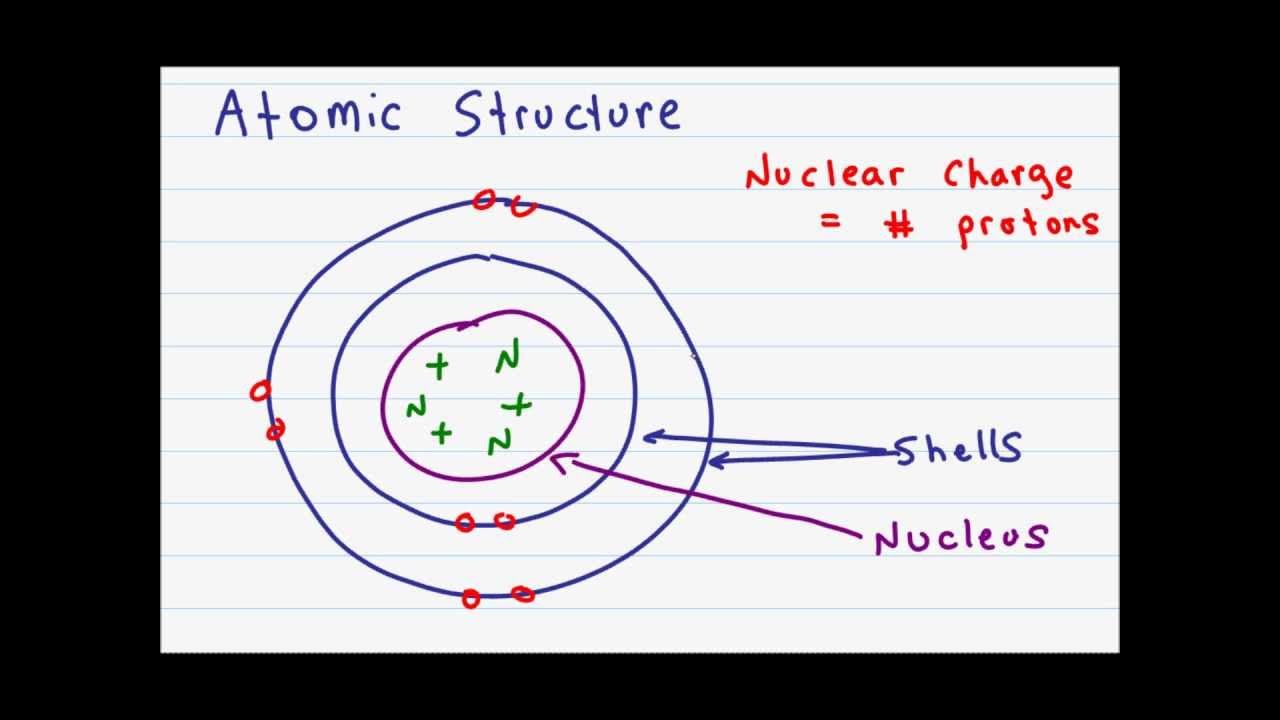
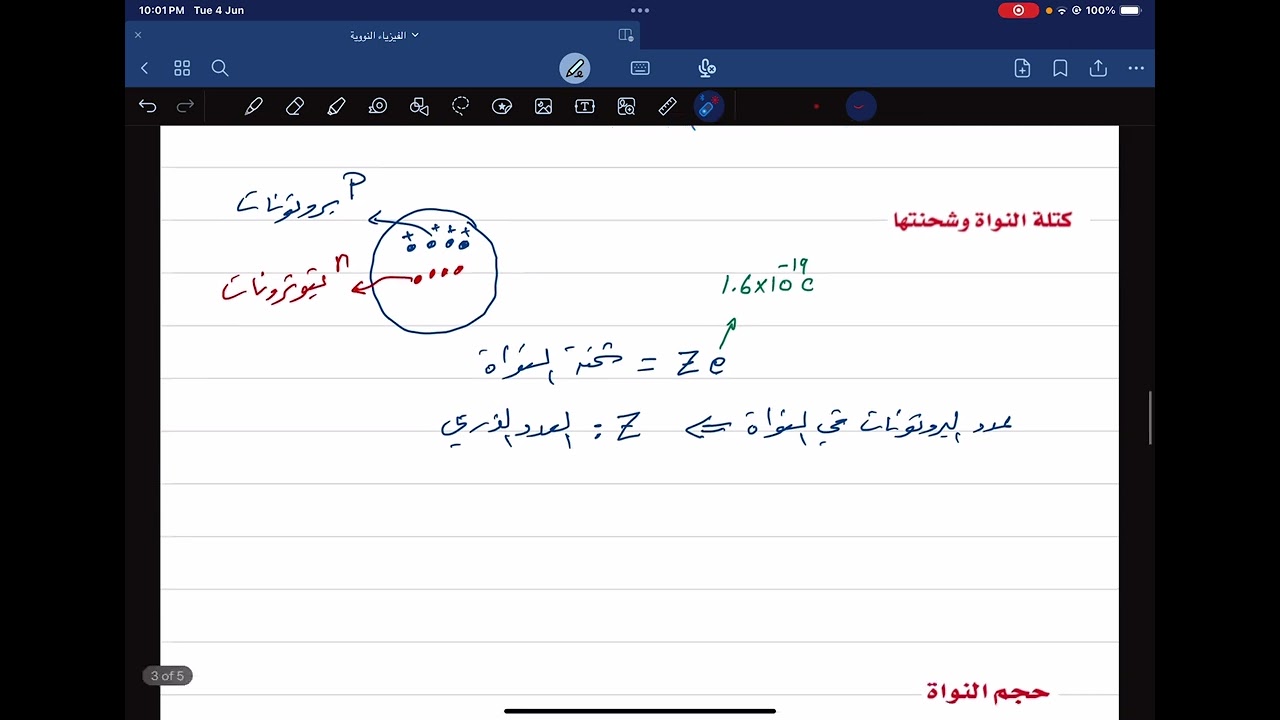
Added:Basic atomic structure, specifically the composition of the atomic nucleus (protons and neutrons) and the concept of nuclear charge.
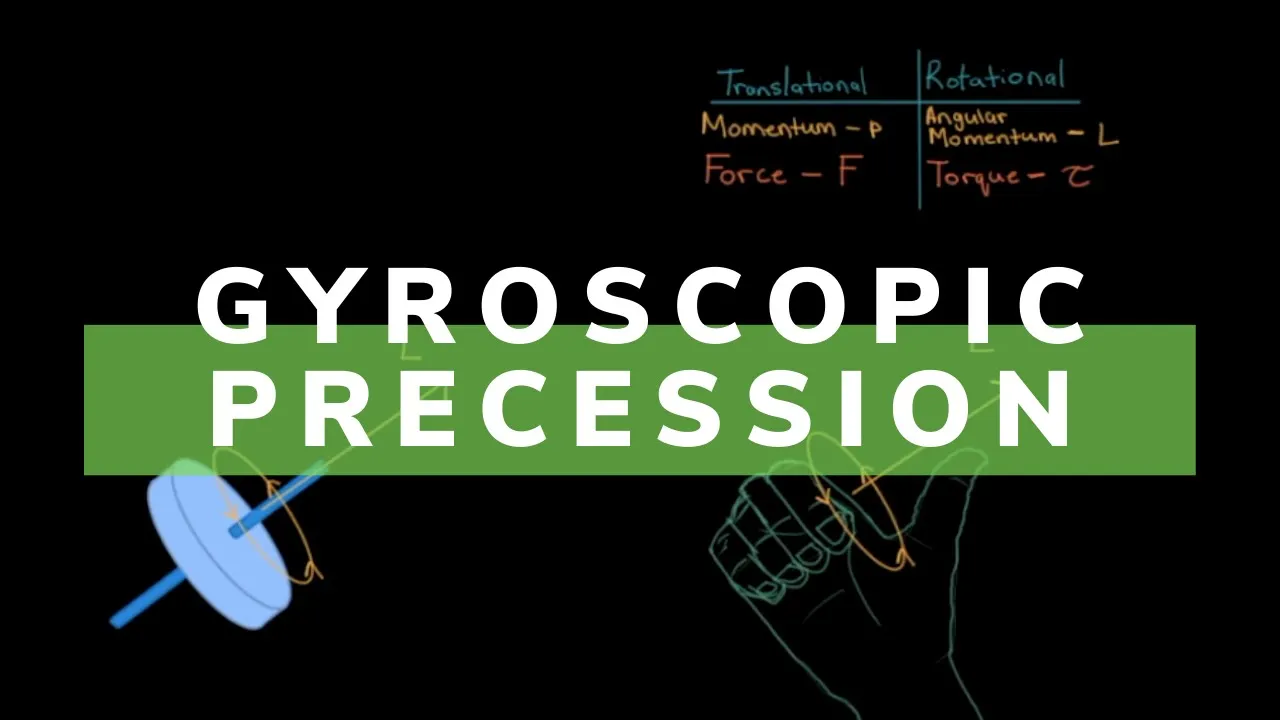
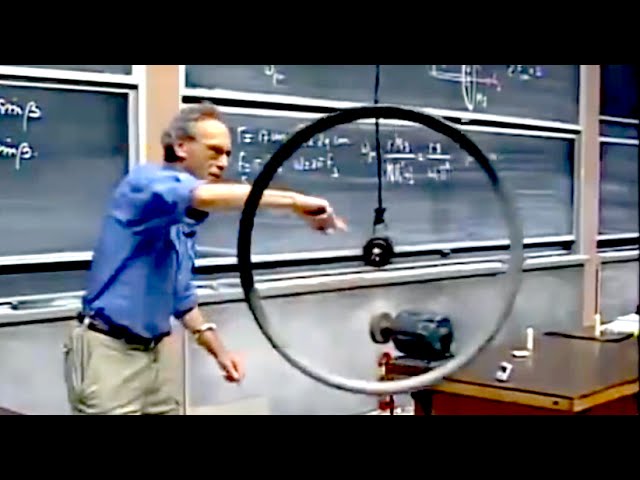
Classical mechanics of rotation, including angular momentum, torque, and the physical precession of a spinning gyroscope.
Fundamental magnetism, including magnetic dipole moments, magnetic field lines, and how dipoles align in an external magnetic field.
Introduction to quantum mechanics, specifically the concept of quantized angular momentum and discrete energy states (e.g., spin-1/2).
The Larmor equation and how to calculate the precession frequency of nuclear spins in an external magnetic field.
The mechanism of radiofrequency (RF) excitation, resonance, and the subsequent relaxation processes (T1 and T2 relaxation times).
Chemical shift and spin-spin (J-coupling) interactions, which explain how local molecular environments affect NMR spectra.
Practical applications of nuclear magnetic resonance, such as 1D/2D NMR spectroscopy for chemical structure elucidation and Magnetic Resonance Imaging (MRI) in clinical medicine.
2.9K views44likes4:14Original Release: 2020-08-13
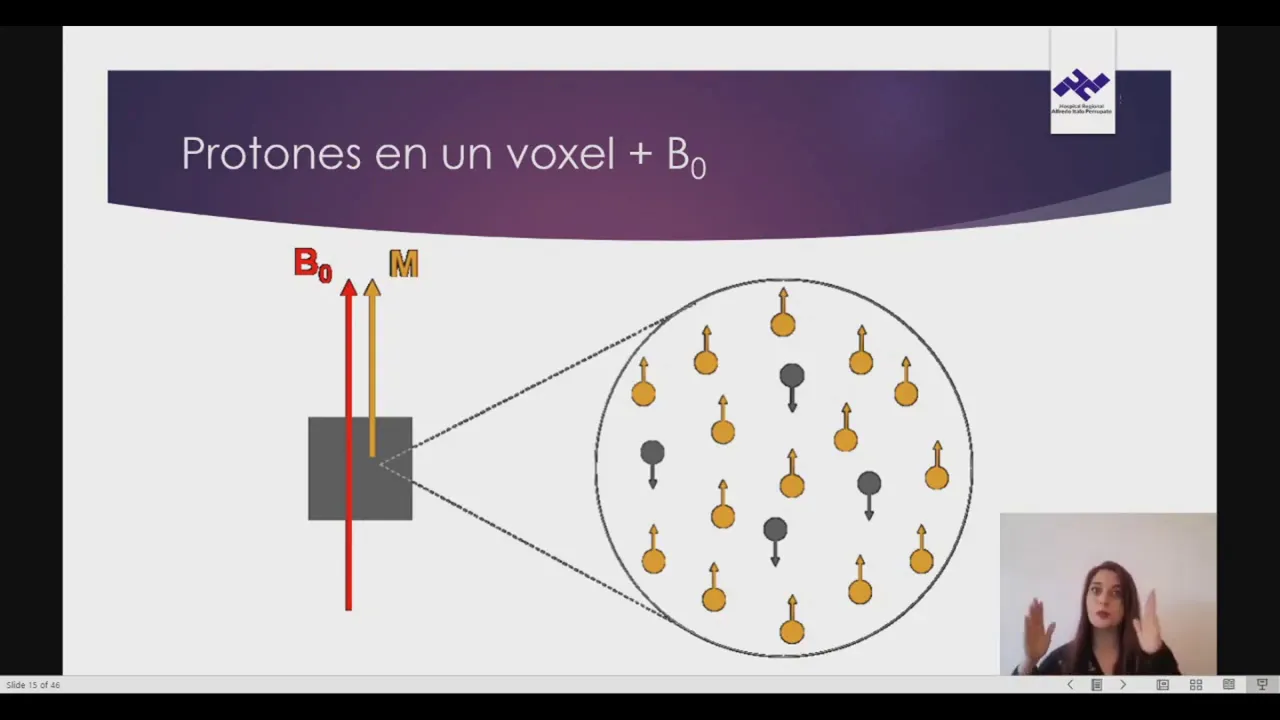
so what i wanted to do was put together a video that explains spin a lot better than most books try to explain it and i always tell students the issue with spin is that we don't really understand it because we don't really understand there aren't a lot of great analogies but one analogy that really permeates the discussion and it's just because it's been historically taught is this idea of spin one half nuclei being treated as north and south pole magnets there's a major issue with looking at the world this way so if we look at a nucle a nucleus inside a magnetic field and we take this analogy of well it's spin one half therefore it has a north pole and a south pole well so does the magnet magnetic field that it's in and what we'd expect is all those spins to point in the direction of the magnetic field because if it's a north and a south pole it's going to want to point in such a way that the magnetic fields line up that's not what actually happens there is an equal chance of finding the spins both aligned and counter to the magnetic field underneath this north south pole analogy so off the bat that doesn't really make sense so why do we use that analogy well it's easy to use the analogy so for this video i actually ended up buying a gyro and unfortunately i bought a really cheap gyro and it shows because it won't do any of the cool tricks that gyro should be able to do so instead of thinking about his north and south poles let's think about it in terms of a spinning top and instead of a magnetic field here we're going to think about it as gravity so if i take the spinning top and i start spinning it a gyro is going to want to point and there are two stable ways to point this gyro one is pointing up the other is pointing down so we would consider this an up spin and a down spin now you can kind of see where it tries to fight me when i try to turn it's actually trying to turn itself this is where the idea of spin actually comes from that definition is to think of it in terms of angular momentum so a top has two stable solutions one word is spinning clockwise relative to gravity others where it's spinning counterclockwise relative to gravity but the gyroscope is stable in both of those directions so there are actually two stable ways that this stop will stand up one word spin clockwise one where it's spinning counterclockwise and this is kind of how the electron or a nucleus interacts with a magnetic field it can spin clockwise or counterclockwise but that spin needs to be perpendicular so the rotation itself needs to be perpendicular to the magnetic field itself so instead of thinking of this north or south pole think of it as a spin a gyroscope spinning one where it spins up or spins clockwise and one where it spins counterclockwise both of those are stable to instead of gravity the magnetic field and this is why we expect to see equal chances of seeing both of them going clockwise and counterclockwise is that they're both stable in that direction now another reason why this analogy is so much better than using the north south pole analogy if you take a top and you turn on the side and unfortunately this is what happens when you buy a really cheap gyro you can actually put it on a post and what the dryer will do is it will begin to spin and i was really hoping that this gyro would do it but it's way too cheap well this is what happens with these materials with these is that when we put use a 90 degree pulse in the nmr it turns them sideways and they're still spinning clockwise and counterclockwise but what they will begin to do is they will process they will actually begin that principal axis that they're spinning on will actually begin to turn perpendicular rotate perpendicular to the magnetic field and this is what we measure in a nmr experiment we measure the fact that there's a net polarization they're pointing a certain direction so this is what's actually happening in nmr we're not really having these north and south poles analogies what we really have are spinning tops and there are two two stable solutions these spinning tops clockwise and counterclockwise relative to the magnetic field and when we do it in our experiment we tip them nine degrees there go nine degree pulse and they will start rotating perpendicular to this magnetic field the same way a gyro would so how does this explain j-coupling well let's try to break that into a second video
Up Next

34:48
JPEG Compression Explained: Signal Processing & DCT Math
@Reducible
1.2M views•2022-01-19

12:53
21cm Hyperfine Transition in Neutral Hydrogen: Radio Astronomy Basics
@AaronRobertParsons
12.4K views•2011-10-13

32:32
NMR Spin Physics I: Zeeman Effect, Resonance Condition & Larmor Frequency
@nptel-indianinstituteofsci8064
2.3K views•2024-01-17

27:14
Entropy and the Second Law of Thermodynamics Explained
@veritasium
27.5M views•2023-07-01
Related Study Plans & Knowledge Roadmaps
Structured learning paths in Physics
physics
Nuclear Physics (Decay, Fission & Reactors)
01Atomic Structure and the Binding Force
02Radioactive Decay and Half-Life
03Nuclear Fission Mechanics and Chain Reactions
+ 2 more learning modules
12h5 modules
Explore Roadmap
physics
Soft Matter (Polymers, Colloids & Rheology)
01Foundations of Soft Matter & Thermal Forces
02Polymer Physics and Macromolecules
03Colloids, Surfactants, and Self-Assembly
+ 2 more learning modules
38h5 modules
Explore Roadmap
physics
Analytical Mechanics: Lagrangian & Hamiltonian
01Mathematical Foundations: Calculus of Variations
02From Newtonian Mechanics to Constraint Dynamics
03The Principle of Least Action & Lagrangian Mechanics
+ 3 more learning modules
28h6 modules
Explore Roadmap
physics
General Relativity (Spacetime & Cosmology)
01Foundations of Relativity: Special Relativity
02The Geometry of Spacetime: Equivalence Principle & Curvature
03Einstein's Field Equations: The Mathematics of Gravity
+ 2 more learning modules
55h5 modules
Explore Roadmap