


















Semiconductors are materials whose conductivity can be tuned by many orders of magnitude, unlike conductors or insulators; they form energy bands when atoms come together in a crystal lattice, where discrete atomic energy levels split into continuous bands due to atomic interactions, creating a band gap between the filled valence band and empty conduction band that determines the material's electrical properties.
Fundamentals of Semiconductor Devices: Course Introduction
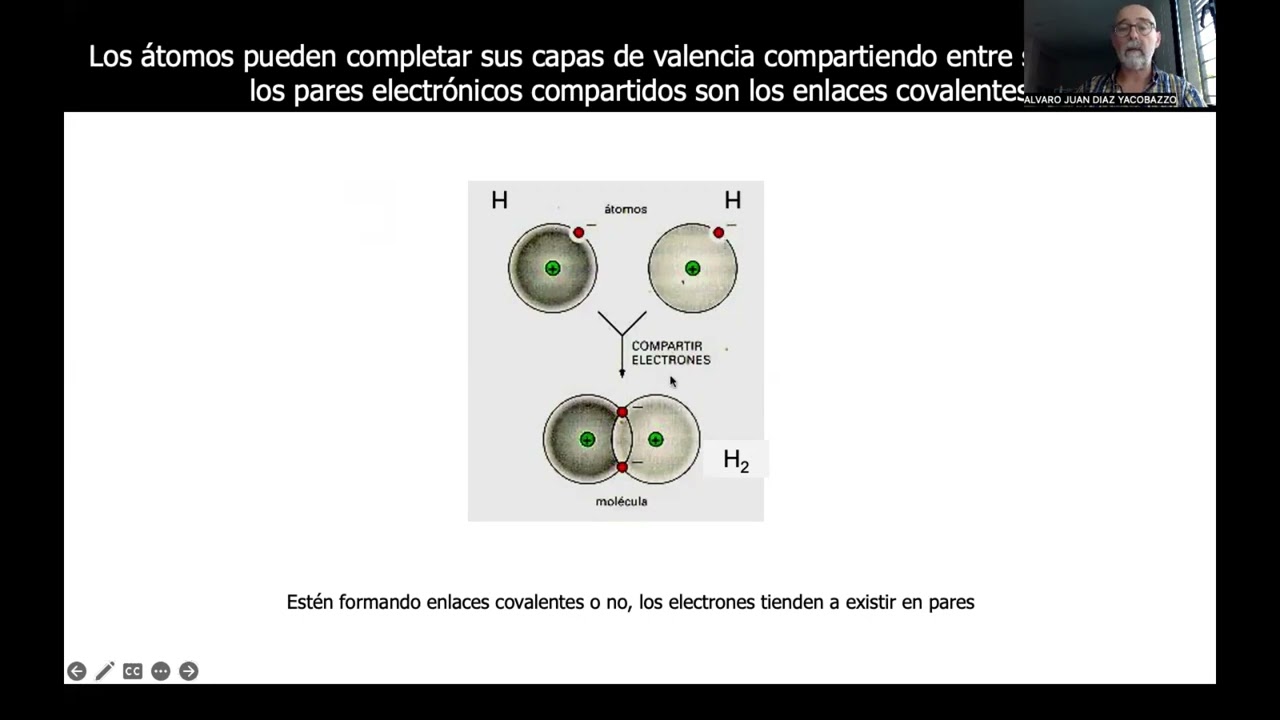
Added:Basic understanding of atomic structure, including electron shells, valence electrons, and covalent bonding.
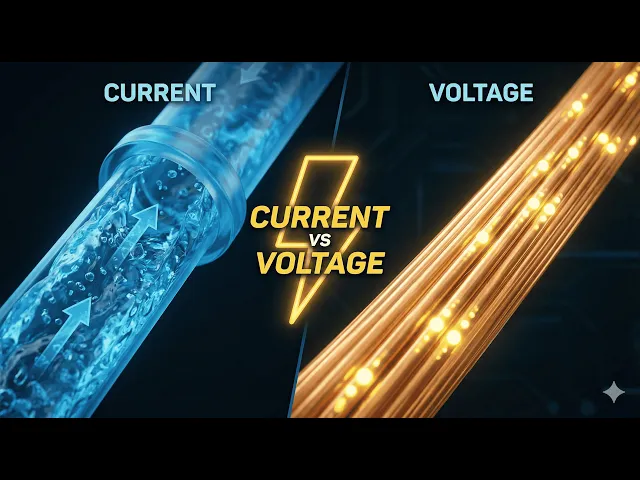
Fundamental concepts of classical electricity, such as current, voltage, resistance, and Ohm's Law.
Introductory quantum physics concepts, particularly discrete energy levels and the Pauli exclusion principle.
Basic classification of materials into conductors, insulators, and semiconductors based on electrical conductivity.
In-depth study of the p-n junction, including depletion width, built-in potential, and forward/reverse bias behavior.
Analysis of transistor physics, specifically focusing on Metal-Oxide-Semiconductor Field-Effect Transistors (MOSFETs) and Bipolar Junction Transistors (BJTs).
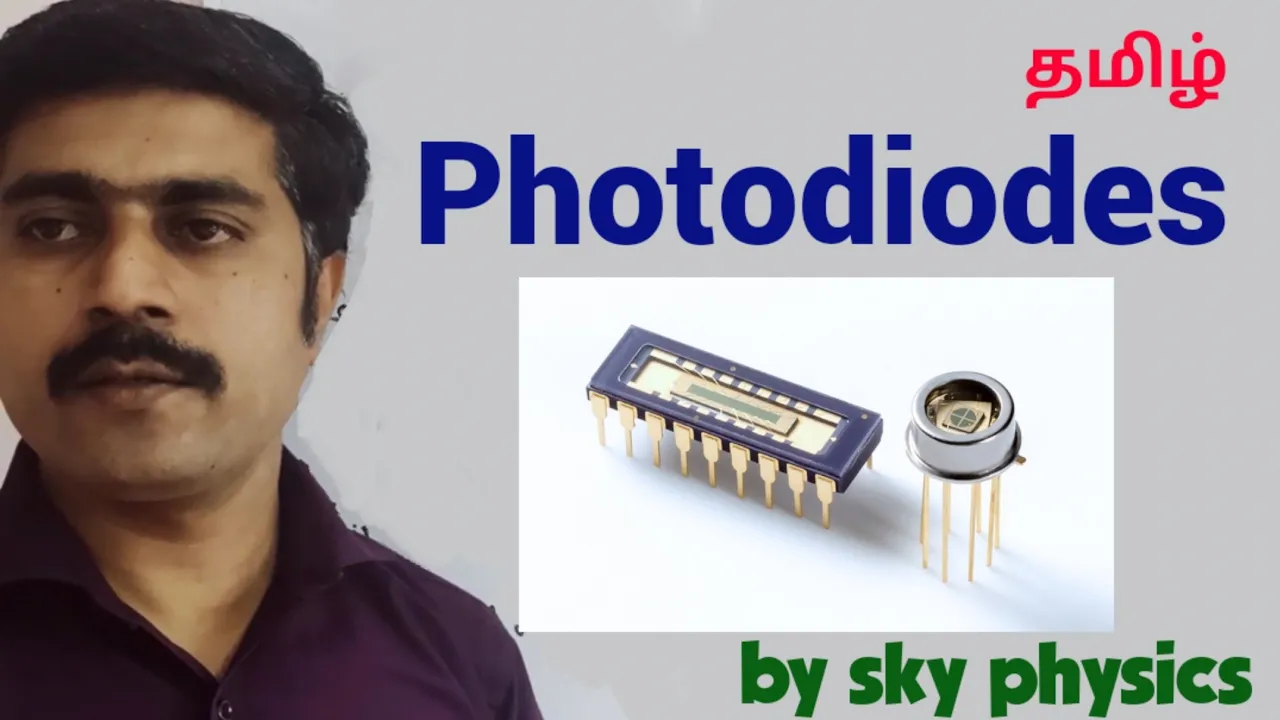
The physics and engineering of optoelectronic devices like solar cells, photodetectors, and semiconductor lasers.
Semiconductor manufacturing and fabrication techniques, such as doping, photolithography, and thin-film deposition.
256.6K views3Klikes31:45Original Release: 2019-01-11
Welcome everyone my name is Digbijoy.
And today we shall begin this new course Fundamentals of Semiconductor Devices.
It will be a 30 hour long course.
I will be recording lectures for you; I will be taking this course.
Many of you might have read about or studied about semiconductor devices, but this course will be a little bit different in the sense that we shall try to correlate semiconductor devices with practical real life applications.
We will make it less mathematical, I mean they has to be mathematics, but it will not be very complicated course.
We will try to make sure that there is no prerequisite.
So, even if you have passed your 12th board exams, you should be able to understand the concept of this course with the basic that you have learned.
It will also have elements for people who are doing post graduate or PhD, there will be sufficient concepts for thoughts, but the idea of this course is to train you and train you to learn how to analyze and understand semiconductor devices, because it is a very important aspect or branch of electronics, physics, material science and so on.
In many institutes of this country, semiconductor courses are thought, but you know the practical correlation with devices and many of the fundamentals are probably not in covered in very great details.
So, we will try to do that here ok.
Now, today is the first introductory class, for so 1 hour we shall discuss about what is semiconductor, where are semiconductors used, what are the types of semiconductor and introduced very basic concepts of semiconductor bands ok.
Even if you have not heard about these words like bands and band diagram, you should not be worried.
We shall go very slow, we make sure that you understand each and everything that we discuss here ok.
So, semiconductor devices are everywhere the very reason you are able to see me and I am able to talk to you is because use of semiconductor devices.
You are very well aware that all our cell phones, mobiles, laptop, ThinkPad’s, everything we have processors, memory devices, logic devices, they are all made of semiconductor devices by the way right.
So, the transistor which revolutionized our electronics industry that transistor is one of the most important semiconductor devices that was invented and that has eventually triggered the IC revolution, the integrated circuit revolution.
In the last 50-60 years you are very aware that the integrated circuit revolution has accelerated the progress of mankind faster than probably anywhere else in the history ok.
It is incredible the things that are shaping up and you may not be aware that semiconductor devices are used in.
So, many other applications outside of mobile cell phones and laptops just so many other applications which you may not be aware ok.
For example, your electric vehicles that are starting to populate the roads increasingly, you know there are semiconductor devices to enable charging of these vehicles.
You have to convert power; you have to convert power from say kilowatt to watt or watt to kilowatt ok.
All your high speed application like radars and satellite transmission communication also need transistors that can operate at very high speed and very high power.
You know semiconductor devices are also used for optical devices.
All the white light LEDs that you are using now to light up, the street, the stadiums, the houses everything that white light LED is a semiconductor device.
Solar cells are semiconductors.
Photo detectors and photo sensors are also semiconductors mostly.
There are varieties of semiconductor devices that are revolutionizing our lives ok.
So, it is very important for us to understand how the semiconductor devices work, what is semiconductor and so on.
You might know of course, semiconductor is something that has a conductivity between metal and insulator, but that is not enough, we shall go more deeper into the concepts of semiconductor ok.
So, I will start using white board or writing instead of slides, so that we can actually get the ideal very closely.
So, the word semiconductor and you know I will use different color maybe semiconductor ok.
Conductor is what conducts electricity very well like metals right; and insulators are like wood and glass which cannot carry electricity so much.
But the word semi conductor this word semiconductor means those materials whose conductivity can be tuned or tailored you know that probably most of you know.
You see if you have a piece of metal it is very difficult to change the conductivity, I mean you can raise the temperature that is different, but at room temperature for example, if you shine light or do anything else, it is very difficult to change the conductivity.
Or if you take a piece of glass for example, it will not conduct electricity no matter what you do, it is very difficult right.
So, there are these materials call semiconductors where you can change the conductivity.
All of you know what is conductivity?
You know resistance right, resistance follows the ohms law typically V by I.
So, conductivity is sort of the reciprocal of resistance or resistivity.
So, you know how much current a material can conduct is a measure that connectivity measures that quantity.
And semiconductors that is unique materials whose conductivity can be tuned by many many orders of magnitude and that is there beauty.
Because of that property you can make devices that can cater to your needs ok.
You can use semiconductor as a switch, you can use it as a switch electrical switch ok.
You can use it as an amplifier.
What does a switch do?
A switch will basically it will it will have an on state.
So, it will let current go in some condition; it is a off state, so it will block the voltage and not allow current to go in another state, that unique property cannot be there in metal.
You cannot make metal go into off state.
A metal will not be able to block voltage right.
If you apply 100 volt or 200 volt and you expect you know pico amps of current, it will not happen right.
Or a glass you cannot expect a very high current ampere or milli ampere to flow at very low voltage, it will break down at very high voltage by the way.
So, only semiconductors have that unique property that it can both allow very high current to flow, it can also block very large voltages like insulators, so that is the beauty of semiconductor that we can use as a switch.
And that has so many applications you know that has so many applications that I will come.
Then you can use it is an amplifier.
What amplifier does is that?
It amplifies, it enlarges the signal ok, and that has a gain; and that gain can be used in many RF devices for example, right.
It can be used as a logic device right.
As a logic device your CMOS logic as a memory device, you can use it is as for memory right where to store information, there are so many things you see.
You can use it as an LED that emits light.
You can also use it as a laser diode right in a laser pointer for example, and so many other uses.
It you can use it as a solar cell; you can use it is a photo detector; all these devices are actually influencing and revolutionizing our lives.
And these are enabling the larger industry the electronic industry for example is heavily dependent semiconductor devices right.
So, this course will be basically understanding how does different devices work.
And what is what are the basics of semiconductor and will never lose side of two things one is that the concepts have to be simple so that we all understand what we are talking about.
The concepts have to be simple and explain with, the second point is that they have to we have to explain all the concepts with practical examples and you know practical correlations so that we know with the world that we are living in how this devices relate ok that is very important.
So, this is broadly the outline of the course.
We have different themes, different topics within semiconductors that we will cover right, many devices that we will cover and basics of semiconductor that we will cover here.
So, let me change the pages.
So, we will have 30 lectures.
So, today is the first lecture right.
We will have 31 hour lectures.
And we shall we shall study devices, the second you know the broadly if I split the course into 2 halfs.
And here I will the first half of this whole course you know will be basics.
So, in basics we will discuss about the basics of band, you know there is something call band and band diagram.
If we are not familiar with this terms do not worry we shall definitely understand very clearly what band diagrams mean.
And you know the moment you understand band diagram, you can understand devices.
The Nobel laureate Herbert Kroemer, he got a Nobel Prize in 2000 for you know developing hetero junction and optoelectronic devices.
He says that if you cannot draw band diagram for a semiconductor device, it means that you do not understand semiconductor device.
So, the moment you understand band diagram, we can understand semiconductor devices very well ok.
And so, we shall introduced the concept of electrons which you know and holes which might be a new concept to you ok.
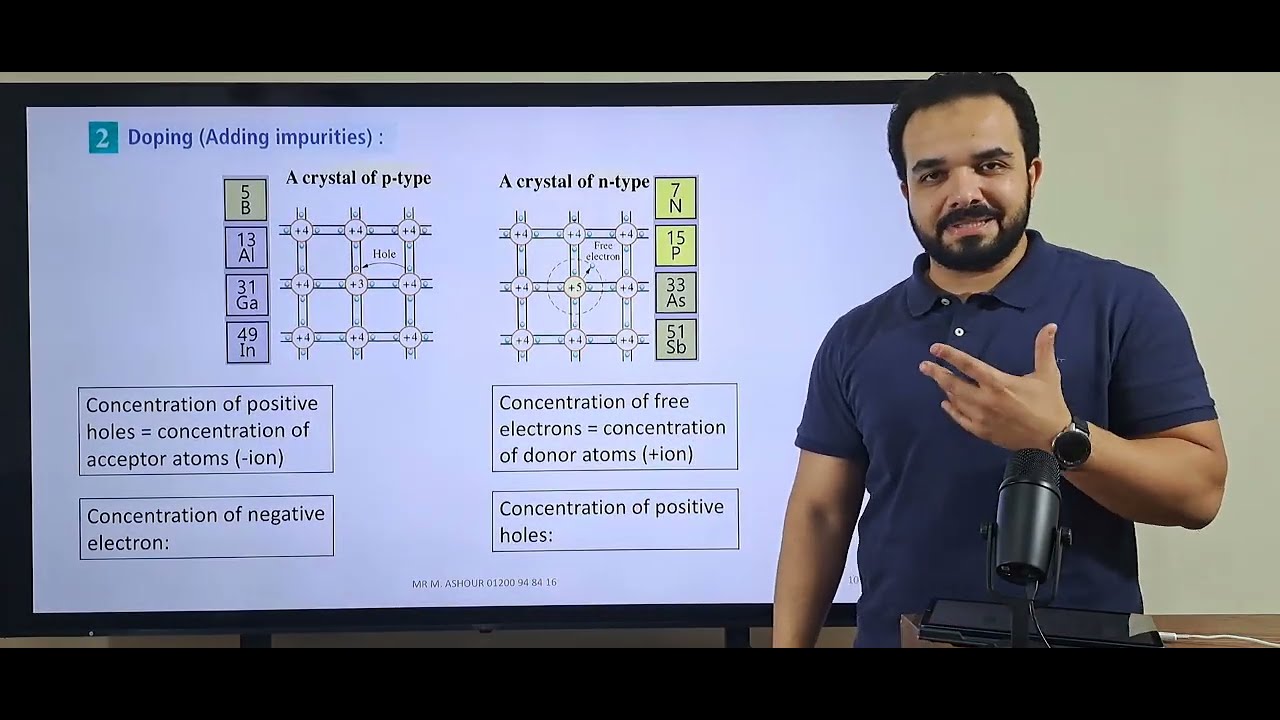
We will introduce concepts of doping.
What is doping?
Doping is basically the ability that the process of changing the conductivity of a material right by introducing some impurities.
We will introduce the concept of doping.
We will introduce the concept of some statistics again not too much mathematics, but very basics.
Why do you need statistics, it is actually call of Fermi-Dirac statistics.
Let us not get scared about the word here.
The Fermi-Dirac statistics basically is a type of statistics that will help us explain the semiconductor you know how electrons are there in semiconductor, how current flows and so on, so many other things will be discuss there.
We will also discuss about transport, the current transport in semiconductor, eventually semiconductor devices have to carry current.
All the processors and logic devices in your cell phones or laptops, they have to carry current, small current in their circuits.
So, how do current flow, that transport we shall discuss.
There are different ways of transport in you know way in the current transport happen.
And also that depends on something called how carriers recombine they something called carrier recombination.
We should not worry so much about it right now.
But how carriers will recombine, we will discuss that right.
And we shall introduce the most common thing that we always learn which is p-n junction.
I am sure you have heard about or read about p-n junction in even in your class 12 or 12 standard boards very briefly.
So, we shall go to the p-n junction.
And pretty much that will be your basics you know there will be some other things I am not writing it down here, but more or less this will be how your basics will come up ok.
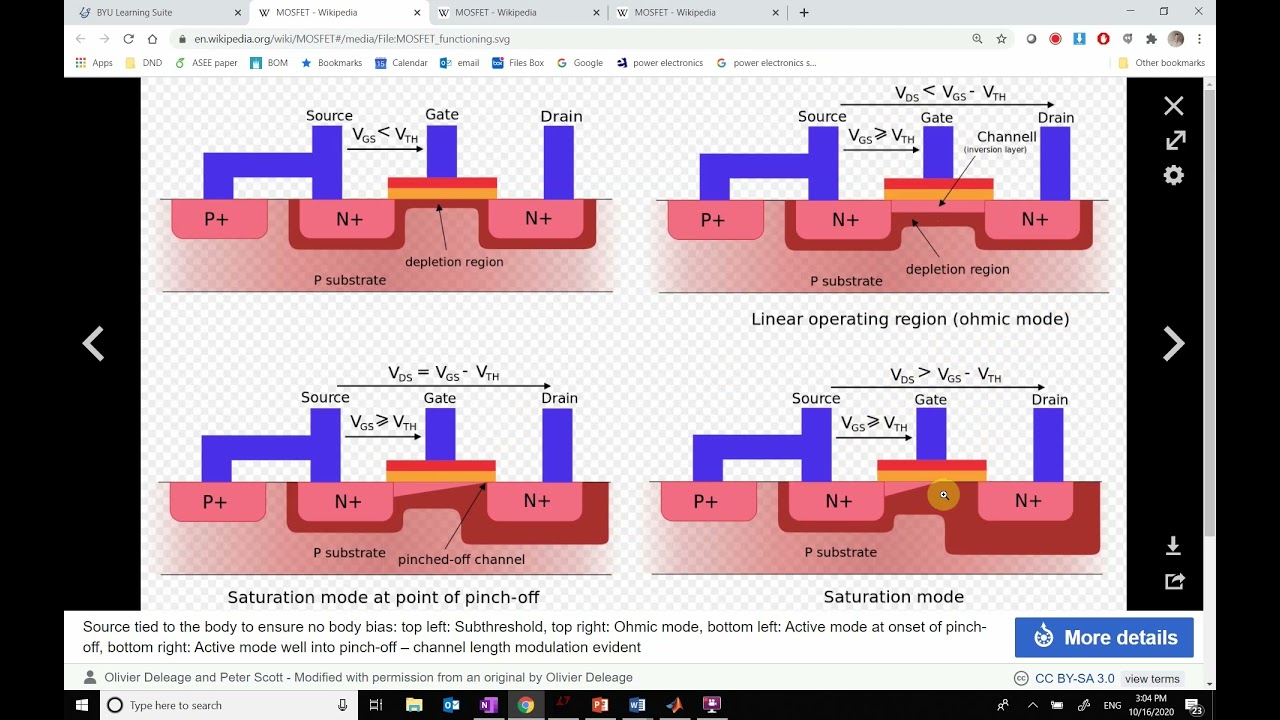
And the device we shall definitely study MOS and MOSFET right.
MOSFET devices are the most common devices that are used in electronics.
Nowadays of course, there very highly scaled ok that is a different things.
We shall also study about BJT; it is a bipolar junction transistor.
It is a different type of transistor that we use.
And we shall study very briefly about solar cell which has to be there, you know our Indian government is spending so much on solar cell.
We need to know what, how solar cells work.
We will also study about LEDs and photo detectors very briefly one one lectures probably each right.
And we shall study about transistors for and diodes for different applications ok, transistors and diodes, how are they engineered, how are they tailored for say high speed applications or maybe for high power applications right, or may be for low noise applications right.
So, many applications are there may be for memory and logic right.
So, how are transistors decided or designed or tuned in order to cater to this different needs separately.
We shall also go through them ok, and that will be the basically the summary of the course that we have.
The many new things that we will come across here, many things that we may not have heard before, but we shall definitely start as if we do not know anything and we will start from there ok, we will start from there.
So, the most important thing in semiconductor devices you know I keep telling that semiconductor devices have revolutionized our lives.
And our semiconductor devices have evolved you know from if I look at 1948 is when the first transistor probably you know BJT was invented at Bell labs in US it is you know.
And from 1948 to 2018 now, sorry 2018 now things have changed immensely.
Now, you have hand held Smartphone’s, I mean it can do crazy things right.
So, this evolution has happened over so many years right.
And if you take any chip, if you take any chip, there many transistors in a chip that do they work right.
The number of transistors in a chip they double, they become two times almost every one and half years ok.
The number of transistors in a chip double every roughly every one and half years and that is called Moore’s law, because a person called Moore have observed this and predicted this long back in 1960s and 70s that you know every two years, the number of transistors is doubling.
What is means is that transistors are becoming smaller their shrinking the sizes and that is why we are able to accommodate more and more transistors in the same chip.
So, the number of transistors is doubling every one and half years.
And secondly, when you can pack more and more transistors in each of this chip, then the complexities and functionalities also become large.
So, you can do more and more sophisticated work a computer in 1980 was not as advanced as in 1995 for example.
And in 2004 laptop was sufficiently more advanced.
And now in 2018, for example, a Smartphone is much more smarter and sophisticated, then a laptop of 1990 or you know 2005 for example.
So, this is the evolution of transistor that happened over a large amount of time in over the last 60, 70 years.
And transistor is not the only device of course, there are diodes and detectors and so many other things, but transistor is one of the most fundamental building blocks of all our circuits right.
And transistor is a semiconductor device that we shall come about.
We shall discuss transistor in details, but in very brief a transistor is a device where the current flowing between two terminal A and B is not decided by the voltage that you applying between A and B, but by the voltage you applying at another point C, so that means, the voltage that you apply at point C can control how much current is flowing between A and B. So, it can be used as a switch it can be used as an amplifier and so many other things right that is a transistor in essence.
Now, this is evolution of transistor and you know and 2018, the transistor sizes have become so so small that you need super powerful electronic microscope actually to see them.
And you need very advanced nanofabrication technologies to fabricate such transistors ok.
When we you know about the company Intel right, Intel is one of the leading companies that make this microprocessors and chips right.
And Intel of course, the Samsung and all though Samsung has this consumer electronic product like you know cell phones, washing machine and TVs and what not, but Samsung also has a lot of you know technologies and facilities for very highly scaled and very sophisticated chip design and transistor technology.
So, this company is for example, Intel, Samsung and there are many others like global foundery and so on, they report the development of technology like say 14 nanometer technology or 14 nanometer node they call it.
It does not necessarily mean the transistor is 14 nanometer, but you can say that you know the smallest feature you know that the spacing between two lines adjacent lines could be as small as 14 nanometer.
Many things are there we will come to that in later classes, but you know 14 nanometer is so small.
Can you get a feel of what 14 nanometer is?
14 nanometer is you know 1 nanometer is basically 1000 times of 1 micron right, 1 micron.
And you know 1 micron is basically itself 1000 times 1000 times smaller than 1 millimeter.
So if you take a ruler, you know if you take a school ruler that you have, you have this 1 millimeters gaps right, 1 millimeter gap.
If you divide that 1 millimeter gap into 1 million times right, then you get 1 nanometer.
So, it is very, very small, you cannot see it with eye ok, so that transistor has evolved from 1948 to 2018.
Now, we are talking about such small dimensions and so many complex functionalities are there in a cell phone.
So, many other areas like you know electric vehicles and radars, satellites also used transistors that we shall learn in this course.
But so it is high time we start learning how semiconductor devices are realized, and what we need to know in this course ok.
So, the most important concept of semiconductor devices or semiconductor is called bands.
And these are energy bands actually, these are energy bands.
Now, what are energy bands actually?
Very simplistically speaking if you take any semiconductor you know what are the common examples of semiconductors do you know silicon, silicon is a of course, an element right it is a very the most widely used and the most commonly used semiconductor by the way.
You have Germanium that is also another semiconductor right.
Some forms of Carbon also can be semiconductor for example.
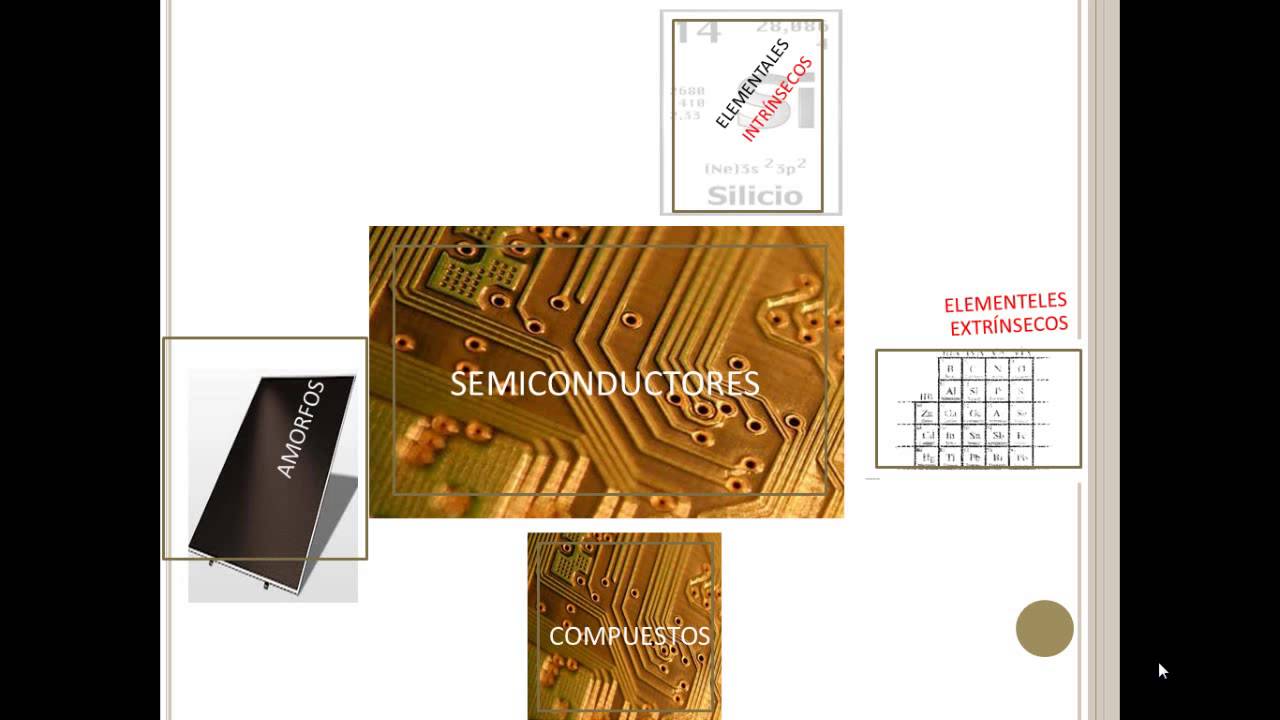
These are elemental semiconductor because this is only one material that is Silicon; this is one material that is Germanium.
You can also mix two for example, you have Gallium which is a metal, and then you have arsenic right, and you mix them together right and you get gallium arsenide right that is a compound.
Its formula is Ga-As gallium arsenide right.
This is a compound semiconductor why because there are two two elements are there, this is a compound semiconductor.
These are elemental semiconductors right.
And all these semiconductors are characterized by something called energy bands ok.
The moment we understand energy bands, many of the things will become clear right.
So, in very very simple language, you know you have in any and when you take silicon for example, or germanium or some other materials for example, you have an energy band which is fully filled with electrons.
And then there is another band which is empty or mildly filled ok, it is empty ok.
And there is what is this y-axis?
By the way, this is energy actually you know energy; and what is this x-axis by the way this is distance in centimeter or meter.
So, I can draw even longer which means it is much longer you know I am talking about diode or something.
So, it is actually distance.
So, I am talking about distance and this is energy.
There are bands there are bands one band is fully filled, and one band is sort of empty mostly empty or maybe there will be few carriers here ok.
Now, when I say fill, they are filled with electrons right.
Now, of course, the question that we have to ask is what are these bands and where have they come from, you cannot magically say that silicon you know silicon has this bands.
Why are these bands coming from?
To understand that you have to go to you know the fundamental each atom each element for example, you know that there are this k shell, L shell and then electrons that you studied in your high school physics and chemistry remember, we have to bring that picture into account to actually explain the bands eventually.
So, let us take a much simpler example right.
So, let us take for example, carbon you know carbon has how many electrons, its formula is 1s 2 2 s 2 2 p 2 sorry right sorry 2 p 2.
So, it has 6, out of 6 electrons in total right.
I am sure that you have learned this representation 1 s 2 2 s 2 2 p 6 is taught in high school and higher secondary you know 10, plus 12, plus 12 chemistry and physics I am sure you have learned this and the understanding is that you have you know this representation and that is why we are able to understand this course ok.
So, we have to know this we assume that you know this thing, so 1 s 2 2 s 2 2 p 2 that is the representation of carbon.
What does it mean?
It means that you have this different shells know.
So, in 1 =s you know 2 electron right, you have 2 electron.
Then in 2s, you have 2 more electron right; and then 2p you have two more electron.
Now, you know in 1s there are only 2 states available and both are occupied by electron.
In 2 states, there are 2 states in 2s, and both are occupied by electron.
In 2p, there are 6 states available.
If you remember p or del can accommodate 6 states, 6 electrons, but there are only two available here ok.
So, there are something that is empty ok, that is for one single carbon atom right, one single carbon atom.
What are we trying to do; we are trying to understand how these bands form.
I told you right in semiconductor we talk about some bands one when is fully filled of electrons and one band is empty.
There is an energy difference between these two ok.
And once we understand this concept we basically move ahead we understand the semiconductor devices or concepts.
So, where are these bands coming from that is what we are trying to understand, let us not lose track of our site.
So, we want to understand how.
This is only one single carbon atom, but do you think a semiconductor has only one single atom, no.
A semiconductor has the trillions and trillions of Avogadro’s numbers of atoms right, I mean it is not one single atom.
So, you have one carbon atom for example, one isolated carbon atom, you get this picture.
There is another isolated carbon atom very far away, you get this picture.
There is another isolated carbon atom very far away you get this picture and so on and so forth right.
In three-dimensional, you can have lot of carbon atoms they are very far from each other.
So, there is no problem each of them have this sort of representation.
Now, in actual crystal, if you take a piece of carbon in graphite or something like that right, if you take an actual piece of carbon, the carbon atoms are actually not so far apart right, they are separated by a fixed spacing you know.
There are so many carbon atoms there are so many carbon atoms that are equally spaced in all directions in three dimensions right.
I am only drawing here in two dimension because this is a whiteboard of two dimension, but you have z, x, y, in all three dimensions you will have depth and this is a fixed distance by the way.
This distance is fixed for each material.
The spacing between two the spacing between two nearby atoms; this is a carbon atoms right.
This is called lattice constant.
Please remember that ok lattice constant.
This is a lattice of atoms actually; this is a lattice of atoms.
And the spacing between two nearby atoms is called lattice constant.
And this is a fixed number at room temperature for each material right, it is a fixed material for each material it’s a fixed number.
Why I am I telling all these, again the eventual idea is to understand how bands are formed and what are the bands?
Now, I told you that for each individual carbon atom this is the picture that we have.
But I will take a different color may be here.
So, let us consider one carbon atom here, another carbon atom very far away, they do not interact with each other ok.
There is no problem.
Each of them has his own set of orbitals, shells, valence orbital’s and everything is there, everything is fine and nice.
But this is not the actual distance of carbon to carbon atom in a crystal.
In a crystal this is much shorter.
So, let us now imagine that we are trying to bring these carbon atoms close to each other.
So, it was here, it was here, but I am bringing them close sorry, so maybe I have a carbon atom here and I have a carbon atom here.
So, I have pushed them I am bringing them closer.
Why, because eventually the carbon atom has to be very close very close as it is a fixed number its some angstrom the level is strong.
Actually the carbon atoms have to be close to each other in reality.
In a real carbon crystal, it is a few angstrom ok.
You know what is Angstrom, 1 angstrom, sorry, 1 angstrom is 0.1 nanometer, few angstrom is the spacing between 2 carbon atoms that is in real crystal.
So, I am trying to bring together 2 carbon atoms, what will happen each carbon atom as its own shells orbitals know it as its own 1 s 1 s 2 2 s 2 2 p 6 everything is there know.
The moment you try to bring them close, the moment you try to as you try to bring them close, this atoms will interact with each other.
What will happen is that you had this discrete energy levels remember.
When I say discrete energy levels, what do I mean I mean the levels like 1s you know 2s 2p, these are discrete energy levels fixed, fixed energy levels.
This discrete energy levels, they will try to interact as they are coming closer you know because a real crystal of carbon or silicon for that matter has so many atoms that are closely packed with each other I mean real crystal is real crystal.
So, this discrete energy levels will start react you know interacting with each other.
And what will happen is that each discrete energy level that discrete energy level which is very sharp will start splitting will start splitting into band.
What does it mean is that one energy level like this will become like a band like this, because the atoms are coming closer and there valence orbitals are now interacting with each other right, and that’s why one discrete energy level will now split up.
So, how do I, write it more clearly?
So, for example, on the x-axis I am plotting distance r, I am plotting distance; on the y-axis, I am plotting energy.
So, far away I have see I will not talk about 1s 2 because the in carbon 1 s 2 is the inner most orbital know.
And that inner most orbital exchange do not take part in that interaction so much.
And inner most inner most electrons also do not contributed is you know energy band gap formation so much.
We will come to that.
So, we will only talk about 2 s 2 and 2 p 2 2 p 2.
So, I have a level which is 2 s 2 which is a sharp discrete level, when r is far away ok.
So, this is r, r is large the atoms are very large and far apart from each other, so these are discrete level that is there.
And then you have a discrete level 2p2 which is also one single level discrete level ok.
Now, you are bringing them close and close, so r is reducing.
What will happen is that this energy level will now start to split like this ok.
This energy level also will try to split like this.
Why are they splitting, because they are interacting now.
And because they are interacting the levels are splitting into a continuum of bands this is called a continuum of states.
Actually when I say band there are many small discrete states that are formed like this.
It is called a continuum a continuum of discrete levels which appear they appear as a band ok, they appear as a band.
These are discrete levels that are so much in number that the whole thing appears like a band an energy band that’s why I am talking it is a band; it is not a discrete level.
So, this is splitting up here ok.
This is splitting up here.
And this they will merge for example, ok, they will merge here ok.
And then again they will go something like this here.
So, I will tell you these are what is happening here is that these are filled I mean these are not filled, I mean these are merge states that are forming.
These are merge states that are forming.
So, you see in 2s2, there are two states and there are 2 electrons you agree.
So, if I take if I take large number of atoms say n atoms, there will be 2 N states and 2 N electrons.
Do you agree?
N is a large number, in p you have 6 N states.
If I have N atoms, I have only 2 N electrons.
So, in this part now as just splitting the bands is splitting right, this part you see this is by the way r is decreasing ok, r is decreasing, your distance is decreasing.
What does it mean, it means the atoms are coming closer and closer ok.
In this part, this energy states have merged.
And what is the total number of available states now 6 N plus 2 N 8 N states are now available, energy states are available.
And how many electrons are their 2 N here, 2 N here, so 4 N electrons available.
And there are 8 N states.
Are you getting my point?
I am talking N is a large number of electrons, large number of atoms sorry ok.
Many carbon atoms are coming together and these are carbon atoms coming together at far away they are discrete levels you are right you have learned in your high school and 10, plus 2 physics and chemistry.
But as you are bringing them close and close the energy levels are splitting into continuum of levels which look like bands.
And these bands will merge.
They form this particular you know merged bands, and then again they spit up here, because it is actually continuing right this actually continuing like this, this actually continuing like that ok.
So, what happens is that what happens is that this part now this 8 N states will split up is 4 N states here and 4 N states here.
This 8 N here know there were 8 N here, they split up as 4 N and 4 N. And because there are only 4 N electrons, this 4 N electrons will occupy this.
So, there will be 4 N electrons here and this will be empty completely, there are no electrons their right.
And you see this is this point this distance we say r equilibrium, this is the equilibrium spacing between the atoms in a carbon atom which what it means is that in a real carbon crystal like graphite this is actually the distance at which the atoms exists distance with respect to each other.
And at that point you see there is a gap here, this is a gap know this is completely empty.
As I told you four N states are empty and this is 4 N states are filled they are separated by a gap this is called energy gap and we call it energy band gap ok.
We call it energy band gap ok, that is how energy band gaps are formed in semi conductor.
I can that was a energy verses distance in a in a splitting of a diagram, but actually what it happens is that I can say that this is one fully filled band, this is fully filled band, it is full of electrons it is full of electrons.
And then there is a band sorry which is empty which is empty.
This is electrons here; this empty here; it is a gap here.
This gap is called the energy band gap.
And energy band gap is symbol by EG, this is energy band gap.
So, thank you for your time.
We will meet in the next class.
Up Next
15:55
Intrinsic vs Extrinsic Semiconductors - Analog Electronics
@nesoacademy
746.1K views•2015-05-27

12:53
21cm Hyperfine Transition in Neutral Hydrogen: Radio Astronomy Basics
@AaronRobertParsons
12.4K views•2011-10-13

32:32
NMR Spin Physics I: Zeeman Effect, Resonance Condition & Larmor Frequency
@nptel-indianinstituteofsci8064
2.3K views•2024-01-17

27:14
Entropy and the Second Law of Thermodynamics Explained
@veritasium
27.5M views•2023-07-01
Related Study Plans & Knowledge Roadmaps
Structured learning paths in Physics
physics
Nuclear Physics (Decay, Fission & Reactors)
01Atomic Structure and the Binding Force
02Radioactive Decay and Half-Life
03Nuclear Fission Mechanics and Chain Reactions
+ 2 more learning modules
12h5 modules
Explore Roadmap
physics
Soft Matter (Polymers, Colloids & Rheology)
01Foundations of Soft Matter & Thermal Forces
02Polymer Physics and Macromolecules
03Colloids, Surfactants, and Self-Assembly
+ 2 more learning modules
38h5 modules
Explore Roadmap
physics
Analytical Mechanics: Lagrangian & Hamiltonian
01Mathematical Foundations: Calculus of Variations
02From Newtonian Mechanics to Constraint Dynamics
03The Principle of Least Action & Lagrangian Mechanics
+ 3 more learning modules
28h6 modules
Explore Roadmap
physics
General Relativity (Spacetime & Cosmology)
01Foundations of Relativity: Special Relativity
02The Geometry of Spacetime: Equivalence Principle & Curvature
03Einstein's Field Equations: The Mathematics of Gravity
+ 2 more learning modules
55h5 modules
Explore Roadmap