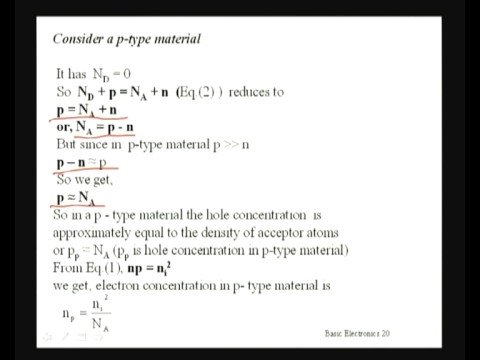


























Intrinsic semiconductors are pure materials (like silicon or germanium) where free electrons are generated only by thermal energy breaking covalent bonds, exhibiting a negative temperature coefficient (resistance decreases with temperature increase). Extrinsic semiconductors are created by doping intrinsic semiconductors with impurity atoms—pentavalent impurities (Group V elements: phosphorus, arsenic, antimony) create n-type semiconductors with electrons as majority carriers, while trivalent impurities (Group III elements: boron, aluminium, gallium) create p-type semiconductors with holes as majority carriers. The doping process involves adding approximately one impurity atom per 10 million semiconductor atoms to significantly alter electrical conductivity.
Intrinsic vs Extrinsic Semiconductors - Analog Electronics
Added:In this presentation, I will teach you intrinsic and exttrinsic semiconductors.
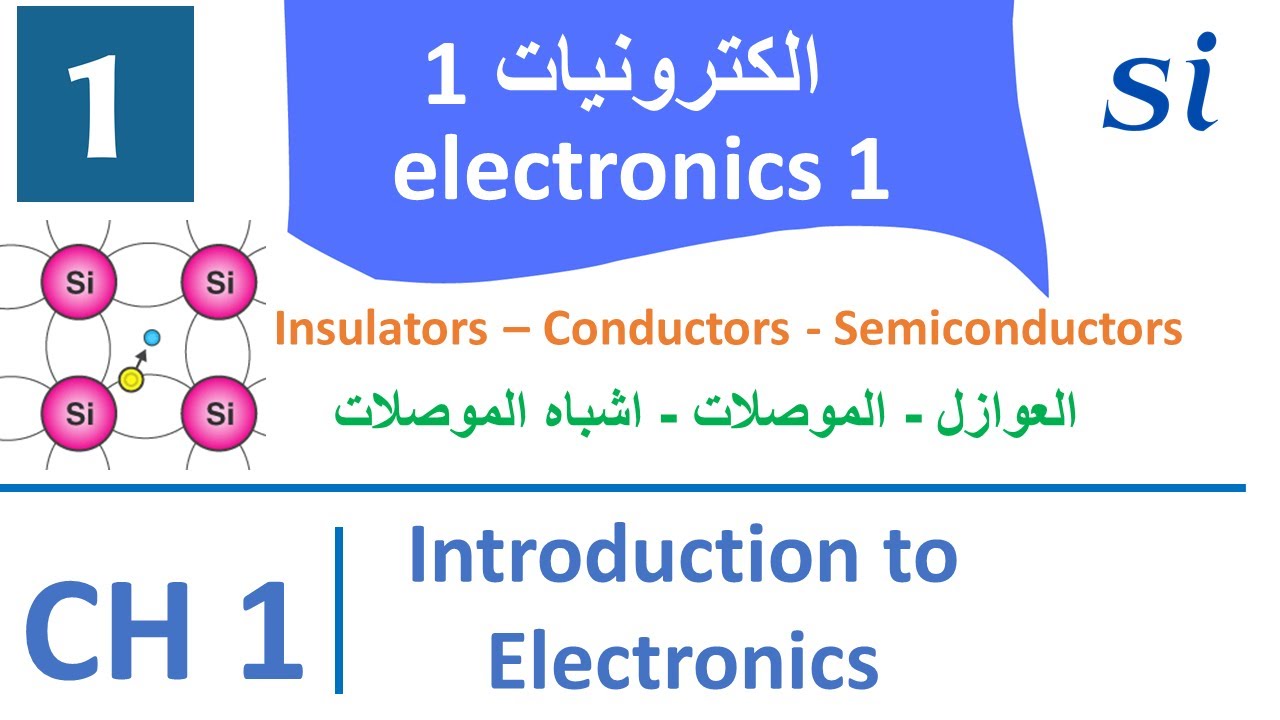
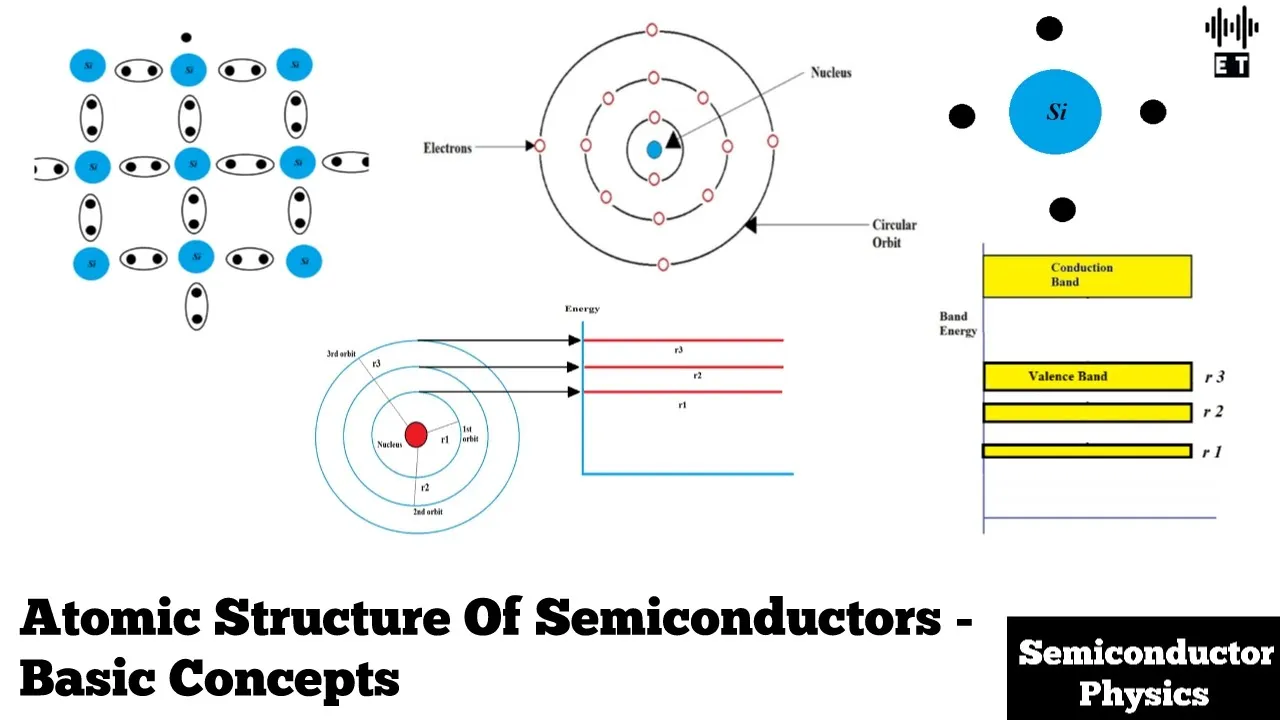
In the last lecture, I explained you how silicon and germananium forms four coalent bonds to attain the noble gas configuration. In this case, we have silicon atom. So, we require four additional silicon atoms to donate four electrons so that we have eight electrons in the outermost orbit. This structure we are going to use in this presentation also but this one is little bit bulky. So I'm going to eliminate few things that will make this structure simple. I will not represent the nucleus and orbits like this. But I'm going to draw a circle and this circle will represent the atom. In this case we have silicon atom. And to represent the silicon atom I will write si inside the circle. If you want to make the atom for geranium, draw the circle and write G inside it. Now let's see how we have to represent these four coalent bonds. I'm going to represent them simply like this.
The last thing that we have to see in this form of representation is electron.
You can see we have electrons here four electrons and this four electrons we will represent by negative sign.
So this is the easiest way to represent this structure and we are going to use this form of representation instead of this one. So let's move to the intrinsic and extrinsic semiconductors. Here you can see this structure that I was talking about. We have four coalent bonds for every atom present in this structure. And in that way we have eight electrons in the outermost orbit. This arrangement of atoms we call as latis.
This lettuce is very important and we have millions and millions of atoms present in this lettuce. This is the lettuce for silicon because we have silicon atoms here. In the same way we have the lettuce for germanmanium when there are germanmanium atoms present.
Now we will move to the intrinsic semiconductor. What it is? Intrinsic semiconductors are pure semiconductors.
What do you mean by this pure semiconductors? Here you can see the lettuce for silicon in which we have only silicon atoms. No other atoms are allowed here. And thus we call it pure.
When there is no other atom present in the lettuce, it is the pure semiconductor or you may also call it intrinsic semiconductor. So this is the one thing that you should keep in your mind and now you can easily distinguish between the intrinsic and extrinsic semiconductor. In extrinsic semiconductor we have impur atoms. We don't have only silicon but we also have some other atoms like aluminium boron that we will see later and uh the free electrons are only due to the natural causes. This is very important point in case of intrinsic semiconductor the free electrons it means the electrons which are ready to participate in the conduction are only due to the natural causes. The natural causes like light energy thermal energy when you give the thermal energy the electrons present in the coalent bond will obtain the kinetic energy and they will break this bond and will be available for the conduction. So we can say that with increase in temperature the number of free electrons available will also increase. The next point is the temperature coefficient.
Silicon and germanmanium silicon and germanmanium both have negative temperature coefficient and as you already know in case of negative temperature coefficient when we increase the temperature the resistance of material will decrease. This implies that with increase in temperature with increase in temperature resistance will decrease and in case of conductors the metals the temperature coefficient is positive and thus by increasing the temperature the resistance will increase. So here we have opposite of that and you should keep this thing in your mind because sometimes they will ask it in multiple choice questions. So this is important. Now you already know intrinsic semiconductor and you have idea about the extrinsic semiconductor.
In this we add impur atoms. We don't have only silicon present in the lettuce but other atoms are also present and we call this atoms impur atoms. So let's talk about this impur atom first. Two types of impurities are there. The first one is the pentavalent.
penta valentant impur and the second one is trivalent impur. Now we will first discuss pentavalent impur. The pentavalent impur atoms present in the fifth group. You have to refer the periodic table and locate the fifth group. You will find the atoms present there. When you see their atomic numbers you will find they have five electrons in the outermost orbit. The fentavalent materials are antimony, phosphorus, arsenic.
As S is the symbol for arsenic. I hope it is correct. Let's see. AS is the symbol for arsenic. And this is the fifth group. In the same way, if we talk about the trialent impurities, then they are the elements of third group. They will have three electrons in the outermost orbit. It is very simple. So let me write down some of the elements from the third group. We have boron, gallium, aluminium of course and indium.
So these are the two types of impurities that we have the pentavalent impur the fifth group element and the trialent impur the third group elements. So we add impur atoms to intrinsic semiconductor or pure semiconductor to have extrinsic semiconductor. At what proportion we have to add this impur atoms to the lettuce we add one part in 10 million. This means in 10 million atoms of intrinsic semiconductor we add one impur atom. in 10 million atoms of pure semiconductor we add one atom of impur or one impur atom. This is very important. And the next thing that you should keep in your mind is the addition of this impur atoms will totally change the electrical properties of the intrinsic or pure semiconductor material. The process of adding certain impur atoms to the pure semiconductor is called doping. This word we are going to use a lot in this course. Doping. Doping is the process of adding impur atoms whether pentavalent or trivalent to the intrinsic semiconductor or pure semiconductor. This intrinsic semiconductor is pure semiconductor and we dope this intrinsic semiconductor with the impur atoms and we have our extrinsic semiconductor. So this is the word that we use for the addition of impur atoms to the pure semiconductor. Because of this doping we get extrinsic semiconductor of two types. The first one is n type. You must have learned these things in your 12th standard. The n type semiconductor and the pt type semiconductor.
in end type semiconductor and these both are the types of extrinsic semiconductor right and uh in n type semiconductor we add pentavalent impur whereas in ptype semiconductor we add trivalent impur we add pentavalent impur and in ptype semic conductor we add trivalent impur. So this is very important thing that you should remember the types of extrinsic semiconductor.
Now we will study how n type semiconductor is formed. For this I will copy it.
Copy and then I will paste it. I will drag it down and we will see how we have n type semiconductor. As I have already told you in case of n type semiconductor we add pentavalent impur. So I'm going to add antimony sb antimony to this lettuce and I will remove this silicon atom.
Instead of this I will have antimony SB and uh as I have already told you the antimony the fifth group element will have five electrons in its outermost shell. So four electrons will be combined with this this this and this silicon atoms four electrons are combined in this coalent bonds and we still have one electron left. So I will represent this electron with a negative sign. This one is the fifth electron of the antimony. Let me write this thing down. The fifth electron, the valence electron, the fifth valence electron of antimony.
Okay. And uh as you already know the electrons are the charge carriers and because of this we have current through the material. So we have electron and this is free electron. If I apply the potential difference across this material then definitely this electron will be drifted and we have electric current. So in end type semiconductor we have electrons as charge carrier. You should keep this thing in your mind. We have we have electron as charge carriers. Right? In the same way if you approach for the ptype semiconductor then I will again paste this diagram and uh I will add trivalent impur in pt type we will add trivalent impur and I will remove this silicon atom and we will have the trialent atom let's say it is boron in trivalent we have three electrons in the outermost orbit or the valence cell and these three electrons will be combined to let's say this silicon atom, this silicon atom and this silicon atom. So this silicon atom will not get the electron to have the coalent bond. So there will be absence of electron and we will represent the absence of electron by the hole. This is hole and it is nothing but the absence of electron.
Absence of electron. This hole is very important concept and uh we will learn more about holes in the next presentation. Right now you have to know only one thing that we have two types of charge carriers in semiconductor. The first one is electron.
Okay. And the second one is the hole. So in ptype semiconductors we have holes as charge carriers whereas in case of n type semiconductors we have electrons as charge carriers. We will see how holes act as the charge carriers in the next presentation that will be very interesting and very important. I hope you got how we obtain the n type semiconductor and ptype semiconductor.
So if I make a semiconductor material that is of N type then let's see how it looks. We have the donor ions. I'm going to represent the donor ions by positive.
Why we have donor ions? Because we have electrons and the atom donating this electron will possess the positive charge and we are representing them with this positive sign. Okay. And we have electrons as majority charge carriers.
So I will represent electron so many electrons because they are the majority charge carriers. And we also have some holes. It is not like we have only electrons in the ntype semiconductor and only holes in the ptype semiconductor but we also have some holes in n type and some electrons in ptype. So we will make pt type semiconductor material also. In this we have holes. So the atom having the holes it means it is going to take some electron. It is going to have some electron from other atoms. So I will represent this by negative sign.
Okay.
And we have holes as the majority charge carriers.
So I will make so many holes like we made electrons in this case.
This is n type and this one is p type and also we have minority charge carriers as electrons in this p type. So this is how we will represent the ntype material and ptype material. These are the immobile ions or we will write donor ions. The electrons are the majority charge carriers.
And in this case, we have holes as majority charge carriers. And uh here holes are minority charge carriers. And in this case, electrons are minority charge carriers. Right? So this is all that you should know in this presentation. The boron atom will get electron from neighboring atoms and hence it has negative charge. That's why we are having the ions with the negative charge. So this is all for this presentation. In the next presentation, we will study about the electron versus whole flow and also we will develop the mass action law. A very important presentation. So, see you in the next
Up Next

N-Type vs P-Type Semiconductors Explained: 3D Animation
@physicsofthings
26.3K views•2025-08-02

21cm Hyperfine Transition in Neutral Hydrogen: Radio Astronomy Basics
@AaronRobertParsons
12.4K views•2011-10-13
Barrier Potential & Built-in Potential in PN Junction Diode
@nesoacademy
487.3K views•2016-03-23

Entropy and the Second Law of Thermodynamics Explained
@veritasium
27.5M views•2023-07-01
Related Study Plans & Knowledge Roadmaps
Structured learning paths in Physics