Optics (Lenses, Wavefronts & Instruments)
Learning Goal: Mastering Geometrical and Physical Optics: Wavefronts, Lenses, and the Design of Optical Instruments.
- Prerequisites: Basic algebra, introductory trigonometry, and college-level fundamental physics (mechanics and electromagnetism basics).
- Estimated Total Study Time: 28 Hours
Module 1: Foundations of Light and Geometrical Optics
This module establishes the foundational characteristics of light propagation using the ray approximation. You will explore how light interacts with boundaries, master the mathematical formulations of reflection and refraction (Snell's Law), and study the phenomenon of Total Internal Reflection (TIR).
Recommended Videos

- Why this video: This lecture provides a mathematically rigorous introduction to geometric optics. It covers simple pinhole imaging systems to build structural intuition before transitioning directly into the formal laws of reflection and the behavior of light boundaries.
- Knowledge Checkpoint:
- Understand the geometric mechanics of pinhole camera image inversion.
- Formulate the mathematical Law of Reflection relative to the surface normal.
- Contrast specular and diffuse reflection at a macroscopic level.
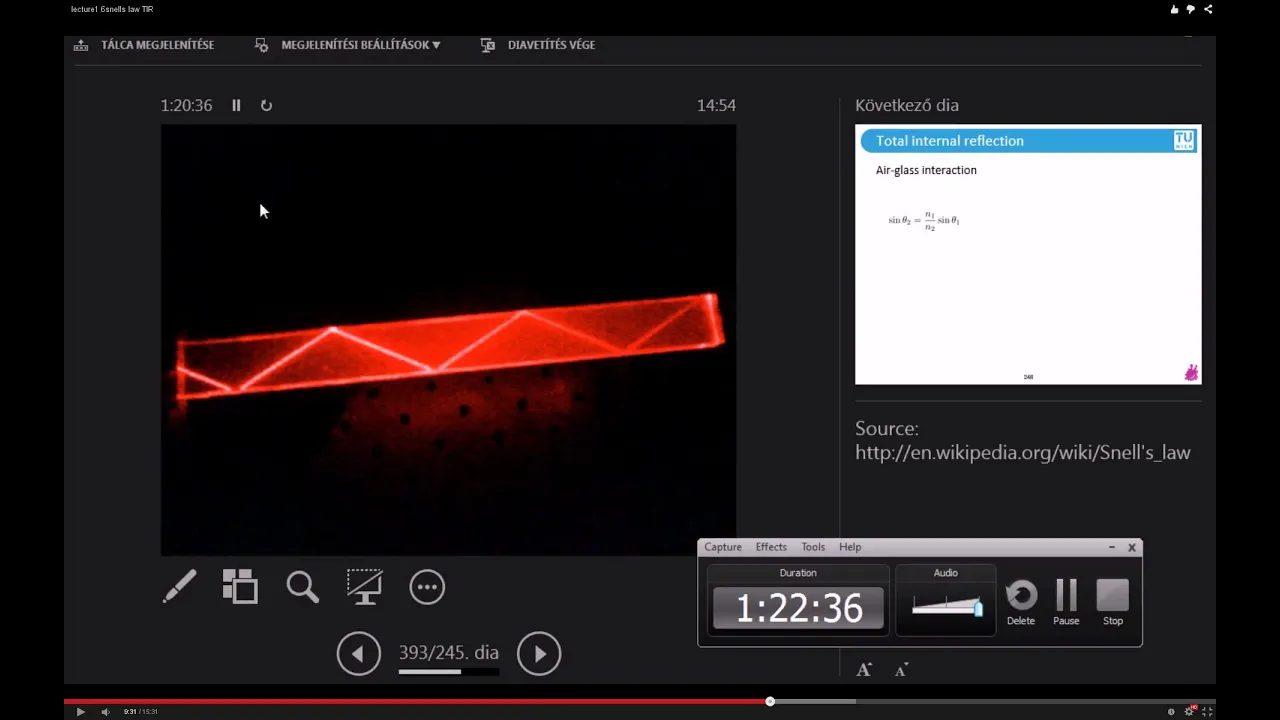
- Why this video: This video uses advanced 3D visual rendering models to demonstrate how Snell's Law functions when light transitions between mediums of varying optical densities. It visually maps out phase changes and the bending behavior of light beams.
- Knowledge Checkpoint:
- Write out the equation for Snell's Law () and define the refractive index .
- Explain why light bends toward the normal when entering a denser optical medium ().
- Mathematically derive the critical angle limit where refraction transitions into internal reflection.
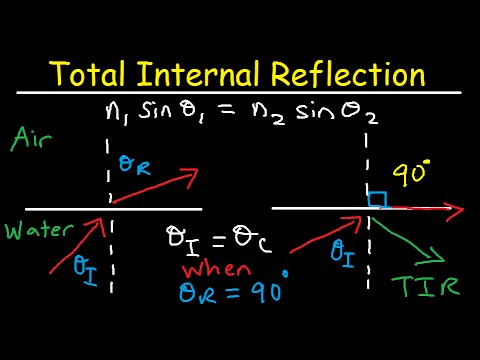
- Why this video: This video offers highly detailed physics problems and step-by-step mathematical calculations for solving complex scenarios involving total internal reflection, index boundaries, and critical angles.
- Knowledge Checkpoint:
- Calculate the critical angle () for any two given media.
- Solve multi-layer refraction problems step-by-step using Snell's Law.
- Identify the physical conditions required for Total Internal Reflection to occur.

- Why this video: This segment is highly useful for mastering the relationship between wave speed, wavelength, and the index of refraction across different mediums.
- Knowledge Checkpoint:
- Calculate refractive index using the velocity ratio: .
- Explain why wave frequency remains constant when light enters a new medium while speed and wavelength change.
Module 2: Mirrors, Lenses, and Image Formation
This module transitions from flat boundaries to curved optical elements. You will study ray tracing techniques for concave and convex elements, analyze virtual versus real images, and derive the thin lens equation and the critical Lensmaker's Formula.
Recommended Videos

- Why this video: This video builds an intuitive conceptual bridge between mirrors and lenses, explaining why concave mirrors behave like convex lenses (converging elements) and why convex mirrors behave like concave lenses (diverging elements).
- Knowledge Checkpoint:
- Define the geometric centers, focal points, and radii of curvature for spherical optical surfaces.
- Map out the behavior of converging versus diverging elements on incoming parallel light rays.
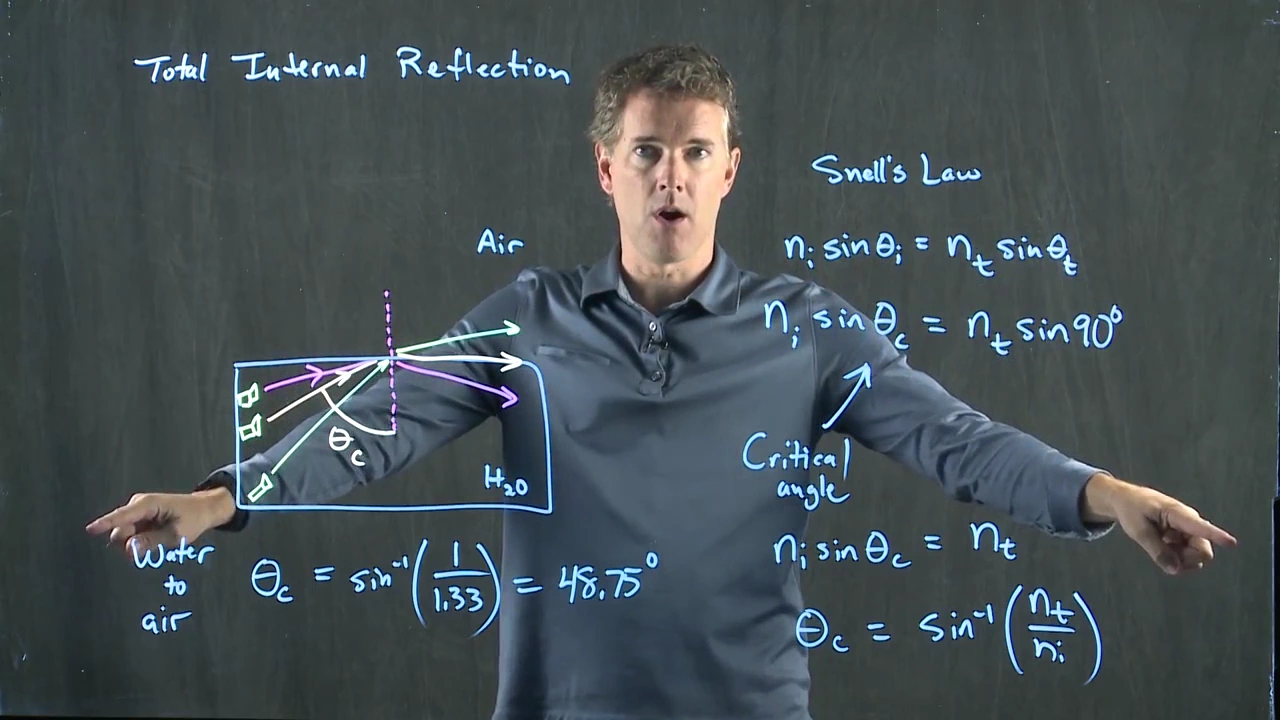
- Why this video: This concise guide teaches the three principal ray tracing rules essential to mathematically and graphically locating an image formed by thin lenses.
- Knowledge Checkpoint:
- Draw the three key rays: (1) parallel to the axis, (2) through the focal point, and (3) through the center of the lens.
- Determine whether an image is real or virtual based on the intersection of real light rays.
- Define the sign conventions for focal length , object distance , and image distance .

- Why this video: A comprehensive, step-by-step mathematical derivation of the Lensmaker's Equation from Snell's law and geometric relationships. This is crucial for engineering custom optical elements with specified focal distances.
- Knowledge Checkpoint:
- Derive the thin lens refractive relationship at a single spherical boundary.
- State and write the complete Lensmaker's Equation: .
- Properly apply sign conventions to the radii of curvature and for biconvex, planoconvex, and meniscus lenses.
- Why this video: This video systematically derives the fundamental thin lens formula () using similar triangles in ray diagrams and establishes the formal magnification index ().
- Knowledge Checkpoint:
- Derive the thin lens equation from a standard ray tracing diagram.
- Compute linear magnification and state whether an image is inverted or upright based on its sign.
Module 3: Wave Optics: Wavefronts and Interference
In physical optics, light must be treated as a wave. This module covers Huygens' Principle, the physical definition of wavefronts, coherent light source mechanics, and Young's double-slit experiment.
Recommended Videos

- Why this video: Introduces the fundamental wave properties of light, establishing wavefronts as the loci of points sharing a constant phase, and outlines the geometric progression of light energy in physical space.
- Knowledge Checkpoint:
- Define a wavefront and explain how energy propagates relative to it.
- Differentiate between spherical, plane, and cylindrical wavefronts based on source geometry.

- Why this video: This video explains how to geometrically derive the physical laws of both reflection and refraction (Snell's Law) using Huygens' Principle.
- Knowledge Checkpoint:
- State Huygens' Principle regarding secondary wavelets.
- Draw the geometric wavefront diagrams that prove the Law of Reflection and Snell's Law.

- Why this video: A classic introduction to the foundational experiment demonstrating the wave nature of light, detailing the constructive and destructive superposition of light waves.
- Knowledge Checkpoint:
- Explain how spatial coherence enables stable, observable interference patterns.
- Sketch the path difference geometries from two slits to a distant screen.

- Why this video: Provides rigorous mathematical derivations of path differences, phase differences, and fringe width parameters essential for calculations in wave optics.
- Knowledge Checkpoint:
- Derive the mathematical condition for constructive interference () and destructive interference ().
- Calculate the fringe width () given the slit spacing and screen distance .
Module 4: Optical Instruments and System Aberrations
This module covers the physics of optical systems, focusing on the biophysics of the human eye, magnification mathematics, simple and compound microscopes, astronomical telescopes, and image degradation due to optical aberrations.
Recommended Videos
- Why this video: This comprehensive session covers the biophysics of the human eye as an active optical system, detailing the five primary anatomical components and optical accommodation mechanics.
- Knowledge Checkpoint:
- Describe the optical roles of the cornea, crystalline eye lens, iris, and ciliary muscles.
- Explain eye accommodation: how ciliary muscles alter lens curvature to shift focal length.
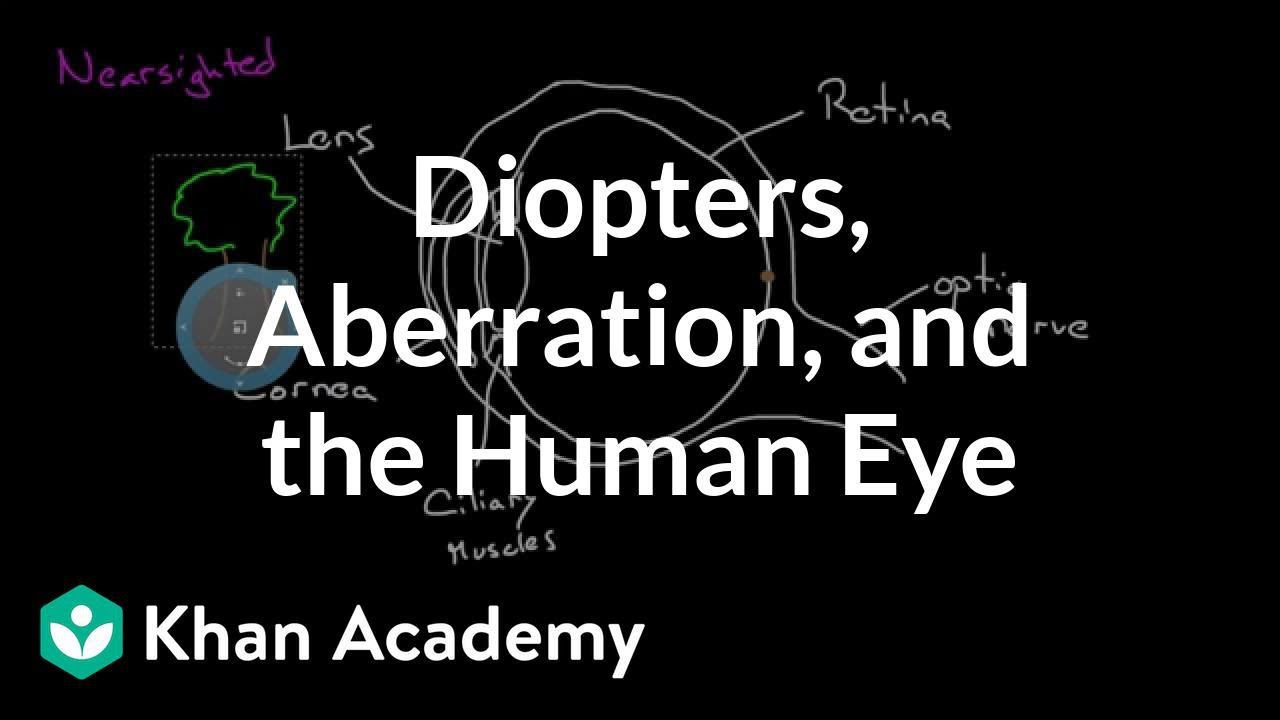
- Why this video: This video bridges physical optics, diopter power scales, eye defects (like myopia and hyperopia), and spherical lens aberrations.
- Knowledge Checkpoint:
- Define optical lens power in diopters ().
- Diagnose myopia (nearsightedness) and hyperopia (farsightedness) based on image focal points relative to the retina.
- Prescribe corrective converging or diverging lenses for vision correction.

- Why this video: This video explains how the two-lens system of a compound microscope works, showing how the objective lens and eyepiece combine to produce highly magnified images.
- Knowledge Checkpoint:
- Sketch the ray trace path through a compound microscope's objective and eyepiece.
- Explain why the objective must have a short focal length relative to the eyepiece.
- Calculate the total magnification of a compound microscope system ().
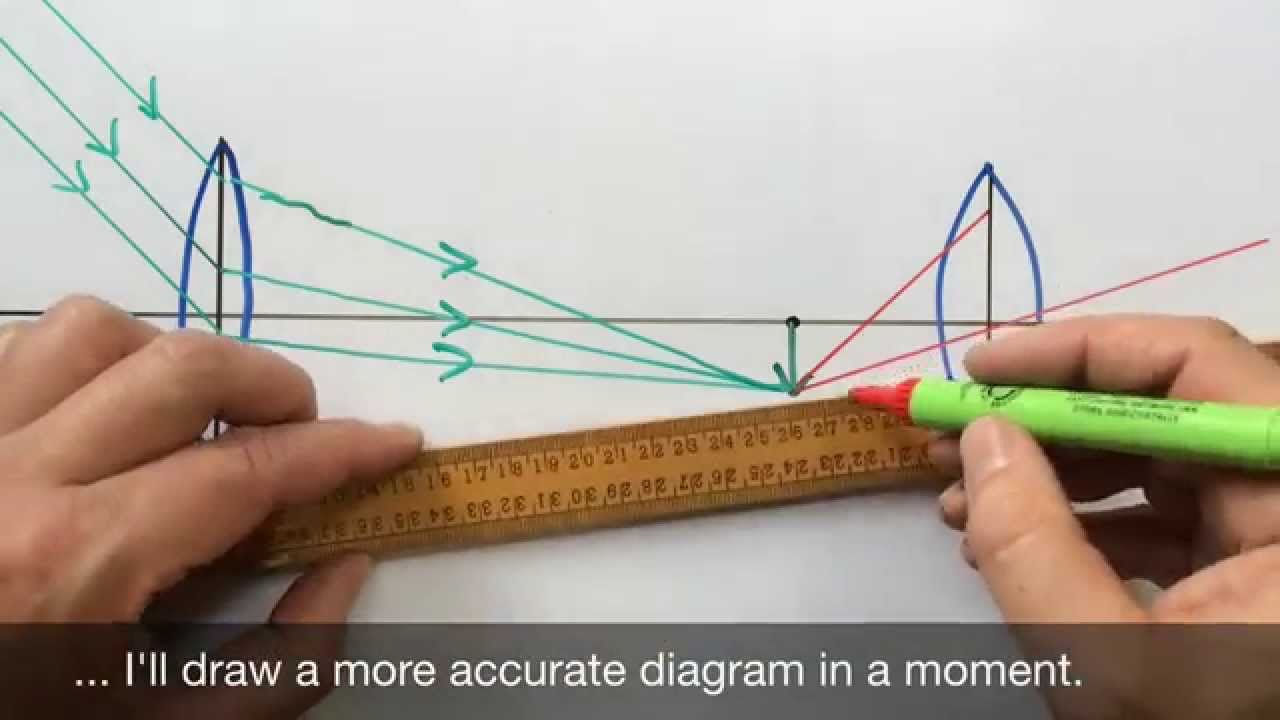
- Why this video: This video uses clear ray diagrams to illustrate how refracting astronomical telescopes collect and focus parallel rays from distant objects.
- Knowledge Checkpoint:
- Draw the ray diagram for an astronomical telescope operating in normal adjustment.
- Compute the angular magnification of a telescope using focal lengths: .
- Why this video: This video explains why physical lenses fail to form perfect images, detailing both chromatic and spherical aberrations.
- Knowledge Checkpoint:
- Distinguish between spherical aberration (shape-related) and chromatic aberration (wavelength dispersion-related).
- Explain how doublet and aspheric lenses are designed to correct these aberrations.
Module 5: Modern Optical Engineering & Wavefront Sensing
This advanced module covers contemporary optical engineering, including Fourier optics, adaptive optics (AO), active wavefront sensing using Shack-Hartmann instruments, and the propagation physics of laser systems.
Recommended Videos

- Why this video: This video addresses key curriculum gaps in active wavefront sensing, showing how a Shack-Hartmann sensor operates in tandem with deformable mirrors to measure and correct atmospheric aberrations in real-time.
- Knowledge Checkpoint:
- Describe how a Shack-Hartmann lenslet array maps local wavefront slopes to a photodetector array.
- Explain how deformable mirrors receive error signals to dynamically reconstruct flat wavefronts.

- Why this video: This video addresses the gap in laser beam dynamics by breaking down the fundamental parameters of Gaussian beam propagation.
- Knowledge Checkpoint:
- Define the beam waist , Rayleigh range , and divergence angle of a Gaussian laser profile.
- Calculate beam radius and radius of curvature at any point along the optical axis.
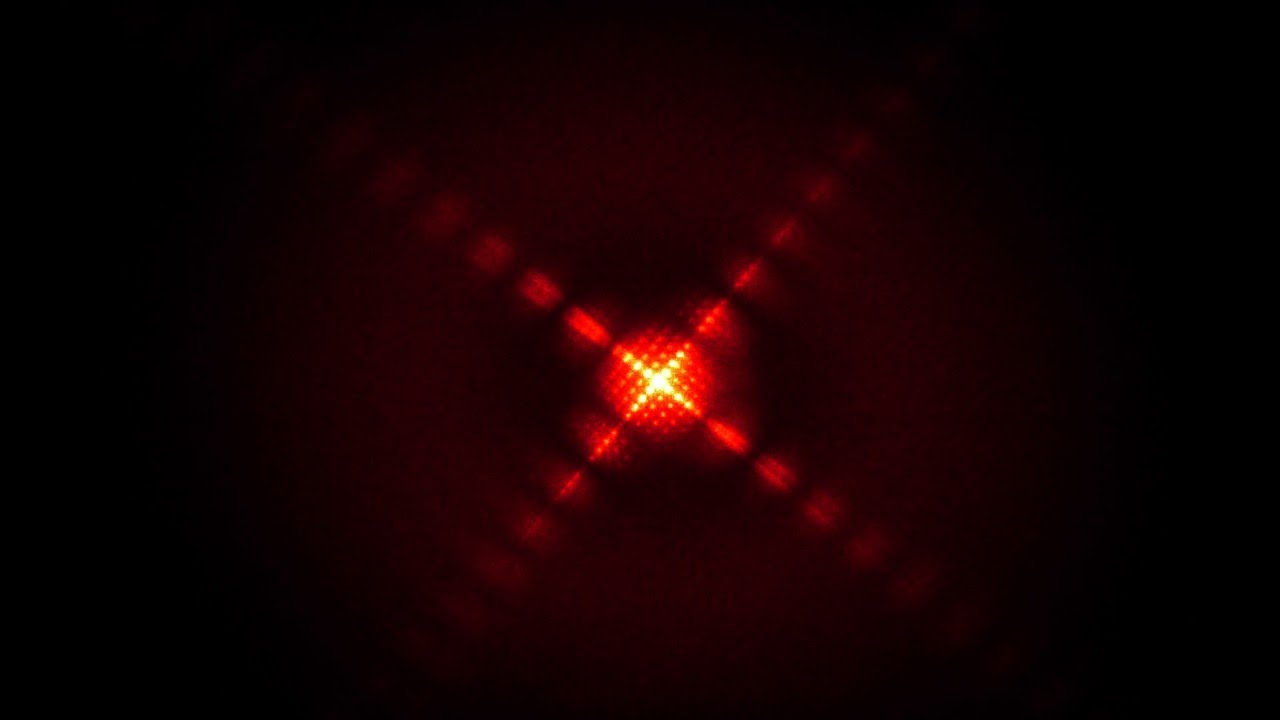
- Why this video: A brilliant, hands-on introduction to Fourier Optics. It demonstrates how a lens naturally computes a 2D spatial Fourier Transform, and shows how to build a 4F correlator to filter image frequencies.
- Knowledge Checkpoint:
- Explain how a lens converts spatial coordinate configurations into spatial frequency spectra.
- Design a spatial filtering mask to remove high-frequency noise from a 2F focal plane.
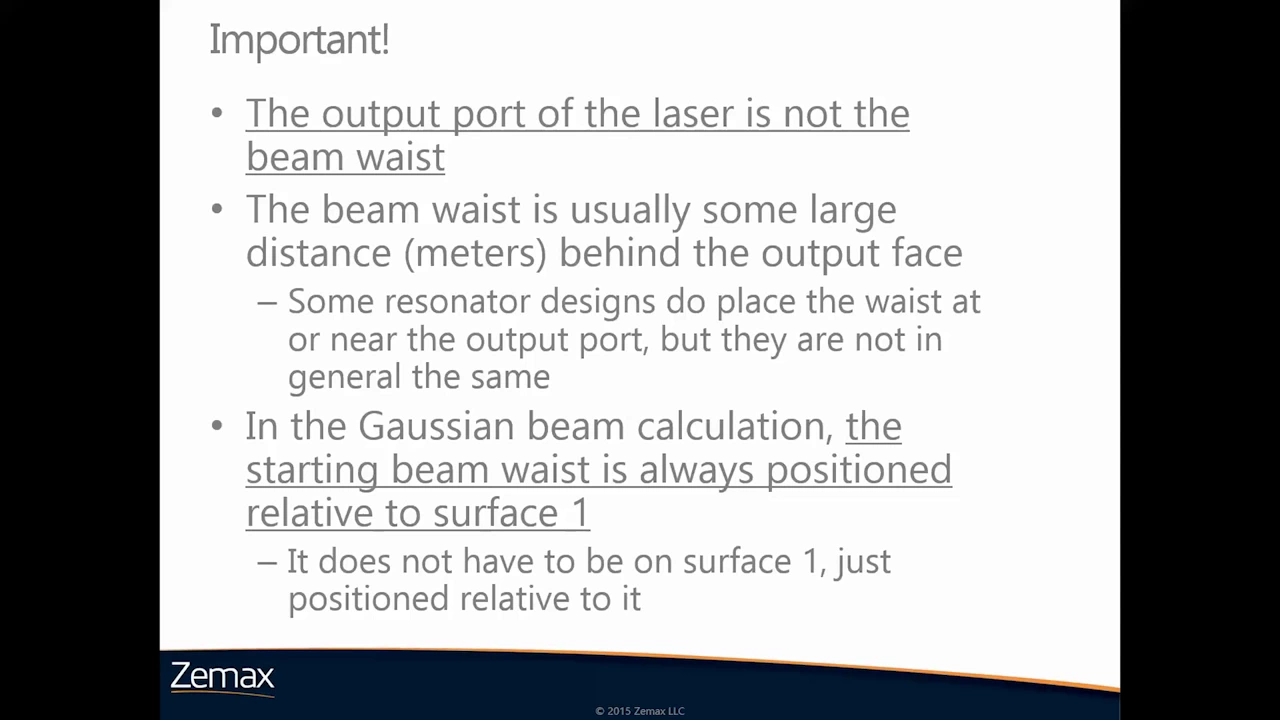
- Why this video: This engineering webinar demonstrates how optical CAD tools design and model complex laser systems using both ray tracing and physical optics propagation algorithms.
- Knowledge Checkpoint:
- Contrast standard geometric ray tracing approximations with wave propagation modeling.
- Identify key alignment challenges encountered when collimating and expanding laser systems.
Course Map
This flowchart maps the recommended learning progression and module dependencies:
Key People Index
- Willebrord Snellius (Snell) [1580–1626]: Dutch astronomer and mathematician who formulated the mathematical law of refraction describing the ratio of incident and refracted angles.
- Christiaan Huygens [1629–1695]: Dutch physicist who proposed the wave theory of light, establishing that wavefront points act as sources of secondary wavelets.
- Thomas Young [1773–1829]: English polymath who demonstrated the wave nature of light through his double-slit interference experiments.
- Roland Shack & Ben Platt [1971]: Optical scientists who developed the Shack-Hartmann wavefront sensor, adapting Johannes Hartmann's screen test into a modern lenslet-based sensor array.
Final Self-Assessment
Complete this comprehensive self-assessment to verify your mastery of geometrical and physical optics:
- Snell's Law Calculation: Can you calculate refractive angles and identify critical boundaries for total internal reflection?
- Lensmaker's Formula: Are you able to calculate the focal length of an asymmetric biconvex lens given its material index and surface radii of curvature?
- Thin Lens Equation: Can you algebraically manipulate to find image distances, and determine if an image is real or virtual?
- Huygens' Construction: Can you geometrically construct a refracted wave front transitioning from a fast medium into a slow medium?
- Double-Slit Parameters: Can you calculate the spatial frequency of interference fringes on a screen if the source wavelength is changed?
- Biophysics of Vision: Can you sketch how myopia and hyperopia focus light relative to the retina, and specify the correcting lens profiles?
- Compound Magnification: Can you calculate the total magnification of a two-lens compound microscope based on objective and eyepiece parameters?
- Aberration Solutions: Can you explain why chromatic aberration occurs in refracting lenses but not in reflecting mirrors, and how to correct it?
- Shack-Hartmann Principles: Can you explain how local wavefront tilts translate to spot displacements on a photodetector array?
- Gaussian Beam Propagation: Can you determine the beam radius of a laser beam at twice its Rayleigh range?