





![Lecture-8 Ultrafast Laser Course (from basics of laser to ultrafast laser pulses) [05-10-25]](https://i.ytimg.com/vi_webp/LmQTBqHGi04/maxresdefault.webp)








![دورة المراجعة النهائية لباك 2024 - الموضوع التحضيري رقم [15] - #الأستاذ_قويسم_الخليل](https://i.ytimg.com/vi_webp/NJpnEklXYgc/maxresdefault.webp)
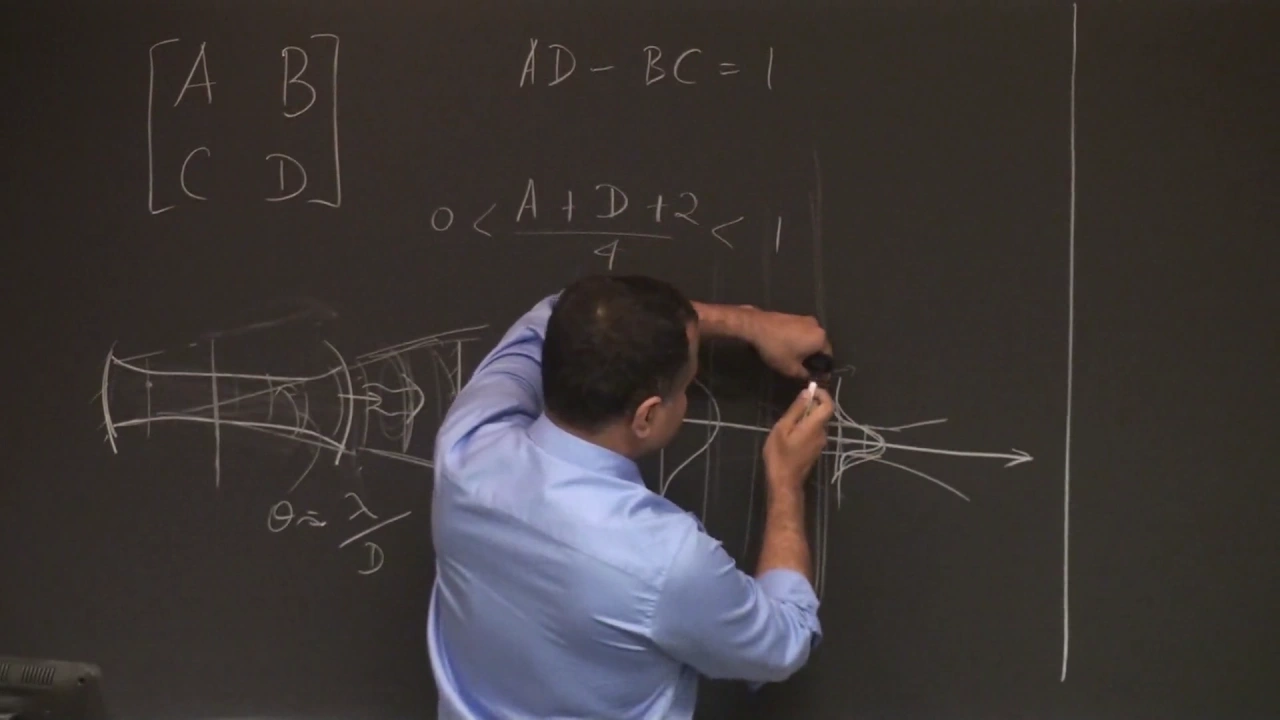
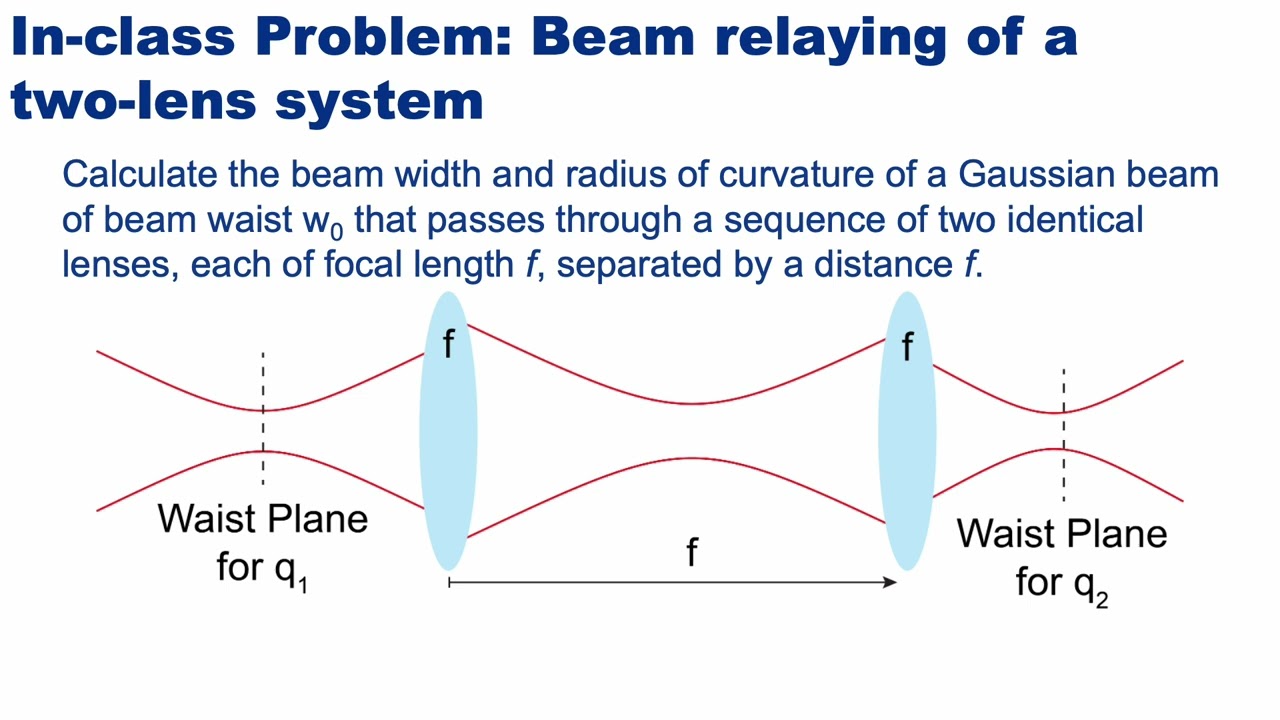

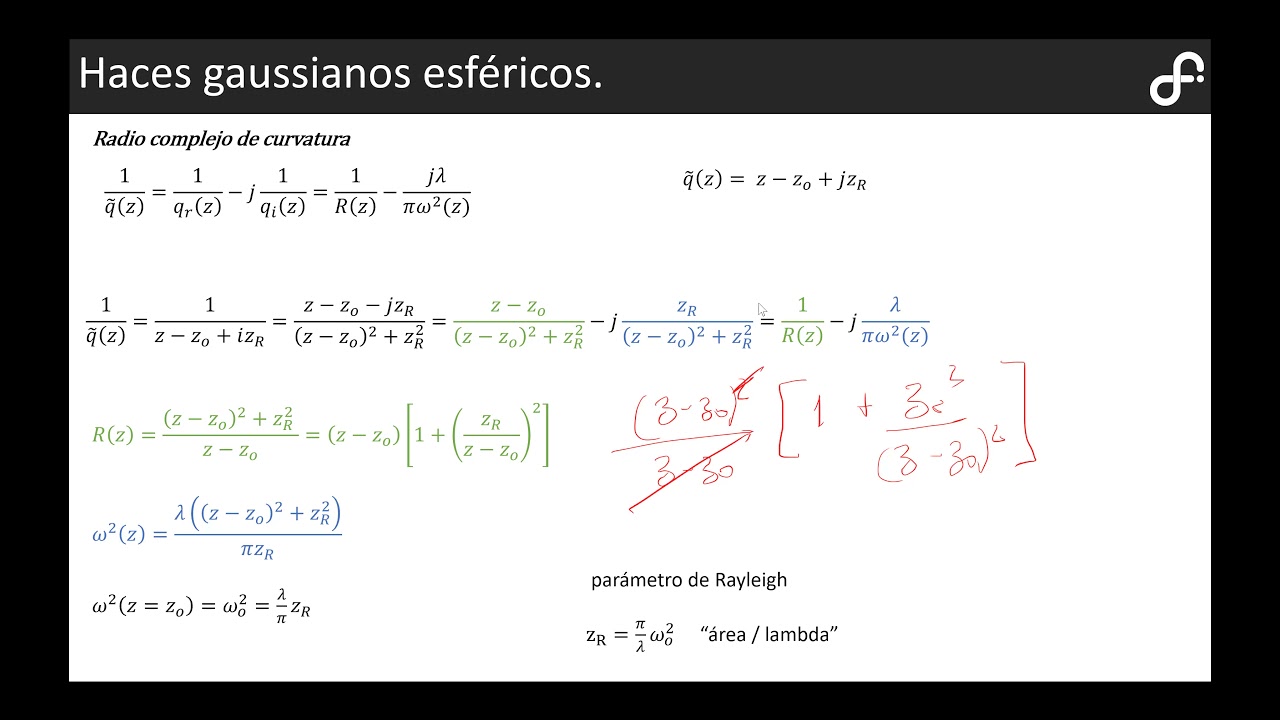





A Gaussian beam is fully described by three fundamental parameters (beam waist W₀, wavelength λ, and position z) plus two derived parameters (beam radius W(z) and radius of curvature R(z)), where the beam waist represents the minimum spot size at z=0, and the Rayleigh range Z₀ marks the transition point where the beam shifts from planar wavefronts to diverging spherical wavefronts.
Gaussian Beam Propagation: Parameters and Calculations Explained
Added:Fundamental concepts of wave optics, including wave propagation, phase, and the wave equation derived from Maxwell's equations.
Basic laser physics, specifically the concept of optical coherence and the definition of a transverse electromagnetic (TEM00) mode.
The distinction between geometric (ray) optics and physical (wave) optics, including the physical limitations imposed by diffraction.
Mathematical familiarity with complex numbers and basic calculus, which are used to define the complex beam parameter.
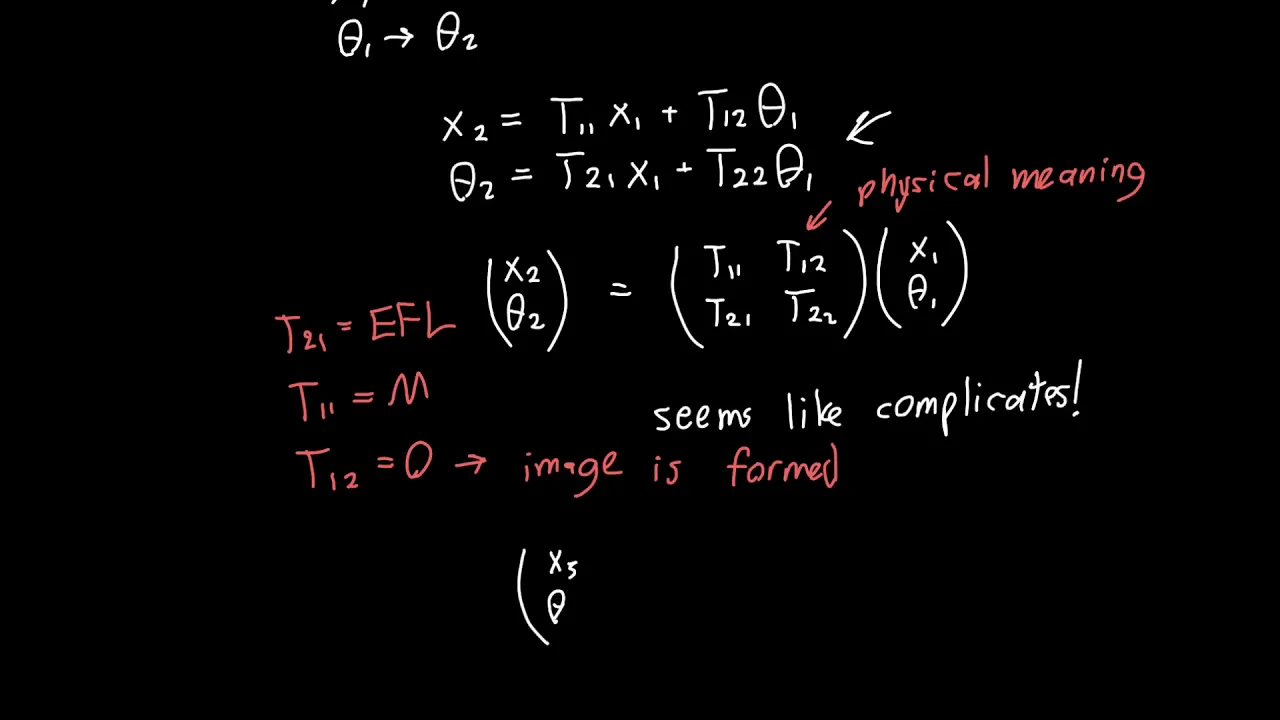
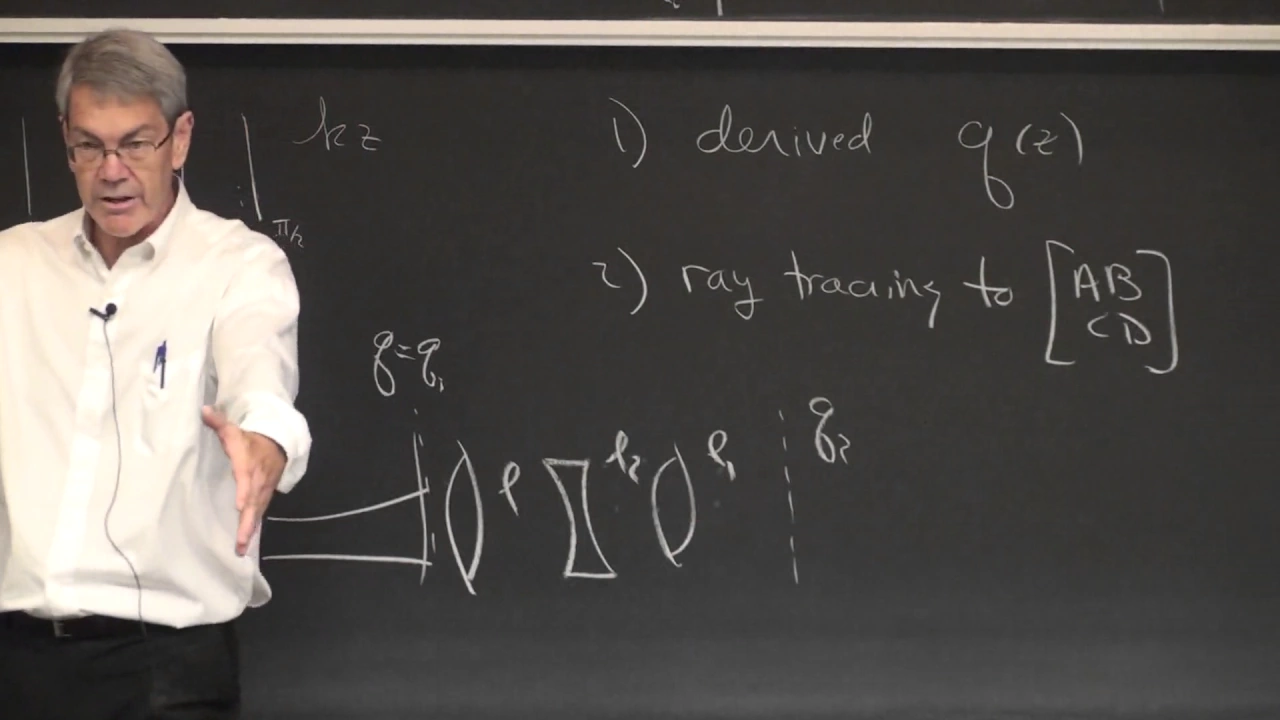
The ABCD matrix formalism (ray transfer matrix analysis) for propagating Gaussian beams through complex optical systems and lenses.
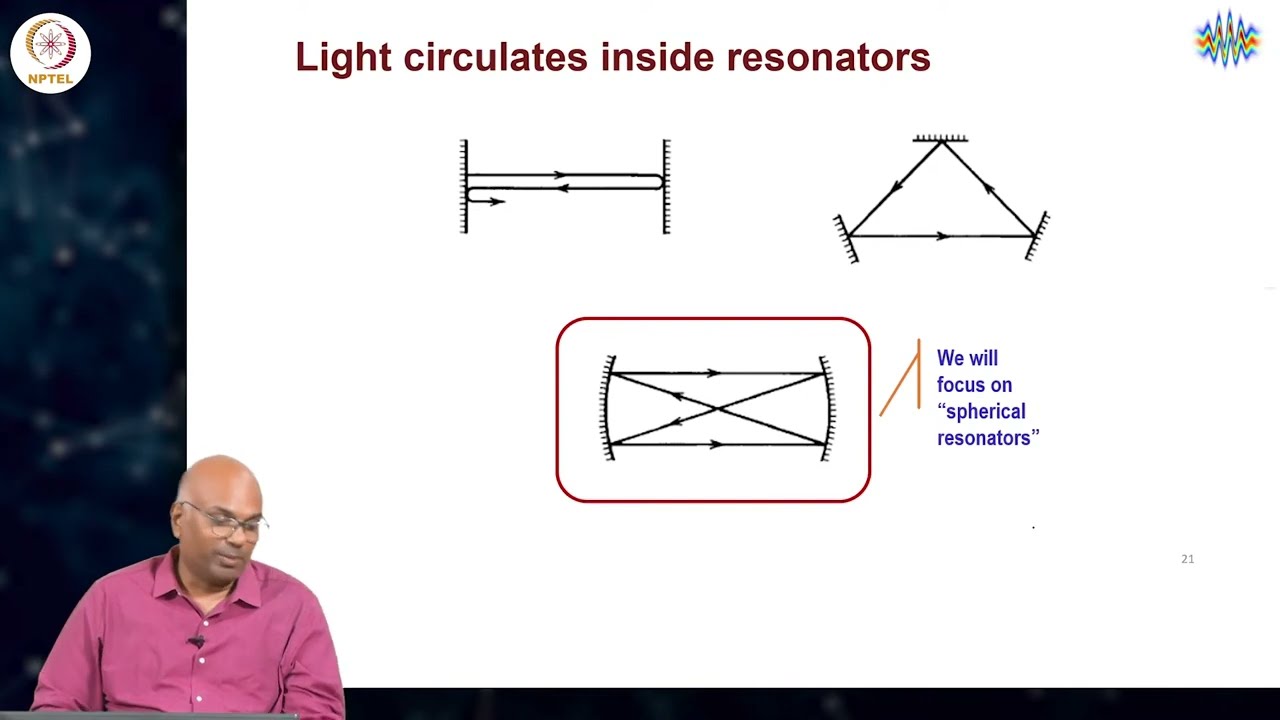
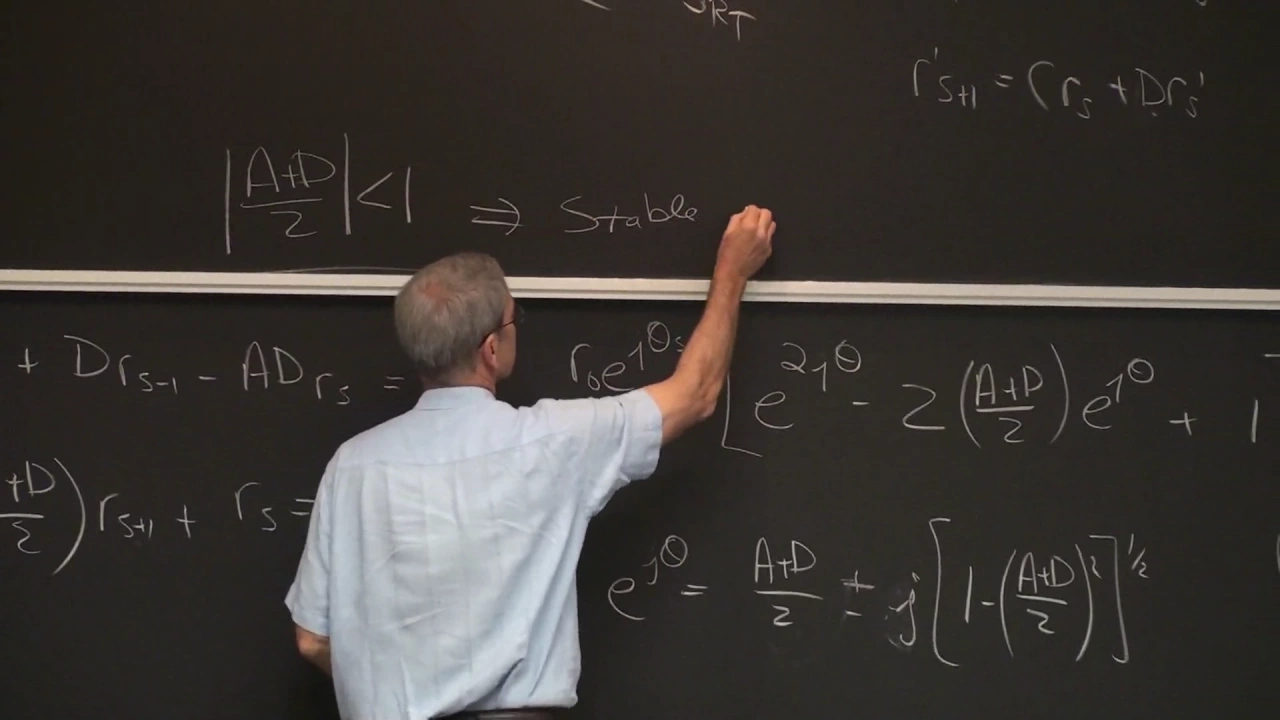
Optical resonator design and cavity stability analysis, applying Gaussian beam parameters to define stable modes within laser cavities.
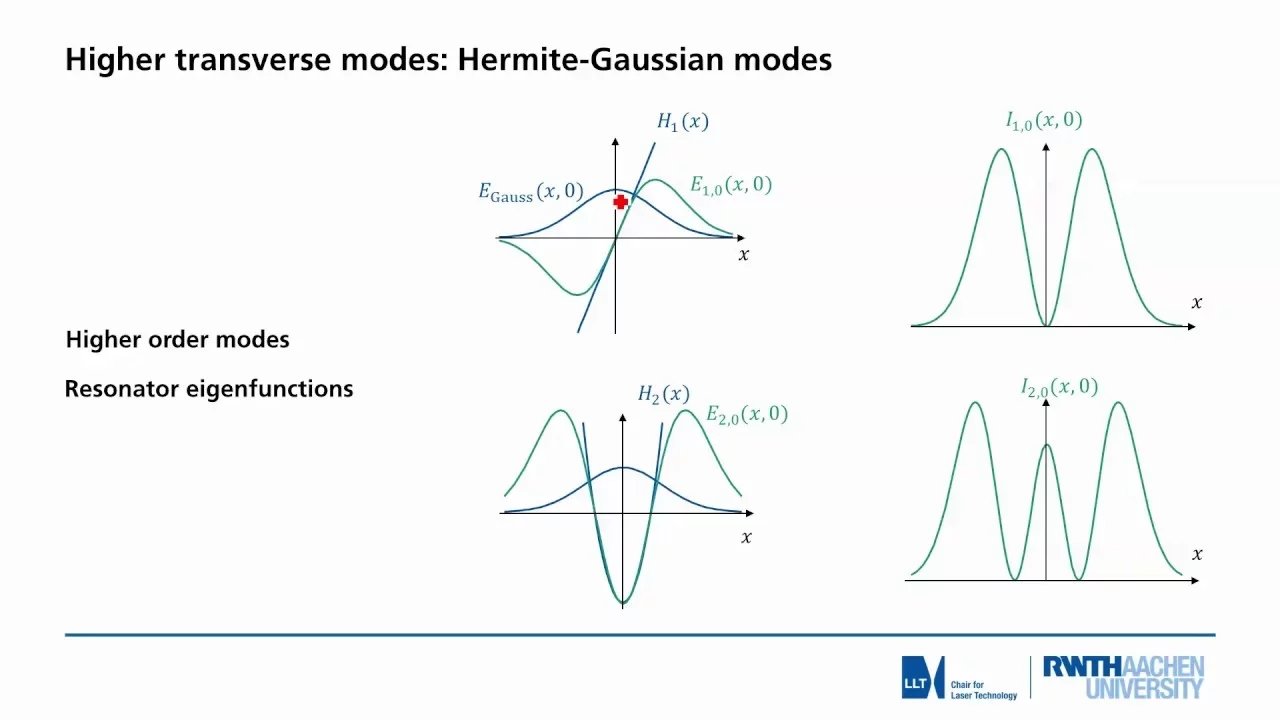
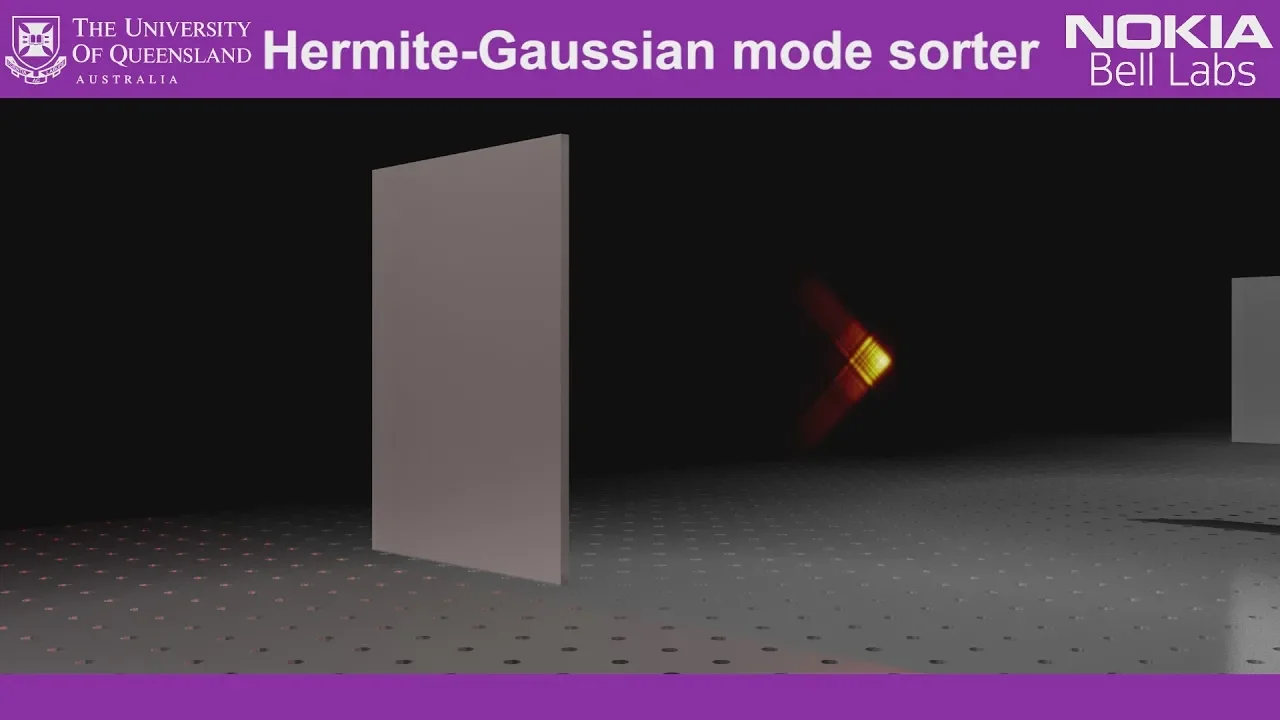
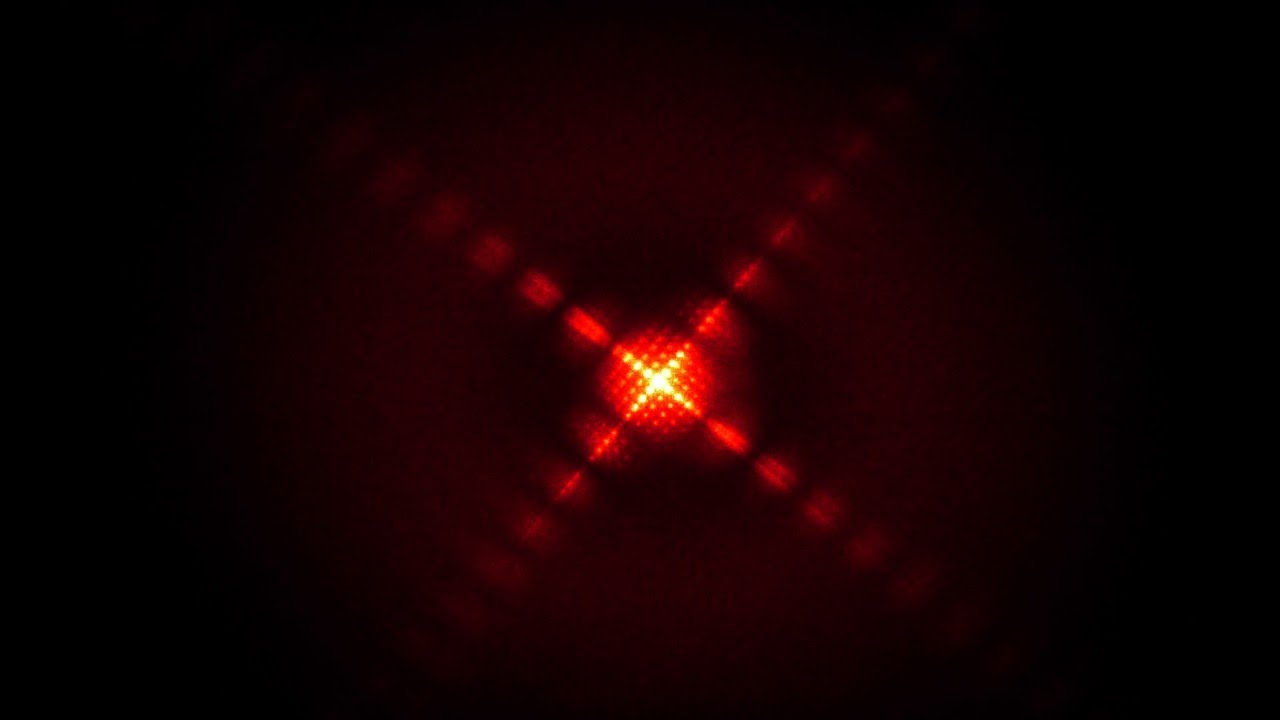
Higher-order transverse modes, including Hermite-Gaussian (HG) and Laguerre-Gaussian (LG) beam profiles and their propagation characteristics.
Practical applications in laser-to-fiber coupling, focusing on calculating mode-matching and coupling efficiency into single-mode fibers.
65.3K views431likes6:54Original Release: 2009-01-30
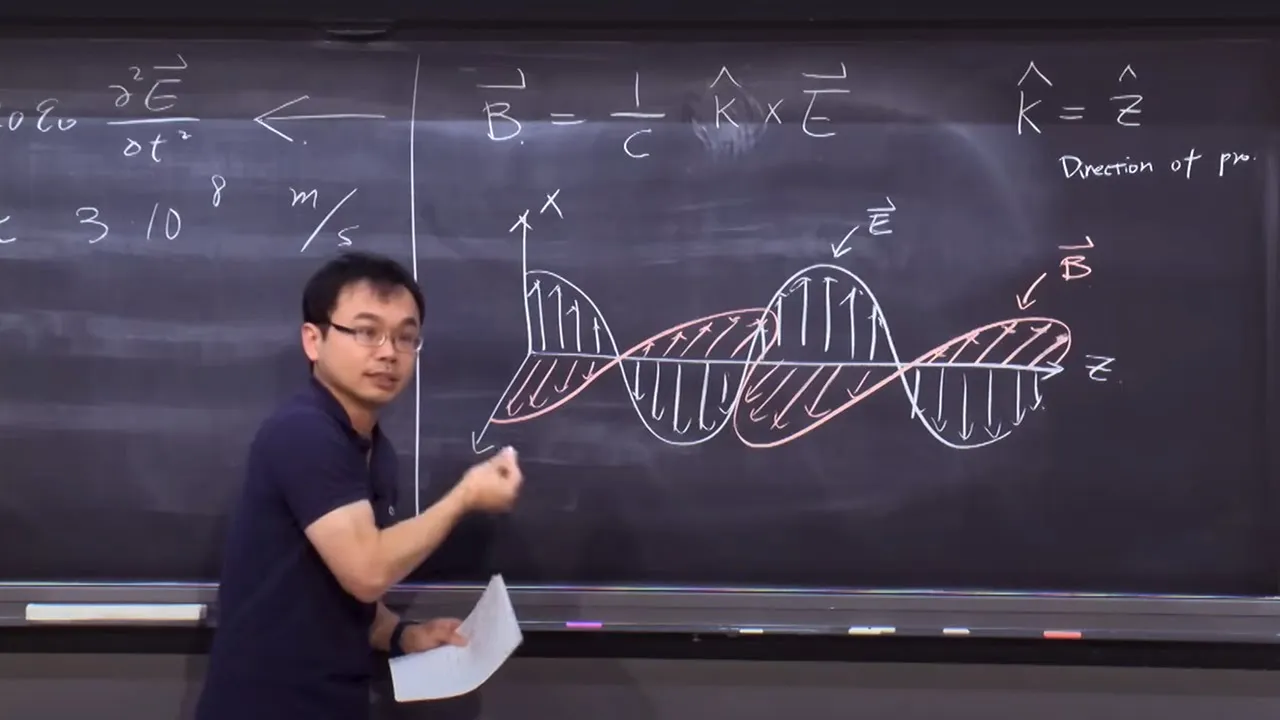
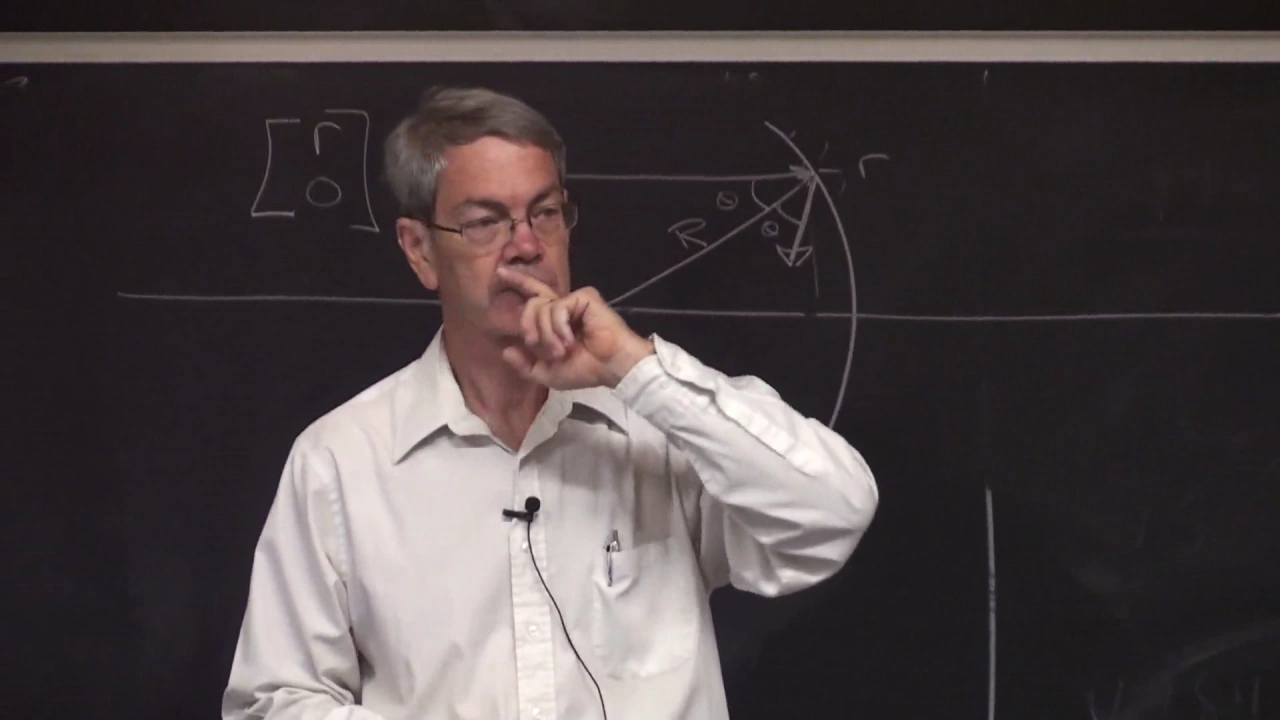
hi welcome to the next of our series of manyi lectures uh as promised we're going to leave the mathematics a little bit and not do any derivations and try to go on and get some idea of what this rather complicated looking expression for a gaussian beam really means and how to do some calculations with it particular in regards to how a gausin beam propagates so at the end of the last class we'd come up with this expression which had three parts uh an amplitude Factor that essentially says what the shape of the beam is and how that varies with the radial Direction R and also with the Z Direction Z and there's R um and this is what we're going to be dealing with most this is most what we care about uh for the simple reason that we can certainly measure the power or amplitude of a um Optical beam but the phase factors which come next can be very very difficult to measure at Optical frequencies it's not to say they're not important but for day-to-day stuff we don't really deal with Optical phase that much but there are two phase factors one is the longitudinal phase and as we saw before a laser beam varies pretty much like a plane wave with the except exception of this tangent Factor but remember that this Factor can only go from minus pi to Pi in value no matter what value Z has and compared to K * Z which will be millions or billions uh one Pi doesn't really make that much of a difference another factor is the radial phase factor which essentially shows how the phase of the wave changes in the radial direction as we go out and essentially says how curved the phase front of the beam is and this can have applications in interferometry and other things we're not going to cover in this class um and is important to remember for that reason but we're not going to use it that much so let's go and see how we use this equation let's go and really sort of dissect the gaussian beam if you will which describes laser beam propagation um what we see right here what we see right here is the parameters of the Gan beam and the first parameter is z where you are on the beam and Z of course is is out in this direction Z and we are starting right here at Z equals 0 and we Define Z equal 0 to be the place where the diameter of the beam is the smallest or alternately where the waves are plain waves and Z is measured and defined to be at the beam waist W KN so Z is one of the parameters of our gaussian beam where you are on the laser beam another parameter of course is the beam waist W no um and that's a fundamental property of the gussian beam W nod is where the beam has its smallest spot size if you're talking about propagation of Gan beam and the definition of w is if the peak amplitude of the of the field is defined to be one then the distance from the center out in the radial Direction where the field is 1 over e of its original value is defined to be W KN so it's essentially the one over point of the beam in terms of the field another parameter of course that we need is the wavelength of the light and remember the wavelength is just one period in space or one spatial period so it's the difference between phase front shown there and you're usually given this each laser has a particular wavelength that you're going to be given in a problem another parameter is W of Z and this is how the beam waist changes with z and you notice we can describe this if we know the wavelength and we know the starting beam ways W no and the wavelength and where we are on the beam we can calculate a new beam waste by this formula and essentially if you think about the beam propagating out here and again we take the ampl to be one at this point the 103 point in amplitude right here is defined to be W of Z at that particular Point finally of course you have the radial phase Factor R and let me go ahead and get a green pin and so this radial phase Factor essentially is essentially the length of this Arrow R of Z the distance from the beam waist where the beam started and it's the radius of the spherical phas fronts at some distance a long way away from the beam and the uh radius of curvature of those phas fronts is given by this formula right here R ofz which of course has the beam waist the wavelength and where you are on the beam and so in review the position Z on the beam the beam waist W no the wavelength are the three fundamental parameters and then we Define two more parameters the waist is a function of position and the radial phase is a function of position and these five parameters or if you want to get technical about the three fundamental parameters z w KN and Lambda are all you need to define a gaussian beam so we've gone from that horrible convoluted derivation and formula to a couple parameters that describe any beam so let's take a look at a couple of examples here um oh and we've got one more parameter let's not forget that uh Z nood is used in many formulas and Z no is given by this formula up here and Z no you can think of as the turning point in a bod plot it's roughly the point where the beam goes from being plain waves and traveling in a perfectly straight line to where the beam starts to turn and angle outward and propagate some very small propagation angle Theta and we use this factor a lot in our calculations and certainly if you calculate Zod uh your calculations are a lot easier to do and it's essentially where the beam goes from going in a perfectly straight line to starting to spread out so we've got three regions of Interest we can describe with a gaussian beam um two sort of extremes of our formula and one Middle Point one of the extremes of course is very close to the waist uh so Z is much much less than Z no in this case W of Z does not depend on Z it's approximately equal to W no and as I said before close to the waist the beam doesn't spread out goes perfectly straight and R ofz the radius of curvature is equal to Infinity because these waves close to the beam have planer face fronts and the acolyte canine plain waves
Up Next
13:32
How Lenses Compute Fourier Transforms: The 4F Correlator Explained
@AppliedScience
153.6K views•2012-11-12

12:53
21cm Hyperfine Transition in Neutral Hydrogen: Radio Astronomy Basics
@AaronRobertParsons
12.4K views•2011-10-13

37:13
Antenna Properties and Terminology Explained | EM Theory
@kridnix
213.6K views•2013-04-17

27:14
Entropy and the Second Law of Thermodynamics Explained
@veritasium
27.5M views•2023-07-01
Related Study Plans & Knowledge Roadmaps
Structured learning paths in Physics
physics
Nuclear Physics (Decay, Fission & Reactors)
01Atomic Structure and the Binding Force
02Radioactive Decay and Half-Life
03Nuclear Fission Mechanics and Chain Reactions
+ 2 more learning modules
12h5 modules
Explore Roadmap
physics
Soft Matter (Polymers, Colloids & Rheology)
01Foundations of Soft Matter & Thermal Forces
02Polymer Physics and Macromolecules
03Colloids, Surfactants, and Self-Assembly
+ 2 more learning modules
38h5 modules
Explore Roadmap
physics
Analytical Mechanics: Lagrangian & Hamiltonian
01Mathematical Foundations: Calculus of Variations
02From Newtonian Mechanics to Constraint Dynamics
03The Principle of Least Action & Lagrangian Mechanics
+ 3 more learning modules
28h6 modules
Explore Roadmap
physics
General Relativity (Spacetime & Cosmology)
01Foundations of Relativity: Special Relativity
02The Geometry of Spacetime: Equivalence Principle & Curvature
03Einstein's Field Equations: The Mathematics of Gravity
+ 2 more learning modules
55h5 modules
Explore Roadmap