



















Adaptive optics is a technology that uses a deformable mirror and a Shack-Hartmann wavefront sensor to detect and correct optical aberrations in real-time; the system works by measuring wavefront distortions using a micro-lens array and camera, then calculating the mirror shape needed to restore the original wavefront, enabling applications in astronomy, microscopy, and biomedical imaging where light travels through distorting media.
Adaptive Optics Explained: Wavefront Correction & Microscopy
Added:Basic wave optics, including the concepts of light propagation, phase, and wavefronts.
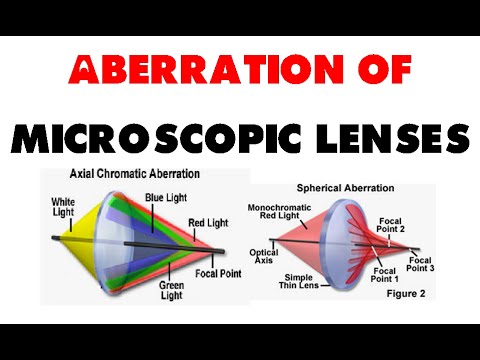
Optical aberrations, such as spherical aberration and astigmatism, and how they distort images.
Fundamentals of optical microscopy, including image formation, resolution limits, and refraction.
An understanding of basic optoelectronic components like photodetectors and standard mirrors.
Closed-loop control systems and real-time reconstruction algorithms used to calculate mirror deformations.
Application of adaptive optics in advanced microscopy modalities, such as deep-tissue multiphoton or super-resolution imaging.
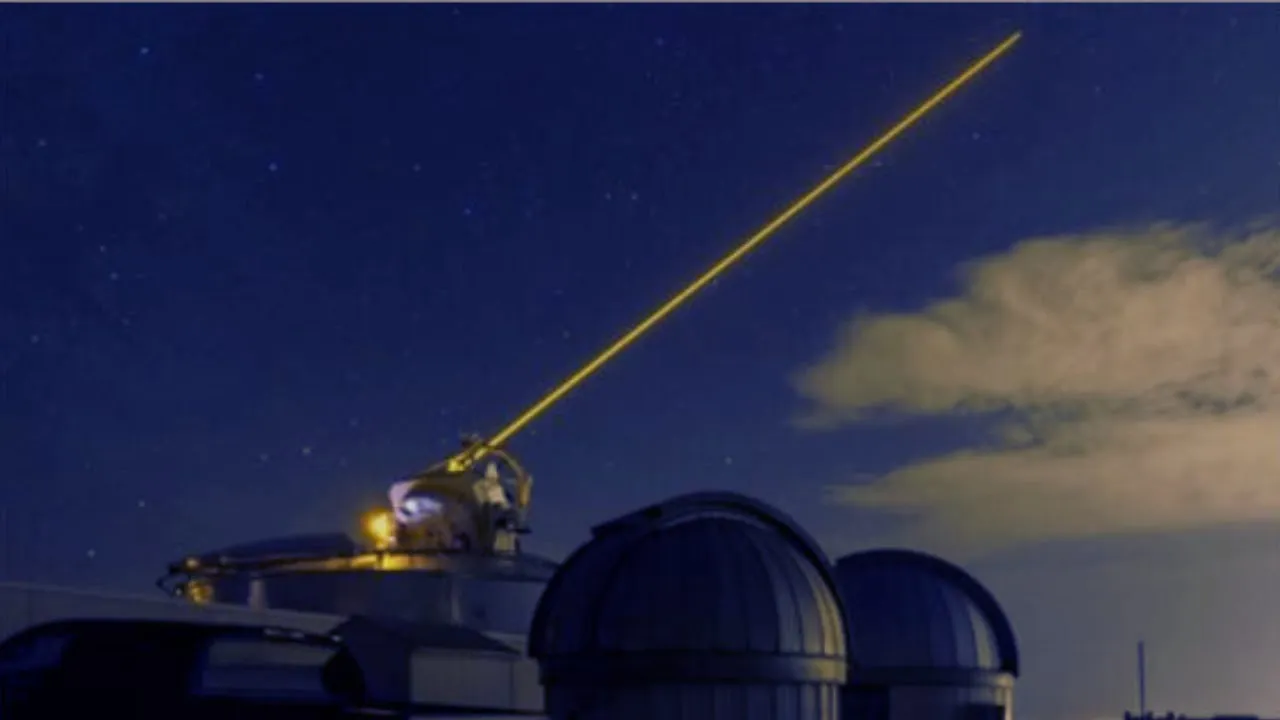
Astronomical adaptive optics, including the use of sodium laser guide stars to correct atmospheric turbulence.
Design and engineering of deformable mirrors (MEMS, piezoelectric actuators) and Shack-Hartmann lenslet arrays.
4.4K views109likes8:25Original Release: 2019-11-25
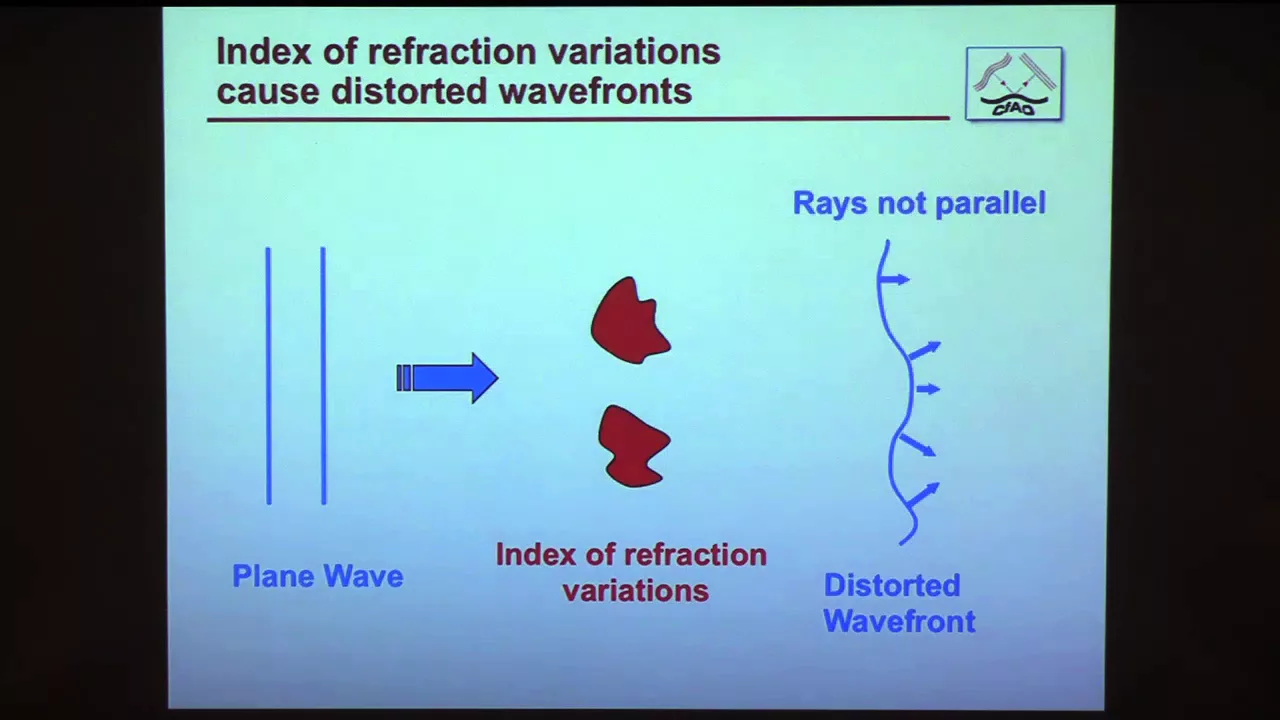
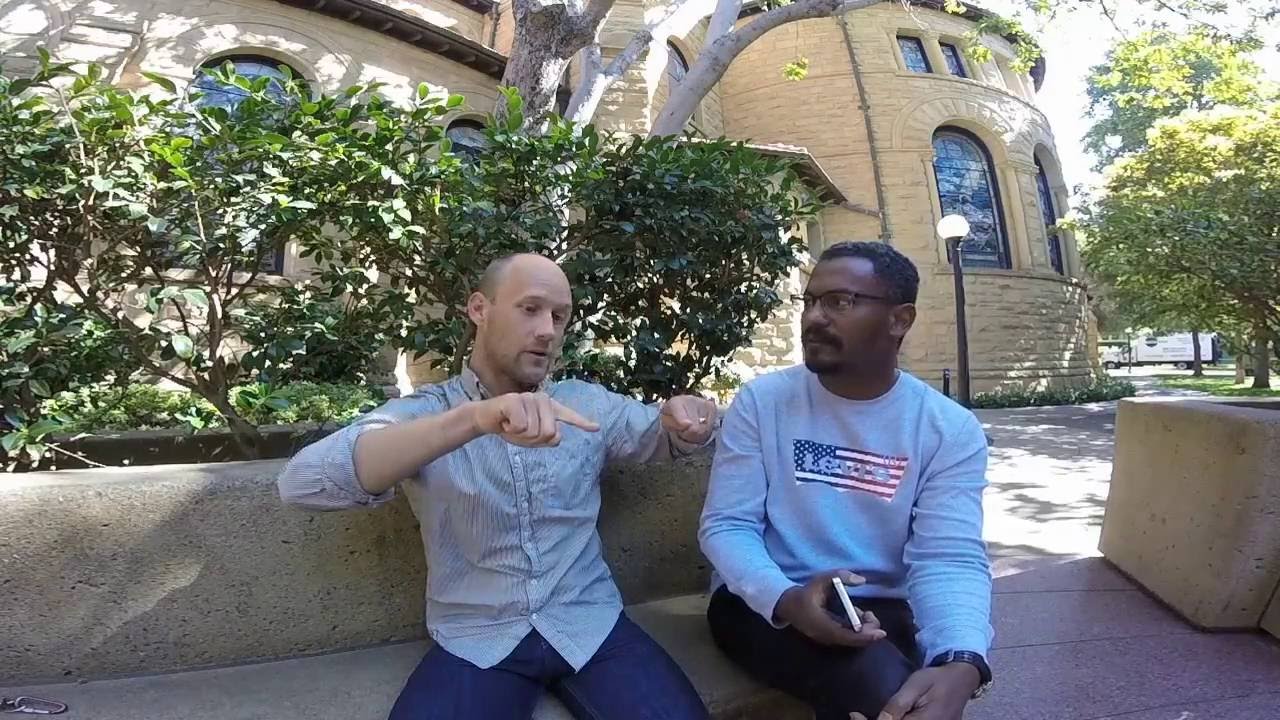
hi I'm Spencer Revere Smith hi I'm Jay how you we're here at UC Santa Barbara and as part of our work that's sponsored by the National Science Foundation and the neuron next program we're gonna tell you a little bit about adaptive optics here ChiHong has built a demo system that involves a deformable mirror and a shack Hartmann wavefront sensor and he's going to show you how this system can be used to measure optical aberrations and correct for them so how is a typical adaptive optics system setup the system start off with collimated laser beam testing serial lanes a mirror and another lens and another mirror to have enlarged and collimated laser beam in the space it means that the laser forms a plane wave with flat wavefront and these two mirrors are used to adjust the pointing direction of laser and these two lenses are used to adjust the beam size and we can have a sample in this space to destroy the waveform and mimic the wavefront is told here so that such as the changing atmosphere in the sky or the scattering samples in scattering tissue in the bio samples and tumor lenses are used to enlarge the laser beam further so that we can fit the size of a laser beam to the aperture of the deform of a mirror so that we can use the we can further use the surface area of the default of a mirror and this is the the form of a mirror that can change the shape of the direction changes shape to compensate for the waveform distortion and then this the form of arrow thwacks of the laser beam to another pair of lenses here and this length is these two lenses are used to feed the laser beam size to the exercise of the way from sensor here and then the laser is divided into two arms by this this beam splitter one armed laser is guided into the waveform sensor and another arm of laser is guided is passing through the beam splitter and can be guided into a optical system to be used such as a microscope but for now we set up a screen to block the laser so that we are able to see the laser being directly on the screen here inside the wavefront sensor there is a micro lens array and a camera and the detector the detected signal from the camera is sent to a computer underneath under the optical table here so that the shape of the waveform can be calculated and seen on the computer screen monitor here for now that if the deformable mirror is set flats acting like a regular flat mirror so that we we see the detector waveforms on a strange is also flat so that we get a collimated laser beam in a space here before the screen so for here this is the interface for us to change the shape of the deform of a mirror here shows us the the shape of deform polymer and this sliders are the delicate coefficients by change in the shape of the form of a mirror we are able to see the shape of wave form also curves either inward or outward from the center so the result is as if the laser beam is reflected by concave or convex mirrors which results in the converging or diverging laser beams for example we see on the screen of the wavefront it's curved outwards so that we are so we get divergent being on a wide screen here so by changing more dignity coefficients we are able to generate very complicated shapes of the form of a mirror so that we can see we got we get a very complicated shape of wave fronts and so that we can sew the ends up giving us very complete complicated shape of the laser paint here next I would like to show you how we can use the full chimera to compensate for the waveform distortion so first I'm gonna 0 the deform of a mirror so that the mirror becomes flat again and then I'm going to put the convex lens into the space here to mimic the waveform test holder and it is known that the convex lenss can curve the wavefront inward from the center which will result in converging like laser beam or focusing laser beam and as predicted we can see the wave France becomes inward curves and also we have focusing laser being in space here so now by changing the default the focusing coefficients of the deform of mirror you can see a flat wave form is gradually restored so it shows that the distortion induced by the convex lens can be compensated by changing the shape of the deform bottomer as a result we got we can bring the we can get the collimated laser beam back in a space here so I just show you how we can use the form of a mirror to compensate for the waveform distortion finally we can come in the real application we can connect the wavefront sensor with the deformable mirror together to form a closed loop in this way the wavefront sensor can tell the deformable mirror to what shape it can change it to so that he can the deform mirror can compensate for the away from distortion in summary we have had the brief introduction to adapt adaptive optics and it's applications the key components to detect and compensate for the waveform distortion are discussed then we built a typical adaptive optical system to show the basic layout we hope that this demonstration provides a better understanding of adaptive optics you
Up Next

6:54
Gaussian Beam Propagation: Parameters and Calculations Explained
@kridnix
65.3K views•2009-01-30

12:53
21cm Hyperfine Transition in Neutral Hydrogen: Radio Astronomy Basics
@AaronRobertParsons
12.4K views•2011-10-13

32:32
NMR Spin Physics I: Zeeman Effect, Resonance Condition & Larmor Frequency
@nptel-indianinstituteofsci8064
2.3K views•2024-01-17

27:14
Entropy and the Second Law of Thermodynamics Explained
@veritasium
27.5M views•2023-07-01
Related Study Plans & Knowledge Roadmaps
Structured learning paths in Physics
physics
Nuclear Physics (Decay, Fission & Reactors)
01Atomic Structure and the Binding Force
02Radioactive Decay and Half-Life
03Nuclear Fission Mechanics and Chain Reactions
+ 2 more learning modules
12h5 modules
Explore Roadmap
physics
Soft Matter (Polymers, Colloids & Rheology)
01Foundations of Soft Matter & Thermal Forces
02Polymer Physics and Macromolecules
03Colloids, Surfactants, and Self-Assembly
+ 2 more learning modules
38h5 modules
Explore Roadmap
physics
Analytical Mechanics: Lagrangian & Hamiltonian
01Mathematical Foundations: Calculus of Variations
02From Newtonian Mechanics to Constraint Dynamics
03The Principle of Least Action & Lagrangian Mechanics
+ 3 more learning modules
28h6 modules
Explore Roadmap
physics
General Relativity (Spacetime & Cosmology)
01Foundations of Relativity: Special Relativity
02The Geometry of Spacetime: Equivalence Principle & Curvature
03Einstein's Field Equations: The Mathematics of Gravity
+ 2 more learning modules
55h5 modules
Explore Roadmap