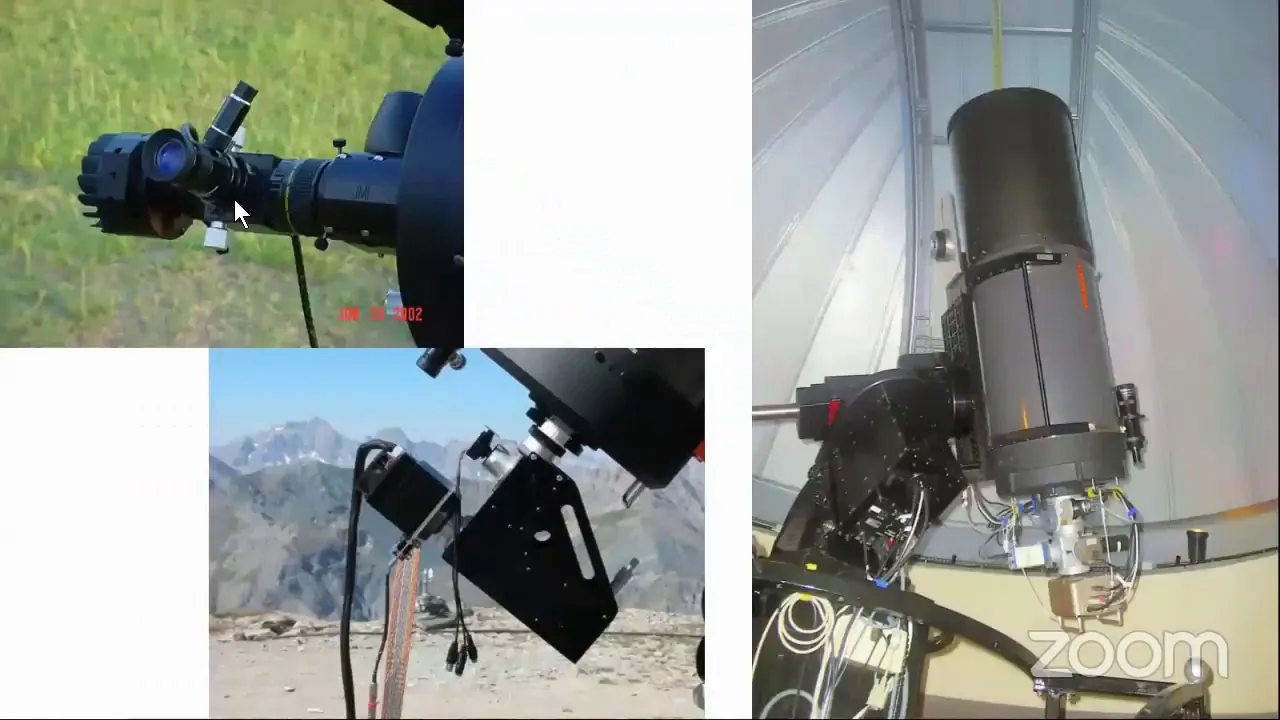

















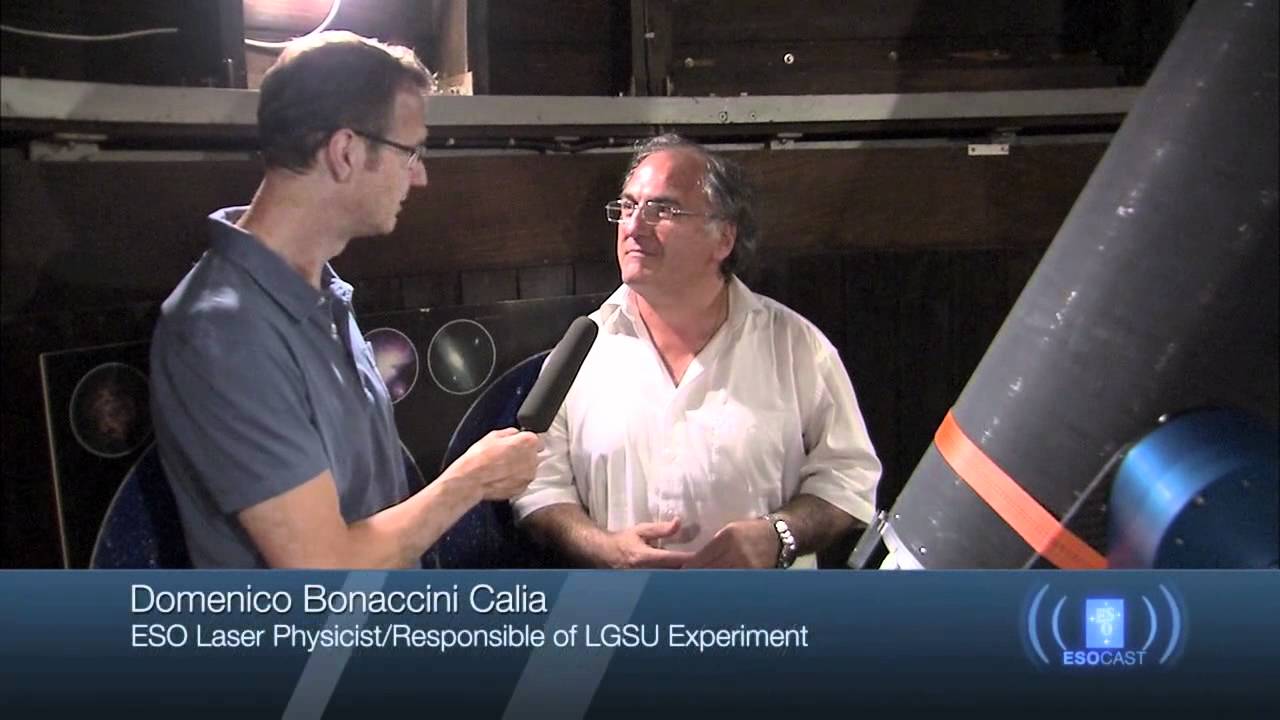


The sodium laser guide star is a revolutionary astronomical technology that creates artificial stars by exciting sodium atoms in a layer of the atmosphere at approximately 100 kilometers altitude, enabling adaptive optics systems to correct for atmospheric turbulence and improve ground-based telescope imaging quality; this invention, developed during the Strategic Defense Initiative in 1982, solved the fundamental problem that natural bright stars are limited to only four or five suitable candidates for measuring atmospheric distortions, thereby transforming ground-based astronomy by allowing astronomers to create artificial reference points anywhere in the sky.
Sodium Laser Guide Star Explained by Dr. William Happer
Added:Atmospheric Turbulence and Optical 'Seeing': How temperature and density fluctuations in Earth's atmosphere distort incoming wavefronts of light from celestial objects.
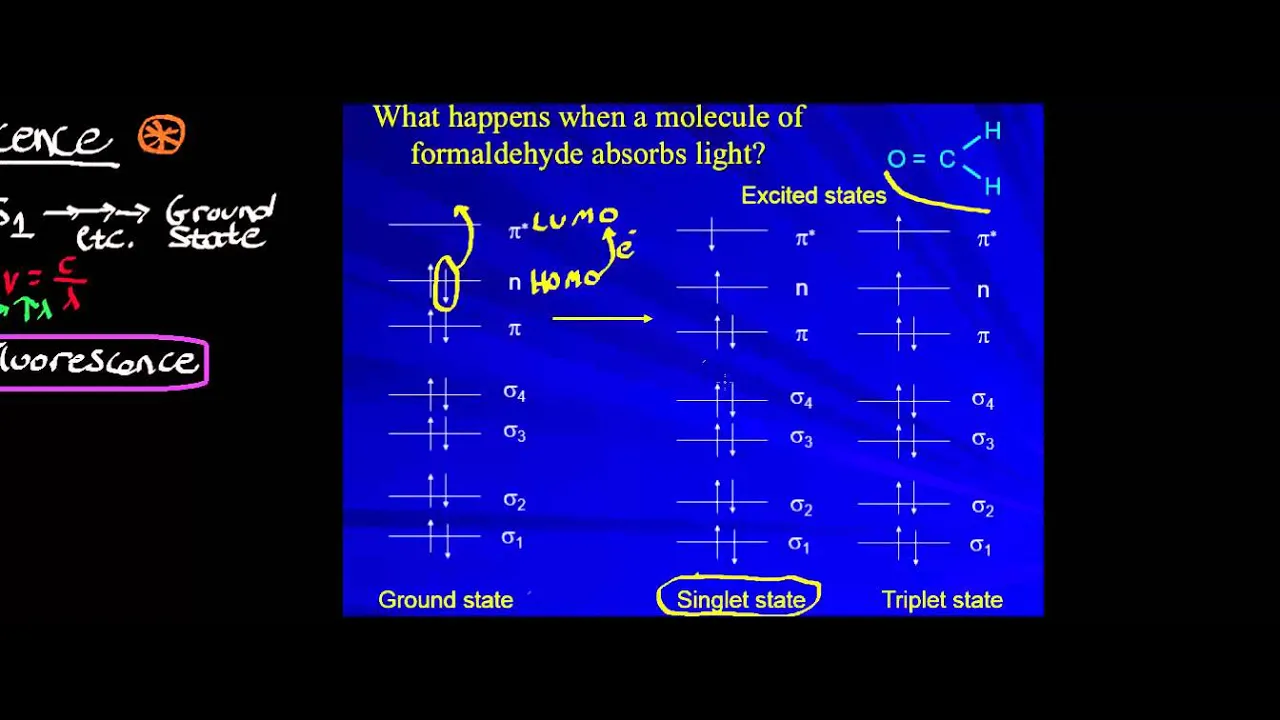
Atomic Transition and Resonance Fluorescence: The quantum mechanical principles of how sodium atoms absorb and re-emit specific wavelengths of light (specifically the D2 spectral line at 589 nm).
The Structure of Earth's Mesosphere: The characteristics and origin of the astronomical sodium layer located approximately 85 to 100 kilometers above the Earth's surface.
Foundations of Adaptive Optics: The basic mechanism of correcting wavefront distortions in real-time using wavefront sensors and deformable mirrors.
Multi-Conjugate Adaptive Optics (MCAO): Advanced systems that use multiple laser guide stars and tomography to correct for atmospheric turbulence over a wider field of view.
The 'Cone Effect' (Focus Anisoplanatism): The geometric limitations of using a artificial guide star at a finite altitude compared to natural stars at infinity, and the engineering solutions used to mitigate it.
Military-to-Civilian Technology Transfer: The history of the Strategic Defense Initiative (SDI) and the 1991 declassification process that revolutionized modern ground-based observational astronomy.
Laser Guide Star Systems on Extremely Large Telescopes (ELTs): The design and scaling challenges of deploying multi-laser constellations on next-generation giant telescopes like the ELT, TMT, and GMT.
1.7K views53likes3:31Original Release: 2024-04-24
this is the the sodium guide star so this was the very first year of the Strategic Defense Initiative you know Star Wars and we were challenged as a scientific Community to think of anything that we could that might stop missile attacks from the Russians and one of the things that was obvious was maybe you can burn them out of the sky with high power lasers and I remember that Senator Malcolm wallet maybe some of you remember him was a big fan of that he wanted to put them in space but that's very expensive and difficult and so an alternative would be to put them on the ground and the reason Senator Wallop didn't like that was because he knew a little bit of physics and the physics is if you take a megawatt laser and you aim it at a incoming attacker from the ground by the time the laser gets to the attacker it's broken up into hundreds of little beams and none of the little beams has enough power to cause any damage you don't have that problem in space because the laser doesn't have to go through the atmosphere and so this is something that's caused by the little patches of warm and cool air in the atmosphere even if it's a completely Blue Sky it looks perfectly transparent it's really not for lasers it was known at that time that you could solve this problem if you could measure the distorting effects of the atmosphere and astronomers knew how to do that so at night if you have a really bright star you can measure the incoming radiation and what happens is the radiation supposed to be a plain wave nice and flat coming from a star but as it goes through the atmosphere it gets bent up and twisted and so as it's coming down toward your telescope or going toward the target if you're going the other way because of this twist it won't focus properly so you don't get a nice point you get all sorts of points hundreds of them and so the astronomers knew you could fix it by distorting the astronomical mirrors they had what they call Rubber mirrors and so you would squeeze the mirror in just such a way that when this distorted wave would hit the mirror it would bounce and it come up perfectly flat and then you could focus it and so that was called Adaptive Optics but to make Adaptive Optics work you had to be able to measure the distortions of the atmosphere and there were only four or five stars at night that were bright enough to do this and so unless the Russians were accommodating enough to attack us from the directions of those four or five stars there was no way we could overcome this Distortion we had a very secret meeting in 1982 and there were a number of generals in from the Air Force and I said well I know how to make artificial stars because there's a layer of sodium atoms over the Earth at about 100 kilometers and all you have to do is pay to make a laser that will excite the sodium atoms and then you can make a yellow star wherever you like including the direction of the target you're trying to kill and so most of the people at the meeting had never heard of this by chance I knew about it and to the Air Force's credit they went back to Washington and they did due diligence this was all very secret and they got back to me later in the summer and said we're going to try it out and we're building a secret observatory in New Mexico south of Albuquerque and I was getting quite nervous now because this was many millions of dollars on my suggestion which had never been tested but to my relief they tested it and it worked the first time so I got a lot of credit then in the classified World in Washington most people didn't hear about it for 15 years when it was finally Declassified I will say if you go to any big telescope today around the world they all have these yellow God Stars
Up Next
78:44
Adaptive Optics Explained with Lick Observatory Applications & Lasers
@sj-astronomy7497
139 views•2020-07-07
61:17
First Billion Years of the Universe with the Square Kilometre Array
@iaaudc
121 views•2022-05-26

6:25
Kepler's Laws of Planetary Motion Explained (Educational Astronomy Video)
@Peekaboo_Kidz
404.9K views•2023-02-17
6:10
Gamma-Ray Bursts: Cosmic Snipers Explained | Astronomy
@kurzgesagt
15M views•2016-07-31
Related Study Plans & Knowledge Roadmaps
Structured learning paths in Astronomy
astronomy
Reionization: Pop III Stars, IGM & 21cm Line
01Foundations of Cosmology & the Early Universe
02Population III Stars & Cosmic Dawn
03Physical Mechanisms of Reionization
+ 2 more learning modules
17h5 modules
Explore Roadmap
astronomy
Planetary Rings: Dynamics, Roche & Resonances
01Foundations of Gravity and Orbital Mechanics
02Tidal Forces and the Roche Limit
03Structure, Composition, and Collisions
+ 2 more learning modules
10h5 modules
Explore Roadmap
astronomy
Asteroseismology: Stellar Waves, Ages & Cores
01Foundations of Stellar Astrophysics & Wave Mechanics
02Stellar Oscillation Modes: P-modes and G-modes
03Mathematical Framework of Asteroseismology
+ 2 more learning modules
35h5 modules
Explore Roadmap
astronomy
Adaptive Optics: Physics, Engineering & Control
01Foundations of Wave Optics and Wavefronts
02Atmospheric Turbulence & Optical Distortion
03Wavefront Sensing Technologies
+ 3 more learning modules
35h6 modules
Explore Roadmap