










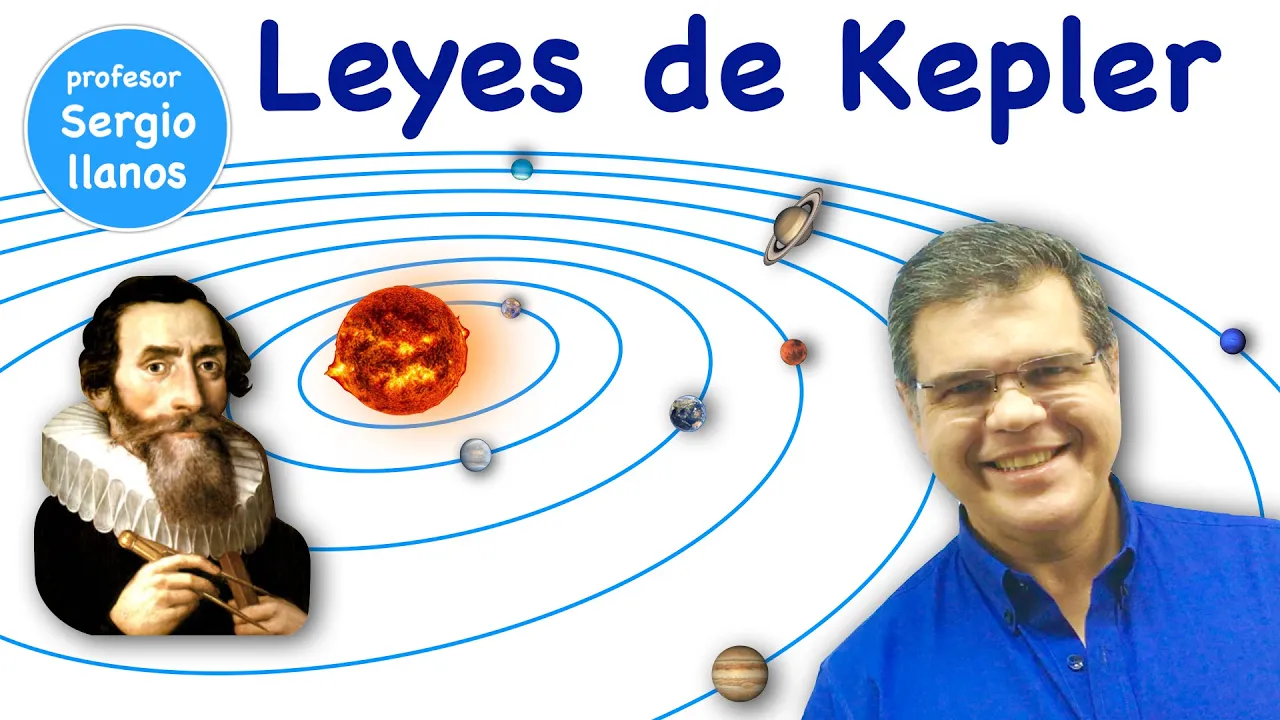

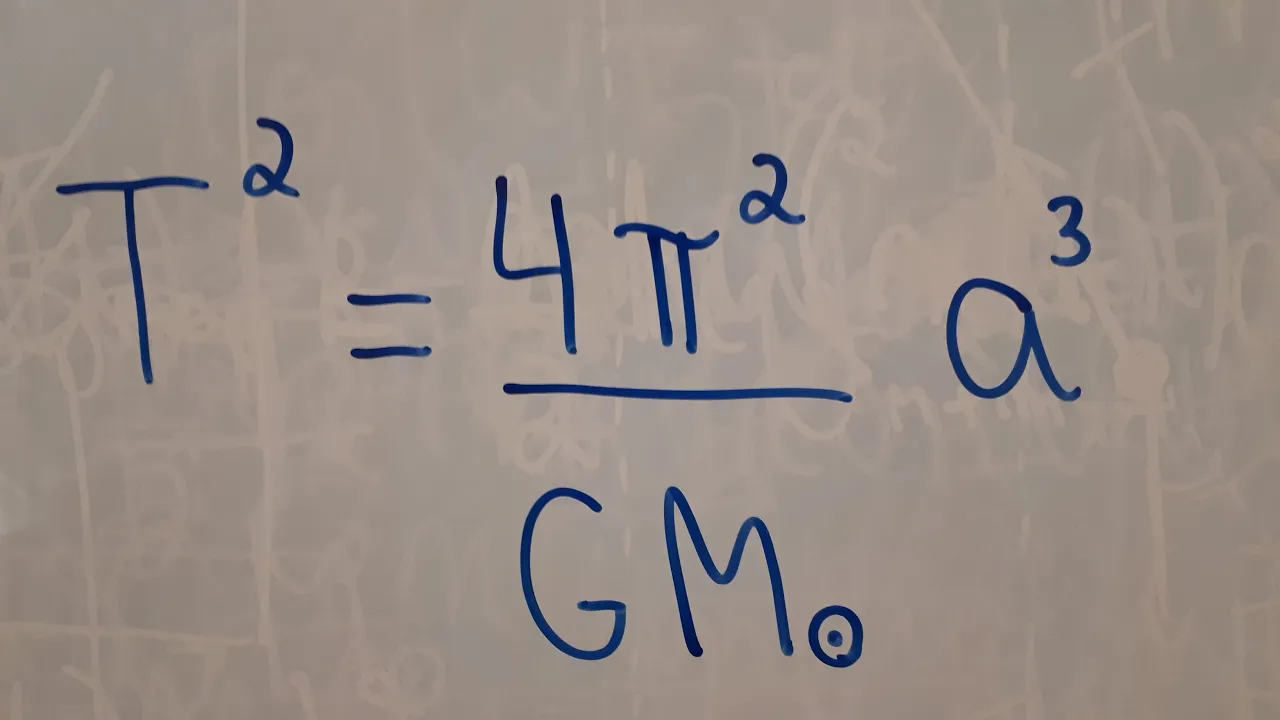






Kepler's three laws describe how planets orbit the Sun: (1) Planets follow elliptical orbits with the Sun at one focus; (2) A line from the Sun to a planet sweeps equal areas in equal time intervals; (3) The square of a planet's orbital period is proportional to the cube of its semi-major axis. These laws, discovered by German astronomer Johannes Kepler in the early 17th century, explain the fundamental patterns governing planetary motion throughout our solar system.
Kepler's Laws of Planetary Motion Explained (Educational Astronomy Video)
Added:Understanding of the heliocentric model, where the planets in our solar system orbit the Sun.
Basic geometric properties of an ellipse, including concepts like foci, semi-major axis, and eccentricity.
Fundamental physics concepts of velocity, acceleration, and the general concept of gravitational attraction.
Newton's Law of Universal Gravitation, which provides the dynamical explanation for why Kepler's laws work.
The principle of conservation of angular momentum and how it mathematically proves Kepler's Second Law.
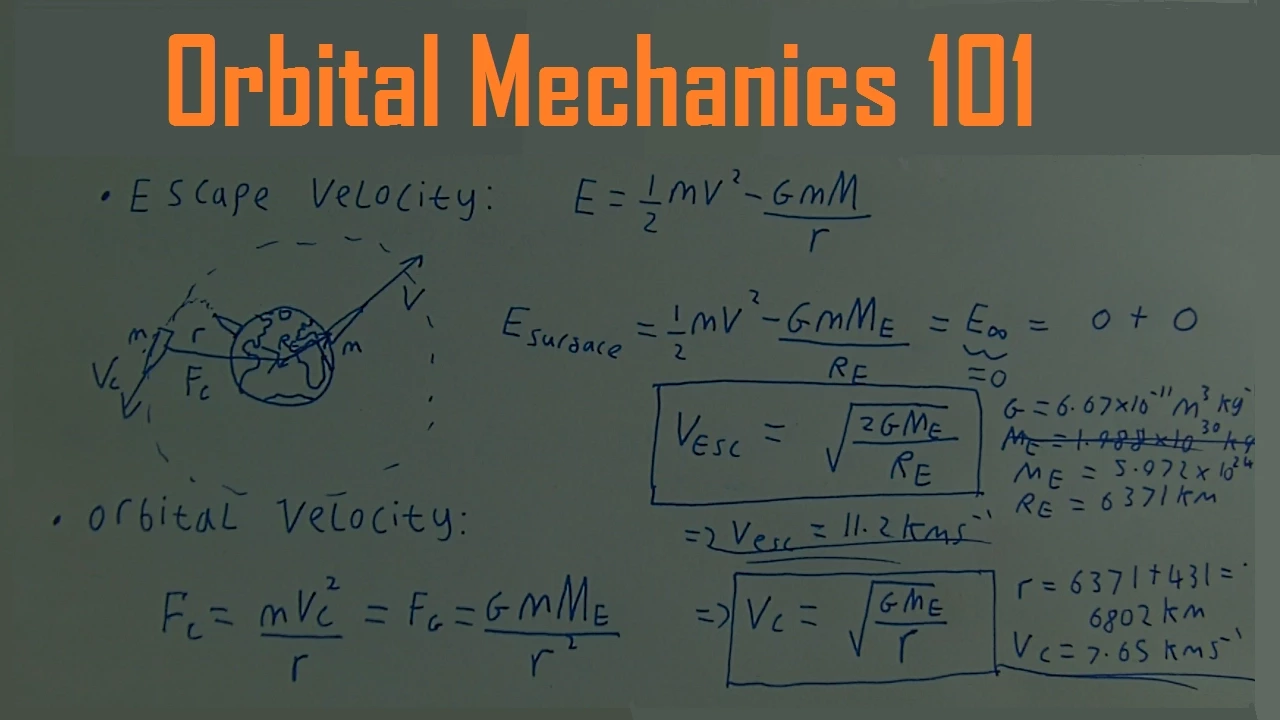
Introduction to orbital mechanics, including concepts like orbital speed, escape velocity, and Hohmann transfer orbits used in spaceflight.
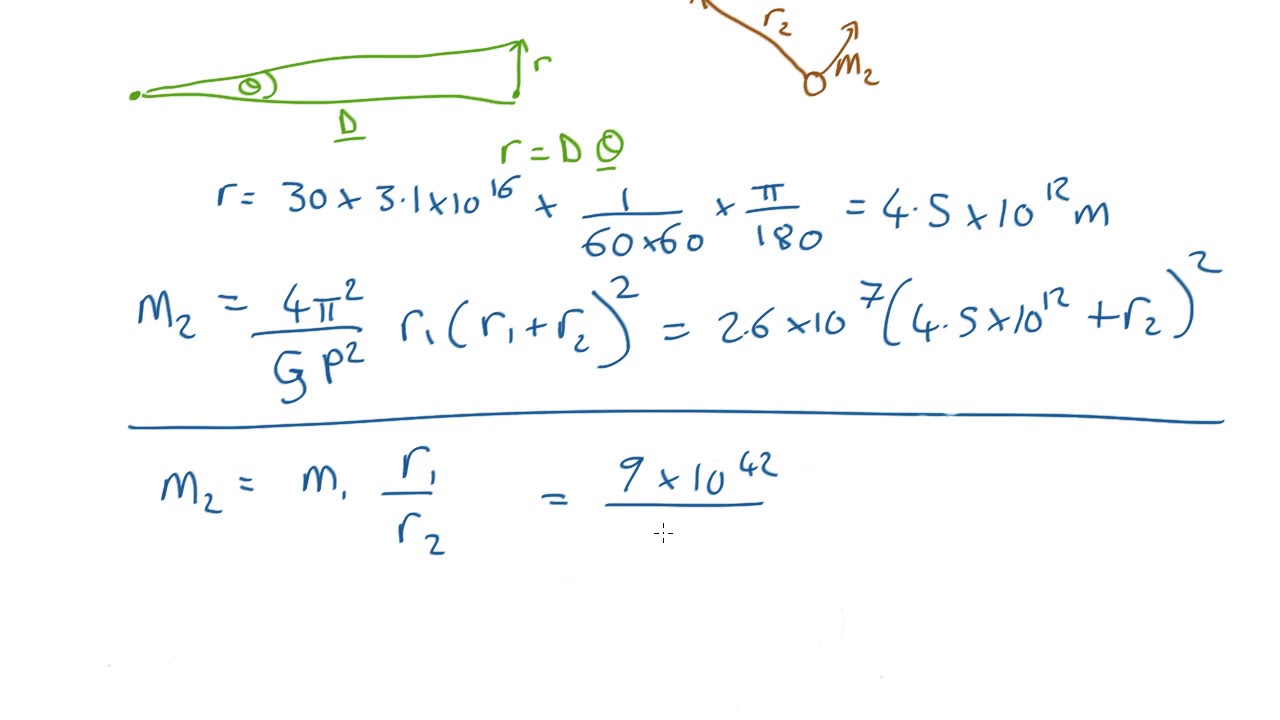
Modern astrophysical applications, such as using orbital periods to calculate stellar masses or detect exoplanets.
404.9K views6.2Klikes6:25Original Release: 2023-02-17
go go go go [Music] oh that's because we should drive according to traffic laws just like our planets move around according to Kepler's Law good question little kitty by the time we tribal let me explain to you all about this vital astronomical question what are Kepler's laws of planetary motion zoom in in 1609 the German astronomer johans Kepler published his book astronomia Nova outlining his discoveries which are now called Kepler's first two laws of planetary motion in this book he explained how all the planets in the solar system followed certain laws to move around the Sun but before we jump into the laws there are a few basic things you need to know about a shape called the ellipse that has two Focus points called Foci which is a plural of focus the foci always lie on the major or longest axis spaced equally on each side of the center but why are we learning about ellipses that's because Kepler's first law states that all the planets revolve around the Sun in elliptical orbits having the Sun at one of the foci in other words the path these planets follow during a revolution is always elliptical shape with the sun located at one of the foci points of the major axis isn't it easy my friends now let us see the second law imagine a line appearing from the Sun and joining a planet this line is called the radius Vector now let's assume this planet moves from position P1 to position P2 in a certain interval of time now along with the position of the planet the position of the radius Vector has also changed and its movement has covered a certain area as well which we will call A1 now let's move this planet to the opposite side where it travels from position B3 to P4 in the same amount of time denoted by the alphabet T and the area covered by the radius Vector is denoted by A2 and you'll be surprised to know according to Kepler's second law area A1 will be equal to area A2 yes the second law states that the radius Vector drawn from the Sun to the planet sweeps out equal areas in equal intervals of time foreign was able to see the smooth ride of the planets his personal life was going through many ups and towns that's why it took him almost a decade to publish his next book called Harmony's Mund in which she explained the third law but before we learn about it let us again go back to our elliptical shaped orbit and draw two axes on it the minor axes and the major axes whose half distance is called the semi major axis [Music] now as we know a planet denoted by the alphabet B takes one revolution around the Sun in tea time also called the time period so Kepler's third law says the square of the time period of revolution of a planet around the Sun in an elliptical orbit is directly proportional to the cube of its semi-major axis in simple words it explains how long a planet takes to finish one revolution depending on its position from the Sun meaning as a planet's distance from the Sun increases the time they take to orbit the sun increases rapidly and no matter what for every planet the square of its time period will always be the same as the cube of the length of its semi-major axis and that's it easy box for you all right here trivia time did you know Johannes Kepler was born prematurely and was a feeble child with weak Vision not just that at the age of six Johannes was sent to school but was soon taken out to earn money for the family by working as a waiter in a hotel hope you learned something new today until next time it's me Dr binox zooming out hmm what are you doing Kitty never mind
Up Next
10:34
Understanding Light & Spectroscopy: Astronomy's Key Tool
@crashcourse
2.8M views•2015-07-09
61:17
First Billion Years of the Universe with the Square Kilometre Array
@iaaudc
121 views•2022-05-26

40:28
Stellar Properties & HR Diagram | Measuring Star Temperatures and Masses
@matthewmalkan137
1.4K views•2014-10-13
6:10
Gamma-Ray Bursts: Cosmic Snipers Explained | Astronomy
@kurzgesagt
15M views•2016-07-31
Related Study Plans & Knowledge Roadmaps
Structured learning paths in Astronomy
astronomy
Reionization: Pop III Stars, IGM & 21cm Line
01Foundations of Cosmology & the Early Universe
02Population III Stars & Cosmic Dawn
03Physical Mechanisms of Reionization
+ 2 more learning modules
17h5 modules
Explore Roadmap
astronomy
Planetary Rings: Dynamics, Roche & Resonances
01Foundations of Gravity and Orbital Mechanics
02Tidal Forces and the Roche Limit
03Structure, Composition, and Collisions
+ 2 more learning modules
10h5 modules
Explore Roadmap
astronomy
Asteroseismology: Stellar Waves, Ages & Cores
01Foundations of Stellar Astrophysics & Wave Mechanics
02Stellar Oscillation Modes: P-modes and G-modes
03Mathematical Framework of Asteroseismology
+ 2 more learning modules
35h5 modules
Explore Roadmap
astronomy
Adaptive Optics: Physics, Engineering & Control
01Foundations of Wave Optics and Wavefronts
02Atmospheric Turbulence & Optical Distortion
03Wavefront Sensing Technologies
+ 3 more learning modules
35h6 modules
Explore Roadmap