











![B1.5 Apparent brightness and luminosity [IB Physics SL/HL]](https://i.ytimg.com/vi_webp/JHHSDLwgkzE/maxresdefault.webp)
![[2022 지구과학1] 51강. 별의 진화 정리와 태양의 진화 과정](https://i.ytimg.com/vi/BZFcon1wXxg/maxresdefault.jpg)

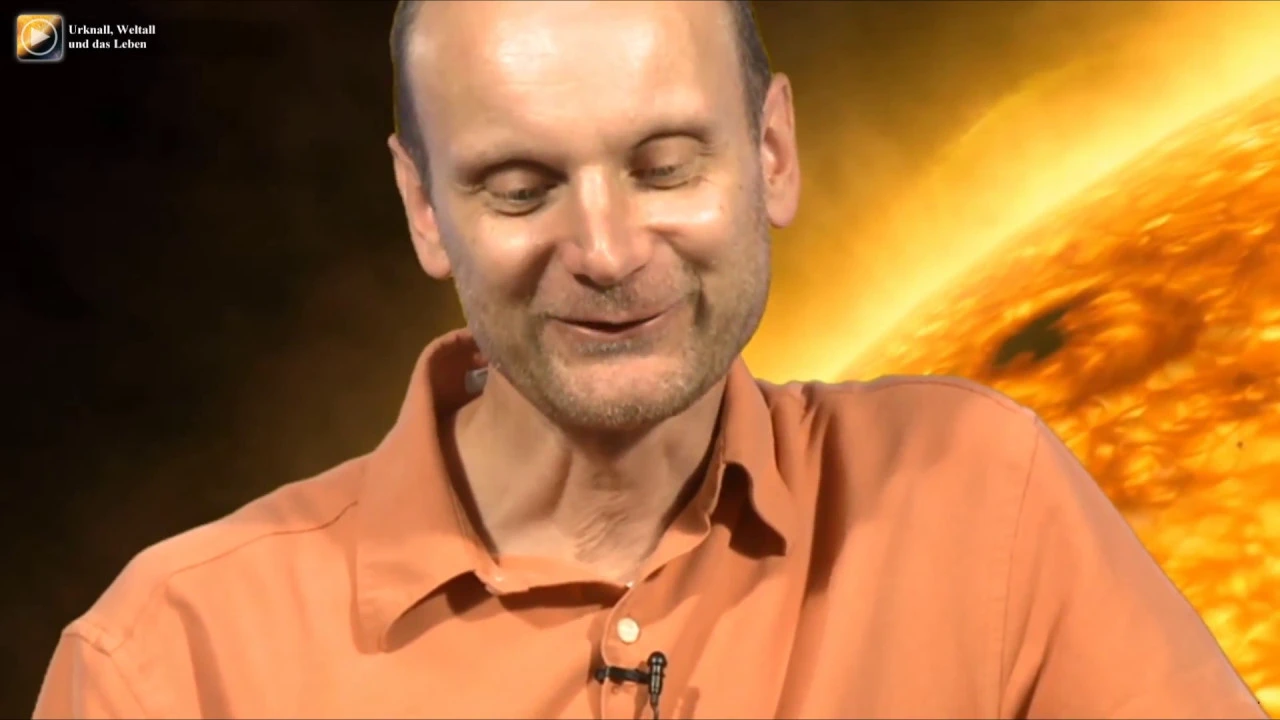











Astronomers measure two fundamental stellar properties—surface temperature (from spectral analysis of absorption lines) and luminosity (intrinsic power output)—to understand how stars work; stellar parallax measures distances by detecting the apparent wobble of nearby stars against distant background stars as Earth orbits the Sun, enabling calculation of luminosity via the inverse square law; plotting these properties on the Hertzsprung-Russell diagram reveals that over 90% of stars lie on the main sequence, where hotter stars are more luminous due to Stefan-Boltzmann's law (power increases with temperature to the fourth power); stellar mass is the most fundamental property controlling all other characteristics, and binary star systems allow astronomers to measure stellar masses by observing orbital dynamics and Doppler shifts, with eclipsing binaries providing the most reliable method for determining both stellar masses and sizes.
Stellar Properties & HR Diagram | Measuring Star Temperatures and Masses
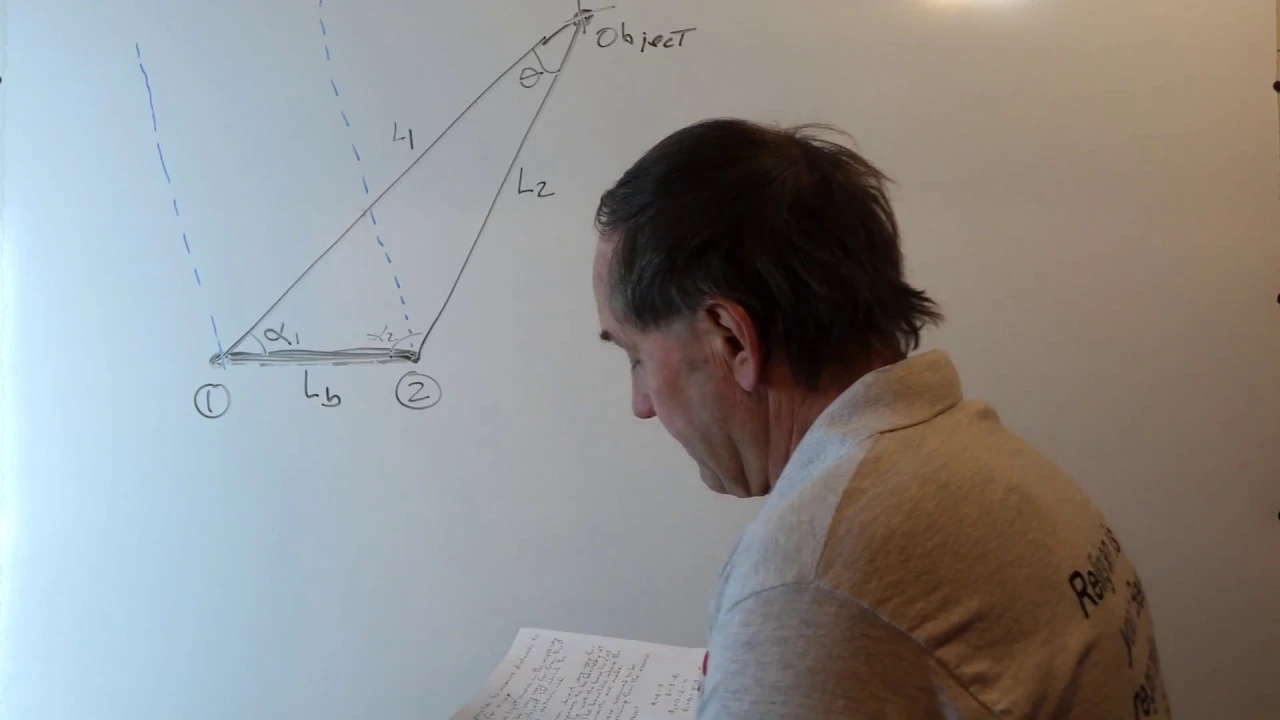
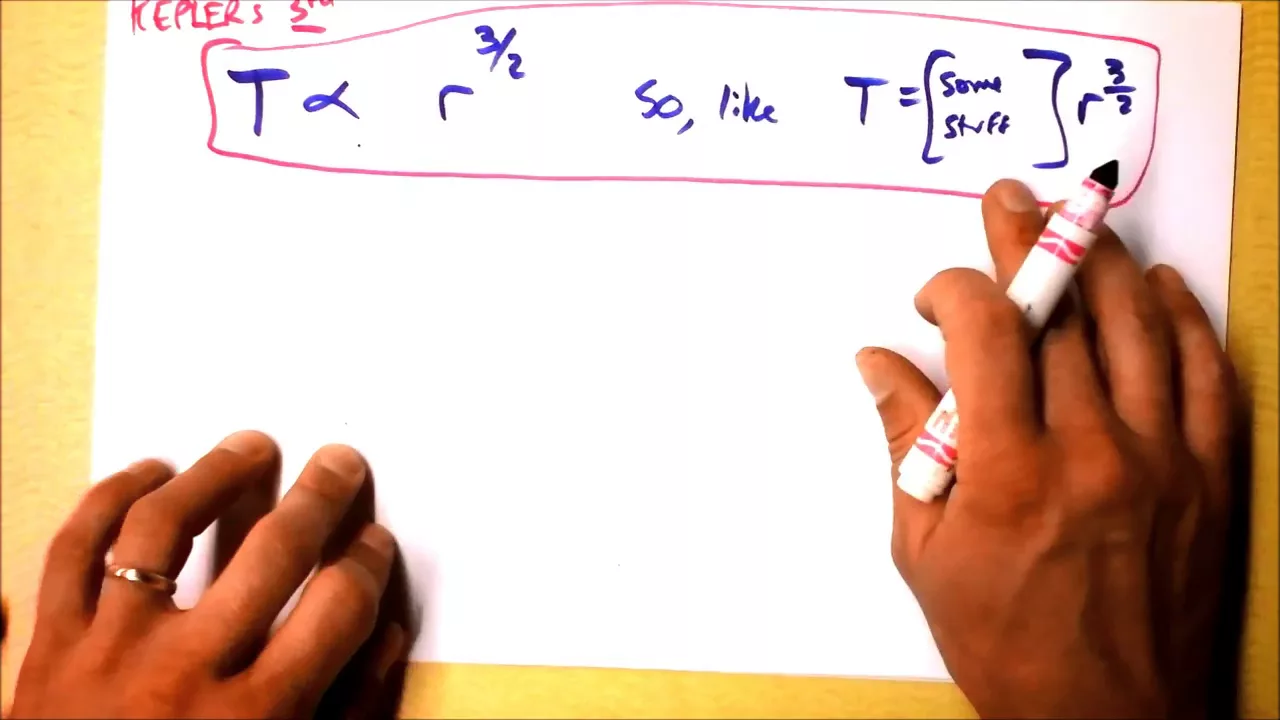
Added:oh hi uh i was just tidying up the office in anticipation of your visit i guess i still have a little bit of work to do but the main purpose of today's lecture is to figure out how we measure the basic properties of stars besides the sun in order to help us figure out how they work what are the basic properties of stars i really have just two that i want to keep track of the first one is the temperature on the surface of the star and we already learned in previous lecture that that's fairly easy to measure all we have to do is look at the spectrum of the star whether it would be the sun or a star that looks similar to the sun or stars that look vastly different from them by measuring the spectrum we see absorption lines that tell us what kinds of atoms in what ionization states in detail are present in the atmosphere of that star that can give us a highly accurate measure of its temperature on the surface which might be related to its temperature inside which would be interesting but the most fundamental thing i suppose that we really need to know about every star besides the sun is how much total power is it putting out and i'm measuring that for example in watts that's awfully small unit when we're talking about stars but that's energy per unit time joules per second and for the sun you understand it's very easy to figure out what its power is we just use the brightness formula it's the inverse square law of brightness so the brightness of course is the power of the star you'll sometimes see this in a textbook called the luminosity of the star i don't care whether you call it power luminosity it's watts it's energy per unit time it's something intrinsic to the star regardless of where we look at the star wherever it is it's putting out a certain amount of watts in the case of the sun it's very easy we measure the brightness of the sun as seen here from our distance our vantage point on earth we are what 93 million miles on average away from the sun and so you remember the brightness formula or say take 150 million kilometers then you take an imaginary sphere of radius 150 million kilometers you work out how many square meters that is and you multiply it times the brightness of the sun which is about 1400 watts per meter and you get a remarkable finding that the sun is putting out 4 times 10 to the 26 watts wow thank goodness for scientific notation of course it looks spectacularly bright but that's only because it's very nearby and the insight that galileo and other people had kepler and so on was that the other stars which look so incredibly dim by comparison are intrinsically actually comparable or even more powerful more luminous than the sun it's just that they're at such a high distance so you see it all gets down this fundamental quantity of power to knowing the distance of those stars i know that they look very faint the brightness is very small but we have to multiply that by four pi distance squared and we have to figure out how huge is the distance and here's where this concept of stellar parallax comes in which is exactly what galileo and tycho brahi and these other early astronomers were desperately trying to measure and as you recall this is the reflex the apparent reflex motion of a star which might not be moving at all as viewed by us on a moving platform we're on the earth going around the sun in an annual orbit and so if i'm looking at a star over here i'm actually not at the sun i'm on the earth which is a moving platform and i'm moving back and forth around the sun and so the star which is not moving is going to appear to wobble back and forth with respect to to more distant stars so at least i ought to be able to measure the parallax of nearby stars and yet and yet you recall that for hundreds of years uh in spite of serious attempts to do this the parallax was not detected a real serious problem for the heliocentric the correct model if we're really moving around the sun and the answer of course was this parallax is measurable with extremely high precision but it's so small why is it so small let's look at the next slide it's so small it's such a small angle because the distance is so vast even to the closest stars this is a grossly not to scale diagram but we'll look at it here anyway here is the earth's over here on one side of the sun in the summer here it is on the opposite side in the winter here we're looking at a nearby star projected in the sky against some constellation of distant stars and as you can see six months passes and the star has appeared to wobble back and forth with respect to the distant stars so this wobble angle is called the parallax we'll call that p it's a very small angle and then the long axis of this triangle here is d the distance to the star and for a small triangle you see that the parallax angle is just this baseline we have to know this baseline accurately one astronomical unit that's the baseline of our triangle how far we are from the sun there's the baseline we have to take the baseline and divide it by the parallax angle and this is really just the definition of angular measurement for small angles this is a sine angle approximation that you don't have to bother about anyway here's a pretty really very accurate formula for the parallax so if typical nearby stars were only a few hundred or a few thousand astronomical units away in other words if they were just lurking around in the outer solar system these parallax angles would have been a reasonable fraction of a degree and they would have been measured by tico but no in fact the nearest star is at such an incredibly large distance that the angles are actually not measured in degrees the parallax angles for the nearest stars are measured in seconds of arc what's a second of arc you take a degree one degree it's about that much of an angle there the width of your finger it's at arm's length and you divide that into sixty don't cut your finger and that one sixtieth of that would be one arc minute it's a sixtieth of a degree and then you take that little arc minute and divide that into 60 little teensy angular pieces that are really practically too small for your eye to distinguish that would be 130 600 degree or one arc second and actually the nearest star even has a parallax angle it's alpha centauri which is a little bit less than that in other words these stars are really far away compared to any other scales we've seen so far compared to anything in the solar system even the nearest stars are vastly far away hundreds of thousands of astronomical units in other words light years in distance away but fortunately if you're if you have good enough technology for very precise angular measurements which has been perfected over the last 50 years or so 100 years it's been working for the nearest stars you can measure these small parallax angles now for tens of thousands maybe hundreds of thousands of stars there have been entire space missions devoted to measuring precise parallaxes for stars if the star is too far away it's really hard to do if it's uh maybe uh tens of thousands of light years away on the other side of the milky way parallax angle won't be measurable but for many many stars in the local part of our galaxy this measurement has now been made with a reasonable accuracy and then we know we know by simply measuring its brightness we multiply by 4 pi distance squared to get the power the intrinsic luminosity of the star great as soon as you've got these two fundamental basic quantities of stars the surface temperature which we got from the spectrum just analyzing the light and then the power of the star which we got from basically getting us distance we had the parallax by the way i just want to mention this whole distance problem is one of the most fundamental challenges to astronomers because we're living we're looking at a two-dimensional view of the universe we can't go out there and we're trying to figure out three-dimensional information about the depth the relative distances of objects which may be incredibly different distances you know mars looks you can see that in the sky and then you can see uh this the star sirius behind it they look kind of similar the distances are ridiculously different so astronomers still to this moment are in a huge challenge to measure the distances of everything to get a three-dimensional view of the universe but assuming that we can do that for nearby stars what's the first thing you would want to do let's take a two quantities are that are intrinsic to stars that we've measured the power of the star and the surface temperature star and let's let's make a graph of them and see if it's correlated there that didn't take a lot of scientific genius to figure that one out you measure two quantities put them on a diagram see how they correlate and the first astronomers to do this have well this herzbrun guy in europe kind of hard to pronounce and then the american astronomer was doing it at about the same time was russell and uh so since i guess they both did it independently of each other and published their results without knowing about it we'll call this the hertzbrung russell diagram uh but i guess i would just like to call it the temperature luminosity or temperature power diagram unless you're interested in you know the historical correctness of giving credit to all of the original discoverers so you don't have to know their names all right i'm sorry they're great astronomers but this is not a history class so what we find when we do this correlation here for historical reasons dr herzberg and dr russell plotted the surface temperature backwards on this axis so they put the lower surface temperature cooler stars on the right hand side and the hotter stars in the left-hand side i'm not even sure that they exactly knew that they were looking at temperatures when they plotted this they were looking at different types of spectra and then they got the vertical axis logically going from the low lowest power stars up to the highest power stars in the top part of the graph all right i'm about to show you the data i'm about to show you the data let me tell you they put hundreds of stars of nearby stars on this diagram and you know what the great majority of the stars had a very simple rather remarkably tight correlation between these two quantities how interesting is that more than 90 well let's say about 90 of the stars actually that they could find lie on something called the main sequence there are some oddballs that don't follow that path but many of them do let's see if i can show you in the next slide ta-da there it is here is a typical well let's see this is the apparent magnitude of a cluster of stars in the pleiades and so what we have here is the mo the brightest and therefore most intrinsically powerful stars are at the top of the graph unfortunately it's a magnitude graph instead of just a graph of linear power um anyway these stars here are what is that five ten magnus these are uh ten 000 times less powerful than these stars on this axis well this is a little bit lazy they simply measured the color of the stars as if they were perfect black bodies they're not exactly but close enough and so yes the red stars would be the lowest surface temperature stars remember wien's law if they if their energy is coming out primarily at a long wavelength that means a lower temperature these these stars down here have a considerably lower surface temperature in the sun maybe uh 3000 degrees centigrade these stars here are considerably hotter than the sun maybe 10 20 000 degrees centigrade but there are only a few stars yes that's a real star up there that's odd there's a few stars down here there's a few stars up there the great majority of these stars all lie on a so-called main sequence in other words if you know the intrinsic power produced by the star you can predict exactly what its surface temperature is going to be one determines the other or if i told you for example this is kind of fun if i told you for example that i had a star in the pleiades that was right about here that's about right that that color there which sort of corresponds to white that color corresponds to the temperature of a star of the same surface temperature as the sun what the main sequence is saying because the sun is also a good main sequence star main sequence is saying well that star in the pleiades or i don't care where it is that star you know halfway across the galaxy also has the same power output as the sun four times 10 to 26 watts they're right it's like p's in a pod there solar type stars whereas if you find a star which is considerably hotter on its surface in the sun it's also going to be considerably more luminous gosh that makes a great deal of sense doesn't it because of what we learned from the stefan law about thermal radiation coming from black bodies these stars are in fact acting pretty close like good black bodies and we learned the laws of radiation from black bodies in the previous lecture all right so we can compare these two observables in the luminosity or the power and the surface temperature of the star and we find this close correlation which is the main sequence and now i want you to think about this does this make sense yes it does what do you find what do you expect when you have two stars one is the surface temperature of the sun and another star is let's just take a concrete number here let's say instead of the surface temperatures the sun 5000 centigrade it's twice as hot on the surface let's say 10 000 degrees centigrade i'm glossing over in the book it off often calls them degrees kelvin all right but you realize that the kelvin scale which goes to absolute zero is only different from the centigrade scale by 273 degrees so i could be off by 273 degrees who cares i'm talking about 10 000 degrees so close enough all right so we have two stars let's suppose just for the sake of argument here suppose that the stars were the same size meaning that they have the same radius meaning that they have the same surface area four pi r squared they have the same number of square meters then the sun and this hot star would look a little bit bluish the hot star would like so assuming that the laws of black body radiation such as the stefan law apply approximately to stars an excellently true assumption then how much more total power do you expect is coming from the hotter star what does stefan's law say it says that power per unit area watts per square meter goes uh increases with what power of the temperature temperature surface temperature is what we're measuring to the fourth power wow a hotter surface of the same given size is much much more efficient at putting out thermal power than a cooler surface so the hot star that's twice the temperature of the sun is putting out let's see two to the fourth power it's two times two times two times two 16 times more energy per second per square meter than the sun so if it has the same size and the same number of square meters how much more luminous is the hot star going to be compared to the sun 16 times more luminous in the sun wow 4 times 10 to the 26 watts times 16 64 times 10 to the 26 watts that's a powerful star and in fact there are quite a number of these stars out there in the local neighborhood of our galaxy and there's actually even more stars which are say only half as hot temp hot to temperature as the sun and those stars being only half as hot on their surfaces would have what 16 times less power than the sun what i just described to you is very close to what you actually observe in the main sequence not exactly but very close so i think we have a tentative simple explanation of what the main sequence is well so my previous diagram here slide says what is the cause of the main sequence well my simple answer is i guess the cause of the main sequence mainly is most of those stars are roughly about the same size actually the stars that are hotter than the sun are even more luminous more powerful than t to the fourth by a little bit so they're also a bit bigger they have a bit larger radius and surface area in the sun but but not by much so i'm not going to worry about that one too much the main reason for this nice correlation of star temperature with star power is that they obey stefan's law for black bodies of a fairly comparable size but that isn't really the the fundamental answer okay that's interesting so why are all stars not all stars why are all main sequence stars that's the majority of stars a fairly similar size to the sun what determines their size ah that's a deeper question what's the underlying fundamental causes i'm just going to tell you the answer right now and then explain how the difficult chain of argument how we figured out logically this answer in a few minutes the answer is that these different stars at different locations on the main sequence differ in one most fundamental property which is their mass that means how much gravity the star has how much stuff it has how much fuel it has to power it so this mass of the star is the absolutely most fundamental property if we could measure that which determines all these other observables that we have been going around measuring well we've been collecting a lot of measurements of power we've been collecting a lot of spectroscopic measurements of temperature and we find though that those are largely determined by the mass of the star hmm that's harder though these stars don't have little mass stamps you know 10 kilograms uh 10 to the 30 kilograms stamped on them we're going to have to make some much more difficult measurements than the ones i was describing before if we want to weigh a star now a lot of this course you'll notice is looking at the effects of gravity so we can weigh things and determine where the masses are in the universe well here's the first example of this it basically goes back to newton's laws even even kepler's laws so as i said here the mass of a star is the most fundamental property that controls everything about its life particularly when it's on the main sequence how am i going to measure that how do we know for example the mass of the sun to very high accuracy that's right if you said we know how much the mass of the sun is by measuring the orbits of our planets around it so we can see how much they're accelerated by and we use basically the newton version of kepler's third law formula remember it has that 4 pi squared on top and then it has gm1 plus m2 where m1 is the mass of the sun underneath and so in other words the more the mass of the star is the shorter the period of objects orbiting around it will be because they're being accelerated more so that's how using newton's laws that of gravity that's how we figured out the mass of the sun to high precision darn very difficult to study planets orbiting around other stars in fact that's only started fairly recently we could send a satellite out there and watch it orbiting around the star unfortunately that's beyond our current technical capability and you'd have to wait hundreds of years to get a result radioed back to you do we have any natural experiment where the universe is producing these situations for us where there's a test object orbiting around a star that we could watch yes there is hooray they're called binary stars and i'm happy to say that the universe has provided our galaxy with loads of binary stars that we can study in relative ease so we can watch well what do we watch when we actually see a binary star that means that there are two stars held together by their mutual gravity there's an example i picked sirius because it's very famous there's a series a the bright one there's series b the dim one which is much dimmer here's a photograph of them in 1900 oops i shouldn't change my slide here there's a photograph of 1910 they seem to be in a slightly different orientation oh my gosh by 1920 that little dim one was over here 1930 it's up here 1940 it's on the other side and so on so it's a visual or photographic whatever binary system with a little star and a big star or a faint star and a and a powerful luminous star well clearly something is going around something what do you think it is the correct way of looking at this which was worked out by newton he realized that his laws of gravity required it is that it's not correct to say that the little star goes around the big star if it was a really little star like suppose it was jupiter that would be a good approximation i mean it's a pretty good approximation to say that jupiter just goes orbits around the sun but if jupiter were a bit more massive as you'd realize that's not exactly the right approximation what actually happens in our solar system is all of the planets including jupiter orbit in elliptical orbits around the center of mass of the solar system now the center of mass of the solar system is very close to the center of the sun it's not in the middle of the sun though it's a little bit thousands of miles away from the center of the sun still inside under the surface of the sun mostly in the direction of wherever jupiter and then to some extent saturn are so that yes so the sun actually also orbits or wobbles i should say around the center of mass of the solar system but if you had so that's tough to measure but if you had a fairly substantial binary star like sirius b here which i believe is a white dwarf star that has a fair amount of mass then what you would actually see very clearly is both stars are orbiting are not around each other they are orbiting around their common center of mass how do you find out what the center well all right so here's the formula we're going to apply i mentioned this already we measure the orbital period that's not too hard to do is a little bit trickier we need to know what the separation of the two stars is and if we could measure those well basically what we could get here is at least we could get the sum of the masses of the two stars so what you really want to do here is you want to measure the orbital speeds of the stars best way to do that would be to measure their doppler shifts and as we found out one of the easiest things you can ever measure because stars have all these very easy to measure absorption lines at fixed intrinsic wavelengths it's very easy to see if that pattern of absorption lines has moved to the red or to the blue a little bit as the star goes away from us or comes towards us or goes away from us in its orbit so we can measure the orbits of binary stars to figure out their masses where is the center of mass this is the basic deal if you had two equal masses then just think of two equally heavy people on a seesaw then the center of mass would be halfway in between that's exactly what happens if you have two stars of equal mass picking up just where i left off in mid slide we saw that newton's third law means that planets actually don't orbit exactly about the sun but they orbit about the center of mass of the system because the sun is exerting a force of gravity on the planets and the planets are also exerting an equal and opposite force on the sun that's newton's third law the action and reaction the force and the opposing force and this also applies then to binary stars the binary stars orbit not each other they orbit around their common center of mass so in a realistic situation one of the binary stars might be for example twice as massive as the other so here's a an example just so you can see where the center of mass would be let's suppose that this corresponds to a star with twice the mass of this star then you can see that the center of mass will be about a third of the way between the massive star going over to the low mass star and what that means then is that the massive star will execute a small orbit small radius just one third of the radius of this star here which will be on a big orbit because it's the low mass star in other words even though it's a little bit of a confusion people have sometimes about newton's third law yes the forces are equal the force of a on b is equal to the force of b on a in the opposite direction but this does not mean that the accelerations are equal no the low mass object accelerates much more it's proportional to the inverse of the mass and that is also true for binary stars so the low mass star is going to have proportionally more acceleration than the high mass star and this applies universally whether it's a star a pair of stars or whether it's some planet going around a star the rule is the same and so we can use that now if we can study the motion of binary stars now i showed you an earlier example a case of sirius it's a very nearby star where you can actually see the two stars if you were willing to wait long enough after decades patiently you can see photographs are showing that two stars are indeed going around the center of mass and the more massive star isn't moving very much the low mass star is moving quite a lot because uh it's accelerated more what if though a more typical situation is you have binary stars like i said they're not at all uncommon throughout our galaxy but they're so far away that your photograph just look makes it look like a single point of light the two images the light from both the stars is merged into a single unresolved point of light this is the most common situation so if you just look at it with a picture it looks like a single star are we out of luck don't worry spectrographic information comes to our aid here we can spread the light out and look for the absorption lines in what looks like a single star and if it's actually the combined light of two stars we are going to see what we're going to see two sets of absorption lines from the light of each of the two different stars that's there they'll probably be usually similar absorption lines if the stars are quite different temperatures they could have different sets of absorption lines but here's the point we can tell them apart because these two sets of absorption lines are not always right on top of each other and why not because they each have a different doppler shift as seen from earth that's the key to this here we are on earth over here and here well this is not a very good drawing there's a massive star here a and then there's a smaller star b and at uh one time in the orbit there i don't like this diagram very much b is going to be coming at us meaning a blue shift at the same time the other star the companion is going to be redshifted moving away from us that's how an orbit works this this one's coming towards you this one's going away then they're at the same velocity so the lines will cross over now this one is red shifted and this one is blue shifted then the lines come together so the spectral emission lines are momentarily on top of each other then they're shifted this way then on top then that way that way so if you just have the patience to take a series of spectra which i've done and many people have done you could determine that actually that light that looks like it's coming from a single star it's actually the combined light of two stars in a binary orbit around their mutual center of mass and the beauty of this is you of course one of the stars will shift more in general have bigger velocity shifts well the other one is shifting a little bit the one that's shifting a little bit is the high mass star it's accelerating less so you can actually get the ratio of the masses of these two stars and of course you can get the period uh of their orbit in other words you can uh since you know the ratio and then from the previous formula of kepler's third law explained by newton you get the total mass basically with a spectroscopic binary system by studying the absorb the emotions of the two stars you can work out both of their masses pretty neat we're not going to go there and measure these things this is all done at the distances of trillions of miles so it's a very clever uh accomplishment that as the spectroscopy of stars gave to astronomers the ability to weigh the stars by watching them accelerate each other according to newton's law of gravity this is very clever and in fact this is such a powerful technique i'm just going to mention this right here it's going to come up later in the course what if we had a binary system where there are two objects orbiting the common center mass and one of them was virtually invisible like a planet is virtually invisible or even something bigger uh could be a very dim star like a white dwarf or it could be something that's virtually totally invisible like a collapsed star like a neutron star or something even more exotic such as a black hole in that case would you know that there were actually two objects there what would that look like there's only light coming from one object so you just see this one object but it would be quite distinctive if you were to take the spectrum and measure the doppler shifts you would notice something odd that it's periodically coming towards us stop it going away from us coming towards us blue shift no shift red shift no shift blue shift and so on you would notice that it must be in orbit around unseen companion it must be there because something is going to cause that star to accelerate back and forth something is changing the doppler shifts periodically you could measure the period you could measure the velocity and if you were willing to make a guess about the mass of the star that you see try to make an educated guess this is fun you could infer what the mass of the unseen dark companion would have to be to be big enough to accelerate the star that you see this is a so-called single line spectroscopic binary where there's only one set of absorption lines but it shows clearly that there are two objects in a binary orbit and you could work out what the mass of the unseen object is by measuring its gravitational acceleration on the scene object brilliant method which is of enormous significance to our field but anyway uh there there is one little uh detail about this that i'll just lay on you for right now it's not terribly important but you can see all of my diagrams here are assuming that all of the orbital motions of these stars are in the same plane as of earth in other words the orbital plane is lies along the direction to the earth in other words i've been assuming here for simplicity that we're viewing this orbital plane of stars edge on like this that way when they're coming towards you you're seeing the entire approach motion the full blue shift when they're coming away from you you see the entire register velocity but of course that is only true remember doppler shifts only measure whether things are getting closer to us or further away from us they do not measure sideways motions so for example what if you had a a single point of light which actually was two binary stars close together and they were orbiting in this plane you're the earth over there they're orbiting like this like this so the velocity they never get closer or further away from you the velocities are always sideways they're in the plane of the sky like that would you see any doppler shifts no there are no doppler shifts at all you'd have to be uh on a planet up there you'd have to be an astronomer over there to notice any doppler shifts you would see just this constant velocity the the the lines would never move because all of the motion is in the plane of the sky in other words what i now in an intermediate case let's suppose that the orbit was tilted like about 45 degrees so they're moving like that so yes they do get closer and further away from us we would see periodic blue shifts and redshifts but we wouldn't see the full blue shift in redshift we would see less than there really is well if we didn't take that into account we would at least have a lower limit on what the total mass of these stars is so by assuming that the stars are edge on then at least we're getting a lower limit to their mass if the orbits are not seen edge on then the masses could be even larger and we're just missing some of the orbital velocity all right oh god what a nuisance is that who wants that kind of hassle don't worry relax astro 4 students there is one golden situation where we can be absolutely confident with a hundred percent certainty that we have found a binary system which is viewed exactly at john which is what we want to get the exact masses and what would that be two stars which are moving around exactly in the plane that the earth also lies in our viewing plane we see them exactly edge on so that one star periodically moves in front of the other star and then halfway around the other side of the orbit the other star blocks the light of the first star that's called an eclipsing binary system and that is like pure gold that's a gift from the heavens because that allows us to figure out everything with no questions whatever we can measure the velocity this by the way you don't have to be able to tell directly that there's two stars there remember these are so far away it'll just look like one star it'll look like the light from one point of light except that periodically the light will dim why is the light dimming so here's the light from both of the stars this is time moving along the x-axis and the vertical axis of brightness of the star we're seeing both the stars both the stars just looks like a single point of light but now notice the little star moves in front of the big star and so now these stars are opaque so we've covered up some of the light of the the big star the red star back there it's covered up so we're not seeing as much of the red star there so the total light of the system drops down makes a little eclipse all right then the orbit goes around we see the light of both stars now the uh little star is on the other side whoops what's happening here at this point in the orbit halfway to around the other side the little star is behind the big star and like i said stars are opaque so we don't even see the light of the little star it's completely covered up by the big star so at the bottom of the eclipse we're only seeing the light from the big star and that's all and then the little star comes out from behind and we can see both of them again so we see two eclipses one of uh one star is getting blocked and then the other star is getting blocked and this happens uh every orbit an eclipsing binary star system but of course it can only happen if these are perfectly inclined exactly edge on so that we can see them uh we can see all of the doppler velocities now there's a bonus to this so first of all we can measure the doppler shifts and use kepler's third law because of newton's third law we can figure out exactly the masses of both stars quite accurately in fact this is how we get real accurate masses of stars but what is another fun thing we can see how long it takes for one star to move behind another star we can measure the duration of these eclipses and since we know how fast the stars are traveling relative each other that gives us a size yes we can get the diameter of stars even though they're way too far away you would never be able to actually resolve them you'll never see little discs of light like this you'll never see two points of light you'll actually just see one blob of light but you can measure the infer the size of the stars the radius and diameter of the stars from the length of the eclipses when they block each other bloody clever those astronomers that do this stuff a lot of this work was done at ucla by a colleague of mine dan popper and it is the most reliable way we have of knowing both the masses of individual stars if you're patient to do this and also the sizes of individual stars and that is the key information if you want to figure out what is going on inside the centers of stars which we'll talk about next
Up Next
JWST Reveals Photochemistry in Exoplanet Atmosphere | WASP-39b
@DrBecky
803.6K views•2022-12-01
First Billion Years of the Universe with the Square Kilometre Array
@iaaudc
121 views•2022-05-26

Black Hole Accretion Disks: How Quasars Are Powered
@matthewmalkan137
215 views•2025-02-27
Gamma-Ray Bursts: Cosmic Snipers Explained | Astronomy
@kurzgesagt
15M views•2016-07-31
Related Study Plans & Knowledge Roadmaps
Structured learning paths in Astronomy