Planetary Rings: Dynamics, Roche & Resonances
Learning Goal: Analyze the dynamics, structure, and evolution of planetary ring systems. This includes examining tidal forces and the Roche limit, calculating orbit structures using Kepler's laws, analyzing how shepherd moons and orbital resonances sculpt rings, and exploring how spiral density waves and bending waves propagate.
Prerequisites
- Basic high-school physics (classical mechanics, universal gravitation)
- Introductory algebra and calculus (interpreting limits, basic derivatives, and algebraic equations)
Estimated Study Time
- Total Time: ~10 Hours (including video content, reading, derivations, and self-guided practice)
Module 1: Foundations of Gravity and Orbital Mechanics
This module establishes the foundational physics required to understand ring systems. You will learn how gravity shapes orbits, analyze Kepler’s laws of planetary motion, and explore how circular velocities scale as a function of orbital distance (the Keplerian velocity profile). Understanding the shearing environment of a Keplerian disk is essential before diving into ring collisions and resonances.
Recommended Videos
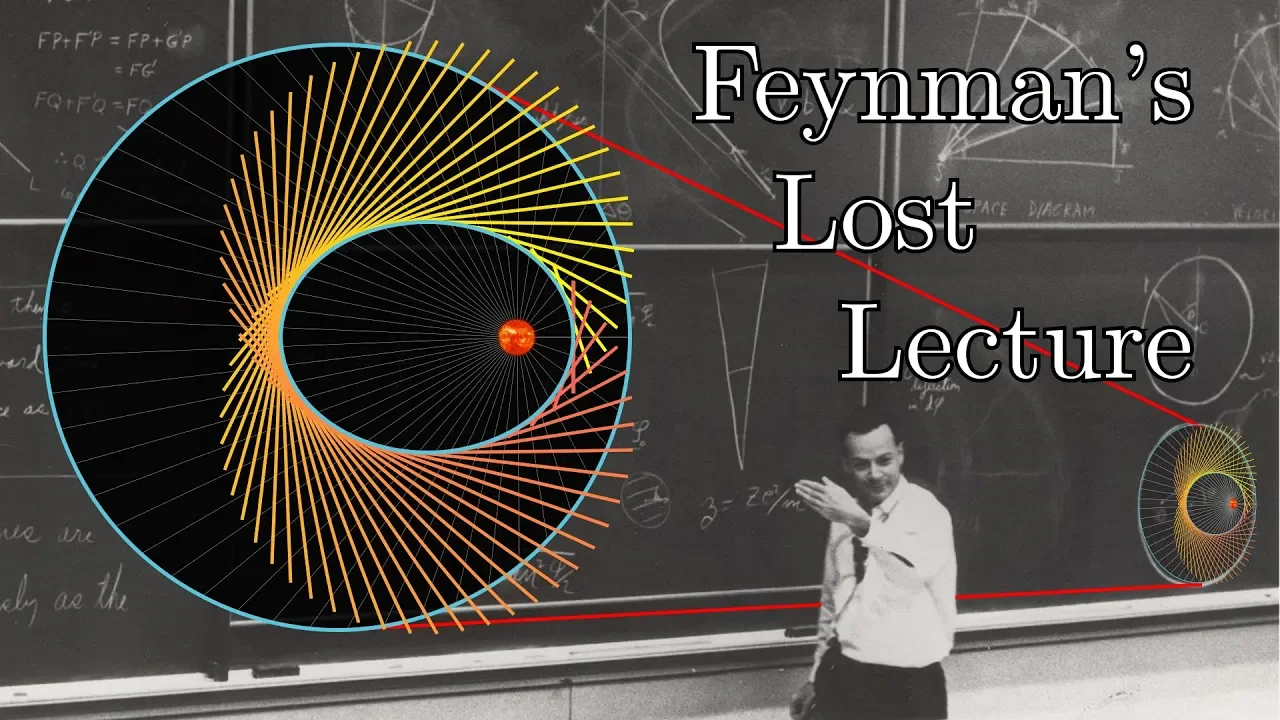
Why this video: This video uses geometric and physical intuition to explain how Kepler's laws arise from Newton's inverse-square law of gravity. It offers a elegant proof of orbit mechanics and emphasizes the conservation of angular momentum, which governs the shearing velocities of particles in rings.
Why this video: This lecture defines Keplerian orbital elements (such as the semi-major axis, eccentricity, and inclination). These mathematical parameters are vital for tracking the individual eccentric and inclined orbits of particles within planetary rings.

Why this video: This academic video derives the circular velocity equation from a point mass gravitational potential. It shows that circular orbital velocity scales inversely with the square root of the orbital radius ()—the exact velocity profile that ring systems obey.

Why this video: This video explains Keplerian shear, demonstrating that inner particles orbit faster than outer particles. Understanding this velocity differential is key to understanding why structures like moonlet wakes look like "propellers" and how energy distributes during collisions.
Knowledge Checkpoint
- Derive the formula for circular orbital velocity () from the balance of gravitational and centripetal forces.
- Explain how a Keplerian velocity profile leads to "Keplerian shear" (why inner ring particles continuously overtake outer ring particles).
- Define the six Keplerian orbital elements and describe what eccentricity () and inclination () mean for a ring particle's 3D motion.
Module 2: Tidal Forces and the Roche Limit
This module explores the boundary where planetary rings are born. You will study how differential gravity (tidal forces) stretches orbiting bodies, and mathematically analyze the Roche limit—the distance from a planet within which a satellite held together only by self-gravity will disintegrate.
Recommended Videos
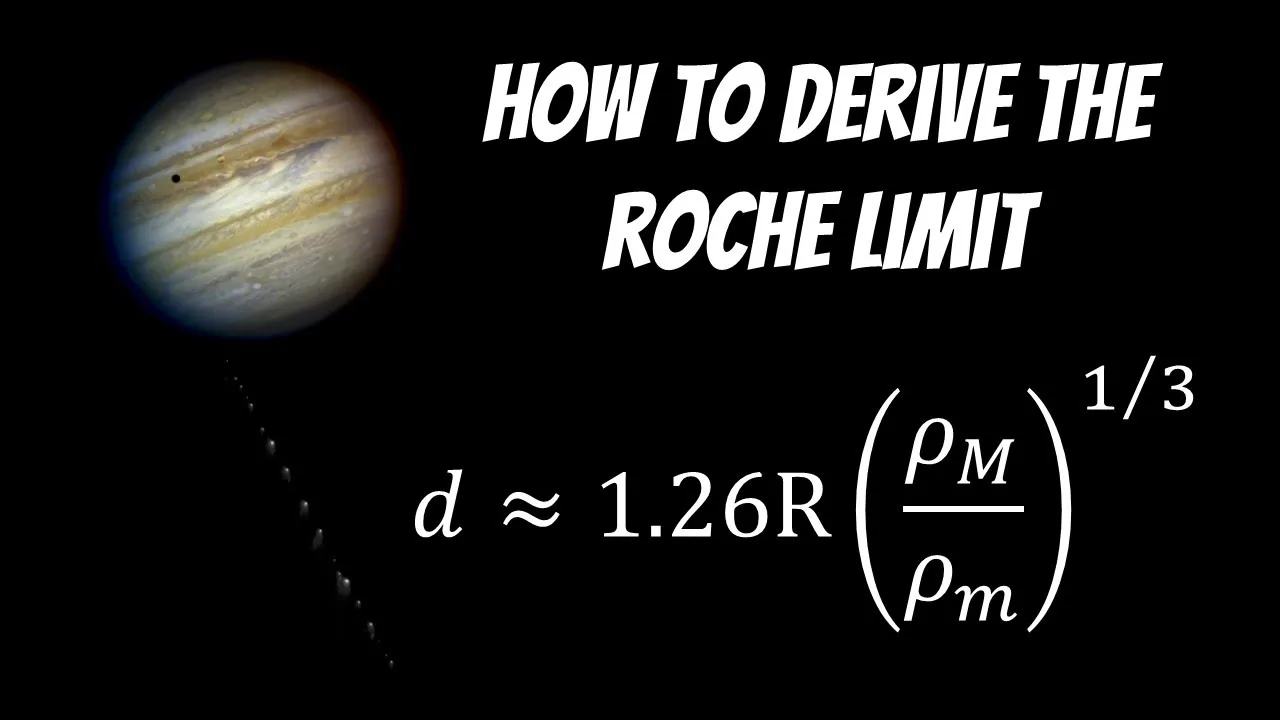
Why this video: An excellent, mathematically rigorous walkthrough that derives the rigid Roche limit. It sets up the force balance equation between the self-gravity pulling a moon's surface particle inward and the external tidal forces pulling it outward.

Why this video: This video offers a practical step-by-step calculation using the standard Roche limit equation: . It uses actual planetary and lunar densities to demonstrate how to find the limit for real celestial bodies.

Why this video: This short video explains the key conceptual difference between the "rigid" Roche limit and the "fluid" Roche limit. It describes how fluid bodies deform under tidal stress, which actually increases the Roche limit distance (making them more vulnerable to disruption).

Why this video: This panel discussion explores the physics of rubble-pile moons and tidal disruption. It highlights why moons are often loose collections of material bound only by gravity, making them highly susceptible to disintegration when passing the Roche limit.
Knowledge Checkpoint
- Write down the mathematical formulas for both the rigid and fluid Roche limits, defining each variable.
- Explain why the constant coefficient for the fluid Roche limit () is larger than that of the rigid Roche limit ( to ).
- Calculate the Roche limit for a water-ice moon () orbiting Saturn (, ). Does Saturn's A-ring lie inside or outside this limit?
Module 3: Structure, Composition, and Collisions
In this module, you will transition from studying single orbits to studying the collective behavior of trillions of ring particles. You will analyze why planetary rings are composed primarily of water ice, how collisions damp out random movements, and why these processes compress ring systems into disks that are incredibly thin (often only tens of meters thick).
Recommended Videos
Why this video: This presentation describes the ring environment at the particle scale. It details how trillions of icy particles orbit at roughly but possess tiny relative random velocities (on the order of millimeters per second), illustrating a highly damped collisional system.

Why this video: This video explains the physics behind the rings' extreme thinness. It shows how inelastic particle collisions continuously dissipate vertical and eccentric energy, flattening the orbits into a thin, cohesive disk.

Why this video: This video focuses on ring diffusion. It explains why planetary rings naturally spread out over time due to angular momentum transport from collisions, and introduces why external mechanisms are required to keep them narrow and bounded.
Knowledge Checkpoint
- Explain why inelastic collisions between ring particles damp out vertical velocities () much faster than azimuthal velocities (), resulting in an extremely thin disk.
- Describe the typical composition and size distribution of particles in Saturn's rings (e.g., millimeter- to meter-sized water ice).
- Explain how "viscous spreading" causes an unconstrained ring to expand outward and inward over astronomical timescales.
Module 4: Shepherd Moons and Orbital Resonances
Without stabilizing forces, planetary rings would quickly spread out and disappear. This module analyzes the gravitational mechanics of shepherd moons. You will study how these moons exchange angular momentum with nearby ring particles to confine rings, clear gaps, and shape sharp edges through orbital resonances.
Recommended Videos

Why this video: This video explains how the F ring is confined. It demonstrates how an inner shepherd moon (orbiting faster than the ring particles) pushes particles outward by adding angular momentum, while an outer shepherd moon (orbiting slower) drags particles inward by absorbing their angular momentum.
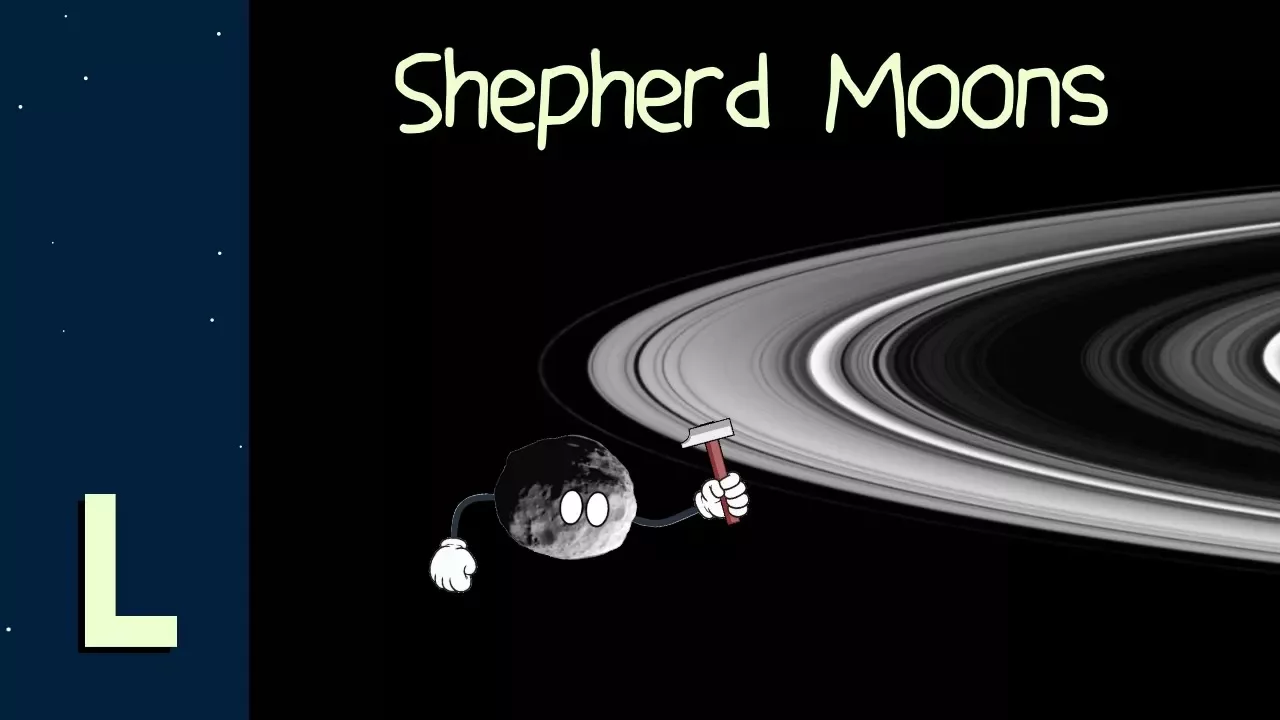
Why this video: This video provides an intuitive breakdown of the gravitational "kicks" that shepherd moons deliver to ring particles, explaining how these periodic encounters clear gaps and construct sharp boundaries.

Why this video: This video showcases real images and animations of Saturn's shepherd moons in action. It profiles Pan inside the Encke Gap and Daphnis inside the Keeler Gap, demonstrating how their gravity carves gaps and leaves wavy gravitational wakes in the ring edges.
Why this video: This video introduces Lindblad resonances—specific orbital frequencies where a moon's gravity repeatedly perturbs ring particles at the same positions in their orbits, creating structured features without needing direct contact.
Knowledge Checkpoint
- Explain how an inner shepherd moon and an outer shepherd moon work together to confine a narrow ring. Define the direction of angular momentum transfer for both moons.
- Describe how a moonlet embedded in a gap (like Pan in the Encke Gap) creates gravitational "wavy edges" on the borders of the gap.
- Define a mean-motion orbital resonance (e.g., a 2:1 or 3:2 resonance) and explain how it can clear a gap (like Mimas clearing the Cassini Division).
Module 5: Wave Propagation and Ring Evolution
In this final module, you will explore the most complex structures in planetary rings: spiral density waves and bending waves. You will study how these wave patterns are excited by moons through Lindblad and corotation resonances, how they propagate through the rings, and what these dynamics tell us about the origin, age, and ultimate fate of ring systems.
Recommended Videos
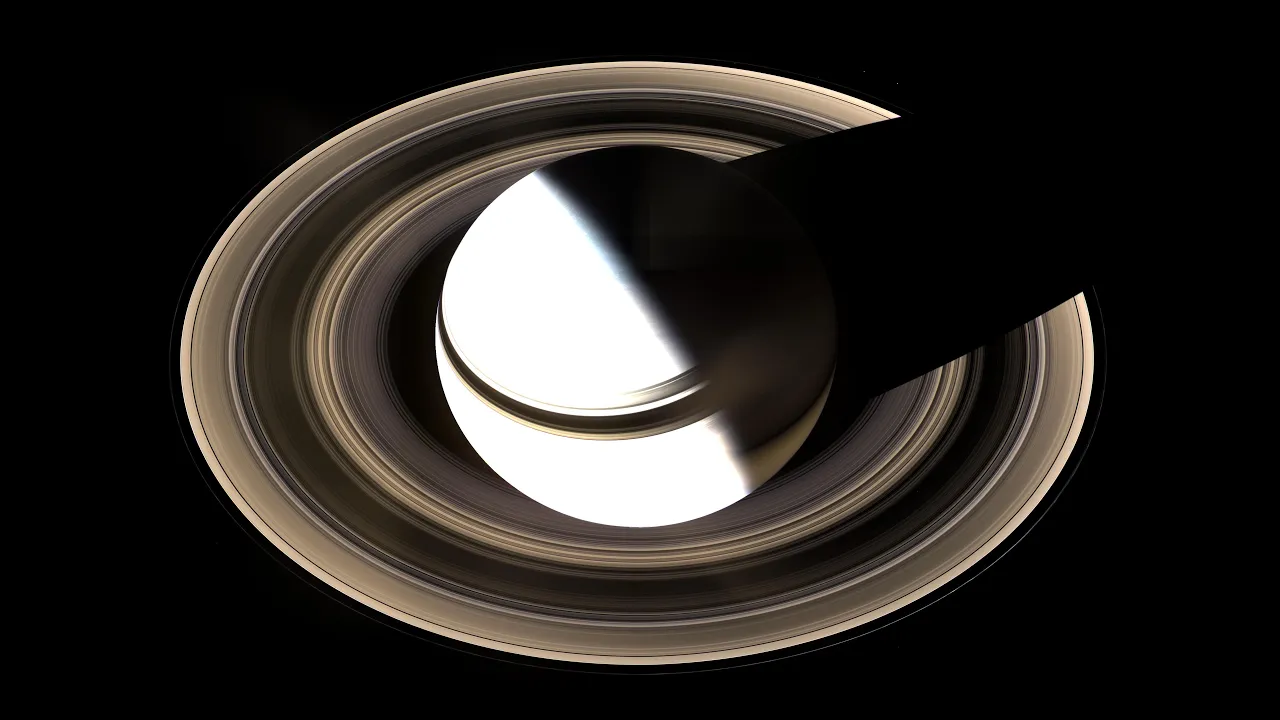
Why this video: This detailed, academic lecture by ring dynamics expert Dr. Matthew Tiscareno explores disk physics. He explains how spiral density waves are excited by external moons through Lindblad resonances, and how we use these waves to measure the local mass density of the rings.
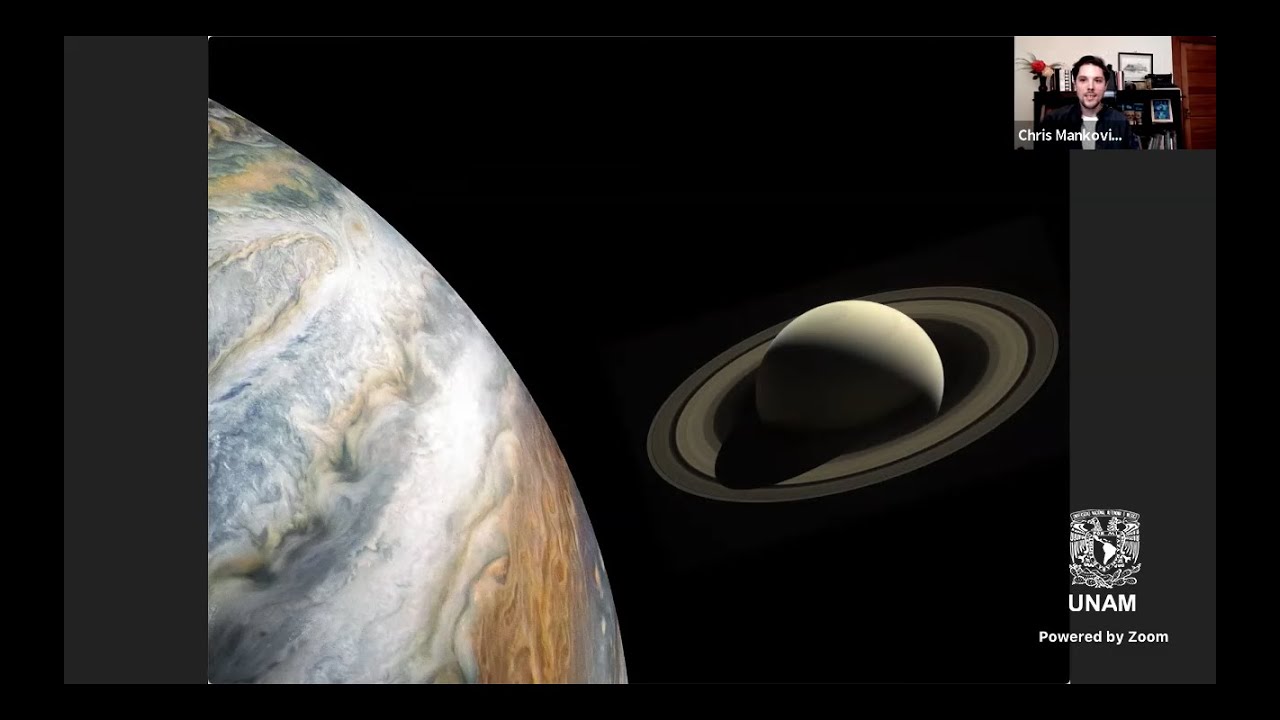
Why this video: Dr. Mankovich explains the physical difference between spiral density waves (radial compressions) and bending waves (vertical corrugated warps). Bending waves are excited by moons on inclined orbits, which pull ring particles vertically out of the ring plane.
Why this video: This video showcases high-resolution imagery of the Janus 2:1 spiral density wave. It provides a visual example of how resonant wave patterns wrap around the planet like tightly wound spiral arms.

Why this video: This video reviews the history of density wave theory, highlighting the contributions of Peter Goldreich and Frank Shu. It explains how mathematical models originally developed to explain spiral galaxies were adapted to explain Saturn's rings.
Knowledge Checkpoint
- Explain the physical difference between a spiral density wave (which causes radial compression and expansion) and a bending wave (which causes vertical, corrugated out-of-plane warping).
- Explain how a moon's orbital resonance excites a spiral density wave. How does the wave's wavelength change as it propagates away from the resonance point?
- Discuss how scientists use the wave profile (specifically its wavelength and damping rate) to calculate the ring's local surface density and viscosity.
Course Map
This flowchart shows the recommended pathway through the curriculum, illustrating how fundamental gravitational and orbital mechanics build toward complex wave mechanics and long-term ring evolution.
Key People Index
- Édouard Roche (1820–1883): French astronomer who first calculated the theoretical limit at which a celestial body held together only by gravity will disintegrate due to tidal forces.
- Dr. Matthew Tiscareno: Senior Research Scientist at the SETI Institute, a leading expert in planetary ring systems and solar system dynamics who analyzed Cassini's high-resolution images.
- Dr. Christopher Mankovich: Caltech astrophysicist specializing in planetary interiors and ring seismology (using planetary rings as a seismograph to measure a planet's interior structure).
- Peter Goldreich & Frank Shu: Astrophysicists who pioneered density wave theory in the 1960s and 1970s. Their work explained both the spiral structures of galaxies and the wave structures in planetary rings.
Final Self-Assessment
To complete this curriculum, verify that you can explain, calculate, or describe each of the following concepts:
- Keplerian Shear: Calculate the relative orbital velocity between two particles in Saturn’s A-ring separated by a radial distance of .
- Roche Limit Derivation: Sketch a simple derivation of the rigid Roche limit, balancing a moon's self-gravity with tidal forces.
- Rigid vs. Fluid Limits: Explain why a fluid body deforms into an oblate spheroid near the Roche limit and how this deformation alters the limit's constant coefficient.
- Ring Thinness Dynamics: Detail how inelastic collisions damp out vertical motion and why the rings are only 10 to 100 meters thick despite being hundreds of thousands of kilometers wide.
- Shepherding Angular Momentum: Explain how the shepherd moons Prometheus and Pandora confine Saturn’s F-ring using angular momentum exchange.
- Resonant Gap Clearing: Describe the gravitational mechanism that allows a moon to clear a gap at a mean-motion resonance (e.g., Mimas and the Cassini Division).
- Wavy Edges & Wakes: Explain how the embedded moonlet Daphnis creates wavy edges in the Keeler Gap, and describe why the waves on the inner edge point in a different direction than those on the outer edge.
- Spiral Density vs. Bending Waves: Define the physical and geometric differences between these two wave types and name the resonant conditions that excite each one.
- Ring Seismology: Briefly explain how scientists use spiral density waves to measure properties of the central planet's interior (like its core structure and rotation rate).
- Ring Lifetimes: Discuss the factors that limit the lifespan of planetary rings (e.g., "ring rain" and viscous spreading), and explain why ring systems are likely temporary structures in astronomical terms.