


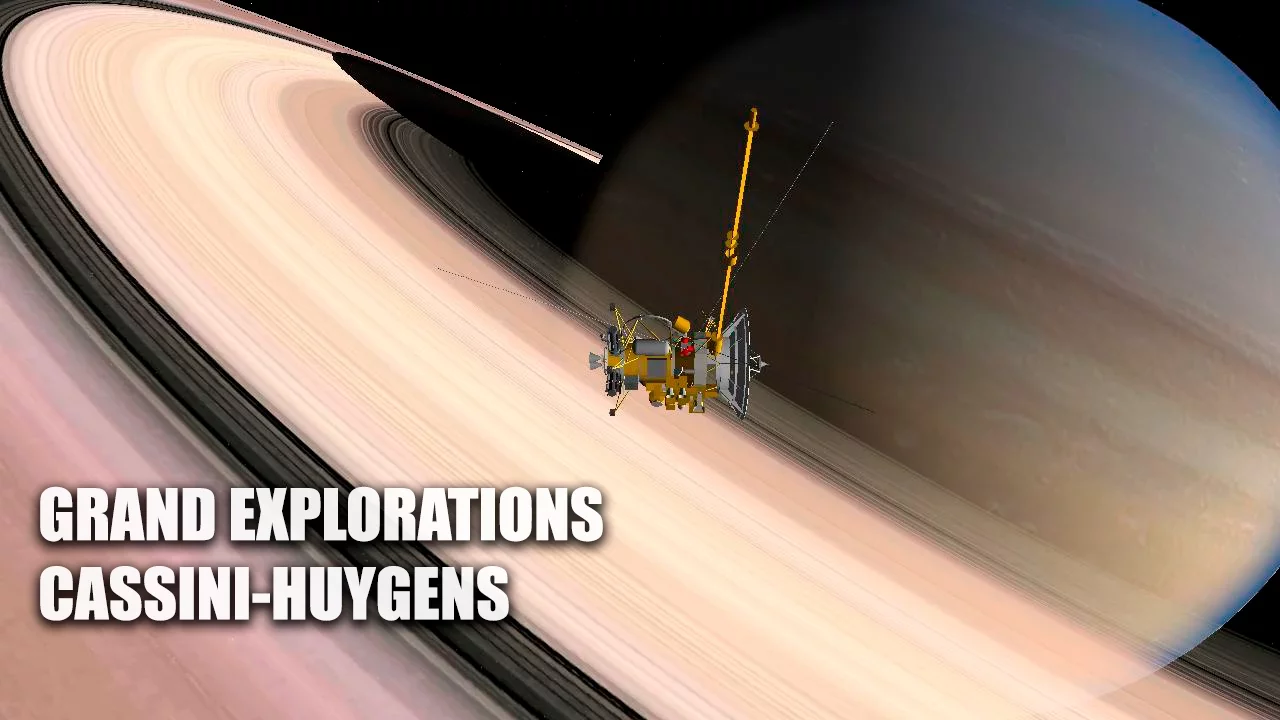
![토성, 고리가 없어진다? 토성 위성 생명체 연구와 카시니-하위헌스 탐사! [궤도의 태양계 시리즈]](https://i.ytimg.com/vi/Axo45Y0tSeo/hqdefault.jpg)





![ЧТО ОБНАРУЖИЛ ПОСЛЕДНИЙ ЗОНД НА САТУРНЕ? [Космический аппарат «Кассини»]](https://i.ytimg.com/vi/svsAENDGKH4/maxresdefault.jpg)





![MẶT TRĂNG CỦA HỆ MẶT TRỜI - những vệ tinh kỳ diệu | CÂU CHUYỆN NGOÀI VŨ TRỤ S7 [FULL SEASON]](https://i.ytimg.com/vi_webp/B-fxuCMbleI/maxresdefault.webp)



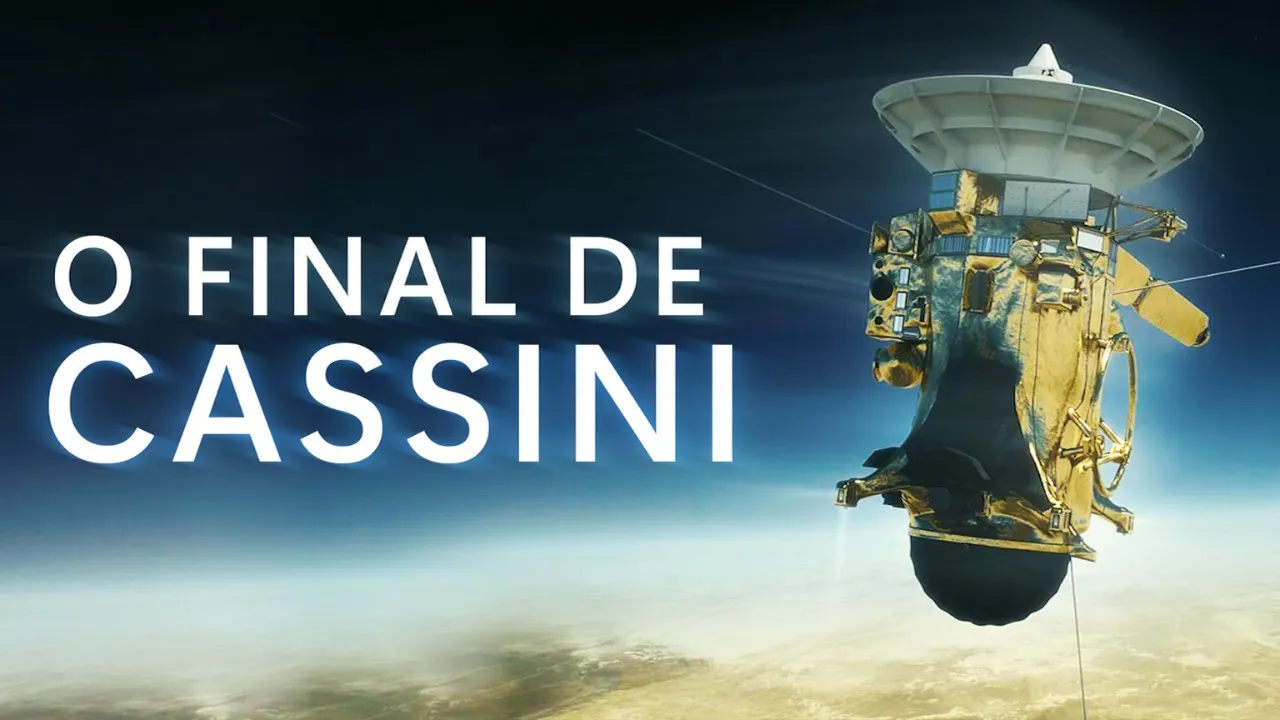
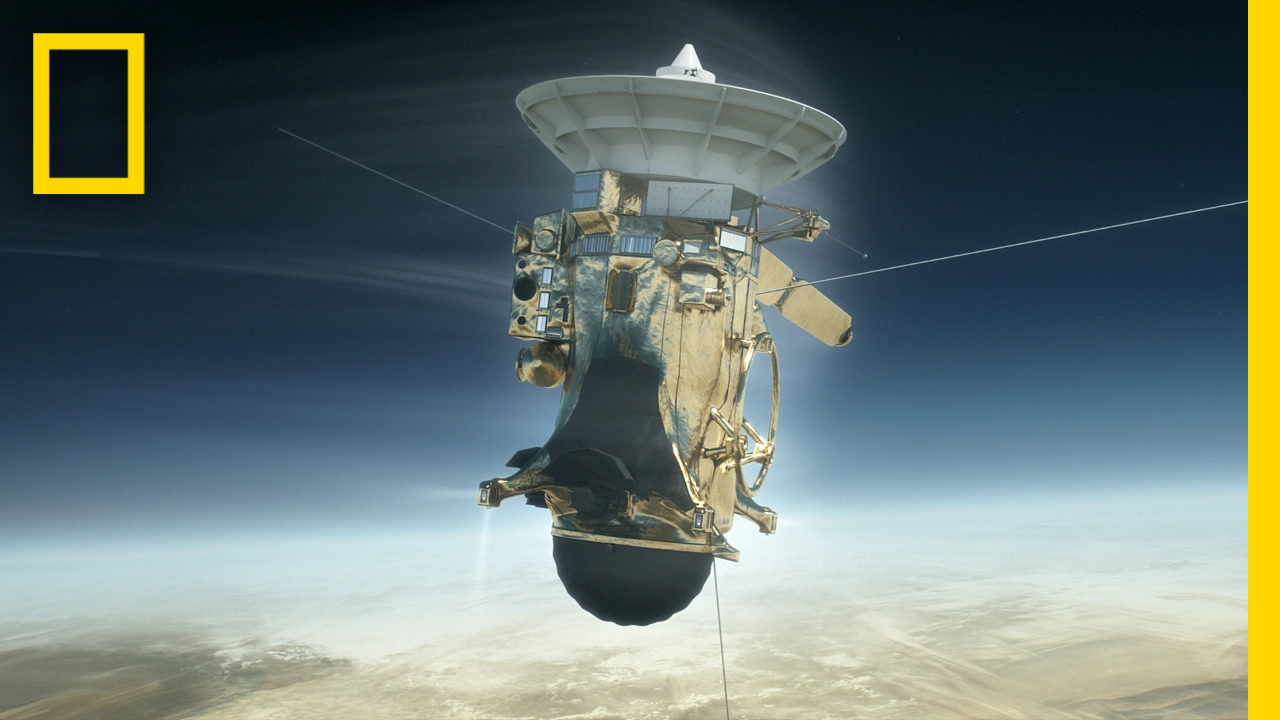
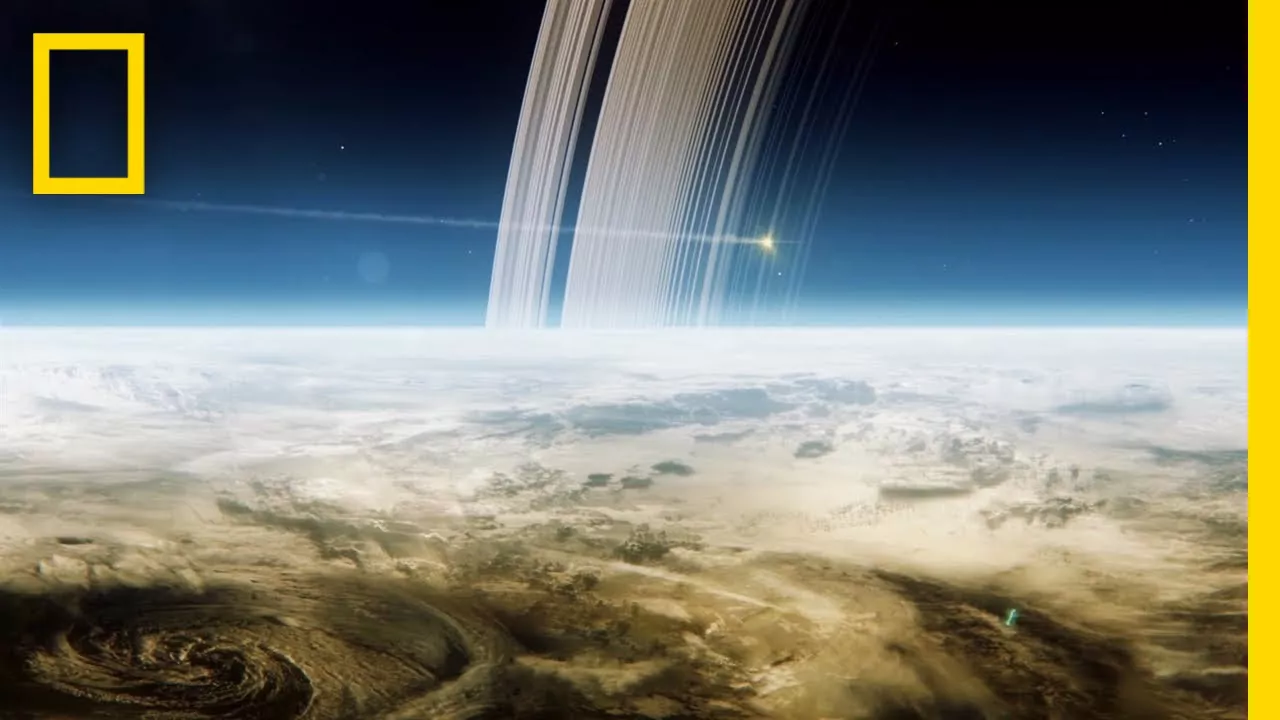
The Cassini-Huygens mission (1997-2017) was NASA's most impactful robotic probe to Saturn, spending 13 years orbiting the planet and collecting data for over 4,000 research papers. The mission's Grand Finale (2016-2017) involved daring dives between Saturn and its rings, revealing unprecedented details about shepherd moons like Atlas, Pan, and Daphnis, and their gravitational effects on ring structures. Despite its success, Cassini uncovered profound mysteries about Saturn, including its perfectly aligned magnetic field (impossible under dynamo theory), variable rotation rate, and the origin of its auroras. The mission's final atmospheric entry on September 15, 2017, provided direct samples of Saturn's atmosphere before the spacecraft disintegrated, while its data continues to yield new discoveries years later.
Cassini's Grand Finale: A Visual Journey to Saturn's Secrets
Added:When it comes to Saturn, it’s hard to summarise just how lucky we were to have the Cassini-Huygens mission. Four robotic probes have visited Saturn, but of those, Cassini-Huygens has hands down been the most impactful; and I mean that both literally and scientifically. Its data has provided the bedrock for over 4,000 research papers. It discovered 6 new moons, and helped us better understand their composition. It survived 20 years travelling 7 billion km, and spent 13 of those years around Saturn itself, gathering data on Saturn’s gravity, magnetosphere, its rings and its structure. And Cassini kept gathering data right up until the last moments of its life, as it plunged into the mustard clouds of Saturn’s atmosphere, and ultimately broke into thousands of pieces.
Couple that with the fact that it provided some of the most jaw-dropping, awe-inspiring images of Saturn and the solar system to date, and you have one hell of a mission.
I’m Alex McColgan, and you’re watching Astrum. Join with me today for this Cassini Supercut as we explore its Grand Finale – the period of time before the dive, what it discovered before and during its plunge, and the incredible discoveries continuing to be made to this day from the clues that Cassini-Huygens provided us.
If you want to see Saturn’s beauty, there is no better way to do it than through the eyes of Cassini in its Grand Finale. The first probe to reach Saturn was the Pioneer 11 probe in 1979. It was at this time that scientists confirmed that Saturn’s largest moon, Titan, had an atmosphere. They knew they had to go back and visit the moon, but this time with a lander. Now, Voyager I and II were already en route to Saturn at that point, and so naturally it was too late to include a lander with those missions. Thus Cassini-Huygens was born, and in October 1997 it was launched into space.
Getting a spacecraft to Saturn is no mean feat, as the whole trip was combatting the gravity of the Sun - the Sun trying to pull Cassini back to the inner solar system. So to help achieve the speed needed to reach Saturn, Cassini used planets as gravitational assists. It flew by Venus twice, before returning back to Earth. Earth’s gravity then slingshotted it towards Jupiter which gave it the final push needed to reach Saturn. This alignment of planets which allowed these gravity assists only occurs once every 600 years so timing in this case was crucial. And Cassini really scrapped past Earth on the second time around too; it was only 1,100 km above Earth’s surface at its closest approach.
This is made even more interesting when you realise what actually powered Cassini. It was by three RTGs, or radioisotope thermoelectric generators. Basically, the power source came from about 33 kgs of radioactive plutonium. It’s this radioactive decay which gave Cassini power, and even until the end of its life it still produced about 700 watts. The issue with the spacecraft carrying this radioactive substance was that if the scientists had gotten their calculations wrong and had crash-landed on Earth, everybody on the planet would have been exposed to the radiation.
Now, 33 kgs spread out over the whole Earth is a very small amount, but in the worst-case scenario NASA estimated it would have caused about 5,000 deaths from cancer. They put this down as an acceptable risk though, as the chances of this happening were only 1 in a million. Cassini used RTGs because solar panel technology wasn’t good enough at the time for the Sun to power something so distant. With RTGs, Cassini would have a very long operational life, and it might still be able to carry on even now if it wasn’t for the fact it eventually ran out of propellant fuel.
Cassini had numerous objectives, to understand the structure and dynamic behaviour of Saturn’s rings, explore Saturn’s moons more fully, measure the magnetosphere of Saturn, study Saturn’s atmosphere, and study Titan more extensively. This last part is where the Huygens part of the Cassini-Huygens comes into play. You see, Huygens was a lander attached to the Cassini spacecraft, designed to see what was going on under the hazy clouds of Titan. Now Huygens is the part of the mission built and operated by the ESA (The European Space Agency). The probe was only about 1.3 meters wide, and weighed 300 kgs. When it detached from the orbiter, it spent 22 days in space before entering Titan’s atmosphere. The only system aboard that was active at this point was a wake-up timer, due to wake up the probe only 15 minutes before it entered the atmosphere.
And when it woke up, what it saw was amazing. This video is an actual sped-up version of the 2-and-a-half-hour descent. The main mission of Huygens was actually about this descent, taking readings from the atmospheric pressure, its composition, wind speed and so on. And because the mission was only to measure atmospheric readings, the battery life wasn’t expected to last long beyond the landing. The scientists thought they could be landing on an ocean or lake and so had designed Huygens accordingly.
From what you see though, it actually landed on what could be the bed of a dried-up lake.
The mission for Cassini itself has been remarkably successful. As well as scientific data it has picked up over the course of those last 13 years, it has been able to provide some of the most stunning pictures found of space. I just want to showcase some of my favourites of Saturn.
And of course Saturn’s moons are beautiful in their own right too. And some very dedicated souls have even taken 1,000,000 photos Cassini has taken to show us what it would be like to be sitting on the Cassini spacecraft. These are all real images, they’ve only been colour corrected and enhanced, and put in order to show movement. There’s no CGI – it’s simply amazing.
As Cassini’s fuel began to run low, scientists began to consider how best to get the most data they could out of the time they had left. To achieve this, they sent commands to Cassini telling it to perform some very close flybys of the planet and some of its moons, getting closer to Saturn and its rings than it ever had before. Beginning on Nov. 30, 2016, Cassini repeatedly climbed high above Saturn's north pole, then plunged to a point just outside the narrow F ring (which is the edge of the main rings), completing 20 orbits in total.
Then, on April 22, 2017, Cassini would leap over the rings to begin its final series of daring dives between the planet and the inner edge of the rings. This was the Cassini "Grand Finale," a series of loops and dives that brought the probe closer and closer to its object of study, facing greater and greater danger as it flew until finally, as its data became purest - as Cassini would fly into the embrace of Saturn itself - Cassini’s chance for annihilation would become certain. NASA’s website states the reason for this final mission. “As it plunges past Saturn during the Grand Finale, Cassini will collect some incredibly rich and valuable information that the mission’s original planners might never have imagined: The spacecraft will make detailed maps of Saturn’s gravity and magnetic fields, revealing how the planet is arranged on the inside, and possibly helping to solve the irksome mystery of just how fast the interior is rotating. It will vastly improve our knowledge of how much material is in the rings, bringing us closer to understanding their origins. Cassini’s particle detectors will sample icy ring particles being funnelled into the atmosphere by Saturn’s magnetic field. And its cameras will take amazing, ultra-close images of Saturn’s rings and clouds. No other mission has ever explored this unique region so close to the planet. What we learn from these activities will help to improve our understanding of how giant planets – and families of planets everywhere – form and evolve. “ At the end of its final orbit, as it would fall into Saturn’s atmosphere, Cassini would complete its 20-year mission by ensuring the biologically interesting worlds Enceladus and Titan would never be contaminated by hardy microbes that may have stowed away and survived the journey intact.
It’s inspiring, adventurous and romantic – and a fitting end to this thrilling story of discovery.
But let’s take a closer look at some of these final moments.
During Cassini’s Grand Finale, NASA became willing to trade Cassini’s prospects for longevity for a chance at unprecedented levels of closeness to Saturn. This was an easy trade to make – after all, Cassini was running out of fuel, so its survival was already off the table. Making this decision meant Cassini was given the go-ahead to approach the planet closer than ever before, darting in between the rings. But what did it see? Did this unique perspective show anything we’ve never seen before? Let’s take a look at some of the awesome sights Cassini saw during its Grand Finale.
Well, starting with the moons of Saturn, it has seen some of the shepherd moons in unprecedented detail. This is a close approach of Atlas, a 40km wide moon near the outskirts of the A ring. What looks remarkable about this moon is the lack of impact craters on its apparently smooth surface, making it look absolutely bizarre. Dust from the rings is collecting over the surface, particularly around the equator of the moon, smoothing it over and giving it this disk shape.
A similar thing happens with the second-innermost moon of Saturn, Pan. At 30km wide and found in the Encke Gap, any particles from the rings that stray into the 350km wide path get swept up by Pan. This keeps the Encke gap steady and constant.
Daphnis is another shepherd moon, sadly not seen in quite so much detail. But due to the gap it is located in, its effect can be seen for hundreds of kilometres. It is only 8km in diameter, and is found in a very narrow gap in the A ring called the Keeler gap. Its gravity is very weak, but is just enough to whisk the nearby dust particles as it brushes by. This creates these waves, or ripple effect in the nearby rings, sometimes even ripping material directly out of the ring, visible in this little trail here. Not only do these ripples move side to side, but up and down too as can be seen by the shadows they create. I can only imagine what it would be like to sit on Daphnis and watch as waves follow its orbital path, with glorious Saturn and its many other moons in the background. It would be quite the sight to behold.
Talking of the rings though, Cassini has been able to capture some spectacular images. One of my favourites from the Grand Finale is this one, showcasing the Janus 2:1 spiral density wave. Amazingly, what you’re looking at here is the result of the same process that creates spiral galaxies, just much more tightly wound. What appears to be many separate rings, is actually only two spiral arms looping around the planet many times, so every second line you see in the image belongs to the same spiral arm. This image is part of the B ring, at a position where the ring orbits twice for every one orbit of Saturn’s moon Janus, causing an orbital resonance. The photo gives the illusion that the image is tilted away at the top left, but this isn’t the case. The illusion is caused by the way density waves propagate from the planet, the wavelength decreasing with the distance from the resonance. And this is where this resonance gets even more mind-blowing. Janus, the moon that contributes to the resonance, switches orbital positions every four years with its close neighbour moon, Epimetheus. Every time this switch takes place, the rings respond, creating a new crest in the waves. NASA says “The distance between any pair of crests corresponds to four years' worth of the wave propagating downstream from the resonance, which means the wave seen here encodes many decades' worth of the orbital history of Janus and Epimetheus. According to this interpretation, the part of the wave at the very upper-left of this image corresponds to the positions of Janus and Epimetheus around the time of the Voyager flybys in 1980 and 1981, which is the time at which Janus and Epimetheus were first proven to be two distinct objects”. This encoding reminds me a bit of a tree trunk encoding how many years it’s been alive by the amount of rings it has. Simply amazing.
Apart from some other beautiful and detailed images of the rings, other interesting sightings have been these little propeller features dotted around the rings in a number of locations. This image shows both sides of the rings, the top image shows the illuminated side and the bottom the unlit side. Scientists do this to compare and try to figure out details. Even though the scale of the image is only about 500m per pixel, the moonlet might not even be able to be resolved. You might just be able to see some trace of it in this top image, but what can be seen is that the moonlet is physically connected to the rings by this band of materials.
As I mentioned, this wasn’t the only moonlet trying to create a gap in the rings. Here is another found right next to the Encke gap, and here is another and probably the biggest out of all three. None of these moonlets are thought to be bigger than 2km and probably have the density of a snowball.
The last interesting thing Cassini was able to image within the rings is extremely small but solid objects which have formed around the F ring, potentially caused by the perturbations of some of the shepherd moons around there. They seem to be solid as they have survived crashing into the F ring a number of times, kicking out dust and particles which sometimes then even follow their orbit, as can be seen by the haze around them. The objects themselves are not actually visible due to the dust obscuring the view.
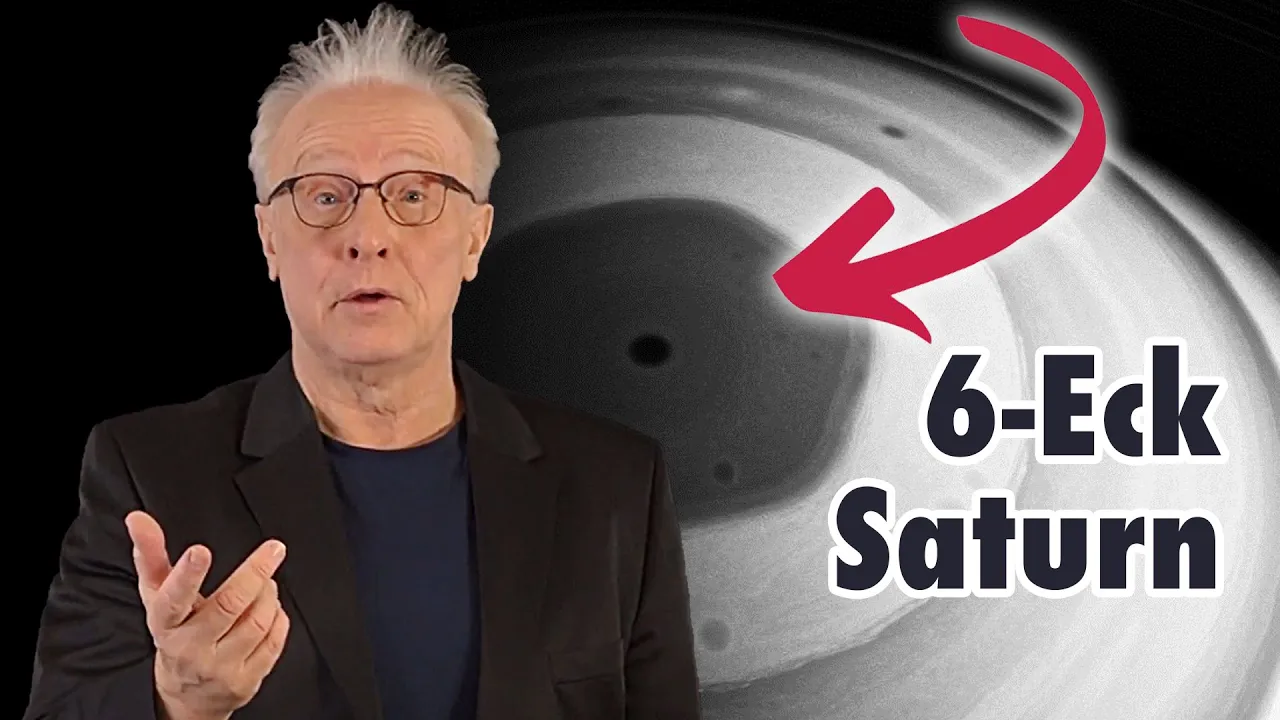
Lastly, let’s look at the planet itself. As Saturn’s northern hemisphere was in full summer at the time Cassini flew by, its remarkable hexagon around the pole was in full view. In the centre of the hexagon is found a permanent polar vortex with the eye wall of a massive hurricane. Interestingly, the pole seems to be changing colour with the season, as you can see quite clearly in comparison to 2012 where the pole appeared quite dark in colour. With the assistance of other wavelengths of light, other storms are visible and can be seen dotted all over the planet, as well as bands reminiscent of Jupiter, just not quite so vivid in natural light.
Also, because of the proximity of Cassini to the planet, it was able to get a good look at the planet’s horizon. On the left of the image can be seen a haze in the stratosphere of the atmosphere that disappears towards the right of the image. When Cassini did enter the atmosphere on its final approach, it was thought it would not survive to even reach this haze. However, scientists weren’t too worried about that. What was of particular interest to scientists is what the atmosphere consists of. Cassini would dive into that atmosphere to find that information, and would burn up in the process, making it the last readings that Cassini would ever send.
But, one week before it entered that atmosphere, Cassini was still taking images. Some of these final images are fantastic, although be aware that Cassini is not capable of real-time video capture. The videos that I’m about to show you are time-lapses, the splicing together of countless individual images into glorious visualisations of what it would be like to fly with Cassini on its ultimate journey into Saturn.
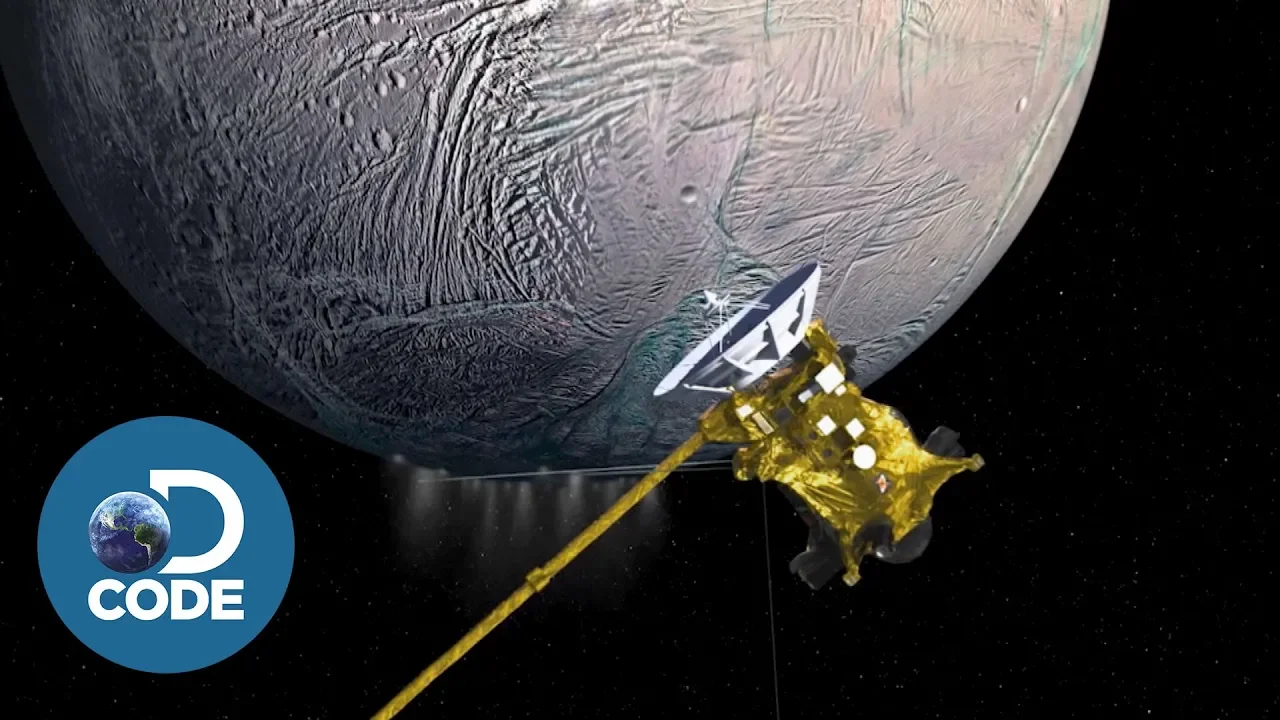
Not all of these images are of Saturn itself. The first time lapse we will look at is from the 8th September 2017, only one week before the end of Cassini’s mission. One of the main focuses of Cassini during its mission was the moon Enceladus, one of the prime candidates in the solar system to contain life in a subsurface ocean. Cassini discovered over 100 water plumes erupting through the moon’s crust from this ocean, water which freezes in the space environment and has now formed the beautiful E ring around Saturn. This ring is very tenuous, only visible when backlit by the Sun, and is potentially the bluest naturally occurring object in the solar system. Here is a great view of Enceladus’ effect on the densest part of the E ring, you can see the plumes disturbing and replenishing the ring. Cassini’s final look at Enceladus’ plumes were captured in this remarkable time lapse taken over a 14-hour period.
On the 11th September, Cassini was near the furthest point of its final orbit and captured this beautiful mosaic in natural light. Visible are the thickest of Saturn’s rings, D, C, B, A and F, with Saturn’s short shadow being cast over them. Saturn’s northern hemisphere was experiencing summer during this time, which means that Saturn’s famous hexagon storm is visible in all its glory. You can also just about notice Saturn’s subtle bands in natural light. What’s really interesting about this image, however, is that the nightside of Saturn is dimly illuminated.
This is due to light reflecting off the rings, meaning Saturn’s nights in the hemisphere facing the Sun don’t get that dark. Below the glow of the rings, Saturn is pitch black.
As Cassini began to approach Saturn again on the 12th of September, it took images of Saturn’s atmosphere near the planet’s terminator line. Incredibly, because the Sun is low in the sky here, huge cloud structures can be seen casting shadows that stretch for many kilometres. You may think this is a close-up of Saturn, but actually we are looking at a scene about 5,500km across. Saturn’s moon Titan could easily fit in this shot.
Cassini was getting closer and closer to Saturn. On the 13th September, it peered one last time at Daphnis, a shepherd moon keeping the A ring in check. The gravity of Daphnis causes ripples in the ring, and some of you keen observers will notice ripples in front of the moon, as well as behind. This is due to the orbital speeds of the rings and the moon. The inner ring orbits faster than Daphnis, meaning the ripples overtake the moon, exposing more ring material to the moon’s gravity. On the other hand, the outer ring travels slower than Daphnis, meaning the ripples lag behind the moon. By the time the ring material reaches Daphnis on either side again, the ripples have already smoothed out.
On the same day, Cassini had one last look around the Saturn system. It captured a view of Titan, a moon it focused on heavily during its mission, a remarkable world with a thick nitrogen atmosphere. It also peered at Saturn’s rings, with the uneven F ring just about visible at the bottom of the image. And as Saturn got bigger, it took one last look at Enceladus over a 40-minute period before it disappeared from view behind the limb of Saturn.
The final image Cassini ever took was looking over the region where it would plunge into the atmosphere. It was night-time here, and so Saturn is lit up by light reflected off the rings.
On the final day, photos were not on the science agenda. As beautiful as they are, they use up a lot of valuable bandwidth, and scientists wanted to get every bit of data real time before the spacecraft was destroyed. This was a unique opportunity; we had never probed Saturn before this. When Cassini first hit the tenuous parts of Saturn’s atmosphere, it was traveling 123,000km/h.
The remnants of Cassini’s fuel were deployed by its thrusters to keep Cassini’s antenna aimed at Earth. At this point, Cassini was 1,900km above Saturn’s clouds. A minute later, these thrusters were firing at maximum capacity to keep Cassini from spinning out of control. Cassini was directly sampling Saturn’s atmosphere, but this atmosphere was also heating Cassini up. Just 10 seconds later, the thrusters were overcome, and Cassini began to tumble, cutting off communication with Earth. Cassini’s onboard computers at this point would have been trying to figure out what was going wrong. Gyroscopes and star trackers would tell the computer that it is spinning, and it likely would have gone into a safe mode to divert power in an attempt to right itself. A minute or so later, the spacecraft would have disintegrated altogether and burned up in Saturn’s atmosphere.
As data started arriving 1 and a half hours later on Earth, this final part of the mission was deemed to be a great success. Cassini recorded data from direct analysis of Saturn’s atmosphere, its ionosphere, dust particles in the atmosphere, from magnetic field measurements and perhaps more that has yet to be uncovered from the data. And that’s the amazing thing about the Cassini mission, it just keeps on giving. Science papers and discoveries are still being made as the data it collected is analysed and re-examined. What have we discovered from Cassini’s data in the years since its ground-breaking mission? You’re about to find out. But be aware – some of the things Cassini has learned about Saturn has only served to make the planet even stranger.
You may think you know Saturn. Its iconic rings are the largest in the Solar System, and its hazy yellow surface is both enigmatic and instantly recognisable.
It is the 2nd largest planet, the least dense, and the 6th from the Sun. And yet, Saturn is an enigma. There is a vast mystery lurking beneath its obscuring atmosphere, uncovered by the CASSINI probe; one that the scientific community still does not have consensus about. Saturn behaves in ways that our conventional models claim is impossible, from its temperature, to its magnetosphere, to even the very length of its days.
What is going on with Saturn? And what are our best attempts at explaining these baffling phenomena?
The CASSINI probe arrived at the gas giant on July 1, 2004. It was not the first probe to arrive at Saturn – 3 others had already done flybys. However, it was the most thorough. As we have already mentioned, it spent 13 years circling the planet, collecting reams of data using its various spectrometers, magnetometers and other equipment. The knowledge it gave us has been a huge benefit, but sometimes only serves to deepen Saturn’s mysteries.
Take for example that hexagon storm on Saturn’s North Pole. The edges of this 29,000km wide storm could each fit the Earth comfortably inside, and as best we are able to tell does not shift its longitude, remaining fixed in its location, travelling with the rotation of the planet; unlike the rest of Saturn’s swirling clouds, pushed along by its up to 1800km/h winds.
This storm is undeniably a strange one. Scientists do not yet have a full explanation for it (although there are some lab experiments that have created close approximations to hexagons on much smaller scales). But it is not alone. As the mountains of CASSINI data started getting analysed in the years since the end of its mission, more mysteries have started coming in.
It started with a fairly innocuous question: How long is a day on Saturn? Although we’ve watched Saturn in our sky for thousands of years, scientists did not yet have a definitive answer. After all, it wasn’t as simple as looking up at the planet and seeing how long it took for its rocky core to rotate. Saturn’s thick cloud cover obscures any landmarks that might exist on any hard surface below, and those clouds move at different speeds to the core, due to the powerful wind. The rings themselves orbit Saturn at different speeds, so they don’t settle this question – you can’t look at how fast they orbit and hope it’s the same. After all, most moons don’t do this, so rings are no different.
Rather cleverly, scientists do have techniques for figuring out the rotation of a gas giant by looking at its magnetic field, and it was hoped that this method might be used on Saturn. Planets with magnetic fields produce them via a dynamo effect. As the planet rotates, liquid metal in the core spins and shifts, and this colossal motion of molecules create massive currents of energy, which in turn produce magnetic fields. One feature of this is that, thanks to this rotation, the pole of this magnetic field is always off from the axis of rotation for the planet itself. If the two lined up, the magnetic field wouldn’t survive for long. So, all you have to do is detect the magnetic fields around a planet – which CASSINI could do – and watch as the magnetic pole shifts in a circle around the true axis of the planet. Once the magnetic pole has completed one rotation, you have your day.
Only, Saturn apparently does not play by the rules, as its magnetic pole is almost perfectly aligned with its axis of rotation, to an order of accuracy of less than 0.1 degree. And in spite of dynamo theory claiming that this should be impossible, Saturn’s magnetic field is alive and well. Its magnetic moment is 580 times more powerful than Earth’s, and is extremely influential on the Saturn system as a whole. Scientists do not know how this magnetic field occurs, as it is impossible under dynamo theory, but no other method for producing such a field is proven. Either a planetary dynamo IS at play in Saturn’s core, but some other effect is occurring in the atmosphere to warp the magnetic field lines to be perfectly aligned with the axis of rotation, or we are observing a completely new method of producing a magnetic field on Saturn.
So, it was back to the drawing board for solving a Saturn day. Fortunately, radiation proved to be of more help. Saturn is an electrically live system.
Charged ions move between the layers within its atmosphere, and even between its rings and its ionosphere. Scientists noticed that Saturn emitted radio waves as a result of all of the magnetic fields at play, and these radio waves rose and fell in intensity. In fact, it seemed to mirror what you might expect to see as a result of the planet rotating – higher levels of radiation would appear every 11 hours or so. As a result, scientists concluded with some certainty that this was Saturn’s day-length. Their initial estimate based on Voyager data was 10 hours, 39 minutes and 23 seconds. It was hoped that CASSINI would be able to improve the accuracy of this figure.
Initially, CASSINI was able to do so. But then it got really weird, because over the course of the 13 years of CASSINI’s study of Saturn, this number started to shift.
It drifted about 1 percent over the course of a year – sometimes rising, and sometimes falling.
This almost seemed to imply that the planet itself was altering the speed of its rotation; sometimes speeding up, and sometimes slowing down. To be clear, a planet as massive as Saturn should not be doing that. As such, scientists concluded that this wasn’t happening, and some effect must be once again muddying the waters around Saturn. Some aspect of the atmosphere was causing shifts in the fields, making the radiation fluctuate over time, hiding the true rotation of the planet beneath a cloaking shimmer.
Another key consequence of the planet’s magnetic field is the auroras that shine at Saturn’s poles.
But while on Earth our auroras are the results of the solar wind interacting with our atmosphere, it is thought that this does not account for the auroras on Saturn. CASSINI detected that at least some of them occurred regardless of what the solar wind was doing at the time, meaning that Saturn’s auroras are non-solar originating.
Something strange must be going on inside Saturn. It was hotter than it ought to be, too. It radiates out into space about twice as much as it receives from the Sun. And while some of this may just be gravitational compression of the planet, the rest needed some other way to account for it.
Ultimately, all of this needed some unifying explanation. And fascinatingly, thanks to Cassini’s data we discovered the key to all of it may lie within Saturn’s gaseous atmosphere.
Saturn is a gas giant. It is almost entirely made of hydrogen and helium – about 75% of the former and 25% of the latter, with some other trace elements mixed throughout. Not all of this is gas, as the great mass of Saturn means that the deeper into its atmosphere you go, the more intense the heat and pressure that you are subjected to. It is thought that this pressure forces the gaseous hydrogen to become liquid metal. Some scientists theorise that this liquid hydrogen, or perhaps even hydrogen compressed so densely that it becomes diamond, rains down into the depths of Saturn, and the friction this generates explains some of Saturn’s unusual heat.
But the rest comes from the auroras. Although these are not fully understood, it is thought that they are the product of electrically charged particles coming into Saturn from its rings and moons. Whatever their source, these auroras may be creating enough heat to warm the upper atmosphere of the planet.
Temperatures so hot create other effects. Where warm fronts meet cold, powerful winds are formed. It is theorised that these winds carry charged ions around Saturn’s upper atmosphere, and these electrically charged winds are what is skewing the data from Saturn’s radiation, causing its variance. Perhaps such motion of electrical currents might also explain why Saturn’s magnetic fields are not where they are supposed to be. This could be caused by a conductive layer within Saturn’s clouds moving at a different speed to the others, creating fields of their own. At least, so goes one explanation. In all this, it should be clear that many of these answers lack final proof. Scientists are trawling through the data given by CASSINI, hoping for further insights. If these are not forthcoming, then ultimately it will take another mission to Saturn to find the answers to these puzzling questions.
But what about the length of Saturn’s day? Thankfully, this is one mystery that does have an answer. And it turned out the clue lay in the rings after all.
Rather than investigate the electrical and magnetic effect of Saturn on its rings, scientists realised that Saturn would also tug at them through its gravity. This is fairly obvious, but what was more insightful was that Saturn would not tug at them uniformly.
Saturn is not a perfectly round ball. Any variance in its shape result in variance in its gravitational field. Saturn’s rings were a perfect canvas to look out for such variance.
As Saturn pulled at its rings with rising and falling force, at certain locations in the rings, we would be able to detect ripples. Scientists started looking for these ripples, and located them. By measuring the distance between them, it was finally possible to calculate the length of Saturn’s day. They weren’t far off. It was 10 hours, 33 minutes and 38 seconds. And this time, scientists are fairly certain that they’ve got it right.
So at least this mystery was solved. And yet Saturn’s other mysteries still persist. The next mission to Saturn will launch in 2027 with NASA’s Dragonfly, although this will focus more on exploring Titan, Saturn’s largest moon. Titan is the most Earth-like object in the solar system as it is the only place thought to have atmosphere filled with nitrogen, similar to ours (albeit with no oxygen), and rain cycles and liquid lakes on its surface (although these are methane rather than water). So it’s understandable why scientists want to give it a look. Still, it means that it may be some time before Saturn’s deepest mysteries find themselves answered.
Saturn breathes. The winds that might prove to be the lifeblood of the system thrum and flow across its atmosphere. Its delicate balance of magnetic fields and gravity coax at its rings, keeping them perfectly aligned.
Saturn’s rings are thought to be surprisingly young. Saturn may be over 4 billion years old, but there is evidence that the rings may have only formed in the last 100 million years. And they are slowly draining back down into Saturn’s atmosphere, so in another 100 million years they may be gone. This is sad to me, but I also feel strangely fortunate. If humanity hadn’t arrived when we did, we might have missed this beautiful cosmic sight.
It might be unscientific to say that, as a planet has no real choice in whether it gives us a gift or not. But I’m nonetheless grateful to have been witness to the enigmatic and wondrous world that is Saturn. And seeing those enigmas and wonders – all the beauty, all the scientific data – just would not have been possible if it had not been for the incredible Cassini-Huygens. This truly was one of the greatest space missions of our time.
Thanks for watching! Want to learn about another fantastic space mission, this time around Mercury? Watch the Mercury MESSENGER supercut here. If you want your favorite planet on your wall go scan the QR code or follow my link in the description below.
A big thanks to my patrons and members for your support. If you too want your name proudly listed at the end of every Astrum episode, check the links below. All the best, and see you next time.
Up Next

Foundry Smart Contract Development: Build, Test & Deploy Solidity
@naderdabit
21.8K views•2022-06-22

Triumph of Orthodoxy Icon: Byzantine Art & History Explained
@BenCallan
2.1K views•2024-08-06

FastAPI vs Flask vs Django: Choosing the Right Python Web Framework
@TechWithTim
302.5K views•2024-05-26

Game of Thrones Opening Credits: A Cinematic Analysis
@gameofthrones
46.3M views•2011-04-18
Related Study Plans & Knowledge Roadmaps
Structured learning paths in General & Interdisciplinary Studies