The official opening credits of Game of Thrones, created by HBO, feature a powerful musical composition that establishes the epic fantasy tone of the series, which is based on George R.R. Martin's bestselling novels and explores themes of power, betrayal, and survival in a medieval-inspired world where summers span decades and winters can last a lifetime.
Game of Thrones Opening Credits: A Cinematic Analysis
Added:Deep Dive
Basic elements of cinematography, including camera movement, lighting, and scale, to understand how visual meaning is constructed.
The 3 Basics Of Cinematography
662.9K
Cinematography is built upon three fundamental elements that directors of photography (DPs) must master: exposure (controlling light through shutter angle, aperture, and ISO to achieve proper brightness), lighting (using continuous light sources to create visually appealing atmospheres and maintain consistency between shots), and camera positioning and movement (including framing choices like the 180-degree rule and understanding how different movements psychologically affect audiences). These three elements work together to build and capture the visual look of a film that supports the story being told.
Click to watch →
This is How You Practice Cinematography (All By Yourself)
1.5M
Cinematography combines multiple interconnected elements to tell stories visually. The core skills include composition (connecting shots and engaging audiences), lighting (creating mood), color (enhancing emotional expression), lens choice (selecting focal lengths for visual effects), camera settings (shutter speed, white balance, exposure), and camera movement. Each element serves the story—beautiful shots mean nothing if they don't support the narrative. Cinematographers must intentionally use composition to keep audiences engaged, lighting and color to express emotions, and appropriate lens choices for each moment. The story always matters most, and all technical decisions should serve the director's vision.
Click to watch →

5 Most Powerful Elements of Cinematography
66.7K
Cinematography relies on five interconnected elements: exposure (controlled by ISO, aperture, and shutter speed), composition (arrangement of visual elements following principles like the rule of thirds), camera movement (static or dynamic choices), camera angles (perspective manipulation like Dutch angles), and color (temperature, white balance, and stylistic choices). Mastering these elements allows filmmakers to control how their films look and feel, transforming visual storytelling from good to unforgettable.
Click to watch →
3 основы для оператора-постановщика (видео для начинающих)
33.4K
The three fundamental elements that a cinematographer (DP) must master are exposure, lighting, and camera positioning/movement. Exposure controls the amount of light reaching the sensor through shutter angle, aperture, and ISO sensitivity, forming the exposure triangle that determines image brightness. Lighting serves two critical functions: creating visually appealing images that match the story's tone and maintaining consistent illumination across shots to ensure continuity. Camera positioning and movement involve understanding the 180-degree rule and recognizing how different camera movements (handheld vs. smooth tracking) create distinct psychological effects on the audience. Together, these three elements enable cinematographers to translate narrative intent into visual language.
Click to watch →
सिनेमेटोग्राफी क्या है II What is cinematography II 6 things of cinematography
138.6K
Cinematography is the art and craft of filmmaking that combines artistic vision with technical skill to create compelling visual storytelling. The six essential elements that define quality cinematography are: camera placement (positioning the camera to capture the scene effectively), camera movement (using deliberate motion to enhance narrative), composition (arranging visual elements within the frame), shot size (choosing appropriate framing from wide to close-up), focus (ensuring the subject is sharp while controlling background blur), and lighting (using light to create mood, depth, and visual interest). Mastery of these elements allows filmmakers to transform ordinary footage into cinematic art.
Click to watch →
Deep Dive
The fundamental purpose of title sequence design in television and cinema, specifically how it sets the tone, atmosphere, and narrative expectations.
Top 10 TV Show Title Sequence Intros
2.2M
TV title sequences serve as the first impression for viewers and set up the show that follows. They combine music and visuals to create an immediate connection with the audience. The quality of a title sequence has evolved over decades as technology has improved, with newer sequences often being more sophisticated than older ones. However, the fundamental purpose remains the same: to establish the tone, theme, and expectations for the series.
Click to watch →

Movies, Myth, Metaphor: Art of Film and TV Title Sequences | Adobe Creative Cloud
998
Title sequences function as poetic storytelling devices that use metaphor rather than literal approaches to frame narratives. The second most important function is setting the tone for the show, particularly crucial for comedies where titles must give audiences permission to laugh. Successful titles transform legal requirements (displaying credits) into storytelling opportunities. More specific designs are superior to generic ones—the test is whether a title could work for any other show. Sequels present unique challenges requiring balance between honoring fan expectations and introducing fresh elements. Effective title design begins with conversations with directors to understand themes and aesthetics. Directors often have specific visions, especially for franchises continuing established styles. Research involves examining vintage materials, personal artistic memories, and finding unexpected connections between narrative elements and visual metaphors. End titles differ from main titles by occurring after plot revelations, allowing celebratory tones and multiverse references. Working with people better than yourself is essential advice for entering this collaborative industry.
Click to watch →

The art of film titles
8.6K
Film title sequences are miniature films within movies that serve both practical and artistic purposes: they fulfill the contractual obligation to display cast and crew names (typically for about 2 seconds each) while also creating emotional responses and establishing the film's tone through creative design, music, and visual storytelling. Effective title sequences balance utilitarian name display with artistic expression, often working on viewers subconsciously to evoke feelings and set expectations. Great title sequences feature simple, pure ideas at their core that transform into something meaningful, and they have evolved from simple fancy fonts to complex, nuanced designs that can even reward patient viewers with additional content at the end.
Click to watch →
How To Make Your Own Title Sequence & The Theory Behind Them
151.7K
Title sequences serve multiple critical functions in media production. They are not merely introductions but opportunities to set the tone of the story, reinforce brand identity, and provide instant recognition. The opening moments represent the only true moment of mystery before audiences see the first frame, making it essential to invite viewers into the fictional world effectively.
Click to watch →
Use Graphic Design to Expand Your Film's Universe!
10.9K
Title sequences serve as the first visual experience for audiences and establish the film's mood and tone. Analyzing classic title sequences reveals how masterful designers distill complex narratives into pure visual form. The opening titles should immediately communicate the film's aesthetic and emotional direction, setting expectations for what follows.
Click to watch →
Deep Dive
A general familiarity with the geography and main factions of Westeros and Essos in the 'Game of Thrones' universe to understand the map's significance.

Game of Thrones World Map EXPLAINED
2.4M
Essos contains diverse regions: the Free Cities (nine independent city-states like Bravos, Norvos, Qohor, Meereen, Volantis, Tyros, Pentos, Lys) were founded by Valyria. The Dothraki Sea hosts nomadic horsemen led by khals. Slaver's Bay includes Astapor, Yunkai, and Meereen. Further east lies Qarth, gateway to the east. The Valyrian Peninsula is now the dangerous Smoking Sea from the Doom. The Shadowlands contain mysterious Asshai. Yi Ti is the Golden Empire ruled by God Emperors. The Jogos Nhai inhabit northern grasslands as matriarchal warriors.
Click to watch →

ESSOS - O MAIOR CONTINENTE DO UNIVERSO DE GAME OF THRONES
101K
Essos is the largest of the four known continents in the Game of Thrones universe, located east of Westeros and north of Sothoryos, stretching from the Shivering Sea to the Summer Sea and from the Narrow Sea to the lands adjacent to the Jade Sea. This vast continent is home to diverse civilizations including the mysterious city of Qarth with its black stone architecture, the slave-trading cities of Astapor, Yunkai, and Meereen in the Bay of Slaves, the ancient civilization of Yi-Ti with its 1000 gods, and the Free Cities of Pentos, Braavos, and Volantis. The continent also features the Dothraki Sea, the Jogos Nhai plains, the Red Desert, and the legendary ruins of Valyria, the capital of the powerful Valyrian Empire that was destroyed 400 years ago in a cataclysmic event known as the Doom of Valyria.
Click to watch →
![Насколько хорошо ты знаешь Игру престолов? [География]](https://i.ytimg.com/vi/4z7sshGUARQ/maxresdefault.jpg)
Насколько хорошо ты знаешь Игру престолов? [География]
62.9K
This video presents a geography quiz about the world of Game of Thrones, covering key geographical knowledge points including the nine regions of the Seven Kingdoms (Dorne, Westerlands, Riverlands, Stormlands, Iron Islands, Vale, Reach, Crownlands, and North), the nine Free Cities of Essos (Pentos, Lys, Tyrosh, Qohor, Norvos, Volantis, Braavos, Astapor, and Yunkai), the largest region by area (the North), the most populous region (the Reach), the Targaryens' homeland of Valyria, Melisandre's origin from Asshai, and the Dothraki's sacred city of Vaes Dothrak.
Click to watch →
ENTIRE A Song of Ice and Fire Map Detailed (Game of Thrones World)
40.8K
This video provides a comprehensive overview of the fictional world of Game of Thrones, explaining the ancient history of Westeros inhabited by the Children of the Forest and Giants before human settlement, the arrival of the First Men 12,000 years ago, the subsequent invasions by the Andals 6,000 years ago, and the eventual Targaryen conquest that unified the Seven Kingdoms; it also covers the history of Essos, including the rise and fall of the Valyrian Empire 5,000 years ago, the formation of the Free Cities, and the various cultures and peoples that populate this vast continent.
Click to watch →

La Carte de Game Of Thrones Expliquée (Westeros, Essos et les 7 Royaumes)
4.4K
The Game of Thrones universe consists of two continents: Westeros and Essos. Westeros is divided into seven kingdoms: Dorne (southernmost, desert climate, resisted Targaryen conquest), the Reach (agricultural heartland), the Stormlands (wild and stormy), the Crownlands (political center with King's Landing), the Conflans (fertile plains), the Iron Islands (archipelago with sea-based religion), the Westerlands (richest, gold mines), the Vale (isolated by mountains), and the North (largest region, only one that resisted Andal invasion). The Wall, 480 km long and 210 m high, separates the North from the Lands of Always Winter. Essos is larger than Westeros, featuring the Free Cities (merchant republics), the Dothraki Sea, Slaver's Bay, and the mysterious Red Waste. The continent's geography shaped the political conflicts and cultural diversity across the series.
Click to watch →
Deep Dive
The concept of leitmotifs in film and television scoring, particularly how Ramin Djawadi uses recurring musical themes to represent different houses and regions.
Game of Thrones: How the Music Works
88.4K
Ramin Djawadi employs three primary musical techniques to build the world of Game of Thrones: (1) Leitmotifs—recurring musical themes attached to characters, places, and concepts that develop alongside their narrative arcs, inspired by Wagner's operatic traditions; (2) Musical ethnicities—assigning distinct sonic signatures to different cultures using specific instruments like ethnic percussion for Dothraki, didgeridoo for Wildlings, and Armenian duduk for Valyrian characters; (3) Strategic silence—using silence during brutal or grim scenes to enhance raw reality and emotional impact, contrasting with fully scored fantasy sequences. These techniques create a rich tapestry that balances medieval realism with fantasy elements throughout the series.
Click to watch →
What is a Leitmotif — 4 Ways to Tell a Story With Film Music
347.7K
A leitmotif is a short, recurring musical phrase used in film scoring to represent characters, settings, emotions, or ideas, allowing composers to guide audience understanding and emotional response through musical association; this technique, originating from Richard Wagner's operas, enables filmmakers to communicate complex narrative elements intuitively by linking specific melodies to recurring themes throughout a story.
Click to watch →
Top 10 Film Scores of All Time
1.5M
A leitmotif is a recurring musical phrase or melody introduced at the same time as an important person, place, thing, or idea, which can be replayed every time the composer wants to evoke that associated element, often with variations to suggest change. John Williams is peerless at writing themes—Jurassic Park, Jaws, Harry Potter, Superman, and Star Wars all feature unforgettable leitmotifs. For Empire Strikes Back, Williams returned to Strauss and Wagner's operatic forebearers of the leitmotif concept, creating Luke's Theme, the Rebel Fanfare, the Force Theme, Leia's Theme, Darth Vader's Imperial March, Yoda's Theme, and the Han-Princess Theme. Each snippet immediately brings specific associations and feelings because Williams has hijacked memory. While contemporaries like Goldsmith and Horner are geniuses in their own ways, no one matches Williams's majestic sweep of huge romantic themes.
Click to watch →

Real Steel - Edit - Pacific Rim Theme Ramin Djawadi
1.9M
This video is an edit of the Pacific Rim theme composed by Ramin Djawadi, featuring the iconic musical piece from the Pacific Rim film franchise.
Click to watch →

House of the Dragon Soundtrack | Reign of the Targaryens - Ramin Djawadi | WaterTower
898.7K
The House of the Dragon soundtrack, composed by Ramin Djawadi, features 44 tracks that accompany the HBO Max prequel series to Game of Thrones, set 200 years before the original series. The music is based on George R.R. Martin’s book “Fire & Blood” and chronicles the rise and internal conflict of House Targaryen. Tracks include thematic pieces such as “Main Title (from Game of Thrones),” “Reign of the Targaryens,” “The Prince That Was Promised,” “Dragons Will Rule the Kingdom,” and “Bloodlines Will Burn,” reflecting key narrative moments like coronations, battles, prophecies, and familial betrayals. The soundtrack emphasizes orchestral and leitmotif-driven compositions, continuing Djawadi’s signature style from Game of Thrones. The official soundtrack is available for streaming and preorder on vinyl through Diggers Factory. WaterTower Music, the in-house label for WarnerMedia, released the album, having previously handled soundtracks for Game of Thrones, Westworld, Dune, and Aquaman. The series and its music aim to expand the lore of Westeros through dramatic, character-specific themes tied to Targaryen history, dragon warfare, and political intrigue. The soundtrack includes cues for pivotal scenes such as “Aemond Rides Vhagar,” “The Silent Sisters,” and “Funeral by the Sea,” underscoring emotional and violent turning points in the Targaryen civil conflict.
Click to watch →
Prerequisite Knowledge
- Concept 01Basic elements of cinematography, including camera movement, lighting, and scale, to understand how visual meaning is constructed.
- Concept 02The fundamental purpose of title sequence design in television and cinema, specifically how it sets the tone, atmosphere, and narrative expectations.
- Concept 03A general familiarity with the geography and main factions of Westeros and Essos in the 'Game of Thrones' universe to understand the map's significance.
- Concept 04The concept of leitmotifs in film and television scoring, particularly how Ramin Djawadi uses recurring musical themes to represent different houses and regions.
Subsequent Learning
- Step 01Advanced study of cartographic narrative design, analyzing how maps in fantasy media serve as active tools for world-building and plot pacing.
- Step 02The technical and creative process of 3D motion graphics and CGI production, focusing on the work of Elastic, the design studio behind the sequence.
- Step 03A comparative analysis of modern television title sequences (e.g., 'Westworld', 'Succession', 'True Detective') to identify trends in prestige TV branding.
- Step 04Visual semiotics in television, specifically how the historical sigils and relief carvings on the astrolabe foreshadow major narrative events and lore.
Core content
Core content
0:36Playing Section
- 1
Main topic begins with music lead-in.
- 2
Video duration is brief, focusing directly on subject.
- 3
No extended discussion or examples provided.
Mechanical Reductionism and Geopolitical Gamification
While the Game of Thrones opening sequence is widely celebrated for its technical innovation and world-building, some media critics offer a more skeptical analysis. This counter-perspective argues that the clockwork, three-dimensional map promotes 'mechanical reductionism' and the 'gamification' of geopolitics. By depicting kingdoms rising like mechanical toys, the sequence abstracts the lived reality of the world, reducing complex societies and human suffering to a sterile board game played by elites. This top-down, imperialistic view of geography distances the viewer from the gritty, organic human drama that follows. Additionally, some critics argue that the sequence's dynamic updates served as a narrative crutch—spoiling character locations and plot shifts before the episode even started, thereby undermining natural narrative tension.
Deep Dive
Advanced study of cartographic narrative design, analyzing how maps in fantasy media serve as active tools for world-building and plot pacing.

Dear Authors: Maps
55.6K
Fantasy maps represent the physical layout of fictional worlds and serve as a crucial subcategory of world building. Effective map design involves deliberate choices about scale, presentation, and visual metaphors that communicate story themes. Maps should correlate with story stakes—larger landmasses for world-ending narratives, hyper-focused city maps for contained stories. Visual elements like storm-like branches can represent turmoil, while prison-like designs can convey protagonist constraints. The stylization of maps must align with authorial vision, as demonstrated by Tolkien's Middle-earth, where artists adhere to his original design with religious devotion. Maps are artistic pieces that enhance storytelling by immersing readers in the world's atmosphere and scope.
Click to watch →
ERRORES de 🗺️mapas de fantasía🧙♂️ que arruinan tu historia (sin que lo sepas)
27.3K
Fantasy maps reveal whether a writer is a beginner through four critical errors: (1) Rivers that ignore basic geography by flowing uphill or originating in flatlands; (2) Climates placed arbitrarily without connection to mountains, winds, or ocean currents; (3) Cities positioned for aesthetics rather than practical needs like water, trade, and defense; (4) Maps lacking political boundaries that reflect historical conflicts and territorial changes. These errors break reader immersion before the story begins.
Click to watch →

Mike Schley; Greyhawk Map in DMs Guide Discussion - Gabbin #308!
237
Advanced fantasy cartographers use maps as narrative devices rather than mere geographic references. One approach involves creating low-fantasy worlds where rational societies suddenly face dramatic upheavals—moving celestial bodies, emerging monsters, or environmental transformations—that force characters to adapt to unfamiliar neighbors and rebuild social structures. This thematic framework allows maps to serve as storytelling catalysts exploring themes of cultural collision, adaptation, and human resilience under uncertainty. The goal is creating maps that don't just show places but suggest stories waiting to unfold, transforming cartography from a technical exercise into a narrative art form that inspires meaningful role-playing experiences.
Click to watch →

Greyhawk - Maps of All Kinds! Legends & Lore #182
154
Effective map design requires understanding the intended purpose—whether for module locations, campaign navigation, or artistic presentation. Professional cartographers like Linda Kikumu apply real-world geographic principles—proper projection, scale consistency, and topographic representation—to elevate fantasy maps from decorative illustrations to functional tools. The presenter contrasts this with artistic approaches that prioritize visual impact over geographic accuracy. Successful fantasy cartography balances artistic expression with geographic coherence, ensuring maps remain useful navigation aids while maintaining distinctive visual character. Advanced fantasy cartography encompasses sophisticated techniques: layered maps combining political boundaries, terrain features, and trade routes into single visualizations; underdark mapping using color-coding by depth level and distinct geological symbols for three-dimensional subterranean spaces; and planar mapping extending principles to non-Euclidean realms requiring abstract visualization techniques. Water depth representation uses color gradients and contour lines to indicate navigational hazards. These techniques demonstrate how hobbyist cartographers push the boundaries of fantasy worldbuilding, creating resources that rival or exceed official publications in detail and utility.
Click to watch →
Priscilla Spencer talks Fantasy Maps, Part 2/4
174
Fantasy maps are storytelling tools that convey the values, perspectives, and world-building elements of a fictional universe, requiring deliberate choices about point of view, political representation, and visual style that shape how readers experience and engage with the story world.
Click to watch →
Deep Dive
The technical and creative process of 3D motion graphics and CGI production, focusing on the work of Elastic, the design studio behind the sequence.
Saas Motion Graphics Project breakdown - SYGNOS
229
This segment covers slide-in animations and elastic motion techniques. Simple slide animations are created using position keyframes with motion path tools. Elastic motion is achieved by applying the Elastic effect to motion paths, creating overshoot animations where elements move beyond their target and return. The workflow involves creating plain shapes, duplicating layers, applying effects, and animating position properties to create dynamic entrance animations.
Click to watch →
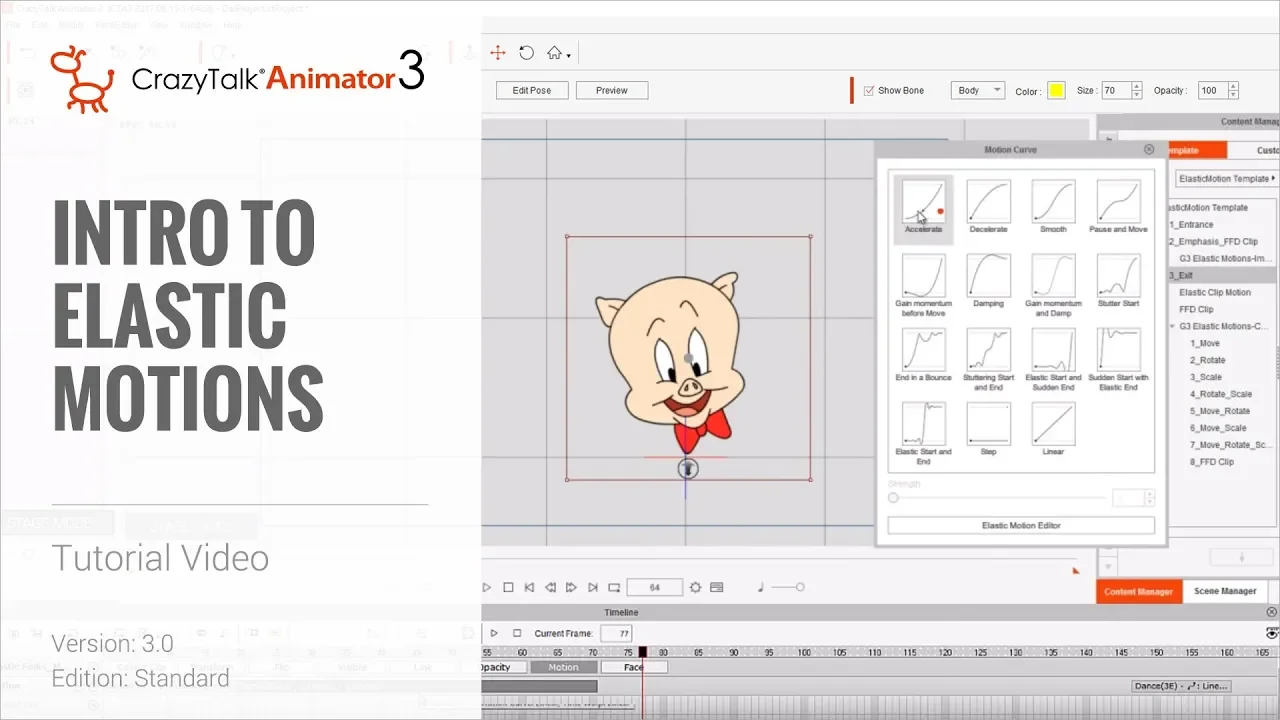
CrazyTalk Animator 3 - Intro to Elastic Motions
29.2K
Elastic motions in Crazy Talk Animator 3 add dynamic, energetic entrance and exit animations to props, images, text, and logos. The software includes an embedded library with additional motions available from the content store. Before applying elastic motions, imported props require 'smooth deformed object' enabled through Edit > Smooth Deformed Object or the Prop Key Editor to create detailed mesh geometry for smooth deformation. Elastic motions are categorized into entrance animations (bounce, grow, roll), emphasis FFD clips (stretchy deformations like drag, bounce, breeze), and exit animations (dynamic removal). Different clip types are visually distinguished by color: entrance clips appear green while FFD emphasis clips appear gray in the timeline. Clips can be combined sequentially in the timeline to create complex animations, with entrance, emphasis, and exit motions working together to produce dynamic character entrances and exits.
Click to watch →

Elastic - ElasticON Global 2021
19.2K
Elastic technology enables innovators to tackle complex global challenges—from space exploration to cybersecurity to resource management—by providing scalable solutions that transform every challenge into an opportunity for breakthrough innovation.
Click to watch →
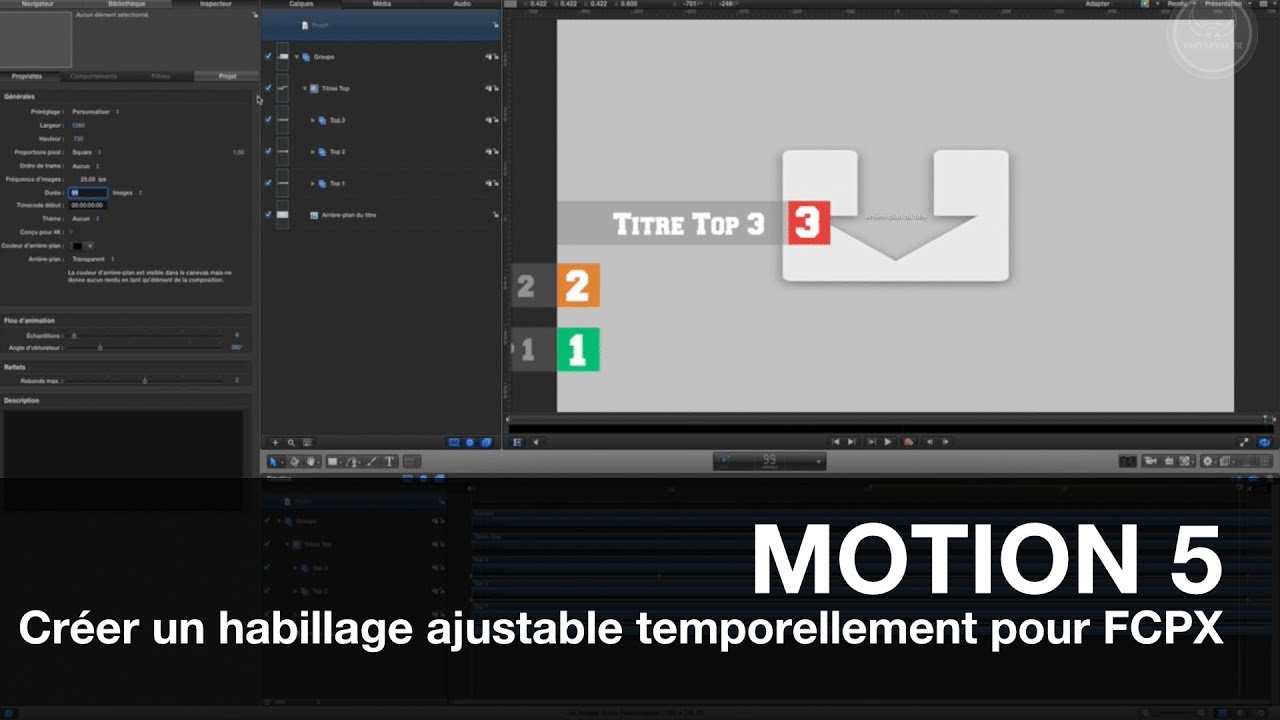
MOTION 5: Créer un habillage ajustable temporellement pour FCPX !
1.2K
This section explains how to create multiple elastic regions for complex motion graphics like top 3 rankings. Since Motion only allows one elastic region per project, each animated section (such as three bands for a top 3 graphic) must be divided into separate projects. The process involves repositioning the animation elements, setting the project duration to match the fixed animation portion, and saving each section as a separate file. Each section requires its own elastic region markers. This approach allows the same motion graphic to be used across multiple video clips with different durations, with each section independently adapting to its underlying video content.
Click to watch →
모션그래픽 디자이너 seven “Ae의 한계를 깨는 감각적인 모션그래픽 워크플로우”ㅣColoso_trailer
763
The motion graphics production process involves creating 12 style frames, conducting animation experiments, applying styling techniques, and performing technical work to complete the final piece. This structured approach ensures systematic development of motion graphics projects.
Click to watch →
Deep Dive
A comparative analysis of modern television title sequences (e.g., 'Westworld', 'Succession', 'True Detective') to identify trends in prestige TV branding.
The 7 Levels of TV Shows EXPLAINED.
204
Prestige TV shows care deeply about form as well as content and reward full attention rather than being background noise. Mad Men is slow burn perfection exploring identity, performance, addiction, and masculinity through quiet, static scenes. Mr. Robot uses visual language as narrative, with characters framed at screen edges to emphasize disconnection and shifting aspect ratios reflecting perception changes. True Detective season 1 is essentially a novel filmed in eight chapters, with long tracking shots externalizing character descent. The Crown is lavish and meticulous, using the British monarchy to explore duty and repression. Atlanta jumps genres from surreal horror to deadpan comedy while returning to grounded human core. Prestige TV openly borrows from cinema, theater, and literature with bigger ambition than just keeping viewers watching.
Click to watch →

5 Filmes que se LEVAM A SÉRIO DEMAIS
549.3K
Westworld is compared to Cowboys and Aliens as an example of how to properly handle serious sci-fi. Westworld has technology and cowboys but creates an interesting universe with engaging characters. In contrast, Cowboys and Aliens has generic characters that audiences do not care about, including Harrison Ford and Daniel Craig acting automatically. The film's trailer music can be downloaded for free, and no one remembers the scenes.
Click to watch →

Name that tune! TV theme songs
52.3K
The emergence of prestige television, particularly through HBO, led to commissioning full-length themes for high-budget productions like Succession, Rome, The Leftovers, Westworld, and Game of Thrones. This represented a return to longer, more sophisticated musical introductions that had been common in earlier television eras.
Click to watch →

Top 10 Melhores Aberturas de SÉRIES de todos os tempos! | Gaveta
551.1K
The Westworld TV show opening is described as a 'medium artistic expression' that conveys the show's themes of ethical dilemmas, technological creation, and human experimentation. The opening features a city of androids that are perfect copies of humans, raising questions about consciousness and human abuse. The visual style is minimalist and industrial, with the presenter noting that if paused, most screens would look like wallpapers. The music is epic and features a distinctive piano piece that creates a memorable and atmospheric introduction.
Click to watch →
True Detective | سریال کارآگاه حقیقی
25.5K
True Detective is widely regarded as a defining example of 'prestige television'—a term used to describe high-quality television series that rival feature films in artistic ambition and production values. The series demonstrated that television could achieve the same level of artistic excellence as cinema, encouraging writers, directors, and actors to take television more seriously as a medium. True Detective transformed the television landscape by proving that limited-run, character-driven series could achieve both critical acclaim and massive audience success, paving the way for subsequent prestige television series.
Click to watch →
Deep Dive
Visual semiotics in television, specifically how the historical sigils and relief carvings on the astrolabe foreshadow major narrative events and lore.
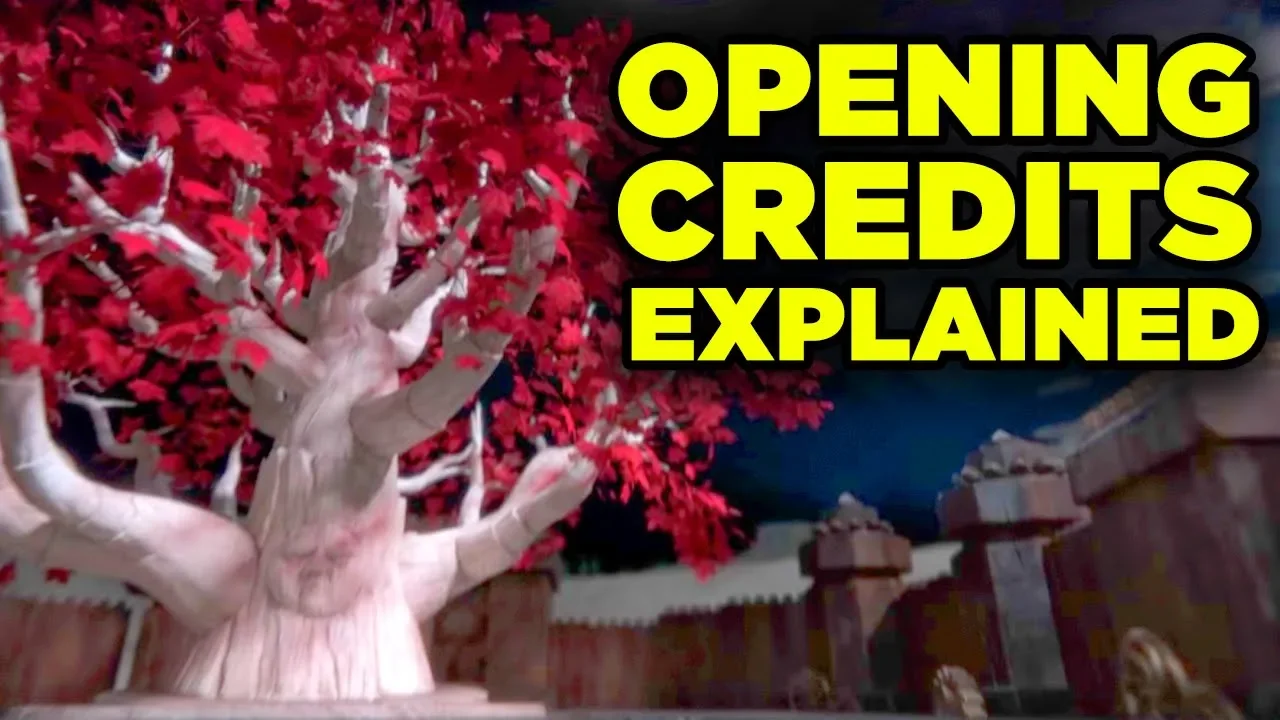
Game of Thrones Season 8 OPENING CREDITS Breakdown! Easter Eggs You Missed!
228.8K
The opening title sequence uses an astrolabe (medieval astronomical instrument) as a narrative device to depict key historical events in Westeros. Unlike previous seasons showing Valyria's doom and Robert's Rebellion, Season 8 shows the Wall's destruction by Viserion, the army of the Dead advancing, and Bran witnessing events through birds. The designers, led by Angus Wall and Kirk Shintani, created a steampunk aesthetic with gears and cogs, scaling all buildings to six-foot humans. This convergence of characters allowed deeper exploration of two or three locations rather than scattering across Westeros, maintaining the map's appearance as something a character within the world might build.
Click to watch →

HOUSE OF THE DRAGON S3E05 BREAKDOWN: Every Detail You Missed!
9.5K
This segment demonstrates how fantasy television uses visual elements to foreshadow future events. The opening tapestry animations reveal Jefferson Hall's name restored, indicating Tailwind Lannister survived his beheading. The empty space where Allison and Helena previously appeared now shows them sneaking off, foreshadowing their escape. The facial camouflage worn by Green soldiers initially appears as three lines (House Stark's sigil) but actually shows four lines in daylight, demonstrating how visual elements can carry multiple layers of meaning. The scene at Harrenhal introduces Alice Rivers, a supernatural entity who teaches Aemon about the castle's dark history of 40-year construction under Harren the Cruel, where thousands of captives died in quarries and weirwood trees were cut down to form the castle's rafters.
Click to watch →

TOUS LES SECRETS CACHÉS DE L'OPENING FINAL DE SAISON 4 DE SHINGEKI NO KYOJIN !
29.5K
The opening clip uses dark colors and visual symbolism to foreshadow the season's events. Eren is shown escaping his cell with determination, wearing his famous vest. The clip shows Titans approaching a city just outside the walls, with Reiner and Eren connected by globules symbolizing their bond as brothers who will trigger the destruction together. Flashbacks show Eren's past including the Scout Regiment mourning at Sasha's grave, representing his regrets. The clip shows Eren above the walls with the phrase 'tout ce que j'ai voulu c'était sauver vos vies' (all I wanted was to save your lives), interpreted as a letter of apology to his friends. The visual narrative demonstrates how the opening combines lyrics and imagery to reveal that Eren has reached a point of no return where he will destroy everything to achieve his goal.
Click to watch →

THE EPISODE I'VE BEEN WAITING FOR.. ATTACK ON TITAN 3x19 and 3x20 (REACTION)
511.8K
This segment demonstrates how visual storytelling and foreshadowing create narrative connections. The speaker notes 'these look like like this guy looks like a titan from like the first season' and 'I remember that beard' and 'I remember these faces,' showing how visual continuity helps audiences track complex relationships. The segment illustrates how foreshadowing works through subtle hints about future events, with the speaker noting 'that's foreshadowing that's why they look so alike' and 'this is why zeke the beast titan doesn't like his father.' The speaker's realization that 'oh my god all of that' demonstrates how narrative connections are revealed at appropriate dramatic moments.
Click to watch →

REAGINDO A LOGOS DE NOVELAS #15
6K
Effective television drama logos use visual semiotics to communicate thematic elements, where design choices like color, typography, and imagery create meaning that connects to the show's narrative, characters, and emotional tone.
Click to watch →
Core content
Core content
0:36- 1
Main topic begins with music lead-in.
- 2
Video duration is brief, focusing directly on subject.
- 3
No extended discussion or examples provided.
Mechanical Reductionism and Geopolitical Gamification
While the Game of Thrones opening sequence is widely celebrated for its technical innovation and world-building, some media critics offer a more skeptical analysis. This counter-perspective argues that the clockwork, three-dimensional map promotes 'mechanical reductionism' and the 'gamification' of geopolitics. By depicting kingdoms rising like mechanical toys, the sequence abstracts the lived reality of the world, reducing complex societies and human suffering to a sterile board game played by elites. This top-down, imperialistic view of geography distances the viewer from the gritty, organic human drama that follows. Additionally, some critics argue that the sequence's dynamic updates served as a narrative crutch—spoiling character locations and plot shifts before the episode even started, thereby undermining natural narrative tension.
Basic elements of cinematography, including camera movement, lighting, and scale, to understand how visual meaning is constructed.
The fundamental purpose of title sequence design in television and cinema, specifically how it sets the tone, atmosphere, and narrative expectations.
A general familiarity with the geography and main factions of Westeros and Essos in the 'Game of Thrones' universe to understand the map's significance.
The concept of leitmotifs in film and television scoring, particularly how Ramin Djawadi uses recurring musical themes to represent different houses and regions.
Advanced study of cartographic narrative design, analyzing how maps in fantasy media serve as active tools for world-building and plot pacing.
The technical and creative process of 3D motion graphics and CGI production, focusing on the work of Elastic, the design studio behind the sequence.
A comparative analysis of modern television title sequences (e.g., 'Westworld', 'Succession', 'True Detective') to identify trends in prestige TV branding.
Visual semiotics in television, specifically how the historical sigils and relief carvings on the astrolabe foreshadow major narrative events and lore.
46.3M views419.4Klikes1:42@gameofthronesOriginal Release: 2011-04-18
[Music] you
Up Next

43:47
Dark Matter Evidence: Why It Is an Observation, Not a Theory
@acollierastro
677.8K views•2023-06-07

12:54
Triumph of Orthodoxy Icon: Byzantine Art & History Explained
@BenCallan
2.1K views•2024-08-06

9:49
FastAPI vs Flask vs Django: Choosing the Right Python Web Framework
@TechWithTim
302.5K views•2024-05-26
24:57
Thomas Midgley: The Inventor Who Poisoned the World with Lead Gas
@veritasium
41.7M views•2022-04-22
Related Study Plans & Knowledge Roadmaps
Structured learning paths in General & Interdisciplinary Studies
general-studies
Elevator Engineering: History, Physics & Cities
01From Hoists to Safety Brakes: The Dawn of Vertical Lift
02Hydraulic vs. Traction: The Engineering Physics of Elevators
03Modern Speed, Safety, and Algorithms
+ 2 more learning modules
12h5 modules
Explore Roadmap
general-studies
Rubber: Material Science, History & Geopolitics
01Origins of Natural Rubber & Mesoamerican History
02The Chemistry of Natural Rubber & Vulcanization
03The Geopolitics of the Rubber Boom & Colonization
+ 2 more learning modules
12h5 modules
Explore Roadmap
general-studies
Containerization: Evolution, Logistics & Trade
01Ancient Trade & Bulk Cargo: Amphorae to Barrels
02The Industrial Revolution & Cardboard Packaging
03The Containerization Revolution: Malcom McLean
+ 2 more learning modules
12h5 modules
Explore Roadmap
general-studies
Textile Tech: Evolution, Labor & Global Impact
01Pre-Industrial Textiles: Handloom & Cottage Industry
02Mechanization: The Spinning Jenny to the Power Loom
03The Factory System & Global Labor Transformation
+ 2 more learning modules
10h5 modules
Explore Roadmap