Containerization: Evolution, Logistics & Trade
Learning Goal: Trace the evolution of storage and shipping containers—from ancient clay amphorae and wooden barrels to corrugated cardboard and standardized intermodal shipping containers—and analyze their impact on global trade logistics, consumer branding, and supply chain efficiency.
- Prerequisites: None (an open mind for economic history, design engineering, and industrial operations is highly recommended).
- Estimated Total Study Time: 12 Hours
Module 1: Ancient Trade & Bulk Cargo: Amphorae to Barrels
Module Overview
For millennia, maritime trade was limited by the physical constraints of clay and wood. This module explores how ancient Mediterranean empires solved liquid and dry bulk storage with clay amphorae, how medieval European coopers revolutionized logistics with the wooden barrel, and the highly labor-intensive, risky nature of traditional "break-bulk" shipping.
Recommended Videos

Why this video
This documentary explores a 2,000-year-old Roman shipwreck containing thousands of intact clay amphorae. It provides an archeological deep-dive into how these specialized clay vessels acted as the standardized shipping containers of the ancient world—carrying wine, olive oil, and garum across the Mediterranean. It illustrates both the scale of ancient maritime networks and the fragile, heavy nature of clay-based storage.
Why this video
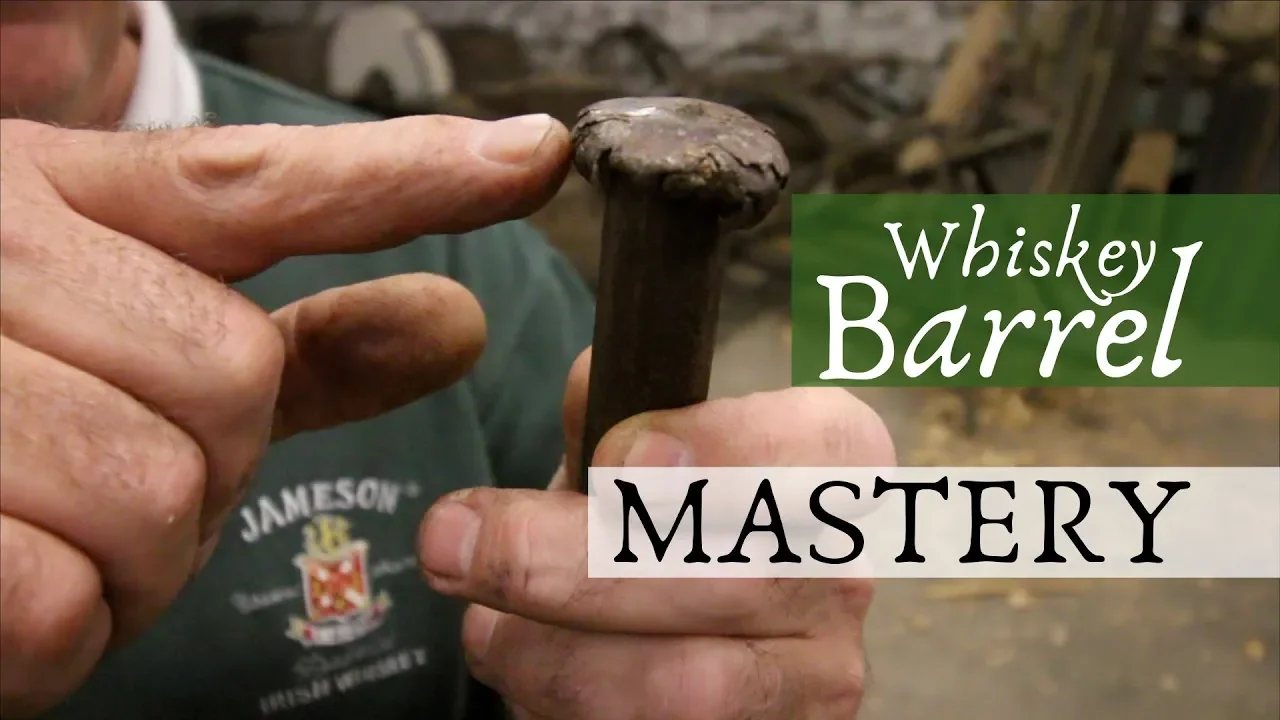
To understand the jump from fragile clay to robust wood, you must understand the highly technical, manual craft of cooperage. Led by a fifth-generation master cooper, this video shows how oak staves are split, bent with fire and water, and bound with iron hoops without any glue or nails to create watertight, highly durable structural cylinders. The barrel was a structural masterpiece that could be rolled, stacked, and dropped without breaking.

Why this video
This animated excerpt illustrates the grueling reality of "break-bulk" shipping—the dominant transport method before standard containers. You will observe how mixed cargo (crates, barrels, bags, and loose boxes) was handled piece-by-piece by hand, requiring armies of longshoremen, massive port dwell times, and exposing goods to constant theft, damage, and weather.
Knowledge Checkpoint
- Explain how the structural design of a Roman clay amphora (tapered bottom, dual handles) optimized it for ship cargo holds.
- Describe the structural engineering principles of a wooden barrel that allow it to remain watertight and structurally stable under tension without glue or nails.
- Define "break-bulk shipping" and list its three main inefficiencies (labor, time, security).
Module 2: The Industrial Revolution & Cardboard Packaging
Module Overview
With the dawn of the Industrial Revolution, manufacturing scaled rapidly, but logistics still relied on heavy wooden crates and bulk sacks. This module examines how the invention of cheap, lightweight paperboard and corrugated cardboard revolutionized domestic shipping, birthed the concept of consumer branding, and enabled the transition to self-service retail environments and modern supermarkets.
Recommended Videos

Why this video
This video details the mechanical evolution of corrugated cardboard, tracking patents from Edward Allen and Edward Healy's 1856 fluted paper hat linings to Albert Jones' 1871 bottle-protection patent, and finally Oliver Long's addition of outer liners. It explains the physics of the "flute"—how a wavy paper core sandwiched between flat sheets creates a lightweight material with an incredibly high strength-to-weight ratio.

Why this video
This excerpt links the structural invention of the cardboard box to a dramatic shift in grocery retail. Before cardboard, dry goods were shipped in giant bulk barrels, and clerks scooped portions by hand. Cardboard boxes allowed manufacturers to pre-package uniform, single-unit portions at the factory, laying the groundwork for consumer packaged goods (CPG).

Why this video
This architectural and historical lecture unpacks how modern retail layout evolved. By moving goods from behind a clerk’s counter onto open, accessible shelves (a layout pioneered by bookshops and adapted by early supermarkets), retailers relied on consumer package design to guide shoppers. This visual self-service landscape was entirely dependent on cheap, printable cardboard packaging.

Why this video
This industry segment highlights packaging as the primary interface of consumer marketing. In a self-service supermarket, the cardboard box or bottle label acts as a "silent salesman." This video explains how eye-catching, standardized retail packaging is used to cut through shelf clutter and drive brand differentiation.
Gap Note & Self-Study Tip: While the video pool contains great clips on cardboard production, retail evolution, and packaging design, it lacks a single, long-form documentary tracing the co-evolution of self-service supermarkets (like Piggly Wiggly in 1916) and cardboard manufacturing. For a deeper historical dive, we recommend reading Marc Levinson's The Box or searching independently for: "History of self-service supermarkets and Clarence Saunders" on YouTube.
Knowledge Checkpoint
- What mechanical advantages does "fluted" paper (corrugated cardboard) have over single-layer paperboard?
- How did factory-level packaging in cardboard boxes change the balance of power between local dry-goods retailers and national food brands?
- Explain the concept of the "silent salesman" and how it relates to the transition from behind-the-counter service to self-service supermarket aisles.
Module 3: The Containerization Revolution: Malcom McLean
Module Overview
In 1956, a trucking entrepreneur named Malcom McLean forever changed global economics. Fed up with the slow, expensive process of loading break-bulk cargo, McLean championed the standardized, intermodal steel container. This module traces McLean's breakthroughs, Keith Tantlinger's crucial engineering innovations, and the mathematics behind standard container sizes (TEU and FEU).
Recommended Videos
Why this video
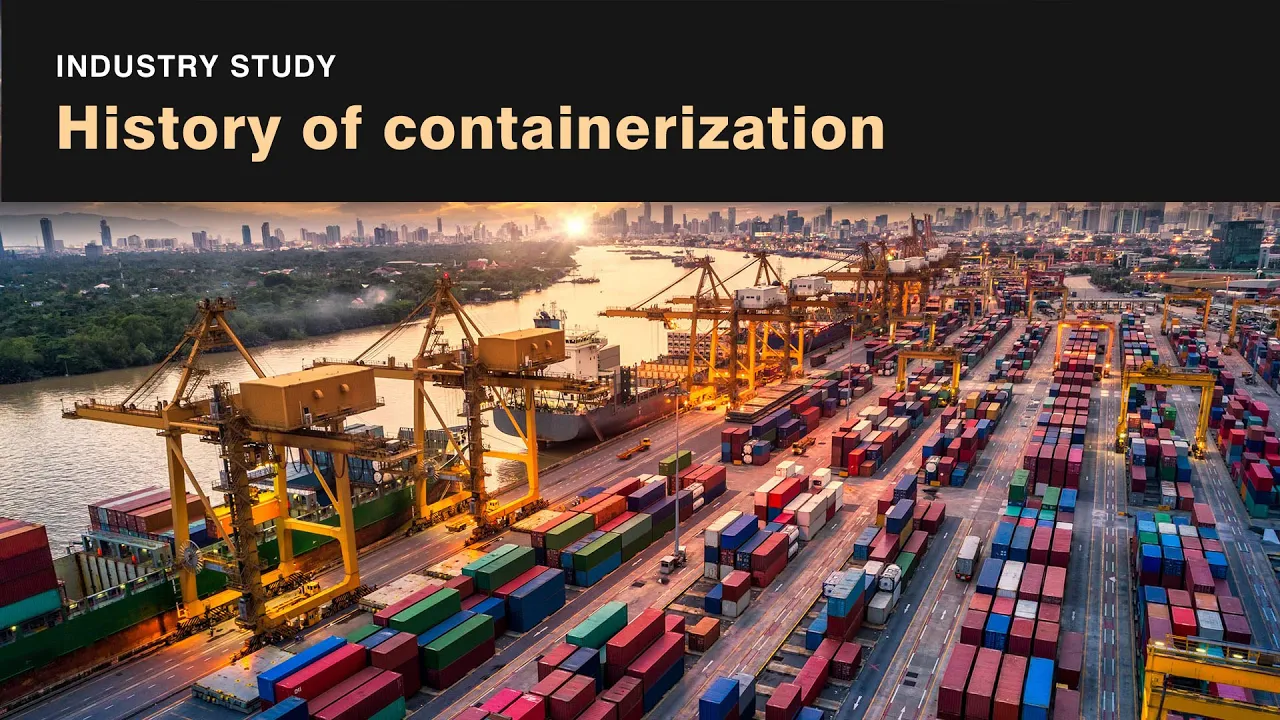
This detailed documentary outlines the history of containerization. It details Malcom McLean's purchase of Pan-Atlantic Steamship Corp, the conversion of the WWII tanker Ideal X, and the engineering genius of Keith Tantlinger, who designed the corner castings and twist-lock mechanisms that secured stacked containers safely. It shows how standardized, uniform steel boxes replaced manual labor on the docks.

Why this video
This academic lecture by Marc Levinson, author of the definitive history The Box, explains how containerization drove down freight costs from 20-25% of product value to near-zero. Levinson connects containerization to structural shifts in global manufacturing. He explains how removing shipping costs allowed factories to move away from consumer markets to low-cost labor regions, effectively enabling the rise of offshoring.

Why this video
Produced by Maersk, one of the world's largest logistics firms, this short historical retrospective focuses on the logistics side of McLean's 1956 voyage. It illustrates how the container acts as an "intermodal" vessel—moving from truck chassis to container ship and onto rail flatcars without its internal contents ever being handled.
Knowledge Checkpoint
- Who was Malcom McLean, and what operational bottle-neck was he trying to solve by moving loaded truck trailers onto ships?
- Explain the role of Keith Tantlinger's twist-lock mechanism and corner castings in making high-volume container stacking possible.
- Define TEU (Twenty-foot Equivalent Unit) and FEU (Forty-foot Equivalent Unit), and calculate the TEU capacity of a ship carrying 4,000 standard 40-foot containers.
Module 4: Modern Intermodal Logistics and Port Operations
Module Overview
Modern container ports are marvels of automated logistics. This module explores how ships, trains, cranes, and trucks coordinate within a single intermodal freight transport system. We will analyze how deepwater mega-ports operate, the mechanics of modern gantry cranes, and the critical role of rail intermodal networks.
Recommended Videos

Why this video
This clean, animated explainer breaks down the spatial and operational zones of a modern container terminal: the quayside (where ship loading/unloading occurs), the stacking yard (for temporary storage), the gatehouse (truck processing), and the intermodal rail yard. It provides an excellent look at the step-by-step physical flow of container traffic.
Why this video
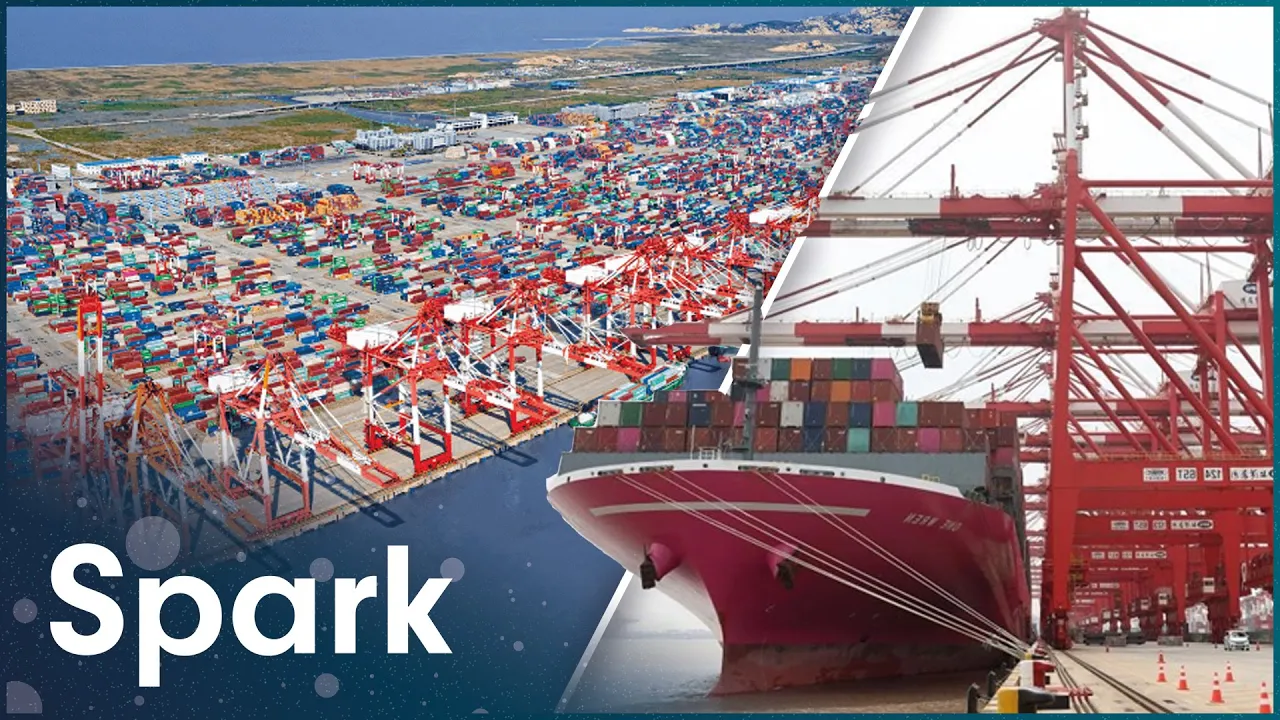
This megastructures profile of the Port of Shanghai's Yangshan Deep Water Port shows the staggering scale of modern port automation. It explains why the port was built 30km out at sea to access deep waters, how mega-gantry cranes operate, and how computerized yard management systems coordinate rubber-tired gantry (RTG) cranes and automated guided vehicles (AGVs) to move thousands of containers daily.

Why this video
Intermodal freight does not stop at the water's edge. This industry video from the Association of American Railroads explains how container ships connect directly to class-I rail networks. It outlines "double-stacking" container trains and how this system moves cargo across continents with remarkable energy and cost efficiency compared to long-haul trucking alone.
Knowledge Checkpoint
- Sketch or list the four main operational zones of a modern container terminal and describe the primary function of each.
- Explain how double-stack rail transportation increases the economic efficiency of intermodal shipping over land.
- What is an Automated Guided Vehicle (AGV), and how does it interface with a port's central terminal operating system?
Module 5: Global Supply Chains, Economics, and Future Challenges
Module Overview
While containerization has driven massive globalization, it has also introduced major macroeconomic vulnerabilities. This module analyzes the fragility of modern "just-in-time" supply chains, the concentration of global manufacturing in East Asia, port congestion issues, and the massive technological push to decarbonize maritime shipping through alternative fuels.
Recommended Videos

Why this video
This news report dissects the fragility of modern global supply chains. It outlines how prioritizing rock-bottom shipping costs and "just-in-time" inventory systems left global markets vulnerable to systemic shocks, port delays, and regional labor shortages, showing that hyper-efficiency can come at the cost of resilience.

Why this video
This video explains the mechanics of "offshoring"—the business practice of shifting production, assembly, or services overseas to capitalize on lower labor costs, tax breaks, and favorable regulations. It directly links containerization (which dramatically lowered physical shipping barriers) to the structural economic split between Western consumption and Asian manufacturing.

Why this video
The shipping industry is responsible for roughly 3% of global carbon emissions. This comprehensive mini-documentary explores the future of green maritime logistics. It highlights cutting-edge clean tech, including Maersk's multi-million dollar investments in green methanol, wind-assisted propulsion (folding sails), and shipboard energy efficiency measures required to decarbonize global trade.
Gap Note & Self-Study Tip: While Video 88 and the Levinson lecture in Module 3 explore offshoring, academic lectures focusing purely on "unbundling" and gravity models in trade are brief in the video pool. For advanced academic study on offshoring economics, we recommend searching YouTube independently for: "Richard Baldwin global supply chains offshoring lecture" or "The Great Unbundling globalization economics".
Knowledge Checkpoint
- Explain why "just-in-time" (JIT) manufacturing makes global supply chains highly vulnerable to localized port delays (like the Suez Canal blockage).
- Define offshoring and explain how containerization served as its physical facilitator.
- What is green methanol, and why are shipping giants like Maersk investing in it as an alternative to traditional heavy bunker fuel?
Course Map
Key People Index
- Malcom McLean (1913–2001): An American trucking entrepreneur who realized that loading individual trucks onto cargo ships was highly inefficient. He developed the first commercially viable standardized steel container system in 1956, launching a transport revolution.
- Keith Tantlinger (1919–2011): An American mechanical engineer hired by McLean. Tantlinger designed the cornerstone of containerization: the corner casting, twist-lock system, and spreader bars that allowed containers to be quickly locked, stacked, and lifted by cranes.
- Marc Levinson: Renowned economist, historian, and author of The Box: How the Shipping Container Made the World Smaller and the World Economy Bigger. His lectures explain how containerization fundamentally reshaped global production networks and sparked modern offshoring.
Final Self-Assessment
Complete this final checklist to verify your understanding of the history, engineering, and economics of containerization:
- Explain how ancient trade relied on the physical properties of clay (amphorae) and wood (cooperage) and contrast this with modern containerized logistics.
- Describe the complete production process of a wooden barrel, including the role of moisture, fire, and metal hoops in creating a watertight seal.
- Explain how the invention of the corrugated cardboard box in the 19th century laid the groundwork for the modern, self-service supermarket layout.
- Detail the historical significance of Malcom McLean's Ideal X voyage in April 1956.
- Define the engineering function of a container "corner casting" and "twist-lock."
- Convert a container fleet list of 12,000 standard 40-foot containers into TEU (Twenty-foot Equivalent Units).
- Map the route of an intermodal container traveling from a factory in Shenzhen, China, to a retail store in Chicago, Illinois, identifying all transit modes and transfer facilities.
- Explain how automated systems (like AGVs, RTG cranes, and port operating software) work together to unload modern mega-container ships.
- Analyze how cheap shipping costs enabled corporate "offshoring" and discuss the environmental impacts of this trade structure.
- Compare the viability, cost, and emission-reduction benefits of green methanol versus wind-assisted wing sails in the green decarbonization of maritime shipping.