



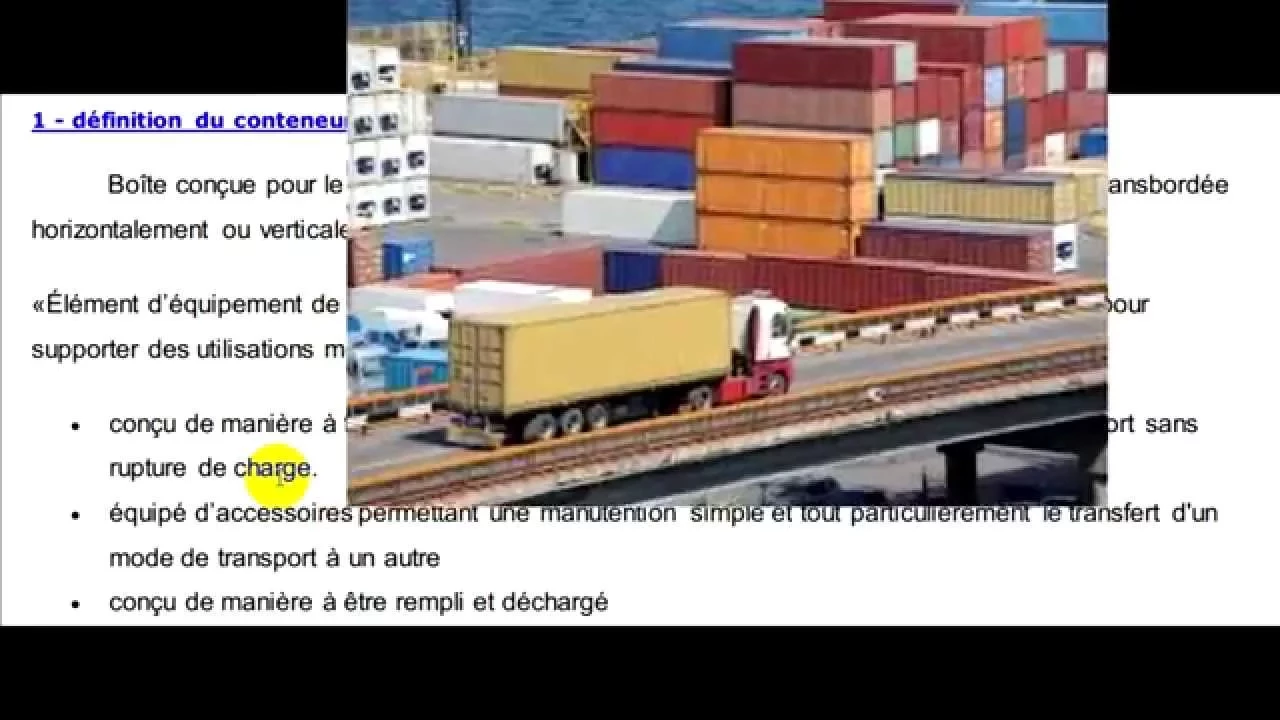





















A container port operates through four main areas—quayside for vessel berthing and loading/unloading, empty container area, incoming container area, and outgoing area—where trucks deliver empty containers to be stacked by reach stackers, incoming containers are moved from quayside to waiting areas, and outgoing containers are loaded onto vessels using gantry cranes, with reefer containers requiring special temperature-controlled handling.
Container Port Operations: How a Shipping Terminal Works (Animation)
Added:The concept of intermodal transportation and how standardized shipping containers revolutionized global trade.
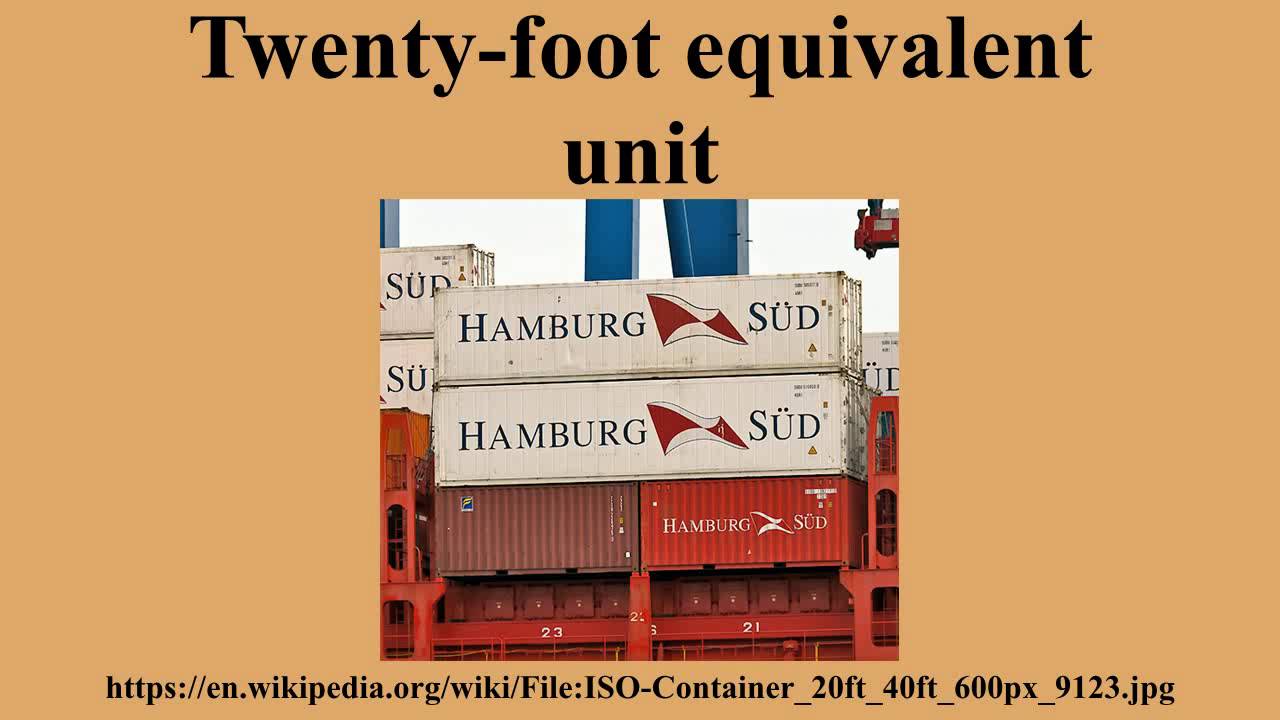
Understanding the unit of measurement for container capacity, specifically the TEU (Twenty-foot Equivalent Unit).
Basic supply chain and logistics concepts, such as bottlenecks, throughput, and cargo flow dynamics.
The fundamental role of maritime ports as critical nodes connecting ocean voyages to inland transit networks.
In-depth study of Terminal Operating Systems (TOS) and the software algorithms used to optimize yard planning and crane dispatching.
The integration of automation in modern terminals, including Automated Guided Vehicles (AGVs) and automated stacking cranes.
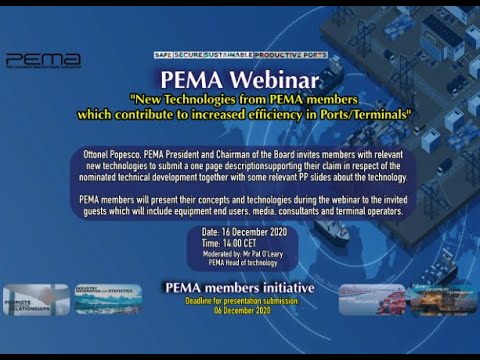
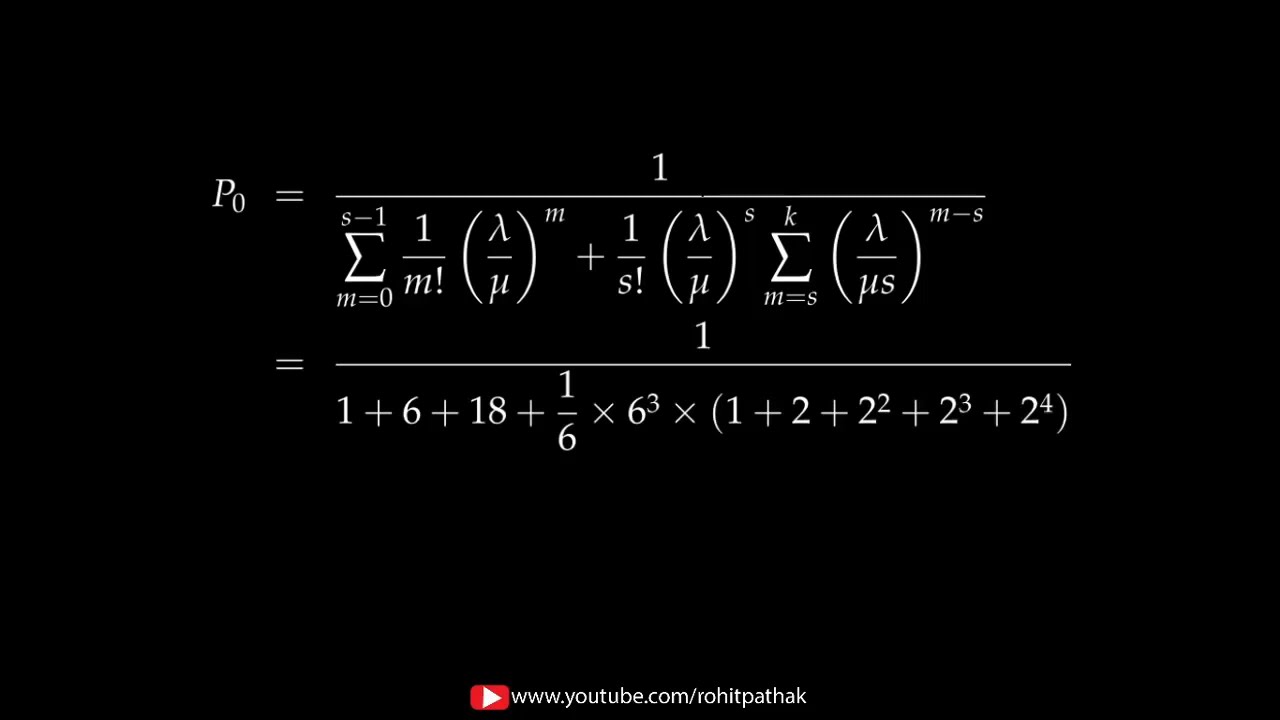
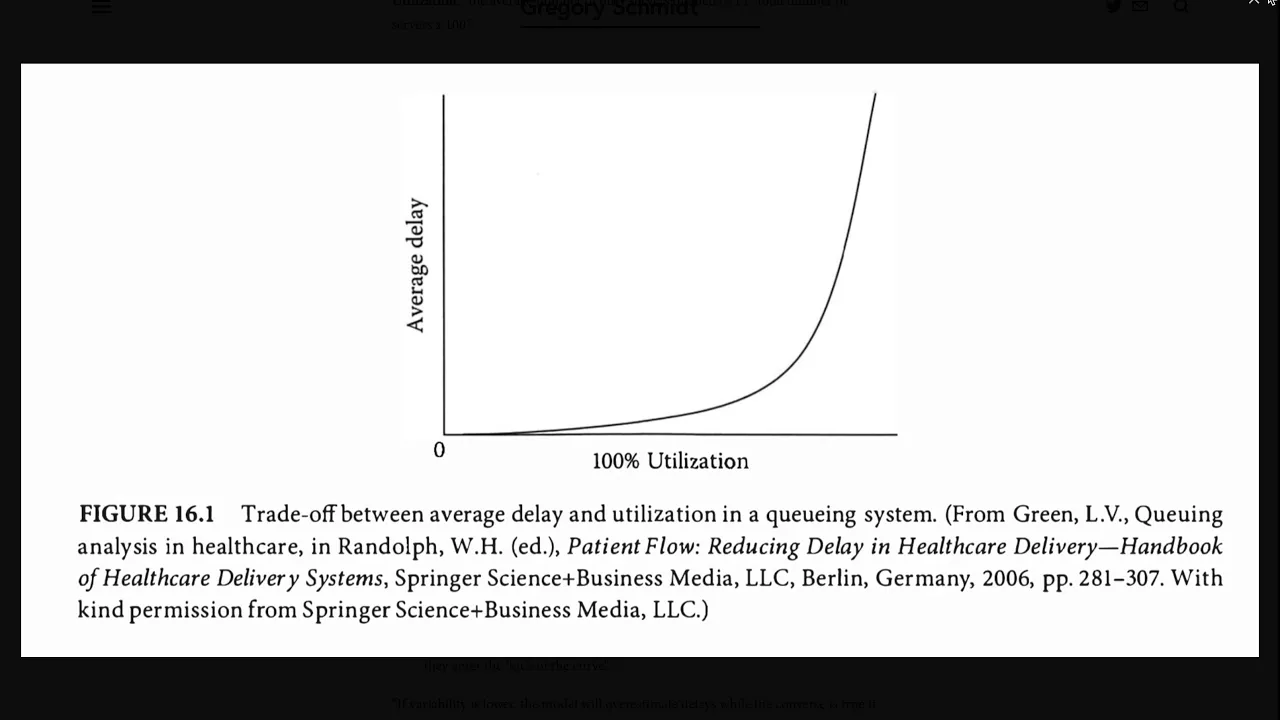
Port capacity planning and queuing theory models used to manage vessel turnaround times and berth allocation.
Environmental logistics and green port strategies, focusing on decarbonization and shore-to-ship power (cold ironing).
Hinterland logistics, including the connection of container ports to dry ports, rail corridors, and inland waterways.
150.6K views2.7Klikes4:45Original Release: 2021-02-26
We will now visually review how a container port may operate. This example covers some items, which are common to many ports, but it is important to keep in mind that every port operates differently.
In our port, we have four main areas: the quayside area, along which a container vessel will berth and be unloaded and loaded, the empty container area, the incoming container area and the outgoing area. A truck carrying an empty 40-foot container arrives at the gate. After having provided all required documentation and information, he is directed to the correct area of the port.
Upon his arrival there a reach stacker takes the empty container and stacks it on another empty one in the empty area. The reach stacker then turns to the incoming area, and picks up a container to load on the empty chassis - once loaded the container chassis with the full container will head for the exit gate. This incoming container arrived on a vessel some time before the loading, it was offloaded on the quayside and then moved to this incoming area to await its pickup. The container chassis will stop at the exit gate for further administrative tasks and possibly a custom clearance one - which may or not include an x-ray scan.
A second truck arrives at the gate, this time an empty container chassis, and after a brief administrative stop, it heads over to the incoming reefer area. Reefer is short for refrigerated container and is a temperature control refrigerated container used to transport temperature sensitive or frozen goods. Once the chassis arrives in the incoming reefer area, it is loaded with a 20 foot reefer container by a heavy duty forklift. The container chassis then heads to the exit gate for possible custom clearance and other administrative steps before leaving the port. The seaside operations take place in parallel and independently of these landside operations. Here we can see a container vessel arrive and once berthed some of its container are offloaded thanks to the gantry shore cranes. These containers are stored in the quayside area and they will be moved, at a later stage, to their corresponding incoming area to await their pickup.
In the meanwhile, our third truck carrying an outgoing last-minute 40-foot container arrived at the gate and after check-in heads with no delay to the outgoing area. Once arrived in the correct area, the truck's container is offloaded by the reach stacker, and due to its last-minute arrival placed directly in the quayside operations area for loading onto the berthed vessel.
The truck then carries on a bit further to the reefer area, where it is loaded with two 20-foot reefer containers by the heavy duty forklift - the truck then leaves the port.
In parallel to this, the reach stacker has been moving containers from the outgoing storage area to the quayside for loading onto the vessel. Now available, the heavy duty forklift joins this repositioning effort while the gantry crane is back into action, this time loading the waiting containers from the quayside onto the vessel.
The reach stacker now moves further down the quayside area to start moving the recently offloaded containers to their matching incoming areas, where they will await a later truck pickup. Once the container vessel is loaded with the plan containers, it leaves the port and heads for its next destination.
The quayside area will be completely cleared and prepared for the next vessel.
We hope you enjoyed our animation and please don't hesitate to subscribe.
Up Next

3:05
Intermodal Freight Rail Transport Explained || How Goods Move by Rail
@AAR-Freight-Rail
35.1K views•2015-08-13

12:54
Triumph of Orthodoxy Icon: Byzantine Art & History Explained
@BenCallan
2.1K views•2024-08-06

9:49
FastAPI vs Flask vs Django: Choosing the Right Python Web Framework
@TechWithTim
302.5K views•2024-05-26

1:42
Game of Thrones Opening Credits: A Cinematic Analysis
@gameofthrones
46.3M views•2011-04-18
Related Study Plans & Knowledge Roadmaps
Structured learning paths in General & Interdisciplinary Studies
general-studies
Elevator Engineering: History, Physics & Cities
01From Hoists to Safety Brakes: The Dawn of Vertical Lift
02Hydraulic vs. Traction: The Engineering Physics of Elevators
03Modern Speed, Safety, and Algorithms
+ 2 more learning modules
12h5 modules
Explore Roadmap
general-studies
Rubber: Material Science, History & Geopolitics
01Origins of Natural Rubber & Mesoamerican History
02The Chemistry of Natural Rubber & Vulcanization
03The Geopolitics of the Rubber Boom & Colonization
+ 2 more learning modules
12h5 modules
Explore Roadmap
general-studies
Containerization: Evolution, Logistics & Trade
01Ancient Trade & Bulk Cargo: Amphorae to Barrels
02The Industrial Revolution & Cardboard Packaging
03The Containerization Revolution: Malcom McLean
+ 2 more learning modules
12h5 modules
Explore Roadmap
general-studies
Textile Tech: Evolution, Labor & Global Impact
01Pre-Industrial Textiles: Handloom & Cottage Industry
02Mechanization: The Spinning Jenny to the Power Loom
03The Factory System & Global Labor Transformation
+ 2 more learning modules
10h5 modules
Explore Roadmap