Intermodal freight transportation is the seamless movement of goods using multiple transportation modes (ships, trains, trucks), where standardized containers remain secure throughout the journey; this system is highly efficient as a single train can carry the equivalent of 250 trucks, reducing traffic congestion, fuel emissions, and transportation costs while benefiting manufacturers, transporters, and consumers through cost-effective and environmentally friendly goods movement.
Intermodal Freight Rail Transport Explained || How Goods Move by Rail
Added:Deep Dive
Fundamentals of supply chain management and the basic flow of goods from manufacturers to consumers.
#9 Supply Chain Management | Set-B SPOM | CA Final Strategic Cost & Performance Mgt. | Rohit Tiwari.
195
Supply Chain Management (SCM) is the complete process of getting goods from raw material purchase to final delivery to consumers. The process involves raw material suppliers providing materials to manufacturers, who convert raw materials into finished goods. These goods then flow through wholesalers/distributors who store them in warehouses, to retailers who sell to consumers, and finally to end users. SCM encompasses all activities associated with the flow and transportation of goods from raw materials to end users. It can be defined as an entire network of organizations working together to design, produce, deliver, and service products.
Click to watch →

What is Supply Chain Management | Process | Advantages in Hindi
20.2K
A supply chain is a connected network between organizations and individuals that facilitates the movement of products or services from manufacturing points to the point of sale. Supply Chain Management encompasses the entire process of handling goods and services from raw material acquisition through manufacturing, distribution, and finally to the end consumer. The six key processes include: (1) Raw Materials - basic inputs for production, (2) Suppliers - entities providing raw materials, (3) Manufacturing - converting raw materials into finished products, (4) Distribution - moving products to retail locations, (5) Retail Locations - where products are sold, and (6) Customers - end users who purchase products. This systematic approach ensures products flow efficiently from origin to consumer.
Click to watch →
E-Commerce Pertemuan 7: Supply Chain
433
Supply chain is the flow of goods, information, money, and services from manufacturers through intermediaries to end customers, functioning as a network of collaborating companies including suppliers, manufacturers, distributors, retailers, and logistics providers. Supply Chain Management (SCM) is the methodology and tools used to integrate these companies so goods are produced and distributed in the right quantities, at the right time, and in the right place. SCM transforms the physical network of companies into an efficient system for sourcing raw materials, manufacturing products, and delivering them to end users.
Click to watch →
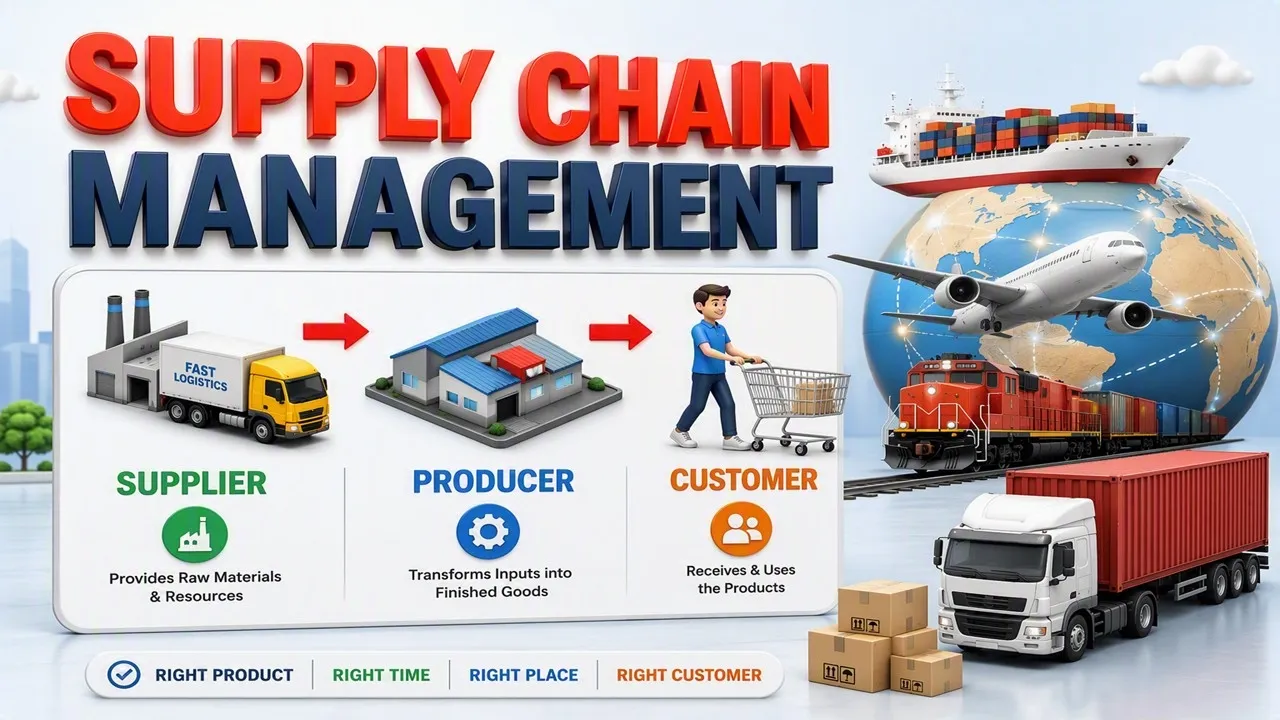
What is Supply Chain Management (SCM) ? | Basic concept, Definition, Introduction, Process & Example
15.7K
Supply Chain Management is a global network handling the entire production flow from raw materials to final product delivery, with the primary goal of matching supply and demand. It serves as the backbone of modern industry, involving every company in one or more supply chains. Four fundamental flows exist: material flow (physical goods movement), financial flow (cash transfers), information flow (coordinating plans and activities), and reverse product flow (returns for defects). The basic structure involves three entities—supplier, producer, and customer—with materials flowing from supplier to producer to customer, financial payments flowing in reverse, and information flowing bidirectionally throughout the chain.
Click to watch →

Supply Chain & Logistics Management Supply Chain Concepts – Objectives | AKTU Digital Education
17.5K
Supply Chain Management (SCM) encompasses the entire flow of goods and services from raw material suppliers to end customers. It includes sourcing raw materials, manufacturing, assembly, warehousing, inventory tracking, order management, distribution, and final delivery. Information flows bidirectionally throughout the chain, while money flows in the opposite direction of goods. SCM exists across industries including automobiles (with over 3,000 components), milk supply chains, and e-commerce platforms like Amazon and Flipkart that have eliminated traditional intermediaries. Transportation services like Ola and Uber also operate as supply chains connecting service providers with customers.
Click to watch →
Deep Dive
The concept of containerization, including the standardization of shipping containers (ISO containers and TEUs).
Everything You Need to Know About India’s Container Sector | Markets by Zerodha Hindi
61.9K
The International Organization for Standardization (ISO) established standardized shipping container dimensions, with 20-foot containers equivalent to 1 TEU (Twenty-foot Equivalent Unit) and 40-foot containers equivalent to 2 TEUs. Today, approximately 2 crore (20 million) ISO-standard containers exist globally, facilitating 80% of world trade. This standardization enabled seamless intermodal transportation and dramatically reduced logistics costs.
Click to watch →
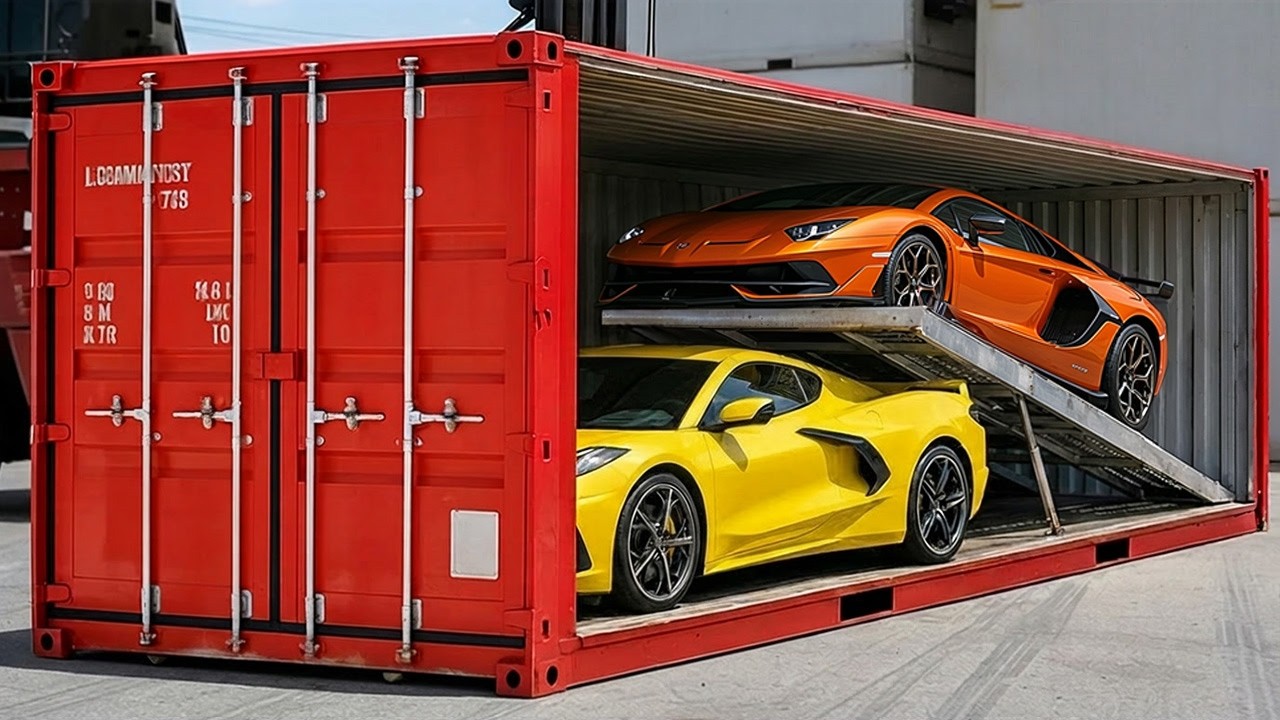
10 ERSTAUNLICHE FAKTEN ÜBER CONTAINERSCHIFFE
8K
In 1956, Malcolm McLean revolutionized global trade by proposing loading entire trucks directly onto ships instead of manually unloading cargo piece by piece. This simple idea transformed slow, expensive manual handling into an efficient system connecting trucks, ports, cranes, railways, and ships. The ISO 668 standard (1968) solved compatibility issues by establishing uniform container dimensions (2.4m width, 12.2m and 6m lengths). This standardization enabled universal port operations worldwide. The TEU (Twenty-foot Equivalent Unit) became the fundamental trade metric, comparable to barrels for oil or troy ounces for gold. Specialized containers (reefers, tank containers, open-top) expanded the system's cargo capabilities.
Click to watch →

Sesión en línea 09/07/2025 - GA2210101064 - AA3 - EV01 - GA2210101064 - AA4 - EV01
321
El contenedor revolucionó el comercio mundial al introducir una unidad estándar, el TEU (unidad equivalente a 20 pies). Esto simplificó todo el proceso de transporte, reduciendo la manipulación de carga suelta, robos y daños. Los contenedores ofrecen ventajas como menor costo de seguro, almacenamiento y embalaje interno. Los tipos más comunes son el Dry (para carga seca), el Reefer (para frío), el Open Top (sin techo) y los Tank (para líquidos). Las medidas estándar son 20 pies (un TEU) y 40 pies (un FEU). Las normas ISO son la base para que el sistema logístico funcione bien globalmente. La ISO 6780 establece dimensiones para paletas y la ISO 680 para contenedores. Sin cumplir estas normas, la carga puede quedar varada en una aduana. La sostenibilidad es cada vez más importante, con normativas que empujan a reducir residuos y reciclar más. Se habla de ecodiseño, análisis de ciclo de vida y economía circular. Se prefieren materiales reciclables, reutilizables, metal, vidrio, papel y cartón, y madera certificada de manejo sostenible.
Click to watch →
The Uncertain Future of Global Shipping
51.5K
McLean's containers reduced loading and unloading time significantly, with a single crane operator unloading dozens of containers directly onto trucks. Ports evolved to accommodate larger ships, and cranes substituted longshoremen workforce. Since containers were reusable metal boxes, they were environmentally better than wooden crates. Standard 20 and 40 foot sizes made logistics planning simple. The dimensions became so standardized that they created the TEU (Twenty-Foot Equivalent Unit), measuring 20 feet long by 8 feet wide by 8.5 feet high (33 cubic meters). The TEU made pricing and scheduling predictable, replacing inconsistent weight or crate count systems. Less than 35 years after invention, container shipping transported 90% of the world's cargo. Modern mega vessels hold up to 24,000 TEUs, and analysts use TEU fluctuations to track economic activity, consumer demand, and geopolitical tensions.
Click to watch →

국제운송론 강의자료 International transportation & logistics 1강
761
Containerization revolutionized maritime shipping starting in 1956 when Malcolm McLean first used containers. Container ships transport standardized containers (20-foot and 40-foot TEU - Twenty-foot Equivalent Unit) that can be easily loaded and unloaded using cranes. This system dramatically increased shipping efficiency, reduced cargo damage, and enabled global supply chains. Modern container ships can carry 24,000+ TEU, representing the largest commercial vessels.
Click to watch →
Deep Dive
An overview of different transportation modes (maritime, road, rail, and air) and their general operational differences.

EV Infografía medios y modos transporte AA5-EV01, Mapa mental modos y medios de transporte AA1-EV01.
317
This segment provides comprehensive coverage of transportation modes. Air transportation is contracted through airports via agencies, loaded by weight and volume, with Air Waybill documentation. Advantages include speed, reliability, and lower insurance costs; disadvantages include highest cost and capacity limitations. Maritime transportation applies to waterways, contracted port-to-port with Bill of Lading documentation. Advantages include lower tariffs and large volume capacity; disadvantages include slow speed and infrequent schedules. Road transportation applies to roadways, contracted door-to-door with flexible vehicles. Advantages include door-to-door service; disadvantages include informal sector issues and infrastructure problems. Rail transportation applies only to railway tracks, contracted terminal-to-terminal. Advantages include lowest cost for long distances and large volume capacity (up to 50,000 tons).
Click to watch →
Road, Rail, Water & Air Transport Explained | Maharashtra Board 4 Marks | Std 12 OCM Transport
367
This comprehensive comparison covers four major transport modes: Road, Rail, Water, and Air. Road transport has limited speed due to road conditions and accidents, limited carrying capacity, is best for short distances, offers door-to-door service, and is mostly government-owned. Rail transport runs on tracks with minimal disturbance, has huge carrying capacity, is ideal for medium-long distances, has relatively fixed low charges, and is government-owned. Water transport is the slowest but has very high carrying capacity, is best for long-distance continental travel, has low charges due to bulk capacity, and is owned by both private and public sectors. Air transport is the fastest and most efficient at approximately 400 km/h, has limited carrying capacity, is best for the longest distances, has the highest charges, and is operated by both private and public sectors.
Click to watch →

SEMINARIO DIPLOMADO ESPECIALIZADO EN GERENCIA OPERACIONES Y LOGÍSTICA (29-05-2021 SEM3GEOL120621R)
132
Different transportation modes have distinct characteristics: maritime is most used globally, air is most expensive with limited capacity, road offers medium capacity with door-to-door service, and rail is best for long distances.
Click to watch →
SEMINARIO DEL DIPLOMADO EN GERENCIA DE OPERACIONES Y LOGÍSTICA (06-12-2021 SEM5GEOL291121R)
103
Transportation modes have different characteristics: maritime is most used globally, air is most expensive and limited in capacity, road offers door-to-door service and flexibility, and rail is best for long distances but slowest. Companies should select modes based on their specific requirements.
Click to watch →

Trafik Güvenliği 2.YAZILIYA HAZIRLIK
174.9K
There are five main transportation modes: (1) Road transportation (karayolu) - uses cars, bicycles, motorcycles, buses, and minibuses; (2) Maritime transportation (deniz yolu) - uses ferries, boats, yachts, and ships; (3) Air transportation (hava yolu) - uses airplanes, hot air balloons, helicopters, and jets; (4) Rail transportation (demir yolu) - uses trains and trams; (5) Each mode has specific characteristics and applications.
Click to watch →
Deep Dive
Basic understanding of transportation infrastructure, specifically the function of seaports and freight hubs.

Jak Funguje Přístav? Kontejnerový Terminál, Lodě, Jeřáby a Světová doprava!
742
Ports are massive logistical nodes connecting maritime transport, railways, trucking, warehouses, and customs. Approximately 90% of global trade by volume moves by sea. Large container ships exceed 400 meters in length and 60 meters in width, carrying tens of thousands of containers. Maneuvering requires pilots who know local waters and currents, often assisted by powerful tugboats. Different ports serve different purposes: container terminals, oil tankers, LNG terminals, car carriers, and bulk material handlers each require specialized infrastructure and equipment.
Click to watch →

2022 08 29 18 42 32
138
A port serves as an intermodal transportation hub connecting multiple transport modes: (1) Maritime transport - the primary function of ports; (2) Land transport - including roads and railways for cargo distribution; (3) Air transport - for time-sensitive cargo; (4) Other transport modes. Ports provide protection (abrigo) for vessels based on their cargo type (containerized, bulk, liquid, or solid cargo). They facilitate the transfer of goods between sea and land, enabling efficient supply chain operations. This intermodal function makes ports critical nodes in global trade networks.
Click to watch →

Jak rozwija się Port Kołobrzeg
10.2K
A seaport serves multiple functions including cargo handling (przeładunkowa), tourism and passenger services (turystyczno-pasażerska), fishing activities (rybacka), and complementary services such as shipbuilding (stocznia) and military naval facilities (marynarki wojennej). These functions define the comprehensive role of a modern seaport in regional economy and community.
Click to watch →

🇬🇧 🇪🇬UK to Hurghada, Egypt | Flight Experience | V1
504
Seaports function as critical transportation hubs connecting cities to other destinations. The video shows the seaport in Hurghada, which provides access to other locations like Sharm el-Sheikh. The speaker explains that travel to Sharm el-Sheikh takes 12 hours by car or 90 minutes by ship, demonstrating how seaports facilitate both road and maritime transportation networks.
Click to watch →

Puertos Marítimos: Eslabones del Comercio Global.
821
Ports consist of two key components: infrastructure (hardware/skeleton) and superstructure (muscles and brain). Infrastructure includes berths (dársenas) for ship mooring, access channels (canales de acceso) connecting ports to open sea, wharves and docks (muelles y atracaderos) for operations, breakwaters (rompeolas) protecting against waves, and maritime signaling systems. Superstructure includes port cranes (gruapórtico) for cargo handling, warehouses and storage facilities (almacenes, bodegas), container yards (patios para contenedores), grain silos (hilos para granos), liquid storage tanks (tanques para líquidos), administrative areas (aduana, sanidad, migración, vigilancia), and computer systems managing information flow. Without infrastructure, superstructure has no place to operate; without efficient superstructure, infrastructure is merely concrete and water without purpose.
Click to watch →
Prerequisite Knowledge
- Concept 01Fundamentals of supply chain management and the basic flow of goods from manufacturers to consumers.
- Concept 02The concept of containerization, including the standardization of shipping containers (ISO containers and TEUs).
- Concept 03An overview of different transportation modes (maritime, road, rail, and air) and their general operational differences.
- Concept 04Basic understanding of transportation infrastructure, specifically the function of seaports and freight hubs.
Subsequent Learning
- Step 01The mechanics of drayage and last-mile logistics challenges in the intermodal transport chain.
- Step 02Advanced terminal operations, including the use of gantry cranes, reach stackers, and Terminal Operating Systems (TOS) for container tracking.
- Step 03Economic and environmental analysis of rail transport, focusing on fuel efficiency, carbon footprint reduction, and cost-per-ton-mile metrics.
- Step 04Global trade corridors and inland ports (dry ports), analyzing how continental land bridges connect oceanic shipping routes.
- Step 05The engineering and logistics behind double-stack rail transport, including vertical clearance requirements and specialized railcar designs.
Core Concept
Future Outlook
Core Concept
0:14Playing Section
- 1
Intermodal freight moves goods seamlessly across transport modes.
- 2
Containers enable efficient double-stacking on trains for scale.
- 3
Rail offers speed, cost savings, and reduced driver dependency.
The Limitations of Intermodal Rail: Last-Mile Bottlenecks and Operational Inflexibility
While intermodal freight rail is highly efficient for long-haul shipping, critics point out its significant limitations compared to direct road transport. A major drawback is the 'last-mile' problem: because trains run on fixed tracks, goods must still be transferred to trucks for final delivery, introducing logistical bottlenecks, handling delays, and increased risk of damage at transfer terminals. Furthermore, intermodal rail lacks the agility of trucking; it is highly vulnerable to rail network congestion, track maintenance delays, and rigid schedules. For shipments under 500 miles, the time, complexity, and administrative costs of coordinating multiple transport modes often outweigh the fuel savings of rail, making direct door-to-door trucking a faster and more reliable alternative.
Deep Dive
The mechanics of drayage and last-mile logistics challenges in the intermodal transport chain.

Understanding Drayage - Intermodal University
11.4K
Drayage is the critical first-mile and last-mile service in intermodal transportation that connects rail networks to final destinations, performed primarily by independent owner operators who handle approximately 80% of intermodal freight; the industry faces key challenges including improving driver experience, enhancing collaboration between stakeholders, adapting to the shift from trailer to container operations, and addressing workforce issues like driver shortages and regulatory compliance.
Click to watch →
Drayage Explained
20.8K
Drayage is the specialized first and last-mile transportation of shipping containers using specialized chassis vehicles, connecting ports, rail terminals, and warehouses; it became essential with containerization in the 1960s-70s, with containers ranging from 20-foot (heavy cargo) to 53-foot (domestic intermodal) sizes, and electric trucks are increasingly viable for drayage due to the typically short route distances (often under 150 miles) that match electric vehicle range capabilities.
Click to watch →

Supply Chain Spotlight - Adriene Bailey
171
Drayage operations face challenges including drainage capacity, terminal detention, and data visibility issues. Many assets are short-haul and exempt from electronic logging, resulting in less data. The challenge requires shifting from viewing stakeholders as arm's-length transactors to thinking about holistic integration. Drayage providers typically schedule drivers only after boxes are available, losing a whole day. If there were high certainty about availability 24 hours in advance, providers would schedule earlier. Intermodal pricing is more disciplined than trucking with less spot exposure, but railroads may be caught behind the curve due to historical pricing frameworks from carload operations.
Click to watch →

POTUS Biden's Supply Chain Plan Will FAIL💣❗ CEO of Logistics & Trucking Co's explains WHY. AMC & GME
2.8K
Drayage—the short-distance movement of containers between ports and rail yards—represents a significant cost component in supply chains. In Chicago, 79 trucking companies spent $12.5 million in August on drayage alone. The primary challenge is chassis availability; when containers arrive in large numbers simultaneously rather than steadily, insufficient chassis prevent efficient movement. Rail yards like BNSF and CNR have contributed to high costs by shortening free time and raising storage charges, forcing truckers to wait beyond allowed windows and incur additional expenses.
Click to watch →
How to find drayage / intermodal loads
41.8K
Load matching platforms like Loadmatch.com revolutionize drayage and intermodal operations by allowing carriers to proactively post their equipment availability (origin, date, equipment type) instead of competing for loads on traditional load boards; this approach generates significant broker interest (hundreds of emails daily) and provides additional features such as equipment directories, job listings, transportation links for leasing and repairs, and intermodal directories connecting carriers with warehouse transloading services, making it an essential tool for drivers seeking sustainable freight opportunities after obtaining their USDOT authority and insurance.
Click to watch →
Deep Dive
Advanced terminal operations, including the use of gantry cranes, reach stackers, and Terminal Operating Systems (TOS) for container tracking.
Discover the World's Most Powerful Machines in Heavy Transport, Cargo Loading, and Port Logistics
32.9K
Modern port container terminals rely on sophisticated equipment and coordinated operations. Container forklifts (reach stackers) lift and stack containers in tight storage areas. Gantry cranes, terminal tractors, and computerized planning systems coordinate ship loading/unloading. Terminal operating systems guide precise container placement. Safety protocols including twist lock stations and traffic control are strictly enforced. The system maintains ship balance through careful weight distribution and stack limit adherence. Time efficiency requires round-the-clock shifts.
Click to watch →

レゴの港『コンテナターミナル』いってみた!LEGO Container Terminal
413.1K
A container terminal is a port facility where ships dock to load and unload shipping containers. The tour reveals several key machines: gantry cranes move containers between ships and trucks along fixed rails; reach stackers are mobile machines that drive around the yard to move containers; transloaders transfer containers between different transportation modes. Workers inspect containers for damage before loading. The terminal connects maritime and land transportation, enabling global trade by efficiently moving cargo between ships, trucks, and warehouses.
Click to watch →

Terminal Operating Systems, U Terminal / Overview on leading port /
1.7K
Terminal Operating Systems (TOS) are sophisticated software solutions that manage and optimize the complex logistics of container terminals by automating vessel planning, gate processing, yard operations, and equipment coordination; these systems employ intelligent algorithms to minimize unnecessary container movements, reduce operational costs, and maximize equipment utilization, with some implementations achieving gate processing times of just 5 seconds and planning time reductions of up to 80% per vessel.
Click to watch →

Merlo defekt bei Anlieferung – Magni muss ran!
17.5K
Container terminals are organized into numbered blocks (8-19), each equipped with tower cranes operated from central control rooms. Modern terminals use computer systems that automatically track container locations and coordinate movements. Some terminals like CTA use fully automated electric forklifts with magnetic navigation systems that detect embedded floor tracks. These systems reduce human operators needed per block while increasing efficiency. Vancriers handle containers from trucks by lifting and redistributing them within the terminal.
Click to watch →

Container Port Operations: How a Shipping Terminal Works (Animation)
150.6K
A container port operates through four main areas—quayside for vessel berthing and loading/unloading, empty container area, incoming container area, and outgoing area—where trucks deliver empty containers to be stacked by reach stackers, incoming containers are moved from quayside to waiting areas, and outgoing containers are loaded onto vessels using gantry cranes, with reefer containers requiring special temperature-controlled handling.
Click to watch →
Deep Dive
Economic and environmental analysis of rail transport, focusing on fuel efficiency, carbon footprint reduction, and cost-per-ton-mile metrics.
The INSANE Length of Modern Freight Trains (LONGER THAN YOU THINK)
243
Freight rail's evolution is driven by economic efficiency and environmental sustainability. Costs per ton-mile dropped from 18 cents (1970s) to 6 cents today, while fuel efficiency improved from 165 to 235 ton-miles per gallon. CO2 emissions fell 30-40%, with rail moving goods 3-4 times more efficiently than trucks. Investments of $1.2 billion per 100 km of upgraded track yield returns in 5-7 years through higher throughput. Looking ahead, autonomous systems like Australia's AutoHaul boosted speeds 15% and cut fuel 10%. Digital twins extend equipment life 8%, while European electrification targets (2040) drive battery-hybrid locomotives reducing emissions 3%. Engineers model mega-trains up to 5 km using advanced algorithms and smart couplers, with automation, electrification, and predictive analytics pushing freight rail toward smarter, cleaner, and more connected operations.
Click to watch →

LIVE | Cabinet briefing by Union Minister Ashwini Vaishnaw | New Delhi | BJP
42.9K
Railway transportation offers significant advantages: it is environmentally about 95% better and costs approximately 60% less per ton-kilometer compared to other modes. India has become the world's second-largest freight-carrying railway network, carrying 1.6 billion tons annually, surpassing the United States. This achievement is attributed to multi-modal cargo terminals, with 166 commissioned and 277 under construction. The four approved projects will create 5 crore human days of employment, add 76-78 million tons of cargo capacity, save 139 crore kg CO2 annually (equivalent to 5 crore trees), save ₹3000 crore in logistics costs, and reduce diesel consumption by 28 crore liters annually.
Click to watch →

Past, Present, Crescent
8.7K
Rail freight transportation is significantly more fuel-efficient and environmentally friendly than truck transportation, with trains capable of moving one ton of freight 436 miles on a single gallon of fuel and producing two-thirds fewer greenhouse gas emissions per mile compared to trucks; this efficiency makes rail a critical solution for reducing highway congestion, conserving fuel, and lowering emissions in freight transportation systems.
Click to watch →

Ile pali pociąg na 100 km? To cię zaskoczy.
43.5K
Rail transport is one of the most energy-efficient transportation modes when measured per passenger or per ton of cargo, despite trains appearing to consume large amounts of energy; regional diesel trains use 80-250 liters per 100 km (about 2-9 liters per person), larger diesel trains use 200-600 liters per 100 km (about 1-5 liters per person at good occupancy), electric trains use several to fifteen kWh per kilometer (about 0.1 kWh per passenger-kilometer), and freight trains can move one ton of cargo over 200 km per liter of fuel, making rail 3-4 times more efficient than trucks.
Click to watch →
How Freight Trains Connect the World
2.5M
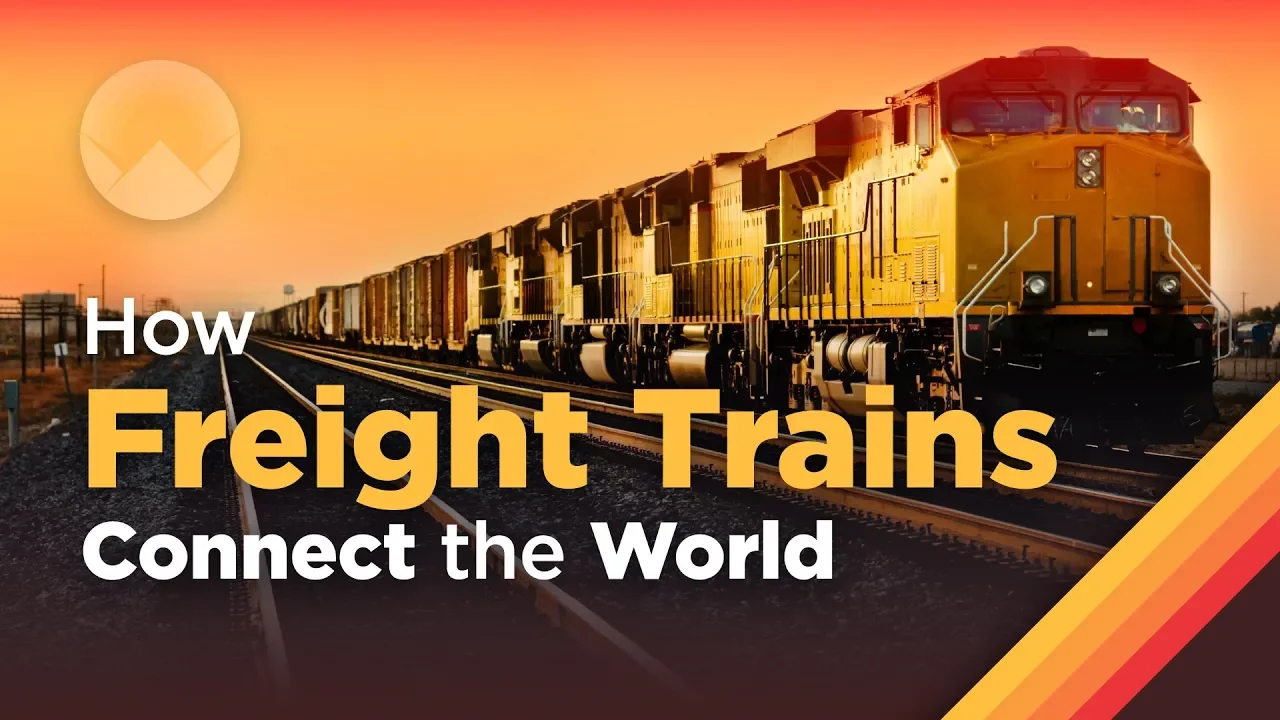
Freight trains are the most cost-effective method for long-distance land freight transport, costing approximately 4 cents per ton-mile in the United States compared to 20 cents for trucks and 121 cents for air freight; this efficiency stems from their superior fuel economy (one gallon moving one ton 469 miles), minimal friction from steel-on-steel contact, and ability to haul massive loads (up to 14,000 feet long) with minimal crew (often just one or two people), making them essential for transporting bulk goods like coal and intermodal containers across large landmasses.
Click to watch →
Deep Dive
Global trade corridors and inland ports (dry ports), analyzing how continental land bridges connect oceanic shipping routes.

What's a DRY Port?
26.3K
A DRY port is an inland transportation facility that functions as a satellite extension of a coastal seaport, enabling efficient cargo transfer between road, rail, and water transport without direct ocean access; these facilities, such as Georgia's Blue Ridge Connector and Appalachia Regional Port, reduce highway congestion by bringing port services closer to importers and exporters while serving regional economic development through intermodal shipping containers transported by high-priority trains.
Click to watch →

"แลนด์บริดจ์" คิดใหญ่แต่ไม่มีใครใช้? | คมชัดลึก | 16 ม.ค.67 | FULL | NationTV22
131.9K
Global maritime trade operates through two primary corridors: the Western route connecting Europe, Middle East, and India to the Atlantic and Americas, and the Eastern route connecting Asia-Pacific nations including China, Japan, Korea, and Southeast Asian countries. Container ships are measured in TEUs (Twenty-foot Equivalent Units), with large vessels carrying 10,000+ TEUs. Ships spend approximately 23 days at sea between ports, making time efficiency critical. The Land Bridge project aims to capture cargo currently passing through Singapore and Malaysia by positioning Thailand as a new global port where ships will naturally stop during their global voyages.
Click to watch →

Спутник НАСА упал на Киев? РФ установила шпионские антенны по всей Европе / Утренний эфир
90.8K
China's Belt and Road Initiative aims to create a modern maritime Silk Road and economic Silk Road, reducing dependence on US-controlled maritime routes. The Eurasian Land Bridge connects Asia, Europe, and Africa to China, potentially reducing delivery times from 45-60 days by sea to approximately 10 days by land. Russia's Northern Sea Route is the main Arctic maritime artery, with increasing capacity through atomic icebreakers. Russia's North-South Transport Corridor connects Saint Petersburg to Mumbai through Iran, reducing transportation costs by one-third and travel time by two-fifths. This has become an economic lifeline for Russia after the war in Ukraine redirected trade away from European markets.
Click to watch →
Transportes hidroviário: portos
4.4K
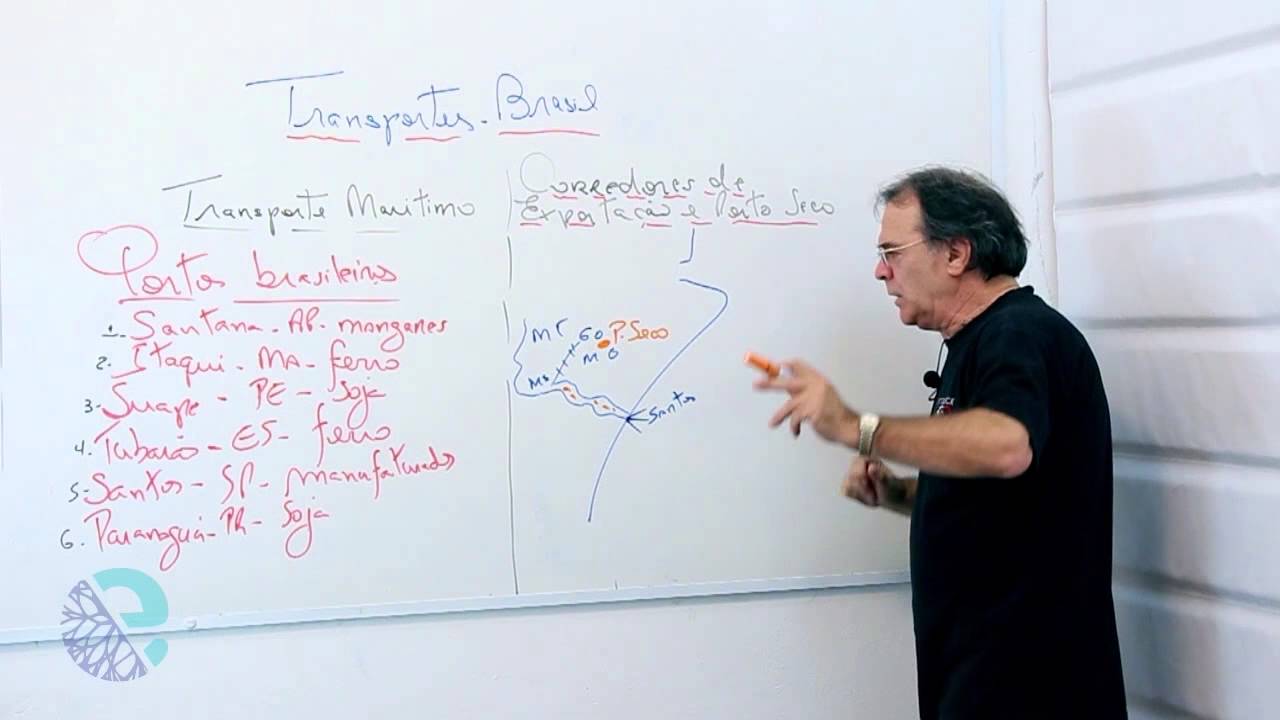
Brazil's maritime transport system features specialized ports handling specific commodities: Santana (manganese), Suape (iron ore), Tubarão (iron ore), Paranaguá (soybeans), and Santos (manufactured goods). Ports are classified by cargo type, with iron ore ports handling heaviest commodities and Santos handling highest-value manufactured goods. The Port of Paranaguá serves landlocked Paraguay and Bolivia. Export corridor ports have specialized infrastructure (tanks, warehouses, silos) and connect inland areas via river, railway, and highway. A Port Seco (Dry Port) replicates port functions without water access, processing cargo and releasing trucks to avoid congestion, enabling efficient multimodal logistics from inland production areas to maritime terminals.
Click to watch →

Sahel Mega Projects: How Traore Built Africa's Ultimate Mega Port Without an Ocean
132
Inland dry ports replicate the functions of traditional maritime harbors, performing all administrative customs and clearing functions hundreds of kilometers from the nearest ocean. The dry ports of Bobo Dioulasso and Wagadugu transform landlocked vulnerability into a powerful asset of central distribution. Economic gravity is now rotating northward across Mali and Niger, forging an alternative trade corridor cutting through the Sahara to touch Morocco's Atlantic gateway and Tangier Med, linking to over 180 ports worldwide. This revives ancient Trans-Saharan trade routes with modern infrastructure, while scientific independence through local mineral analysis and resource nationalization systematically dismantles the old architecture of extraction.
Click to watch →
Deep Dive
The engineering and logistics behind double-stack rail transport, including vertical clearance requirements and specialized railcar designs.
DOUBLE-STACK RAIL TRANSPORT INDIAN RAILWAYS : COMPILATION OF COLOURFUL DOUBLE STACKS
66.8K
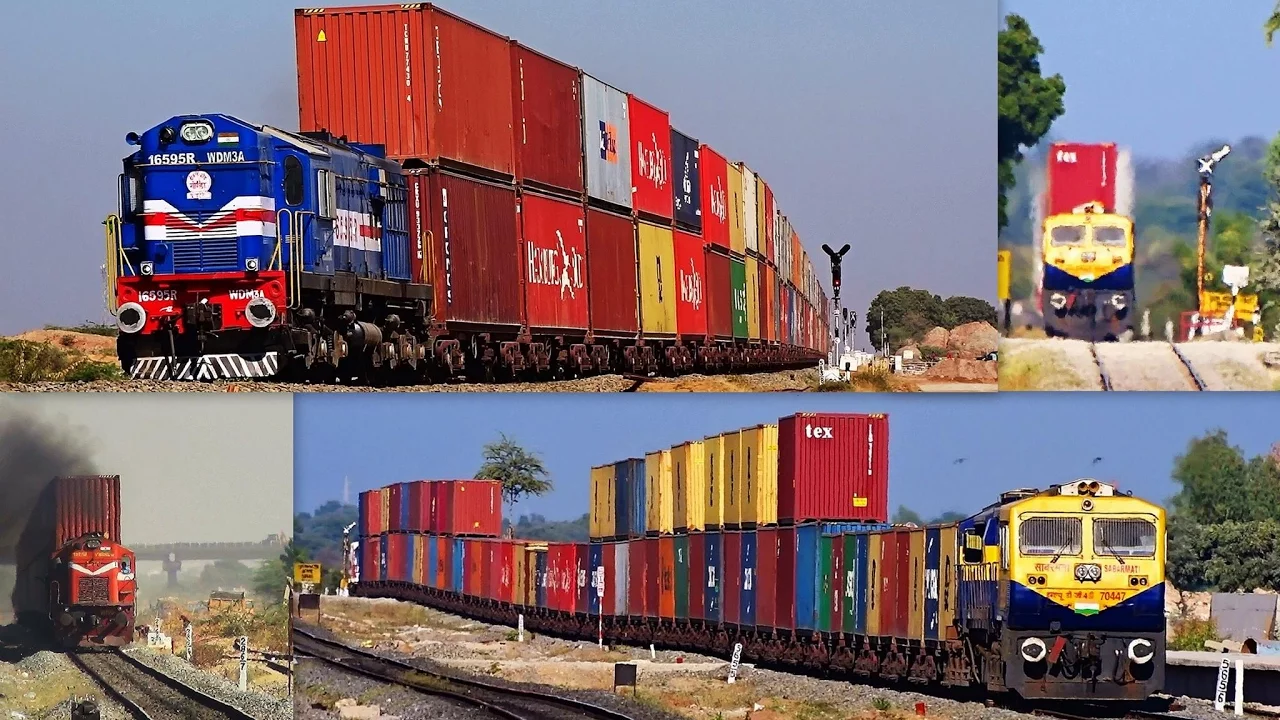
Double-stack rail transport is an intermodal freight method where containers are stacked two high on specialized railroad cars, significantly increasing cargo capacity per train. Originating in North America in 1984, it now handles nearly 70% of U.S. intermodal shipments, reducing costs per container by roughly doubling transport efficiency. North American railroads use well cars—designed to lower the center of gravity and reduce vertical clearance needs—which also minimize transit damage and enhance security by cradling lower containers to prevent door tampering. While widely adopted in North America, global implementation faces constraints due to infrastructure limitations like tunnel clearances and overhead line heights. India is among only three countries commercially operating double-stacked trains with 9 ft 6 in (2,896 mm) high cube containers on its 1,676 mm (5 ft 6 in) gauge network, using flat wagons at Mundra and Pipavav Ports. India is constructing the Dedicated Freight Corridor, a first-of-its-kind electrical traction-based double-stack freight network designed to transport international standard containers efficiently and sustainably. The video showcases four double-stack trains hauled by diesel locomotives WDM3A, WDG4D, WDG4, and WDG3A from various sheds, highlighting operational diversity on Indian Railways’ North Western Railway.
Click to watch →
District 6: planes, trains, but no automobiles?? Geographer talks the Hunger Games
117K
Double stacked container technology allows two shipping containers to be loaded on top of each other on a single train car, effectively doubling how much freight a single trip can carry. This method was initially invented in 1984. The main limitations stem from clearance height requirements, with four standard clearance heights ranging from 18t 2 inches to 20t 3 inches (approximately 5.5 to 6.2 meters). Interestingly, the lack of electrified passenger rail in the US is actually an advantage for double stacking because there are no overhead wires to interfere.
Click to watch →
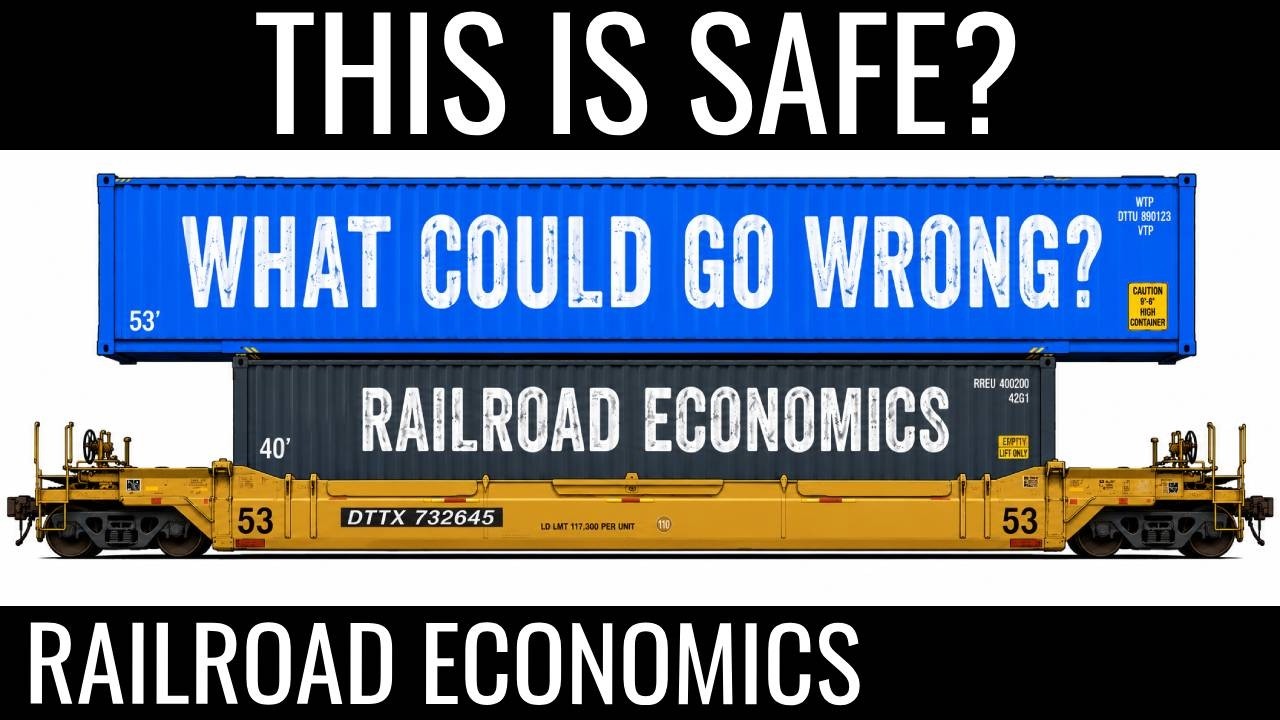
WHY DON’T DOUBLE-STACK TRAINS FALL OVER? | Railroad Economics 038
545
Double-stack container trains use specialized well cars with a lowered middle section that creates a well for the bottom container, lowering the center of gravity and reducing overall height for bridges and tunnels; containers are secured using interbox connectors at corners, and the counterintuitive practice of placing longer 53-foot containers on top of shorter 40-foot containers works because the longer containers have attachment points that align with the shorter ones below. Southern Pacific pioneered this technology in the late 1970s, and 1984 marked the landmark year when American President Lines launched dedicated double-stack service, enabling railroads to dramatically increase freight capacity within existing train lengths by moving more containers on fewer trains, though this requires expensive infrastructure modifications including raised bridges, lowered tracks, and modified tunnels.
Click to watch →

The Rise of Container Trains
104.8K
The development of double-stack intermodal rail cars in 1977 by McLean, Southern Pacific, and American Car and Foundry revolutionized rail capacity. Well cars supporting two 40-foot containers provided stability and cleared height restrictions. The 1984 Union Pacific-American President Lines route from LA to NJ established all-double-stack service, making double-stacks the industry standard. Throughout the 1980s-1990s, hot shot trains prioritized high-value and perishable goods. By 2022, American railroads moved 13.5 million intermodal units generating 27% of freight revenue. Single stacks dominate Europe and Asia due to overhead wires, while double stacks prevail elsewhere. Container trains now connect the world from UK to China, keeping hundreds of trucks off roads and reducing emissions.
Click to watch →

America's Most Modern Giant Machines | State-of-the-art Machines in Action! #25
345
Double stack intermodal rail transport systems represent an engineering feat in high-volume logistics. These systems utilize specialized rail cars designed to withstand static loads up to 99 tons per car. Container units are arranged according to principles of space optimization, with a 40-foot container or two 20-foot units on the bottom tier coupled with containers up to 53 feet long on the top tier. This configuration maximizes cargo capacity while maintaining structural integrity and safety standards.
Click to watch →
Core Concept
Future Outlook
Core Concept
0:14- 1
Intermodal freight moves goods seamlessly across transport modes.
- 2
Containers enable efficient double-stacking on trains for scale.
- 3
Rail offers speed, cost savings, and reduced driver dependency.
The Limitations of Intermodal Rail: Last-Mile Bottlenecks and Operational Inflexibility
While intermodal freight rail is highly efficient for long-haul shipping, critics point out its significant limitations compared to direct road transport. A major drawback is the 'last-mile' problem: because trains run on fixed tracks, goods must still be transferred to trucks for final delivery, introducing logistical bottlenecks, handling delays, and increased risk of damage at transfer terminals. Furthermore, intermodal rail lacks the agility of trucking; it is highly vulnerable to rail network congestion, track maintenance delays, and rigid schedules. For shipments under 500 miles, the time, complexity, and administrative costs of coordinating multiple transport modes often outweigh the fuel savings of rail, making direct door-to-door trucking a faster and more reliable alternative.
Fundamentals of supply chain management and the basic flow of goods from manufacturers to consumers.
The concept of containerization, including the standardization of shipping containers (ISO containers and TEUs).
An overview of different transportation modes (maritime, road, rail, and air) and their general operational differences.
Basic understanding of transportation infrastructure, specifically the function of seaports and freight hubs.
The mechanics of drayage and last-mile logistics challenges in the intermodal transport chain.
Advanced terminal operations, including the use of gantry cranes, reach stackers, and Terminal Operating Systems (TOS) for container tracking.
Economic and environmental analysis of rail transport, focusing on fuel efficiency, carbon footprint reduction, and cost-per-ton-mile metrics.
Global trade corridors and inland ports (dry ports), analyzing how continental land bridges connect oceanic shipping routes.
The engineering and logistics behind double-stack rail transport, including vertical clearance requirements and specialized railcar designs.
35.1K views255likes3:05@AAR-Freight-RailOriginal Release: 2015-08-13
when we use the term intermodal Freight we're talking about the seamless movement of goods from one mode of transportation to the other intermodal is the most efficient means ever devised of getting goods from around the world to you the American consumer so once the containers arrive here in the port we utilize the railroads to deliver our goods all throughout the country but the goods stay secure in that one container one box for the duration of the move all types of goods from fruits and vegetables and refrigerated containers to dry goods apparel electronics pharmaceuticals the whole gamut of goods that are coming and going rail provides an opportunity for us to move the goods off the port quicker and get them to market quicker the intermodal container is the key to swift seamless movement an intermodal container is really a box without wheels the advantage to a container is when it's put on the train they can generally be double stacked and so there's this multiplier effect of the trains when we build a train we look at destination you want to build your train strategically so you can just cut the bottom of the train off keep going cut the bottom off keep going intermodal benefits everyone in the supply chain from manufacturers to transporters to consumers in today's marketplace driver capacity is a limitation across the transportation industry so what intermodal brings is the opportunity to utilize less drivers to move more Freight the domestic share of intermodal traffic has been rising in recent years because it's a cost-efficient way to move goods which is often cheaper than using trucks so more and more freight that used to move around America by truck now moves by real intermodal it's one of the most efficient forms of transport a train can carry as much freight as 250 trucks that's less congestion on the nation's interstates that's cleaner air for everybody less trucks less traffic less fuel emissions and all this has been made possible by freight rails ongoing investment in the most advanced intermodal network in the world tens of billions of dollars in new infrastructure and equipment well we have to do as we plan for the futures we have to move cargo in a smart manner and intermodal rail connectivity is a key component of that movement intermodal in the future is going to be a lot about automation and about technology all railroads are investing in infrastructure and enhanced technology and I think that's only going to benefit the intermodal product that is available in the market as well as benefit the end customers of Transportation intermodal from ships to trains to trucks to you
Up Next

2:09
The Sentry: Investigating War Economies in Africa's Deadliest Conflicts
@ENOUGHproject
14.8K views•2015-07-20

12:54
Triumph of Orthodoxy Icon: Byzantine Art & History Explained
@BenCallan
2.1K views•2024-08-06

9:49
FastAPI vs Flask vs Django: Choosing the Right Python Web Framework
@TechWithTim
302.5K views•2024-05-26

1:42
Game of Thrones Opening Credits: A Cinematic Analysis
@gameofthrones
46.3M views•2011-04-18
Related Study Plans & Knowledge Roadmaps
Structured learning paths in General & Interdisciplinary Studies
general-studies
Elevator Engineering: History, Physics & Cities
01From Hoists to Safety Brakes: The Dawn of Vertical Lift
02Hydraulic vs. Traction: The Engineering Physics of Elevators
03Modern Speed, Safety, and Algorithms
+ 2 more learning modules
12h5 modules
Explore Roadmap
general-studies
Rubber: Material Science, History & Geopolitics
01Origins of Natural Rubber & Mesoamerican History
02The Chemistry of Natural Rubber & Vulcanization
03The Geopolitics of the Rubber Boom & Colonization
+ 2 more learning modules
12h5 modules
Explore Roadmap
general-studies
Containerization: Evolution, Logistics & Trade
01Ancient Trade & Bulk Cargo: Amphorae to Barrels
02The Industrial Revolution & Cardboard Packaging
03The Containerization Revolution: Malcom McLean
+ 2 more learning modules
12h5 modules
Explore Roadmap
general-studies
Textile Tech: Evolution, Labor & Global Impact
01Pre-Industrial Textiles: Handloom & Cottage Industry
02Mechanization: The Spinning Jenny to the Power Loom
03The Factory System & Global Labor Transformation
+ 2 more learning modules
10h5 modules
Explore Roadmap