War economies sustain deadly conflicts through the smuggling and trafficking of valuable resources like gold, diamonds, minerals, and ivory, as well as the theft of state resources, which allows violent governments and rebel leaders to fund their operations and enrich themselves; dismantling these illegal networks requires following the money and imposing costs on those who benefit from war, as long as the benefits of conflict outweigh the costs, violence will continue.
The Sentry: Investigating War Economies in Africa's Deadliest Conflicts
Added:Deep Dive
Understanding the concept of 'war economies' and how natural resources (such as gold, diamonds, and oil) are militarized and exploited to fund armed conflicts.

【闇】アフリカで戦争が「永久に」終わらない理由
161.4K
Armed groups in new wars finance operations by controlling and smuggling natural resources like diamonds, gold, and rare earth metals. This creates self-sustaining war economies where parties avoid resolution because peace would eliminate profitable chaos. In the DRC, 25 years of resource conflict killed over 600,000 people—the highest death toll since WWII. Resources extracted from these zones ultimately reach markets in wealthy nations, creating direct connections between consumer prosperity and ongoing violence in developing countries.
Click to watch →

Ibrahim Traoré : 17 jours pour briser 15 ans d’économie de guerre au Sahel !
139
Artisanal gold mining in Mali's northern regions functions as a war economy. Armed groups tax miners, transporters, and border crossings, creating a financial chain that funds their operations. The money then leaves Mali through discreet routes and returns as weapons, ammunition, fuel, and salaries. This demonstrates how natural resources can be weaponized to sustain armed conflicts.
Click to watch →

ASI Thought Leaders Forum | Fuelling Conflict: Inside the Illicit Economies of War
199
War economies refer to a phenomenon where parties to a conflict engage in large-scale illicit enterprises, exploitation of resources, levy of taxes, and control of trade routes to generate funds necessary to continue their operations and benefit from them. This includes both state and non-state actors, and 'war' encompasses both active conflicts and those that have not seen sustained direct combat in years (low-intensity conflicts).
Click to watch →

ใครคุมทรัพยากร=คุมสงคราม สมการที่กำหนดความสัมพันธ์กะเหรี่ยง–เมียนมา #history #podcast #สารคดีเสียง
994
Natural resources in conflict zones are transformed into war capital through a process where resources are extracted, converted to cash, and then used to purchase weapons and sustain military operations. The video explains that trees, minerals, and rivers become 'cash checks' that fund military campaigns. This creates a self-reinforcing cycle where resources attract conflict, and conflict enables further resource extraction, perpetuating the war economy.
Click to watch →

What is a war economy?
4.3K
A war economy is when states redirect resources and supply chains toward defense priorities, involving labor control, production reallocation, rationing, conscription, and new technology development, which creates a trade-off between military spending (guns) and social programs (butter) that inevitably leads to price hikes due to expensive equipment, workforce reduction, and financing mechanisms.
Click to watch →
Deep Dive
Fundamentals of illicit financial flows (IFFs), including money laundering, the use of offshore shell companies, and the role of global financial intermediaries.
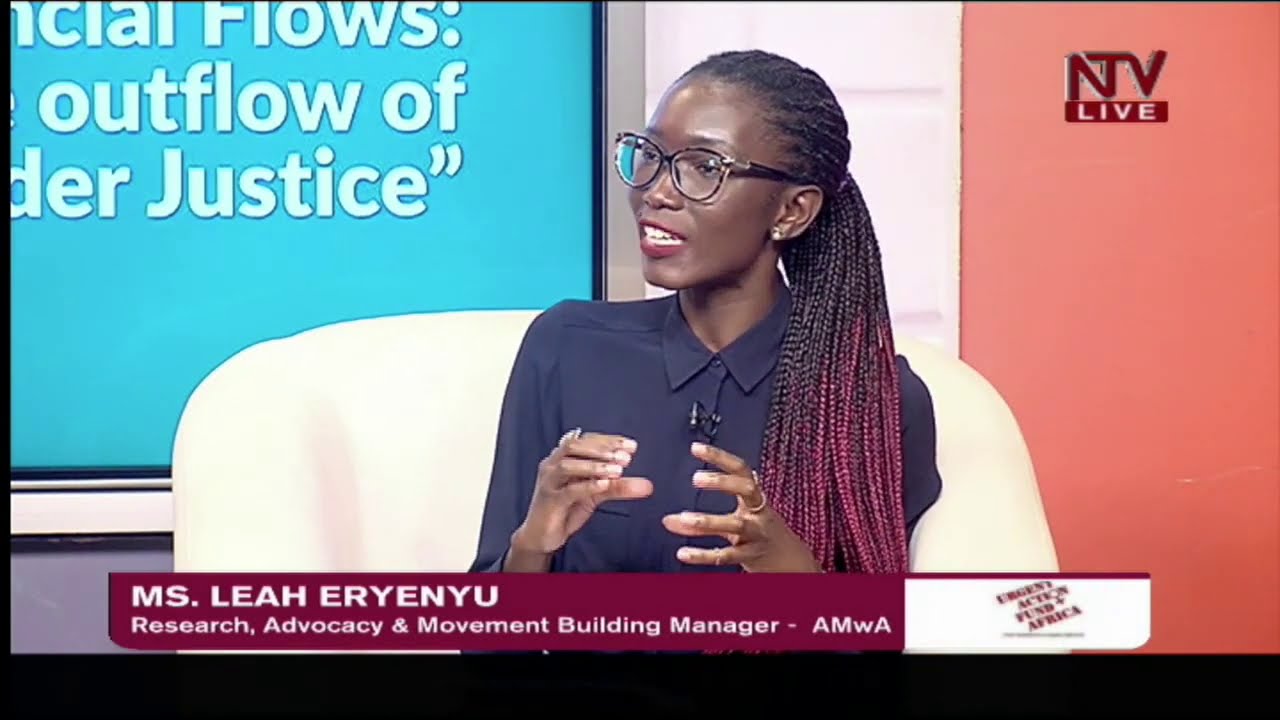
Illicit financial flows: Plugging the outflow of resources for gender justice | TALK SHOW
227
This comprehensive segment provides a thorough examination of illicit financial flows (IFFs). IFFs are defined as money that is illegally earned, illegally used, and illegally transferred. The three main categories are: (1) proceeds from corrupt activities like bribery, (2) proceeds from criminal activities such as drug trafficking and wildlife poaching, and (3) proceeds from commercial tax abuse including tax evasion and tax avoidance. Commercial tax abuse accounts for approximately 65% of IFFs, making it the largest contributor. The 2015 IMF report revealed Africa loses over 50 billion dollars annually in illegal outflows, totaling over one trillion dollars over 50 years. The global financial architecture enables IFFs through its borderless nature, where trade flows globally without adequate control. Intermediaries include lawyers, bankers, accountants, auditors, and tax experts who advise corporations on structuring transactions to exploit loopholes. Tax havens are countries with very low corporate tax rates (often zero to two percent) that multinational companies use to minimize tax obligations. Rules around taxation, including transfer pricing and double taxation agreements, were created over 100 years ago primarily by advanced economies when developing countries were colonized, making them unfair in allocating taxing rights between advanced and developing economies.
Click to watch →

Illicit Financial Flows to and from Africa - A Conversation with Raymond Baker
2.5K
Illicit financial flows are illegal movements of money that break laws at any point in their origin, movement, or use, originating from three main sources: corruption, criminality, and commercial tax evasion; contrary to common perception, commercial tax evasion represents the largest component (particularly for cross-border flows), followed by criminal activities, with corruption being the smallest; these flows are facilitated by a global shadow financial system including tax havens, disguised corporations, anonymous trusts, and trade misinvoicing; combating these flows requires greater financial transparency globally, which reduces opportunities for illicit money to move through the shadow system, though this primarily depends on political will rather than technical difficulty.
Click to watch →

Illicit financial flows and the impact on developing countries - conference by ASERI and Transcrime
134
This section presents the core argument that IFFs are highly heterogeneous in their sources, channels, and consequences. Sources include tax evasion, corruption (petty and grand), criminal enterprise, innocent flows (currency restriction violations), and transfer pricing abuse. Channels include money laundering, shell corporations, trade mispricing, and casinos. Different sources use different channels based on offender skills and networks. Drug dealers use expensive, clumsy methods like cash backpacks, while grand corruption cases involve skilled professionals using cheaper methods. This heterogeneity means that aggregation strategies used for advocacy purposes may obscure important policy opportunities and problems.
Click to watch →

Законът "Магнитски" зад кулисите / The Magnitsky Act. Behind the Scenes (2016)
12.1K
The three companies used for the 230 million dollar fraudulent tax refund were non-descript shell companies with authorized capital of only four hundred dollars, functioning essentially as mailboxes. Such shell companies are designed for real beneficiaries to remain anonymous while controlling chains of nominee owners and directors. The sale of such vehicles meant that old nominee directors clearly traceable to Bill Browder and HSBC were not responsible for the theft. Gasanov, the middleman who signed contracts leading to company re-registration, mysteriously died once ownership transfer was completed. Another figurehead director died under suspicious circumstances. The international financial system's embrace of corporate anonymity allows stolen money to go untraceable like trickles in a stream. This demonstrates how complex corporate structures enable financial crimes while protecting real beneficiaries from accountability. The case reveals how legitimate-looking business transactions can conceal criminal activities and how international financial systems can facilitate money laundering through opaque corporate structures.
Click to watch →
The Oligarchs l Al Jazeera Investigations
2.6M
This segment traces the sophisticated routes used to launder billions through multiple countries and banks. It documents how funds moved from Ukraine through Cyprus, Austria, Germany, and Latvia using interconnected shell companies. The investigation reveals how each bank failed to raise red flags despite massive transactions, how nominee directors and cutout companies obscured ownership, and how the complexity of international finance creates opportunities for criminals to exploit regulatory gaps across jurisdictions.
Click to watch →
Deep Dive
A basic geopolitical understanding of post-colonial conflicts in East and Central Africa, particularly in regions like South Sudan, the Democratic Republic of Congo, and Sudan.
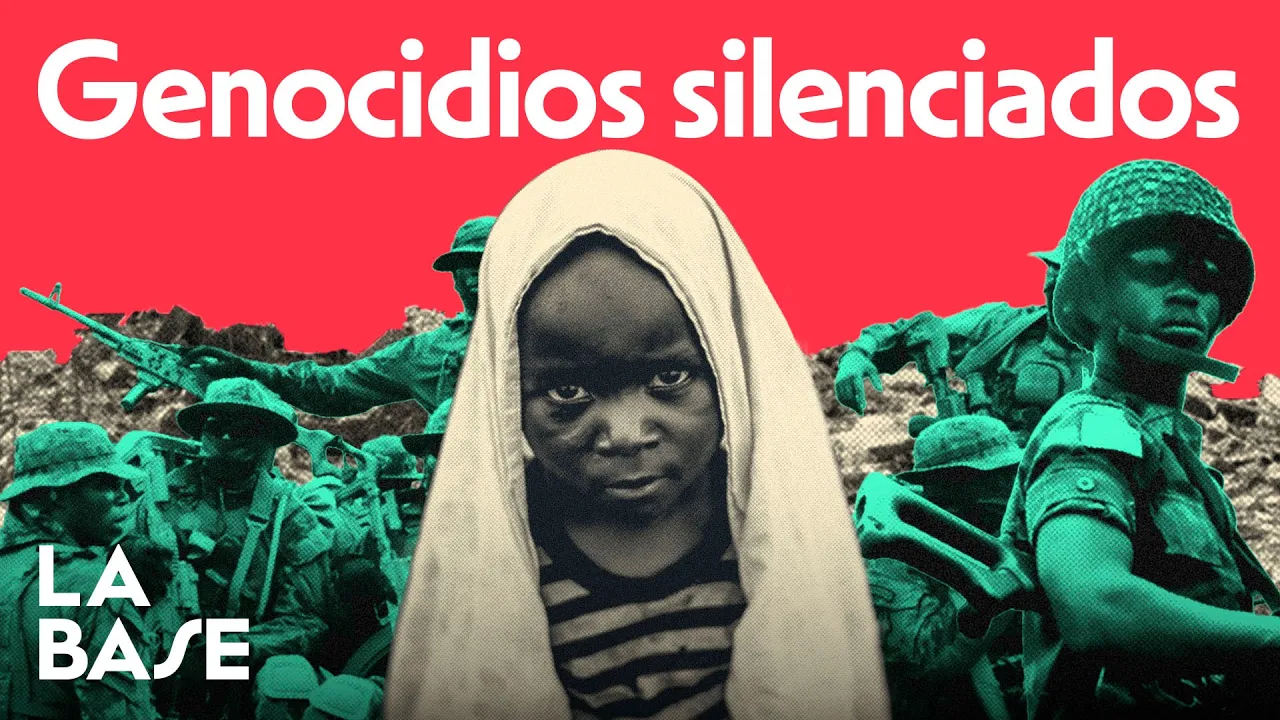
La Base 4×10⁸ | El Congo y Sudán: ¿qué está pasando?
70.4K
The conflicts in Sudan and Congo are not natural curses but result from the combination of colonialism, a hasty and inadequate decolonization process, international disinterest, and a global arms trade that perpetuates state failure. An industry of exploitation and arms trafficking has interests in maintaining the status quo, making it difficult to bring democracy and values to these nations. The suffering is not inevitable but the result of deliberate choices by powerful nations.
Click to watch →

【高校生のための政治・経済】アフリカの困難#22
24.7K
Africa experienced centuries of European colonial rule primarily due to abundant natural resources, particularly rare metals. The 1960 independence wave saw 17 nations achieve freedom, followed by the African Union's formation in 2002. Post-colonial conflicts emerged from ethnic and religious divisions, exemplified by Sudan's civil wars (1956-1972, 1983-2005) driven by Arab Muslim versus African Christian tensions. The Darfur conflict (2003) became the 21st century's largest humanitarian crisis, with 400,000 killed through ethnic cleansing. China's economic interests, including 70% of Sudan's oil exports and $170 million in loans, prevented UN sanctions. South Sudan's 2011 independence followed a referendum, with Japan deploying Self-Defense Forces under the PKO Cooperation Law.
Click to watch →
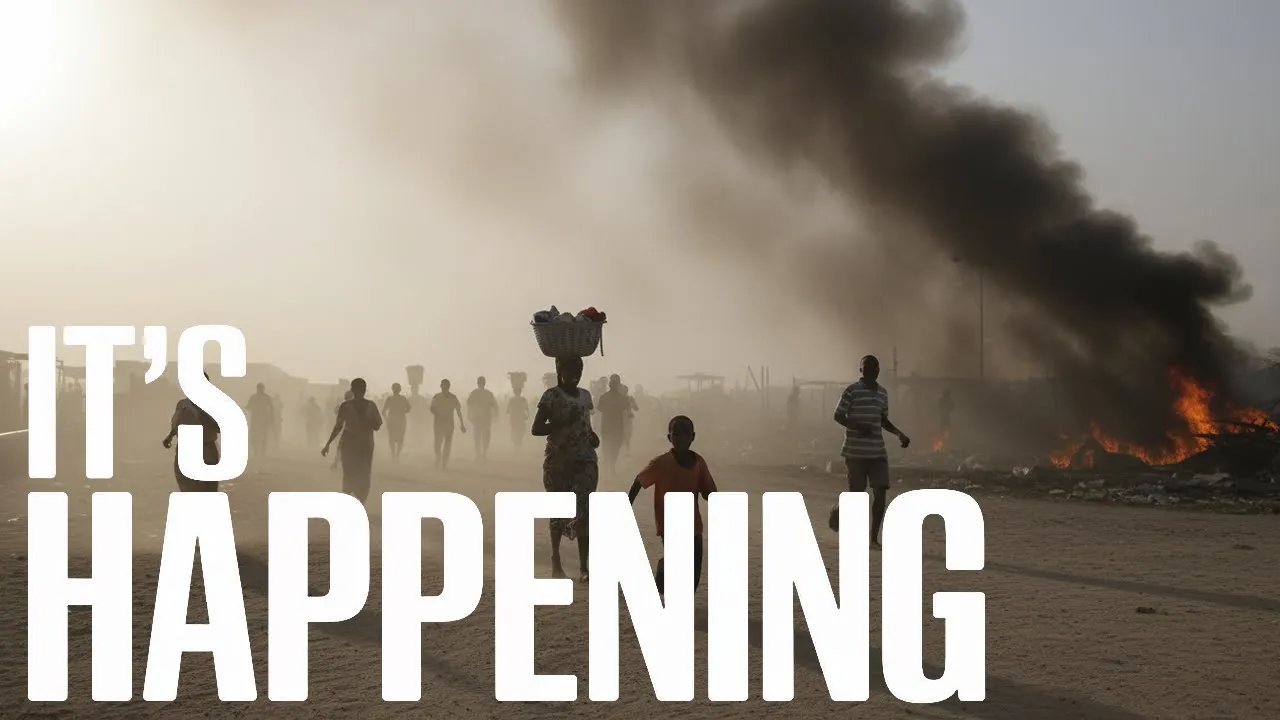
South Sudan is Sliding into War
170.5K
South Sudan, a nation of approximately 60 tribes with Dinka and Nuer comprising 50% of the population, has struggled with ethnic-based governance since independence. The 2018 peace agreement forced Dinka President Salva Kiir and Nuer Vice President Riek Machar to govern together, creating inherent tensions. Between 2020-2025, leaders systematically looted national resources for private gain, with Kiir's private medical unit receiving more funding than the entire healthcare system. Kiir's subsequent purges of Nuer elites, aimed at securing power for his protégé Benjamin Bemuel, triggered ethnic militia mobilization and escalated tensions toward renewed civil war.
Click to watch →
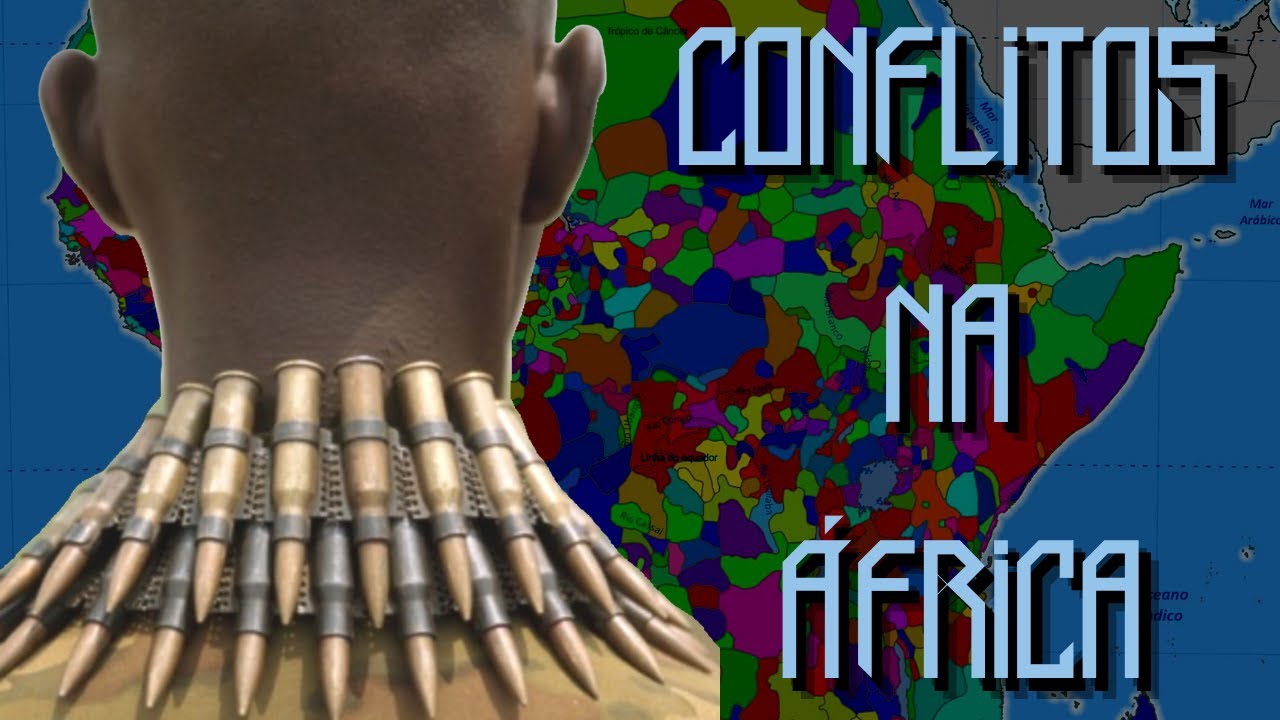
Conflitos na África
13.4K
African conflicts stem from territorial disputes, ethnic tensions, religious differences, and resource competition, exacerbated by colonial borders, Cold War interventions, and electoral failures. Sudan's history illustrates this pattern: the First Civil War (1955-1972) killed 500,000 people and led to South Sudan's autonomy via the Addis Ababa Agreement. The Second Civil War (1983-2005) was religiously motivated, killing 2 million people. South Sudan now faces its own civil war since 2013 between President Kiir and rebel leader Machar, with 10,000 deaths and economic devastation. Boko Haram in Nigeria exemplifies how religious extremism and resource competition create ongoing violence, having killed over 15,000 people and abducted hundreds of women.
Click to watch →
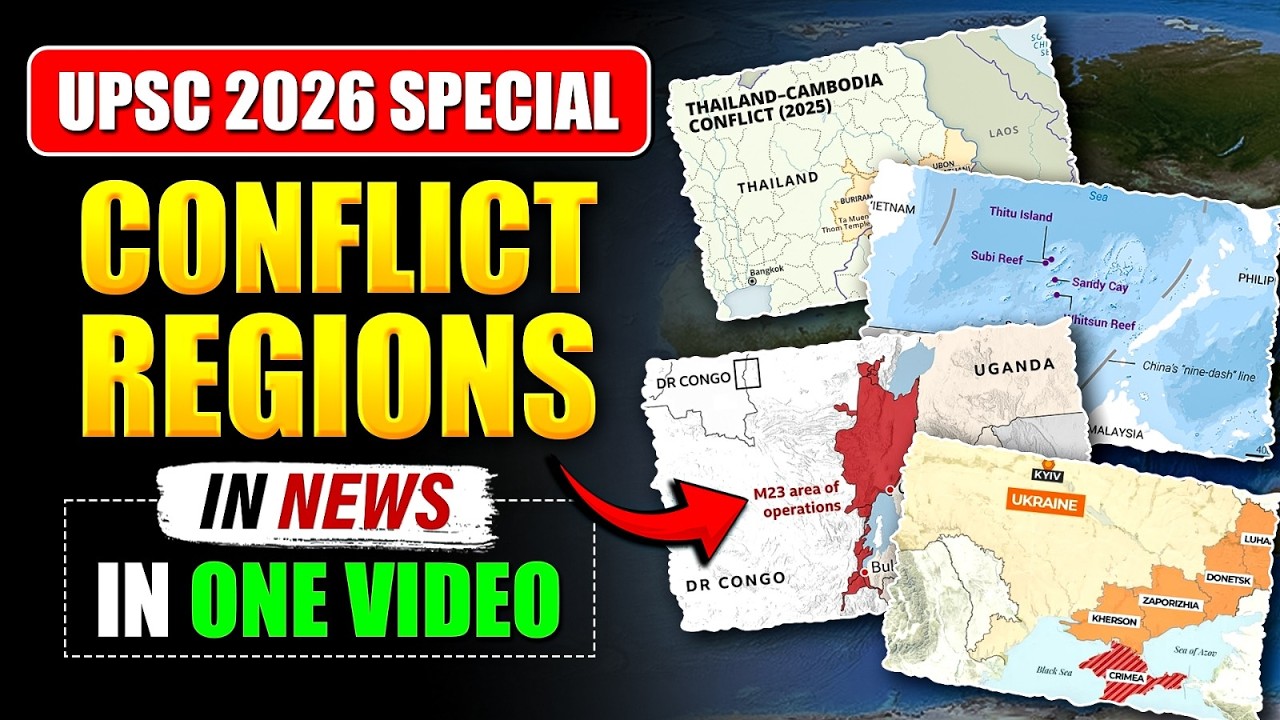
Revise All Important Conflict Regions in News | Prelims 2026 | PW | OnlyIAS
4.9K
Africa's post-colonial conflicts trace directly to arbitrary colonial boundary-drawing that ignored ethnic and cultural realities. The Durand Line between Afghanistan and Pakistan exemplifies how British-era boundaries persist as sources of conflict, with Afghan Taliban rejecting the division entirely. Similarly, the Congo River basin's arbitrary partitioning created the DRC, which became a battleground for the M23 rebellion affecting Rwanda, Uganda, and Burundi. Sudan's civil war and Darfur conflict similarly reflect how colonial borders combined with ethnic divisions to produce prolonged violence. Understanding this historical context reveals that many contemporary African conflicts are not spontaneous but are structural outcomes of colonial governance strategies that prioritized administrative convenience over human welfare.
Click to watch →
Deep Dive
The role of international regulatory bodies and frameworks (such as the Financial Action Task Force) in combating corruption, terrorism financing, and transnational organized crime.

Secretary Janet Yellen Gives Remarks at 2023 Summit for Democracy Anti-Corruption Event
612
The Financial Action Task Force (FATF) leads global action to tackle money laundering, terrorist financing, and proliferation financing. A strong anti-money laundering framework helps deter serious crimes including foreign bribery and other forms of corruption. FATF is responsible for some of the most important tools to fight corruption and kleptocracy and the international infrastructure used to fight economic crime.
Click to watch →
Hafta Sonu Siyaset: Yolsuzluk-Yoksulluk-Yasaklar: Üç "Y" ile mücadelenin 18 yıllık bilançosu
2K
The Financial Action Task Force (FATF) is an intergovernmental organization established by G7 countries to combat money laundering, corruption, and organized crime. It operates on the principle that corruption is a contagious disease that can spread between countries through trade, political, and alliance relationships. FATF evaluates countries based on 40 recommendations and 11 performance standards, categorizing them into White List (good performance), Grey List (poor performance), and Black List (money laundering sources). Countries on Grey or Black Lists face severe restrictions on international financial transactions, as all transactions become suspicious. Turkey was warned that failure to implement key recommendations would result in placement on these lists, demonstrating the serious consequences of inadequate anti-corruption measures.
Click to watch →

En voz de los expertos... Dr. Israel Trujillo Bravo
634
The regulation against money laundering and terrorist financing is supported by multiple frameworks: internationally, the United Nations Security Council recognizes the close relationship between international terrorism and organized crime, generating guidelines for prevention and repression. Mexico has been a member of the Financial Action Task Force (FATF) since 2000, which is the intergovernmental organization that establishes international standards for preventing and combating money laundering and terrorist financing. The regulation is also part of Mexico's National Development Plan 2019-2024, which considers combating these crimes as an obligation of the state. The Unidad de Inteligencia Financiera (Financial Intelligence Unit) plays a key role in this framework, with its participation visible in media coverage.
Click to watch →

Renewing American Leadership in the Fight Against Corruption
1.1K
The Financial Action Task Force (FATF) plays a key role in combating illicit financing and corruption through developing and implementing international recommendations. The U.S. leads the U.S. delegation to FATF, using these multilateral engagements to promote financial transparency in the international financial system.
Click to watch →

Anti-Money Laundering Reporting Obligations and its Impact on the Legal Profession
227
This section covers the international framework governing money laundering and terrorism financing enforcement. The three main conventions are: (1) The Vienna Convention (1988) - a legal mechanism for enforcing conventions on narcotic drugs and psychotropic substances, also devoted to fighting organized crime; (2) The Palermo Convention (2000) - the UN Convention against Transnational Organized Crime; and (3) The Merida Convention (2003) - the only legally binding universal anti-corruption instrument. The Financial Action Task Force (FATF), founded in 1989 by the G7, developed policies to combat money laundering and later terrorism financing. In 2019-2020, the UN Security Council recognized FATF as a global standard setter and instrument to fight money laundering and financial crimes.
Click to watch →
Prerequisite Knowledge
- Concept 01Understanding the concept of 'war economies' and how natural resources (such as gold, diamonds, and oil) are militarized and exploited to fund armed conflicts.
- Concept 02Fundamentals of illicit financial flows (IFFs), including money laundering, the use of offshore shell companies, and the role of global financial intermediaries.
- Concept 03A basic geopolitical understanding of post-colonial conflicts in East and Central Africa, particularly in regions like South Sudan, the Democratic Republic of Congo, and Sudan.
- Concept 04The role of international regulatory bodies and frameworks (such as the Financial Action Task Force) in combating corruption, terrorism financing, and transnational organized crime.
Subsequent Learning
- Step 01Advanced techniques in forensic accounting and open-source intelligence (OSINT) used by non-governmental investigators to track high-level corruption.
- Step 02Evaluating the effectiveness of targeted 'smart sanctions' and the Global Magnitsky Act in holding corrupt foreign officials accountable.
- Step 03The study of global supply chain due diligence and corporate compliance laws designed to keep conflict-linked commodities out of consumer markets.
- Step 04Analyzing the legal and ethical challenges of asset recovery and returning stolen state wealth to victim populations in post-conflict nations.
War Economy
War Economy
0:06Playing Section
- 1
Investigates illicit networks funding Africa's deadliest conflicts.
- 2
Exposes how war profiteers exploit state resources and mineral smuggling.
- 3
Seeks to impose costs on beneficiaries to halt the cycle of violence.
Criticisms of Western-Centric Financial Advocacy and Neo-Colonial Framing
While The Sentry is praised for exposing corruption, critics argue its approach embodies a 'Western savior' dynamic that simplifies complex African conflicts into narratives of financial greed easily solved by Western intervention. Detractors point out that focusing heavily on international sanctions and financial pressure can lead to 'de-risking,' where global banks exit African markets, inadvertently harming ordinary citizens and local economies. Furthermore, critics argue that this top-down, celebrity-driven advocacy often marginalizes local civil society groups and ignores the deep-seated political, historical, and ethnic roots of these conflicts. By relying on Western financial leverage and governments to enforce accountability, such initiatives risk reinforcing neo-colonial power dynamics rather than fostering sustainable, locally-led democratic institutions.
Deep Dive
Advanced techniques in forensic accounting and open-source intelligence (OSINT) used by non-governmental investigators to track high-level corruption.
1. Técnicas de OSINT e proteção digital em contextos de direitos humanos
112
OSINT enables investigation of public financial flows through databases like the Brazilian Party Electoral Fund and Transparency Portal. These databases track public spending and political financing, revealing patterns of money circulation that may indicate corruption. Advanced search techniques using Google operators are fundamental OSINT skills. Key operators include: quotes for exact phrases, parentheses for grouping, asterisks for wildcards, 'OR' for multiple terms, 'AND' for combining terms, 'NOT' or minus signs for exclusion, and 'site:' for filtering by domain. These techniques allow investigators to find specific information, filter results by source, and conduct more precise searches than standard queries.
Click to watch →

ОХОТА НА КОРОЛЯ РОССИЙСКИХ СКАМЕРОВ: Как хакеры вычислили главаря колл-центра
2.8K
OSINT (Open Source Intelligence) is the methodology of collecting and analyzing data from absolutely open sources. It is not hacking or purchasing information from black markets, but rather pure analytics. The five-step methodology includes: (1) Digital Archive - tracing phone numbers from public job postings to abandoned profiles; (2) Social Graph - analyzing connections to find former employees; (3) Geolocation - extracting GPS coordinates from photos and cross-referencing with business registries; (4) Blockchain Analytics - tracing financial flows through public cryptocurrency transactions; (5) Voice Biometrics - comparing voice samples from different sources. This systematic approach allows investigators to find needles in haystacks by following clues criminals leave in open access.
Click to watch →

Course Preview: HUMINT, OSINT & SOCMINT
2.8K
Professional open source intelligence (OSINT) requires specialized training beyond basic Google searches, as investigators must learn to find information that appears deleted, access the deep web, track individuals through digital footprints and shadows, and use covert techniques to gather intelligence while maintaining operational security; this methodology involves understanding that nothing on the internet is truly deleted, learning to search beyond surface-level results, and applying lateral thinking to uncover information that targets may actively attempt to hide.
Click to watch →

OSINT в Інтернеті: про пошук в Гуглі і не тільки — Відкрита лекція «(не)Просто про корупцію»
158
OSINT (Open Source Intelligence) is the practice of gathering publicly available information from various internet sources to conduct investigations, requiring analysts to use multiple search tools (browsers, search engines, metasearch engines), understand different search methodologies (text, metadata, image, address-based), and follow a systematic four-step process (select keywords, organize materials, analyze results, repeat if needed) while maintaining security through separate devices, incognito mode, and VPNs to protect their own digital footprint.
Click to watch →

OSINT Explained for Beginners | Introduction to Open-Source Intelligence | OSINT Course #1
1.5K
Open-Source Intelligence (OSINT) is the systematic collection and analysis of information from publicly available sources such as databases, social media, government records, and online platforms, used across security, business intelligence, and journalism fields. The OSINT methodology follows a structured cycle: data collection from multiple sources, source verification to ensure accuracy, analysis to identify patterns and relationships, and documentation of findings. Essential safety measures include using virtual machines for secure investigations, configuring browsers for anonymity, employing VPNs for privacy protection, and implementing encryption for data security. Advanced techniques include creating sock puppets for ethical operations, using advanced search operators, researching businesses and individuals through usernames and images, and integrating physical and digital OSINT methods.
Click to watch →
Deep Dive
Evaluating the effectiveness of targeted 'smart sanctions' and the Global Magnitsky Act in holding corrupt foreign officials accountable.

🚨 ALLAN DOS SANTOS: VOLTA DA MAGNITSKY, DESESPERO E PRISÃO DE MINISTROS
256.3K
The Magnitsky Act is an effective tool for holding corrupt officials accountable, as demonstrated by the resignation of Barroso and the difficulties faced by Gilmar Mendes and Dias Toffoli, and citizens should channel their anger toward political corruption constructively rather than passively accepting systemic injustice.
Click to watch →
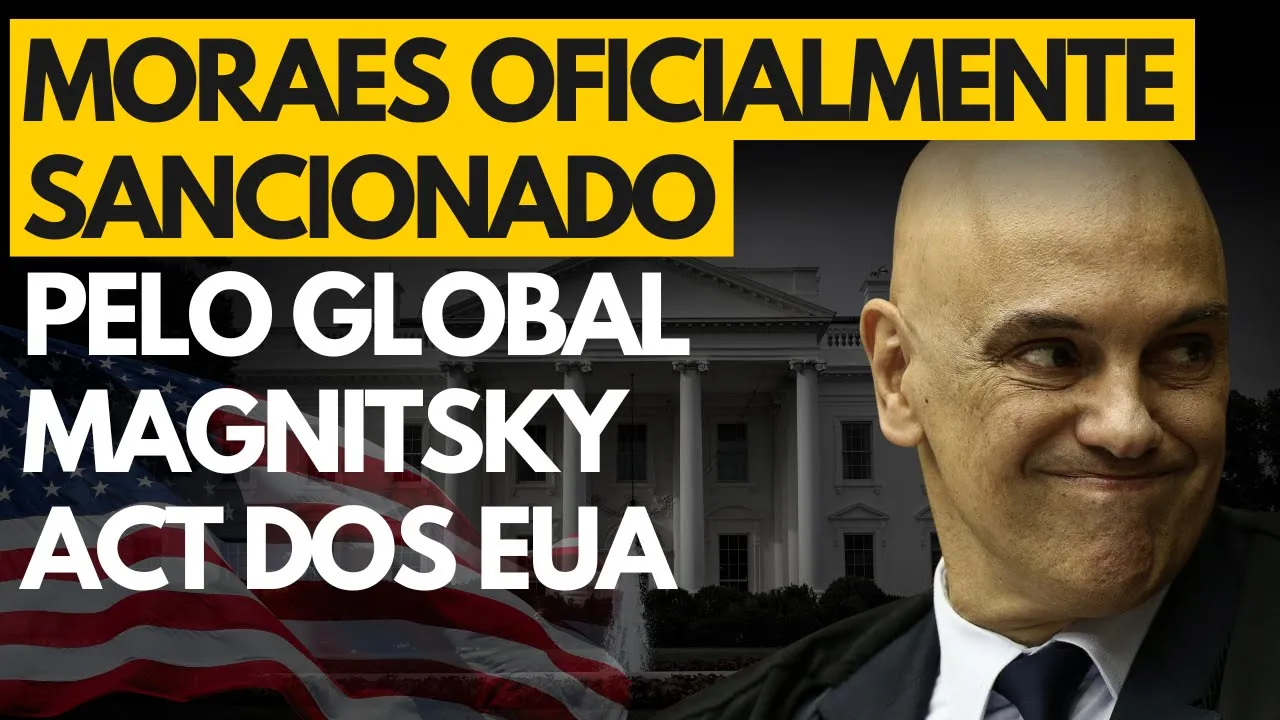
MORAES SANCIONADO: O que acontece agora com o ministro punido através do Global Magnitsky Act
18.9K
The Global Magnitsky Act is U.S. legislation that imposes financial sanctions on foreign officials who abuse power to commit human rights violations. Originally created in 2012 to sanction Russian authorities involved in the death of a corruption-exposing accountant, it was signed by President Obama and later expanded to apply to any foreign authority violating human rights. Alexandre de Moraes became the first Supreme Court justice sanctioned under this act, representing the first punishment of a democratic country's authority. The sanctions include: (1) U.S. entry prohibition, (2) asset blocking in U.S. territory, and (3) the most significant component requiring all U.S.-based companies to cut services, earning it the 'financial death penalty' label. Credit card companies, banks, and platforms like Netflix must terminate accounts, while U.S. authorities monitor sanctioned individuals to prevent circumvention through proxies.
Click to watch →

Xandão SANCIONADO pela Lei Magnitiski e com ameaça de PRISÃO nos EUA
102.6K
The Global Magnitsky Act is a US sanctions law that can freeze assets and restrict financial transactions of individuals deemed responsible for human rights violations or corruption, as demonstrated by the case of Brazilian Supreme Court Minister Alexandre de Moraes, who faced reimposition of sanctions and potential legal consequences for his actions against technology companies and political figures.
Click to watch →

Magnitsky, Ozzy e FBI persegue Católicos | BK Show #01
16.8K
The Global Magnitsky Human Rights Accountability Act is a US sanctions law created in 2012, named after Russian lawyer Sergei Magnitsky who died in 2009 after exposing corruption. Originally targeting only Russians, it was expanded in 2016 to apply globally. The law allows the US to impose financial sanctions on individuals responsible for serious human rights abuses including torture, extrajudicial executions, arbitrary detentions, and freedom of expression repression. It also covers significant corruption like misappropriation of public funds. The sanctions work by freezing assets in the US and prohibiting transactions with American entities, effectively imposing a 'financial death sentence' on targeted individuals.
Click to watch →

ACORDAMOS COM A BOMBA! MAGNITSKY PEGA TOFFOLI! POR ATOS DE CORRUPÇÃO! TRUMP ACABA A BRINCADEIRA!
13.6K
This segment explains the Magnitsky Act, which sanctions individuals in two categories: human rights violations and acts of corruption. The video notes that one Brazilian judge has already been sanctioned for human rights violations, but no Brazilian officials have yet been sanctioned for corruption. The segment connects this to the renewed US investigation into Odebrecht's leniency agreement, which could reveal corruption involving Brazilian officials and potentially lead to new Magnitsky sanctions. The video also mentions a Supreme Court minister known as 'the friend of my father's friend' who was involved in Lava-Jato decisions.
Click to watch →
Deep Dive
The study of global supply chain due diligence and corporate compliance laws designed to keep conflict-linked commodities out of consumer markets.

SHIN & KIM | 법무법인 세종 - 공급망 실사, 인권 실사의 국내외 동향- 김종수 변호사 (법무법인(유) 세종)
421
The EU Corporate Sustainability Due Diligence Directive (2022) requires companies to conduct supply chain due diligence on human rights and environmental impacts, identify and prevent negative effects, establish complaint mechanisms, monitor implementation, and publicly disclose results. The directive applies to companies with 500+ employees or €1.5B+ revenue, and smaller companies in high-risk sectors (agriculture, forestry, textiles, automotive, minerals, metals, water). It extends obligations to all companies in the value chain, including subsidiaries and business partners. Companies must align business strategies with climate goals (1.5°C target) and face civil liability for damages caused through supply chain violations. Germany's Supply Chain Due Diligence Act requires companies with 3,000+ employees (2011) and 1,000+ employees (2013) to conduct due diligence on human rights and environmental risks, report to the Federal Office for Economic Affairs, and face consequences including public procurement exclusion. The US Uyghur Forced Labor Prevention Act (2021) prohibits goods made with forced labor from entering the US market, applying to companies that receive and process goods from Xinjiang. The US Conflict Minerals Rule (Dodd-Frank Act) requires due diligence on tin, tantalum, tungsten, and gold from conflict-affected regions, with SEC reporting requirements. These regulations create comprehensive supply chain due diligence obligations across multiple jurisdictions.
Click to watch →
Quelle loi européenne sur le devoir de vigilance des entreprises ?
389
Due diligence laws represent a new approach to corporate responsibility that goes beyond voluntary CSR initiatives. They require companies to lift the veil of artificial legal separation between economic actors and their suppliers or subsidiaries in complex global supply chains. The laws address the fragility of human dignity in globalization and the fragility of common goods (ecological and social). The laws enable companies to prevent and combat the violence of the world through justice, democracy, and human rights protection.
Click to watch →

제10회 ESG 활성화 연례 포럼 '공급망 ESG 관리의 동향과 사례'
347
Supply chain due diligence practices originated from labor rights issues in the 1990s, particularly concerning forced labor, child labor, workplace safety, and environmental pollution. Early initiatives like SA 8000, SMETA, and RBA emerged to help companies assess supplier risks. Modern slavery legislation, including the UK Modern Slavery Act 2015 and EU Supply Chain Due Diligence Directive (CSDDD), now requires companies to conduct due diligence on their entire supply chains. Conflict minerals regulations, originating from the Dodd-Frank Act, require companies to ensure minerals from conflict-affected regions are not financing armed groups. These regulations apply to companies of all sizes operating in the EU and require identification, prevention, and mitigation of human rights and environmental risks throughout supply chains.
Click to watch →
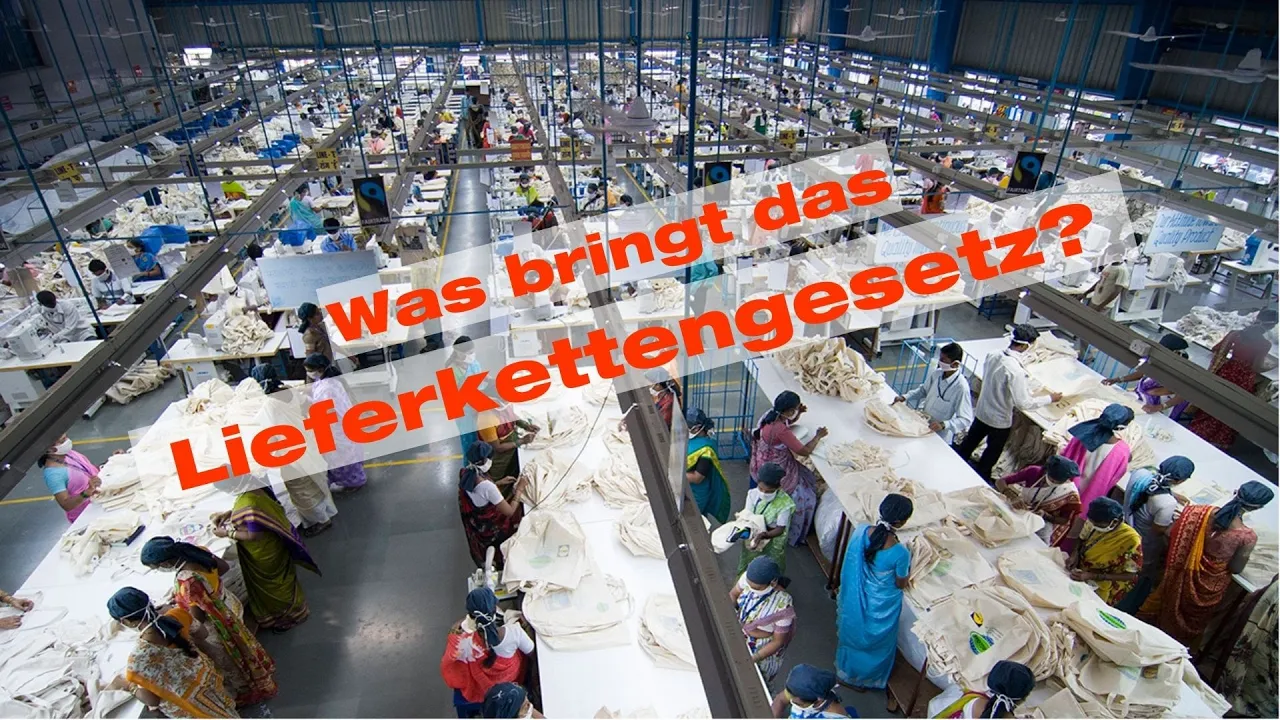
Was bringt das deutsche Lieferkettengesetz?
1.1K
The Supply Chain Due Diligence Act addresses human rights violations and environmental pollution caused by economic actors in transnational supply chains. The law requires companies to examine their supply chains for risks including building safety, fire protection, workplace safety, prohibition of child labor and forced labor, freedom of association, and non-discrimination. Companies must submit compliance reports reviewed by BAFA, which can impose fines for non-compliance. The law establishes complaint mechanisms for affected parties and requires communication of provisions throughout the entire supply chain. The legislation aims to change corporate behavior systemically rather than placing the burden of global capitalism's negative impacts on consumers.
Click to watch →

Global Initiative Webinar - Training and Auditing: Lessons Learned
247
The OECD has developed authoritative due diligence guidance for responsible supply chains. The most significant is the Due Diligence Guidance for Responsible Mineral Supply Chains, recently made mandatory for part of the EU industry, representing a breakthrough. This guidance applies to all minerals in high-risk areas, not just conflict minerals in Africa, addressing forced and child labor. Similar guidance exists for agricultural supply chains (including all labor standards) and is being developed for textiles with a forced labor module. Backed by 46 governments, these frameworks provide strong international legal instruments for addressing supply chain human rights violations.
Click to watch →
Deep Dive
Analyzing the legal and ethical challenges of asset recovery and returning stolen state wealth to victim populations in post-conflict nations.
'Butler to the world' with Oliver Bullough
5.8K
Successful confiscation of stolen assets is extremely rare. Even when frozen, returning assets to victim countries poses problems—if returned to corrupt regimes, money may simply go back to original thieves. Examples include Nigeria's Abacha family and Ukraine's Pavlo Lazarenko, where decades of legal battles yield little actual recovery. The UN Convention Against Corruption faced definition problems during drafting, with different blocs wanting to define corruption differently.
Click to watch →

FELIX TSHISEKEDI VA DECLARER LA GUERRE CONTRE LE RWANDA
8.6K
The Minister discusses asset recovery and victim compensation: the Frivao case demonstrates successful recovery of 19 million dollars placed in the state treasury; ongoing investigations into false victim lists used to defraud the system; and commitment to ensuring recovered assets benefit actual victims rather than intermediaries. The minister emphasizes establishing jurisprudence that stolen assets can be returned to the state and subsequently distributed to affected populations through proper legal channels. The approach treats asset recovery as both a financial and moral imperative.
Click to watch →
Grande Interview Speciale : William Bourdon versus Olivier Pardo
1.3K
A legitimate concern in international justice is how stolen assets should be returned to affected populations. The video discusses the challenges of identifying beneficiaries, establishing ownership, and ensuring that restitution actually benefits the intended populations rather than being absorbed by elites.
Click to watch →
Episode #1: Nigeria’s Experience in Becoming a World Champion in Asset Recovery!
195
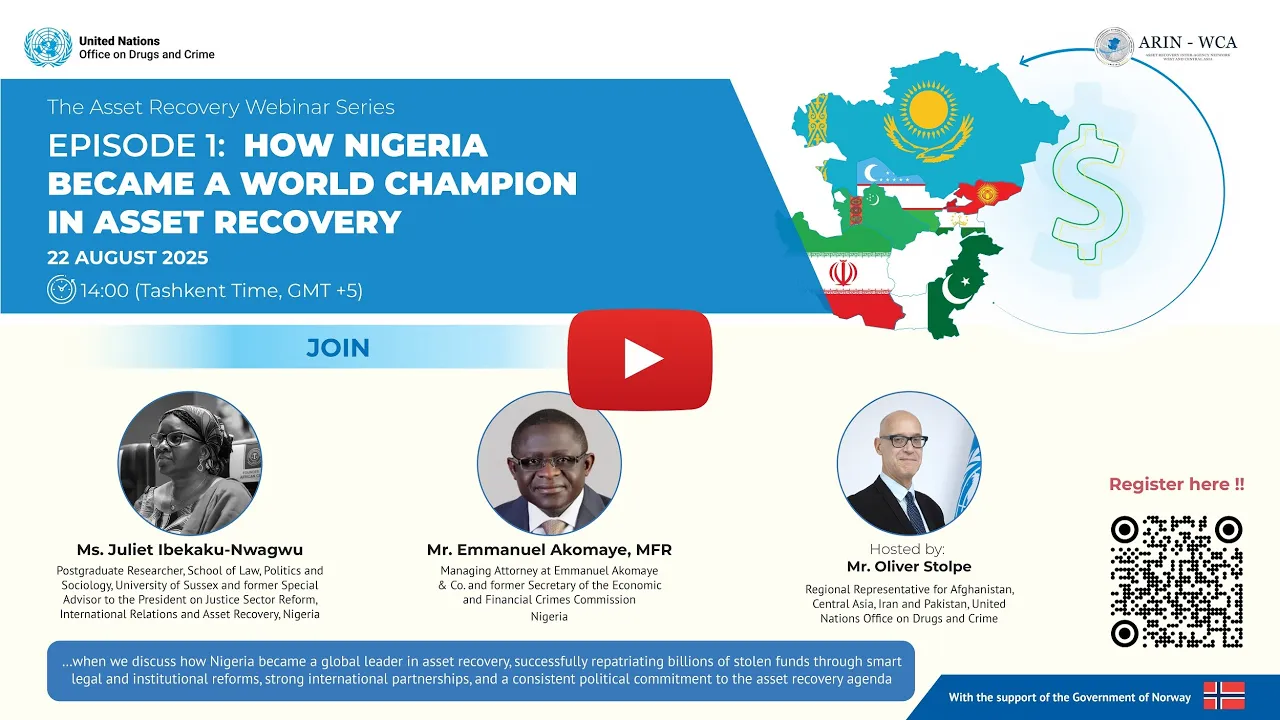
Asset recovery faces significant challenges requiring sustained commitment: comprehensive political will must extend beyond top leadership to regional levels; asset recovery is expensive requiring strategic planning; mutual legal assistance varies dramatically between countries with some being slow or suspicious; destination countries require detailed transparency assurances about fund usage to prevent relaundering. Trust is critical between destination and victim countries, requiring early communication about fund usage and involving civil society organizations. Countries must start discussions about fund usage during confiscation proceedings rather than waiting until negotiations begin.
Click to watch →

My Husband Abandoned Me During Chemotherapy—I Beat Cancer and Beat Him at His Own Game
128
Asset recovery and victim restitution involve returning stolen assets to the victims of a criminal enterprise. Detective Miranda announced that $5.8 million had been recovered, including liquidated offshore accounts, seized properties, recovered investments, and life insurance settlements fraudulently obtained. Sarah Chen's family would receive the college fund she had established before her murder. Rebecca Torres's children would receive their mother's bakery money that had been hidden in shell companies. Lisa Morrison's elderly parents would finally have access to their daughter's real estate investments.
Click to watch →
War Economy
War Economy
0:06- 1
Investigates illicit networks funding Africa's deadliest conflicts.
- 2
Exposes how war profiteers exploit state resources and mineral smuggling.
- 3
Seeks to impose costs on beneficiaries to halt the cycle of violence.
Criticisms of Western-Centric Financial Advocacy and Neo-Colonial Framing
While The Sentry is praised for exposing corruption, critics argue its approach embodies a 'Western savior' dynamic that simplifies complex African conflicts into narratives of financial greed easily solved by Western intervention. Detractors point out that focusing heavily on international sanctions and financial pressure can lead to 'de-risking,' where global banks exit African markets, inadvertently harming ordinary citizens and local economies. Furthermore, critics argue that this top-down, celebrity-driven advocacy often marginalizes local civil society groups and ignores the deep-seated political, historical, and ethnic roots of these conflicts. By relying on Western financial leverage and governments to enforce accountability, such initiatives risk reinforcing neo-colonial power dynamics rather than fostering sustainable, locally-led democratic institutions.
Understanding the concept of 'war economies' and how natural resources (such as gold, diamonds, and oil) are militarized and exploited to fund armed conflicts.
Fundamentals of illicit financial flows (IFFs), including money laundering, the use of offshore shell companies, and the role of global financial intermediaries.
A basic geopolitical understanding of post-colonial conflicts in East and Central Africa, particularly in regions like South Sudan, the Democratic Republic of Congo, and Sudan.
The role of international regulatory bodies and frameworks (such as the Financial Action Task Force) in combating corruption, terrorism financing, and transnational organized crime.
Advanced techniques in forensic accounting and open-source intelligence (OSINT) used by non-governmental investigators to track high-level corruption.
Evaluating the effectiveness of targeted 'smart sanctions' and the Global Magnitsky Act in holding corrupt foreign officials accountable.
The study of global supply chain due diligence and corporate compliance laws designed to keep conflict-linked commodities out of consumer markets.
Analyzing the legal and ethical challenges of asset recovery and returning stolen state wealth to victim populations in post-conflict nations.
14.8K views138likes2:09@ENOUGHprojectOriginal Release: 2015-07-20
the world's efforts to end Africa's deadliest Wars are failing endless peace talks and expensive peacekeeping missions have not ended conflicts in Sudan South Sudan Somalia the Central African Republic and the Democratic Republic of the Congo over 9 million people have perished in the last 20 years a figure without parallel globally as it stands now atrocity crimes pay the perpetrators and facilitators of violence benefit and the world imposes little cost in response we created the senty to investigate the war economies that sustain Africa's deadliest conflicts the Sentry supports efforts to dismantle the illegal networks that allow violent and corrupt governments and rebel leaders to fund war and enrich themselves by hijacking the state and its natural resources the center uses financial analysis and in-depth investigation ations to follow the money and map the networks of violence we work with governments the UN and Civil Society organizations around the world to dismantle these networks War economies do their most obvious damage in Conflict zones Mass rape Child Soldier recruitment aerial bombing and Village burning but they sustain themselves through the smuggling and trafficking of gold diamonds other valuable minerals Ivory and and the theft of State resources these shadow economies extend all the way to boardrooms in New York London Geneva Dubai and other International Financial Centers where money and assets are the most vulnerable and exposed to the reach of law enforcement and Regulatory authorities real leverage for peace and human rights will come when the people who benefit from war will pay a price for the damage they cause these are the world's deadliest war zones and as long as the benefit benefits of War outweigh the costs The Killing will never stop
Up Next

25:00
Why Western Muslims Join Jihadist Groups in Syria | Analysis
@aljazeeraenglish
177.9K views•2015-03-04

12:54
Triumph of Orthodoxy Icon: Byzantine Art & History Explained
@BenCallan
2.1K views•2024-08-06

9:49
FastAPI vs Flask vs Django: Choosing the Right Python Web Framework
@TechWithTim
302.5K views•2024-05-26

1:42
Game of Thrones Opening Credits: A Cinematic Analysis
@gameofthrones
46.3M views•2011-04-18
Related Study Plans & Knowledge Roadmaps
Structured learning paths in General & Interdisciplinary Studies
general-studies
Elevator Engineering: History, Physics & Cities
01From Hoists to Safety Brakes: The Dawn of Vertical Lift
02Hydraulic vs. Traction: The Engineering Physics of Elevators
03Modern Speed, Safety, and Algorithms
+ 2 more learning modules
12h5 modules
Explore Roadmap
general-studies
Rubber: Material Science, History & Geopolitics
01Origins of Natural Rubber & Mesoamerican History
02The Chemistry of Natural Rubber & Vulcanization
03The Geopolitics of the Rubber Boom & Colonization
+ 2 more learning modules
12h5 modules
Explore Roadmap
general-studies
Containerization: Evolution, Logistics & Trade
01Ancient Trade & Bulk Cargo: Amphorae to Barrels
02The Industrial Revolution & Cardboard Packaging
03The Containerization Revolution: Malcom McLean
+ 2 more learning modules
12h5 modules
Explore Roadmap
general-studies
Textile Tech: Evolution, Labor & Global Impact
01Pre-Industrial Textiles: Handloom & Cottage Industry
02Mechanization: The Spinning Jenny to the Power Loom
03The Factory System & Global Labor Transformation
+ 2 more learning modules
10h5 modules
Explore Roadmap