
















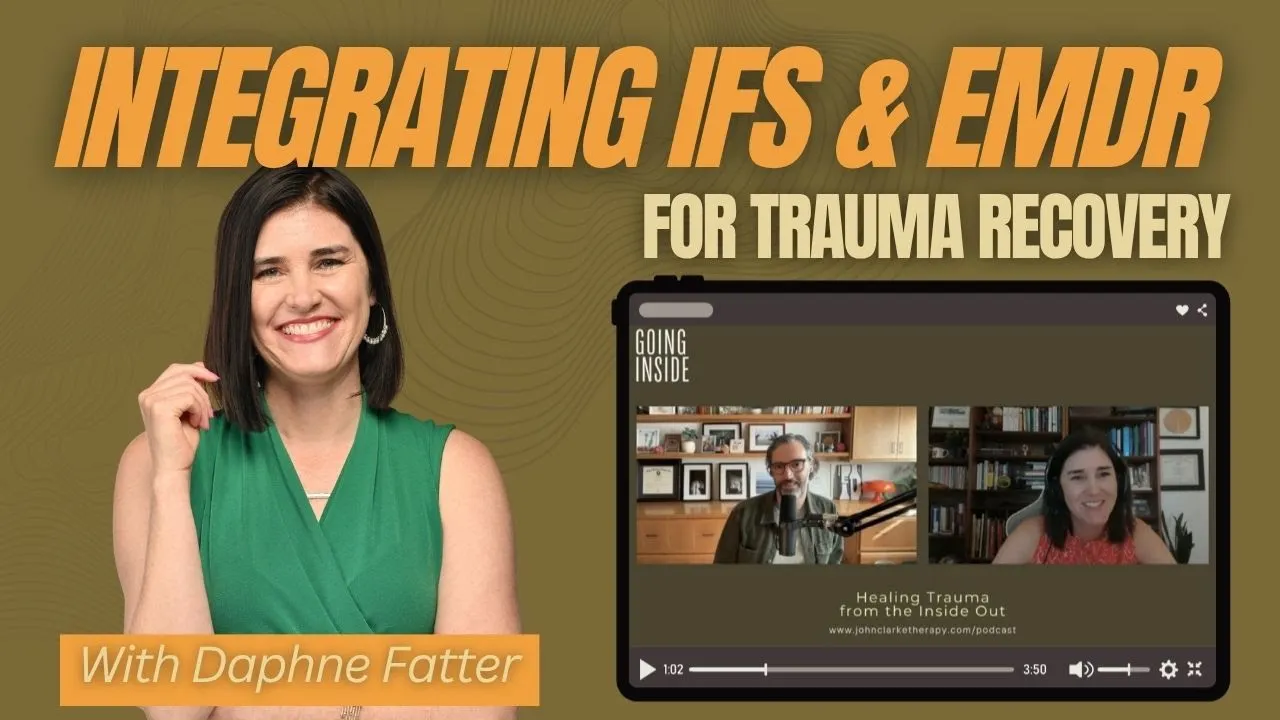
This video demonstrates a complete Internal Family Systems (IFS) therapy session featuring an unburdening process. The therapist models the IFS approach by first identifying and acknowledging different parts of the client's internal system, including a productive part that drives busyness and achievement, a protective part that creates anxiety about not being productive, and an exile part that carries childhood wounds about feeling like a burden and not being important. The therapist guides the client through connecting with the exile, understanding its origin (feeling like a burden to teenage parents), and facilitating the release of these burdens. The session concludes with the client experiencing a shift in how they relate to non-productive moments, demonstrating how unburdening can transform core beliefs about self-worth and productivity.
IFS Therapy Demonstration: Complete Session with Unburdening
Added:i was excited that you asked me to do it right good okay so i'm just because um an aspect of this is modeling for other uh therapists i'm just gonna check what's going on for me normally i'll do this internally but i'll do it externally so um people are clear on what i'm doing so there's a part of me that's um nervous that doesn't usually happen why is it nervous oh there's a part that wants to get this right and really wants us to be helpful for people so okay got it you see he can pull back a bit that's good what else is going on inside not a lot yeah i'm feeling pretty calm feeling pretty good ready to start i have a part that's aware i have a snoring dog in the background but i hope that's not gonna be this welcome [Laughter] and otherwise we're good oh no there's another part that's reminding me um where i'm sitting sometimes birds flip by outside or a squirrel runs up a tree and so you may notice my eye contact briefly flipping when that happens it doesn't mean i'm not attending to you uh if you notice it it's just that's what's going on okay so i like a lot of attention though so i don't know okay if the triggers apart just let me know okay there we go yeah all right so how are you doing are you aware of any parts right now that would like some attention or are you just you know where does the question take you right now um well i think there's parts of me that are similar to yours that are like anxious i think it's a part there's a part that's up about just shifting from being busy to like landing here with you just being busy with clients and all that stuff and then landing here so there's a little bit of that of like feeling like i was kind of moving fast and then there's definitely another part that's anxious about like wanting to make sure that this is helpful for people and um that i'm this is helpful i think there's another part that like i i'm i'm open and um and i'm open to be personal and it doesn't actually bother me at all but there are parts of me that are like make sure you're not too personal like right there's a part that's like um make sure there is i do need a boundary so i'm just noticing that i'm noticing a part that needs a boundary that's great that's great and a reminder to you um that you have the power of veto so if the session's going somewhere and your parts really want the attention rather than pulling it back we'll just wipe out the video it doesn't matter okay because i want your parents to know they're more important than whatever this might be doing for other people right i really want to get that and if there's a part that really you know has some personal information want some attention we'll go there we'll just do this another time well you know as you say that what that really brings up for me which is i think one of the things that's happening right now is that this part that said well that's tammy doesn't feel that way like we're not important to tammy like that idea of um attending to my parts that might come up isn't as important as producing the video sure so so this part is like but tammy doesn't treat us that way because the way tammy treats us as producing the thing is more important than attending to us right so what it sounds like is when you're in producing the thing mode when that part's taking the lead that's probably true yeah yeah fine so can you let your producing the thing part know that this is my thing she doesn't like that wait what does she like about it she doesn't have to like it what doesn't she like about that she likes she likes producing she likes like she's she's hearing that it's your thing but it's also like the thing that i'm not loving she's not loving about this whole virus thing it's like we like producing we like having a full schedule we like being you know really active and really busy and um that's the thing that i felt like on sunday when i was trying to organize my schedule for monday so on sunday we kind of got the like um you know schools are closed and so what does this week look like and so i was getting emails from some of my therapist friends that were switching all to telehealth doing all of all of sessions online so sunday night i was starting to switch into like i was um texting and emailing my clients like you know how's the week gonna look whatever and i got this like punch in the gut like feeling i remember i was giving my this is me this is crazy me i'm giving my son a bath and i'm texting and i got this i walked in the bathroom and i was like feeling of like i'm not going to have a full schedule like i'm not going to produce and this it's the same it's the same i mean she's definitely feeling a little more sassy with you but it's this it's connected to that like punch in the gut like what if what if all my clients cancel and i make no money and um but it's not about the money it's more about having people in my schedule okay okay thank you now does she know you're there you've just been speaking for her quite a bit just take a moment to connect make sure she knows you're there yeah slow it down with her and notice how you feel towards her she works really hard she's got some worries it sounds like what i'm noticing what's coming up what's coming up is is the sassiness the sassiness that's like yeah she thinks she thinks very highly of herself and it looks like you you're enjoying your assassins from your smile yeah i like it yeah let her know that let me know you like how sassy she is it's great and just stay with her see what else she wants you to know she's sassy she's busy she does a lot for you a lot for the world she likes that she likes that recognition that's true so just stay in that appreciation ever just see what needs to happen what comes up pretty she likes that look what comes up pretty quickly is another part that says that's reminding me that on saturday so friday she was really active last week friday was really busy saturday was busy saturday afternoon was like i had to go full stop like let's lay on the couch let's snuggle let's watch movies let's just be in because it had been because she had been so hard like running me so hard and so this part of me as i try to sit with her this other part of me comes up that's like but if we let her run us so much then we have to go to full stop and then and then we get to prep then we go full stop which me which goes to depression which feels like depression it goes to like staying in and it feels terrible that feels terrible okay good so does that one's worry make sense to you yeah yeah good and can you let her know that is it also aware of you yeah that's actually feeling a little bit closer to me good so i want this one to know that we're not inviting the one that the productive one that works so hard we're not inviting it to take over and run the show in this moment we're just inviting it to be known by you to be appreciated by you even though this other one doesn't appreciate the intensity of it you can she says but you let her run the show all the time yeah so it sounds like there may be some truth in that okay yeah so your productive one is around a lot it sounds like this one doesn't like the fact it's around a lot and it also sounds like if it's not around a lot you know doing doing doing you're bathing my kid texting and thinking and planning uh that there's a concern that there'll be a flattening in your system which may or may not feel like depression is that right yeah that's exactly right all right does that make sense to you hold on yeah okay it feels so good to be heard i just felt that like oh gosh it feels so good to be heard and understood feels good all right so there's a number of ways we can go we can keep listening to these two that don't like each other particularly or this one doesn't like that one i should say the productivity one hasn't made a comment on the other one or we could come to uh the part that has gone into depression in the past to see what that's about because that also will have a story to tell you or there may be other parts connected to all this now that you've acknowledged these that are also coming so just see what needs to happen as i name those possibilities what i'm hearing from something is about is this idea of my worth about something about the producing and like the the feeling of like the the air being knocked out of me has something to do with my worth and that like i'm not worth anything if i'm just laying around like if i if i decide or if like this productive part decides oh you can you can lay around it saturday afternoon or like um like it's it's ex the example is like if it's football season then you have this like you're allowed to lay around because it's you're watching football and you're having snacks and like you're allowed to but like right now you're it's like what worth are you if you're not with saying what worth are you if you're not producing that's what i'm hearing okay okay can you let it know you're hearing that thank you for that i think this other one is giving me like examples of times i don't produce like there's like plenty of times i don't produce like i love reading and but it's almost like yeah yeah so here's what i understand about what i call productivity managers because i know i've got one too right they can really enjoy and really be good at doing the whole productivity thing and that's great there are also times when they feel compelled into doing the productivity thing and that i have to or what if i don't is usually when it's a manager that's connected to an exile it sounds like that's what you've got here you've got a part that feels like it's not worth much or maybe not worth anything and so this productivity part is you know we'll just keep putting out right and then that will prove that we've got some worth some purpose something like that yeah all right yeah okay so i'm aware of the context of what we're doing here tammy so i want to check with you we could come to get to know that one that feels like she's not worth much because that's a horrible feeling and it would just be nice to connect with her yeah i'm also aware that there are problems at the beginning saying they didn't want to get too personal and we have to have boundaries so um i just want to let those parts know that i'm aware of them um and we could stay working with a protective bunch and you can let this other one know that you're gonna come back to it at some point or we could just touch in on her so that she knows you're there it's a horrible place to be to feel like i'm not worth much and to feel alone in it so see what needs to happen um they love that you checked in with me about that and this is not a topic that feels too personal right okay so um they feel like you know we could stay with the product protectors kind of arguing back and forth and being kind of playful but all right so let's go in yeah okay so thank you for that and then just add some older software back especially the ones that let you know about her and then ask if it's okay for you to connect with this one directly see where it feels like she is in or around your body not feeling like she's worth much if it's a she and then just drop into her in whatever way you do that so you can let her know you're there so i just got this um this image of this little girl and she's sitting on the floor and she's got this um i mean i'm just checking to make sure it's okay if i say this great okay okay wait a second wait a second okay is it i don't want to override any of the protective parts is it genuinely okay or is there a part kind of saying yeah compromising i don't need to know what she's showing you she can just show you herself but if it is okay it's easier for me to track but that that doesn't have to be the deciding factor well i think okay let me take a second yeah just take a moment whatever concern there may be about you letting me know how she's presenting listen to that concern it's important otherwise it could be backlash after the session right like oh i shouldn't have said that well one of the one of the reasons why i feel like it needs to be said is that um [Music] that there's no shame in it and like it's okay to say it because i think that i felt shame or parts of me felt shame about it okay no everyone's gonna be like what is it and making it sound like such a big deal um but it's part of something that felt a lot of shame and so i feel like if i don't say it then it colludes with the parts that to say hide okay and so so the part of the concern is does it feel like it's been uh suitably witnessed and attended to by you and it's giving you the permission i want to make doubly sure yeah okay great okay so let's move forward then thank you thank you parts letting you know about the concerns okay so it's a girl and she's um she's sitting on the floor and she's got her knees up and her head is kind of like in her knees and she's got so when i was little i had this security object of and i used to call it my furry and it was like um it was like this you know there's like plastic rabbits that you get that has like the fur on them and you would get them for easter and they would be probably don't get them anymore but they're like really really soft and i i guess at one point when i was little that turned into like i just had the fur part of this thing and i would carry it with me and i had it for years and i think i maybe had different ones but i had this thing for years and so she's holding that so she's like i'm hurt holding my furry is what she's holding and you have a sense of about how old she is in this scene four is the number that's coming up okay great and i just want to take a little bit of time to make sure that the connection is there so um invited to be aware of you um that she's got your attention that's why you're there with her and i want to make sure that she's present-day oriented so can you ask her to tell you how old you are and then just wait for the reply so i'm sitting next to her and she's scooching away from me okay so i'm sitting next to her may not be the best idea for now okay so whatever part of you wanted to you know maybe get a little closer just let us know we've got this covered right we've got it covered yeah so that for some reason that that bit of distance is important to her so let's respect it for now and then just ask her does she know who you are does she know how old you are and wait for her to respond she doesn't know who i am she does she doesn't want anything to do with me she doesn't have to have anything to do with you okay so can you let her know that good now how do you feel towards her when she says i don't want anything to do with you um [Music] there's like an analytical part that's up a little bit that's like um that's like she's doing this like i'm all tangled up hold on okay okay she's doing this like little like half scooching thing and there's like an analytical part that's going like she's um she's like um she's like not wanting attention but by her bae by her behavior she's pulling for attention so she's saying like i don't want attention but she's pulling for it by just scooching away like no no no like analytical parts coming up so thank you and local part for that information okay and then ask it to soften back because chances are it's right and then let's come back to how do you feel towards her when she says i don't want you there yeah so now i'm just feeling like love for her and just so much like softness and i i went from like standing so i'm now further away from her and um and i'm so but i kind of went from standing to just like kneeling like that's like talking to her from like that posture that's great good tammy i have a teaching part of this up so i'm going to speak for a moment because it's aware that this is a teaching piece and then we're going to come back is that okay right of course yeah so just be present with her um the teaching part wants to say when a young part pushes us away rejects us even two-year-olds having a tantrum right you're a mom you know this you don't you never leave the room you just stay present and particularly because this one um something she believes about herself is that somehow she's not okay right so it's very important that she knows any way she wants to be with you is welcome anyway at all because that's not been her experience so um i'm just naming that i know you know that because you're with her and you've already connected but i'm just naming that if there are anyone anyone's observing that is wondering about that particular intervention so that's my teaching part thank you very much yeah so you're with her kneeling the connection feels like it's stronger somehow does she know who you are now she may not care she doesn't have to but i want to check and she she did get your attention that is why you're there with her she doesn't have to say or do anything she doesn't want to there's something about she doesn't want to give me this okay this isn't from her there's almost like um not to make this complicated but so there's like the four-year-old and then all of a sudden it's like there's like the seven-year-old who's in this like dark clothes who like doesn't want to give me the sad like i don't want to give you the satisfaction of telling you who i know who you are like it feels very different than the four-year-old yeah it's almost like i'm i'm getting that yeah so it sounds like there's a relationship between these two yeah it's like she has this sassy the my thinking part is like oh she's got the sassiness of that per the be productive one right she's got like her sassiness okay so this sounds that now if i'm wrong just throw it out but what it sounds like to me is the seven-year-old's got the sassy so she's probably protective and she sounds like she's protective of the four-year-old we don't have to give you nothing right yeah yeah so this is the origin of this dynamic right productive and sassy and not feeling good about yourself yeah so just as you become aware of that what'd you notice hmm yeah it's like wow that makes so much sense and also like the four-year-old is also kind of like hiding and she's really hiding and she's hiding in the furry she just wants to be with the furry she doesn't want any like she's like this like i just want to be with my furry like yeah um yeah i'm just like wow like that's i totally get that makes so much sense to me just knowing myself like wow and i just honestly i just feel so much love for both of them like i just love both of them so just shine that on them right let them feel your warmth your open-heartedness your love and just be present to that that's all you need to do and then just see what needs to happen as you do that a seven-year-old sits down and is like fine [Laughter] okay is what's it saying fine too does it think there's some hidden agenda we got here well it's almost like fine if you're going to be nice to us or if you're going to love us fine just love us then like that kind of thing oh it's got nothing to push against right okay yeah right so do that just be there and love them they're amazing and i i i'm really feeling i'm really feeling a lot of love for both of them but that feisty seven-year-old it feels like a big sister or a big brother apart to me like really taking care of the sibling you know so nice to see i'm so glad that little one's got this seven year old so the seven-year-old loves that loves hearing that and that feels really good and so i want i i don't this is from self but i'm really wanting that four year old to feel it i don't i feel like she's not feeling that like the seven-year-old is more open the four-year-old is i don't even know that she's aware of the seven-year-old tell me that's fine so this sounds like what i think of as a caregiving part of you the one that really wants that for the four-year-old so like this yeah yeah let this caregiving partner we're getting there we know what we're doing yeah yeah and a reminder and again my teaching person right so reminder that the protectors determine the safety of the work right and so they're seven-year-olds right very protective fine if you just want to love us yeah let's stay with the seven-year-old because it sounds like i get that it's feisty and it's high energy i'm also aware that in its adult manifestation there's a punch in the gut when it feels like it can't do his job in the way it wants to right so very important that he's able to do its job and i'm wondering how it feels about his job maybe we could ask it that it feels like his job's really important it is yeah yeah good now if there was anything about it anything at all that it could change if it was possible you know better pay less hours more vacations would it be interested in that possibility or not is it just fine i did agree that it works well i'm just going to say what it just said right it just said well more vacation something about the vacation i love vacations so i don't know what this means but something about well more vacations wouldn't be good for us because we need to work because we're very important people like we're very we need we need to be very important and so more vacations would be we're not very important got it okay now does that make sense to you because that makes sense to me it does now good okay so let's ask how come it's so important to be so important again hypothetically if it wasn't so important what would happen oh my god there's another part it's like oh my god you're not that important shut up i and let's come back to this one that does need to feel important she says she needs seven-year-old pointing to the four-year-old she needs to feel important okay good now it sounds like then the four-year-old actually may not feel important is that right all right so we could let the seven-year-old know this the seven-year-old feels very important i get it she he really is he really is so i i want you to let the seven-year-old know this we have exactly the same um intention here we all want the four-year-old to feel better about herself and the seven-year-old does it by bringing a lot of important energy into the system and we could ask if it could be an ally in a different way because the seven-year-old may not know this but if it allows you to hear from the four-year-old if the four-year-old wants to share with you how come it doesn't feel important then we could help clear that from its system because that's a false belief that it doesn't matter that it's not important but it picked it up somewhere and because it picked it up we can help it to release it which is something the seven-year-old is not able to do but we can if that feels okay okay so as you are talking the seven-year-old like knelt down next to the four-year-old and was like um like caressing her and the four-year-old said it's easier for me to not feel like i'm important because then when my parents treat me as if i'm not important then then that's fine because i'm not important so it's easier for me to handle that yeah good that's really good thank you so much for letting you know that right because i don't know that go ahead like that i don't know that a four-year-old would say that but that was just like the sense like the complete like i got that like in a second yeah that's it you're you're getting into that yeah you're getting the information through it sounds like through your intuitive faculty and then you're translating into language that's fine so okay invite your analytical partner not to get hung up on that on the tv okay um and hang on i lost focus no you're fine you're absolutely fine it was my distracting part there um for ah good yes so it sounds like the four-year-old's got what i call a resignation protector we'll just resign ourselves for not being important and then we don't have to worry and then we don't have to feel hurt and then we don't have to feel ignored or whatever else might happen if we're not resigned to it right does that make sense yes yeah all right great so let the resigned one that's a part of the four-year-old right let that resigned protector know that you totally get that strategy and it makes total sense i make sure the resigned ones know the resigned one i'm sorry make sure it knows how old you are now and that it might be okay now it might be safe now just in this bubble that the three of us are in to hear from what it was like what it is like when resignation is not there it's too scary for resignation to not be there okay no good that's great so how about instead of it not being there we don't want it to abandon its post how would it be if it considered instead of blocking the information if it kind of moved into being more like a valve allowing some of it to come through and then shutting it down which it's really good at so you you can hear it bit by bit but not in a way that gets too scary or too overwhelming how's that yeah that feels good great okay thank you for that okay so just invite the resignation part to just soften back a little bit so you can make more direct contact with that little four-year-old and just see what happens now as you do that something about mum and dad not being available or not feeling important or something there's like a wave of sadness okay good is this much sadness okay for you to feel okay let the little one know you get she's sad just let her know you get her that's the part that's like don't lose it don't completely lose it right now but yes yeah so you can ask the little one if it does feel like you might lose it just ask the little one to dial it back just a little bit but in a way this invitation will invite her to be known in her sadness we're not pushing her sadness away okay and the best way she can be known is to just bring it to you a little more gently even though it's really big for her i don't know you can get that without her flooding you good yeah yeah she's sad how come she's so sad what does that sadness connect to like mom mom mom not paying attention to me okay you get that tummy okay good let her know you get that she carries deep sadness about that and it also sounds like the way she makes sense of that is by deciding that it's because she's not important or something is that right yeah okay so does that make sense did she start to believe that about herself yeah makes sense to me too okay thank her for all that she's doing great right so she feels really sad she believes that mom doesn't pay attention because she's not that important she doesn't really matter keep listening see what else she needs you to know i feel like she's aware of like other protectors that are like now these like shadowy figures that are standing around her like you better not say another word uh-huh great because she's got a lot of protection good so can you send a message to all of those protectors invite them to be aware that it's 2020 that the only people here are you and me there is no mom and dad around there is no one that is going to judge her or criticize her or hurt her in any way and then see how they respond they like um like went away like right okay so they really needed to that updating that reassurance i'm really glad they let us know about how they've been protecting her she's very important to them as well yeah so come back to her now what else has she been holding for you that she wants to be a good girl yeah okay so how is it that that she thinks she's not a good girl when mom gets mad okay so long as angry sometimes and when mom's angry part is up she feels like it's because she's not good okay good that makes sense to you too yeah yeah me too yeah it's hard to be around mum's angry part yeah good doing great keep asking what else has she been holding what else has been hard for her she's showing me like um my mom and i lived in this apartment like it was a house that was broken up into two apartments and we lived in this apartment and she's now she's kind of like crawling around i don't know what she's showing me but she's like crawling around the floor okay so let her know you're not entirely clear on what she needs you to know by showing you that and just ask her if she can help you be more clear okay she's showing me like a teddy bear okay and i don't have a memory of this but i know that i think at some point my mom like i wouldn't clean up my room and so my mom threatened to throw away my teddy bears and i think she did i don't remember that but that's like a story yeah i actually am picturing now like my mom [Music] like throwing them out of the second floor window again like i don't actually think that happened but like okay so you're remembering part and the part is trying to figure out if it happened just get them to pull back it doesn't matter it doesn't matter because that's what this part is showing you showing an image of all the bears being thrown out of the window right yeah so just ask her how come she's showing you that image what is she wanting you to know well that's really scary and those are my teddy bears and like she's throwing them out like in in like in a really out of control like completely out of control away like mom is completely out of control throwing these out the window right that's what she needs you to know she gets really scared when mom gets out of control like that's how important it is that i'm like a good girl right oh got it okay because if you're not mom might get angry and then kind of crazy out of control and that's scary yeah yeah so she has to be a good girl in terms of how she behaves yeah and on the inside she worries that she's not a good girl is that right or well it's she was saying it like ties into the importance that i'm important because then like if i'm a good girl and i'm important because then mom can do the other things that she needs to do and doesn't have to worry about me okay okay so it sounds like she's also got some sense that she's a burden to her mum in some way that's really important to know good thank her for that yeah how are you feeling towards her now yeah i feel um love for her and i feel like she's being so brave telling me these things and yeah yeah so um i'm just invited to be aware of this because she is being really brave once she's let you know everything about what she's been holding that's been so hard for her we're going to help her to not have to hold that anymore so see how she feels about that possibility she's feeling really really liked showing me she's really really connected to me like we're feeling really connected right and so she's feeling like a lot of trust for me and um so she's like yeah that is that's sounds good all right great so but we want to make sure we've got everything because we want to make sure she never ever has to go back there again okay and she's already let you know a lot and i don't know what else she might be holding but we're going to listen to her until she's told you everything and there's no rush but let's just see what else is there what else has been hard for her beliefs about herself feelings experiences well this idea that she's a burden there was so much over trying to tell me how important so my mom was a teenager when she had me my both my mom and dad were teenagers and so there was this over compensating of how important i am it's funny that she's using that word so it's almost like you just acknowledging that i was a burden not that you were acknowledging that but that feeling this is almost like i had a feeling that i was a burden even as they're telling me that i'm so important like there was this miss i mean i'm little i don't know that she's a teenager like i don't know but it's like this feeling this this missed feeling of like so like yeah it felt like i was a burden and it felt like the best thing i could do was just be a really good girl that was like the most important thing i could do was just be a good girl yeah and then i wouldn't be so much of a burden right so that became a strategy and part of being a good girl is being productive in later life it's the same dynamic right but it takes on a different yeah it all makes so much sense thank you for that [Music] it's a horrible feeling to feel like a burden so see if there's more see if there's more she needs to know and also the confusion it was hard it's hard to be to have that confusion of feeling like a burden but then being told yeah that you are awesome and you're a lifesaver and you're the best thing or whatever yeah that is really confusing it is confusing yeah absolutely yeah so i just was like so hi is there anything else and now she's like sitting at the table eating cereal and like kicking her feet nope okay all right okay good so it sounds like she's ready to release all that stuff then um yeah yeah that's yeah yeah she moves pretty fast i like her so much okay so um just invite her maybe put the cereal down for the moment she can come back to it in a minute if she likes but i wanted you to invite her to um either you can go back to where she is or she can come into the present with us or you can both go somewhere where she would like to do this but you got to invite her to take all of that stuff she's been holding the the difficult feelings the beliefs about herself and she's going to send it all away she could send it to the earth she could send it into water into fire into light or into the air but in any way that makes sense to her or anything else what would you like to let all that go to now that you know about it so after my therapist thinking part is i need to ask that to relax a little bit okay so i can ask her what she wants yeah i'm gonna do that good catch so she's remembering this huge snowstorm that happened this was like in the 70s and there was a crazy snowstorm and there is pictures of this house with a snowstorm so she's saying i want to dig a really big hole like not just in the snow but like move all the snow back and dig like the biggest hole and like have fun like while i'm digging the hole but then put all this stuff in there all right so invite her into that process and just let me know when she's done okay okay she's fast so uh i want you to invite her to check her body one last time does it feel clear now or is there anything at all in there that doesn't feel like it belongs to her that she'd like to get rid of she feels bouncy is the word okay i don't know good bouncing all right so it sounds as though she's clear what she needed to clear so it also sounds like she's taking in bouncy or she's returning to her bouncy um see if there's anything else that's going to make her feel whole again or complete or anything else she wants to take in for herself or own bouncy what else what else is true about her there is this feeling of not having so i don't know what this is but this could be a thinking part that's coming up about like not having to be a good girl and it almost is like that's what's giving the bouncy like oh my gosh like if i don't have to be the good girl like i can't even imagine what that would feel like yeah like oh okay i just want to discern or help you to send something here that might be the protector that's coming in very automatically and saying oh i don't because it's her protective part that has the strategy of being the good girl yeah okay it might be that it doesn't feel like it's yeah it feels like there's something else coming in it's not heard just like bouncing it's this other thing it's like so let's let's let this protector and all the other protectors know we're going to come to them in a moment actually okay just as i really want to finish this piece with her so it's complete and so we know she's good okay yeah so just come back to her she that's all buried in the snow her body's clear it sounds like is that right it's all gone all right what would she like to take in for herself now into the space she made well you know what she wants to get out of that she's still like in the 70s right so she's feeling like she's still there and she wants to leave that yard yeah so she's like i need to leave the yard yeah where would she like to go she'd go anywhere she likes now she's not stuck there right unless she likes jane fonda leggings she can come into the present she could age i think they're coming back i think those things are coming back no because i can't mine i can't mind them just in case the leotard you have the leotard too i'm not answering that question in public um where would you like to settle seriously she can go anywhere she could tuck herself into your heart if that feels right for her so she has this idea that she wants to like bounce and end up in a field of like flowers and then there's like a castle like a like a like a treehouse castle sort of thing and she wants to hang out there that sounds like a fun place to hang out so invite her to bounce there it's great yeah she's there yeah great okay my my intuition is that her bouncing protector is going with her [Laughter] yeah there's bouncing happening there's a lot of balance happening good anything now she's there anything else that she wants or needs for herself what does that feel like she's good now she feels really good great all right so um i want you to let her know that you're going to check in with her every day for about three weeks if that feels doable if it's not don't make the promise if you've got parts saying i'm too busy or we got this crazy virus to deal with then don't make a promise if you can't fulfill it yeah no that feels good that feels good all right so let her know you're gonna do that and you know where to find her she's in the treehouse yeah all right great great so we're gonna withdraw the very focused attention from her for now we'll be back tomorrow let's come now to these protectors right she had the uh resigned protector she had that fabulous seven-year-old that led us to her with its productivity there was the shadowy kind of enclave protectors that were available and ready to ensure that nothing happened to invite them all in invite them to be aware of this shift in your system that she's no longer stuck in that place feeling those things and then see if there's any comments concerns or questions from any of these parts so the resigned one is like that it needs to it it helps other parts because it feels like that's important so i'm just like it's it's kind of saying like that's nice and good but you still need me around absolutely and we don't want to get rid of it absolutely right but you might invite it to notice that in terms of this particular part it can step down it can step down it can take a little bit of a break right um okay but it sounds like there are other parts that it's connected to that it's important that it maintains its role so yeah yeah yeah it's great we don't want to get rid of any parts that'd be foolish yeah unless they want to change then it's coming from them okay any others you're hearing from the seven-year-old is just really happy for her oh good yeah so the seven-year-old started off ensuring you know good girl behavior and then productivity and working real hard all the time um you can invite it now is there anything about his role it might like to shift now it's no longer compelled by her or is it just doing just fine as it is it's skipped away yeah it just skipped yeah sounds like it's doing fine yeah yeah great and the shadowy parts are just they're fine good they're like we'll come in when we need to oh great yeah great great good thank them for that that's great okay any other parts now with any comments about your work today questions concerns i know you've got a big analytical part because that was in and out uh no i feel good i feel like uh that feels really good okay okay so i want you to just just before we close tell me bring your attention back to that scene where you're washing your boys hair you're texting your friends and then there was that moment of if i'm not productive because that's kind of what led us to her so come back to that moment and see what comes up for you now does it still feel like a punch in the gut or does it has it shifted in any way um yeah i feel like it's like the thought of like this vague thought of like not having anything to do or any clients to see and that doesn't feel like uh i'm not getting a reaction i'm not getting anything it doesn't feel like a fear doesn't feel like it actually feels like go put your phone away and play in the tub and not in a critical way but just like i don't need to do this let's just let's just be here and play with playmobil characters and yeah yeah it sounds like there's permission to do that now even though it's not a scheduled event like a sporting event right now this is bath time bath time is a scheduled play event play go yeah it doesn't even feel like that yeah it feels sick yeah no good yeah so yeah that's just an indication that something shifted which is what we wanted to check so that's great yeah that's great so beautiful thank you so much [Music] um do you want to sit with this for a bit or do you think this is okay to let people see or you know this involvement yeah you're okay yeah definitely great thank you yeah thank you derek wow you
Up Next

ADHD-Friendly House Hacks: Executive Function Strategies
@HowtoADHD
835.8K views•2023-10-24

Walking in the City: Urban Rituals and the Flâneur in Contemporary India
@PSBTIndia
1.9K views•2016-08-02

FastAPI vs Flask vs Django: Choosing the Right Python Web Framework
@TechWithTim
302.5K views•2024-05-26

Game of Thrones Opening Credits: A Cinematic Analysis
@gameofthrones
46.3M views•2011-04-18
Related Study Plans & Knowledge Roadmaps
Structured learning paths in General & Interdisciplinary Studies