






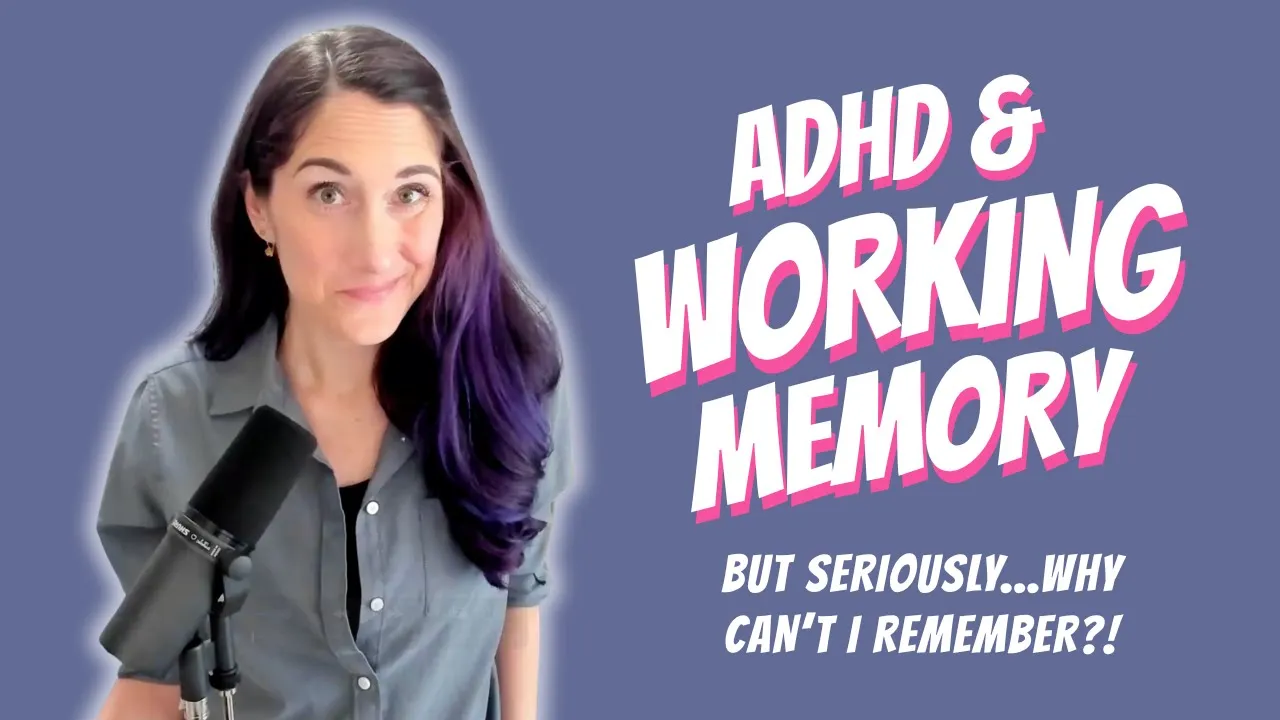

















This video presents five key strategies for creating an ADHD-friendly home environment: (1) Launchpads by doors with designated spaces for each person's belongings to externalize memory and reduce forgotten items; (2) Centralized family calendars that sync events and assign chores to reduce mental load; (3) Easy access to brain-healthy items like pre-cut fruits, vegetables, and water throughout the house; (4) Point of performance systems where all necessary items for tasks are located at the exact location where they will be used; (5) Comprehensive labeling of all items and bins to help everyone find things independently and reduce interruptions. These environmental accommodations compensate for executive function challenges by reducing reliance on working memory and creating systems that support automatic, organized behavior.
ADHD-Friendly House Hacks: Executive Function Strategies
Added:thanks to Skylight calendar for sponsoring today's video it's a book that I wrote it's now available for pre-order everywhere books are [Music] sold should I take my shoes off no okay am I doing this right I don't know you guys are going to have to pull me out of this Alexa turn off the The Outdoor bedroom light no the backyard lights automation uh i' I've just discovered a flaw you have to be able to remember the words that you need to [Music] say hello brains welcome to episode two of AD Friendly House hacks this time featuring someone else's house Caroline this is Caroline McGuire she's an ADHD coach and a good friend of mine I came to stay with her for a week and noticed that her house is even more ADHD friendly than mine and so I asked her if I could show you her house and she said sure which is amazing so we're going to go look around her house and I'm going to show you the five things that I think make a house adhc friendly and give you Caroline's examples of how to do it ready to the Launchpad number one launchpads this is one of my favorite hacks for an ADHD Friendly House and it's something that my mom did before she even knew that we had ADHD which is to have a Launchpad by the door this is important for idiots years it's also important for kids there's probably a reason why a lot of families will have a LaunchPad but even if you don't have kids it's really good idea to have a place by the door which is where you put your stuff so there's baskets for each person including the dog all their sports gear is here including refill items so when I do laundry I fill bags with what they'll need for the week and that way I'm not scrambling or remembering and they can fill their own bags and I even have socks for their shoes oh that's brilliant so anything they might need is they are running out the door a hry yeah so that I don't have to remember I externalize it cuz otherwise I'd be like socks run upstairs I don't rely on my memory because my memory is not going to succeed so I literally just make sure everything is set up and I don't have to remember and I create systems that also remind me so I have flags on my phone to remind me to refill these bags once a week right and and that's one of the things that's really helpful about the Launchpad is you don't have to remember to grab your bag with your towel in it it's there you see it as as you're going out the door so a lot of people with ADHD have this phenomenon um it's it's like if things are out of sight they're out of mind and so you don't realize until you get to the point where you're at the pool like oh wait I need a towel like you forgot that towels existed for a while and so having them be visible as you're running out the door having whatever you need to bring as you run out the door is really good idea you'll notice there's sunglasses so that I don't have to remember they're equipped on his bag if he goes somewhere and he needs them he has his Spidey sunglasses that's brilliant there's everything that they would need and also then I'm empowering them you can get your own bag you can fill your own bag and it's not this constant like we have to run upstairs cuz we forgot this yeah moving on yay before I jump to the next tip with Caroline one thing that can make a home more ADHD friendly is having a family calendar one place where everyone in the family can go to see what's happening when such as Skylight Skylight calendar is a smart touchscreen calendar that syncs events from all the existing calendars your family uses and when you add an event on your existing calendar it will automatically appear on the Skylight calendar at home that is very helpful because before doing this I would forget to tell my partner very important things like the fact that I'm going to be out of town tomorrow the Family chore chart also allows you to assign everyone's to-dos they can come find their name and check off their chores and get little celebration emojis when they do which makes it more more motivating being able to assign my partner chores on Skylight has been really helpful so I don't interrupt and distract him when I remember I need his help with something I can just add it directly to the calendar or even from the app and he can do the same for me this also reduces the mental load of either of us feeling like we have to remember what needs to be done when because it's easy to check even when we can't find our phones we can find Skylight and on days when we're feeling overwhelmed we can also remind each other to relax when you have a brain that wants to do all the things it's important to have a place to keep track of all the things Skylight calendar can give you peace of mind and time to enjoy Things You Love by organizing your busy household go to Skylight cal.com howto ADHD and use my code how to ADHD for 10% off and now back to the tips okay another thing that makes your house really adht friendly is you make things easy to access that support brain health and function you have cut up vegetables you have cut up fruit you have bowls and forks readily accessible I have eaten more fruit since I have been at your house that I probably have in a very long time and that's because I come downstairs and there is fruit on the on the table not that it magically happened I'm sure you put it there but but You' got a fruit tray and fruit trays are something that I'm like that would be so great but I'm like that's such a waste it would be cheaper to get the but I'm eating so much more fruit now that's my thing too like I would love to be a person who cuts up fruit but I don't and so this is my accommodation because if I have the fruit cut up we eat it if I have the vegetables cut up otherwise I don't cut them up and they die yeah I've thrown away a lot of uncut fruit thrown away a lot too so this is great um having easy access to water water is very important for functionality too and so you have water here but you also have water bottles which is great CU if I'm on the go I'm not going to grab a glass and like run out the door but I might grab a bottle of water and run out the door you also have different types of Water and Power Aid zeros and everything so hydrating is really easy and one of the things I love is you also make it really easy to restock so if I take one so that you don't have to do all the restocking your kids and your husband can help right I can take one of these and then just go to that cabinet right there and restock it pretty easily I like it when people help restock because otherwise it's just me so that's why I set this up your house is really ADHD friendly but some of it is because you have done a lot of things to make sure that it's EDC friendly it doesn't just magically appear that way it's actually because at one point they told me that they thought there was a fairy who did all of this stuff and I reminded them that I was the fairy so how do you get yourself to do all these things I think everybody has their own way of motivating and you've talked about this a lot on your channel but I like to gamify everything so I like set a timer and I race through stuff and I like allow myself a reward then at the end and I have a lot of reminders so that I don't have to remember to do all this stuff and it's set up every Sunday I do these things and then I get a reward which might be just sitting by myself watching a movie I have um on Sundays are my kind of reset days where I'm like okay let me set up for the week let me clear the chaos of the week as much as I can uh I can't always get through all of it but then reset for the following week so that I'm set up and I noticed if I do that I have a really good week and if I don't do that I'm miserable it really is important to take this time to set your your space up to be ADHD friendly for you because otherwise the access the number of accessibility issues that you run into throughout the week are so frustrating yeah that's kind of my thing Sunday nights I reset everything because if I don't then the week is this miserable slog and that's part of what incentivizes me I really hate that feeling of scramble I love that you have a fitness area if I didn't have this I would never work out cuz my Barbie is C ouch yeah uh the the fewer barriers that we can have to doing the things that we need to do to help our brains function at their best the more likely we're actually going to do them if I didn't have a fitness area in my house I would not work out you don't have to have an entire like corner of a room that is your Fitness area but having something out that can encourage you to move is really important because exercise is one of the most helpful things for ADHD brains you can check out our video on that here now this is this is really great and it's not just about Fitness Gear it's also about um the cut up fruit that you have upstairs it's also it's also about the waters that you have easily accessible by the way not just upstairs in the upstairs fridge but the water is accessible down here too so if I'm thirsty I don't have to go upstairs and get distracted and get a water and then be like yeah I'll come back and then not come back I can just go grab a water right here everything's so well set up to support that you have a trampoline in the backyard too you want to go I do have a trampoline in the backyard let's go bounce on that that woo you have fun things too you have a variety you have different options and they're fun am I doing this right I don't know trampoline do you ever use a trampoline um no but my kids do that's really f aren she's tricking them into exercising because it's fun we also do activities where they learn things like math facts while they [Music] bounce all right Caroline I think we're on our own with this oh my we've lost the cameraman number three point of performance okay so you do something similar to what I do in terms of coffee station point of performance is really really helpful for people with ADHD which is basically having everything that you need to use at the place where you need to use it and in the case of coffee you've got everything you need right here you have the cups and the spoons you've got the coffee you've got the the cuur cups in case you don't want to make the coffee you have your coffee maker and you've got it right next to the sink so you can dump it out pour water I talk about that in this video on my my own ADHD hacks for my own house I need to do an updated version cuz that's my old house I got to do one for my new one anyway this is something that I learned as a server waiting table when everything's really chaotic and you are scrambling to take care of the dinner rush you want everything where you need it to be so the coffee station has everything you need to make coffee the drink station has everything you need to make drinks there's ice there's cups there's the soda machine there's everything is right there and that's the only way I think any of us were able to do anything because if you had to run from one side of the restaurant to the other to take care of one order then nobody would get their food in time and everybody would be mad sometimes having ADHD is a lot like the dinner rush at the restaurant where there's way too much to do all at once and you really need everything to be as convenient and accessible as possible you need efficiency because um otherwise everything falls apart really quickly there's a whole lot of like oh shoot I just remembered that I needed to do the the thing you know and you have to do it in that moment the the less you have to run across the house to get all of the things that you need for the thing the better I don't want to have to do everything all the time for every one also so everything that's set up is self-service oh that's a really good point so for me I do that for myself but for you you do it so that you don't have to do all of these things for your kids they can do it themselves absolutely everything has a point of performance that way I don't have to do everything and I'm not constantly called upon mom where are the spoons mom where the cups Mom Mom where's the coffee exactly they can just see that it's all right here and it's not just coffee every everything I do this I just I just realized like I'm assuming your kids drink a ton of coffee they probably don't no coffee for the kids but I do have this for everything like they their lunches everything so that they don't have to remember and I don't have to remember I think what I'm realizing is that a lot of things that make a home ADHD friendly are the same things that make a home kid friendly but it's because kids don't have developed executive function right right and so we we set things up this way for kids but it also makes it easier for us because executive function gets taxed a lot by life in general for everyone um but especially if you have ADHD and you have impaired executive function it's really important that you set these systems up for yourself so you can be an automatic pilot like you don't have to worry about everything all the time it just goes so this is a another really great example of point of performance you have cords everywhere um this no this is super helpful and not only that what the heck is this magic you've got you've got a chord that is all of the chords that you could possibly need that's so that we don't have to go find the quartz I didn't even know they made these what the heck and it's cheap too that's so cool also dog treats where's the dog treat right there where are the dog treats right here yeah you were not joking about this point of performance thing you've got this unlock I have to because otherwise I am constantly frantic and I I it's so draining I can't take it I have to tell you of all of the homes I've ever been in this is the most chill and you have two kids I'm glad that you think they were chill it's pretty amazing like I'm taking notes I noticed your labels CH number four labels this is brilliant so you have all of your snacks labeled you have more snacks labeled you've got British tea is there any other kind what what makes a tea British cuz I brought it back oh it's actually British tea look at that Caroline explain yourself I brought it back from England and I put it in plain sight so my family won't take it wait hang on explain that you put it in plain sight so that your family wouldn't take it it's best to hide things in plain sight I love that your British tea comes with cookies you have to have cookies uh cakes brownies frosting stuff for s'mores you have a s'mores bin yeah because when you have a fire pit sometimes it's last minute so you have to have the stuff for the s'mores or if you have a bad day and you need a s'more oh my God these look like really good s'mores your s'mores have Oreos in them well the Oreos are for people who come to the backyard fire pit oh so this is like your fire pit backyard party where are the gr crackers you need more gram crackers oh the graham crackers are in a bin called crackers oh wow okay cool Pirates Booty pretzels taco shells what do we have coffee crackers gram crackers Saltines pasta mac and cheese yeah this is great all your cleaning supplies are just here in one place which is great I know why I label things why do you label things well this really helps with kids and caregivers so if my dad comes to help and he's here and I'm traveling he can find everything if my son needs to find stuff it's labeled he can read now he can read these so I label everything for myself to lower the burden on my executive function but it occurs to me that you're doing it to lower the burden on your executive function not just so that you can find things more easily but so that other people don't interrupt you going where is the yeah it helps for the interruption Factor but it also helps with the do I have these supplies because if you have the empty bin and you knew what was supposed to be in it right so you it's not like oh I think I have this it's like oh I know that this bin as I pass it is empty so if you're throwing a party in your backyard and you don't see marshmallows in the s'mores bin you know you need to get some marshmallows this is brilliant I I think labeling things is one of the most helpful things for ADHD this is also something my mom did a lot my mom did a lot of things that were just naturally helpful for my edhd that I'm learning to do myself and for myself this was an ebue this took a long time I had this idea that for return to school I would have this and so I worked on it just whenever I was waiting for the kids to get on and off the bus oh that's really F so I set a specific time it had a beginning and an end I put my label maker down here for like a month and a half poting performance you put the label maker where you needed to label stuff and eventually you're like all right fine I'll do it well and also it was like I am only working on this for 15 minutes and then tomorrow I'll do more where did you get all the bins um container store because one of my family's complaints was that all the bins were different and they didn't all fit together and so they claimed that the reason that they never put things back was because they couldn't fit everything on the shelf by the way this is for moving too if you're packing it is it to me was really really worth it to get boxes or bins or whatever that were all the same size so it's easy um because otherwise it's so much more stressful and moving is hard anyway it's so much more stressful to try and cram things into misshaping differ size boxes I'm a big fan of uniformity if you can you can get bins pretty for pretty cheap you don't have to get them from The Container Store either but getting bins that are roughly the same same size and shape I think is really helpful because they do they fit together better number five automation Alexa turn off the lights a few things share that me that's fair I just told Alexa to turn off the lights and it's like I don't know there's a lot of things that that are lights I don't know which one you want me to turn off that's really smart Okay CU I was just about to turn off the lights the entire house yeah she wants you to be specific okay well that makes sense this is a conversation now okay Alexa turn off the The Outdoor bedroom light no the backyard lights your music onon off automation uh i' I've just discovered a flaw you have to be able to remember the words that you need to say Alexa turn on the backyard lights okay it did it yep what else do you have automated cuz I'm sure it's more than lights Auto bills um everything that I can think of like there's an announcement feature to Alexa so I can make announcements throughout the house so I don't have to scream how how does that work show me Alexa make an announcement what's the announcement I would like you all to come down to [Music] dinner oh so does that then that plays with all the Alexis throughout the house a lot of the alexas throughout the house play that message so I can also help them with things so if they need something the kids they can say to me you know Mom I'm in my room and I can't find my socks and I can make an announcement back of where the socks are so that I don't have to be running up up and down the stairs they can just let me know messages back and forth that's brilliant I just yell at my boyfriend I'm like babe babe babe where my socks babe but then babe is it cold outside but then you're constantly like trying to remember stuff right and you you can't be constantly trying to remember stuff that's too draining I automate some stuff too um I also do the auto pay thing because otherwise I will not remember to pay my bills uh in fact the things that I can't set up on autopay are the things that I am late on I'm pretty sure I was supposed to pay my studio rent this week but I'm out of town so I forgot I have certain things that I run out of often that I will um I will set up like automatic shipping on so there's there's smoothie powder that I really like um that I used to go to a shop in La for and now I have them automatically ship it to me every month and that does a couple of things one I don't have to remember what's the name of that place what's my address where do I live and then go and do it every time but also it reminds me to drink smoothies because if I get a new shipment and I go to put it in the bin with the other smoothie powder and the other smoothie powder is like hi I haven't been touched in like a month I'm like ah I should drink more smoothies absolutely you have to have reminders and every time something gets shipped to you it reminds you yeah so you you have Auto a reminders too I have automated reminders I have things on auto ship I have things that I just don't have to think about as much as possible yeah so it's less taxing on Executive function to automate stuff absolutely otherwise it's all in your working memory and you can't remember it all but I'll remember I won't forget yeah I like to think that but it doesn't happen yeah and other Lies We Tell ourselves let's go upstairs all right come on okay so Craig my husband set up all this automation I'm not sure how I feel about it Alexa turn on the master bedroom light oh and then you're like Alexa turn off the master bedroom lights okay there are times where I have slept with the lights on because I'm too tired to go turn them off off and then I don't sleep well yeah absolutely I do the same thing it doesn't always work it works o massage chair I have a bunch of different options for my neck my back I massage chair one of them no this is great um Because massage is really good for ADHD too we we're stressed we are very stressed a lot of the time massage is one of the best things to kind of bring those stress levels down really quickly which is what we need when I went to massage school people don't know this I I used to be a massage therapist when I went to massage school I was taught um that an a 60-minute massage has the same stress relieving benefits as a two-day vacation oh my god get this more and for people with ADHD it's probably even more so because two-day vacation is a lot of stress actually because there's a lot of packing involved and all kinds of stuff how do I use this there is a clicker oh oh this is so cool okay the rest of the shoot is canceled I'm just going to be here now yeah if I had the room in my house for one of these and the budget for it I would have one but there are a lot of ways to have some sort of massage thing in your house without this there's little massage gun things there's there's massage balls that you can use to massage yourself I have I have a lot of like little massage things that are um cheaper and fit in my house but this is amazing this is the dream I use this a lot yeah that's what I mean the massage gun yeah how does it work whoa that is like it's like a drill it's probably good you didn't show this to me before because I wouldn't have done anything else this week you guys are going to have to pull me out of this we should keep going um being important of performance we don't always just need things at home so I leave everything in this supcase packed all the time this is your go bag it's my go bag and so it's all my toiletries ready all my cords these are the things I forget and then I get to the hotel and I'm like I have no cord to charge my phone ready and I just leave it here and I don't touch it because if I Rob from it then you won't have it you'll think you have it I replace it or every trip becomes a major undertaking I have a go bag too uh J2 just made me make a go bag and it's the best thing ever it's the reason why I've had all the cords that I need and all of the face wash and everything that I need on this trip go bags for the win yes it's amazing Alexa turn on the ma turn off the master bedroom lights okay yeah this is really nice I like your house thanks thank you to my brain Advocates and all my patreon brains for allowing me to make content like this I hope you like the video I hope it was helpful for you I hope the cameraman stops getting distracted by the dog so where can people find you if they like your ideas and want to join your community Carolin Maguire author.com or at author Caroline M perfect like subscribe click all the things and I will see you next video one two three bye brains oh that was [Music] good [Music]
Up Next
DBT Skills for ADHD: 7 Techniques to Manage Emotions & Focus
@recoverydotcom
143 views•2025-12-27

The Internet's Own Boy: Aaron Swartz Documentary (2014) | Digital Rights & Activism
@moviemaniacs
2.4M views•2014-07-01

FastAPI vs Flask vs Django: Choosing the Right Python Web Framework
@TechWithTim
302.5K views•2024-05-26

Game of Thrones Opening Credits: A Cinematic Analysis
@gameofthrones
46.3M views•2011-04-18
Related Study Plans & Knowledge Roadmaps
Structured learning paths in General & Interdisciplinary Studies