


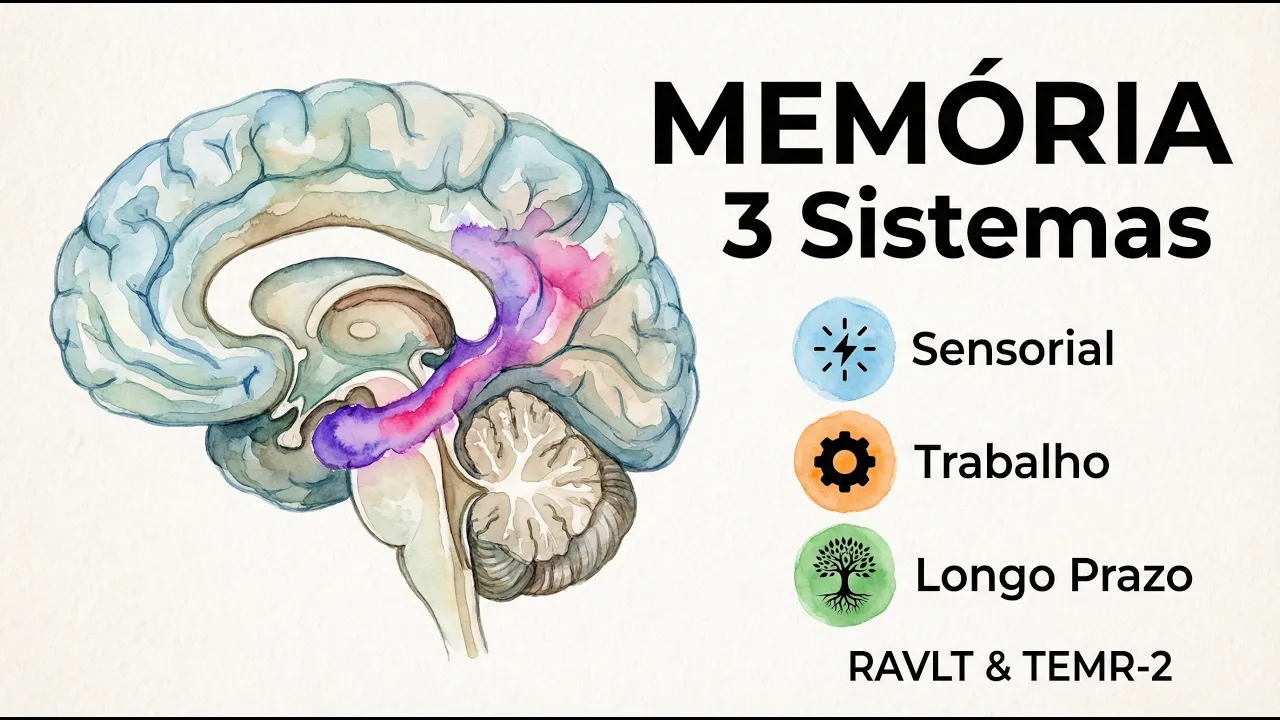
















Executive function is the brain's ability to coordinate cognitive and psychological processes needed to initiate, sustain, monitor, and adapt behaviors and attitudes to achieve goals; it encompasses three core components—working memory (holding and manipulating information), inhibitory control (managing thoughts and impulses), and cognitive flexibility (shifting strategies)—and develops throughout childhood into the mid-20s, requiring sustained practice and support rather than quick fixes.
Executive Function Basics: Skills for Everyday Success
Added:Basic neuroanatomy, particularly the role of the prefrontal cortex in decision-making and behavior control.
Fundamentals of cognitive psychology, including the distinction between working memory and long-term memory.
The concept of self-regulation and how individuals monitor and manage their emotional and behavioral responses.
How physiological factors like sleep, stress, and nutrition influence general cognitive performance.
Advanced cognitive control processes, focusing on working memory updating, inhibitory control, and cognitive flexibility/shifting.
The developmental stages of executive functioning across the lifespan, from early childhood to older adulthood.
Understanding executive dysfunction and its relationship to neurodevelopmental disorders such as ADHD and autism.
Evidence-based cognitive training interventions and behavioral strategies (like CBT) used to rehabilitate or enhance executive skills.
The principles of neuroplasticity and how targeted habit formation physically alters neural pathways.
405 views0likes1:01:33Original Release: 2025-01-09
good evening everyone it is 7 o'clock on the dots Eastern Standard Time and this is Adam hickey from Landmark School welcoming you to the first Landmark learns for this Academic School year tonight's Landmark learns uh the subject is executive function the basics and myself and Margo Maru will be co-presenting Margo will really be taking the lead in just a couple minutes on tonight's topic um but I'll act as this evening's MC um and uh kind of introduce what's going to happen this evening so we're happy to have everyone here it's a quick introduction uh my name is Adam hickey I have been at lar school for quite a while at this point and I have two fabulous roles I think they're fabulous I love my job uh lammer School Outreach lead faculty and I'll talk in just a second a little bit about what Lamar School Outreach is um and I'm also the lamarch school research coordinator um and in that capacity I coordinate and establish amazing relationships with researchers in the in the field uh and in our general area to help uh move the field forward and the way that we help uh students meet their potential and just be the best people they can be uh lamrock School itself has two campuses we have our Elementary Middle School uh up in Manchester by the Sea for students in grades 2 through 8 as a day school and our high school is just south of there in Prides Crossing Massachusetts and that is for uh students in grades 9 through 12 and for those students we offer both residential as well as a day program um we like to say that the best part about being at lar Mark school is that we have the incredible opportunity to be both prescriptive um Diagnostic and prescriptive in the approach that we take in working with students um and um and at the Cornerstone of the work that we're doing with students on both of our campuses is a daily one toone tutorial that allows us to remediate the needs of students who have a specific learning disability Andor dyslexia with Incredible potential who come to us to meet um and achieve their academic and their social potential complimenting Landmark School itself is Landmark School Outreach with an incredible mission of helping Educators do the work that we do on our campuses at their schools at their districts um and lammer school Outreach Works exclusively with students um no not with students with Educators um to best help them meet the needs of their students so we like to say we try to um bring that special sauce that's happening at Lark School uh to a broader more diverse community of Learners beyond our campuses themselves uh which are limited in space um we service about 350 students and we have the capacity to help so many more students through the work that Landmark School Outreach lead faculty are doing uh both within the state of Massachusetts New England um and even broader from there so we're we're happy to have you here with us tonight before we begin with this evening's we we inar I do want to plug a couple upcoming webinars um the first one I want to speak to is one being hosted by Landmark Outreach itself um and in that webinar that will be taking place later in January on the 21st um is a really great executive function and ADHD um webinar um that's going to focus really about reading the implications of executive function attention deficit hyperactivity disorder among readers specifically with dyslexia the presenter is Joanna Christa dulu uh from her lab at The Institute of Health Professions at MGH Christina is I mean Joanna is a wonderful researcher she is one of our research Partners who we have worked with over the years and I can't say more about how just fabulous she is so if you like this topic or interested in this you really should attend that in addition to that webinar we have three more Landmark learned webinars coming up over the course of the year we're going to specifically look at executive function at work executive function in the home setting and then finally executive function at school so as you're thinking about the work that's happening tonight the information that uh Margot is going to be presenting if you have specific questions um around those three subtopics we would encourage you to record those uh and save those for those future webinars the spirit of tonight is really a primer or a broad Strokes uh overview of executive function really to prepare us to be able to do that deeper dive as we get ready for those um for those questions having said that I want to speak very quickly about the function we would encourage you to use the question and answer function of the webinar Zoom webinar um platform to pose questions that do come to you during tonight's uh webinar and that we will be reserving about 10 to 12 minutes at the end to address those questions um so without any further uh Ado I do want to move right to um letting Margot introduce herself and we'll begin tonight's presentation thank you thanks Adam um hi everyone I'm Margo Maru I um have been at Landmark since 2010 I started my time at Landmark on the high school campus where I was the assistant director of the prep program there for many years and a teacher in the classroom for all the years that I was there more recently I've transitioned to working for landmark Outreach as a lead faculty member like Adam and I also work one-on-one with college students to provide executive function coaching so I I'm in the weeds with executive function a lot these days and I'm really passionate and interested in all things executive function um and I'm happy to be here with you all tonight just thinking about our road map for the next hour um I'm gonna give you know Adam kind of touched upon this excuse me in his intro but I am planning to give an overview of executive function you know this is our kickoff to The Landmark learn series on Executive function so my intention is really to be looking at it from a big picture lens so that we're all grounded in some common knowledge before the upcoming webinars that are really going to you know hone in and focus on strategies for at work at home and at school um so as a part of that I am going to dive into some key terms and you know we couldn't leave you without some takeaways and strategies so we'll also do that you know some simple things to try at home and I've kind of layered some in throughout um tonight's session as well as I move through you know Adam I invite you to interrupt me at any point he and I had talked about making this maybe more of a conversation if we could so um I'm just going to put that out there feel free to interrupt me Adam and I'll invite you in moments if I think of it sounds great thank you okay um another moment before I dive in you know this is uh the teacher in me as I move through this webinar I did identify five places where I'm hoping we can sort of pause and identify a takeaway that you could maybe record in your notes and I do always encourage note taking it's a great kinesthetic way to engage your mind while being you know present for a webinar I wanted to try to scaffold this a little um again the teacher and me so I've included a model template here um showing you how you could maybe organize your notes in a simple effective way of taking two column notes which we use at Landmark the time and one of our goals for two column notes is to really sort and organize your thinking in real time so feel free to use this structure to capture your ideas as you go um it's always best if you can try to put things in your own words to really make sense of them as you go as well but this is not a classroom and I won't be checking so you also don't need to do any of that it's just a suggestion as we go so to get started thinking about executive function um I couldn't stop thinking about the holiday stress and how that really plays into all of this you know in a meeting about this webinar leading into holiday break one of my colleagues mentioned how stressful she was feeling about the season you know and we reflected in part on how that could be because there's so many demands placed on Executive function during that holiday season you know and then I was at a school this week with teachers and I asked them to reflect on if they had a scenario from break they could bring forward where they had to use their EX function and everyone had immediate great examples you know so anyone who was hosting a large meal had to plan ahead of time um they had to plan out the items on the meal they had to make grocery lists and identify a good time to go shop for those grocery items they had to understand and plan for the timing of when dishes need to be in the oven and then out so that everything was ready and warm on time they had to hold all of this information in their visual working memory while they had to plan seating arrangements potentially so there's a lot that goes into just planning and then anyone with maybe some family relationships that might have tension they have to manage their emotions throughout the holidays and self-regulate during these events anyone who needed to wrap presents you have to time that correctly so that they're wrapped you know by the present opening day and you're not staying up late into the night to get that done and then anyone who's feeling stressed by all of this has to manage that stress will while still trying to enjoy the holiday season in some way and this is without school or work or anything right these are just the at home fun holiday season times so I I just thought it was such a powerful image of how executive function as part of our everyday lives and especially right now coming off of that season well Margo and I think that's such a good point this coming off the season I've had a number of conversations um Monday and Tuesday of this week people are saying that they feel this sense of relief and just this feeling of okay the holidays were wonderful but I'm so glad they were over and I think that speaks to the incredible stress to the systems that are in play in order to maintain all of those moving parts and that when that kind of goes away for a bit you are really faced with wow like I that was you know it's such it's such a beautiful kind of way analogy metaphor to really set up how encompassing this is for all of us absolutely so what is executive function when we're talking about this before I dive into this disclaimer it's really complex there's a lot that goes into executive function um and there's a lot of researchers in the field and they all have slightly varying definitions so there's not one definition or one go-to model it's not in the dsm5 so I just think that's good to know because um we're going to be sorting through different definitions and our own Landmark definition so as I go through these slides you know keep in mind that my first takeaway is going to be a moment in your notes to try to capture your own definition of executive function um ideally in your own words or maybe from the slides ahead and it's okay if you know you have to f it a little because again there's not one goto definition I like to start when I'm talking about executive function with visuals in analogies because I just find that a really rich way to think about things um so this particular analogy comes from Thomas Brown who's like an early researcher of executive function um and I just love his direct quote about this so I'm going to read it he wrote that regardless of their expertise the musicians need a competent conductor who will select the piece to play make make sure they start playing at the same time and stay on Tempo fade in the strings and then bring in the brass and manage them as they interpret the music without an effective conductor the symphony will not produce good music so because of this he calls it the musical conductor of the brain right we need that overarching ability to understand when we need to like bring in louder music Fade Out quieter music pick up a Tempo and all of that um and there's so many musicians and instruments that go into an orchestra that have to come together cohesively to produce beautiful sound um which is also kind of what's going on when we think of executive function there's so much that the brain has to coordinate in terms of our thoughts our emotions our planning in order to activate and complete a task I also like this one because I feel like it Taps into this idea of sort of a metacognitive supervisory element of our brain and we're going to talk more about the cognition later a different visual for this um that comes from the Harvard Center on the developing child who has some really awesome resources about executive function excuse me is the air traffic controller of the brain um I also really like this one I it's a little more visual maybe and less Musical and auditory uh but if you think about being in an airport and how essential that air traffic controller system is to the functionality of planes landing and taking off safely and smoothly you know it is absolutely essential for that and you know I often think about that experience maybe you've also had it when you're on a plane and you're just eager to get to your destination or to get home but the pilot comes on and says you know they're not ready for us on the runway so we're going to have to circle the air a little bit and everyone kind of groans but thank goodness that exists because otherwise it would not be safe to land and the pilot wouldn't know that so it's an essential system to coordinate all of that goes into the effective smooth running of an airport much like when we need to execute our own tasks and then the last visuals I'm going to um leave you with both come from Linn Meltzer um who also has a ton of great executive function research out there she's local in in Lexington um so she has two things I like to talk about one is the Rubik's cube of the brain and the other is this concept of the forest versus the trees so the Rubik's cube of the brain is kind of a way to push back against this idea of like one little mini me sitting in your brain coordinating all the events and actually show that well it's everything is interrelated right when you when you shift any of these Rubik's Cube colors everything else is going to be shifting and working together it's all integrated so you know thinking about flexibility organization goal setting prioritization like those all Impact each other when we think about how we fluidly use our functions and then she also talks about this concept of the forest for the from the trees which is really thinking about cognitive flexibility and shifting so if you think about when you're standing at the top of a mountain you look out and you can see valleys and other mountains in the distance and all of the forest laid out before you but if you're at the bottom of that mountain you're really only going to be seeing the one tree in front of you and the leaves on that tree and the bark on that tree and it's hard Maybe to shift between knowing that big picture in all of the forest and the details of each of the trees that make up that Forest so that's I think a great visual for the other aspect of executive function that's so key which is this concept of cognitive flexibility and of flexibly Shifting which I'll talk a little bit more about later too so those are my visuals like I said when we think of the definition itself there is no one definition and it's not a diagnosis in the dsm5 but at Landmark our working definition which comes from Patricia nehaal is that I'm going to call it EF by the way moving forward I think EF is the brain's ability to coordinate the cognitive and psychological processes needed to initiate sustain Monitor and adapt the behaviors and attitudes required to achieve a goal like many of the definitions it's a bit of a mouthful so let's break it down a little bit I like to really highlight some of the key words in this definition that I think help us make sense of what executive function is really all about so this idea of coordinate we it's all about coordination these systems working together and having to come together in order to execute and produce whatever our goal might be and especially that's especially true that coordination when anything is novel or multi-step or particularly challenging for us um I also like to draw attention to this concept of both cognitive and psychological processes when we're talking about executive function we're really talking about both thinking you know learning and importantly emotion and how they work together um and we're going to talk about that throughout this as well uh I will say I was super lucky this year I got to go to the learning in the brain conference on emotions and emotional regulation and my key takeaway from that was that learning is emotional you cannot separate them emotions are part of learning so that feeds right into this concept of executive function as well and how it's a part of that system and then when you dive into like okay what of what are all these you know emotional psychological cognitive things that are coordinating to do well it's about how do we initiate a task how do we get started on that task how do we sustain throughout so that's sustaining our Attention our motivation our effort throughout the duration of whatever task we're trying to complete how do we monitor ourselves throughout that bring self-awareness to the process and monitor our actions and then adapt how are we flexible as we are needed which we'll need to be as we move through anything so that we can adapt and shift our Behavior how we act how you know we actually respond to our environment and our attitude our beliefs our internal emotions that's where they come in again all to achieve a goal now goals can be something really large like a college thesis or a big school project but they can also be daily regular things we're trying to do like get out of the house on time to avoid being tardy to school that is a goal so how do we initiate that task sustain and do all that goes into it to successfully achieve that goal so there's a lot already right there that's going into what it means when we talk about executive function I also like this definition so I thought I would bring it in because it's a little bit simpler and it's a nice um complement to our Landmark definition this comes from Sabine doble who has a great Ted Talk that I recommend a lot it's called how your brain's executive function works and how to improve it um so she has a slightly simp simpler definition like I said and it she says that it's our amazing ability to consciously control our thoughts emotions and actions in order to achieve goals and one thing I really love that she highlighted is she Compares this to driving like when we are first learning to drive but I'm actually going to add to that I think it's helpful to think about all the executive functions we have to use when we're learning to drive but also in two other situations and those are when we're in a really stressful driving situation like maybe following directions in City Like a downtown City traffic or in a totally new situation like maybe we're driving in a country where you have to drive on the opposite side of the road so in all of those situations when it's brand new or when it's really stressful excuse me or when it's like extra challenging and it changes up how what we normally have done our EF is taxed even more and we notice that we're using our executive function because we have to F consciously pay attention to all that's going on we have to pay attention to the traffic rules in different ways we have to hold the directions in our working memory while we navigate the roads that may be really congested and full of angry drivers who are honking at us and that's causing us stress so we have to manage that stress while we're trying to effectively drive safely and get where we're trying to go so I think it's a great moment if you're ever like what is executive function if you find yourself driving in one of those situations and you notice that you're like gripping the steering wheel a little more tightly and you're feeling exhausted because you have to think so hard that's because you're actively using your executive function in a way that you might not always have to do when you're moving through regular tasks of the day so that and the holiday planning stress I think are two great ways to think about like when is this being used regularly okay so I'm going to pause here it's our first takeaway if you are taking notes now's a great time to maybe jot them down maybe you've been doing that while I was talking which is grade two you know I think our big idea to get is that we use executive function all the time but in general when we are envisioning a goal trying to lay out a path toward that goal sustain our attention effort and motivation throughout out the work towards that goal managing our emotions as they come up inevitably along the way resisting any distractions using flexibility to adapt and we're trying to stay motivated through all of that to successfully execute our plan so there's a lot going on I really like that you brought in these multiple definitions and the idea of looking at it from slightly different perspectives um and and I like it for a couple of reasons one is that when we're working with student students they they're so want just one answer and I think it's very freeing for them to understand that complexity requires looking at things in slightly different ways because each of those definitions I think helps us understand it when we think about struggles in managing our own executive function based upon the complexity of the task um and and what one one definition might be really resonate with one student or person whereas another has a different effect for another student so thank thank you for like giving us the perspective from different angles I think it's really helpful you're welcome I would also say just adding to that one thing that Sabine doble also talks about is how context matters and so I think that's just a different way to talk about you know that concept of when you're driving in a different place but your executive function will look different depending on the context of the task itself the environment that you're in the setting the situation so all of that's really important to note as well so let's I dive into some sort of the development of executive function and some of the key terms um I call this my brain slide um I'm not a neuroscientists I'm not going to dive in or linger too long on this don't worry um but just very simply I think it's helpful to note that through functional MRIs you know they have been able to identify that there are you know our executive function circuits are taking place in the prefrontal cortex the frontal lobes of our brain and that's important to know because this part of the brain doesn't really fully develop until our mid 20s so that you know meaning even those who might not have executive function like vulnerabilities or deficits there's still developing their whole executive function system into adulthood so when you know when I'm talking to Educators out in the world about this I I think that's so important because to me it highlights the fact that we need to be supporting executive function for all of our Learners across grade levels to scaffold and support the development of these systems in their brain um and then I think it's also helpful to know just for our own understanding and and comfort to know like this isn't evolving part of who we are as Learners and of our brains in general I think it's also excuse me worth noting that you definitely can Implement strategies to support executive function and routines lead to Improvement practice leads to improvement over time but I think that overtime is key there's no quick fix executive function where it's like here do this one thing and now you've done it once and so executive function is solved it's not quite like that you know there's it's it's a long process where routines and practice over time are really helpful um going back to the Harvard Center on developing child they had a great quote about this they note that as children develop these capacities they need practice reflecting on their experiences talking about what they are doing and why monitoring their actions considering possible next steps and evaluating the effectiveness of their decisions so these are all things that children can practice as they're talking about but adolescence and adults can practice those things as well the simple helpful moment of inserting a pause and asking ourselves or others to reflect on their experiences their decisions the actions the next steps they're planning to take that moment to pause and reflect can be a really powerful and helpful tool and it builds that metacognitive skill which again we'll talk about in a bit um that that is a goal for many of our Learners Adam I think you had a great story here too yeah and I just want to emphasize that that final bullet point on this slide around the idea that there's no really quick fix uh in addition to the work that I do at l Mar school I'm also working privately with some clients and I often will be called by families who are in crisis because their child is really struggling with um in attentiveness complemented by incredible vulnerabilities Sur EXE I function and they just want the Quick Fix just come in work with my child tell us what to do and it's it's a longer moment that needs more than a moment it's a long it's a it's a journey that you need to take um but this particular student I've been with for a year and I was with him earlier this afternoon and you know Margo a year ago we're looking at the Google Classroom list of work that was 20 20 assignments long and then the Aspen the other piece of the of the school data management system that also suggested even more assignments that hadn't been turned in and now 12 months later almost to the day we're checking in on both of those um platforms and consistently since September there is no missing work and it h it develops slowly over time and so you got to get your student or your client or your person to understand it it takes some work but it is absolutely achievable um in the other piece that I just would want to say relative to this slide is that yes that prefrontal lobe is not maturing until the mid 20s but we don't have the luxury of just waiting for it to mature because we're asking students to do incredibly complex tasks and so if we want them to be able to do that we have to also build in time for the support and the development of those skills that open up accessibility to the complexity of those tasks in a way that makes the student feel good about their achievements I love that and how can we build in routines to do just that throughout our day at school at home so that we can accomplish that think that's great to think about yeah so sticking with Harvard Center and developing child um as we dive in and dig into executive function a little bit more in terms of like the terms that are used regularly when talking about if um while researchers have very different ways of representing it and they have sometimes different models different domains these days more recent researchers out there tend to agree on these three Central skills areas I I've been calling them the big three um of working memory inhibitory control and cognitive flexibility so I'm going to dive into each one of these um over the next few slides so working memory first one we could talk about and I've heard Adam talk about working memory and memory for an hour or longer so there's a lot you could say about working memory um in its simplest terms it's the skill of holding and manipulating information in mind holding and using information research shows that children with a learning disability can typically only hold about three plus or minus two items in their minds so keep in mind that could be as little as one thing at a time that a child could potentially hold in their working memory um so that's really worth noting because we need our working memory all the time if you're thinking about a student in school they're using working memory constantly they have to use it while holding a teacher's question in their mind to formulate their answer or when they're following multi-step directions at school or at home because they tend to get a lot of directions in both places or when reading you need to use your working memory to hold on to meaning in the at the word level to hold on to sounds throughout that word at the paragraph level to hold on meaning from the beginning to the end of it and at the page or longer passage level so working memory is huge this is one of the reasons that routines around note taking and directions um are so important when we think about at school things that teachers can do to help reduce the cognitive load um in general it's really helpful when you when it comes to working memory and I think we're gonna I'm going to live a little bit in that idea of giving oral directions and how how huge that can be so I'm going to get some specifics about that later but when I'm talking about that keep in mind the working memory piece as I go the next piece of the big three or the next area in the big three is inhibitory control and that's really how we are able to control our thoughts and our impulses to resist Temptations or distractions um an example that I like to give is when a student is trying to listen to the teacher but a buddy is also whispering to them they have to resist the temptation to listen to that friend and instead listen to the boring teacher and I'll I I'll take the role of boring teacher gladly I don't mean that offensively um but that's hard you know you have to inhibit this desire to really want to be able to engaging with your friend which is giving you maybe more in that moment than having to engage in a school related task in a lab setting um this is often tested through delayed gratification tests like the marshmallow test for example is a famous one I'm just if you're unfamiliar I'm going to quickly go over it because I'm going to talk about it again later I think this test has become fast fascinating and how people use it these days um the basic concept is children are given one marshmallow until they can eat that one marshmallow now or they can wait and eat two marshmallows later and children typically struggle to resist that Temptation and eat the marshmallow now you know they're struggling in that moment with response inhibition they have to inhibit that desire to eat to because they want to eat it so they're going to eat it now instead of inhibiting it so they can wait and actually get more um I'm gonna talk about this more later when we dig into emotions but it is re a helpful way to just think about inhibitory control as a starting point and then the last one is cognitive flexibility which again I've talked about a bit that ability to shift gears adjust our strategies or our thinking as we are moving through a task um you need this in a lot of different ways that I think can be sneaky so you also need it like if you're shifting flexibly between rules say in a game or in a lab test um you have to switch gears after recess when you're transitioning back into math class um you have to shift gears in terms of say they talk about this with empathy to shift gears between perspectives when you're reading or when you're trying to take on the perspective of another um and you have to try out different strategies if they're not working like if you're TR doing a task and it's not working you have to shift to a different strategy I had one example came to mind for me recently you know I was working with one of the college students I work with and it was finals time so she had to study and she had a clear strategy for how she liked to study she liked to use Quizlet where she would sort of just write definitions term definition um but you know we found that in this college setting just knowing the definitions what wasn't really enough you know she needed to provide examples of those definitions she needed to use the term in context she had to make connections between all the different terms so quizzle in the way she was using it wasn't really working as her strategy so she had to shift gears but she found that really difficult to do without some scaffolded support for me to be able to say like what are some different strategies you can I hear that this has been a really good one for you in the past but it's not quite working anymore given the complexity of this task so how can we shift your strategy even a little to try to make it work more effectively that was all about in part her cognitive flexibility when it came to that particular task okay another moment to pause I think big ideas to get here for me that I might summarize and you can think about as you write your own note would be you know as a reminder that there is no official diagnosis our executive functions are developing into our 20s and there are different models and definitions that exist for it but all tend to agree on these three really big main components of executive function of working memory cognitive flexibility and inhibitory control so after you've had a minute just gonna pause with a little bit of silence and then move on okay I have a few more terms because I just can't help it those big three are really helpful when it comes to understanding executive function don't get me wrong but there are so many other terms that I use all the time when I'm talking about executive function that I know parents and teachers and students tend to hear more often than maybe some of the more Clinic more like researchy terms so I have two slides and I'm going talk about eight different terms that I just think are helpful and and I'm going to try to use to also throw in some strategies and examples so these particular ones are coming from Dawson andu who wrote smart but scattered as well as this textbook here executive skills in children and Adolescence they have some great strategies overall for supporting executive function um so the first terms on this slide are probably ones you're really familiar with like time management planning organization we've heard these right we talk about them a lot um we know that students can really struggle to manage their time meet deadlines make and follow a plan of any sort follow any sort of organized approach to materials either physical or digital and they can struggle to sustain their attention when necessary to do all of those things and to sustain throughout a task so I know that these are familiar terms um but I also think these are good examples and reminders of why you know we can try simple things at home that can really help with any of these so when I think about time management I'm often thinking about like how can I make time visible in the home space can I use clocks regularly and calendars and rep make sure that I'm referencing them and looking at the calendar with my child having them interact with it in some way and remind me of what's coming up in the week ahead um can I have them create a plan of attack for their homework and verbalize that plan to me so that they can kind of flex that planning muscle a little bit on a nightly basis while they're sitting down just to do homework um can I have clear systems of organization in the home like a consistent place where the backpack goes every night so it's easy to find in the morning and reduces stress during that morning transitional time of getting out of the house um so I think there are different things we can try to do um but I think coming back to that point about practice over time when it comes to these these things seem simple and yet they're actually pretty complex for many students who might have vulnerabilities in their executive function and so it takes a lot of practice and a lot of really solid routines in place to internalize for our students to internalize some of these skills I think back to kind of like Adam a college student I've been working with now for a year and a half and just talking about let's live in that planning place for for now you know at first we set up a system for her to track her due dates and her assignments and then make a plan from those of how she's going to attack them over the week so at first you know a year and a half ago we were every time we met going through all of her class syllabi and all of her online class platforms to find those dates and populate them make sure they were still current and up to date and together make a plan of attack but now and we did that consistently routinely all year by this year this past semester she when we would get on the call she had already added all of the Ates and had made her first go at a plan and so now we were just talking through okay tell me about your plan why did you choose to break it down this way do you see any roadblocks that might come up do you have anything going on that could shift your plan and make you have to think about it differently so she definitely over time had internalized a lot of these planning skills but it did take time routine and support and Scaffolding for me in a consistent way so I just think that's another helpful way of thinking about about how valuable that support can be and how it does take that time it really does take the time I don't think you can emphasize that enough but I also want to speak to what I think is the real power of the previous slides that you just presented and what I'm thinking about and reflecting on tonight as you speak is the idea that executive function by definition is an abstract noun and abstract nouns are challenging for us to understand because you can't hold them you can't pick up executive function and put it on the table or put it on a shelf and so when you presented on the three variables of working memory cognitive flexibility Etc what students find so powerful about that is it begins to give them the language to help understand and describe what it is that they're experiencing and feeling and that's what's so important so yes tonight is really a broad sweep around definitions but I just don't want to miss the power of what you're presenting is also the starting points for the conversation to provide the control that a student is is really looking for to move forward um and I'm thinking about the the four bullet points on this slide you're showing right now and how those cat those bullet points could categorically sit underneath the the previous slide as well and so absolutely they involve they are part of and they are taxed by those other systems of working memory cognitive flexibility and inhibitory control they all kind of interrelate that's that Rubik's Cube idea right they all work together yeah so if you're listening tonight watching Margot and me tonight and you're like wow you guys are may maybe you're experiencing this as very new information or it's moving really fast I would encourage you to go back and rewatch this it'll be archived and available for free and kind of go through it again with a second viewing in a slightly different perspective okay my thing just went okay I have another slide of tasks I mean of terms it's my last one before I switch and I won't Linger on it too long because um I have my eye on the clock all of a sudden I just wanted to say so those are all common terms we talk about a lot when it comes to Executive function but these are also terms that get that I use all the time and are are super also prevalent within the executive function system so that's that ability of task initiation just initiating a task can be really challenging especially when it is one that is larger overwhelming or multi-step um so the college students I work with I often we're talking a lot about activation because it's about how do we help break tasks down for our children and our students um excuse me I had recently heard a cool analogy um from someone named laa dued who talked about learning to write a bike without pedals and that you know children tend to fear that moment when when they're learning to ride a bike and their parents holding them and pushing them and then they let go and that's really scary but I guess there's this method out there where you can remove the pedals first and children just first have to learn balance and stability without the added fear of speed and then you can add the pedals back on so that they can start to control you know focus on controlling speed after they've already managed balance um and I just thought that was a really cool anal you know analogy for thinking through how do I take the pedal off or how do I break this task down like how do I get to the simpler more discrete tasks that is a skill that we really want to help our young people develop because it it helps with task management when you're an adult so much if you can break down and have those discreet steps and it feeds right into the next three on this slide as well goal directed persistence how do you have a goal in mind be able to visualize it and create a path toward it but what I like about this term is that it includes that term persistence which is this whole idea of like how do you persevere when you inevitably encounter roadblocks along the way um which is huge and then self-monitoring and metacognition are really part of what I wanted to just pause and think about in terms of how do we bring awareness to our own behavior throughout you know metacognition is all about that overarching ability to think about our thinking you when we're being really metacognitive it means we understand our own needs we understand the demands of a task at hand and we can make like self-aware choices based on what's going to be needed to complete that task and that's our ultimate goal for all of our Learners and that's why I've really been focusing a lot lately on the need to build in that time for self-reflection and all of my work with the college students I I work with and I'm encouraging teachers to do the same in the classroom just to build in a moment to have self-reflection for all their successes as well as the faur I think often we only prompt it when it hasn't gone great but it's also great to reflect after something went really well so that you can help your student or child bring to the front of their mind like here's what I did to have that success and that can be replicable right I can do that again but I don't want to just like glaze over it and just assume it was oh this task just went by easily for some reason now you want to hone in on why what' you feel good about what could have gone better and let's just talk about that and think about it for next time so my key takeaway here after those slides is just that I think helping us understand that everything from really commonly discussed skills like time management to higher order thinking skills like metacognition can be a function of our executive skills um and they can all be areas of potential strength or Challenge and it can look different depending on the context and the person that's a lot to go into Adam I know we need some questions time at the end so I'm going to just I'm GNA I do want to uh address the emotional slides and then we can dive in great that okay um hot and cool executive function is are some terms that are being thrown out there and this researcher um mu wison and zelazo have really talked a lot about that just in the simple terms cool is less emotional and hot is more emotional when these terms are being used so cool EF refers to aspects that are traditionally measured in like a less stressful emotionally cool lab environment um so such as recalling a sequence of numbers or sorting objects based on color or shape um I'll get more just specifics in the following slide but just to give you this big picture and then hot in contrast to that is measured outside of the laboratory in motivationally and emotionally significant situations they call quote in the wild which I really like that just means at school and at home right like out in the world when things have an emotional charge to them so I think this can help explain why children may perform really well on a cool EF task maybe when they're being tested but then you know like in a lab when they're getting tested but then they can be confusing when they really struggle in context in an emotionally charged environment so let's dive into that a little bit um so for thinking about cool executive function skills I'm not I'm not going to go too long into the dimensional card sort but it's just a really simple um test where children have to sort cards first based on color and then they have to shift and sort the same cards but now by shape so this is going to test their cognitive flexibility their working memory um but there's no real emotional weight to it it you know there's no Stakes if they don't do well they're not um in a classroom setting with peers or a teacher who might have some sort of relationship with them that's charged it's just kind of a lab setting test um so there's no emotion to it and therefore it's tested in a different way if you also think about the marshmallow test um I'm going to talk about it Revisited so the way I had talked about it in the first you know earlier on that is its kind of classic stance and that's when it's hot when an when the marshmallow test is like really truly just by itself it's a hot task because the student has to inhibit an emotional desire to eat the marshmallow but they Revisited it Revisited it excuse me um and turned it into a cool task which I thought was was really fascinating so children were given the same set of rules but asked to make the decision for someone else so I'm given the marshmallow or I'm I'm told you know Adam over there he has one marshmallow he can choose to eat it now or he can wait and he'll get two marshmallows later and when it's about someone else the children are more likely to say oh well he should wait and then he can eat two marshmallows they're like great okay now here's one marshmallow for you you can choose to eat it now or wait and get to later and the children will eat the marshmallow right in front of them and they still can't wait and so that to me is a perfect example of how something can go from cool to hot you know it's cool because it's over there and I'm detached but when I'm emotionally impacted and I am the one who's eating the marshmallows it's hard for me to make that decision that on the face value might seem kind of logical it shows the power emotions can have on our decision-making I think another way to think about this is how hot executive function can like sneakily exist in a task um for example when giving multip step oral directions which we often do at home without realizing it so if we're thinking of an example with young children if we say pick up the toys in your room in the hallway and in the living room before you can go outside and play it feels like a really simple set of directions but when you view it through this hot and cool lens you know if you think about the cool demands they have to remember those three locations hold the directions and the locations in their working memory and monitor their progress as they go and then if you shift to thinking of it from the hot demands the emot emotionally charged demands if you will they have to inhibit that desire to play with the toys around them instead of putting them away they have to also resist the desire to go outside and play right now and you know right this minute instead of after they put those toys away so all of that can make it really hard to then focus on the task at hand so it becomes a hot task rather than just this cool task of oh it's just about working memory know it's about which is already could be taxing for our students if they can only hold one potential item in their memory and then you add to that the desire to do all these other things instead like play with the toys or go outside so suddenly you can see why it might be really hard for a child to focus on that task and I think this is exactly what can come into play when it comes to high stress assignments or situations so when you're thinking of watching your child at home with a school project or you're trying to plan a big family meal like that's when this comes in and it becomes a hot task so I like to think about this in terms of like the bottom line which is that emotion plays a role in our learning and in how we are able to move through ex you know ex executing on these tasks tasks um I think it's another plug for why it's so helpful to reduce the demands and scaffold development of these skills you know give One Direction at a time or remove the desirable distractions um to help students kind of break that task down and and feel successful so our big idea for this is that emotions cannot be divorced from these systems it's integral to learning it's integral to Executive function and it's a part of how we are able to effectively use our executive functions is is that kind of emotional regulation so it's also just helpful to know when things are charged for your child to because it can explain when they might be struggling to initiate or execute I really like your use of the word sneaky a couple minutes ago because that you never intended to be emotionally charged or really didn't even think there were emotions involved in can be perceived by the receiver as fairly emotionally yeah you know absolutely loaded and that and that's so that that that use to the word sneaky really resonates I think it's that's important and I think it's also I'm just going to end on this which is that executive function is complex part of it's because it's Sneaky right there are things we don't notice it shifts based on the context based on the emotions based on so much and there's a lot that's already going on and being coordinated when we think about the effective use of executive function to begin with cool so some really simple takeaways Adam and I had sort of brainstorm like what are some things you could try at home I think it can be really helpful to be intentional when giving directions at home like that example about picking up toys um and some quick things to implement when giving those directions would be to ask that child to reverb Alize have them have to say back to you what the directions were this is a great way to capture their understanding make sure they are understanding it and um kind of pause in the moment so that they're not just racing off um trying to provide visual as best you can for what a clean room looks like and visuals for you know your routine for the start of the day break down those directions into really discrete steps as often as you can and then try to remove distractions so if it's um whether that's the phone I hate to say it removing the phone during homework time or if you're really you know that toy example pick up one room at a time for toys so they don't have the distraction of all the toys they just have the toys in each room before you then say okay go play and the other piece that I just really keep talking about is that prompting for self-reflection really trying to build the ma metacognition of our children by asking them to reflect on things in all the different ways that could be whether it's what they learned how their day was if something didn't go well just talk about it and then let be you know a building block for for next time there are going to be some references here but I wanted to pause for a minute we have probably time for one maybe two questions yeah we have a couple questions um yeah so and before we get to them just really quickly you you touched upon the idea of metacognition um and the marshmallow test and both of those reminded me of the power of selft talk um I remember in the first test they were very keen to pay attention to uh those children who were able to resist the temptation were the ones that demonstrated a higher level of selft talk to absolutely work their way through it and we know that selft talk also is a bridge to our ability to be metacognitive that statement that I just made does bring us to the first question though which is and I'll read the question um how can can we support a student in maintaining uh a level of self-esteem and motivation to continue their efforts in the face of grades and successes that don't really reflect how hard they're working um I'm processing that question because I feel like it was long how do we help them stay motivated yes to the question is like in the spirit of this is a long journey yeah after a couple of weeks of working with the student we know how hard they're working how do we just keep them invested when they're not getting the immediate gratification of wow I worked really hard on that and I got an A on the science test well no I didn't get an A but I got a C which is way better than the grade I got the time before any any ideas and how we build in moments of keeping the motivation going in the face of not that immediate gratification yeah first of all thank you for breaking that question down for me as I was listening um I mean I think a lot of it is is it's all about pausing and reflecting on well what progress have we made like celebrating the victories as they come no matter how small they are to help a student student feel really great about the process I think a lot of it that's something I used to talk about and do talk about when I'm in schools is really trying to shift from so much focus on the product and instead focus on the process like how much progress have you made just in your ability to follow through with this plan or to break this task down it's okay if you got a see on it but were you following a plan more a little bit more effectively than last time yeah that's great that I hope that that you're feeling good about that because I noticed how well you followed that plan this time and that should be celebrated so I think a lot of it is those really celebrating those small moments along the way um and then one more question Margo um I totally agree with everything you just said I think it was great um is we had a woman email us earlier today who clearly has incredible executive function skills herself um which I really appreciate um looking for some answers around like how do we help support really basic arguably some basic stuff like checking emails or making sure personal finances are are you know in shape you know those in the weed stuff any thoughts about that I mean I think I think that question really highlights how frustrating can feel maybe to have vulnerabilities with executive function when there are all these life tasks that need it um and I don't have one system or trick that I'm going to subscribe for things like that but I do think it can be really helpful just to think about it in terms of those routines how can you create a routine or habit out of it whether that's a clear routine where you check your email at a certain time every day you know like we do that at work a lot we get to the office and we check our email first thing how do we introduce that into other people's lives or also like keeping it in sight and present I know you and I had talked about that like if it's out of sight it can be out of mind so making sure that things are visible to you that are tied to time and that you're making it into a routine as often as you can yeah but just be some big picture things to think about absolutely yeah um Margot thank you so much for your efforts tonight I really appreciate it IO spending the last hour listening to you speak about a topic that clearly you have a passion about um thank you everyone for joining us for tonight's uh webinar uh and one more time before we leave I just wanted to remind everyone that we have three more coming so we have one on February 5th executive function at work we'll have one on March 26 executive function at home um and our last one for the year will be executive function at school um again uh thank you everyone for joining um and we look look forward to seeing you again soon
Up Next
25:47
ADHD and Prefrontal Cortex: Executive Function & Stress
@DrJohnKruse
3.7K views•2024-10-26

33:24
Peptide Neurotoxin Probes of Ion Channel Function
@ciartech
324 views•2010-09-12

4:10
Vagus Nerve (CN X): Anatomy, Nuclei & Functions Explained
@Alilamedicalmedia
305.2K views•2022-10-31
13:03
How Exercise Benefits Your Brain: Science Explained
@TED
11.4M views•2018-03-21
Related Study Plans & Knowledge Roadmaps
Structured learning paths in Neuroscience
neuroscience
Appetite Regulation: Brain Circuits & Hormones
01Foundations of Endocrinology and Brain Anatomy
02Introduction to Energy Homeostasis
03Peripheral Signals: Leptin, Ghrelin, and Insulin
+ 2 more learning modules
14h5 modules
Explore Roadmap
neuroscience
Neuroeconomics: Value, Risk & Brain Mechanisms
01Foundations of Neuroscience and Brain Anatomy
02Introduction to Neuroeconomics and Subjective Value
03Dopaminergic Prediction Errors & Reinforcement Learning
+ 3 more learning modules
18h6 modules
Explore Roadmap
neuroscience
Spatial Navigation: Cells, Grids & Brain Maps
01Foundations of Brain Anatomy and Memory
02Place Cells and Head-Direction Cells
03Grid Cells: The Brain's Coordinate System
+ 2 more learning modules
12h5 modules
Explore Roadmap
neuroscience
BCIs: Neural Decoding & Prosthetic Control
01Neuroscience Foundations: How the Brain Signals Intent
02Signal Acquisition: Recording the Brain's Activity
03Neural Decoding: Translating Brain Waves into Data
+ 2 more learning modules
25h5 modules
Explore Roadmap