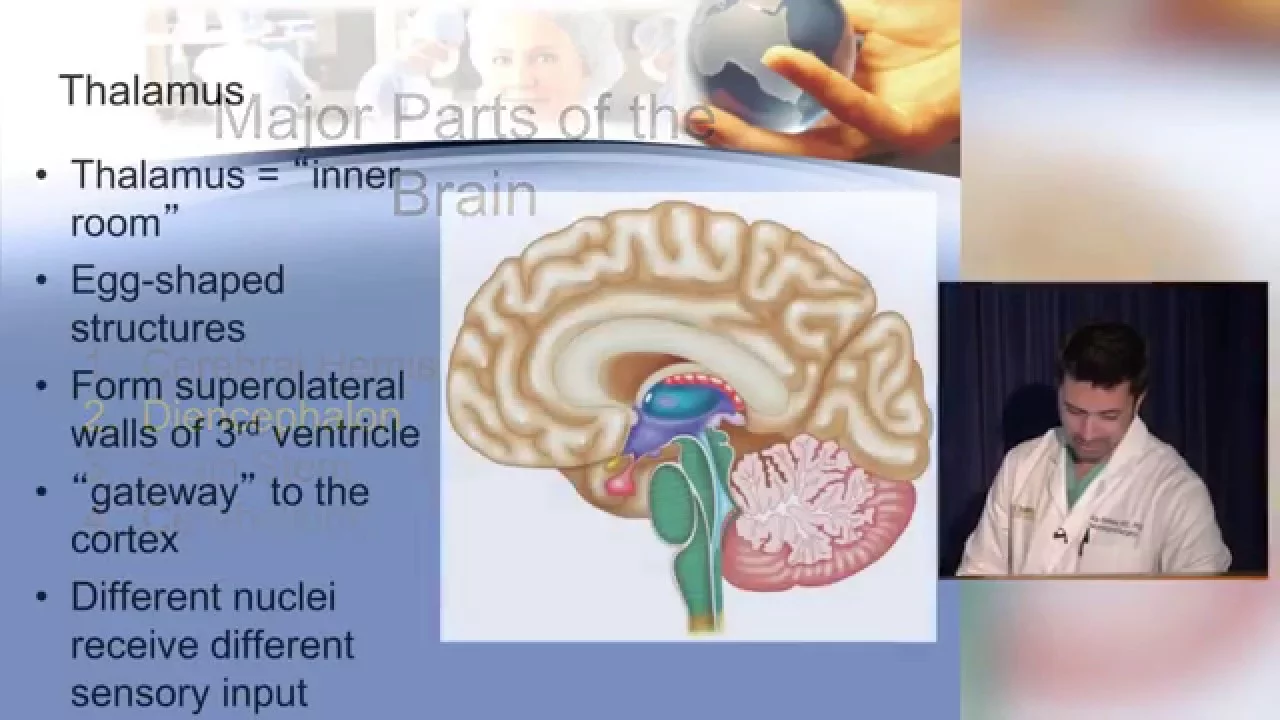

























The prefrontal cortex, located in front of the motor cortex and representing the newest evolutionary brain region, is central to executive functions including working memory, selective attention, emotional regulation, and decision-making; unlike most brain regions, it exhibits significant interconnectivity between functions, experiences fatigue under excessive demand, and is stress-dependent, with high levels of norepinephrine and dopamine weakening synaptic connectivity and impairing executive functions, which explains why conditions like anxiety, depression, and PTSD can mimic ADHD symptoms by creating similar disruptions in prefrontal circuitry.
ADHD and Prefrontal Cortex: Executive Function & Stress
Added:Basic Neuroanatomy: Understanding the location of the prefrontal cortex (PFC) and its primary role in high-level cognitive processing.
The Concept of Executive Function: Familiarity with cognitive processes like working memory, cognitive flexibility, and inhibitory control.
Clinical Overview of ADHD: Knowing the diagnostic criteria, core symptoms (inattention, hyperactivity, impulsivity), and neurodevelopmental nature of ADHD.
The Physiology of Stress: A basic understanding of how the autonomic nervous system and stress hormones (like cortisol) affect brain function.
Neuropharmacology of ADHD: Exploring how stimulant and non-stimulant medications specifically target neurotransmitters (dopamine and norepinephrine) in the prefrontal cortex.
Cognitive Behavioral Therapy (CBT) and Behavioral Scaffolding: Investigating evidence-based strategies designed to compensate for executive dysfunction and manage stress.
Comorbidity in Neuropsychology: Studying the overlapping neural pathways and clinical presentation of ADHD when co-occurring with anxiety, depression, or PTSD.
Neuroplasticity and Stress Resilience: Examining how lifestyle interventions, such as mindfulness, aerobic exercise, and sleep hygiene, can structurally and functionally strengthen the prefrontal cortex.
3.7K views152likes25:47Original Release: 2024-10-26
hello I'm Dr John Cruz and today I'm going to be talking about the prefrontal cortex and ADHD what's the connection so as usual I'll start with the take-home message and after about two or so minutes I'll jump into the main body that talk so the take-home message is that the prefrontal cortex is the location the body embodiment or where the executive functions of brain occur those are Cent to problems connected with ADHD so executive functions are things like working memory prioritization selective attention how we how our brain works to create goal directed projects and accomplish things and although neuroscientific neuros psychological testing can tease out and find ways to test and verify and research separate executive functions one of the things that's important regarding the prefrontal cortex is that there's a great deal of interconnectivity between these different functions and there's also what I would call recruitment so if one system is being taxed it engages more of the the whole prefrontal cortex in general and that's substantially different from much of the other brain regions which are narrowly focused on their task and don't recruit others so if your visual if you're looking at lots of different things your visual cortex doesn't get start recruiting other sensory areas because it just can't process so much visual information but again in the prefrontal cortex there is recruitment there is slop or interconnectivity and there's also fatigue ability so we often use the metaphor of muscles when we're talking about the brain and so it's not surprising to us that parts of the brain if you use it too much might can strengthen it over time like a muscle that it might get tired to wear out but most of the rest of the brain isn't fatigable in that way so again looking the visual cortex if you're looking at something you know really really intently your eye strain may happen but your brain doesn't get tired your brain doesn't have trouble processing looking at one marble versus looking at a thousand marbles on the floor even though the task is a thousand times different in some ways um or you can look for one minute you can look for 50 minutes at your marbles on the floor your your visual cortex is not fatiguing and unable to process that visual information whereas with many of the preor prefrontal cortex executive function um there is fatigability if you're put too much burden on it it just can't accomplish that task or does it much more poorly and tied in with this is the frontal cortex prefrontal cortex is stress dependent so how it functions has to do with the overall state of the brain or the overall state of arousal of the brain and this is part of why stressed out brains too anxious too depressed too PTSD traumatized um the deterioration in executive functions from those conditions isn't just resembling what's going on in ADHD I would say it is creating the exact same underlying difficulties in executive functions that we see in ADHD so jumping into the main talk so the prefrontal cortex and sort of the question is what's it in front of it's in front of the motor cortex which is a strip of the brain sort of about here down in um which controls movement of the body this is the area in front of that so prefrontal it's the newest part of the brain evolutionarily um so in the time that our brains evolved from our primate early primate ancestors and approximately tripled our cortex tripled in volum or size the prefontal cortex actually sex tled so not only did our whole brain grow bigger but preferentially the part of our brain grew much bigger and one other special thing about this brain at a sort of neurochemical area um glutamate is our most common neurotransmitter in the brain it is an excitatory neurotransmitter but there's a particular dependence on a subset of glutamate receptors called The nmda receptors in the frontal cortex rather than the other types of glutamate receptors found out the rest of the brain so not just with ADHD but with almost all of our mental health conditions schizophrenia depression anxiety PTSD there are certainly other parts of the brain that are involved you know ADHD the cerebellum's involved the thalamus is involved but most of the research most of the interest most of the findings have evolve I mean the executive functions which are housed in this area are so critical important to all of these mental health conditions that that's where most of the activity most of the interest has been happening so again what are executive functions are things like working memory top down attention emotional regulation organization and planning sort of how your brain works to accomplish tasks and what I'm going to be saying next is there's a lot of it's involving oversimplification so dividing the prefrontal cortex into two sort of main categories so there's a dorsal lateral and prefrontal cortex and there's ventral medial so d some like a dorsal fin on a shark is the if there dorsal it's the back um anatomically humans are sort of weird in terms of their posture but dorsum is going to be the top surface lateral is sides ventral where your vent is to let waste products leave your body is your bottom your Underside um so it's the underside of your brain so ventral medial is sort of down under anyway the dorsal lateral prefrontal cortex is especially um connected with brain regions involving cool what are called cool or cold reasoning aspects of executive functioning like self-regulation working memory planning so includes cognitive control how do you make decisions how do you decide what working memory and working memory again is the information you need to keep in hand for a few seconds at a time to complete a task so it's remembering I've picked up my keys but I'm in the way to get at my wallet you're not dropping off one you're keeping track of one without maintaining it in your eye contact or other so you can get a task completed um top down directed attention so top down directed attention is what you decide you want want to be focusing on so some called selective attention versus bottom up attention is what in the environments popping out as important or S attention to so dorsal leral prefrontal cortex involed in top- down attention cognitive control things like decision- making working memory goal directed Behavior identifying goals um understanding the future consequences of your behavior um countering emotional biases so it's overriding emotional biases and deciding what's rational or socially appropriate even though you might feel like doing something otherwise dorsolateral prefrontal cortex is also involved in deciding which rule to follow when there's two conflicting rules or decisions so it's also involved in flexibility in decision making and ization and it's also involved in the Cog cognitive regulation and control of fear so in contrast the ventral prefrontal cortex um is often considered the hot region and hot means more emotional more um hot blooded so it's involved in Emotion reward and value decisions so emotional reg there's lots of connections between the lyic SE system the amydala if the camp forx other areas I'm involved in Emotion so the eventual prefrontal cortex is involved in generating helping generate regulate emotions and controlling emotional reactions it's also involved in memory representation and not and that's sort of integrating emotional aspects and sensory aspects of a em of a memory together and creating repr representations in the brain as well as concepts of the self within the brain this is also the vental prefrontal cortex is involved in social cognition such as facial recognition emotions the theory of Mind processing self-relevant information that also has a role in controlling actions or physical behaviors so we often describe these as as very separate modules and tasks and again with intricate neuropsychological testing in a laboratory situation we can tease out these executive functions as separate discret identifiable tasks although many real world tasks combine multiple executive functions at the same time and in the real world in the operating brain it looks like compared again to many other brain regions one there's much more interconnectivity and cross wiring but also more recruitment of other areas if your working memory is to higher exhausted than other that's having an impact on other executive functions directly and immediately so this gets to part of why the prefrontal cortex is more vulnerable um so there's couple different levels of vulnerability I'll talk to one is just genetic vulnerability so we know a lot of the propensity for ADHD for depression for schizophrenia are genetic factors so clearly how someone winds up being wired their their biological predisposition does affect how well the prefrontal cortex and executive functions may be working um but there's also inh parent vulnerability due to the anatomy I mean this is a big area of your brain therefore you're facing trauma and and it's not just a big area it's a forward leading if you're we move generally move forward in life it increases the likelihood of damage to the front of the brain it also involves longer projections in average than in much of the brain because they're coming from deep brain stem and pamic and other internal structures it's a longer difference distance we know lots of the damage from trauma isn't just direct concussive force but shearing um physical forces being shaken and and twisted and shearing within it so that makes it more vulnerable and again there's a greater degree of sort of interconnectivity lots of dense connections so damage to one area May well have impact beyond that Naro discreete area another area of vulnerability is the neurochemical one so again glutamate receptors in much of the brain are ampa receptors those are quick responses um so like in the visual cortex glutamates released it has a quick response generally on the Amper re receptors the MDA glutamate receptors work a little more slowly and that may be part of tied to the next connection which is fatigue so again we talk about we make analogies all the time to the brain being like a muscle but most of the brain does not fatigue so muscles do fatigue so yes muscles wear out a different you know aice St doing curls wears out more quickly than some of our postural muscles that are important for our standing up or sitting down or maintaining posture but all of our muscles with enough time with enough effort get tired and fatigued most parts of our brain keep functioning as well as we're alert and aroused or not even whereas again the frontal cortex gets tired it it has finite reserves and some of the executive functions controlled within the prefrontal cortex do compete with each other so if there's too much demand placed on working memory if you're asking someone to keep track of five different numbers and then you give them a task where they have to switch between different strategies there is competition there there is fatigue there is the whole system collapses because there are too much of a demand on the system so again this is unlike other areas of the brain this is unlike muscle I mean this is more like muscles in some ways so the other aspect of why the this prefrontal cortex is more vulnerable is that it is again arousal dependent or stress dependent and I'll get into this a little more detail so much of this is based on Decades of work by Amy arston and her colleagues at Yale and outside of Le Yale and particularly she's looking at cortical layer three in the dorsal lateral prefrontal cortex I'm looking at working memory models and looking at the nmda glutamate receptor system so under low stress sort of normal operating conditions the nmda glutamate receptor is an ion Channel receptor so it regulates the flow of calcium that activates cyclic and protein kinases which then go affecting potassium Flows In and Out of the brain that nmda receptor glutamate receptor also requires actually some acetylcholine binding on that cell that has received the glutamate so the the acetylcholine binds to a nicotine Alpha 7 receptor which allows things to happen there's other neurotransmitter um receptors on those glutamate receiving cells so the um norepinephrine receptors so the Alpha 2 a receptors under normal amounts of neopine so someone's not stressed out just a low Baseline level those binding to the nor the Alpha 2 a receptor actually inhibits the formation of cyclic and protein kinases changes the amount of calcium flow and eventually potassium flow and this actually within the pref prefrontal cortex strengthens synaptic connectivity so under low stress conditions normal amount of norepinephrine and dopamine being present prefrontal cortex connections the synaptic spines are built up there's there's strengthening connections but under situations where dopamine or neopine are extensive excessive levels high levels then rather than binding as much the alpha 2A receptors the neopine phrine binds to Alpha 1A receptors the dopamine binds to dopamine one receptors that are again also on these cells with the glutamate and MDA receptor um this increases calcium flow it increases protein kyate es and cyclic um signaling and this rapidly opens um calcium or not calcium potassium channels changes which nerves are going to fire and that effect is actually to weaken the interconnectivity to decline um synaptic connectivity within the prefrontal cortex and that functionally weakens working memory it weakens other executive functions so under high stress conditions you're causing a deer iation and executive functions um in contrast the effects on the Amiga are basic emotional bottom emotional part of our brain processing system stress actually strengthens the um synaptic connections with the amydala and not only are these acute changes we can see chronic changes of with stress so with long-term stress there is further deterioration or weakening of synaptic Connections in the prefrontal cortex there is deterioration of many of the executive functions whereas there is stronger consolidation of amydala functioning so you are more driven by emotional impul pulses andless able to sort of Pop down regulate or control them and this is why conditions like anxiety and PTSD mimic ADHD so they are causing a deterioration or a disconnection or a weakening of some of the prefrontal partical circuitry and executive functions within the brain so it's not just like anxiety sort of looks like ADHD I would say at a brain functional level it seems to be mimicking it seems to be creating those same conditions in certain parts of the prefrontal cortex um so another Yale Professor Mark GGO psychiatrist more clinical work has written a book called frontal fatigue where he argues that much of our stressors in Modern Life so there's an increas in complexity not with just with technology but that's a big driving force but even our Urban environments other aspects we're dealing with more complexity we're dealing with much more abstraction rather than Hands-On real physical seeing if I do a with my hand that results in this in the world most of our calculations most of our work most of our how we're dealing with things particularly with the computer is an abstraction um we're also needing to reformat rechange it's not just updates in the operating systems but things in life are changing much more quickly than they did for thousands of generations of people our environment's changing more quickly and we have more decision making required of us so all of those stressers of modern day life are wearing down these prefrontal cortex they're causing again they're causing a situation of higher stress higher norepinephrine dopamine present which is decreasing synaptic connectivity within the prefrontal cortex and contributing to that you know again this is a part of the brain that's susceptible to fatigue so one of the thoughts my question or Direction my questions go into this is one is clearly our current psychiatric labels are not some some argue they're meaningless some say they're not the best way to really separate out different conditions and what be going on some argue about whether there are conditions or not clearly there are social factors the National Institutes of mental health for more than a decade now has been trying to get and encouraging and has successfully gotten people to research more on what are called research domain criteria so that's rather than looking at diagnostic conditions but encouraging researchers to examine functional processes and look at them on a Continuum between Normal and abnormal and try to make connections and correlations between um brain processes that are going on and how that's manifesting in terms of thoughts Behavior feelings in the real world and again it it eventually will be it's already sort of undermining our concept of what is something like ADHD yes we Define it as a set of symptoms um but maybe it would be more helpful to Define it as disturbance of or abent patterns and executive functions connected with prefrontal cortex disruptions um and if we do things that way then we may not be saying oh you have trouble concentrating because of your anxiety that trouble concentrating is happening at the same neurologic level as trouble concentrating from ADHD maybe it's better just to call it a trouble concentrating rather than to attribute to either and it underlies the I mean almost every condition in our dsm5 psychiatric diagnosis it lists symptoms after it lists other criteria for the condition puts in not due to another condition um so all our whole system is based on rule outs and yet what we're ruling out is other conditions whose ultimate Origins ideologies we don't know either which doesn't make a lot of sense um I mean when someone breaks a leg they've broken a leg and we treat it as a broken leg now it might be due to partly because they had osteoporosis weakening the bone it might be just a traumatic injury they were involved in a car crash it might be that factors related to benzo aspine use or hydris made their balance less stable and more prone to a fall so there could be lots of different Origins and Pathways and contributors to it um but we don't rule out we don't say oh well you're you have osteoporosis that's why you broke your leg we're not going to treat you for a broken leg so we often pretend that other fields of medicine don't primarily focus on symptomatology they often do and they need to do and they don't rule out things just because other conditions are contributing to them so that's where I will end my talk about prefrontal cortex um again it's Central to ADHD and unlike other brain areas it's fatigue ability it's leading across different functions when one function is stressed out or overwhelmed is an important part of the consideration of what's going on in ADHD so stay healthy stay happy thanks for listening and I'll have questions and answers on this in a few days feel free to write down questions or comments
Up Next

5:03
ADHD Working Memory: Strategies for Externalizing Information
@AttentionTalkVideo
16K views•2015-03-30

33:24
Peptide Neurotoxin Probes of Ion Channel Function
@ciartech
324 views•2010-09-12

4:10
Vagus Nerve (CN X): Anatomy, Nuclei & Functions Explained
@Alilamedicalmedia
305.2K views•2022-10-31

13:03
How Exercise Benefits Your Brain: Science Explained
@TED
11.4M views•2018-03-21
Related Study Plans & Knowledge Roadmaps
Structured learning paths in Neuroscience
neuroscience
Appetite Regulation: Brain Circuits & Hormones
01Foundations of Endocrinology and Brain Anatomy
02Introduction to Energy Homeostasis
03Peripheral Signals: Leptin, Ghrelin, and Insulin
+ 2 more learning modules
14h5 modules
Explore Roadmap
neuroscience
Neuroeconomics: Value, Risk & Brain Mechanisms
01Foundations of Neuroscience and Brain Anatomy
02Introduction to Neuroeconomics and Subjective Value
03Dopaminergic Prediction Errors & Reinforcement Learning
+ 3 more learning modules
18h6 modules
Explore Roadmap
neuroscience
Spatial Navigation: Cells, Grids & Brain Maps
01Foundations of Brain Anatomy and Memory
02Place Cells and Head-Direction Cells
03Grid Cells: The Brain's Coordinate System
+ 2 more learning modules
12h5 modules
Explore Roadmap
neuroscience
BCIs: Neural Decoding & Prosthetic Control
01Neuroscience Foundations: How the Brain Signals Intent
02Signal Acquisition: Recording the Brain's Activity
03Neural Decoding: Translating Brain Waves into Data
+ 2 more learning modules
25h5 modules
Explore Roadmap