
















![[rlla #10] CBT Phương pháp nhận thức hành vi - hỗ trợ trị liệu tâm lý lo lắng, sợ hãi..số 1](https://i.ytimg.com/vi/Izm8MFlJfBM/maxresdefault.jpg)

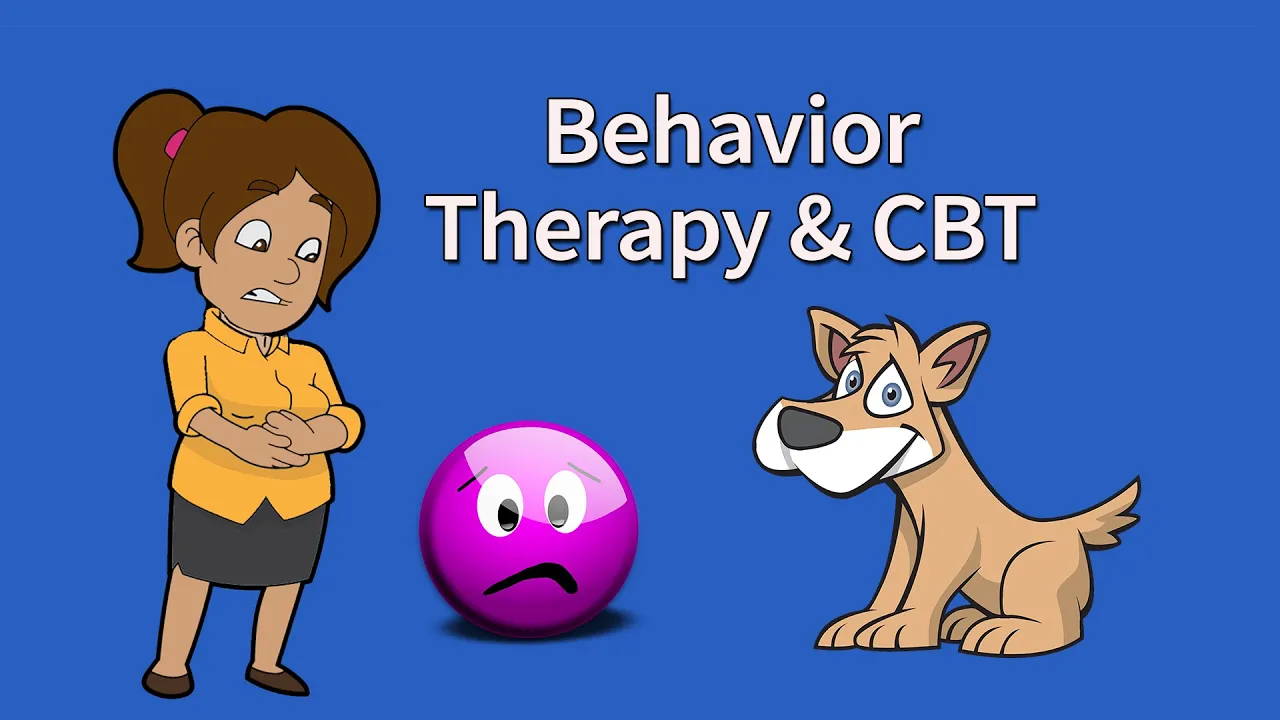






Cognitive Behavioral Therapy (CBT), developed by Aaron Temkin Beck in 1964, is a therapeutic approach that helps individuals identify and challenge false core beliefs—negative thought patterns that distort perception and lead to unhealthy emotional and behavioral responses—by using techniques such as the Socratic method, journaling, constructive self-talk, and gradual exposure to build new neural pathways and develop more realistic interpretations of situations.
CBT Explained: How Cognitive Behavioral Therapy Works
Added:Basic definitions of anxiety and its physiological and psychological manifestations.
The foundational concept of 'cognition'—how thoughts, beliefs, and internal dialogue shape our perception of reality.
The distinction between thoughts, feelings, and behaviors, and how they interact in daily life.
An overview of early psychotherapy approaches, such as behavioral therapy and psychoanalysis, to understand why CBT was revolutionary.
Identification of common 'cognitive distortions' (e.g., catastrophizing, black-and-white thinking, emotional reasoning).
Practical CBT techniques and interventions, such as cognitive restructuring, behavioral activation, and exposure therapy.
The integration of mindfulness in CBT, leading to 'Third-Wave' therapies like Acceptance and Commitment Therapy (ACT) and Dialectical Behavior Therapy (DBT).
Clinical applications of CBT for other psychological conditions, including major depressive disorder, PTSD, and OCD.
423.7K views11.6Klikes6:00Original Release: 2021-09-15
Cognitive Behavioral Therapy is based on the idea that certain situations trigger false core beliefs that negatively impact our thoughts, emotions, behavior, and physical reactions.
Once we learn how to identify what situations bring upon such destructive thoughts, we can practice developing new interpretations that will then change our pattern of reaction.
The therapy is widely used to help people with phobias, depression, anxieties, or addictions.
To show how it works, let's look at Lily, a teenage girl who hates going to school due to her fear of being judged and humiliated.
In her first session, the therapist tries to build trust and explains how CBT functions since the better Lily understands the process, the more likely it is that the therapy is effective. The therapist also illustrates how our brain, in specific situations, follows a fixed path of reason — which gets stronger after years of having the same thought process.
Many of our destructive behaviors are based on false core beliefs — thoughts that objectively don't make sense. We acquired these false beliefs when we were too young to interpret others correctly. Throughout the therapy, Lily will try to unlearn these false beliefs and create new mental pathways that will replace the false beliefs she holds of herself with more realistic thoughts.
Once Lily understands the process, the counselor begins to ask questions following the Socratic method, a form of argumentative conversation that stimulates critical thinking to draw out false ideas and underlying assumptions.
“Would you like to tell me why you are here today?” Starts the therapist. “Because I think I’m not normal,” Lily responds. Therapist1: You appear perfectly normal to me, can you be more specific? Lily1: I think I’m afraid of people. Therapist2: So, you are afraid of me? Lily2: No Therapist3: Do you feel socially insecure? Lily3: I’m not sure what you mean. Therapist4: Tell me how you feel about school. Lily4: I’m scared of going because they think I’m stupid.
Throughout the interview, the counselor takes notes of Lily’s answers and identifies the signs of social anxiety based on a false core belief - Lily believes she is stupid.
For homework, Lily should practice introspection. The goal: to find out which situations trigger her negative thoughts. She gets a learning journal to keep record of all triggers and other observations, such as self-talk or interpretations of particular events and people.
During the following week, Lily becomes more aware of her thoughts and the physical reactions they trigger. By paying attention to her feelings, she identifies a specific pattern which occurs every time during math class. The moment her teacher begins to ask questions her heart starts racing and her palms get sweaty - she worries about having to answer the question, about making a mistake, about looking dumb in front of all the others.
In her second session, Lily shares her observations and the therapist helps her realize that her cognitive-behavioral patterns are false. First, her math grades are great, so she should feel anything but stupid. Second, she explains that there are always more interpretations to the same thing. What to her may look like her "stupid" face, to others she may just look unhappy about having to answer. The reason she is afraid of what people think is a form of social anxiety — a completely irrational cognitive behavioral response.[5.7] As the sessions continue, the therapist suggests three practical strategies: Through Journaling, Lily records her negative beliefs and reformulates them into positive ones she can replace them with. Constructive Self-talk, helps her to replace a critical voice with a positive one. And she starts exposure exercises, which means Lilly deliberately puts herself in situations where she becomes the center of attention.
Along the way, the two set goals that are specific, measurable, achievable, realistic, and time-based. SMART goals give her control over how she progresses thus helping her to gain confidence in herself.
Over time and with a lot of practise, her brain builds new neural pathways that lead to different, more neutral reactions to the same old triggers. And one day, Lily may even enjoy the thrill of speaking in front of her class. Her interpretation of the situation is more realistic and more aligned with those of the others.
CBT was initially developed in 1964 by Aaron Temkin Beck. Beck hypothesised that people's feelings are determined by the way they interpret situations, rather than by the situations per se. About depression he once said: “If our thinking is bogged down by distorted symbolic meanings, illogical reasoning and erroneous interpretations, we become, in truth, blind and deaf”.
This and all other Sprouts videos are licensed under creative commons. That means teachers from all around the world can use them in classrooms, online courses, or to start projects — and today, thousands already do! To learn how it works, and download this video without ads or background music, check out our website or read the description below. If you want to support our mission and help change education, visit our Patreon — that’s patreon.com/sprouts.
Up Next

89:03
Sugar's Toxic Truth: Metabolic Health & Brain Aging with Dr. Perlmutter
@lewishowes
507.5K views•2022-01-24

48:47
Graphic Medicine: Comics for Collaborative Healthcare Communication
@nationalpatientadvocate
189 views•2023-12-04

10:28
Neuroanatomy: Central and Peripheral Nervous System Divisions Explained
@AKLECTURES
136.2K views•2014-09-20

3:05
Stages of Labor and Vaginal Birth | Childbirth Animation
@nucleusmedicalmedia
52.1M views•2017-08-18
Related Study Plans & Knowledge Roadmaps
Structured learning paths in Medicine
medicine
Abnormal LFTs: Diagnostic Workup & Pathology
01Liver Anatomy and Basic Physiology
02Introduction to Liver Function Tests (LFTs)
03Hepatocellular vs. Cholestatic Patterns
+ 3 more learning modules
12h6 modules
Explore Roadmap
medicine
Analyzing Blood Smears: RBC, WBC & Platelets
01Introduction to Blood Components & Smear Preparation
02Normal Morphology of Blood Cells
03Erythrocyte Pathologies & Morphological Variants
+ 2 more learning modules
12h5 modules
Explore Roadmap
medicine
Mechanical Ventilation: Waveforms & Alarms
01Anatomy and Physiology of Breathing
02Introduction to Mechanical Ventilation & Core Modes
03Ventilator Settings and Waveform Interpretation
+ 2 more learning modules
12h5 modules
Explore Roadmap
medicine
Neuro Exam: Localization & Stroke Syndromes
01Foundations of Neuroanatomy and Vascular Supply
02The Neurological Examination: Step-by-Step
03Principles of Neurological Localization
+ 3 more learning modules
18h6 modules
Explore Roadmap