






























Cognitive Behavioral Therapy (CBT) is an evidence-based psychotherapy developed by Dr. Aaron Beck in the 1960s that helps individuals understand how their thoughts, feelings, and behaviors interact in a cycle, and teaches practical strategies like cognitive restructuring and behavioral activation to identify and modify distorted thinking patterns and unhelpful behaviors, making it effective for treating depression, anxiety, and improving overall mental wellbeing.
CBT Explained: Cognitive Behavioral Therapy for Everyday Mental Health
Added:A basic understanding of the connection between thoughts, emotions, and physical sensations.
Familiarity with the general definitions and symptoms of anxiety and depression.
The concept of metacognition, which is the ability to monitor and analyze one's own thought processes.
A general awareness of how psychotherapy differs from pharmacotherapy in mental health treatment.
Identifying and classifying specific cognitive distortions, such as catastrophizing, mind-reading, and all-or-nothing thinking.
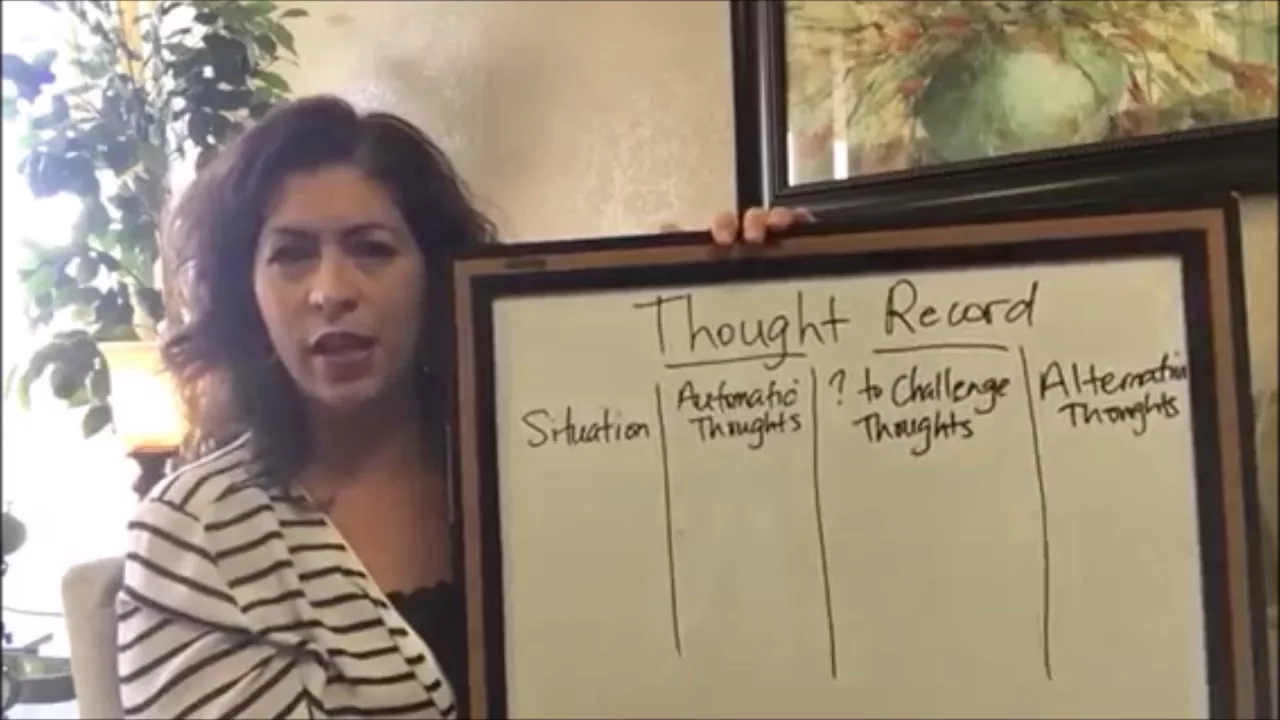
Learning how to complete a 'thought record' to actively challenge and restructure negative automatic thoughts.
Exploring Behavioral Activation (BA) as a specific, evidence-based CBT protocol for treating depression.
Investigating 'Third-Wave' CBT approaches, such as Acceptance and Commitment Therapy (ACT) and Mindfulness-Based Cognitive Therapy (MBCT).
15.7K views201likes1:02:31Original Release: 2022-11-24
okay welcome everyone to this evening's webinar and thank you so much for taking the time to uh participate in this one hour webinar on an introduction to CBT or cognitive behavioral therapy my name is Kathy sisac and I'm a clinical manager with Homewood health and I'll be presenting the webinar tonight and I'm joined by my colleague Lindsay uh who will be acting as a moderator and supporting behind the scenes as well tonight's webinar will be recorded a recording will be available after tonight's session so that's something that you can access afterwards if you'd like and we're a very large group tonight which is wonderful um there's over 350 people and I can see that people are still joining so um that's wonderful to see um so if you do have any questions if you can just jot them down and then I'll make sure that we have time for questions um at the end if it's easier for you to put the questions right in the chat or in the Q a as we're going along that's fine as well and I'll just stop to answer questions at the end of the presentation since we're such a large full group foreign so there we go um so just to start I'd like to begin by bringing to mind the indigenous peoples of all the lands that we are on today and the significance of these lands from coast to coast to coast we acknowledge the ancestral and unseated territory of all the Inuit metis and First Nations People Who call these lands home uh tonight Iowa lands closest to Anna shinabi or the Mississauga's territory and to learn more about whose land you are on you can visit whose land or download the app and you can see a map you can put in the town the city that you're in and it'll show you um what lands you are closest to and that app is available in both English and French so just as we're getting uh started uh looking at the social determinants of health and so really in an effort to be trauma informed inclusive and just more culturally diverse we recognize that social determinants of Health do oppress members of marginalized groups and can contribute to chronic stress and other health conditions that are not reflective of today's mainstream cultural experiences so these health conditions are created by and they exist within systems of eurocentric culture and those are included and including but not limited to White patriarchal heteronormative individualistic and capitalistic systems and so although the content that I'll be sharing with you this evening may not specifically name these systems we acknowledge the disproportionate Health burden that is placed on Equity deserving and marginalized groups as a result of these systems and so um as a as a white cisgendered female I may not be familiar with all cultural practices including language I do look forward to us all engaging in shared learning here today and I just encourage you to participate in the information to take what is Meaningful to new so just in terms of being aware of how you might be affected by the information that we're going to be looking at this evening together um I will be presenting on different mental health issues some of which may trigger feelings of past or present stressors distress difficult experiences trauma I'll be mentioning things around mental illness some suicide eating disorders and so forth and so I would just encourage you to notice the impact that this session may be having on you and to do what you need to be safe to feel well and to take care of yourself during this session and afterwards too if you need a moment during the session to take a break to do something to soothe yourself to do something grounding if you need to leave the session please do whatever you need in the course of this session and a reminder that you can also reach out for additional support to your efop resources so in terms of what we're going to be doing this evening um this session is really designed for like general education and preventative purposes only so the overall objective of the session today is really to provide um knowledge about what is cognitive behavioral therapy as well as skill building opportunities so to look at kind of from a practical perspective what can you do what can we all do to apply uh the principles of cognitive behavioral therapy to our own lives for General well-being overall so this session is really not intended to replace therapy with a professional but if mental health concerns are present do consider contacting a medical professional or a mental health professional for support as well um in terms of what we're going to be looking at this evening really defining what is cognitive behavioral therapy and what are the main kind of ideas or principles around CBT looking at how do thoughts feelings and behavior so what we do the actions we take um how do those three things interact with each other to look at what are some strategies for dealing with disruptive thought patterns as well as some opportunities for self-reflection and application of CBT principles so as we're going through this material I would encourage you to kind of bring to mind some some real life situations that you're dealing with nothing that's particularly too difficult but things that maybe are on your mind different difficult situations that you're dealing with and you can sort of have that in mind as I'm presenting some of this material and then just in closing uh I will share some resources and supports that you can access around CET so for the agenda tonight as I mentioned we'll look at what is CBT and really unpacking what are the main principles what are the main ideas um behind CBT looking at the relationship between our thoughts between our feelings and our behaviors looking at some CBT strategies for day-to-day life and then closing with some resources and supports so CBT was developed in the 60s by psychiatrists named Dr Aaron Beck and really the idea of CBT is that when we experience stress or distress when we're suffering um that that distress and suffering comes from not necessarily the event itself but it comes from our perception or from our thoughts about the event itself so for example if I have an argument with a friend and that argument is really you know I'm playing it over in my head I'm I'm rehashing it I'm stressing about it it's not necessarily the argument itself that causes me my distress and that causes me my suffering uh it might be partly related to the argument but a lot of my stress and distress and discomfort around that argument has to do not with the argument itself but it has to do with how I'm interpreting it how I'm perceiving it and the story that I'm telling myself about the argument and the impact that it has on me so it might be things and and thoughts that I might be saying to myself things like uh you know after the argument my friend doesn't care about me or my friend totally blew that out of proportion or I totally overreacted and so embarrassed you know he's never going to forgive me um and so Dr Aaron Beck who really is the the developer of CBT um he noticed that when he was working with patients at that time who had depression that a lot of them had what he called internal dialogue so it's kind of these stories that people would tell themselves about the events about the situations about the struggles that they were having and so um when CBT was developed it was first used to to support people to treat people who were presenting with depression and since then its use has really been very very widely expanded to support people who are Consulting with all sorts of issues depression anxiety substance use Eating Disorders relationship issues ETC it's one of the most widely if not the most widely studied and researched form of psychotherapy so it is considered to be an evidence-based Psychotherapy and when we say evidence-based what we mean is that the the approach is really based on the best available current uh research and so CBT is often called the gold standard approach um when looking at different types of therapy models um in addition to using CBT um with a therapist with a counselor there's lots of self-guided forms of CBT and I'll talk about those a bit too so um there's tons of apps there's workbooks there's resources online um certainly there's resources in your local public library and so CBT is really something that um you can see a mental health professional for but there's also a lot of self-guided options as well so when we're talking about CBT it's really about that link between thoughts feelings and behaviors um and if we think about this as kind of a cycle that goes around so when I have a thought um that leads to a certain feeling and then that impacts my behaviors as well and so uh if I go back to my example with having you know some kind of an argument or a conflict with a friend um say for example my thoughts are you know she doesn't care about me I'm not important to her etc those types of thoughts might lead to certain feelings right I might feel sad I might feel abandoned I might feel not valued I might feel really angry and then those uh um feelings are going to lead to certain behaviors so those behaviors might be that I withdraw from her um that I I punish her in some way I might lash out at her I might avoid her um and then that in turn makes me feel worse as well so we're kind of looking at this this cycle and how those thoughts feelings and behaviors really work together so what we're going to be talking about is really increasing our own self-awareness um so at the beginning of the session I was encouraging you to think about what are some struggles what are some stressors that you're dealing with in your own life what are some situations that have maybe recently caused you to feel agitated or upset or frustrated and if you keep that situation in mind what we're really trying to do is identify okay what are my thoughts what's the story that I'm telling myself what are sort of the glasses that I'm wearing when I'm trying to make sense of that situation and really one of the main ideas of CBT is identifying are there any distorted thoughts that I'm having about the situation and if I change the way that I'm thinking about that situation if I change the story if I have alternative ways of understanding the situation might I feel better and might I also act in a way um that I prefer to act in so um as I mentioned CBT is a helpful tool for treating and improving um various uh issues that I've listed up here and while we might use the terms depressed and anxious in everyday language it is important to note that there is a difference between feeling down or feeling blue or feeling anxious temporarily and having a diagnosed mental health disorder and so on the next two slides I'm going to briefly discuss some of the features of depression and anxiety and if you think that you're experiencing some of these symptoms related to a mental health disorder I would encourage you to consider getting support from your family doctor from your health care professional or a mental health counselor as well so because we do all experience difficult events however because we all experience losses and struggles and stressors and changes CBT is something that really anybody can benefit from in terms of our everyday life and just helping us cope with our human experience and some of the difficulties that we all go through so just starting off with depression so depression which is also sometimes called major depression is considered to be a serious and complex mental health issue um it can cause ongoing feelings of sadness and a loss of interest in previously enjoyed activities um it's not just a simple feeling of unhappiness that people can sort of quickly or easily get over and um you know everybody's experience of depression is going to be unique uh the way that it looks the symptoms that a person experiences it's really going to vary from person to person um when we think about the cause of depression we need to sort of have that whole picture in mind and depression could be caused by a number of factors could be brain chemistry it could be genetic predisposition uh could be persons personality features and it could also be uh stressors that the person's experiencing in their life or life events a major loss uh things like that so when we think about depression it really does affect how a person feels how they think how they behave it can affect their physical self as well and it can lead to various emotional and physical challenges so with depression a person may have difficulty completing day-to-day tasks um functioning when we think about functioning and thinking about all of our different roles in our personal lives and our work lives so just difficulty completing all those responsibilities and it may impact relationships with others people may feel really just a lack of Hope and just feel like life is not worth living there are some people who may experience depression uh once in their lifetime it may be related to a particular stress or a particular loss um and then there's many people who will experience multiple episodes of depression uh throughout their life and so it's an ongoing work of working towards recovery and wellness uh and and maintaining uh feeling well so in terms of how to manage depression depression is often very well managed with Psychotherapy um as I mentioned CBT is really the gold standard in terms of treating depression as well as medication or both so it is very treatable CBT interventions for depression are really effective in terms of helping people manage the specific symptoms of depression that they have and how CBT is used is it's really helped to um used to help the person recognize and evaluate what are the thoughts that they may be having that are contributing to them feeling depressed so if a person's having a thought like uh you know I'm a failure I can't do it I can't handle it what's the point um and so forth we can understand how that those types of thinking can really um get someone entrenched in in that depressive cycle so CBT is really working with people to first figure out okay what are the thoughts that they're having what's the story what you know if you had an audio recording of what was going on in a person's mind what would they be hearing and then working on uh sort of Shifting some of those thoughts and trying out some alternative Thoughts with really the main goal being that the person is going to feel better in terms of their emotions and also that their behavior in terms of what they're doing having energy being able to function is going to improve as well so when we think about some of the uh kind of actions or what CBT might actually look like in person or in practice it might look like things like thought journaling so and this these are all things that you can try uh yourself so thought journaling is if you uh for example think about an upsetting situation that you had or a situation that made you feel upset what are all the thoughts that you had about that situation I can't believe this happened I should have done something better um you know all the thoughts related to that just to kind of notice okay what what are my thoughts related to this situation ABC analysis which I'm going to get into a little bit later in our slides um treatment might also look like identifying harmful thoughts and replacing them with more adaptive thoughts activity scheduling and problem solving um so these are all sort of different types of actions that you might be taking if you're doing either self-guided CBT or CBT with a therapist or counselor so in terms of anxiety anxiety is really a universal Human Experience I think it's something that most if not all people can relate to on some level and it's really just our our body's natural response to stress it can be adaptive or helpful when it's mild and also when the danger is real right so if there's some kind of danger in front of me if my someone's about to step out in front of a moving vehicle and I feel kind of that Rush of anxiety it's protective right kind of from that evolutionary perspective to keep to keep me safe but if the anxiety is getting so intense that it's keeping me from doing what I need to do with my personal life and my work life if it's impacting my sleep if my thoughts are constantly consumed with worry and so forth that's when we start to look at okay how can we shift um maybe how intense the anxiety is that a person might be experiencing um it really is as I said a normal emotion that has evolved to help protect us by pushing us into action escaping from danger planning from the future and so forth and so in terms of anxiety disorders that might include things like generalizing anxiety disorders social anxiety Panic obsessive compulsive disorder phobias and so forth and so if you struggle with anxiety on a regular basis again I'd encourage you to consider speaking with your health care professional or with a mental health professional as well even if you don't have an issue with anxiety CBT can be helpful in terms of dealing with physical symptoms of worry and stress so for example I'm noticing that oh I noticed that my heart is pounding and I'm feeling clammy or I have a dry mouth when I'm about to speak in a social situation or in a work situation and then I notice my thoughts are this means I won't do well or this means I'm going to embarrass myself I'm going to make a fool out of myself um this means I probably shouldn't say anything else at all so just noticing some of those thoughts that you might be having um and that might be some work to do about okay what are some kind of alternative thoughts that I could use that would help to relieve me of my anxiety in that situation help me to cope um so looking at thoughts like okay I'm noticing that I'm feeling anxious I'm noticing that I'm feeling stressed um I've been in a difficult situation like this before I've been in a situation that's been a social situation that's provoked anxiety and it's gone okay or it's gone really good or it's gone you know well enough we're telling myself I can I can get through this I am stressed out my anxiety is High um I can cope with this I can take a few breaths I can sit down um I can have a glass of water I'll be able to get through this um I can say to myself you know I can do my best it doesn't have to be perfect right so all these different ways of noticing what our uh as Aaron Beck called our our inner dialogue or our self-talk and replacing it with self-talk that is um less negative in a way more accurate and helps us to cope helps us to perform well in our personal lives and our work lives and so forth so um CBT Works in two ways um it works through cognitive restructuring and behavioral activation and so um cognitive restructuring is really what I've been talking about it's about the first step before we can change any of our thinking patterns we really have to recognize so it's about increasing our own self-awareness and kind of stopping and paying attention to what's that inner dialogue what's my self-talk what are my thoughts right now about a particular situation figuring out are there certain types of patterns to my thoughts is there a certain way that I tend to think about things that kind of gets me into trouble or keeps me stuck and then looking at how can I experiment with other ways of thinking about the situation that might be a bit more productive or adaptive or accurate and that'll actually help me to feel better um so in terms of an example of cognitive restructuring so say for example a person is having a lot of anxiety about something work related um could be a new project it could be moving to a new team uh it could be taking on a new task having a leader um and so forth and so the person uh starts to avoid certain meetings or they start to avoid certain interactions um they might call in sick on a day to avoid a certain situation that's really anxiety provoking um you might procrastinate on updating your leader how you're doing with the certification and a certain task for how you're doing um on a certain project and you notice that sort of performance is is going down right cognitive restructure in that situation might look like helping the person to identify what their thoughts are about the situation or you can do this for yourself right so you notice that you're avoiding you notice that you're concerned about your performance you're not doing what you're supposed to be doing so getting kind of curious in a self-compassionate non-judgmental way about okay what's the story I'm telling myself what are kind of the thoughts behind what I'm doing um and you might notice yourself saying you know I'm so anxious and everyone can tell I should stay away I'm going to embarrass myself it's it's better just to stay away or I can't handle this task I can't learn this new task I can't do it as well as my colleagues I don't even know where to begin um or I might get fired for this I'm such a failure might as well not try anyways and so also looking at um what are the main types of cognitive distortions so when we're talking about CBT there's certain thinking patterns um and typically we use some more than others and so getting kind of curious about what are the ways that I tend to think about things do I tend to catastrophize the situation right so with this work example do I tend to go right away to I'm going to get fired or I'm going to get written up or I'm going to get a written warning Etc I'm not going to get a promotion um do I tend to look at things in black and white meaning do I get really rigid when I'm stressed and either I have to perform this new task perfectly with no room for feedback or I'm totally gonna fail it right so do I tend to think about things in black and white terms uh another cognitive distortion is emotional reasoning right so if I feel anxious if I feel stressed if I feel afraid that means there's some kind of threat or danger I should avoid it um and so and so kind of getting getting stuck in that sense and so um with cognitive restructuring really linking these ways of thinking in terms of mood and behavior so if I'm thinking these ways about um work related situations I might start to feel really depressed right if I'm feeling like I'm a failure I can't do it I'm gonna make a fool out of myself feeling depressed I'm starting to feel withdrawn feeling hopeless feeling powerless um and then that's going to lead to my behavior actually with uh withdrawing actually avoiding procrastinating uh maybe lying right um and so cognitive restructuring is really getting into the nitty-gritty of what are those thoughts and looking at how can I restructure some of those thoughts so with this work example it might be saying to yourself like I'm I'm worried about learning this new task I'm worried I might not be able to do it um there are colleagues and leaders that I can reach out to for support um I've been successful at learning new tasks before this isn't the first time I've had to learn something new I can do a good enough job right so changing these ways of thinking it might bring my anxiety down from a 9 on 10 or 10 on 10 to a six on ten or a five on Ten and just improve in terms of how I am able to function in that environment and then in terms of behavioral activation really the the idea with behavioral activation is that when we do something it helps us to feel better and so um say for example you're experiencing some type of loss or change in your life it could be a job loss it could be a health diagnosis Health diagnosis in your family behavioral activation and those are kind of leading to feelings of depression behavioral activation in that situation would look like planning activities to engage your overall just activity throughout the day it could be things like walking calling a friend making a meal and so forth and then also tracking to see how enjoyable these activities are for yourself so if you track over a week on a scale of one to ten one being like Mom the activity was fine neutral and 10 being I really felt this activity was meaningful it brought me joy it energized me then those are the types of activities that you want to schedule for yourself to um create those types of positive feelings for yourself and so um as I was mentioning um the CBT Triad is really that link between our thoughts so what we think affects how we feel and act our emotions what we feel affects how we think and act and then our behaviors what we do affects how we think and feel and just also to highlight our physical selves in here as well um so just being aware of any physical experiences that we're having in terms of of tension or pain related to our thoughts and feelings and our behaviors the idea with this Triad or with this cycle is that when we change one thing when we change our thoughts or our feelings or our behaviors it impacts the rest of the the Triad or the cycle and what I would encourage you to do is to just think about where for you it's easiest to kind of interrupt the cycle in a particular situation um so if you have a situation that's particularly upsetting where it's causing you a lot of frustration or a lot of agitation a lot of grief sadness um where in these three elements emotions thoughts and behaviors do you feel that you're able to do something that can kind of shift things or unstick things a little bit um when we are feeling extremely distressed or extremely depressed or anxious it can be hard to go at it from kind of that cognitive thought level um it might be hard to you know if you're feeling really really unwell to identify what are my thoughts in the situation how can I change my thoughts and in those types of situations it is sometimes more doable to look at the behavioral side of things so in this moment what's something that I can do that will impact how I think and feel so it might be for example noticing I'm Feeling Extreme anxiety right now my mind is just racing uh my heart is racing I'm sweating I'm just feeling so unwell so what's something behavioral that I can do to shift this I might take a few deep breaths uh maybe I need to go outside do some exercise or some physical movement uh play an instrument or listen to music spending time with a pet and that one small action can really shift our thoughts and our emotions in a positive way okay so the ABC model that I had mentioned before this model was created in 1957 by Dr Albert Ellis who is a psychologist and researcher and really this model is about that link between how our beliefs or our perceptions about an event affect how we react to that event um so there's an activating event there's our beliefs or thoughts about the event so it's kind of the story that we tell ourselves about it and then there's the consequences so it's what happens afterwards including what we do and how we feel about it and I'll give you an example here so say for example you are meeting a friend for lunch and um your friend shows up 15 minutes late and you're kind of um just waiting around at the restaurant right until they arrive so your automatic belief or thought might be they're so inconsiderate they don't value my time or our friendship so it doesn't just stop there that belief or that thought is then going to Cascade into what we consider uh the consequences and those consequences include how we feel so we might feel really angry and also our Behavior so we might act really standoffish when our friend arrives and this ABC model really um is the basic building block of emotional life but our building blocks can become jumbled and confusing and in the case of really painful feelings and negative food feedback loop can occur when an uncomfortable emotion or feeling becomes an event and then the subject of further negative events producing more painful feelings which then turns into larger and more negative events and the loop continues um and so in CBT really the belief or the be about it event is the most important in the ABC model um so that be the belief or the perception or the story about the event because that story or that perception question is really what leads to the C which is the emotions that we feel and then also our behaviors and so going back to that example with with the friend and lunch um so if you do act uh standoffish it doesn't just stop there then your friend might feel uncomfortable right it might sense that there's some tension or discomfort and your friend might decide okay I'm not going to have any dessert let's just call it a night after supper and then you take that as evidence that your friend doesn't care and is really inconsiderate and doesn't value your time doesn't appreciate your friendship so then you go to not calling your friend for a while and then that negative feedback loop continues in that sense so again with that ABC model we're really trying to tap into not the event so much as what's my perception what's my uh the story that I'm telling myself about the event so CBT really um encourages us to consider alternative interpretations what are other ways of seeing the situation and so the the event is the same our friend is 15 minutes late but the belief or the thought might be maybe something came up at work um I wish they'd call me so I would know I need to adjust my schedule I hope everything's okay and by adjusting my belief or my thought that way the consequences that trickle after that are also impacted so instead of um being really angry still probably not feeling well right the person's saying I still feel disappointed and concerned but I'm not angry the intensity has gone down and the behavior instead of acting standoffish maybe I call my friend to find out their ETA and then when they arrive let them know like hey next time you're running late can you call me or text me or can you let me know like in advance that you're running late so that I can maybe take some more time at home to get ready or whatever the case may be so just by changing that belief or that thought it can have a really significant impact in terms of how we feel and then what we do next so when we start to consider how to manage disruptive thinking so sort of the first part we've talked about increasing our awareness being really curious and just noticing observing um what are my thoughts about a certain situation you can do that by writing them down you can do them just by kind of listening and paying attention you can visualize your thoughts but getting really um clear specific to a certain situation so it's not that abstract what are my thoughts about this situation that is causing me a lot of suffering and annoyance and aggravation in my life once we kind of get clear on what those thoughts might be noticing what are some of the patterns with my thoughts we want to start looking at how can we manage disruptive or distorted thinking um so that we can start to change them so the first thing is cognitive distortions and so cognitive distortions really is about seeing things in sort of a distorted way so if you think about kind of those uh those funny mirrors Fair where they make you look taller or wider or Wiggly same kind of idea with cognitive distortions it's not that our thoughts are completely offered and completely inaccurate it's just that they're distorted and um it's this idea that our thoughts are information but they're not facts and so we need to kind of get curious about what our thoughts are when we're thinking about cognitive distortions another way of thinking about it is just negative thinking and this is a challenge really for most if not all people in particular for people who experience depression and anxiety so when something bad happens a person might begin a negative thought cycle right thinking I can't do anything right I'm a failure this is all my fault nothing ever works out and then and because our feelings start to mimic what we're thinking if I'm thinking those thoughts I'm probably not going to feel encouraged and empowered and hopeful I'm probably going to feel pretty pretty crappy pretty low and that's going to contribute to then my behaviors which is withdrawing feeling like what's the point and so forth so people with a negative view of themselves um or sort of a negative gloomy view of the world are more susceptible to mental health issues related to depression and anxiety and at the same time because our thoughts influence our feelings and behaviors CBT really focuses on increasing self-awareness of our thoughts and then I think this is really key evaluating the accuracy of our thoughts right so when I have a thought about a particular situation what evidence do I have that this thought is accurate um do I have any evidence that the thought is not accurate are there other ways of seeing the situation and so by modifying some of those ways of thinking um improving how we feel and then improving our behaviors as well in terms of how we can notice our thoughts as I mentioned um you can write them down you can notice them visually um you can kind of picture it almost as a story so what's the story that I'm telling myself about the event and then noticing any of those cognitive distortions so what's the usual way that I think about situations when I'm upset um do I personalize right so in a particular situation situation do I say it's all my fault or things fell apart because of something I did or didn't do um do I mind read so do I say this colleague at work did this particular thing because of something because of this reason um do I use that black and white thinking right things have to either be 100 this way or 100 that way and having very little room for that greater for that Nuance so just getting curious about some of those distorted um thought patterns that you might notice in yourself and then being aware of automatic thoughts too so when there is an event like um your friend showing up late for a lunch or something going kind of off at work we all have what are called automatic thoughts and automatic thoughts are just that they just pop into our heads um and they're just interpretations of events and experiences it's that internal dialogue or self-talk that happens very quickly um and often before we even fully process a situation our automatic thoughts might be really accurate and on the spot or they might be really distorted and so um one of the things that we're trying to do with automatic thoughts is to slow ourselves down and to notice what are those automatic thoughts that I might be having the features of automatic thoughts are that they're automatic they pop into our minds suddenly and spontaneously um it just happens kind of very quickly and they're usually also very short um they might be some type of a judgment like this is good this is bad um they might feel intuitive or like a gut feeling um they might be illogical so you might be at a store and you notice someone purchasing a really expensive item and you think must be nice to have no problems must be nice to be you um they might start with some kind of expectation or a should like I should have paid my my debt off by now I should have known better I should have booked that appointment sooner Etc our automatic thoughts often expect the worst so we might be catastrophizing or predicting failure um looking for danger in situations where maybe there isn't any or there isn't danger to the intensity that we're kind of seeing that there might be uh they might act in a chain effect and they're often learned right so again when something kind of upsetting or distressing happens just noticing what's that automatic thought that pops into my head because those automatic thoughts are really linked to uh the unpleasant feelings that we might have as well and then looking at core beliefs so core beliefs are really shaped by our past experiences uh and once established they require some work um to be able to know what they are and then how to change them how to modify them how to get some flexibility in there core beliefs are really those things that we believe about ourselves and that we believe about other people uh what we believe about the world they usually begin to develop in early childhood through direct and indirect messages received from caregivers and through the experience of Life events and they really significantly influence our automatic thoughts they guide our expectations and they provide a really biased lens in terms of how we see the world how we experience the world our place in the world how we feel the world is with us how other people are with us and so forth I think what's interesting about core beliefs is that information that's inconsistent with a core belief might go unnoticed be rejected or be dis distorted in order to fit with the belief um so if I have a poor belief for example that um I am unlovable and I might really sort of focus on or my my eye um my perception might bring me to recognize what are the different situations where I feel people have let me down people have abandoned me people haven't come through for me um and that reinforces that core belief and other experiences that I've had where people have showed up for me people have backed me up people have helped me out people have bailed me out um those types of things because they don't fit with the core belief might kind of not get uh recognized or don't kind of get that equal air time core beliefs can be positive or negative so positive core belief might be things like I can handle it I'm confident um the world is a safe place most people can be trusted but then there's all those negative core beliefs too around I'm a failure people are untrustworthy the world is a dangerous place I'm unlovable and so forth and so what I would encourage you to do is when you're sort of getting curious about what some of your own core beliefs might be is to really notice that the core belief is an absolute statement about ourselves other people or the world um so it's not if I don't get this promotion uh I'm I'm not doing a good job or I'm not competent it's that I am incompetent it is an absolute statement about ourselves or about the world and so core beliefs really influence our current emotions our thoughts our behaviors our body reactions and they create um basic rules for us to follow and so part of the work of core beliefs is looking at identifying what they might be and um challenging our core beliefs so how do we how do we identify our core beliefs so the first thing to do and I would again encourage you if you want to try this is to think about a recent situation not too difficult that was frustrating or upsetting and to um think about what are the first of all what were the automatic thoughts that came with that situation how did you explain that situation to yourself what was the story that you told yourself what were the images that you maybe saw um and then ask yourself so what if my thought was true and what does that mean about me and why does this matter to me and what would happen if this were true and so this kind of laddering effect um so you can see on the right here the example is if I throw a party no one will come and that um would mean that no one will care that it's my birthday and that means that people think I'm boring and the core belief is I'll be alone on my birthday because I'm worthless right so um this kind of lattering technique can help us to create a link between our current the current situation our current perceptions and ways of thinking about it and what are some of those more ingrained and core beliefs um that we can also work through so this technique is called laddering and really as I as I um shared with you it's about working down rung by rum of the ladder to really identify what's the meaning of the statement until you uncover the core belief that is linked to the negative automatic thoughts that you're having so after you've identified your core beliefs you can evaluate if they're accurate and you can practice replacing inaccurate beliefs with more helpful balanced core beliefs and so if you think back to the previous example about the birthday party you might think about other times where you invited people to an event and they were receptive or and you had a good time and it was a successful social Gathering you enjoyed yourself people told you know expressed appreciation for for hosting or putting it together um you might remember the love and support that your family and friends have shown you on past birthdays or you might say to yourself I don't know how receptive people will be because I've never invited people to an event like this and I won't know for sure until I try um you might think of times where your friends invited you to events or good times that you shared together um and you might remind yourself too that there's lots of people or there's lots of reasons that people may not come to an event and it may not have anything to do with you at all um and about how people feel about you as a person or about your worthiness and so in that case alternate or core beliefs might sound like I'm I am level people I'm worth celebrating I'm worth inviting people um to a party to celebrate me people care about me and I enjoy a nice time with my family and friends if I'm willing to put myself out there I'm worthy I can put myself out there and I may be surprised by the result okay so just some examples of um how you can sort of work to unstick that core belief a bit so an example here as well of a CBT thought record which is a really um the classic uh strategy or tool that's used in CBT if this is something that's of interest to to you if you Google this you'll find lots of templates and I find it's really excellent um so again if you think of a situation recently in your own life that's caused you some um frustration or stress you can kind of use this to um to work your way through it so in this situation um the situation or the trigger is that the person's home alone at night and they hear scratching at the window so that's the event right the initial reaction or the automatic thought here um is well first it's the initial reaction to fear so fear is at a hundred percent you're gonna rate the intensity that you feel so the person immediately feels lots of fear and they notice increased heart rate they notice their um their fast breathing and then the negative automatic thoughts so that's the one that just comes in really quick is someone's breaking into the house right there's danger you might have a vision or an image of someone breaking into the house you feel threatened you do not feel safe then you ask yourself okay what's the supporting evidence of the situation well the supporting evidence of is that I can hear the sound of scratching um that's true I can hear that and then what's the opposing evidence that someone's breaking into the house right um well the opposing evidence is I live in a safe and secure home no one has ever tried to break in before and there's also a storm outside and it's windy right what's the balanced or the alternative thoughts might be it's windy outside and the branches might be scratching at the window and then you re-rate um the emotion that you're having so if you'll notice there the person is still feeling fearful but the intensity is gone from 100 to 30. and um and then the outcome or the learning is I automatically felt afraid when I heard a noise I can preempt my fear in the future right so um again if this is of interest to you these thought records are really really useful they're really practical you can see by how adjusting your your explanation or the story your perception of a situation it can completely change the emotion or it can really bring the intensity of the emotion down um self-compassion so practicing self-compassion at a really important part of the CBT process as we've talked about a common difficulty that people face is how to work with the negative thoughts and judgments when it comes to life challenges might be difficulties that we're having in personal relationships and finances our work situations our health and truly we can be our own uh our worst worst critic and so um with self-compassion what we're really trying to do is to Grant ourselves the same level of compassion and care and non-judgment that we would offer a friend a family member a parent a sibling a child um struggling and and to really be compassionate with ourselves so self-compassion is described by the psychologist Kristen Neff as kindness towards the self and that might look like uh being supportive being understanding being gentle and offering unconditional acceptance rather than judging ourselves for our personal shortcomings and so it's to ask ourselves you know am I being kind and understanding to myself today um do I acknowledge shortcomings and failure as experienced and shared by everyone am I keeping my negative feelings in perspective and so forth and um so that's that's kind of really the idea I wraps self-compassion in terms of additional resources and supports um so certainly identifying and changing cognitive distortions and automatic thoughts can be really challenging it often requires a lot of practice um and so this is where working with a registered professional counselor can be really helpful to keep you on track um and while CBT is an effective and research-based model it's not necessarily the best fit for everyone there are plenty of other forms of psychotherapy as well that can help and so certainly you can consult with your healthcare provider your mental health counselor to see what might be a good fit for you depending on why you're Consulting in terms of other resources and supports as I mentioned the employee and family assistance program your medical doctor your health care professional or mental health professional other Community Resources or cultural supports there's lots of self-guided resources workbooks apps lots of really really good resources available in the public domain some self-guided CBT resources are the books that are listed here and I'll put them back up at the end of the presentation in case you want to take any of these titles down certainly from this list Mind Over mood has been around for a very long time and it's really readily available at Chapters and to go Amazon and is a really great one to start out if you're interested in doing sort of a self-guided process in terms of CBT and then in terms of some apps there's mind shift CBT as well as San Bello so just in summary uh we've talked about that cognitive behavioral therapy it's a useful tool that can help us with a wide range of issues related to mental health relationships communication our relationship with ourselves our relationships with others and just our overall well-being most people struggle with negative thinking and a diagnosis is not needed to work on mental health and to work on well-being becoming familiar with CBT Concepts and strategies is a really useful step in terms of managing disruptive thought patterns and the resulting emotional and behavioral consequences so again just getting really curious about what are the patterns that we notice in terms of our thinking and then lastly the resources that I shared there are lots of resources available to support you um and support that you can access early to prevent larger problems from developing so I will pause there for now and I'll have a look if there's any questions coming through I will go back to the slide with the resources just in case people want to take that down as we're having a look at the questions if you have any questions or comments feel free to put them in the Q a um and then I can go through them that way foreign okay so uh there was a question about what was the name of the Doctor Who first acknowledged this so that's uh Dr Aaron Beck who was a psychiatrist and he's the one who was working with uh patients with depression and he noticed that they had like an internal dialogue or a story um so it wasn't necessarily the event Dr embeck thought that was causing the depression but about the way that the person was understanding the event the story that they were telling themselves about the event how they were interpreting and perceiving it um so it came from Dr Aaron Beck yeah um there is a question about this is such a great question what's the difference between DBT or dialectical behavior therapy and cognitive behavioral therapy so DBT um is kind of second wave of after CBT and uh was developed by Dr Marcia Linehan uh from the University of Washington so there are many similarities between DBT and CBT but dialectical um the dialectical part of DBT really focuses on the balance between acceptance and change and so with CBT we're talking about sort of noticing our thoughts um and working on noticing what our typical thought patterns how they connect to our thoughts and feelings and behaviors and changing them one of the big aspects of the dialectical part is that yes we're working on changing but there's this acceptance piece as well so accepting that we're doing the best we can with with the resources that we have with the experiences that we've had um so there's a big component around acceptance um and then a focus as well DBT is kind of set up around certain skills around learning how to tolerate distress uh regulating our emotions mindfulness and then interpersonal relationship so it's kind of focused on those four main skill groups yeah and DBT uh was first developed to work with people uh who were Consulting around borderline personality disorder but similar to CBT it's something that is really now widely used um just for overall I think wellness and um in terms of relationships um yeah okay um so there was a question around if uh the PowerPoint will be available so the PowerPoint slides are not available but it's the recording of the presentation that will be made available um after this evening foreign there was a question around um someone who is using mindfulness and acceptance commitment um or act techniques um and regarding core beliefs I find this can be a challenging dialogue to have when some past experiences may be waited more heavily in consideration because of the impact or the significance how might we emphasize or seek understanding with core beliefs that are detrimental to one's well-being while also honoring their past their painful past experiences yeah I think you know depending on who you're working with and what the experience is um you know I think the relationship is key so having a trusting relationship with with the counselor uh um and um I think you know timing and pacing with some of these conversations as well I think when you're choosing a situation where you're going to use that sort of Latter approach not choosing something that's the most difficult thing to sort of start with so sort of tempering um in terms of how sort of quickly you might get into some of those conversations as well and um and I think it's that sort of both and so like you said sort of honoring past painful experiences and it's kind of that dialectic um looking at how some of those core beliefs might actually cause uh the person to remain stuck and are there other ways to sort of shift or adjust that that would be more useful to the person so question around with the worksheets I think that's the thought law would be a good would that be a good thing to do when you're right in the middle of a negative thought situation as opposed to ranting or venting to a friend or co-worker I think that would be a great time to do it um the thing with venting to a friend or co-worker as good as that feels to do sometimes if we think about again that link between thoughts feelings and behaviors if we're sort of venting sometimes it can kind of keep that negative uh feedback loop going so by sort of looking at that thought laws looking at how am I thinking about it are there other ways of thinking about it it might lead to a bit more of a productive outcome Yeah question is CBT offered through efap programs to employees um it is yet CBT is offered um question if the apps are no cost I believe they are yeah I believe the two uh were mentioned uh that were mentioned are okay um there's a question around um if there's any types of people that CBT might not be appropriate for uh so uh yeah I think I think um there are other forms so for example uh depending on what a person is Consulting for um maybe they've tried lots of CBT and they felt like they haven't necessarily gotten what they've needed and there is another type of therapy that they want to try like DBT or act um or something like that so that might be something to consider um or if there's literacy um considerations um if there's a lot of worksheets and things like that it might not be that CBT is not appropriate but it might be that it has to be adjusted or adapted in some in some way um sometimes people want to do you know therapies that are more um let's say maybe more physical um so I think it's kind of having a conversation with whoever it is that you're working with to see what are you hoping to get out of it what works for you what have you tried um what have you liked about what you've tried what what have you not liked about it and then seeing if CBT is is the right fit um combined with something else or to try something else entirely yeah uh question about what are some of the main criticisms or things to look out for with CBT um so you know cognitive behavioral therapy so we've talked about thoughts feelings and behavior so I think sometimes one of the comments about CBT is just for us to be mindful of integrating our physical selves so we're more than just kind of uh you know neck up um and so just being aware of our physical selves uh and how that integrates and how that impacts our thoughts feelings and behaviors so not to lose sight of that is is um one thing that I think uh is worth sort of weaving in when we're when we're looking at this approach yeah okay a question around how well does CBT work with OCD yes so there are there's sort of um certain models of CBT that can be used with certain populations including um OCD yeah a question about accelerated resolution therapy so there is a website about Accelerated Resolution Therapy and they um do the certification for people who want to become certified in this approach so that is the uh resource that I would point you to a question around a resource for self-guided help for those struggling with addiction or alcoholism for self-guided um there's uh 12 steps so AAA n a and then there's also smart recovery um which is also a peer-based support group um and it's just a bit of a different approach to 12 steps so those are the two that I typically suggest I don't recommend one app more than the other yeah I think they're both worth checking out okay question do you have any keywords that you might recite to yourself to jump start the analyzation of your thoughts quick words that you might train your brain to jump into your head yeah I think um examples of thoughts could be or of kind of keywords are stop like as soon as you notice your mind racing it's to say to yourself stop right Kathy stop or slow down or hit the brakes those kinds of things are are useful and are often used okay so I'm going to pause here because we're just getting to after the hour um but I would like to thank everybody for their participation um and uh as I mentioned the recording will be provided afterwards um so thank you again for your participation for all of the excellent questions and comments and I wish you all a good evening thank you
Up Next

4:13
Carl Rogers' Core Conditions: Person-Centered Therapy Essentials
@DrGrande
38.4K views•2017-10-01

68:32
Cognitive Skills for Differentiated Instruction | Teacher PD
@BrainWareLearning
631 views•2017-12-17

9:55
Thinking, Fast and Slow: Daniel Kahneman Animated Book Summary
@FightMediocrity
2.3M views•2015-06-05

6:40
The Nocebo Effect: How Beliefs Can Cause Real Harm
@CGPGrey
10.4M views•2013-12-23
Related Study Plans & Knowledge Roadmaps
Structured learning paths in Psychology
psychology
Neuroscience of Creativity: Networks & Training
01Foundations of Creative Cognition
02The Cognitive Neuroscience of Insight & Fixation
03The Triple Network Model of Creativity
+ 1 more learning modules
15h4 modules
Explore Roadmap
psychology
Imposter Syndrome: Etiology & CBT Framework
01Defining the Imposter Phenomenon
02Socio-Developmental Etiologies
03CBT Fundamentals & Thought Distortions
+ 2 more learning modules
15h5 modules
Explore Roadmap
psychology
Adult ADHD: Executive Dysfunction & Scaffolding
01Neurobiology of the ADHD Brain
02The Core Triad of Executive Deficits
03Executive Dysfunction and Emotional Regulation
+ 2 more learning modules
12h5 modules
Explore Roadmap
psychology
Loneliness: Evolution, Neurobiology & CBT
01Evolutionary Origins of Human Connection and Loneliness
02The Neurobiology and Physiology of Chronic Loneliness
03Maladaptive Social Cognition: The Psychological Loop
+ 2 more learning modules
12h5 modules
Explore Roadmap