



![[생방송 목요특강 24강의] 건강하게 오래 살고 싶으면 이렇게! (태어나서 죽을때까지) I 오상철 토마스아퀴나스 신부 2022.10.20(목)오전11시 춘천교구 애막골성당](https://i.ytimg.com/vi/L_i43yu4eOY/maxresdefault.jpg)
















![Somatization Disorder [Bodily Distress Disorder] Briquet’s syndrome [Somatic symptom disorder]](https://i.ytimg.com/vi/3Jp0r1XSabU/maxresdefault.jpg)

The nocebo effect is a psychological phenomenon where harmless stimuli cause real physical harm because individuals believe they are harmful; this occurs because the brain's expectation system can trigger actual physiological responses, such as headaches from fake high-frequency sounds or side effects from placebo pills, demonstrating that our beliefs about potentially harmful situations can manifest as genuine physical symptoms through neurological pathways.
The Nocebo Effect: How Beliefs Can Cause Real Harm
Added:The Placebo Effect: Understanding how positive expectations and inert treatments can lead to genuine, measurable physiological improvements.
Mind-Body Connection: The fundamental concepts of psychosomatic medicine, specifically how psychological states like anxiety and stress manifest as physical symptoms.
Expectancy Theory and Classical Conditioning: How prior conditioning, verbal suggestions, and anticipation shape the brain's sensory processing and pain perception.
Basic Clinical Trial Methodology: The purpose of control groups, placebos, and double-blind studies in distinguishing chemical drug efficacy from psychological response.
The Clinical Dilemma of Informed Consent: Exploring how healthcare providers can ethically disclose treatment side effects without inducing nocebo-related symptoms.
Mass Psychogenic Illness (MPI): Investigating how collective anxiety, social contagion, and media coverage can trigger widespread, physical illness in populations.
Neurobiology of Nocebo Hyperalgesia: Examining the specific chemical pathways, such as cholecystokinin (CCK) and anxiety-induced activation of the spinal cord, that amplify pain.
Cognitive-Behavioral Strategies for Somatization: Learning how therapeutic interventions can reframe negative expectations to mitigate chronic pain and somatic symptom disorders.
10.4M views228.6Klikes6:40Original Release: 2013-12-23
## This Video Will Hurt Please, put on your headphones -- I promise that there won't be any loud sounds, but this video is going to hurt.
There's a study about hypersounds and how they cause headaches: these sounds are too high-pitched to hear -- like the one added to this video, playing right now -- but cause headaches they still do.
The hypersound in your headphones is pressing on your inner ear, stressing the nerves leading to your brain where, if the headache hasn't started already, it soon will as exposure causes headaches after only ten seconds.
Oh my.
Can you feel it?
That pressure on your ears spreading to your now throbbing brain?
Because......you shouldn't: the study is made up and there's no hypersound in the audio, but still some of you will have began to feel a headache.
Why?
The nocebo effect.
A nocebo is a harmless thing -- like a video with nonexistent hypersounds -- that causes harm -- like a headache -- because you *believe* it's harmful.
That sounds like Voodoo, but there's science behind the nocebo effect, which is more than an irritating parlor trick, it causes real problems like in medicine.
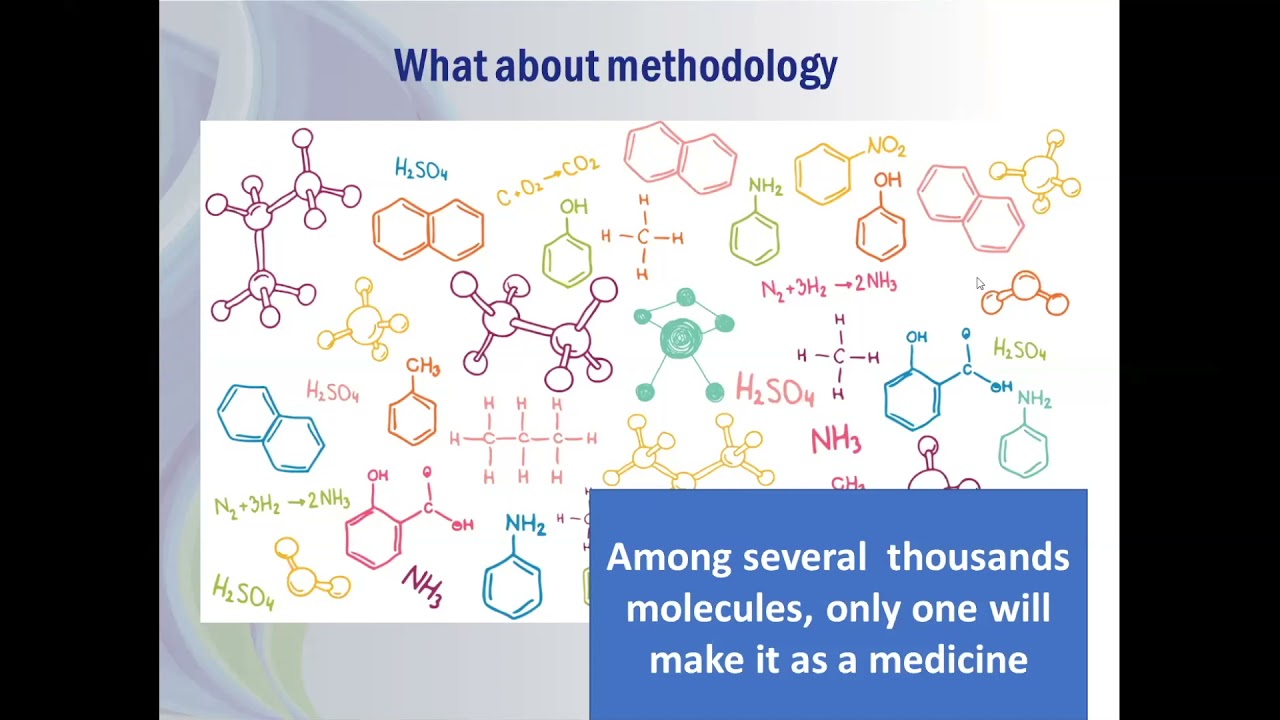
When testing a new drug doctors get a group of sick people give half of them the new drug and give the other have a fake pill that does nothing -- but which they're told is real.
This is how science finds the stuff that works amongst the junk that doesn't.
But new drugs have side effects and sometimes patients drop out of the experiment because of them.
No surprise there.
But some people on the fake *also* drop out from the side effects.
Side effects they've gotten from a drug they *aren't* taking.
But because they *think* they're on the real thing, they've also *thought* themselves into the side effects.
Now maybe this is just a case of misattribution: people get headaches and, if they're joined a drug trial that lists headaches in the side effects, it's natural to blame the new drug -- and that certainly happens to some extent.
But the nocebo effects is more than just misattribution, it causes real, additional harm that scientists can measure in cruel, cruel experiments -- and this is one of the reasons there not an over abundance of research on nocoboes: approach your friendly neighborhood ethics board with an experiment designed to hurt people and they'll frown on that.
But sometimes nocebo experiments do get approved to the benefit of science and humanity, if not the participants.
For example, under the right conditions some people who expect a harmless injection will give them a rash will get a rash, but for people who expect nothing to happen, nothing is exactly what happens.
And fake pills can be additive: take test subjects off pills they believe are addictive and some will experience nocebic withdrawal symptoms -- like pain and fatigue -- from the pills that they could never have been addicted to in the first place.
Another experiment gave people harmless injections, told half of them to just sit there and told the other half that their pain would increase for the next thirty minutes -- which it did.
But in this situation there is a drug that can block the nocebo effect and those who were told the injection would hurt, but were also secretly given the nocebo-blocking drug did *not* report an increase in pain -- showing that the nocebo effect is a real, physical process.
In all these nocebo experiments it's the belief in harm that matters.
If someone dressed as a voodoo witch doctor popped up and hexed you with a curse of great pain -- no effect.
But, in a room with a real doctor and his clipboard and a big science machine and a needle in your arm, you'll take his words rather more seriously.
Which is why doctors say: "This won't hurt a bit" rather than "Oh this?
It's going to hurt.
Like *a lot*." -- which, by the way, was a real experiment done on women undergoing labor during spinal injections.
Guess how that turned out?
But nocebos don't end here.
While illnesses like the flu, spread from contact with disgusting, germ-infected humans and the things they touch with their, disgusting germy hands -- a nocebo spreads from mind to mind, no contact required.
A notable example happened in a Tennessee high school.
One teacher reported a strange smell in her classroom and developed symptoms of headache nausea, and difficulty breathing.
These symptoms spread to some of her students and from them to others in the school.
Almost two hundred people ended up at the local hospital but all medical tests came back with nothing, nor was anything harmful found at the school.
This was a nocebo -- the belief that the air was making them sick -- spread mind to mind.
Everyone who got sick heard about the symptoms from someone else.
When this happens, it's called mass psychogenic illness.
The treatment in these cases is to separate those with symptoms from the rest and reassure the ill that yes, their symptoms are real, but no they haven't been exposed to anything toxic, and yes people are getting better quickly: The last is one of the indicators that separates a real poison gas leak or biological weapon from mass psychogenic illness.
But the final factor, number of cases increasing with greater media coverage, can lead to this kind of thing spreading far and wide.
Take, electrosensitives: people who get nausea (among other things) from exposure to parts of the electromagnetic spectrum, notably WiFi the density of which is increasing over time, forcing particularly bad sufferers to retreat to places like the creepy-sounding radio science zone in, where else, West Virginia.
But put electrosensitives in a room with a WiFi router and they can't actually tell via their symptoms if it's on or off.
Instead their symptoms track with being told if it's on or off.
And if you make a group of people without electrosensitivity watch a news report on how Wifi makes you ill while another group watches something uninformative and afterward expose both groups to a fake Wifi signal only some of those who watched the news report feel sick.
There's a similar phenomenon called 'wind farm disease' with similar side effects, which turns up where it's been talked about on the local news, but not in other places in the same country with the same wind farms where it isn't.
All this makes it too easy to mock people for thinking they're getting sick from WiFi or Wind farms or *Wind farms with WiFi* -- but it's important to realize they're not crazy, the side effects are real, they're just wrong about the source: all evidence points to the belief in electrosensitivy as the cause of electrosensitivity.
Which means the news reports talking about these illnesses are spreading a kind of mind virus.
And while these are exotic examples, there is also evidence that some allergies and asthma cases are nocebic and thus able to be spread in the same way.
To be clear: if someone's having an asthma attack, that's not the time to tell them you know they're being a drama llama because you watched an Internet video about the nocebo effect.
*They're really having an asthma attack* and they *really* need something to make it stop and that's *really* not you showing off your knowledge.
Harmful things aren't harmful just because we believe they are -- the right dose of arsenic will kill you as surely as an anvil to the head, no matter your insistence otherwise.
But the nocebo effect does show that our beliefs about otherwise harmless things can make them harmful.
Which means that our voodoo doctor's hex from before really could work, but only if you were foolish enough to believe him.
Up Next
49:44
Psychology Evolution: Natural Selection, Genetics, and Human Universals
@universityworcester
9.6K views•2019-01-18

68:32
Cognitive Skills for Differentiated Instruction | Teacher PD
@BrainWareLearning
631 views•2017-12-17

9:55
Thinking, Fast and Slow: Daniel Kahneman Animated Book Summary
@FightMediocrity
2.3M views•2015-06-05
18:15
Why Breaking the Fourth Wall Feels So Unsettling | Psychology
@DarylTalksGames
8.6M views•2020-04-18
Related Study Plans & Knowledge Roadmaps
Structured learning paths in Psychology
psychology
Neuroscience of Creativity: Networks & Training
01Foundations of Creative Cognition
02The Cognitive Neuroscience of Insight & Fixation
03The Triple Network Model of Creativity
+ 1 more learning modules
15h4 modules
Explore Roadmap
psychology
Imposter Syndrome: Etiology & CBT Framework
01Defining the Imposter Phenomenon
02Socio-Developmental Etiologies
03CBT Fundamentals & Thought Distortions
+ 2 more learning modules
15h5 modules
Explore Roadmap
psychology
Adult ADHD: Executive Dysfunction & Scaffolding
01Neurobiology of the ADHD Brain
02The Core Triad of Executive Deficits
03Executive Dysfunction and Emotional Regulation
+ 2 more learning modules
12h5 modules
Explore Roadmap
psychology
Loneliness: Evolution, Neurobiology & CBT
01Evolutionary Origins of Human Connection and Loneliness
02The Neurobiology and Physiology of Chronic Loneliness
03Maladaptive Social Cognition: The Psychological Loop
+ 2 more learning modules
12h5 modules
Explore Roadmap