Parasocial Relationships (Psychology & CBT)
Learning Goal: Deconstruct the psychological mechanisms of parasocial relationships in modern digital spaces—specifically investigating attachment theory, identification, and the illusion of intimacy—and design a cognitive-behavioral framework to help media consumers establish healthy digital boundaries and balance virtual connections with real-world relationships.
- Prerequisites: None. A basic understanding of social media platforms (YouTube, Twitch, Instagram) is helpful.
- Estimated Study Time: 14 hours
Module 1: Foundations of Parasocial Interaction
This module introduces the foundational definitions, history, and structural characteristics of parasocial relationships (PSRs). You will trace the origins of the term from its initial formulation in the 1950s context of mass television broadcasting to its modern manifestation in highly interactive digital ecosystems.
Why this video: This video offers an academic yet accessible introduction to the psychology of parasocial relationships, connecting them explicitly to developmental stages in adolescents. It explains the baseline mechanics of why humans form unilateral bonds with media figures and clarifies how these bonds historically served as normal components of identity formation, while highlighting modern risks when they displace real-world connections.

Why this video: Despite the financial title, this short excerpt contains critical historical context for media psychologists. It highlights that the concept of "parasocial interaction" was originally coined in 1956 by sociologists Donald Horton and Richard Wohl. They observed how early television personalities used direct gaze, conversational speaking styles, and informal staging to establish a simulated, one-sided conversational partnership with audiences at home.

Why this video: This video decomposes the neurological and psychological illusion of unilateral intimacy. It highlights how the human brain struggles to structurally distinguish between face-to-face real-life interactions and mediated social interactions, explaining why we experience genuine emotional distress when online creators face hardships or go offline.
Gap Acknowledgment & Independent Study
While the selected videos introduce Horton & Wohl’s 1956 work, the video pool lacks a comprehensive documentary tracing the evolution of parasocial interaction through the era of 1990s talk shows and early 2000s forums.
- Recommended Search Query:
"history of parasocial interaction Donald Horton Richard Wohl" - Recommended Search Query:
"evolution of media fandom from television to web 2.0"
Knowledge Checkpoint
- Define "parasocial interaction" (PSI) versus "parasocial relationship" (PSR).
- Identify Donald Horton and Richard Wohl's 1956 hypothesis regarding how television performers manipulate physical staging to simulate proximity.
- Explain why the human limbic system struggles to distinguish mediated representations from actual face-to-face social encounters.
Module 2: Attachment Theory and Media Identification
This module investigates how developmental psychology—specifically John Bowlby’s Attachment Theory—influences modern digital consumption. You will analyze how secure, anxious, and avoidant attachment styles dictate how media consumers form psychological bonds with virtual personas.

Why this video: To understand how attachment styles map onto parasocial relationships, you must first master the clinical baseline of infant and adult attachment. This video outlines the developmental origins of secure, anxious, and avoidant attachment styles, showing how early parental responsiveness models adult relational expectations.

Why this video: This is a crucial academic video that directly bridges attachment theory and parasocial interaction. It explains that individuals with insecure attachment styles (specifically anxious-ambivalent) are significantly more prone to forming intense, obsessive parasocial bonds. Because these bonds are entirely unilateral, they present zero risk of rejection or abandonment, making them highly attractive substitutes for real-world intimacy.
Why this video: This news segment provides a helpful summary of how early developmental psychology informs adult behavior. It discusses the four primary attachment styles, illustrating how early parental neglect or inconsistency translates to emotional hyper-vigilance or complete avoidant isolation in later life.
Gap Acknowledgment & Independent Study
The video pool has a minor gap in describing "wishful identification" (where a consumer models their behavior and identity entirely on a fictional persona or influencer).
- Recommended Search Query:
"wishful identification parasocial relationships media psychology" - Recommended Search Query:
"how anxious attachment style predicts parasocial intensity"
Knowledge Checkpoint
- Describe the differences in how an anxious-attached person and an avoidant-attached person consume social media.
- Explain why a one-sided parasocial relationship is psychologically "safe" for someone with a profound fear of interpersonal rejection.
- Identify the core developmental factors that lead to insecure adult attachment styles.
Module 3: The Illusion of Intimacy in Modern Digital Spaces
This module deconstructs the economic and algorithmic engineering of modern platforms (Twitch, Patreon, YouTube). You will examine how live-chat interactions, customized notifications, direct monetization options, and algorithmic loops are deliberately calibrated to simulate mutual, reciprocal friendships.

Why this video: This is a definitive case study in parasocial boundary setting. Top streamer Ludwig Ahgren addresses his audience directly to break down the illusion of mutual friendship. He explains how streamers curate highly relatable, direct-to-camera personas for thousands of hours, while structurally processing their audience as a collective "faceless chat" rather than a set of personal friends.

Why this video: This clip provides a breakdown of why livestreaming generates high-frequency parasocial bonds compared to traditional television. It analyzes the role of: (1) real-time, low-latency viewer interaction; (2) unedited, long-form live content that simulates authentic presence; and (3) systematic, tier-based financial support models that leverage the user's desire to feel noticed.

Why this video: A stark, real-world look at how the monetization of loneliness operates in streaming ecosystems. It highlights how viewers often believe that donating financial gifts will bypass the digital barrier and buy them genuine, individualized affection from a creator, creating a transactional cycle that exploits the viewer's real-life isolation.

Why this video: This video provides extreme case studies of parasocial relationships escalating into celebrity stalking, real-world harassment, and boundary violations. It illustrates what happens when the digital illusion of intimacy collapses and individuals attempt to force their unilateral mental models into physical, reciprocal reality.
Gap Acknowledgment & Independent Study
While these videos illustrate stream dynamics and stalking cases, a deeper algorithmic breakdown of modern recommender engines and push notification loops is recommended for independent study.
- Recommended Search Query:
"how notifications exploit dopamine pathways in parasocial behavior" - Recommended Search Query:
"the economic model of Twitch bits superchats and loneliness"
Knowledge Checkpoint
- Explain how "direct-to-camera" framing and unedited live content simulate physical proximity and authentic social cues.
- Detail the transactional loop of stream donations: how do financial transactions buy the illusion of interpersonal influence?
- Contrast how a content creator views their "audience" in aggregate versus how an individual viewer interprets their customized, one-on-one digital feed.
Module 4: Cognitive-Behavioral Frameworks for Media Use
This module shifts the focus to clinical interventions. You will master the fundamentals of Cognitive Behavioral Therapy (CBT) and learn how to identify, dispute, and restructure digital cognitive distortions (such as personalization, emotional reasoning, and mind reading) that lead to virtual over-investment.

Why this video: This video introduces the core therapeutic framework of CBT. You will study how automatic thoughts drive emotional responses, which in turn dictate maladaptive behaviors. Understanding this cognitive-behavioral triangle is crucial before you can begin applying cognitive restructuring to digital habits.

Why this video: A comprehensive masterclass detailing ten common cognitive distortions. In this module, you will focus on how these distortions apply to parasocial relationships—for example, how "emotional reasoning" ("I feel so close to this creator, so they must feel close to me") and "mind reading" ("The creator looked disappointed in their video, they must need my personal help") distort digital realities.
Why this video: This video introduces the highly practical ABCDE model of Cognitive Behavioral Therapy (Activating event, Beliefs, Consequences, Dispute, Effectiveness). You will use this framework to map out situations where digital triggers (e.g., an influencer announcing a personal break) lead to dysregulated behavioral consequences.
Knowledge Checkpoint
- Define the cognitive-behavioral triangle (Thoughts, Feelings, Behaviors) and explain how it drives digital consumption habits.
- Identify and define three digital cognitive distortions: Emotional Reasoning, Mind Reading, and Personalization.
- Outline the five stages of the clinical ABCDE model.
Module 5: Designing Digital Boundaries & Reclaiming Real-World Connections
In this final, action-oriented module, you will assemble the tools and strategies acquired throughout the course to design a personalized digital boundary plan. You will practice using CBT worksheets, execute a dopamine baseline reset, and implement behavioral experiments to rebuild offline social skills.
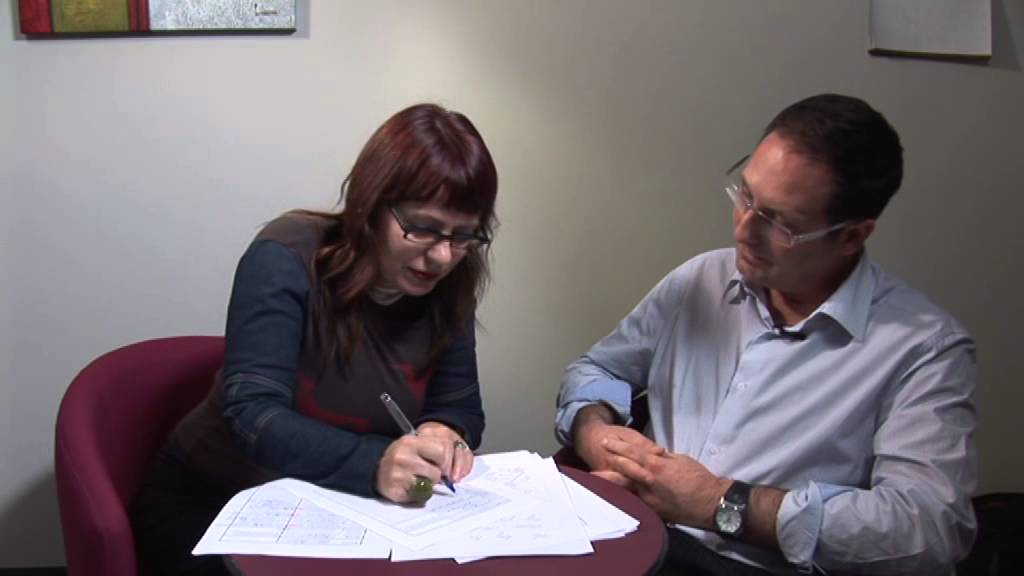
Why this video: This video offers a step-by-step practical guide on how to complete a standard CBT cognitive restructuring worksheet. You will learn how to write down automatic parasocial thoughts, identify their cognitive distortions, compile objective evidence for and against those thoughts, and formulate balanced, reality-grounded alternative thoughts.

Why this video: This video offers a structured methodology for digital boundary creation. You will study practical techniques for the critical first 48 hours of a digital detox, such as establishing phone-free morning routines and implementing physical friction to interrupt automatic social media checking behaviors.

Why this video: This video focuses on the neurobiology of dopamine baseline recovery. It explains how a 24 to 48-hour complete digital screen-time fast begins recovering dopamine receptor density, breaking the immediate neurological dependency on notifications and simulated digital intimacy.

Why this video: This video addresses the reconstruction of real-world relationships. It uses the excellent analogy of comparing social skills to physical muscle fitness: showing that if social skills have atrophied due to digital isolation, they can only be rebuilt through incremental, repeated real-world exposure and physical-presence practice.
Gap Acknowledgment & Independent Study
While the videos introduce dopamine resets and general social skill fitness, step-by-step instructions on designing highly specific offline behavioral experiments are limited.
- Recommended Search Query:
"CBT behavioral experiments for social anxiety and isolation" - Recommended Search Query:
"systematic desensitization for rebuilding offline friendships"
Knowledge Checkpoint
- Map an automatic parasocial thought (e.g., "I need to donate to this streamer's fundraiser or they won't be able to pay rent") using a standard CBT worksheet.
- Explain how a 48-hour screen-time fast impacts human dopamine receptor density and baseline sensitivity.
- Formulate a progressive behavioral exercise to build real-world social "muscles" in your local community.
Course Map
Key People Index
- Donald Horton & Richard Wohl (1956)
- Context: The pioneering sociologists who first observed and theorized "parasocial interaction" (PSI). They investigated how the technical staging of early television created an artificial sense of reciprocal intimacy between performers and audiences.
- John Bowlby (1907–1990)
- Context: The British psychologist and psychoanalyst who developed Attachment Theory. He mapped how early childhood relationships with primary caregivers create cognitive models of human attachment that persist into adult relational behaviors.
- Dr. Aaron Beck (1921–2021)
- Context: The American psychiatrist regarded as the father of Cognitive Behavioral Therapy (CBT). He identified the systemic role of cognitive distortions in psychological distress and pioneered cognitive restructuring techniques.
Final Self-Assessment
Complete this comprehensive self-assessment to verify your mastery of the curriculum:
- I can clearly define the structural difference between a unilateral parasocial relationship and a bilateral, reciprocal real-world relationship.
- I can trace the historical origins of parasocial research from Horton and Wohl's 1956 TV study to today's interactive digital platforms.
- I can identify the four primary attachment styles (secure, anxious-preoccupied, dismissive-avoidant, fearful-avoidant) and explain how they influence digital habits.
- I can explain why individuals with an anxious attachment style are statistically more prone to forming intense, obsessive parasocial bonds.
- I can list three design features (such as notifications, livestream chat, sub goals, or Patreon tiers) that platforms utilize to commercially monetize human loneliness.
- I can identify three cognitive distortions (Emotional Reasoning, Personalization, Mind Reading) when they manifest in my personal thoughts about online creators.
- I can explain the mechanics of the CBT triangle, detailing how digital automatic thoughts directly dictate physical screen-time behaviors.
- I can successfully execute a five-step ABCDE model worksheet to challenge an irrational automatic thought regarding a media figure.
- I can outline a realistic 48-hour dopamine reset protocol, including specific methods to introduce physical friction to phone use.
- I can design a progressive, real-world behavioral experiment to practice face-to-face social skills and build offline relationships.