






![KADIN YAYINCI OLMA SİMÜLATÖRÜ - [Chilla's Art] Parasocial](https://i.ytimg.com/vi_webp/pwU3eXU-4kc/maxresdefault.webp)













Social media platforms exploit fundamental brain mechanisms including dopamine prediction errors, variable reward schedules, and parasocial intimacy cues to create addictive 'goon trance' states, where users experience perpetual desire without satisfaction through engineered content that triggers emotional arousal and mimics real intimacy, ultimately reinforcing isolation rather than curing loneliness.
Social Media Dopamine Loops: The Neuroscience of Gooning
Added:The basic neurobiology of dopamine, specifically its role as a neurotransmitter governing motivation, anticipation, and reward rather than just pleasure.
The concept of Reward Prediction Error (RPE) and how unexpected rewards trigger stronger dopamine releases than expected ones.
An understanding of parasocial interaction, where media consumers form one-sided psychological bonds with digital creators or online personas.
The fundamentals of operant conditioning, particularly how variable-ratio reinforcement schedules sustain repetitive behaviors.
The neurobiology of recovery and neuroplasticity, studying how the brain restores receptor sensitivity after chronic overstimulation.
Persuasive design and 'attention economy' ethics, analyzing the specific algorithms and UI/UX 'dark patterns' used to maximize user engagement.
The long-term cognitive impacts of digital media consumption on working memory, deep focus capacity, and sustained attention span.
Clinical interventions and behavioral therapies (such as Cognitive Behavioral Therapy or mindfulness-based habit reversal) designed to treat digital and behavioral addictions.
327.7K views21.7Klikes22:10Original Release: 2025-11-06
If you're a normal red-blooded American, your Instagram feed is probably a healthy blend of racism and car crash videos. But if it seems like every other real features one or more half- naked 20something girls shaking what their mamas gave them, you might just be a stage one gooner or maybe a pre-gooner.
I'm not a doctor. When algorithms switched from followerbased feeds [music] to what sells, the digital attention economy shifted forever. And if there's one major rule in marketing, it's [music] that sex sells. But this isn't just about spicy sites being more accessible than ever. This is now about the safe for work content that we consume every day. Your social media feed has become a prolonged subconscious goon session and the centers of our brain dedicated to intimacy have been hacked and productized. It's time to get our hands dirty and take a look at the goon economy. Hi there. I'm a chronically online cognitive scientist and software product developer who specializes in human computer interaction in the world of intimacy.
This channel is dedicated to how technology is rewiring connection, attention, and identity. We have a lot to cover, so make sure you subscribe if you like this kind of content. And let's get into the video. Oh, and if you're my mom, dad, or equivalent elder in my life, this video is not for you. You can go now. Bye. So, what is gooning? I saw it on social media. Instagram posts of pretty girls with captions like, >> "You're a gooner, aren't you?"
>> Although I was certainly not the target demographic, I swear I only read Playboy for the articles, my feed does relate to a lot of what I study, including the loneliness epidemic and how technology is solving or exacerbating it.
Exasturbating, which happens to make my algorithm functionally identical to a recently divorced middle-aged man with a bit too much time on his hands. Simply put, Gooning originally referred to prolonging the euphoric state before quite frankly, I'm already feeling so awkward about this without all the science jargon to soften the blow that I bet a cat would do a better job explaining it.
>> Mooney explained by cats. Kitty lies in bed. Phone glowing. Kitty scrolls Instagram. Little kitty [music] appears.
Bikini only. Kitty eyes wide. Kitty brain melting. Kitty sneaks to CatHub.
Videos. More videos. Kitty playing with tuna. Minutes pass. Kitty forgets time.
Eyes glazed. Tail twitching. This is [snorts] >> The term originated on online forums like 4chan and Reddit in the early 2010s where communities formed around this practice as a form of extended pleasure- seeeking behavior. The key here is the translike state. People describe losing track of time, being completely absorbed, chasing that next hit without ever quite reaching satisfaction. It's a loop, an endless dopaminefueled loop.
But but here's the twist. That same physiological loop, that translike state is baked into our short form media feed, even without us going to the hub and not GitHub. Think about it. Have you ever opened Tik Tok or Instagram reels just for a second and then suddenly it's 45 minutes later and you don't even remember what you watched? That's the goon state. Just with your clothes on and in public. Social media algorithms models work just like this. The more time and attention you spend on a post, especially beyond the 3se secondond mark, and the more you engage with or send that silly, slightly dirty thing to your friends as a joke, the algorithm will promote that content to both you and other people who fit similar psychographic consumption profiles. It's called personabased filtering, and it's scarily accurate. Although we're not voluntarily engaging in a sexual or explicitly intimate act, we're exchanging our time and attention for this service and Instagram use what's called a recommendation system powered by collaborative filtering and neural networks. Every second you watch, every rewatch, every hesitation before swiping, it's all data. The algorithm doesn't care about who you follow anymore. It cares about what keeps your eyes glued. And what keeps our eyes glued? the promise of intimacy, novelty, and sexual suggestion. Recommendation algorithms amplify content that triggers emotional arousal because it increases time spent on the app, the holy grail metric for these platforms. More time and attention equals more revenue. It's that simple. The intimacy script in short form content looks like this. Eye contact crops, close body framing, rhythmic loops, >> just two lonely gooners staring at each other, never to break eye contact, forming a close, tight-knit digital bond.
[music] [music] >> You think you're just watching content, but you're actually in a dopamine driven trans state. the same one Gooners describe, just trigger differently.
Let's do a thought experiment. Take a freeze frame from one of these pieces of content and imagine putting that same person in the same clothes doing the same thing in the room that you're in right now. Maybe you're home alone.
Maybe you're at work, on a bus, or in a car. If that suggestive person was physically in front of you, you'd be expecting mental and physical arousal that would cyclically feed off of one another and potentially lead to which would satisfy your biological urge to reproduce. This is our basic programming for existence. Your subconscious mind takes the bait, but there is no other person to bounce this energy off of. So, you swipe to the next one and the next and the next, chasing that feeling. Never really satisfied.
Just like gooning, except you're scrolling instead of well, you know. So, some historical context on all of this biological hacking. Now, none of this is new. In the 1900s, there was the food hack. Calorically dense food became mass producible. Before this, humans evolved in environments of scarcity. Our brains are wired to seek out sugar, fat, and salt because they were rare and meant survival. Then, we figured out how to make Coca-Cola and donuts. The result, an obesity epidemic.
Between 1960 and 2000, obesity rates in the US tripled. Studies show that hyper palatable foods, combinations of sugar, fat, and salt, activates the same reward pathways in the brain as addictive drugs, specifically the nucleus, which releases dopamine. We hacked the food system and our bodies paid the price. In the 2010s, we had the attention hack.
Smartphones hacked our mental states.
>> Smartphones had wide reaching changes all over the brain. These are MRI images from a recent study in Korea.
>> Do you want your brain to be this colorful?
>> You don't.
>> Why?
>> Well, because this is showing where the brain is working extra hard compared to a non-addicted brain when asked to do actually a pretty simple task.
>> Addicted smartphone users brains were so colorful, so active it made them less attentive and more easily distracted.
What's now informally called brain rot.
The average person now checks their phone 144 times per day, according to a 2023 study. We hacked attention and our mental health suffered. In the 2020s, we have the intimacy hack. Short form content hacks our need for emotional and sexual connection. Let's talk about parasocial relationships for a second.
In the way that we're using the term here, parasocial relationships refers to the one-sided emotional bond a viewer develops for a content creator. There's a connection here. Even if the parties don't know each other's names, this parasocial dynamic is critical because it mimics real intimacy without any of the actual work or risk of real relationships. Mental social media foreplay, my incredibly academically coined term. Parasocial intimacy cues are designed to mimic real intimate interactions. When someone makes eye contact with the camera, prolonged eye contact, your brain's fusifform face area and superior temporal sulcus activate as if you're making real eye contact. When you hear breathy close mic audio, your brain interprets spatial proximity. This person is close to me. Thank god we can't detect bad breath through screens.
Fun fact, around 50% of adults in the US have heltosis.
the good boy.
Reals are particularly insidious because they're tapping into attachment needs, specifically the need for affirmation and validation that typically comes from romantic or parental relationships.
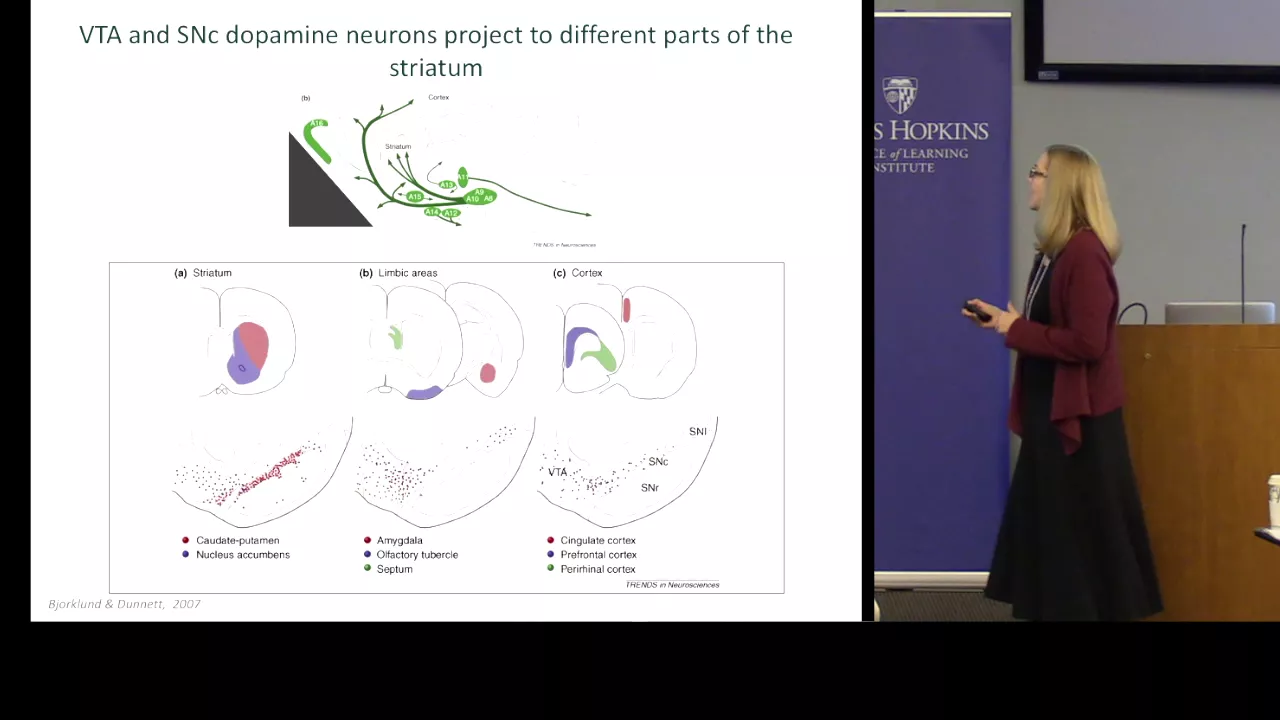
Mommy. Mommy. A 2019 study in computers and human behavior found that parasocial relationships activate the neural circuits just like real social bonds do, particularly in people reporting higher loneliness. So, you're getting the brain chemicals of connection without any actual connection. It's intimacy junk food. Creators are only getting better at creating a convincing faximile of real intimacy. This is parasocial intimacy on steroids. We are now hacking the deepest, most vulnerable parts of human experience. Our need to be seen, wanted, and affirmed. This is harder to talk about than food or phone addiction because, well, it's about intimacy, damn it. And that's weird to talk about addiction are hard enough to discuss, but needing emotional connection from a screen that may be even harder to acknowledge for most people. All right, let's get into the nerdy. How our brains are actually being hijacked and how the trance state works. Our brains run on prediction errors. Dopamine isn't actually the pleasure chemical. It's the anticipation chemical. Wolf from Schultz's famous studies with monkeys in the 1990s showed that dopamine is received not when you get the reward, but when you learn to predict it. Here's how the cycle works. One, micro novelty.
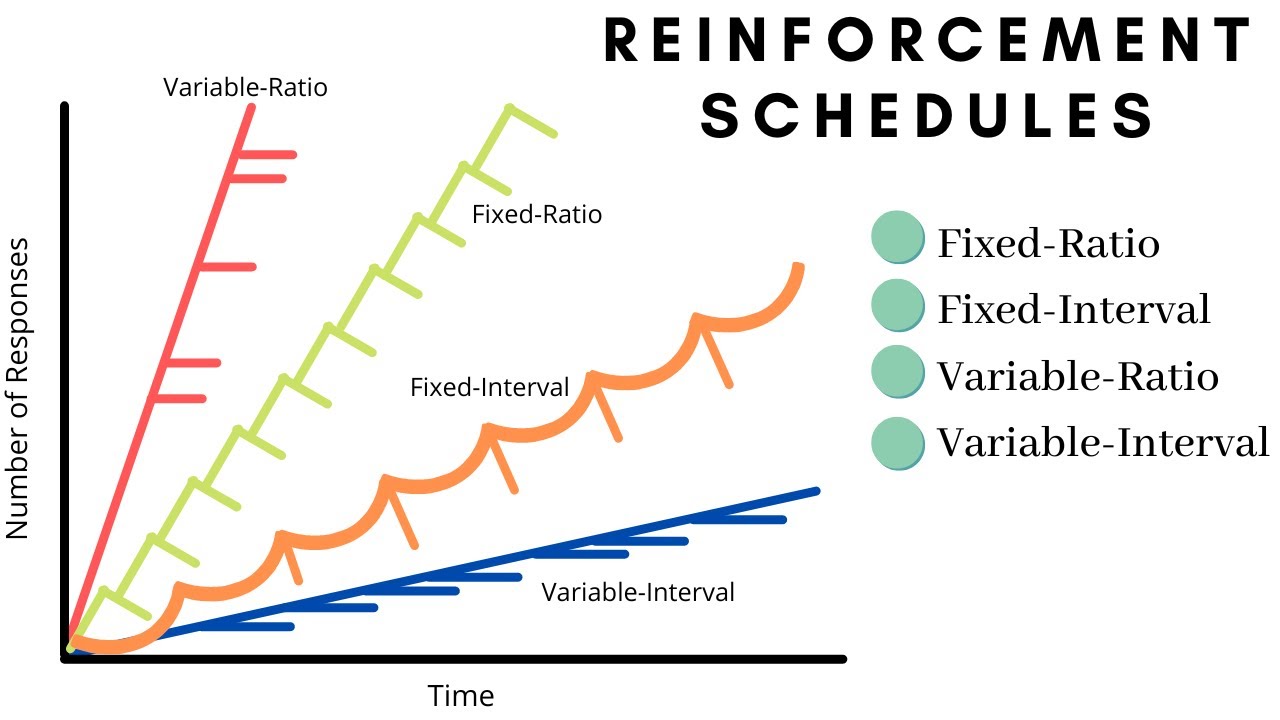
You swipe and see something slightly different. A new face, a new outfit, a new angle, prediction error. Your brain goes, "Oh, what's this?" Three, a dopamine hit. You get a small surge of dopamine. Remember, that's the anticipation chemical, not the reward chemical. Four, baseline creep. After a while, your brain adapts and now needs more novelty to get the same hit. Seeing a girl in a bikini doesn't quite do it anymore. Now she has to be bent over in weird camera angles that make you think funny thoughts. Anidonia. So eventually, after prolonged cycles of this, normal life feels dull because your baseline dopamine threshold is so elevated. Have you ever scrolled for hours and felt absolutely exhausted and empty afterward? This is called hedonic adaptation and it's the exact same mechanism at play in gooning. The trance keeps you chasing but you never actually catch satisfaction. So this infinite scrolling keeps you trapped. These methods of providing content are designed with something very important in mind. Variable reward schedules. If you've had even a basic psychology class, you'll know that BF Skinner figured this out with pigeons in the 1950s. If you reward a behavior randomly, sometimes yes, sometimes no, the behavior becomes incredibly persistent.
>> Now, we'll just watch its behavior a bit. It's not doing anything in particular. You see, >> slot machines use this. Social media uses this. Every swipe might be the one.
the perfect video, the perfect thirst trap, the perfect dopamine hit. So, you keep swiping. But what does this have to do with girls jiggling their lady lumps on the internet? Everything.
Everything. Because the uncertainty is what keeps you locked in the trance. So, why can you scroll for hours without realizing? This is called flow state, but the shitty version. real flow state, like when you're deeply focused on creative work, as shown in that one actually good Disney movie, activates the prefrontal cortex in a balanced way.
[music] >> What is this place?
>> You know how when you humans are really into something and it feels like you're in another place? Feels like you're in the zone, right? [music] >> Yeah.
>> Well, this is the zone. It's the space between the physical and spiritual.
Scroll trance actually suppresses prefrontal activity, which is the part of your brain responsible for a ton of important stuff. Executive functioning, time awareness, and self-control. An fMRI study from 2022 showed that passive social media consumption reduces activity in the dorsal lateral prefrontal cortex, which is literally the I should stop doing this part of your brain. This could be classified as a very important part of your brain, especially if you're, I don't know, touching a hot stove or watching softcore for two hours while sitting on the toilet, which isn't good for you.
Hemorrhoids are not cute. This is the same trans gooners describe time disappears, awareness shrinks, and you're just in it, locked in the loop.
So, desire versus satisfaction. What our brains actually want is satisfaction. I can't get no. But all social media seems to give us is a loop of desire with no end in sight. So this is happening for a few different reasons. One, because the engineers building these platforms have put millions, if not billions of dollars into making sure you're always wanting more, but also because desire and satisfaction actually use different neural pathways. Desire activates the messolympic dopamine pathway, the wanting system, and satisfaction activates the opioid system, the liking system. Short form content is engineered to maximize wanting while minimizing satisfaction. So, you're in a perpetual state of almost almost satisfied, almost fulfilled, but you never really get there. So, you keep scrolling. Sound familiar? That's gooning. That's gooning. That's gooning.
That's the exact same loop. You're just swiping instead of another loop, the loneliness loop. The final nail in the proverbial goon coffin is that all of this reinforces isolation instead of curing it. Because parasocial interaction is junk food for your social brain, like we talked about, it gives you the neural hit of connection without the actual relational nutrients, reciprocity, vulnerability, growth. Your brain thinks it's getting intimacy, so it stops seeking the real thing. We're stuck in a trance thinking we're connected, but we're even more alone than ever. So, the attention economy's role. Let's be clear, social media platforms know exactly what they're doing. Internal documents from Facebook released by whistleblower Francis Hogan showed that the company's own research found that the algorithm amplified the most divisive, emotionally provocative content because it drove up the most usage time. They know they don't really care because it's profitable. Engagement equals time on platform equals ad revenue. The platforms don't create content. They just push out what people want to see. It's easy and popular to [ __ ] on Instagram and Tik Tok, but the reality is that they are companies with a profit motive. So, it's easy to understand why they know, but don't really care. Is there some blame to be placed on creators of this Gooner content? There's a reason women don't walk around on the street in their underwear. We know how men will react.
Why is it suddenly okay to assault the world with sexual imagery when there's no risk of immediate consequence except for and attention? The algorithm amplifies desirebased content because it works.
And your feed isn't neutral. It's been AB tested into oblivion to figure out exactly what makes our monkey brains light up with emotion. Hoohoo. Haha.
We're not weak though. Our biology is being exploited. Tristan Harris, former Google design ethicist, calls this human downgrading.
These are not neutral tools. And it's important for us to understand this.
They're designed by teams of engineers, neuroscientists, and behavioral psychologists whose entire job is to extract maximum attention from you.
You're not failing at willpower. You're up against a multi-billion dollar industry that's literally engineered to bypass your prefrontal cortex. And it's not just social media. Now, another billion-dollar industry has gotten a hold of this psychology, and they're using social media as their primary marketing funnel. Only friends. Ever wonder why OAF detected opinion rejected is so accurate? These creators use this exact psychology hack as their entire marketing strategy. Most of them don't even need to do crazy stunts or buy billboards. They just need to understand your neuroscience and hack your brain through short form content. So, while you thought you were making fun of these demo girls, they're quite literally exploiting the neuroscience of your brain and laughing all the way to the bank. Respect the hustle, I guess. Or don't. I'm conflicted.
Okay. So, what the hell do we do about this? If you want out, awareness is step one. Metacognition, thinking about your thinking, is the first step to breaking automaticity. The more you research this topic, the better. I'd suggest healthy gamer GG here on YouTube. If you're looking for more content like this, his content is amazing. The first step to breaking any cycle is admitting you're in one. So, let's take a moment of silence for all the gooners out there and let's all speak one giant m of unity for those hours lost to social media goon trance two tangible action app limits on short form platforms specifically iOS and Android both have screen time control set a 30 minute daily limit on Tik Tok Instagram reels and YouTube shorts there are many other solutions, but I'm not yet sponsored by them.
Research from the University of Pennsylvania found that 30 minutes or less significantly reduce loneliness and depression. Three, content curation.
Train your algorithm intentionally.
Unfollow creators who bring no value to you. And beyond that, block creators who post content you find stimulating in a way that you don't like. Use that not interested button aggressively. Tell the algorithm you don't want to see this stuff. And if you watch educational content, nature content, hobby content, even if it's less stimulating, the algorithm will adjust. One way I retrained my algorithm recently, I went to an amusement park despite being deathly afraid of roller coasters. And for days before, I went on the platform and watched every POV of every roller coaster in that park. After a few days, my feed changed from programming memes and horny mail content to roller coaster death stories, which was much better.
[screaming] >> Four, replace the dopamine source. Your brain needs novelty and reward. Give it a healthier source. Real conversations, hobbies, my comment section, exercise, creative projects, join a club, take a class, text a friend to hang out in real life, your brain will literally rewire itself. Neuroplasticity is not just an overhyped buzzword. It is one of the realest things we can rely on. Five, digital detox periods. Even 24 to 48 hours off social media can reset your dopamine baseline. Studies show the dopamine receptor density can begin to recover after just a few days of reduced stimulation. If you're staying in the cycle, at least you understand the mechanism. Knowledge is power. So, if you're being manipulated, you can at least make an informed choice. But set some boundaries. Time limits. No phone in the bedroom. No scrolling before bed or first thing in the morning. Protect your sleep and your morning mental state. Acknowledge the trade-off that you're making. You're trading time, attention, and mental health for micro hits of parasocial intimacy. And that's fine. Just be honest with yourself about it. My conclusion, our minds have been hacked. First our physical bodies with food, then our attention with smartphones, and now our need for intimacy [music] and connection via short form video content in the 2020s.
The hardest part, this is taboo, so people [music] suffer in silence. We can talk about our being addicted to phones.
We can barely talk about being addicted to [music] the feeling of being wanted, seen, affirmed, even when it's coming from a screen. I made this video because somebody needs to say it out loud. If this resonated [music] with you, drop a comment. If you're struggling with this, just know that you're not alone. And if you know someone who needs to hear this, send it to them. We can rewire our relationship with technology, but first we have to acknowledge what's happening.
But what do you think? Who's primarily to blame for society scale terminal goonerism? Is it the content creators putting themselves on display for the world? Is it the users who can't just turn their phones off and touch grass?
the platforms themselves for distributing the content. Let me know what you think in the comments. If you watch the whole video, please drop a comment below with the keyword thanks void to let me know. It helps recommend my content to other digital wackadoos like ourselves and gives me a giggle. If this was of any interest to you and you want to keep up to date with this kind of stuff, subscribe. I'll be making weekly videos researching how tech is quietly rewiring what it means [music] to be human. Thanks, CyberNuggets. Your favorite void. Now, get off of your phone or computer and go talk to a real
Up Next
11:33
History of Psychology: From Plato to Behaviorism & Cognitive Science
@ProfessorDaveExplains
347.7K views•2021-11-15

178:38
Whole Brain Architecture: First International Workshop 2024
@thewholebrainarchitecturei9784
640 views•2024-07-22

9:49
FastAPI vs Flask vs Django: Choosing the Right Python Web Framework
@TechWithTim
302.5K views•2024-05-26

1:42
Game of Thrones Opening Credits: A Cinematic Analysis
@gameofthrones
46.3M views•2011-04-18
Related Study Plans & Knowledge Roadmaps
Structured learning paths in General & Interdisciplinary Studies
general-studies
Artificial Light: History, Tech & Human Impact
01The Pre-Electric Era: Fire, Oil, and Gas Lighting
02The Incandescent Revolution and Grid Electrification
03Gas Discharge and Fluorescent Illumination
+ 3 more learning modules
14h6 modules
Explore Roadmap
general-studies
Elevator Engineering: History, Physics & Cities
01From Hoists to Safety Brakes: The Dawn of Vertical Lift
02Hydraulic vs. Traction: The Engineering Physics of Elevators
03Modern Speed, Safety, and Algorithms
+ 2 more learning modules
12h5 modules
Explore Roadmap
general-studies
Rubber: Material Science, History & Geopolitics
01Origins of Natural Rubber & Mesoamerican History
02The Chemistry of Natural Rubber & Vulcanization
03The Geopolitics of the Rubber Boom & Colonization
+ 2 more learning modules
12h5 modules
Explore Roadmap
general-studies
Containerization: Evolution, Logistics & Trade
01Ancient Trade & Bulk Cargo: Amphorae to Barrels
02The Industrial Revolution & Cardboard Packaging
03The Containerization Revolution: Malcom McLean
+ 2 more learning modules
12h5 modules
Explore Roadmap