Adult ADHD: Executive Dysfunction & Scaffolding
LEARNING GOAL Deconstruct the neurocognitive sub-domains of executive dysfunction in Adult ADHD—specifically working memory, cognitive flexibility, and inhibitory control—and formulate a personalized, evidence-based behavioral scaffolding protocol to optimize daily task management and emotional regulation.
- Estimated Total Study Time: 12 Hours
- Prerequisites: None. However, a basic understanding of neurodiversity and biology is helpful.
Module 1: Neurobiology of the ADHD Brain
This module introduces you to the functional neuroanatomy of the ADHD brain. You will learn about key structures, specifically the prefrontal cortex (PFC), and delve into the pathophysiology of neurotransmitter transmission (dopamine and norepinephrine). Understanding these differences helps shift the perspective from a moral failure of "laziness" to a structural and chemical neurodevelopmental variance.
Recommended Videos
Why this video: This concise, high-yield animation provides a clear entry point into the neurochemical basis of ADHD. It demonstrates how shortages and functional imbalances of two key neurotransmitters—dopamine (linked to reward, motivation, and motor control) and norepinephrine (linked to arousal, vigilance, and focus regulation)—prevent neurons in key executive systems from communicating efficiently.
- Knowledge Checkpoint:
- Understand the specific roles of dopamine and norepinephrine in the transmission of neural signals.
- Explain how synaptic reuptake mechanisms differ in an ADHD brain compared to a neurotypical brain.

Why this video: This deep-dive academic lecture traces the origin of dopamine and norepinephrine from deep brain stem structures (such as the ventral tegmental area and the locus coeruleus) to their terminal pathways in the frontal lobes. It delivers a rigorous scientific breakdown of how these dysregulated chemical messengers directly cause the classic presentation of ADHD symptoms.
- Knowledge Checkpoint:
- Identify where dopamine and norepinephrine originate in the deep brain structures.
- Trace the anatomical pathways that carry these neurotransmitters to the prefrontal cortex.
- Articulate how dysregulation at the synaptic cleft translates directly to clinical symptoms of inattention and hyperactivity.
Why this video: This detailed lecture focuses on the prefrontal cortex (PFC), the brain's newest evolutionary region and the command center for executive function. It explains how the PFC coordinates selective attention, working memory, and impulse inhibition, showing how functional hypo-arousal in this region explains why individuals with ADHD struggle to direct their focus at will.
- Knowledge Checkpoint:
- Describe the primary location and evolutionary significance of the prefrontal cortex (PFC).
- Detail the executive tasks governed by the PFC, including working memory and selective attention.
- Describe what happens functionally inside the PFC during periods of task initiation and cognitive strain.
Module 2: The Core Triad of Executive Deficits
This module breaks down the "triad" of executive impairments: Working Memory, Inhibitory Control, and Cognitive Flexibility. You will learn to recognize how deficits in these distinct sub-domains manifest as daily operational struggles.
Recommended Videos

Why this video: This video establishes the foundational framework of the core executive functions. It introduces the primary domains of working memory (holding and manipulating information), inhibitory control (the ability to resist impulses or distractions), and cognitive flexibility (shifting rules or perspective).
- Knowledge Checkpoint:
- Define the three core pillars of executive function.
- Contrast how typical working memory capacity limits (typically holding several items) differ from the reduced capacity seen in ADHD.
Why this video: This short video highlights the mechanism of response inhibition, which is the brain's ability to halt a planned physical or emotional reaction. It introduces the role of the Anterior Cingulate Cortex (ACC) and explains how an impaired inhibitory "brake system" leads to instant, unchecked behavioral responses.
- Knowledge Checkpoint:
- Explain the concept of response inhibition and its role in self-regulation.
- Describe the neurocognitive function of the Anterior Cingulate Cortex (ACC) in mediating behavioral brakes.

Why this video: This video demystifies working memory—the mental scratchpad that keeps goal-relevant rules and sequences active in our awareness. It explains why individuals with ADHD struggle to hold onto instructions and execute complex multi-step tasks when hit with minor sensory distractions.
- Knowledge Checkpoint:
- Explain how working memory acts as the brain's "mental workspace" during goal-directed tasks.
- Understand why distractions cause an immediate wipe of short-term memory traces in the ADHD brain.
Recommended Independent Study & Gaps
CRITICAL GAP NOTE: High-quality videos detailing adult-focused cognitive flexibility techniques are scarce. To bridge this gap, focus your independent learning on Cognitive Behavioral Therapy (CBT) paradigms.
- Suggested Search Terms:
"Cognitive flexibility training for adults with ADHD","Cognitive switching and set-shifting in adult ADHD", and"ADHD cognitive rigidity coaching strategies".
Module 3: Executive Dysfunction and Emotional Regulation
Emotional dysregulation is not just a secondary symptom of ADHD; it is directly rooted in the core triad of executive deficits. This module explores how an impaired prefrontal cortex fails to inhibit emotional responses generated by the amygdala, leading to rejection sensitivity, frustration intolerance, and sudden emotional storms.
Recommended Videos
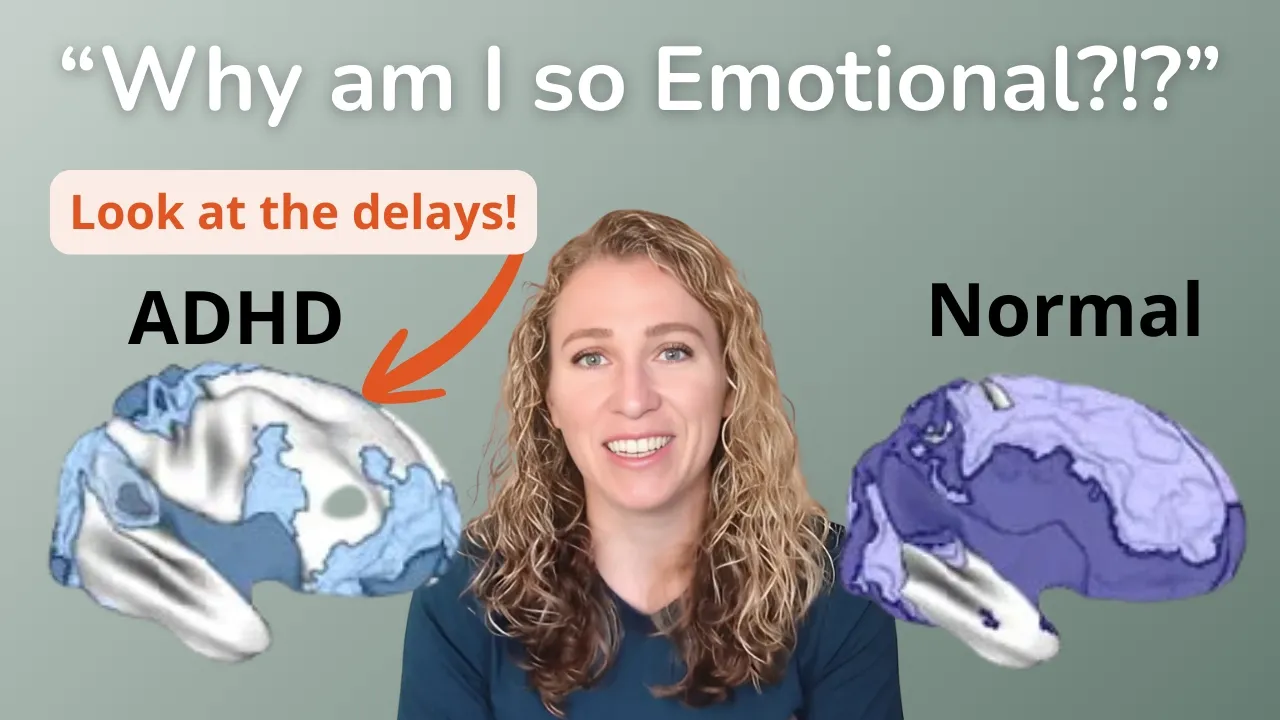
Why this video: This clinical video maps the neurobiology of ADHD-related emotional dysregulation. It details the dialogue between the amygdala (emotional generator) and the prefrontal cortex (emotional governor). It demonstrates that ADHD is an emotional regulation deficit where the brain struggles to turn down the volume of emotional responses.
- Knowledge Checkpoint:
- Explain the physiological dynamic between the amygdala and the prefrontal cortex.
- Name at least three skills (e.g., physiological grounding, explicit labeling) used to restore prefrontal control over an overactive amygdala.
- Differentiate between normal emotional experiences and executive-deficit-driven emotional storms.

Why this video: This video introduces concrete, somatic rescue steps to manage emotional hyper-arousal. It details the "TIPP" protocol from Dialectical Behavior Therapy (DBT), demonstrating how physical changes like cold temperature exposure or paced breathing can manually reset an over-stimulated autonomic nervous system.
- Knowledge Checkpoint:
- Define the acronym TIPP (Temperature, Intense exercise, Paced breathing, Paired muscle relaxation).
- Explain the physiological mechanism of using cold water to trigger the mammalian dive reflex and reduce acute emotional distress.
Why this video: An extensive presentation showing how Dialectical Behavior Therapy (DBT) acts as an external scaffolding system for emotional processing. It outlines the core DBT modules—Mindfulness, Distress Tolerance, and Emotion Regulation—and shows how to adapt these structured steps to manage ADHD-specific emotional vulnerability.
- Knowledge Checkpoint:
- Understand the four core training modules of Dialectical Behavior Therapy (DBT).
- Describe how distress tolerance acts as a conscious buffer when immediate impulse inhibition fails.
- Explain how to systematically apply the "Check the Facts" skill when experiencing rejection-sensitive thoughts.
Module 4: Behavioral Scaffolding: Externalizing Executive Functions and Time
Because the ADHD brain cannot rely on internal working memory and time perception, these processes must be externalized. This module teaches you the science of behavioral scaffolding—building structures in your physical environment to offload cognitive strain, manage time blindness, and trigger action at the point of performance.
Recommended Videos
Why this video: In this classic lecture segment, Dr. Russell Barkley lays out the foundational principle of ADHD rehabilitation: internal representations must be externalized. If working memory cannot hold onto ideas, those ideas must be physically represented in the immediate environment at the exact point of performance.
- Knowledge Checkpoint:
- Define what "externalizing information" means in the context of Dr. Russell Barkley’s work.
- Identify physical mediums (cards, signs, dynamic displays) that can offload internal working memory demands.
- Explain why internal motivation strategies (e.g., "trying harder next time") consistently fail without external scaffolds.
Why this video: Dr. Ari Tuckman details the neurology behind "time blindness," demonstrating how executive dysfunction diminishes an individual's ability to naturally perceive and project the passage of time. He shows that time-management tools must make time visible to be effective.
- Knowledge Checkpoint:
- Explain why time is an abstract concept that is difficult for the ADHD brain to track.
- Describe the difference between "Now" and "Not Now" time horizons.
- Identify strategies to convert abstract time intervals into visible, spatial representations (e.g., analog clocks, sweep timers).

Why this video: This practical, home-tour-style video demonstrates how behavioral scaffolding theories translate into physical environmental design. It highlights visual-first storage, accessible "launchpads" at doors, clear labeling, and strategies to minimize daily decision fatigue.
- Knowledge Checkpoint:
- Design a functional "launchpad" to eliminate transition friction when leaving the house.
- Apply the "out of sight, out of mind" rule of ADHD to object organization (using clear bins, open shelves).
- Explain how reducing physical friction points lowers the overall executive demand of daily tasks.
Why this video: Dr. Barkley returns to emphasize the clinical reality that ADHD is not a knowledge disorder—it is a point-of-performance execution disorder. He explains why standard productivity hacks fail and provides a framework for building external structures around five major executive domains.
- Knowledge Checkpoint:
- Contrast a "knowledge deficit" with a "point-of-performance deficit."
- Outline the five areas of executive functioning that must be systematically externalized using technology or physical setups.
Recommended Independent Study & Gaps
CRITICAL GAP NOTE: While design and workspace hacks are helpful, they often lack deep cognitive system analysis. Focus your independent study on the formal cognitive theory of "distributed cognition" and "extended mind theory" as they apply to clinical ADHD therapy.
- Suggested Search Terms:
"Russell Barkley externalizing working memory lecture full","Extended mind theory ADHD cognitive scaffolding academic".
Module 5: Personalized Protocol: Task & Emotion Management
In this final module, you will synthesize everything you have learned to build your own personalized, daily operational protocol. You will combine executive-friendly task-management systems with somatic emotional rescue strategies to create a balanced, sustainable routine.
Recommended Videos
Why this video: This quick guide introduces six principles to minimize friction in daily routines. It emphasizes keeping resources within immediate reach, reducing steps to initiate tasks, and using physical visual cues to prompt actions automatically.
- Knowledge Checkpoint:
- List six design rules to minimize cognitive friction during task initiation.
- Analyze a daily point of failure in your routine and identify a physical visual cue that can address it.
Why this video: A structured overview of seven Dialectical Behavior Therapy (DBT) skills adapted specifically for ADHD adults. This video shows how to transition from high-energy emotional states back into focused work, bridging emotional regulation and daily productivity.
- Knowledge Checkpoint:
- Use physical movement to discharge high-arousal emotional energy.
- Describe the process of using structured distraction safely to prevent chronic task avoidance.
- Integrate sensory regulation steps into your workspace to manage overwhelm.
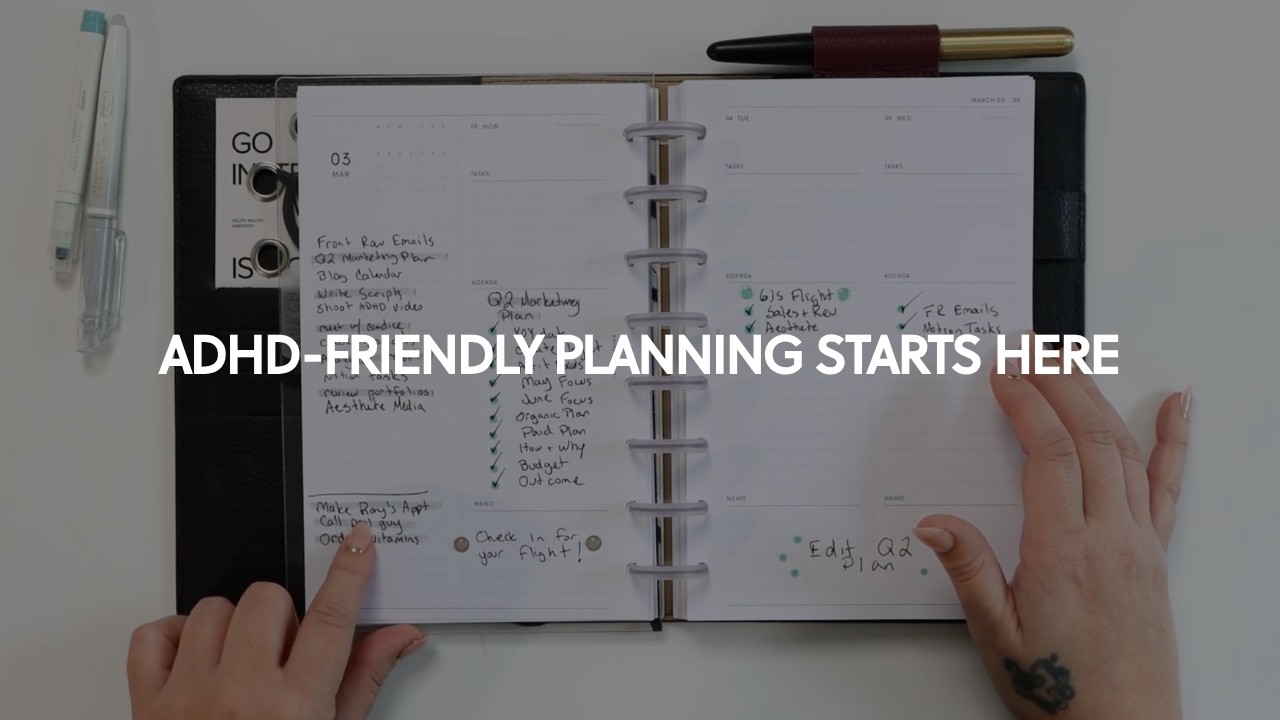
Why this video: This short video demonstrates the "Task Snowball" system, a highly effective visual planning method designed for ADHD brains. By rolling tasks over and collecting them in a single, master list, this approach prevents tasks from slipping out of sight while reducing the anxiety of daily planning.
- Knowledge Checkpoint:
- Explain how the "Task Snowball" approach prevents tasks from getting lost.
- Outline how to handle uncompleted tasks without shame or guilt.
Why this video: This digital-focused walkthrough shows how to build an external memory system using tools like Toodledo and Notability. It highlights critical features needed in any ADHD-friendly tool, such as hiding future tasks to reduce clutter, handling automatic task rollovers, and maintaining a single, unified inbox.
- Knowledge Checkpoint:
- Set up a digital inbox that acts as your single source of truth for incoming tasks.
- Configure task-filtering settings to show only "due today" or "overdue" tasks, preventing choice paralysis.
- Map out your daily step-by-step protocol, detailing when to capture tasks and how to prioritize them.
Recommended Independent Study & Gaps
CRITICAL GAP NOTE: Most task management videos show templates but lack clinical guidance on personalizing them. To build a highly effective protocol, look into ADHD coaching clinical guides.
- Suggested Search Terms:
"ADHD coaching step-by-step daily protocol template","CBT ADHD daily planning sequencing workbook clinical".
Course Map
This map outlines the recommended learning path and dependencies for this curriculum:
Key People Index
| Practitioner / Researcher | Primary Contribution | Context / Clinical Focus |
|---|---|---|
| Dr. Russell A. Barkley | Response Inhibition Theory | A leading clinical researcher who reframed ADHD as a primary deficit in executive function and response inhibition, highlighting the critical need to externalize support structures. |
| Dr. Ari Tuckman | Time Blindness | Clinical psychologist specializing in how impaired working memory alters an individual's perception of time, developing strategies to make time visible. |
| Dr. Thomas E. Brown | Cognitive Underpinnings of ADHD | Clinical psychologist who conceptualized ADHD as a complex developmental impairment of the brain's cognitive management system. |
| Dr. Marsha Linehan | Dialectical Behavior Therapy (DBT) | Developed DBT; her structured skills for emotional regulation, distress tolerance, and mindfulness have been successfully adapted to treat executive dysfunction in ADHD. |
Final Self-Assessment
Complete this comprehensive self-assessment to evaluate your integration of the curriculum material:
- Neurochemical Mechanics: Can you explain how dopamine and norepinephrine deficiencies in the prefrontal synaptic cleft directly cause difficulties with attention and impulse control?
- Structural Differences: Can you describe the functional role of the prefrontal cortex and anterior cingulate cortex in self-regulation?
- Triad Definitions: Can you define the operational differences between working memory, response inhibition, and cognitive flexibility?
- Identifying "Time Blindness": Do you understand the neurological basis of time blindness, and can you recognize when you are experiencing it?
- The "Point of Performance": Can you explain the difference between a knowledge deficit and an execution deficit, and why traditional productivity advice often fails for ADHD?
- Scaffolding Design: Have you set up at least one physical or digital scaffold (e.g., a "launchpad" or a "single-inbox system") to offload working memory?
- Time Visibility: Have you integrated a visual, spatial time-tracking tool (like an analog clock, sweep timer, or a visual planning page) into your workspace?
- Emotional Regulation Physiology: Can you explain how the amygdala and prefrontal cortex interact during an emotional storm?
- Somatic Rescue Practice: Do you know how to apply the DBT TIPP skills (such as temperature exposure or paced breathing) to calm emotional hyper-arousal?
- Protocol Synthesis: Have you created a daily task-management protocol that filters out future distractions, handles rollover tasks cleanly, and places key visual cues at your point of performance?