















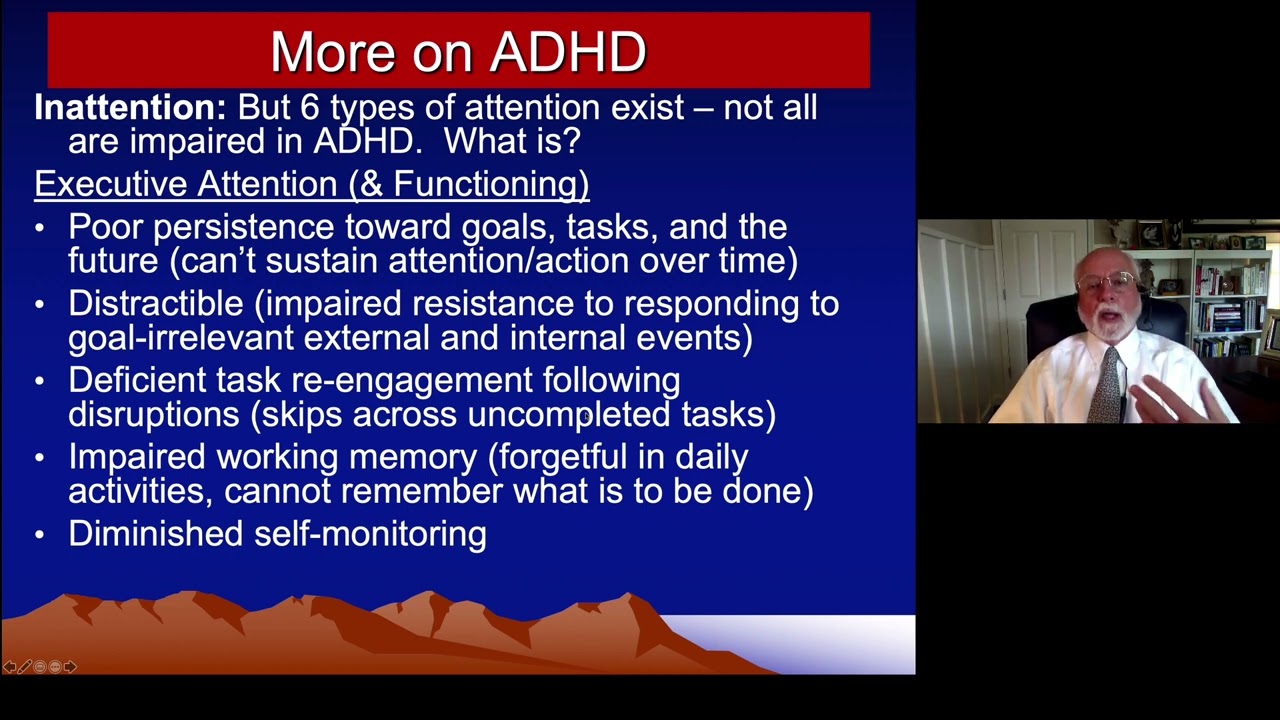









ADHD is fundamentally an executive functioning deficit disorder characterized by impaired self-regulation, where individuals struggle with self-awareness, inhibition, working memory, emotional control, motivation, and planning; this condition involves a developmental delay in the prefrontal cortex and related brain networks, causing approximately a 40% reduction in future-oriented thinking capacity, which explains why adult ADHD is considered one of the most impairing psychiatric conditions affecting time management and life outcomes.
Understanding ADHD with Russell Barkley: Executive Functions & Beyond
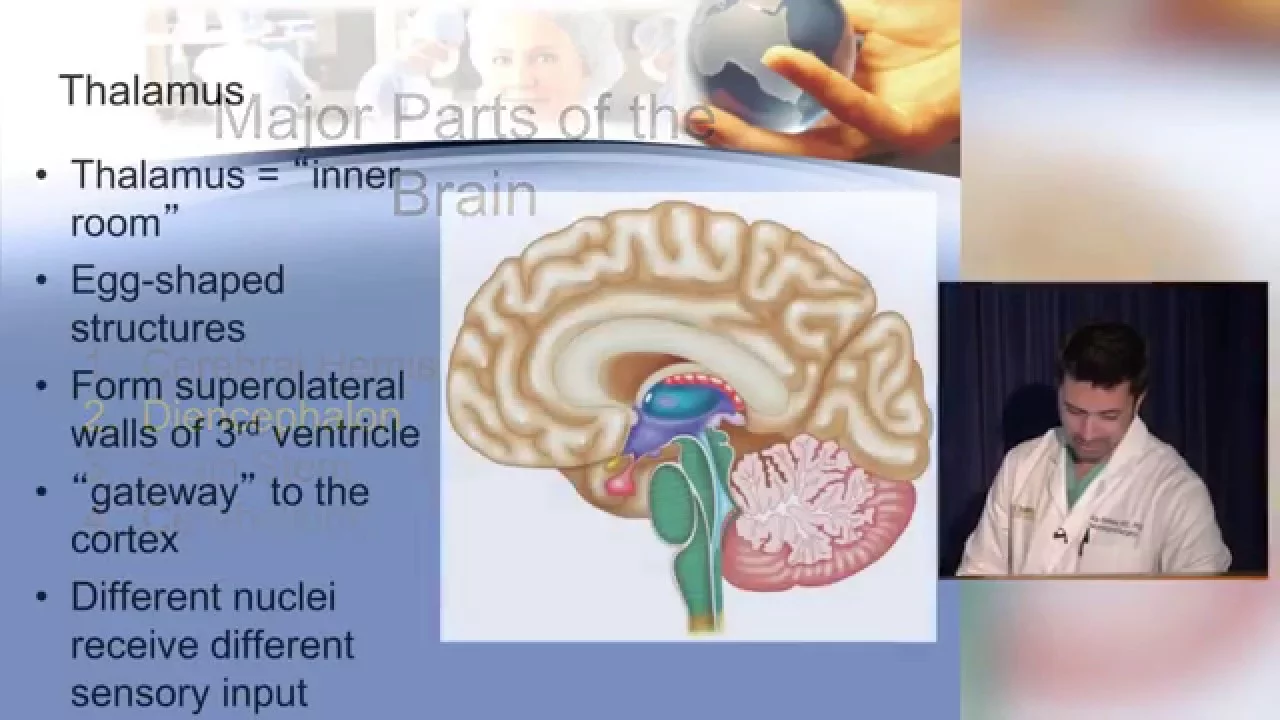
Added:Basic neuroanatomy, particularly the structure and primary functions of the prefrontal cortex.
An introductory understanding of Attention Deficit Hyperactivity Disorder (ADHD) as a neurodevelopmental condition rather than a behavioral choice.
The general definition of 'executive functions', including cognitive processes like working memory, cognitive flexibility, and inhibitory control.
A foundational concept of neuroimaging techniques (such as fMRI and PET scans) and how they are used in cognitive neuroscience.
Russell Barkley's Hybrid Neuropsychological Model of Executive Functions and its implications for self-regulation.
Clinical and educational interventions designed to support executive function deficits, such as cognitive behavioral strategies and environmental scaffolding.
The scientific debate surrounding the clinical utility of neuroimaging in diagnosing psychiatric conditions versus its research applications.
How pharmacological treatments for ADHD affect the neurotransmitter systems of the prefrontal cortex.
The role of emotional dysregulation in ADHD and why it is increasingly recognized as a core executive function deficit.
22.8K views512likes1:08:54Original Release: 2015-05-14
ADHD rewired episode number 63 this is the show designed to help those of us who have really good intentions and a slightly wandering attention my name is Eric tippers I'm a licensed clinical social worker coach and consultant we know that starting can be the hardest part so let's get started but first let me thank our sponsors today's podcast is brought to you by audible.com get a free audiobook download and a 30-day free trial go to audible trial calm it HD rewired Jeff show notes for Lincoln do you need an easy way to connect with people virtually but don't want to be hassled by downloads that don't work connections that are complicated go to Eric tippers dot-com / zoom and check out truly what I think is a revolutionarily easy-to-use video conferencing platform that's Eric tippers dot-com / zoom welcome back to another episode of ADHD rewired I am thrilled to have on the show today dr. Russell Barkley if you don't know who dr. Barkley is he might be new to the world of ADHD Russell Barkley is an internationally recognized authority on attention deficit hyperactivity disorder in children and adults he has dedicated his career to widely disseminating science-based information about ADHD dr. Barkley is a clinical professor of psychiatry and pediatrics at the Medical University of South Carolina in Charleston is a clinical scientist educator and practitioner who is authored co-authored and co-edited 20 books I think that's grown since that was written manuals published for the 200 scientific articles and books related to the nature assessment and treatment of ADHD and related disorders and I have to say from of myself and speaking on behalf of many other people I view you as a kind of an unofficial and mentor because I study your work and so I just want to thank you for for coming on the show and even more so thank you for everything that you have done for ADHD Eric thank you it's my pleasure your kind of say so so um we were talking the other day about kind of what what would be the best things for us to talk about on the show and you know you know I first saw you speaking I share the story with you I had my very first Chad conference that I went to the conference thinking I was this expert in ADHD I read a couple books and I have ADHD and you very graciously gave me the experience of realizing how much I had to learn it was when you presented your theory on executive functions maybe we can start there and talking about executive functioning because one of the things that you talked about is that ADHD is executive functioning deficit disorder and and executive functioning as a as a construct of self-regulation so just talk to us a little bit about your theory and kind of how you came to to this understanding of ADHD I'd be glad to of course a subject dear to my heart having written several books just on that topic alone but and by the way let me say as an aside that you probably were quite up to date if not more informed when you attended that meeting compared to other practitioners but people need to understand that there is between a thousand and fifteen hundred articles published every year now on ADHD in the world science journals I know because I tracked them weekly and it's just astounding how much information is out there so please you know all of us struggle to stay up-to-date with this rapidly advancing body of knowledge but back to executive functioning I got interested in this many years ago because being a neuropsychologist by training it was obvious even to people writing fifty sixty years ago or earlier that the symptoms of ADH very similar to the symptoms we see in patients who have frontal lobe disorders albeit the symptoms are milder than somebody with a frank brain injury but they're still very very similar and so you know a lot of us have been studying ADHD and its overlap with frontal lobe functions particularly what are known as the executive functions and the reason I sort of took this on even more in my research and writing is that after surveying the literature it turned out that there are more than 25 definitions currently in use on executive functioning which is not a good thing because we as a researcher how do you measure IQ yeah absolutely and that leads the second problem that you just mentioned which is how do you assess it if everybody's using a different definition then what people use to assess that definition is going to vary widely which it does there are hundreds of tests on executive functioning and and a survey of neuropsychologist showed that people ascribe up to 33 different brain functions into this category of executive functioning and that's just not possible either so you can see there's mass confusion when you read about this widely used term I mean this has become a fashion trend in research papers and when you read these papers you have to be very careful to read what definition they're using and it helps to explain why these papers often disagree with each other on their findings whether it's with ADHD or autism or bipolar disorder or even normal development so that's that's just not a good thing it just leads to confusion at the clinical level at the research level at the theory building level so you know being an ambitious person I said I'm gonna take this on and so since 1994 I've been working in this area and trying to develop a theory of it and the way to do that is to start with a concrete operational definition one is executive functioning and rather than take someone else's definition I I started with a trait that virtually every scientists would say who studies executive functioning which would say is part of executive functioning and that is self regulation okay so you started where everyone agrees yes let's start there okay and the beauty of that is that we have a very precise definition of self-control given to us many years ago by people like BIA Skinner and later others can for karoli Mike and Baum and others who've studied self-control and it goes simply like this self-control or self-regulation is any action you direct at yourself that's something you're doing to yourself and you're doing it to change your behavior from what it automatically would have been and you're doing that in order to change your future to change something that lies ahead an influencer can be you know in a minute a minute two five an hour but in humans it can be days weeks or months so we're doing something in order to increase or decrease some consequence out there in the future that is probable based upon how we act and basically what we're doing is we're looking out for a long-term welfare not just our short-term welfare so that's a very good definition of self-control three things something you do to yourself to change your behavior over what you're doing now to change your future to make it better for you now then what I did was to say okay an executive function is to what you're doing to yourself and if we look at it that way and by the way Vygotsky also looked at it that way speech yeah what are you doing to yourself in your right he focused more on self speech which is one of the executive functions but what I did was to steal vygotsky's idea and to generalize it to all of the executive functions there are all types of self-directed behavior and one of them is talking to yourself but what are the others so then I said well the most common executive functions that virtually all researchers agree on are the following seven they are inhibition self-awareness non verbal working memory verbal working memory emotion regulation self motivation and planning and problem solving and those two tend to go together and by the way that's the last one to develop so I did that as I took those and I said all right let's look at what people are doing to themselves and rephrase these ideas and when you do that you begin to realize what people do to control themselves first of all they self direct their attention self awareness they use self restraint inhibition now when I read at your and some of your work regarding how self awareness is an executive function that was like because if you're not aware of what you're doing and why you're doing it you can't possibly unlike modify the urine to know you you absolutely can't that's why self awareness is step one in executive function and self control if you're not monitoring yourself who cares right why would you do anything because you don't know that you're doing something wrong that may get you in trouble in the future or that you could be doing it better to make your future better for you so what we tend to see is that the first three that developed together are self awareness self restraint and visual imagery which is seeing to yourself that's the nonverbal system a little bit about that I think a lot of people get confused about the difference between a verbal working memory memory now work and nonverbal memory well with good reason because in traditional studies of those two ideas people use cognitive tests and so they use tests that involve words and that's the verbal working memory and then they use tests that involve spatial arrangements for nonverbal but if you stop and think about what people have to do to perform those tests they have to talk to themselves to keep refreshing their short-term memory beta lee calls that the phonological loop I really wish psychologists would stop using phonetic terms because you're just talking to yourself there's no reason to you know glorify this and the spatial tasks involve visual imagery and so what people are doing is they're seeing to themselves using their mind's eye and they're talking to themselves using the minds voice and that's where we get the verbal working memory systems and by using these we are able to sustain information in our mind longer than it ordinarily would be there we keep refreshing it by doing these things and that's where work and where he comes from so you know with like Stephen Covey he talks about beginning with the end in mind oh yeah when I first heard that mic that sounds great how the heck do you do that okay and so I think that's worth some of that challenges those challenges are is like oh how do you begin with the end in mind if you can't actually imagine what that looks like yeah well then you can't begin with you know it starts with visual imagery can you come up with some hypothetical image of what that would be like he even as you point out and I love his book by the way I used to tape his seven principles on my mirror in the morning so I could see it every day and I kept it there for weeks until I had sort of internalized these ideas I think they're just good principles to follow but but back to the point it's hard to use that principle if you can't visually imagine that endpoint so the the other executive functions would be self directed emotion self motivation and planning and problem solving ourself play their forms of mental play where we take information apart and recombine it in our mind in order to invent new ideas overcome obstacles create multiple options for doing things but it's actually based on children's play it's based on manual play I'm not the first person to say that there's a huge literature showing that adult problem-solving is predicated on human play so there's your seven executive functions and all I did to simplify matters is to say that each one of them is something that you're doing to yourself and now we can understand what this is and I'm gonna look at the executive functions as a developmental model right yes yeah can you talk a little bit about that so then again one of them are my community members asked the question is from Doug Harris Hosea as an ADHD coach he says I want to know why if ADHD is a result of a delay in the development of the cortex why and why everyone doesn't out ADHD once that their brain catches up developmentally sure well I think to answer that point and then we'll come back to your question to answer that point is delay doesn't mean lag that's temporary it can be a permanent delay and if you think about mental retardation now called intellectual disability you think about dyslexia reading disabilities those are delays but they're permanent hmm so the individual is developing at a rate that is below the rate of typical people they're developing and they will meet similar milestone but they will meet them later and when the brain finally reaches its maturity they will level off well for the ceiling is kind of Motoring sound good the ceiling is lower so I think people have to be careful when they use the word delay not to me in a temporary immaturity but to mean a chronic lag in the development of these mental functions now as with reading disorders there is a level of executive functioning in adulthood that you have to have to at least make it to at least be effective we can call that a functional level and it helps to think about reading you don't need to be reading at a twelfth grade level to function in society but you have to be reading at a sixth grade level and most people would say eighth grade but at least sits great if you're going to fill out forms read menus you know read a newspaper these are all aimed at about a six or seventh grade level that's called the functional level of reading and if we can get you there if you have dyslexia or beyond that you're probably going to do okay in life and I'm going to do great but you're going to function and I think there is a functional level of executive functioning that you have to attain and if you get past that even if you don't make it to the normal benchmark you're still going to function okay but if you don't get there then I think you're going to be in trouble and the problem with ADHD is that many people with ADHD don't get there or get there only marginally or get there only erratically and then they're in trouble so the brain maybe two to three years delayed in its development and it may ultimately reach a similar size to normal though that is debatable but the architecture of the brain the connections the neural networks have now been shown to be and to remain abnormal even it to adulthood so you don't be careful with brain size then it's not a marker or a brain function I know there's um speaking of brain size there were some questions regarding brain imagery for the diagnosis and treatment I think there were some questions regarding you know dr. Ayman what were your thoughts on that okay well to finish our thoughts on executive function let's go back the development of executive functioning at least according to my model and consistent with other people's views is that you don't get it all at once it develops and stages because it probably evolved in stages people forget that there were probably between 12 and 20 different human ancestors to current humans there were different species of humans back then I don't like the word species but different certainly earlier stages of humanity and so each of them probably didn't have all of these executive functions but we have them all and so my feeling is that the first three that developed very early are self-awareness self-restraint and visual imagery and then followed within five years or more by self speech and then later within a few years by emotion regulation followed by self motivation and then ultimately by the time you're an adolescent you get into the development of problem-solving or planning and so there's a staging to executive functioning that wit that we see in typical people and that's important because if the earlier ones are impaired the later ones will be as well because they're all built on a pyramid on a hierarchy so and because ADHD disrupts the first three very early in life the others are at risk because of the they depend on those so I think that's an important idea as well now back to neuroimaging while neuroimaging studies used groups of Jules hmm and clearly show when you compare groups of ADHD to typical people we get numerous differences particularly in five brain areas and they're significantly different anywhere from upwards of five to thirty five percent difference in the size of these five regions at least that level of difference in under functioning in these regions and the prefrontal cortex were discovered no well it is largely the prefrontal cortex but the frontal Court prefrontal cortex projects back to other brain areas and the area stitch projecting to like the basal ganglia the cerebellum and also the visual cortex of the brain are also underdeveloped in these individuals and that's that's a great idea because it conveys to your audience that these are networks don't just look at one area look at their functional connectivity and in the past five years modern neuroimaging techniques such as Curt otic tensor diffusion and so on these are ways to studying how these areas interconnect with each other have shown that the abnormalities in ADHD are even greater than we suspected by just looking at a brain volume the connectivity of the brain is even more disturbed and that's important now back to the question why then isn't brain imaging useful for diagnosis because the overlap between the ADHD brains and normal brains is sufficient to prevent that kind of use in order for a clinical test to be useful the groups you're using it on have to be vastly far apart whereas if the distributions of the two groups overlap and they overlap by about a third then that means that you're not going to be able to detect that overlap and your test isn't going to be very accurate so the usefulness of these fulness of SPECT scans yes a SPECT scans functional MRI MRI but especially SPECT scanning the degree of functional differences between ADHD and normal brains is so subtle that you'll only pick it up by studying groups of people and you average them together and the averages are what are different but if you try to classify people the overlap in these brains and their functioning is so large that you will fail at diagnosis you will fail at classification and that's what we see and that's why everybody working in the field of neuro imaging at ADHD research will tell you these devices cannot be used for clinical practice it doesn't matter what dr. Amon says they can't because the overlap was too great what happens is you get about a 35 to 50 percent rate of false false positives false negatives rather meaning that people with ADHD will fall in the normal range of brain functioning and you'll classify them as normal when they're none so for that reason functional neuroimaging at the moment and even structural neuroimaging are not very useful now I do want to hasten to add that the development of these new very sophisticated very refined methods for analyzing neuro imaging such as this cancer diffusion in the deal with it that's something new to me well what that does is instead of looking at blood flow like spec scanning does to look at functioning this uses the flow of water I mean water is ubiquitous in the brain but when water hits certain structures like nerve cells walls synapses and so on it diverts and you can actually measure how much water is being diverted or blocked or flowing or prevented and using very sophisticated mathematics you can create images from these and it's a way of looking at how nerve cells connect to other areas of the brain how pathways and networks connect and I I'm not doing justice to how sophisticated this is but I want to tell you the images it creates are so refined that you literally contract single tracks single bundles of nerve cells through the brain and look at where they end and then study how if I stimulate this area that area activates and vice versa looking at this functional connection this is really cutting edge and what it shows is that what we thought about the brain and ADHD is even more different than the earlier neuroimaging studies show the early studies looked at size at volume there's less brain here there's less brain there and so on and it's delayed in development the newer ones are actually creating images of these networks and fibers and he's beautiful almost you know you could frame these images as artwork showing that the ADHD networks are not as strong not projecting to the correct areas they're projecting to other areas they shouldn't be projecting to and that's probably underlying a lot of the symptoms and also what it's showing is that people with ADHD may be developing compensatory networks hmm because of this under development I mean if it's if it stays underdeveloped for so long the brain being somewhat plastic tries to find different ways to roam so to speak so it sounds like what you're saying is the ADHD brain is then getting rewired yes it's rewiring during development in order to try to function as well as it can using other routes to these end points and these these various places in the brain and it partially helps but it doesn't completely compensate for that it so it seems like the more we learn then what we realize how much very much we are at the beginning of really understanding this yeah absolutely yeah it's just absolutely fascinating so expect to see a lot more of these papers on functional connectivity if you use Google Scholar you can just type that in ADHD and functional connectivity and you would see many of these studies coming up and they're absolutely fascinating that's that's great yeah let me ask you a question in regarding so we're going to be kind of a I think of the fifth and sixth stage of your phenotype model of executive functioning so they let's talk about time frames you talk about time horizon and our ability to plan yeah so if we can kind of break it up from kind of eighteen to like thirty thirty to what those kind of adult phases of our ability to project into the future sure sure what we see let me go back to the separate executive functions of saying these are the things that are going on in your head they're hard for people to see late in development you can see them early you can see children talk to themselves but eventually it disappears it becomes internal and cognitive inform now those seven cognitive abilities are used together like a symphony to create what we call the five dimensions of executive functioning in everyday life this is what rating scales measure are these executive functions in daily life activities and those five are self-restraint inhibition as you can imagine time management the verbal and non verbal working memory systems are related to self-organization and problem-solving and then we have emotional self control and self motivation those are the five things we see in people's daily lives that these seven executive abilities are contributing to and that's what you're going to see being disrupted by ADHD you're not going to see the mental disruption only the patient is aware of that mm-hmm but the people around them are going to see profound problems with impulse control time management planning an organization emotional dysregulation and impulsivity and problems with self motivation with the ability to stick with things now as those develop over time particularly the self manage the time management one you're going to see a window on time open in people's behavior in young children they're concerned only with their now they're not concerned about the next moment or tomorrow as you get in elementary school children are thinking about 12 hours ahead as you move into late elementary school today or two ahead teenagers maybe three to five days up to seven days ahead college students probably 1 to 3 weeks ahead by the time you meet your 30s you're looking out about two to three months in your life the average thing you're contemplating in the future lies within that time frame you are capable of looking further I said the average thing mental development yes typical development now what ADHD is doing is its slamming that window shut and it's causing about a 40% delay in its expansion so the person with ADHD is like somebody about 30 to 40% younger in their sense of time and they're planning and they're projecting the future their ability to anticipate the future and that is seriously impairing because as you know life becomes more time-sensitive as you grow up and enter adulthood and if you're having trouble with time and time management you're going to become more functionally impaired in adulthood than you would have thought in childhood because children don't have to worry about time the way adults do that is why I say in my book that adult ADHD is the worst disorder you can have with regard to time management there is no psychiatric disorder as impairing of time as adult ADHD which is why in my book as you know I refer to it as being time blind yeah I'm black yes being nearsighted to the future because ADHD means you can only deal with futures that are closed rights that are imminent as opposed to futures that lie a month or two out and that explains a lot about what ADHD adults focus on and what they do and don't do and why they're not ready when that future arrives they're in crisis because they haven't gotten ready for it and now they're scrambling around trying to cobble something together very quickly they're try to deal with this sometimes it works most times it doesn't or myself what I'm going to like conferences like in my mind I know that there's all these things that I need to be doing like a couple weeks ahead of time but the information it comes to me like the night before right but to other people it came a week or two or three or eight you know a lot of us booked our airline tickets three months ago and we got our hotel and we got our rental car and all of a sudden the night before the adult with ADHD is saying oh my god I haven't registered for this and I don't know a room and you know and then they show up at the conference unregistered and beg to get in and you know we you obviously know these things and that's it you know that's not as important an example as for instance your work life can you imagine I mean if you can't manage time you're going to be fired late for work every morning you don't have your projects ready the stuff that you needed to do for this particular deadline are not done completely and people unfortunately are not very patient with that in fact as net Halliwell says people start to view this aspect of ADHD as a moral failing as a choice you just don't care because if you cared you get these things done whereas we know it's a neurobiological deficit it has nothing to do with choice and and moral turpitude it in fact is a serious neuropsychological deficit but it tells you why people with ADHD to cope with it have to focus on what I call scaffolding they have to put things around them to cope with the timing deficits the inhibitory deficits the problem solving deficits the emotional and motivational deficits they have to create this structure outside of themselves that helps with their management that other people have internal structure they have to externalize and you know that's a favorite word of mine when it comes to telling people with ADHD how to cope with it is this word externalized you have to put outside of you the things that other people do in here we're working memory is when we talked about you can't rely on mental information to guide you to help you remember you need to be using journals and your computer and all this other technology the phrase I like is you have to offload your working memory onto other device rather outsource it yeah absolutely I'm sources I like I'm looking at my time timer right now and I've in my office there's no spot or I will be looking at word where I don't do not have a clock in my vision there you go right across from the chair Mike my clients will sit right above their head is a clock so it looks like I'm looking right at them but I could also see the time I love it because that's one of the six things we recommend for executive function is you have to external eyes information that's the journals and the notes and everything you have to external eyes time that's the clock that's the beeper that's your Outlook program or your iPad that chimes when schedules are due so externalize time you have to externalize your motivation you have to create extra sources of reward around you such as making yourself accountable to other people yeah for what you promised to do create consequences where they don't exist you have to externalize your emotional control ask other people to give you cues as to when it seems that you might be drifting a little bit into higher emotionality like you're getting a little silly or you're talking too loud or maybe you're starting to show a little frustration you know other people can kind of cue you verbally and non-verbally to help structure that and then of course the problem solving one you external eyes that by making problem-solving manual by trying to write down the pieces of the problem and then play with them outside of your mind not just in your mind yes so speaking of problem-solving and outsourcing I do need to take a quick moment to thank my sponsors because I get to outsource the post-production of this podcast which is detail oriented and I don't like that part so we will be right back zoom video conferencing is so easy-to-use that with all the extra time I saved not having to configure complicated settings I recorded this promotion support ADHD rewired and chicka-boom video conferencing Google Eric tippers comm / zoom again that's Eric tippers comm / zoom get a zoom room support for this podcast comes from audible for a free audiobook download go to Eric tippers comm slash audible for a link for that a free download and for some hand-picked recommendations go to Eric tubers dot-com / audible for your free audiobook download the ADHD rewired 2015 summer coaching and accountability group is just around the corner I'm going to do something that I don't think that I've ever done before I'm gonna give you my phone number and invite you to call me if you're interested in being a part of the next ADHD rewired coaching and accountability group call me and leave a message at two two four nine nine three nine four five Oh that's two to four nine nine three nine four five O or go to coaching rewired calm you could send me a message or schedule your free consultation there that's coaching rewired one word.com we start in June don't wait and for you who is listening right now thinking oh that sounds great I'll remember right now I'll do it later yes I'm talking directly to you pause this audio cuz I'll be here when you get back and write it down put it in your phone or do it now I know you think you'll remember but we both know what will probably happen turn in good intentions into actions write it down or go to coaching rewired calm or call me at two to four nine nine three nine four five oh that's two to four nine nine three nine four five oh my number and other links that I just mentioned are in the show notes just click on your podcast app and it'll be right there now back to the episode alright dr. Barker we are back so we were just talking about executive functioning about outsourcing our these kind of cognitive structures of our brain and what one one phrase that I like to use for myself regarding time is that my internal clock never came with batteries so I make sure all my timers have fresh batteries in them in one of my presentations I show a picture of a typical clock under which it says typical person and then a picture of an ADHD clock and all the numbers are in a pile on the bottom of the clock circle there's no numbers here we have no idea what this is however you convey that people need to know that this invisible dimension of life that we call time is seriously affected by this disorder it's hard and what I like about the executive functioning view of adult ADHD which you have emphasized is that it brings with it all of these insights not just for understanding but for management that you wouldn't get if you kept viewing ADHD as an attention disorder calling ADHD an attention disorder trivializes the disorder it disrespects it it's like Rodney Dangerfield you know that name gets no respect where is EFD d- function deficit disorder is a profound problem well let's let's talk a little bit about the whole you know not getting respect because we and we talked a little bit about the whole notion of that you know ADHD is not a real disorder ADHD is a myth all this all this stuff yeah I know I smile but it's actually very frustrating to deal with it because the media in particular the mainstream media and our social critics it's not just Scientologists although they certainly contribute to this misunderstanding but but even the mainstream media does as well the New York Times has done so many pieces that misrepresent the disorder it's it's a travesty and I think as you and I discussed earlier although part of this has to do with fringe political and religious groups attacking psychiatry attacking mental health and and diagnosis and especially medication use some of it I think stems from simply the public having a profound misunderstanding about mental disorders that the public continues to believe that people's misbehavior is a result of their upbringing of their parents and their education their schooling that it lies outside the person that it's a socially induced condition mm-hmm and therefore either it doesn't exist or it's socially caused and the root causes of the problem lie in parenting and education and that's where the solutions need to be whereas we know that ADHD is one of the top three neurobiological disorders in psychiatry it's rivaled only by bipolar disorder and autism for the degree to which neurobiological causes genetic and neurological contribute to this disorder there is no contribution of upbringing to this disorder but the public thinks that there is and as long as there is this striking disparity between what the public believes and what science is showing you'll continue to have stories in the mainstream media attacking ADHD as this social problem this mythology when in fact the evidence from more than 20,000 studies now is that we are dealing with a seriously genetic and biological disorder until those two views come together expect to continue to see controversy in the media but that's why you and I do what we do which is to disseminate science to take the knowledge out there so that at least we fight the good fight against these sources of misunderstanding to try to make people understand the science based view of ADHD not the mythology or the Scientology view you know and one of the things that I'm and I've been over the last couple years coming to the understanding does it mean the science to me is this clear is black and white I mean it's it's it's real and I live it every day but I think one of the things that that I that and I've struggled with myself is this an understanding that as you know we talk about emotion as a construct in in ADHD that we make decisions decisions based on emotion and with our data so how do we take this the data clearly shows it and shift this into something that we can help shift the emotional perspective of the general public who think that ADHD is a myth because it appears maybe that is the science of the evidence isn't doing it so what do you what are some of your ideas on how could we shift to this conversation in society so it almost becomes absurd for someone to say gee well I think we could take a look at how this happened with other disorders as well go back to mental retardation which previously was viewed as a socially induced condition even sixty to a hundred years ago marked ISM in the 1950s was blamed on cold mother I freedom and then we had the learning disabilities that were being blamed originally for hundreds of years on inadequate upbringing you just didn't teach your children to read properly you screwed you know notice the common theme here we are very good at bashing parents particularly mothers for any ills that befall their children and we have to stop doing that that is that is inappropriate but if you look at how these other disorders got into public recognition it took a while it took anywhere from 10 to 30 years for autism to hurt syndrome LD to finally get the respect that they now get as biological disorders nobody blames dyslexia on upbringing and they damn well better not be blaming autism on upbringing because the research is clear now I think what they did is they had champions in the celebrity community in the mainstream media they had athletes they had actors they had TV shows that were dedicated to these disorders they wove these disorders into the plot lines and eventually it became common practice that these things were there they were acknowledged and they were viewed as neurobiological ADHD needs to follow a similar path and although we're trying to do that it's going to take awhile I mean it took these other disorders decades but we're getting there we have our celebrities we have Michael Phelps we have Bubba Watson we have you know golfers and athletes like these but we also have other people in the mainstream media like this you know for instance Ty Pennington from Extreme Home Makeover Glenn Beck in the political commentary spectrum just Google ADHD celebrities and you will see or go to attitude magazine's website and you will see these interviews with their parents and how their parents got them to the states that they did I think those are the kinds of things that help to break down these walls of prejudice by using celebrities and by doing what we do which is disseminating knowledge and then I think the third thing I had hesitated to say it but it's true is you know we need to start shaming people who hold these views by shaming them I mean clearly calling them out for these misguided views I mean it goes back to we we used to blame you know homosexuality on parenting and now look at what's happened I mean we have the increasing widespread acceptance of the gay lesbian movement we have you know gay marriage on the agenda now we have many people believing that these people should you know that this wasn't some life choice that you needed to be trained out of you know and it's taken them a long time to fight that fight of shaming people and disseminating knowledge and then using celebrities and others people who were present in the media in order to help educate the public and it works but it takes time it's very frustrating when you're in the middle of this as we are it's not moving as fast as you and I wanted to move but it's interesting are you familiar with that Bernie Browns work yes she talks a lot about you know shame and vulnerability and how yeah shame is this kind of insidious you know emotional thing that we do it and it's it's kind of toxic and so and right before I got into starting some of her work I there was this a blog post on Psychology Today that was basically talked about how ADHD isn't real and there's and there's zero scientific evidence that is know so I posted a response on there basically and I and I said I use the words and I'm speaking back and sort of sort of embarrassed that I said this I'm like shame on you Psychology Today for even publishing this and well I did the same to Scientific American Scientific American about oh maybe six months to a year ago had one of their bloggers write that ADHD was actually creativity in disguise and that if we treated it we were going to see a reduction in creative people this is insane there is no evidence for this and you know here we have one of the premier popular science magazines in the world having one of its bloggers state what is clearly the least scientific view I can imagine about this that does real harm to people and so I did write as you did you know shame on you and then I went through and tore apart the commentary showing that even the articles here ever he was referencing had miss referenced intentionally by the way miss referenced and when he was called out on it he simply said oh well that's okay because my point is still valid anyway even though the evidence I marshaled was not correct you know it it's it's very frustrating you have to do I think the you had said at one time that I know a thg is kind of the whipping boy of psychiatric disorders yes it is it's the Rodney Dangerfield which actually makes it sound funny when in fact it really isn't it just doesn't get the respect I'd like to see the disorder renamed that's not going to happen I think the name in part is is part of this trivializing of the disorder it makes it sound like all you have to do is go to Starbucks and get a coffee you know we just fine whereas if you viewed it as a self-regulation disorder I mean that's a profound disorder and speaking of names and renaming in the clinical literature there's a the other ADHD or the inattentive ADHD which has been sluggish cognitive tempo a CT and you're also suggesting another name for it will you just talk a little bit about what SCT is what you what you're recommending as a new name for it well yes I mean people who follow my sort of research and work know this is my more recent passion at the moment this along with emotion being part of ADHD and not some separate thing from it which we can talk about if you wish but we have known since the 1980s that there is a subset of people with attention problems who don't look like ADHD originally we call them a DD without hyperactivity but then we got rid of that term when DSM 4 and dsm-5 came out but we've known for quite some time that there's a subset of people who have a set of symptoms that don't look like ADHD at all and yet they're being put into the a DD ADHD category because it's the only attention disorder so you have an attention disorder this must be where you Hmong when in fact researchers have been looking at these people separately and eventually the term in 1986 was coined by Ben Lahey and his students sluggish cognitive 10 for the name of this dimension of inattention and just briefly it consists of staring daydreaming this sort of pensive nosov a sleepy sluggish appearance but sort of being inwardly preoccupied slow-moving sluggish this pattern called sluggish cognitive tempo is not correlated with ADHD to any great extent and is distinct from it in in many ways and still we began to study people with SCT and there's now probably about 6070 publications good science papers on the disorder and growing by the way weekly now other people have caught on to this but it's a very different disorder for instance ADHD is linked up with conduct problems substance use as you know difficulties with anger and hostility and sometimes aggression mm-hmm whereas SCT has no link to that SCT is linked more to depression and anxiety we know that ADHD people are very outspoken talkative engaging even overly so in fact whereas people with SCT tend to be reticent shy reserved quiet there are many of these kinds of differences between these two disorders so a couple of things that have happened in the last five years first of all I and others have now done national surveys documenting that SCT is as prevalent as ADHD both in children and adults it's about 5% of the population that SCT is different than ADHD in terms of experiment it's about a 50% overlap with and we've also realized they can be comorbid which in the old view you either had ADHD or you had a DD in the new view you're gonna have ADHD and SCT but half of the people don't they have their separate disorders okay but half of them do and by the way what we showed across the lifespan is when these two disorders coexist they are far far more impairing then ADHD is by itself that each disorder brings with it its own impairments and they're additive and that's a very important idea because some of what we see in severe ADHD is the fact that you've got two attention disorders not one now back to this change in label it's a very important point researchers coined this term more than 30 years ago because it wasn't a clinical diagnosis and they didn't give much thought to how patients would receive it but over the past five or six years my students and and others that we've been introducing this to patients and I cannot have to tell you that people hate this name and well they should because it is pejorative it is derogatory it is demeaning and and as they will tell you it implies that I'm stupid that I'm mentally intellectually slow and we don't mean to imply that so a year ago I wrote an article for a science journal that I think is getting some play among my colleagues encouraging them to rename this as concentration deficit disorder it's benign it uses a name that's different from ADHD whereas calling this a DD is creates confusion a DD is the old name for ADHD so I I don't know if you're just out of date when you use it or if you're referring to this group of people whereas EDD hasn't been used for anything else it implies that there was a problem with concentration shows there's another attention disorder but carries no derogatory baggage that is offensive to people and and so I think you're going to see this term used more and more I certainly used it in my textbook that was published in January the fourth edition of my handbook and I'm trying to encourage people so that we don't you know get on this tangent of using offensive terms that eventually patients are going to reject when I first heard you talk about this and you when you talk about the staring my first thought was oh crap sometimes getting this like gaze where I'm just like or I know I'm doing and I can't even overt my attention away from just being like spaced out so it's like I'm semi aware aware of it but then you also talked about how it's consistent and where we know ADHD the one thing that's consistent about it is its inconsistent yes it's highly variable right yes but your point is well-taken everybody has some SCT liked traits we all periodically scare we all engage in mind-wandering we all have trouble with daydreaming sometimes so if I'm driving to work and it's boring I start to think about other things and I missed the turn to the parking garage that's a good example of all of us having a little SCT CDD all of us engaged a little bit in mind wandering the point is when this becomes pathological when every time you're engaged in some primary activity that isn't very interesting your mind starts to wander away and that mind wandering comes back to interfere with what you're doing you've crossed a line into the disorder category you are experiencing impairment in major life activities from this and that's where the disorder begins and I want to talk a little bit as we're kind of we have about nine minutes left here okay I'm about you know the functional impairment and how ADHD really can be you know it's it's it I view ADHD as very much of a spectrum disorder it can be mildly impairing it could be severely impaired and we know that ADHD often travels with friends meaning other coexisting disorders so I know that you know part of your kind of compassion for ADHD does come from a very personal place well yes you have lost your brother who had pretty severe ADHD what would you say would you mind sharing a little bit about that yeah yeah I'm happy to talk about it just because it makes what was a senseless death hopefully have some meaning and maybe other people who can benefit from it I have had a fraternal twin brother Ron who has been severe ADHD with learning disabilities going back well into our preschool years before Ron was five years of age he had at least three or four life-threatening accidental injuries ran in front of cars dove into Lake only four feet deep hitting his head lacerated himself practically set fire to our home playing with matches and things like that I mean Ron was very very ADHD and you know it you he was a great guy he was a funny guy he was very active and talkative and but he was very very poor student and eventually he left school at 16 years of age to pursue rock music and became a very gifted rock musician played with hundreds of bands all over the US and you know always waiting for that big break and that next American Idol moment or something which unfortunately never came but if you watched him play I would liken him I think quite honestly to people like Stevie Ray Vaughan Eric Clapton la I mean he you literally could see him channeling music as he played but he was very good but his impulsiveness and his risk-taking and his poor organization and his emotions always got the best of him so unfortunately his relationships with his wives didn't last very long or with his his three children and he would engage and a lot of risk-taking behavior he always drove without seatbelts always speeding always using alcohol more than he should have as is typical in the music community drugs become a serious part of life he was in and out of jail from time to time for drug possession nothing violent but certainly the use of drugs and so eventually in his 50s unfortunately Ron was just out driving one of the back roads in the Adirondack Mountains of upstate New York but you know he was going 40 on a 25 mile an hour dirt Mountain Road wasn't wearing a seat belt and unfortunately just caught the wheel of the car in a ditch and over corrected and rolled the vehicle and was thrown out of it and it rolled on him and killed him instantly in a very very sad moment in our lives but you know it just illustrates the life-threatening nature that this disorder can have not just with regard to drug use but with regard to you know poor diet poor health care for new trician and then on top of that the connection between ADHD and driving risks is very strong ADHD is the worst disorder you can have actually an operate a motor vehicle and and Ron was a classic case of that and eventually it caught up with him he was in and out of treatment there were times he was willing to get treated there were other times he denied that there was any problem and therefore stopped treatment this happened to have occurred and one of those times when he was not in treatment so very very sad to see this highly creative musician you know end his life at 56 years of age through a very trivial single car accident that was preventable I'm very sorry for your loss from that thank you and I when I first read that in the back of taking charge of adult ADHD is I was glad that you put that in there because I think it makes it bearable and I hope that it serves to forewarn others that this is a disorder that needs to be taken seriously it's one of the most empowering outpatient disorders that you and I see it more empowering than depression anxiety learning problems relationship issues because it interferes with almost every major area of life including life expectancy we now have studies to show that people with ADHD are 3 times more likely to die before the age of 46 and that their life expectancy is probably going to be shortened by a number of years anywhere my guess would be 7 to 15 years or more if it isn't treated it's a risk factor for coronary heart disease we've already mentioned accidental injury drug use probably cancer because all of them come back to this underlying problem with self regulation and self regulation problems are the single biggest cause of mortality hmm thank you for sharing appreciate yeah you're welcome I do see behind you that a bass guitar yes it is you play I I've gone back to it because speaking of my brother when he left school to learn rock music I didn't leave school but my older brother took up the drums and I took up the basic guitar and we played in the Maryland Washington DC area for a number of years while I was in high school in early college in fact you can read the history of rock and roll in the DC area called I believe a capitol rock is the name of the book and in there you'll see our band being mentioned as contributing to the history of rock and roll but I played in the Georgetown bars and the campuses of the colleges and if the military base is and so a number of years ago actually it was the year my brother passed away to help with my grieving and I'm going to start tearing up here my wife of 46 years who I've known since high school went out and bought me a bass guitar and said I think you need to get back into this and so yes that's what you say and I play around with it what I call curio ki bass play to the old 60s and 70s rock songs so I have a good time with it well maybe it's some meeting at some point in the future you know I like keyboard and piano so oh my goodness maybe at some point you and I can have a little jam session well we'll get Sam Goldstein who plays lead guitar and Mike Gordon also plays a very good guitar and not to mention other instruments as well so you know I think we're onto something here and that would be incredible so you know now that we're kind of ending the show here I do want to just leave a few moments for the random question around this is the part of the show that has nothing to do with ADHD which and paradoxically has everything to do all right so if you can come up with an invention or an improvement upon a certain product out there what would it be oh my goodness oh that that's tough what what would it be I you know you've you put me to shame here it would probably be taking you know technology like the Apple watch or other things and reprogramming it for self-regulation yeah brilliant brilliant it okay um if you know I think I might actually know the answer to this question now but maybe in a bit if you were to enter a talent show what wouldn't be I think you saw it in the background I certainly can't sing my brothers never let me near a microphone I was one of the few had no boys so certainly it would be that that instrument yeah so it certainly wouldn't be a golf or sports okay animal bleats you out the most oh my goodness not many but probably sudden movement of things like you know maybe snakes and spiders once I see them I'm fine with them but I think it's just sudden motion so there was a great podcast episode on a podcast called invisible yeah NPR which he talks all about the the movement of snakes and and yeah no wait because it's like unexplainable to our mind in some way so my it is well I actually since you mentioned that one that does occasionally freak me out though I'm a little more rational about it are our bees especially stinging bees because I nearly died when I was eight years old from falling into an underground huge nest of Yellowjackets oh my gosh suffered cardiac arrest and had to be resuscitated and everything so to this day I still have occasional nightmares I bet your cortisol flooding you when he sees he's being let me ask you one last question nutritional value can irrelevant on this if every meal had to be the same from now on what would you eat I would eat steak you didn't say thank you I tell you I come back two or three times a week in some form or another but I am definitely a car and how do you like your Scots oh I cook one last night we did filet mignons on the grill I cook them for about three to four minutes on the grill to serum with a little olive oil and Italian seasonings and some sea salt and then I finish him off in the oven for about eight to ten minutes and I like him about medium rare and that and a bottle of red wine and some grilled veggies on the side and that is to die for well if I might end this by calling your russ and just saying Russell anytime you're in Northern Illinois you have an open invitation to come out to tavola which is a small town out here in northern Illinois you know and I will make you a steak just the way you like it Eric thank you so much what a pleasure Russ can you tell people how they can reach you and kind of find more information about you the best way is through my my two websites Russell Barkley org that's our USS Double L VAR k le wide org and my other website too which i've posted about 35 hours of my lectures since I'm gradually moving into retirement now is ADHD lectures calm and they're free so those two websites will get to the information you need to know well thank you so much for spending the hour with me and for everything that you have done in here are continuing to enjoyed thank you for having me thank you so much you're welcome that was so incredibly fun for me I you know it ADHD sometimes call it the disorder of good intentions and I want to tell you that a over a year ago when I first started my podcast I had I kept thinking about man how awesome would it be if I can get an interview with dr. Russell Barkley and my only regret was that I didn't ask him sooner sorry I want to thank personally Carolyn Thoreau jennie-o who who helped me craft my email to to dr. Barkley and asking him to be on the show I also want to thank Meredith Deshawn rich Doug Donna and Virginia and in Colleen for submitting questions and and and Jenny for spending questions for me to ask I didn't get to all of them but I did get to a few of them so I I hope you enjoyed this as much as I did I am kind of having that night my facial muscles our facial my feet you know what I mean are hurting from smiling so much I just got off the interview with him that was a lot of fun but that's all the time we got so until next time cue the outro music thank you for listening to another episode of ADHD rewired if you're new to the show welcome to ADHD rewired we are more than just a podcast we are a community you can see a full outline of this and all other episodes with links and other resources mentioned at ADHD rewired calm help support this podcast by checking out my sponsors Erik tippers comm slash zoom and Erik tippers comm slash audible and next time we shop Amazon use a search portal at ADHD rewired calm you can also help us support this podcast by leaving an honest review in iTunes or stitcher and don't forget hit subscribe so you never miss an episode don't just be a passive listener be an active member of the community ADHD rewired is on Facebook you can like our page but submit your request to join our free and growing community we are almost at 200 members and please check your other inbox because I screen everyone before they come into the group speaking of groups ADHD rewired summer coaching groups are now forming schedule your free 20 minute consultation with me at coaching rewired and calm if you're looking to get a better handle on time management project management and productivity while being connected to a group of like-minded people who all support you and genuinely understanding your challenges join the next ADHD rewired coaching and accountability group we begin in June 2015 there is a reason why eight out of the 12 members of our last group requested an extension group and that group is starting this week go to coaching re-wired dot-com to complete the interest form or to schedule your free consultation with me that's coaching rewired calm do you have a question or comment that you want to be played at an upcoming episode go to speak pipe dot-com slash ADHD rewired and leave a message from your computer or from the speakpipe app I want to thank you for donating to the nuts another 1 in 20 campaign that we launched during last week's episode recently a young adult client of mine died from a diabetic coma and an honor we are raising money to help Carol and our Jenny O's 7 year old son who has type 1 diabetes get a device that would alert his mom if his levels are too high or too low this device could have saved my clients life we are raising three thousand dollars and your contribution can help go to Eric tubers comm slash t1d for a link to make a donation and thank you and thanks again for listening and don't forget it takes courage to do things that are hard but the things that are hard are always worth doing until next time you you
Up Next

10:32
ADHD: Science-Based Systems for Daily Follow-Through
@FOCUSCOLLECTIVE-n4k
454 views•2025-11-29

68:32
Cognitive Skills for Differentiated Instruction | Teacher PD
@BrainWareLearning
631 views•2017-12-17

9:55
Thinking, Fast and Slow: Daniel Kahneman Animated Book Summary
@FightMediocrity
2.3M views•2015-06-05

6:40
The Nocebo Effect: How Beliefs Can Cause Real Harm
@CGPGrey
10.4M views•2013-12-23
Related Study Plans & Knowledge Roadmaps
Structured learning paths in Psychology
psychology
Neuroscience of Creativity: Networks & Training
01Foundations of Creative Cognition
02The Cognitive Neuroscience of Insight & Fixation
03The Triple Network Model of Creativity
+ 1 more learning modules
15h4 modules
Explore Roadmap
psychology
Imposter Syndrome: Etiology & CBT Framework
01Defining the Imposter Phenomenon
02Socio-Developmental Etiologies
03CBT Fundamentals & Thought Distortions
+ 2 more learning modules
15h5 modules
Explore Roadmap
psychology
Adult ADHD: Executive Dysfunction & Scaffolding
01Neurobiology of the ADHD Brain
02The Core Triad of Executive Deficits
03Executive Dysfunction and Emotional Regulation
+ 2 more learning modules
12h5 modules
Explore Roadmap
psychology
Loneliness: Evolution, Neurobiology & CBT
01Evolutionary Origins of Human Connection and Loneliness
02The Neurobiology and Physiology of Chronic Loneliness
03Maladaptive Social Cognition: The Psychological Loop
+ 2 more learning modules
12h5 modules
Explore Roadmap