






![[[VMOOCS 2026] Interactive Talk 2 - TESOL Methodology](https://i.ytimg.com/vi/MWvBeJxlZ2c/maxresdefault.jpg)







![[나]도 포함된 개선을 할 때입니다. 학교와 학원은 학생과 선생님이 함께 만듭니다.](https://i.ytimg.com/vi/EODlo4JIFUw/maxresdefault.jpg)
![Papy F. "Les bases de connaissances en bibliothèque : un modèle innovant [...]"](https://i.ytimg.com/vi/qP4lcab54FU/maxresdefault.jpg)







Differentiation based on cognitive skills—specifically working memory, verbal memory, and abstract reasoning—is more effective than traditional approaches like learning styles because it addresses the actual neural processes underlying learning; understanding a student's cognitive profile allows teachers to implement targeted strategies such as vocabulary webs for weak verbal memory or showing work for weak working memory, thereby supporting diverse learners more effectively.
Cognitive Skills for Differentiated Instruction | Teacher PD
Added:Fundamental principles of Differentiated Instruction (DI), including differentiating content, process, product, and environment.
Basic concepts in cognitive psychology, such as working memory, executive functioning, processing speed, and attention.
The concept of learner profiles and individual student variability in an educational setting.
Standard classroom assessment techniques used to identify student readiness, interests, and learning profiles.
How to administer and interpret informal cognitive profiling tools to map student strengths and weaknesses in the classroom.
Designing specific lesson plans that align cognitive profiles with targeted instructional accommodations, such as scaffolding for working memory deficits.
Integrating cognitive-based differentiation with the Universal Design for Learning (UDL) framework to create proactively accessible environments.
Exploring neurodiversity in the classroom, focusing on tailored support for students with ADHD, dyslexia, or executive dysfunction.
Implementing metacognitive strategies to help students understand their own cognitive profiles and self-regulate their learning.
631 views4likes1:08:32Original Release: 2017-12-17
good morning good afternoon good evening I know we have people from all of those different parts of the globe today so this is Betsy Hill president of Brainware Learning Company and I want to welcome you to our webinar today we're delighted that you're here and really look forward to sharing some some thinking with you just a few housekeeping details before we get started most of you have found the chat window and I would encourage you to type your comments and your questions into the chat window as we go along I'll try to answer as many as we can as we go along and at the end and if there's more left over we'll try and do that afterwards we are recording the session today so if you have a colleague who couldn't be there or whatever or want to listen to it again you will be able to do that it usually the recording usually gets posted within about 24 hours and you should automatically receive an email when the recording is available the slides for today's presentation are available for you they are behind the handouts tab so if you look to the right of the champ tab you should see that and be able to download them there if you have requested a certificate of participation for professional development purposes you will receive that it usually takes us up to a week depending on the numbers to be able to get those out you but you'll get those via email if you didn't request one and you do want one you can email me and I'll provide my contact information at the end I think that's it for our housekeeping details so I'd like to start today's webinar with a poll and I'm gonna go just go here and launch that all right so there's been so much that's been written about talked about differentiation of instruction and there's plenty of advice out there on how to do it so I wanted to see which of these approaches to differentiation do you typically use so you can check as many of those options as you like if you check the other box it would be great if you would type into the chat window and describe what kind of differentiated instruction you have in mind so we have a number of responses people are still commenting there are lots of different ways to differentiate we've got quite a smattering of things in different areas and a couple of others so I'm going to go back and check on that I'd love to hear for those of you who commented other what kind of differentiation you were thinking of when you typed that other column okay well we're still getting a couple all right so I think that's leveling off I'm going to close the poll and you should be able to see the results now and so really responses in all of those categories a lot 25 percent 25 votes 21 percent on students learning styles so that's a popular way the most popular way though with students ability level which makes a lot of sense I think that's been going on in classrooms since there were classrooms performance on in formative assessments and so focusing on learning gaps and things like that so these are the common things that we read about in terms of the ways to differentiate one of them I'm actually the top one I was interested to see how many responses were there because the concept of learning styles and the need to adjust instruction based on whether a student is a visual learner an auditory learner or a kinesthetic learner that has largely now been debunked it's sort of one of those neural myths that has persisted and continues to persist despite all of the evidence to the contrary and well sometimes we do have preferred learning styles or we like to get information coming to us in a particular way the evidence is very strong now that providing information in multiple modes that is verbally and auditorily and kinesthetically when we experience the more ways we experience information as we are learning it the more hooks we have to retrieve the information when it's time you try to remember it enter bring it back up again and we'll actually be talking some more about this as we go along there's actually one more poll after I did the first one that I found myself having a bunch of questions the way they learn and forget to make sure that they teach the way the kids learn that's good you should be able to see the results of the poll attention working memory okay marna eye we're gonna exactly what we're going to be talking about today so thank you very much for sharing all that you should be able to see the results of the poll if there is a poll tab make sure you close click on the closed one but otherwise you should be able to see that and I'm going to launch now a second poll which has to do with why perhaps there isn't as much differentiation going on that I read about a poll of Fordham University where 83% of teachers so the differentiation is somewhat or very difficult but I thought there might be some other reasons why teachers don't differentiate and why sort of learning gets delivered as a sort of take-it-or-leave-it proposition so thanks to everybody for providing your responses we have a number of different responses so far I'm gonna let it go for just another moment and again you could have chosen as many as you wish to all right we seem to be plateauing there so I'm gonna close oops no just somebody else got it in the nick of time when I close the poll and hopefully you all can see it again so the top answer was they're not really sure how and I think that's a wonderful point because there's a lot of advice a lot of you can do it this way or that way but perhaps that a lot of really great direction and specifics about application the second answer was that it's very difficult and I know that in my teaching I teach in an MBA program sometimes it can seem very difficult but there are ways to differentiate that actually don't take nearly as much energy and when we start to recognize that we can get students to participate and contribute to that differentiation it becomes less about the teacher having to bear all of that load and so we'll be coming back to that but I think that's really and actually there was almost 10% of this group who said school or district policies get in the way I'd love to know more about that too because I think that may be a somewhat under appreciated problem as well as students are different so hopefully what we're going to talk about today will give everybody some insights I know your comments do know if we think about the ways that students are different which is of course what caused us to think about differentiation the first place all of those things we've been talking about are relevant to instruction except learning styles and if you look about our aircraft storms and we get to know our students some of the differences are really apparent one of the ways the students differ is the brains that they bring to the classroom to learn and of course this is like looking at a classroom with a bunch of brains in it and they all sort of look the same sort of underscoring the point that we can't really see their brains necessarily but each of those brain system of those brains is attending to something whether it's what the teacher wants is another story may not be each brain is seeing patterns or not seeing patterns each brain is deriving meaning from what's being talked about or not each is connecting or not connecting to the learning so all those brains are doing very different things and as we have come to understand more about how brains learn it becomes clear that learning is really the process of the brain creating itself it's building itself in interaction with the environment so what we have to do as teachers as educators as parents as clinicians as whoever we whatever role we happen to be in at the moment is to create activate and strengthen those neural networks in various parts of our brains in order for learning to take place and one of the questions that somebody asked when they were registering had to do with whether what we're talking about today has something in common with the Universal Design for Learning and indeed it does in fact the Universal Design for Learning really recognizes that there are different networks in the brain that are activated and that are necessary and need to be working efficiently and accurately for learning to take place and there are several different aspects of that you know I thought I started reflecting on the fact that it's interesting to think that UDL Universal Design for Learning is really connected with the concept of differentiation because you're in reversal implies that it's for everybody and differentiation reply' implies it's only for a small group of students or even down to one or a few but what the Universal Design for Learning does is it explicit takes into consideration the students interests and understanding of how they learn and their readiness to learn something often we think of that as prior knowledge and the ability for the student to control some of the learning process so if we think about the networks of our brain that recognize information compare it to what we already know we think about brains and the strategic networks the how of learning how we pay attention how we make decisions and the affective networks of the brain the limbic system and our emotions and what really gets us excited and motivated then in fact we actually are talking about the brain and knowing that each brain is different so a lot of teachers understand students interests they get to understand whether they are ready to learn a new subject manner based on prior knowledge and skills they get to understand and enable students to control some of the learning process but what does it mean to understand how students learn and if we can understand a student's learning profile what does that mean for instruction so those are the questions that we really want to focus on today so with that preamble our agenda is to take a look at cognitive skills about what they are we're going to look at kindness kills and reading and math which are the basics of of most most of our education system everything else builds on that and then we're going to talk about what it means to look at a student's learning profile based on areas of strength and areas of weakness and then we'll talk about instructional strategies that might connect to them so this is a chart that many of you may have seen before some of you may have not have but this is one that we use to talk about cognitive skills so at the top is where of course we all want to our students to get as far as they can educationally we want them to have a good job that sustains them and their families that is rewarding to them we want them to be healthy and stay out of jail and all of those kinds of things and in school we focus a lot on reading and math and learning skills and information that presumably will allow us to reach all of those long term goals but underneath those is a whole constructor a whole group of cognitive processes that our brains use to do every kind of learning whether it's reading or math or anything else so we start down at the very bottom with what we refer to as foundational cognitive skills these are things like attention visual processing auditory processing processing speed simultaneous or sequential processing the basic ways that information gets into our brains from the outside world and if they're happening efficiently and accurately that's great and if not of course we can have some bumps in the road very early in the learning process with information actually getting into our brains the user process that happened in fractions of a second at an unconscious level and on top of that are a group of cognitive skills that are now being referred to as executive functions I find that most educators these days are familiar with the term executive functions although they may not know exactly what to do about it but I hopefully the discussion today will help and actually we're going to look in a little bit more depth at at least at least one of them working memory inhibitory control and cognitive flexibility are the three core executive functions and then of course we mix and match with all kinds of other capabilities when we start to do reasoning and problem-solving and all of those higher-order executive functions which we read like a list of 21st century skills or a list of skills that employers want or however you want to think about it and what we know about these skills is that as those arrows show often in education teachers get asked to teach reading and teach math and teach everything else that sits on top of that without knowing and whether their students have those strong cognitive that strong cognitive infrastructure so what I want to do for the next part of our work today is to focus on three cognitive skills those of you who have been on my webinars before no I really like to pick apart some of these skills and give people an experience of what it's like and what these what these skills are all about and what it might be like if we're not quite as good at them so I'm gonna start with working memory working memory is highly predictive of pretty much everything will accomplish in school our and as well as long-term and it has to do with remembering information long enough to use it so we hold information in our minds while we manipulate it we would use this if we're trying to follow several steps in a in a problem several steps of instructions while we're executing them if we're thinking about mental arithmetic listening to a story and virtually any kind of critical thinking and problem solving we engage and we have to hold that working memory is sometimes compared to a work table where we assemble all the pieces of information we need to work with but working memory is not a separate place in our brain what it is is our ability to keep active the neural networks that we need to have engaged to perform that activity so it could be a combination of something we've just heard short-term memory and prior learning something that's stirred in long-term memory where our brain is able to activate all of those pieces at the same time so when we talk about working memory capacity it's really more like bandwidth than it is space in a refrigerator or space on a work table so we're going to do now is give you an opportunity to use your own working memory that's the way to help understand the concept a little better and for those of you who have seen this particular example there's a little twist at the end so you can look forward to something a little different today so I'm going to show you a set of combination of numbers and letters and I'm going to give you a few seconds to try to memorize them and then we'll see how we do let's go okay now can you remember those letters the sequence was 7 4 b8 5f so if you could recall those give yourself a pat on the back now let's try a harder one can you remember that sequence unless you have a photographic memory you probably can't and don't feel bad sometimes every once in a while I do have somebody who's got that kind of brain which is pretty cool but most of us can't most of us can remember about seven chunks of information plus or minus two but that list was 10 and it's not easily remembered by most of us working memory capacity is developmental but not everyone has developed their working memory to the same degree so if you have a student or someone who's in a training program or an employee or whoever it might be who's working memory capacity is only three or four chunks of information then that's going to be hindering their learning ability because they cannot hold as much information in order to perform the tasks that we would expect them to do and if information can't be managed in working memory that's actually where we rehearse it and where we practice it and where we repeat it and if we can't hold it then it's going to just disappear and has really no opportunity to get into long-term memory it's just discarded so now I want to do one more little example this is where the twist is so see if you can memorize this sequence okay now what I want you to do is say the sequence aloud to yourself but in alphabetical order all right so that's actually a better example of the kind of manipulation of information that takes place in working memory so we'll have information and then we try to categorize it or sequence it or organize it or see patterns in it and things like that so it's actually probably a little bit truer example than it is just remembering a bunch of letters and numbers all right another skill that I want to focus on today is verbal memory and of course verbal memory has to do with our ability to acquire information through words we use it to remember information that we read might be written on the board it might be in a text book it might be somewhere else being able to recall vocabulary words and think about what they mean all that kind of information is about verbal memory so and here we're talking about pretty much remembering if it's long-term of course we're talking about vocabulary sometimes it's short-term and I'm going to try an example so here's a list of words please don't write them down just spend a few moments trying to learn them just so that you'll know them again if you see them or you'll see them if you you'll know them if you see them again I think that was really what I meant to say so I'll give you another couple of seconds here okay now I'm going to do is going to show you a list of words and I want to see it's a recognition task I'm not going to ask you to write them all down it's a different kind of exercise but I want to give you another list I'm gonna see if you can figure out which words were on the previous list and which words so I'll give you a minute or two so here and let you maybe write notes of the ones that you think are new that might be the easiest way to do this again some of these were on the previous list and some arts all right so on this slide the words in red were on the original list although I did change the order around a little bit and four of the words were not on the original list they replaced words so rabbit flute elephant and wrench were not on this list one of the things that made this task perhaps a little easier than it might be is that the words fit into categories animals toys tools and instruments did anybody realize that did you recognize that when you were thinking about the birds sometimes if you you know visualize the words to remember them what variety of different kinds of strategies that people can use to help them remember information like this and I'll be interested to know if people had grabbed it flute an elephant measured up there good carry okay doing really well so we're going to cut back again after we go through one more cognitive process and look at what this implies and for when it's a strong skill versus a weak skill the last one I want to do is abstract reasoning and this is using critical thinking for non verbal or nonverbal information basically for visual information it's what we use to identify concepts to see patterns very important when we're understanding and trying to analyze and solve problems and it's basically problem-solving with visual information you've probably all at one point or another taken a test oh saying the words out loud which help to remember them good very good you've always probably all taken a test on abstract reasoning and there's an assessment that we have used some times in our work that's called the gamma which is the general ability measure for adults and here a couple of things samples of abstract reasoning this is one of the areas of the test one of the sub test areas is called analogies most of you have probably taken an analogies test I remember the analogies part of my SAT seem to have Oh everybody driving a little bit crazy but this is a visual analogy and in order to this to do this you need to figure out what the pattern is so there's a relationship between these first two pictures and then you need to figure out which of the bottom options has the same relationship to this other picture and so the point here is just for you to understand the concept but for those who are trying to solve it the correct answer is for good job Julia here's another example this one has to do with the sequence where we're taking looking at interrelationships of designs as they move through time and space and we start with the design on the left and then it moves its way and morphs if you will goes through a sequence of changes where the pieces get rearranged to come up with the image on the right and right in the middle where that question mark is one of those shapes on the bottom will fit in there and again just giving you an idea of what is involved in abstract reasoning but for those of you who are playing along at home the correct answer is three so now what I want to do is now I'm going to connect all of these skills to reading and to math and how these actually manifests themselves and are needed in the process of and all of our academic performance so when I ask most educators what the basics of reading are typically I will hear something like decoding and fluency and comprehension and then often vocabulary is thrown there as well and these are great we have to be good at all of these things to be good readers but they're also not the most basic in many ways because in our brains we have to have a variety of different cognitive processes working in order to be able to read so there is no in fact decoding area of our brain there are a variety of different parts of our brain that have to work together and they're a bunch of cognitive processes so for example if I can't sustain my attention or I can't visually discriminate between a B and a P or an eminent and in fractions of a second or if I can't keep the numbers and the letters in the right order if they bounce around or whatever just get into a different order as they're coming into my brain then decoding is going to be problematic when it comes to fluency things like visual span or my flexible attention processing speed are going to affect my ability to build fluency when it comes to vocabulary verbal memory which we were just talking about as well as long-term memory so we have to get that information encoded in such a way that we're going to actually be able to retrieve it later and then comprehension is where these skills really come into play and are so important and in fact what we're doing when we're comprehending is taking the information that's coming in and comparing it to what we already know the information that we understand because if we can't do that then it has no meaning and we just will never remember it because we're comprehending it we have to compare it to information that we already have in our memory banks we might have to visualize it but all of that happens in working memory if we are reading a text for holding pieces of information we're thinking about them and comparing them that happens in our conscious processing which is what working memory is it's our only conscious processing the same principles apply in math spatial representations so we think they're here about geometry we think about reading and graphs we think about being able to follow a map or a schematic of some kind and then it turns out actually that there's a big overlap between these first two because counting actually depends a lot on our spatial understanding of the world and being able to keep track of things and of units so when we're counting just think about the very basic activity in math which is counting and I've been watching my four-year-old granddaughter who is now able to count a bunch of things I mean she's been able to go one two three four five six seven eight nine ten for quite some time but now she can actually count individual things and keep track of which she has counted in which she hasn't I'm not sure what her upper limit is but it's been fascinating testing to watch that develop keeping things in a sequence selective attention knowing which things to pay attention to and then there's a semantic part of math as well as a non semantic part of that and the semantic processing has to do with learning what operators mean learning what symbols and relationships mean the meaning of terms and then finally math is all about problem solving complex reasoning where our working memory our reasoning skills our planning skills are absolutely essential so none of this happens without good kind of skills in this areas so want to talk a little bit now so we have an idea of what cognitive skills are right now I want to move on to what a learning profile is so this next step we want to take a look at what a learning profile of cognitive and strengths and weaknesses might look like and so I just want you to think about what came to your mind when I said learning profile if it was something like this that's not what I meant I do not mean a report card although that is in some ways I suppose a profile of something whether it's learning or not it's another question this is not a learning profile this is an example of some kind of map of learning styles that I found that I as if we can ever learn anything completely in solitaire versus in a social environment but what I do mean is something like this so this is an example of a learning profile and what it does is it takes cognitive processes and it tells us whether they're strong whether they're weak and it gives us a good idea of how this student learns so lots of great comments in the chat window thanks for sharing all of those and ideally this is based on not just what we think about a student but based on a valid cognitive assessment and this type of learning profile comes from an assessment called mind print and I should have posted this under handouts Kristen thanks for pointing that out but what I will do is when I do the follow up I will include some more information on this if you have particular questions about mind print as I talk about this please let us know about those and happy to provide more information now and and following the webinar but basically this is an online cognitive assessment it takes about an hour I was developed at the University of Pennsylvania School of Medicine nationally normed on kids so we're using it primarily for ages eight to twenty one it's been it's all of its validity and reliability has been documented and researched and published and all that kind of thing the nice thing about this is that can be administered by a teacher or a parent and there's various different kinds of reporting depending on on that and here the again the test areas that are done and you'll see that match up pretty nicely with what we talked about in terms of cognitive infrastructure there are tests for adults and we'll talk about those but and the 21 is not necessarily cutoff that the depending on the use it can be used for adults sometimes as well so but we'll take that offline and we'll address those questions separately tensile boat what you're trying to accomplish but what you'll do is you test all of these areas so we get the good sense of the students processing speed we get a whole set of different insights into different complex reasoning areas verbal reasoning abstract reasoning spatial reasoning those all-important executive functions remember we talked about how closely those are tied to our expected academic so attention working memory flexible thinking and then finally our ability to manage verbal and visual information now once you have a good picture of this then you really have a choice and it's not a mutually exclusive choice so we're going to understand our cognitive strengths and our cognitive weaknesses and then this choice has to do and again not one or the other but maybe both or that there are strategies that we can use to support and further develop those skills use our strengths to support our weaknesses use a variety of strategies to help students work but work around and work with their weaker areas and then there is also the option of cognitive training to actually strengthen some of those areas both those areas of strength as well as some of those areas that are not as strong so I'm going to talk a little bit about both of those I'm glad I gave you these to print out because this is not quite as big as I'd anticipated but what I want to do in this next little bit is give you some different learning profiles and talk a little bit about how different these students are and why it might be important to understand the these strengths and weaknesses in the context of figuring out how to support that student a different kind of differentiate than simply saying okay the both of these students need help with reading so here are two students who are struggling with reading and but there are very different students with very different capabilities very different cognitive strengths and weaknesses the student on the Left I don't know how well you can read this but has strong visual memory and strong working memory but weak verbal memory and a weak spatial perception so this students really struggles with vocabulary and reading comprehension the one on the right has good verbal memory remember the other one had weak verbal memory but this this one on the right has good verbal memory but it's fairly weak in working memory and abstract reasoning is an area that really needs some support and this student also struggles with reading comprehension so we have two students who are struggling with reading comprehension but with very different profiles so different strategies will be in order so these are some examples of strategies that can be used that would be very different so for the student on the Left who has weak verbal reasoning weak verbal memory helping them pull the words apart understanding the pieces of them like prefixes suffixes and root words is going to be a strategy that may be very important for them most important for the other student memorizing with pictures and flashcards while you vocalize the words while you say the words out loud and vocabulary webs and vocabulary web so it's a little bit of a new concept to me so that's one I'm going to talk about a little bit more detail how we'd apply it on the right because of those week that week abstract reasoning ability we're going to really want to focus on developing inferencing developing secret developing maybe an organizational guide so not only does this help the teacher sort of understand what the students are going to need to be successful especially when students get to be in Oh third fourth fifth grade and up the information and the assessment and that can be shared with them and I'm just was talking into a clinician this morning actually who who said who just jumped on then said yes they what they what what happens is that when they could put a name on it they just don't feel so dumb they know they're struggling when they could put a name on it when they can see it and when they're empowered with strategies to help them support them in it then it's just really empowering and no longer is so so depressing and discouraging so I'm going to give an example of each of these this is all information that comes with with mine printed there's an enormous depth of information but if you think about how this would help a student who maybe has not as strong his strong visual memory but weak verbal remember we remember so if we can create a visual web by writing the vocabulary word the center drawing all the other information about it they will be able to use that strong visual memory as a cue to help retrieve the information about the word web stake time to create so you're not going to want to use them for every single word that the student encounters you're going to really pick those most important ones and I want to underscore the value with having the students creating the web if you're creating the web then you're going to learn that we're really well but it's not going to do much for the student it's the the process of doing it the process of connecting it and visually creating it and seeing those associations that's going to help them I know there are questions that I'm going to try and get back to them I just so I'm not not ignoring you I'm just acknowledging it so sequencing this is part of abstract reasoning and I know a lot of kids who have trouble keeping things in the right order of steps in the right order or stories in the right order and practice is really key here and there are lots of different ways you can create logical sequencing of things from building blocks to actual texts and stories so here's an example of how it would be applied with the text hopefully that has a clear beginning middle and end reading aloud and then asking students to pay attention to the sequence of events the beginning the middle the end having them look for key words you might have them highlight first then afterwards finally at last all those sorts of things and then you know you can take pieces of paper you can create a timeline you can take the note cards or whenever you put the events on them and put them in order anything that is helpful here about visualizing connecting it and creating a strong sense of sequence is going to be helpful know not only about math because the same sort of principles again apply in math here at profiles of to students who struggle with math the student on the left has relatively weak working memory while the student on the right has relatively strong working memory but is weak in abstract reasoning so what kinds of strategies would be most useful for these two now here are some examples for the student who has struggles with working memory showing their work is going to be helpful to keep track of where they are in a multi-step solution getting math facts and an automatic level means that that calculation isn't going to take up that valuable mental real estate that they need to actually work through the problems so having that automatic relieves the burden on working memory and for the other student talking through the problem or drawing a picture helps them the same particularly given that students stronger visual memory skills so again here are a couple of examples of how we would apply these show your work so I used to hate it I have to say this and I have a nephew who did the same thing he said my teacher always wants me to show my work and I just don't need to do that and that was my nephew when he was about 10 and he was right because he really didn't get extraordinarily good working memory and good abstract reasoning and really good sequential processing skills he was excelling at math though not struggling some students however will benefit greatly by showing their work and this is an example of differentiation and it's not about the teacher judging the process it's not about saying whether you took the right steps the showing your work is for you not for the teacher showing your work means that you're going to be able to go back you're going to be able to see more specifically where you are in solving the problem so this is something maybe you don't require everybody to do but that is for those who really need this kind of support one of the comments I should make is all of these strategies can be useful to all kinds of learners these are not things you need to only reserve for students who struggle in these areas but what I will say is that for students who struggle in these areas who have weaker cognitive skills it will be extremely difficult for them to learn and make good progress unless they have these kinds of strategies so that's why we want to focus on them and make sure that they have this kind of support right it's always hard to get kids to show their work but for those who need it so maybe it's not for everybody but for those who need it another one on the other side activating prior knowledge so this was for a student who didn't have such good abstract reasoning skills so being able to connect it to prior knowledge is important it's always a good idea when we're teaching students a new concept in fact if they can't relate what they're learning to something they're already know there's no neural network to attach the new information to you interesting I once heard a presenter who dismissed the whole idea of activating prior knowledge and she said it would happen to be a she she said prior knowledge is always activated whenever you say you know they whatever they know about it is what will be activated however what we know about a subject is what we will try to attach new information to but if our brains don't see the pattern or see a specific connection that would be a really good pattern or analogy then we won't have that it we won't be able to stick it to that we won't be able to connect it to that so I think that activating prior knowledge particularly ensure in terms of an analogy or a metaphor or creating experience with them or something like that it you'll then be able to be much more confident that you're connecting it to something really valuable so again I want to say now mutually explosive choice we've talked about some strategies I also want to talk a little bit about cognitive training here some of the things that you want to think about there is cognitive training that is one-on-one there are a variety of different kinds of therapists that engage in cognitive training they call themselves all kinds of different things and they have all kinds of different training but again that's going to be one-on-one there's also computer-based cognitive training and our brain wear Safari program is an example of that I'm going to show you just a little bit of general information about what's important in a cognitive training program if you are interested in that area and would like more information again we'd be happy to just type something in the chat window and we'll get back to you within that kind of information but here's here's what really needs to be part of your consideration set when you're looking at cognitive training there ought to be a protocol to achieve specific goals so it's not just about oh we're going to do a bunch of exercises or mental exercises or mental therapy whatever it is and in hope and just sort of monitoring there should be a specific protocol and specific goals that are associated with it and if the whoever is working with you to do that should be able to provide that information evidence that it works research is always really important and particularly not just evidence that it should work but evidence that it has worked so evidence on the program itself obviously needs to get progressively more challenging and one as you develop these skills you always want to be reaching not just doing things that are comfortable but continuing to push that envelope a little bit and one of the things that we have come to understand is the importance of getting all of these different cognitive processes to work together not just to work in isolation the way that we too often teach in schools where math is in one room and science is in a different room and reading is in a different room but they all have to work together and working memory and attention and verbal memory and abstract reasoning these things all are interdependent and so a cross-training approach that gets them to doing that and there needs to be effective feedback and coaching and of course it needs to be engaging our brains don't learn what they don't like to do so those are those are some of the key criterion things that you need to understand what you're going to expect to get out of a a cognitive training program but I will tell you I'm just going to show you one example here where we're going to be using that cognitive profile that learning profile that was developed from mine print with cognitive training and this happened to be with brain wear Safari so this is a profile of the student you can see on the left-hand column you can see all of those different test areas within mine print and here we're using it as a pretest and a post-test so you test the student prior to using the program and then you want to use the program and you're going to take a post-test now remember that these are independent it's not just testing with the program itself is testing with an independent measure and then we can see the kinds of changes so this is a student who had a particular very strong in abstract reasoning but very weak in attention and of course unless you've got good attention skills it's very hard to get much else going on because that information isn't getting through it those initial stages of the learning process but once they the student did that and it was a he he was able to really be very good at solving problems pretty strong learner all together other than that attention and yes mine print is for eight to twenty one and we'll talk about we'll talk about some other things in a minute when I get that but but I want to show you here once is the kinds of changes that can be accomplished so it's not again either-or this is not a replacement for strategies and strategies or not a replacement think they can actually provide a really great multiplier effect if you will and what we're seeing here is that the student experienced a significant improvement which means at least a half a standard deviation and/or very significant improvement which was at least one full standard deviation of improvement over in this case it was 12 weeks 10 to 12 weeks of training all right so just to come back and wrap up we'll have time for a few questions here how teachers can differentiate for me to say how teachers can differentiate instruction one of them is based on learning profiles that is their cognitive strengths and weaknesses which is really what can help drive that learning process also based on personal interests we talked about that before you're going to want to still want to see what gaps in learning there are in terms of content and process and skills and those kinds of things and of course based on the output which has a lot to do with personal interests although I would not let a student just do book reports for a whole year without also trying to get experiences some of those others because we know how valuable that multimodal education is so I'm going to take a moment to look at some questions while I do that I want to point out that we have a couple of webinars scheduled already for next year I know hard to believe but 2018 is around the corner Jenny where I'll be talking about stress in the brain so that's not posted yet but you'll get an invitation and then in February cognitive skills and English language learners I also want to share with you a opportunity that I really hope some of you will be able to take advantage of dr. Pat wolf is the author of brain matters it's published by ASCD it's one of the first really great texts on the application of neuroscience in the classroom Pat is as well as being a dear friend and a mentor one of the pioneers of understanding neuroscience of what it means to teaching a learning and she will be putting on her trainer of training of trainers her four-day it's four days workshop in Orlando Florida a great place to be I might add at the end of February and it's an absolutely incredible value I don't know where else you can go to get this kind of information if you are interested in learning in the brain if you're interested in understanding neuroscience of what it means there is no better program that I couldn't even think of than this one and I really hope everybody will take advantage of it and again you'll get the slides so you'll have that link I'm just going to put this here and then I'm going to go back to some questions testing under 8 you know I that is not something that I am really expert in although I do have a number of clinicians in fact I think there are a couple of clinicians that we work with who are actually on so I don't know Judy if you're still there if you maybe want to comment on that but I what I'd like to do is to get back to you a parent can obtain access to the mind print cognitive assessment on our website and or by calling our toll-free number or by but if you go to my brain Wacom you can you can access that there as well as our other programs our brains don't learn what they don't like to do amen the computer-based training it's a brain where Safari is recommended for ages 6 and up we there's another program called ramps to reading which is can go as young as 4 and does a really nice job of working on some not quite as broad as brain wear but some of some really key cognitive skills related to the learning process to the reading process especially be sure to figure out that good visual memory so Dana's also ansed asked a question about preschool students and I'm going to take that under advisement I think that you can get some of this information from the whisk if that's if you have that data and again you would want to consult somebody who is expert on the whisk or their guides and things like that to see exactly what kind of information I can't tell you that the mind print aligns and is correlates well with the whisk how does this correlate with IEP assessment testing that's a great question so the ton of testing that's typically done with an IEP is often a battery of a whole bunch of different kinds of tests depending on exactly what the referral was and that's usually determined by the school psychologist or other psychologists or evaluator whoever's doing that evaluation not everybody gets an IEP or an assessment and often mine print can be used to screen a bunch of students either well it can be as a screen but either to screen a bunch of students to figure out those that need further assessment or as the preliminary screen as part of an IEP assessment to figure out where you can focus on so it helps you concentrate focus a little bit better on the areas that may need more in-depth investigation the age of 21 does not represent a cutoff for learning in fact we learn all of our lives the brain is constantly changing so there's very broad consensus these days on the concept of neuroplasticity which means that our brains are just or changing plastic means malleable and so our brains change throughout our lives we can still learn when we're old the the cognitive many of the cognitive processes that are assessed in my print tend to without some other kind of development or intervention often Plateau in our 20s one of the things that we do know is that executive functions that is those decision-making self-regulation planning higher-order thinking skills that we talked about which happened in our frontal lobes the front part of our brain actually don't get fully mature until we're well into our 20s maybe even 30 and maybe even beyond that so so it's not like 21 is a cut-off for learning at all there's a lot of learning that goes on it is we don't learn as easily many things as we did when we were young but we are learning on the list all right now I'm gonna skip back down it encourage you to ask any other questions right if you missed part of the webinar the brick it was it is was is and will be recorded and the recording will be processing afterwards usually takes maybe up to about 24 hours and then you will automatically receive an email when the recording is available so we are just about right at our stopping time okay and I'm just trying to see if there any other questions now as I said we're just delighted that you could all be with with us today we appreciated the opportunity to interact with you I loved all of the comments and I'm gonna go back and read the chat comments afterwards and look forward to continuing the discussion with you is if you have any questions don't feel don't feel free don't hesitate to be in touch and we wish you all the happiest of holidays and a safe and productive and healthy and restful time over the holidays and the new year so yeah keep typing if you've got particular questions in and I'm going to leave the chat window going for a little bit but thank you again and have a great rest of your day and a great holiday
Up Next
39:20
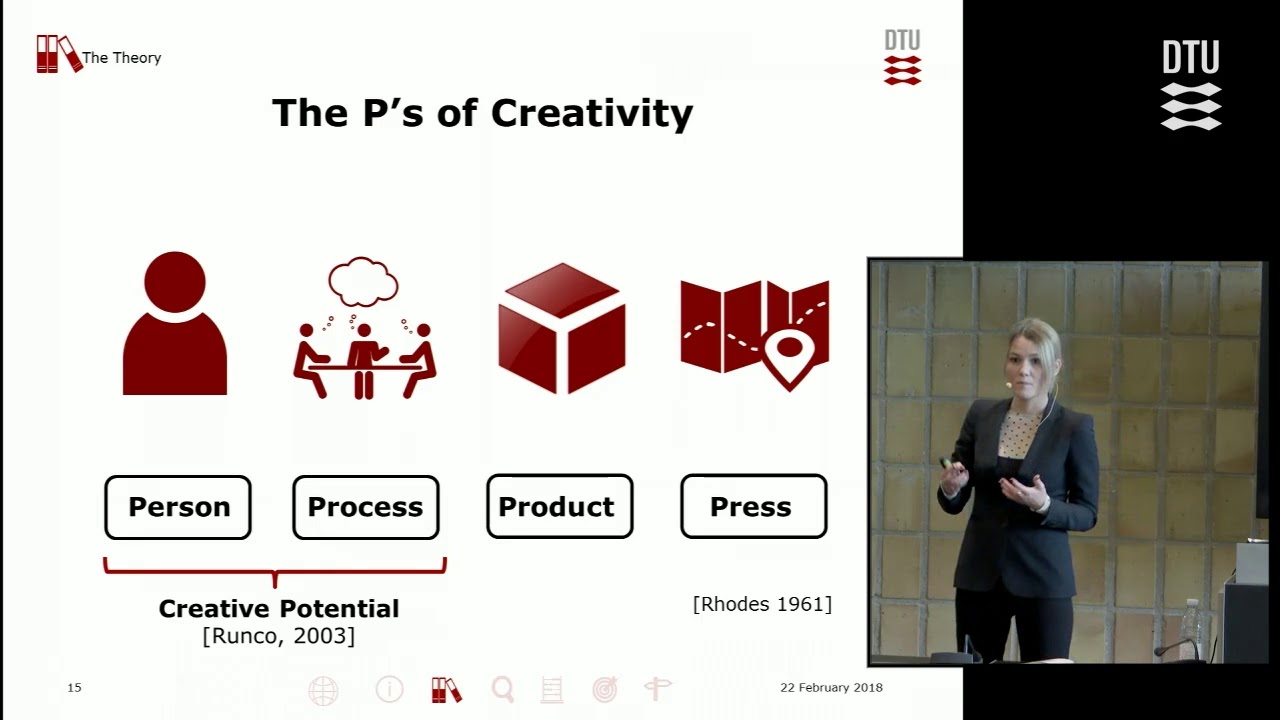
Enhancing Creativity: A PhD Defence on Training Innovation Practitioners
@DTUbroadcast
584 views•2018-02-22
7:01
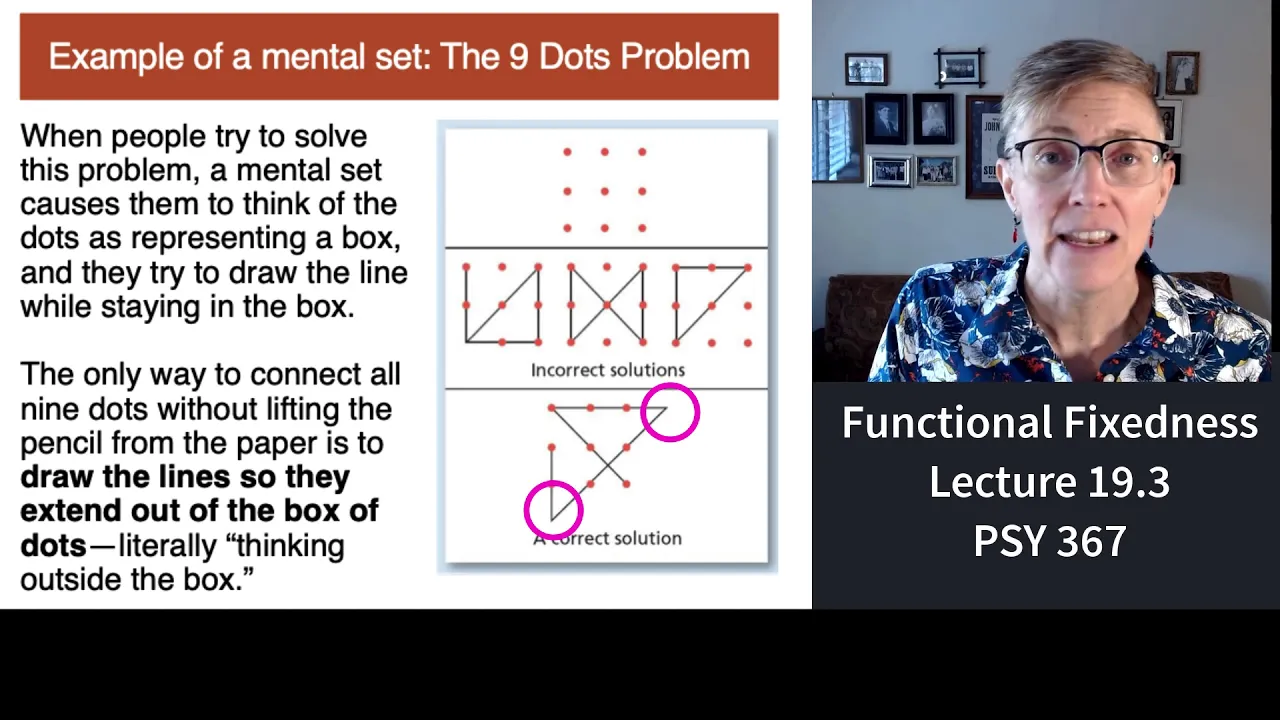
Functional Fixedness & Mental Sets in Problem Solving
@csunprofmaggie1163
1.1K views•2020-11-06

9:55
Thinking, Fast and Slow: Daniel Kahneman Animated Book Summary
@FightMediocrity
2.3M views•2015-06-05

6:40
The Nocebo Effect: How Beliefs Can Cause Real Harm
@CGPGrey
10.4M views•2013-12-23
Related Study Plans & Knowledge Roadmaps
Structured learning paths in Psychology
psychology
Neuroscience of Creativity: Networks & Training
01Foundations of Creative Cognition
02The Cognitive Neuroscience of Insight & Fixation
03The Triple Network Model of Creativity
+ 1 more learning modules
15h4 modules
Explore Roadmap
psychology
Imposter Syndrome: Etiology & CBT Framework
01Defining the Imposter Phenomenon
02Socio-Developmental Etiologies
03CBT Fundamentals & Thought Distortions
+ 2 more learning modules
15h5 modules
Explore Roadmap
psychology
Adult ADHD: Executive Dysfunction & Scaffolding
01Neurobiology of the ADHD Brain
02The Core Triad of Executive Deficits
03Executive Dysfunction and Emotional Regulation
+ 2 more learning modules
12h5 modules
Explore Roadmap
psychology
Loneliness: Evolution, Neurobiology & CBT
01Evolutionary Origins of Human Connection and Loneliness
02The Neurobiology and Physiology of Chronic Loneliness
03Maladaptive Social Cognition: The Psychological Loop
+ 2 more learning modules
12h5 modules
Explore Roadmap