












![★[넛지] 설민석 강독 풀버전★ 노벨경제학상 수상자 리처드 탈러의 화제작! 넛지(Nudge) | 책 읽어드립니다 The Page-Turners EP.9](https://i.ytimg.com/vi/EP-6cPXpeXc/maxresdefault.jpg)

![[넛지 파이널에디션 / 리처드 탈러, 캐스 선스타인] 행동경제학 고전 / 넛지 개념, 뜻 / 넛지 예, 유용성 / 선택설계 / 슬러지](https://i.ytimg.com/vi_webp/mT4YipwWQNM/maxresdefault.webp)


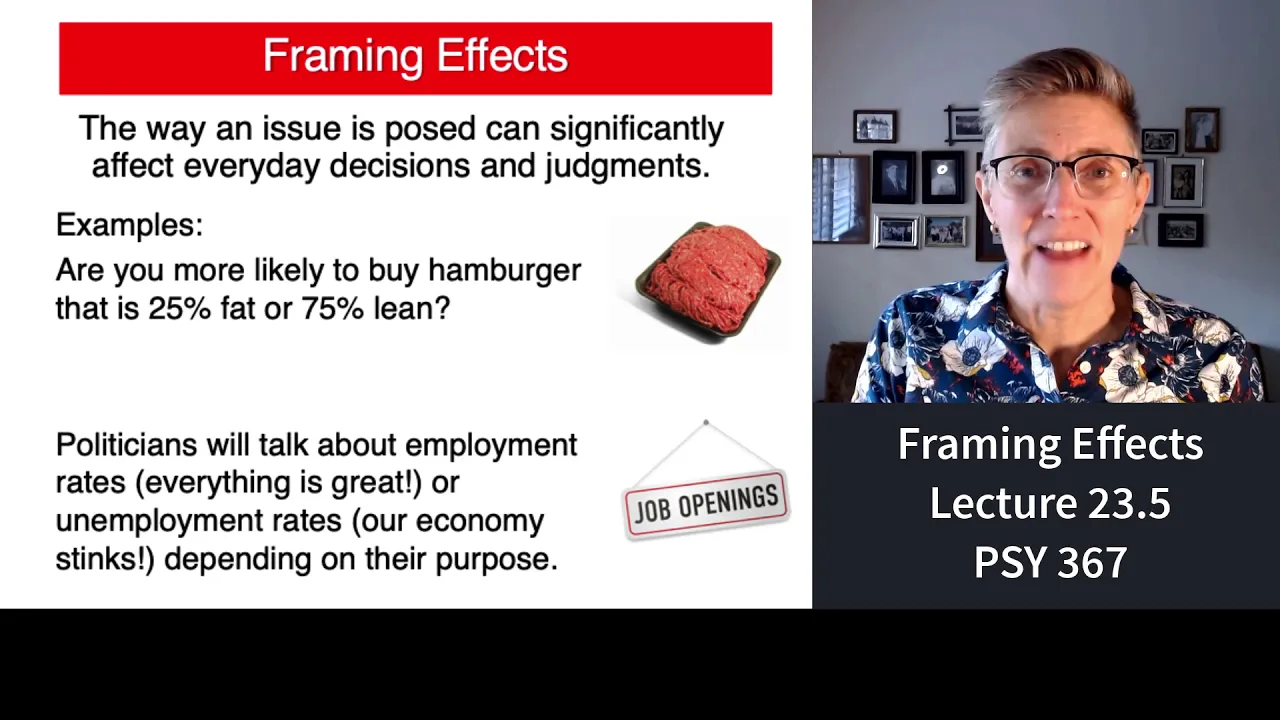





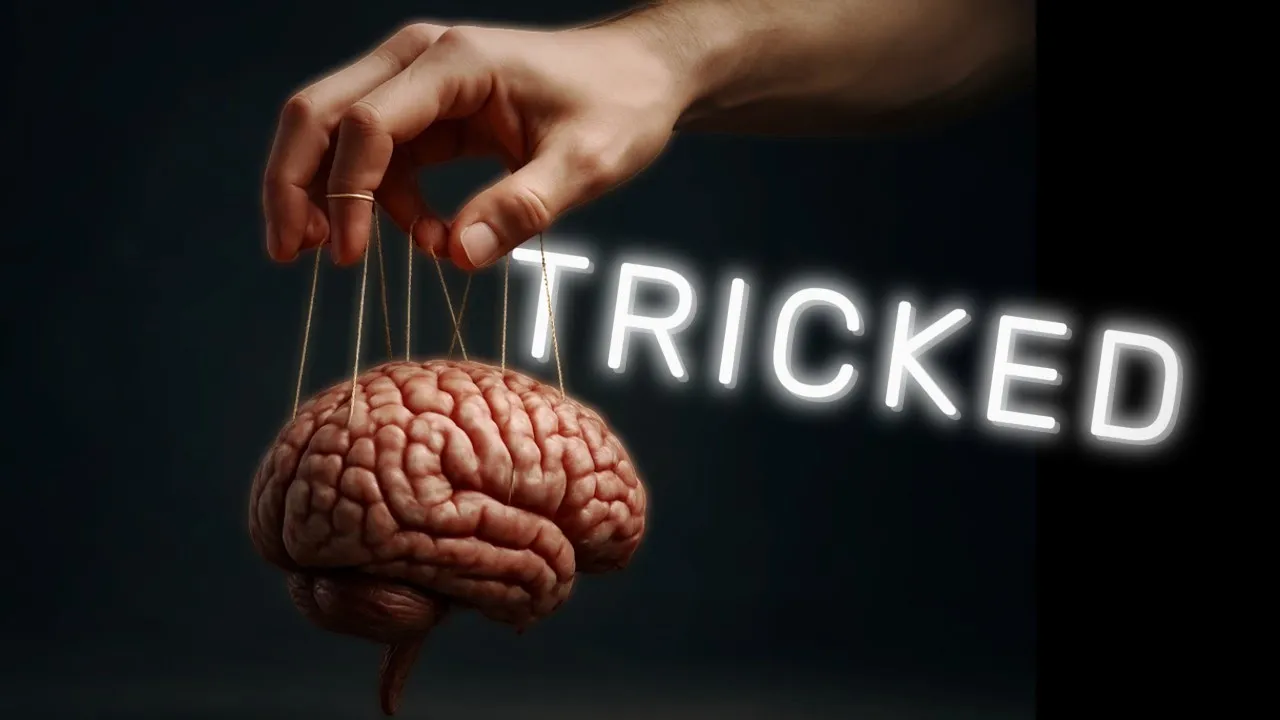

Daniel Kahneman's 'Thinking, Fast and Slow' introduces two thinking systems: System 1 (fast, automatic, intuitive) and System 2 (slow, rational, logical). While System 1 enables quick survival responses, it also creates cognitive biases including anchoring (initial information disproportionately influences estimates), availability heuristic (recent/frequent events seem more probable), loss aversion (losses feel more impactful than equivalent gains), framing effects (presentation dramatically impacts decisions), and the sunk cost fallacy (past investments unduly influence current decisions). Recognizing these biases helps individuals make more rational decisions by understanding when to engage System 2 thinking instead of relying solely on automatic responses.
Thinking, Fast and Slow: Daniel Kahneman Animated Book Summary
Added:Imagine you're one of the first human beings, and you're walking with your kid and you see a lion.
And you don't know what a lion is, so you take your kid over to play with him and the lion eats your kid.
So you go home and you're sad, but it's okay, you get your wife pregnant, and in five years, you're walking again with your new kid and you see a lion far away.
This time you hide with your kid, and the lion eventually leaves and you both survive.
So you come out, you start walking with your kid again and a bird flys over and all of a sudden your kid drops dead.
And you go home sad again, you get your wife pregnant again, and you make a promise to yourself.
You're going to make sure that you hide your new kid from lions, and that you'll hide him if you see a bird flying over.
So there are two ways that we think.
Both of the decisions that you made are based on the fast, automatic thought process, which Kahneman calls System 1.
System 1 is where we find how irrational and illogical or just simply how stupid we really are so it can lead us to not value System 1 or think that it's useless.
If you had used your slow, more rational and logical thinking, you would have found that you were right about the lion, but the bird had nothing to do with your kid's death.
But, we should value System 1, because it has huge benefits.
It's the reason why we've survived.
Yes, maybe at the cost of some really ridiculous assumptions, like your kid dying every time a bird flys over, but if we had rationally thought about what a loud noise might mean and analyze it carefully instead of being scared and running away from it immediately, we wouldn't be here.
So big idea 1 is: Understanding System 1 and System 2.
There are huge benefits to both systems, the problem however really arises when we use System 1 instead of System 2, when System 2 would be the appropriate system to use.
And this leads us to all kinds of biases and fallacies that are not optimal.
It's not optimal to think that if a bird flys over, your kid will drop dead.
So if I were to ask you these two questions, what would your answer be?
1.
Is the height of the tallest redwood more or less than 1,200 feet?
2.
What is your best guess about the height of the tallest redwood?
So one group was asked these questions, And another group was asked the exact same questions except instead of 1,200 feet in the first question, this time they were asked whether the height of the tree was more or less than only 180 feet.
So what do you think the answers looked like?
The first group's mean guess was 844 feet.
The second group's mean guess was only 282 feet.
That is a HUGE difference.
This is what is known as anchoring.
So ask yourself and throughout this video, how can knowing this be useful to you.
Dan Ariely, one of my favorite economists, talks about how we have no idea about most things and what they should cost.
If you're not an expert just like we aren't in most things, you don't know how tall a redwood tree should be, I don't know what a microwave should cost when I go buy it... Should it be $99, $199?
I have no idea... So we use different ways to approximate what it should be, and anchoring is one of them.
So again how is this useful to you personally?
If you're the buyer do you want to look at the MSRP, and be anchored to that?
If you're selling something, how do you want to set up your MSRP to use anchoring to your advantage?
Big idea 2 is: Understanding anchoring.
So one of the things that I really enjoy about my life is the peace of mind I have while doing things.
When I visit somewhere I'm not worried about a terrorist attack, and when I fly there I'm not worried about the plane crashing.
And that peace of mind largely comes from the fact that I'm not really a big consumer of mainstream media.
But I meet people all the time who are really constantly worried.
"Have you seen how terrorism is taking over the world?
What are we headed towards?
Have you seen how planes are just crashing all the time now?"
But in reality, it's not like the chances of those two things have risen in some dramatic proportion.
They're highly unlikely, and I mean a probability very close to zero that your plane will crash.
And this is what is known as the science of availability.
Even an event that has an almost non-existent probability of happening to you can be assigned a reasonable or even a high probability by you just because of what's available to you.
So again ask yourself, how can you use this concept to make your life better?
Is it better to enjoy your life and realize that the world is actually not as bad as commonly portrayed, or watch the news every day where you'll be shown constant death and destruction because that's what sells?
Big idea 3 is: Understanding the Science of Availability Now let's say I offer you to play a game with me.
We're going to flip a coin, and if you win, you win a $1000.
And if you lose, you lose a $1000.
Do you want to play that game?
If you're like most people, that is a game that you do not want to play.
What if we change the rules a little bit.
If you win, you win $1100.
And if you lose, you lose only a $1000.
From an expected value point of view, that is a good game to play.
But if I asked you to play that game right now, and you knew that there was a 50% chance of losing your $1000, if you're like most people you still wouldn't play even though there's also a 50% chance of winning $1100.
This is called Loss Aversion.
Most people are very loss averse.
In fact, you have to offer somewhere about $2000 to get people to play.
Now this might be intersting, but again ask yourself, how can you use understanding this in your life?
You know you're going to be more convincing explaining to someone what they are risking losing, instead of what they could possibly gain.
So maybe you want to convince someone that being an alcoholic is bad... How do you want to go about doing that?
Do you want to talk about how they could possibly gain a better job and make more money if they overcome this problem, or do you want to tell them how they're going to lose their loved ones like their spouse and children?
Big idea 4 is: understanding Loss Aversion.
Now imagine I'm your doctor and I have to do an operation on you and I tell you, "There is a %10 chance that you're going to die."
I could also tell you, "There is a 90% chance that you're going to live."
Now from a statistical point of view, there is absolutely no difference in those two statements.
BUT... In the first case, you're going to feel much worse than in the second.
This is known as framing.
How you frame the exact same situation can have dramatically different consequences.
So big idea 5 is: Understanding framing.
Again ask yourself, how can you use this?
How can you use framing to make good things more appealing and convincing to your friends or your children or whoever else you want to influence?
And finally, big idea 6 is: Understanding the Sunk Cost Fallacy.
This is all about letting your past decisions influence your present decisions.
So think of John.
He has no idea about poker, but he thought he would go gamble and play.
Fast forward into the night, and John has now lost a $1000 and hasn't won anything.
Now if John looks at the odds of his winning from this moment on, which would require the use of System 2, which he's probably not going to use, he would find that the best thing to do is completely disregard the $1000 and get up and leave.
The $1000 already lost has nothing to do with what his odds are starting from this moment.
But John is going to be heavily influenced by the $1000 and most likely keep playing and losing even more.
Let me give you another example... Jen bought 50 boxes of candy a few months ago, so her house is full of candy.
But she now finds out about the importance of eating healthy, and she realizes that the candy actually hurts her, but she can't just get rid of it.
She payed money for it at some point, so it's really hard for her even though the candy is going to hurt her.
Now you might look at John and Jen and say, "Heh... What a bunch of idiots!"
But the reality is that you and I are no different... Look around your house right now.
How much stupid shit have you bought over the years that's now just laying there taking up space, bothering you, you're never even going to use it again, but you don't get rid of it?
There is no difference between Jen or John and you in this situation.
The chair that you bought gets in the way all the time, there is no room for it in your little house, it's causing you pain, but how can you get rid of it?
You paid $59 for it at some point.
This is what is known as the sunk cost fallacy.
Your past decisions shouldn't affect what is good for you now.
If you paid money for a bunch of candy at some point, it doesn't mean that it's good for you to keep eating it.
Up Next
The Hidden Forces Behind Our Irrational Decisions | Dan Ariely
@foratv
265.3K views•2009-01-13

Cognitive Skills for Differentiated Instruction | Teacher PD
@BrainWareLearning
631 views•2017-12-17
The Psychology of Money: Pain of Paying Explained
@FuquaSchOfBusiness
121.3K views•2013-02-01

The Nocebo Effect: How Beliefs Can Cause Real Harm
@CGPGrey
10.4M views•2013-12-23
Related Study Plans & Knowledge Roadmaps
Structured learning paths in Psychology